so if you're new to e-learning there are some really important things you need to know about instructional design and how it relates to e-learning now we're gonna look at those today hey there folks Tim slate here so one of the things I love talking about is the importance of applying really good instructional design techniques especially when you're creating elearning content now whether you create content for the classroom you create elearning content or whatever it is you're creating in the realm of learning and development it's always important to apply really good instructional design techniques to make
sure that you're creating content that helps learners perform better rather than just know better right because there's a big difference between knowledge and performance and so I want to talk today about four really important things that you need to know about instructional design as it relates to eLearning so let's jump right in alright number one clicking doesn't always create meaningful interactivity what do I mean by that well when you're new to e-learning one of the things that you're bombarded with is the importance of making your e-learning content interactive right and when I was new to
e-learning I thought that just meant adding some buttons on the screen to reveal some content but the truth is it's not about creating interactivity it's about creating meaningful interactivity and creating interactions where the learner clicks on the screen is not enough to make that interactivity or those interactions meaningful there is a big difference between interactions that are completely passive and interactions that force learners to use their critical thinking skills to make a decision let me give you an example let's say I create an interaction where there's a button on the screen the learner clicks on
it and it reveals some content right for them to read or listen to or whatever what's sort of critical thinking skills or knowledge did the learner have to apply in order to complete that task of clicking on the button to read some content well the only thing the learner needed to know how to do was to use their mouse and click on the button right they didn't learn anything new as a result of that interaction it was just a fancy way of revealing additional passive content or on the other hand let's say I create an
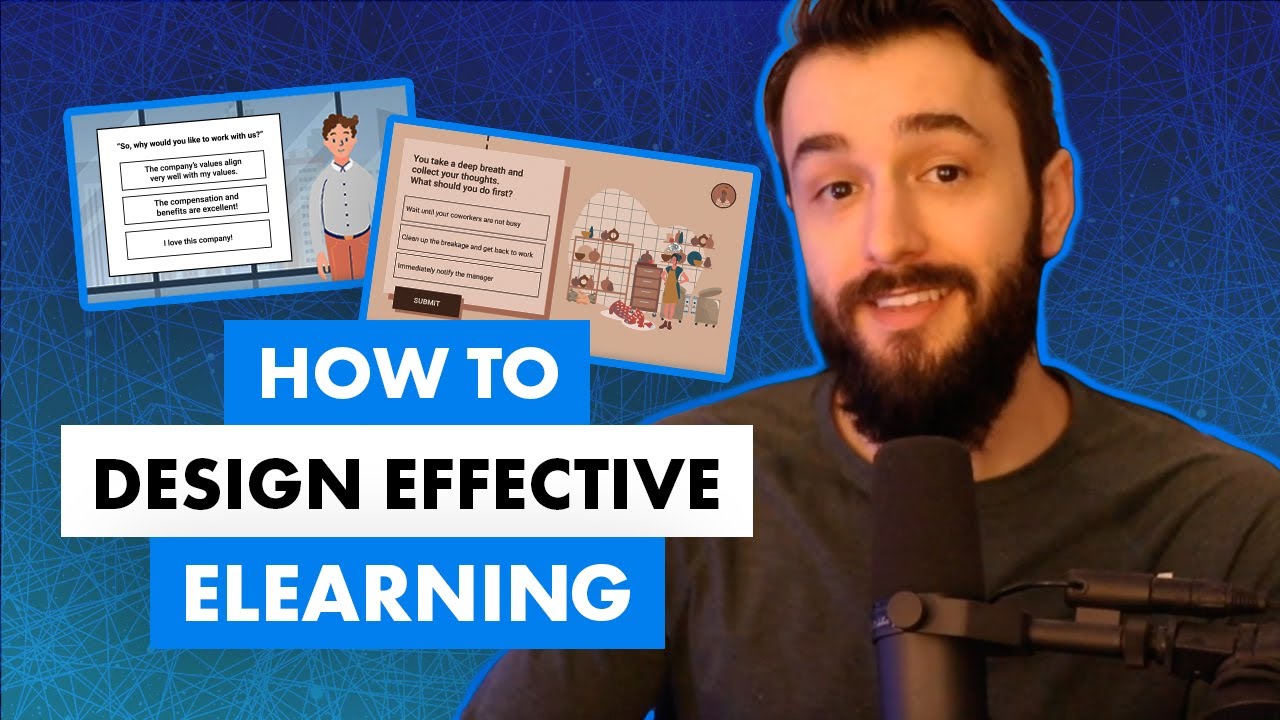
interaction where the learner is challenged with the scenario or a question or some sort of action they need to take and you present the learner with a couple of options and they have to pick one right they click on it and something else happens right they make a decision and then there's a result of that decision and it might be a good decision or it might be a bad decision and then maybe they need to make another decision after that right so what sort of knowledge did they need to apply there well they needed to
hopefully apply knowledge that they learned previously on the course to make that decision and that's really the difference between meaningful interaction and just passive interaction so clicking does not make interactions meaningful alright so number two knowledge and behavior aren't mutually exclusive so one of the things that frequently happens when you're working with a stakeholder or a subject matter experts when building an e-learning course is they will want to stuff that course with as much information as possible because they believe that the more information we provide the learners the better they will be at their jobs
and the truth is no knowledge and behavior aren't mutually exclusive the more information you provide the learner doesn't mean you're going to get more performance right learners only need the minimal amount of information necessary in order to perform a task no more no less and so when you're building a course and you are evaluating your content you need to evaluate whether or not the knowledge you're providing actually benefits better performance or not if you're filling your course with fun facts additional information that's not relevant to the behaviors strip that content out it will not increase
the performance of your learner's at the end of the day because knowledge and behavior aren't mutually exclusive all right number three elearning isn't always the right solution as an e-learning designer or as an instructional designer it's really important that I am really objective about what sort of learning or performance issues can be fixed with an e-learning course or not and oftentimes elearning isn't always the right answer sometimes learning isn't the answer so maybe sometimes you do a needs analysis and you find that there's a performance issue that's caused by a lack of motivation or an
environmental issue that that simply can't be fixed with any sort of learning intervention elearning or not but even if there is a knowledge of performance issue sometimes elearning won't fix it either sometimes people need to be in a classroom where they can socialize with other students or sometimes they need to be able to practice the thing practice their job in real life and and get coaching in feedback sometimes those sorts of interventions are way more powerful than elearning alone so it's really important to know that elearning is not always the right answer all right my
fourth and final tip for instructional design for e-learning is that elearning is so much more than just instructional design it's so easy when we're building an e-learning course to think about purely the instructional design or the quality of the instructional design when developing that course but it's also important to remember that elearning is so much more than instructional design eLearning you have to take into account graphic design and visual communications and user interface design so how is that course going to look how am I going to visually communicate my ideas to my learners so they
can see what I'm saying and how is the learner going to interact with that course is it going to be easy to use is it going to be intuitive elearning is so much more than instructional design alright folks so those are my four instructional design tips for eLearning you have to know them you need to remember them and apply them the next time you are developing an e-learning course but my question of the day is what other things do new e-learning designers need to know about instructional design for e-learning share them by commenting below alright
folks thank you so much for watching make sure to hit the subscribe button below until next time I'll talk to you later hey there youtubers if you like that video and you want to learn more about becoming an e-learning designer click that subscribe button down here check out some of my other great videos and follow me at Tim slate com




![Upbeat Lofi - Power and Energize Your Workday - [R&B, Neo Soul, Lofi Hiphop]](https://img.youtube.com/vi/ONcY0BM5EAg/maxresdefault.jpg)