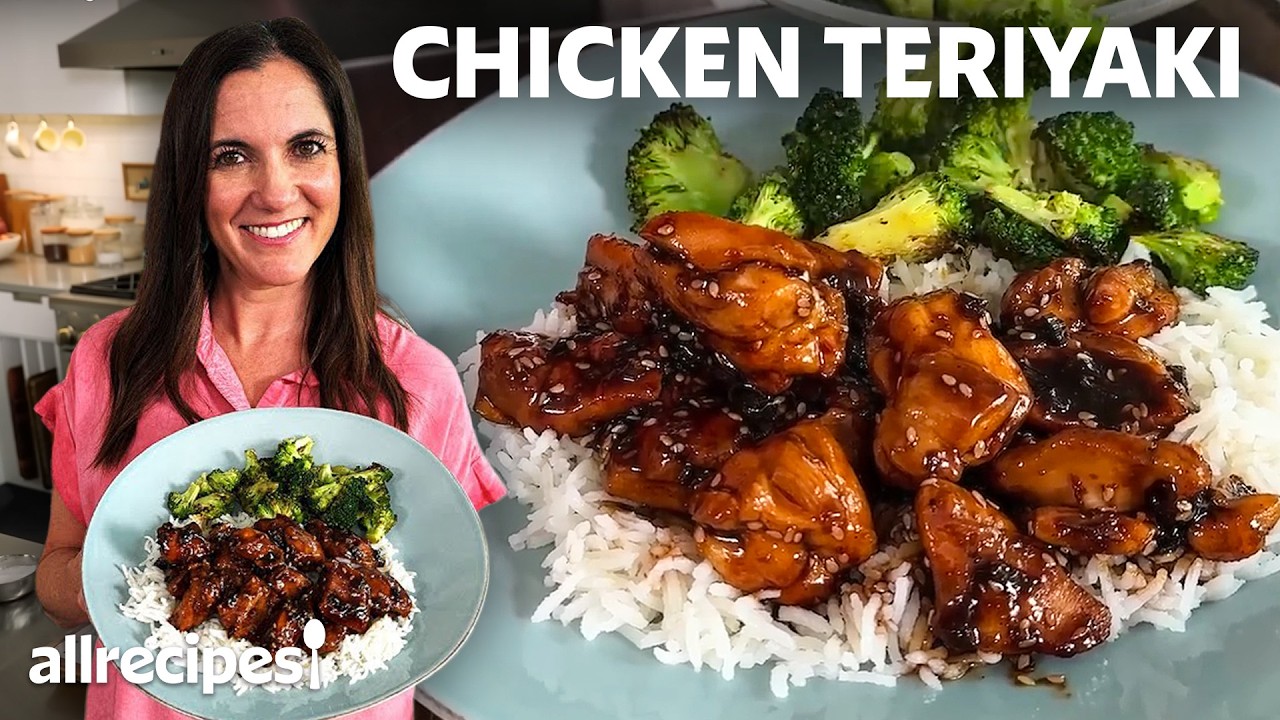
- Chicken teriyaki is a favorite meal at my house. In fact, I make it at least once a week, which is why I'm excited that Keith's gonna make a version for me today. - So, teriyaki is hugely popular in the United States.
Salty, sweet, umami packed pieces of chicken, absolutely delicious. But we wanted to learn a little bit more about the dish. So we talked to a Japanese cooking authority, Elizabeth Andoh, and kind of learned how it's prepared in Japan versus what's prepared in the United States and it's a little different.
So it starts with the chicken. In Japan, they're always using skin-on pieces of chicken, and the skin is there because you're gonna sear the chicken pretty hard and you want that skin to protect the flesh. So you don't want to use skinless parts here.
So we have two pounds of thighs here. A lot of collagen in there. It's gonna keep it nice and moist when we sear it.
But we don't want the bone because we're gonna sear this in small pieces. So we need to get rid of the bone, but we need to keep the skin. It's very simple.
This is the skin side, so you want to flip that over to expose the bone and have that up. And we want to get rid of the majority of the skin. We need the skin for some protection, but we don't want so much in there that it gets greasy.
So I'll actually start with a paring knife and I'm just gonna take off this excess skin and fat right here. - [Julia] Mm hmm. - [Keith] Now for this bone, you can see there's a line of fat right here that resides right over that bone and I'm just gonna take my pairing knife and cut down until I can feel the tip of my paring knife hit that bone.
And now that I've reached that bone, I'm just gonna cut down on either side of it with my paring knife. And I'm only using the tip. I'm not using the blade up here.
I'm just kind of using that to flick that meat away from the bone to expose the bone. And now that once I've exposed most of that bone, I can take the tip of the knife and put it underneath the bone, poke like that and whoop, like that. - [Julia] Nice.
- So, and now I can hold that up and just scrape down, again, using the side of the blade, exposing the end, and then cutting the bone out like that. So now I'll lie that flat, make sure our skin is in place. And then I just want to come over here and you can see there's a little piece of cartilage right there that I've missed.
Wanna get rid of that. So we're gonna cut this into pieces that are chopstick friendly. - [Julia] Ah.
- And also we're gonna expose more surface area for the glaze to attach to. - [Julia] Ah. - So I'm just gonna take this and I'll just transfer this over to a bowl.
Again, cut strips. Making sure to cut through the skin all the way. So I'm gonna finish up cutting these thighs, taking the bone out, cutting them into one and a half inch pieces, wash my hands and we can go to the glaze.
- [Julia] All right. - Before we cook the chicken, I'm just gonna do one thing to it. So a lot of recipes out there will marinade in the same flavors that are in the teriyaki sauce, but this is one thing that we learned from Elizabeth Andoh, is that you really want to have levels of flavor here.
So you want to be able to taste the chicken. You want it to have a nice chickeny bite to it, and the glaze should just be on the exterior. So we don't wanna marinate it, but we do wanna give it a little bit of extra protection before it goes in the skillet.
So I'm gonna add one and a half tablespoons of saki. - [Julia] Mmm. - That's gonna give it a nice savory flavor.
And I have one tablespoon of corn starch in here. Now corn starch is gonna do a couple things. It's gonna provide protection in the skillet and it will keep it from becoming leathery, but it will also help the glaze stick to the pieces of chicken.
So I'm just gonna toss this together until that corn starch is mixed in there. And I want to do this a little gently. I don't want to disturb those pieces of skin.
And now we can look at the sauce. Not many ingredients in teriyaki sauce. - No.
- You have to have soy sauce. - [Julia] Yep. So I have three tablespoons of soy sauce in here, and I'm gonna add two tablespoons of saki to that.
Saki is gonna add a ton of complexity. And I'm also gonna add one tablespoon of sugar. So I'm gonna give this a quick stir and microwave this for 30 seconds and warming that up will allow the sugar to dissolve.
So we can see that the soy is just steaming a little bit, which is exactly what we want. So I'm just gonna stir this and make sure that that sugar is all dissolved in there. So one last ingredient.
We wanted to add a little bit of brightness, liven it up a little bit. - Mm hmm. - So ginger is a common addition, but we're gonna add this in a very unique way.
I'm gonna take two tablespoons of grated ginger, and then rather than putting the ginger whole into the sauce and flavoring it that way, - Mm hmm. - I'm gonna take it, I'm gonna put it into a fine mesh strainer, and I'm gonna press this. And so I'm just gonna get the juice - [Julia] Ah.
- [Keith] To flavor it. And that way, we get the ginger flavor, but we don't have any flecks of ginger in there. I have a 12 inch skillet here, heating over medium heat with two teaspoons of vegetable oil in it.
- Okay, and it's non-stick? - Yeah, we want to have non-stick. We want to have the browning on the chicken.
We don't necessarily wanna leave it in the pan. - Makes sense. - So now that we have some shimmering, right?
You can see it kind of skitter across the surface of the pan, I'm just gonna add the chicken piece by piece with the skin side down. Now you don't want to dump it all in at once because you want to make sure that that skin is facing down. Gonna take some time to get these in here nicely.
And this pan is gonna be a little crowded. That's okay. Okay, now the chicken is in there.
If I can ask you to turn that up to medium high and I'm gonna go wash my hands really quickly. - Okie doke. - Now we're gonna wait.
We're not gonna touch this chicken. We want to make sure that the skin renders and browns. We want to cook this for six to eight minutes.
We're gonna cook it mostly on this first side to make sure that that skin gets nice and brown. So most of the cooking will happen on this side and we'll just turn it over really quickly and cook it for one or two minutes. But before we do that, you want to use this splatter screen.
- May I? - You can see, it's just been a minute or two. - Yes.
- And we have a lot of grease right here. So if this is gonna go six to eight minutes, you're gonna have a lot of grease. So highly recommend using a splatter screen.
- Hey there, fellow fans of cooking, wanna stay in the know? - [Julia] Visit AmericasTestKitchen. com and sign up for our free Notes From The Test Kitchen email newsletter.
- [Bridget] Get exclusive tips, seasonal recipes, product reviews, and more delivered straight to your inbox. - [Julia] Sign up for free at AmericasTestKitchen. com.
- It's been seven minutes so let's check on our chicken. - Ooh, they really have cooked through. - Yeah, so this is absolutely perfect.
This is what we're looking for. You can see that there's a little bit of raw color right there, but the outside of that piece of a quarter inch or a half an inch is opaque. So that means it's time to flip it over.
So I'm just gonna do that off the heat. (chicken sizzling) Let's see what we got. - Oh ho ho ho.
- Look at that skin. Look at that beautifully brown skin. - [Julia] That is mahogany gorgeous.
- Yeah. Okay, so we have all of our pieces flipped over. I'm just gonna go back over the burner, over medium heat.
And we just want to let this cook on the second side one to two minutes. It's been a minute and a half and our chicken is cooked through. So I just want to get this out of the skillet, - [Julia] Cooked through and gorgeous, Keith.
- So I'm just gonna transfer this over to a paper towel-lined plate and that will wick away any of this excess grease. Okay, so I'm gonna pour off all of this fat. You don't need that anymore.
We'll wipe out any bits of skin. Now we can return the chicken to the skillet, (chicken sizzling) and add our glaze. - Ah.
- Just give this a quick stir to make sure it's all dissolved. Add that. Now we're gonna let this cook over medium heat.
And what we're looking for is that that is gonna reduce down to like a maple syrup-like consistency. It'll take one to two minutes. I'll just go in there, give that a shake, make sure we start to get that chicken nice and coated in that glaze.
- Okay. - So it's been a minute and you can see that that glaze has reduced down nicely. And also the corn starch that was on the chicken earlier, that's also helped to thicken that sauce.
And you can see how nice and thick that is. - [Julia] Beautiful. - Beautiful, so I'll just shut the heat off.
Scoop this out of the skillet using our slotted spoon. - [Julia] Man, that looks good, Keith. - [Keith] Can't wait to eat this.
- [Julia] Me neither. - So one last thing. This is not a absolutely necessary step, but I'm gonna strain our sauce off one more time.
We want a really nice, smooth glaze here. So I'll return just a little bit of this glaze, couple tablespoons, drizzle that over our chicken. - [Julia] Goodness.
- [Keith] You see that we don't have that much here. This stuff is pretty strong, so we don't need that much. So I have some steamed white rice in these bowls, which is traditionally how you would see this eaten.
I have some watercress here. Mizuna is another option. - [Julia] Ooh.
- [Keith] And it just helps kind of break up the saltiness of the sauce. - [Julia] Yeah. - [Keith] I want to give you just a little drizzle of sauce over everything.
- [Julia] Mmm. - [Keith] Over your rice. - [Julia] And my mouth has been watering for the past five minutes.
- [Keith] Smells wonderful. - [Julia] Oh, it smells amazing. Hmm mm.
Mmm, mmm. That's incredible. - I love the layers of flavor.
So it tastes like chicken. - Mm hmm. - It's not so pervasive in the teriyaki.
So you have this chickeny bite followed by that kind of intensely flavored teriyaki sauce. - We hope you enjoyed this video as much as we enjoyed making it. - Don't forget to hit that like button and subscribe to our channel.
- And if you're ready to take your cooking to the next level, head over to AmericasTestKitchen. com and get a free all access trial membership. - While you're there, you can sign up for our free email newsletters and download our app.
- [Julia] With unlimited access to over 14,000 of our Test Kitchen recipes and 8,000 product reviews, you'll have everything you need to cook and learn. - So I ask, what are you waiting for? - Let's make something great together.