in this our last session together in this course on interpreting the bible we're going to finish by offering some concrete suggestions on how to handle this difficult problem of knowing what from the new testament the old testament applies to our lives today and what would be simply a matter of custom in our last lesson we looked at the distinction between principle and custom and i promised at this time we would try to find a way to discern the difference last sunday i was in church and as i was sitting in the in the congregation i
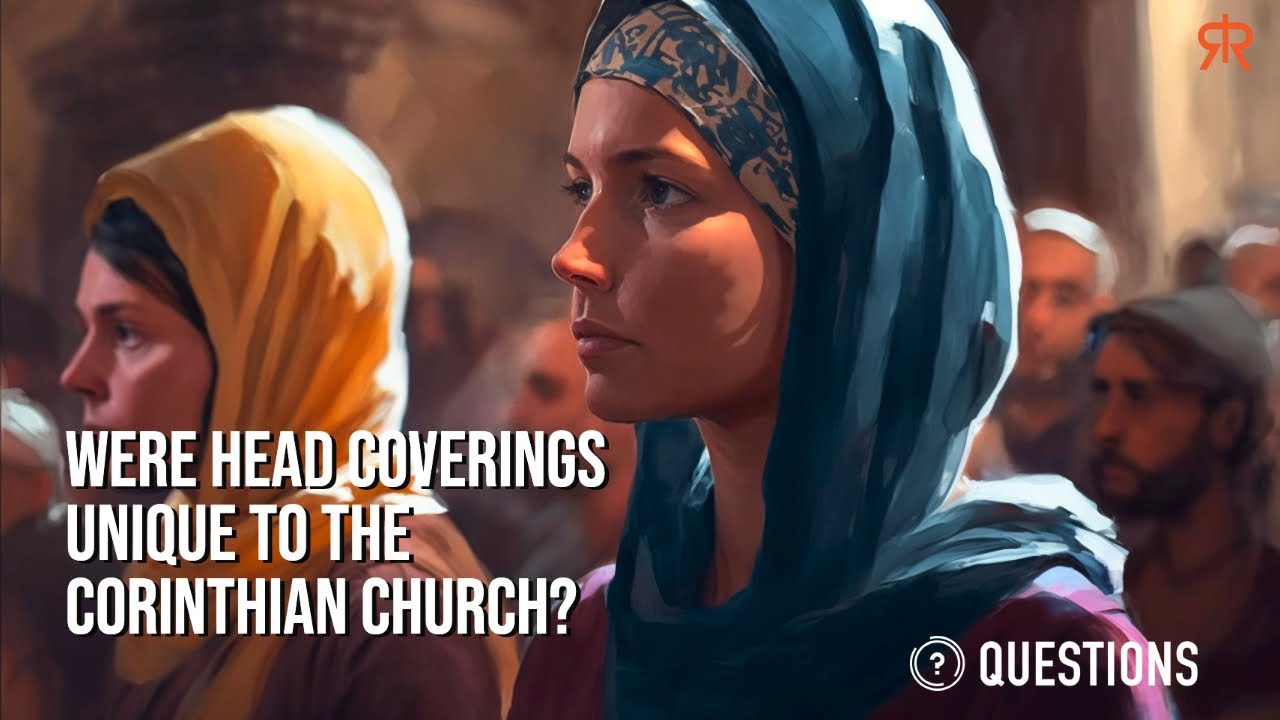
looked around and i noticed that there were two women sitting next to each other they were sisters i believe they were both in their 80s and there was something very conspicuous about these two particular women these two women and these two women alone in the entire congregation were wearing hats they had their heads covered in the midst of corporate worship and it looks strange it looked a little bit out of place because women just simply don't wear hats the church anymore and as i thought about it i thought back to my own childhood in fact
back to the days of when i was in high school which wasn't all that long ago i just celebrated my 25th anniversary from my high school graduating class i remember when i was in high school it was unthinkable that any girl or any woman would come to church with her head uncovered i can remember my mother being very fussy about it my sister my girlfriend if they got to a church and said oh i don't have a hat they would scramble for a handkerchief or something to cover their heads when they came into the church
and they were enjoying at that time we were involved in a very large presbyterian church mainline church not a small denomination that still retained ancient customs this church was a liberal church a mainline church and so on still it was expected that every one of the women wore hats to church well where does that come from where does that practice come from i think most of us are aware that we have that strange teaching in paul's epistle to the of his first epistle to the corinthians in the 11th chapter where paul goes through an elaborate
exposition there where he commands that women cover their heads and the assumption is that in in one of the translations i believe it's the rsb he instructs the women that they ought to have their heads covered when they're praying and when they're in church and that they ought to cover their heads with a veil and that particular apostolic injunction was the practice of the church for nearly 2 000 years before it was set aside now the question is what is principle in that passage and what is customary now in order for us to learn the
difference between principle and custom what i want to do is have a little exercise among ourselves today to practice the application of the principles and to see that we can really feel how the problems are why don't you open your bibles to first corinthians 11 and look at this whole passage because there are several sections to it in which the apostle enjoins the woman to have her head covered and he explains that the reason to have his head covered is that the covering of the head is a sign or a symbol of the woman subordinating
herself to the man which was the jewish custom which some believe of course to be outmoded today so there's lots more involved in this text than simply the question of whether or not we ought to cover uh women ought to cover their heads with veils there are several parts to it and as we look at that passage and ask ourselves how are we to regard it there are basically four different ways we can interpret and apply the principles of this text to first corinthians 11. the first way is to say the whole thing is a
matter of custom from beginning to end it's pure custom it has no relevance whatsoever to the life of the church today and that that is that these elements would all be regarded as customary that the covering of the head with a veil is a matter of custom doesn't matter whether you cover your head with a veil or with a hat or with a babushka or with a handkerchief the veil is customary but not only is the veil customer but the whole act of covering the head simply is a first century means or method of of
displaying or symbolizing a woman's subordination to her husband in church now that subordination could be shown a multitude of ways it could be shown through all kinds of different rituals it doesn't have to be shown by covering the head so that the very act of covering the head is merely customary and then it takes it a step further and say you have the veil to cover the head you cover the head to symbolize the subordination of the wife to the husband but even that subordination of the wife to the husband is a matter of local
custom and that is not to be carried across into the 20th century life of the church so the whole thing veil head covering principle of subordination or the idea of subordination all of those are custom and none of it has any bearing upon us so that we conclude that since we live in a different culture from which first corinthians 11 was written it is no longer necessary for a woman to cover her head with a bail it is no longer necessary to for a woman to cover her head with anything and it is no longer
necessary for a woman to be subordinate to a man that is what we would call view number one that's one possibility of applying ourselves to the church the second option is that we regard the whole thing as principia that everything about this text is of transcultural significance and that all christian women everywhere at all times in all places ought always to practice the subordination of themselves to their husbands and that all women everywhere in every local situation are required to symbolize their subordination to men by the covering of their head and that the covering of
the head that god prescribes that is to be applied all times in every culture is a veil so if a woman covers her head with a babushka or with a hat she is in violation of the principle of this passage that's option number two so we see the first two options don't we the first one is that none of it's principle it's all custom and so we don't have to pay attention to any of it the second is that it's all principle none of its custom and we have to implement every single detail of the
passage those are the two extremes now in between those two extremes there are two other possible approaches we can say that it's partly principle which i'll call option a and partly principal option b see if we divide it into its parts we can divide it more than one way in the first option we could say that part of the passage is principle and applies and is binding on all generations and that part is the principle of female subordination to the man and so someone can come to this text and say all right i believe that
that paul is setting forth a principle here that women are always to be willing to be subjected to their husbands and be in submission in the church and that's the principle how that principle is manifested can vary from culture to culture it can be done through some other liturgical device other than the covering of the head so that the only principle that we want to carry across is the principle of female subordination but we're a complete latitude as to how we show it the second partly partly option is that we say that two parts of
this are principle and one part is custom the two parts that are principle would be this that it is always binding on women to be submissive to their husbands and to be subordinate in the church and it is always binding in every culture to illustrate and symbolize that willingness to submit by covering the head so that then we have two principles subordination and covering of the head but what you use to cover the head is optional it can be a veil it can be a handkerchief it could be a voice it can be a hat
it could be whatever you want it to be but the only two things that are important are subordination and the covering of the head how the head's covered is immaterial so actually we have four different ways to approach that text how do we know what is the correct one well it's obviously not always easy as i mentioned at the end of our last lecture it seems to be pretty simple when when jesus sends out the 70 and said don't take any bag with you that that's obviously not to be carried over the 20th century and
forbids ministers and evangelists from taking suitcases on the trip there was a specific reason why jesus required that sense of urgency this was a very quick blitz of the uh of the surrounding areas well in the midst of an urgent moment in redemptive history that is not part of the mandate of the church in all ages foot washing as we mentioned was not quite so clear there are still many churches that practice foot washing as a sacrament and even the roman catholic church has not discontinued the practice altogether every year once a year the pope
himself goes through washing ceremony of people in rome and in the church and so on and so foot washing has been retained to lesser and greater degree in the life of the church but now what i want to do is set down four basic guidelines for determining the difference between principle and custom the first guideline is this that we ought to examine the bible itself and to see within scripture if there are certain particular areas that apparently are open to the application of custom because we recognize that the bible itself was not just written in
the first century but the whole process of writing the bible stretched almost as long from the beginning of the old testament to the end of the new testament as it has from the end of the new testament to our present day remember that the bible itself was written over hundreds and hundreds of years by people in different cultures at different times and in different places so even within scripture we have the problem of cultural transposition don't we now what kinds of things do we see in the bible that are open to being treated as custom
the first thing we see is language and that's a very important thing we may take it for granted today because it's a custom commonplace thing for us to see translations of the bible in english and in every other language in the world and as i mentioned earlier in this class that was not always the case and from very early in church history the restriction of translation was to latin to the latin vulgate and it was centuries before the church made it possible to translate the bible into the vernacular into the local languages of the people
because there was that fear that something would be lost by translation but we notice that in the bible itself part of the bible is written in hebrew and another part of the bible is written in greek and so even the bible sees the possibility of translating because the new testament quotes old testament laws for example and it quotes those laws that were written in hebrew and it quotes them now in greek so it obviously is not offensive to the holy spirit to have the ability of transposing and translating the word of god by way of
language it can be spoken in hebrew it can be spoken in greek it can be spoken in english all right the second this is not the second guideline we're still on the first guideline which is to examine the self the bible itself for apparent areas of custom and the first example of that i gave was language the second example of that is styles of dress we see that in the old testament people dressed according to certain styles in the days of patriot of the patriarch abraham one certain style of dress was in vogue by the
time of the roman occupation of palestine in the first century when the new testament church was emerging there was another style of dress there were still patterns of similarities as there still are today with the ancient near east but there also were changes in clothing and it was perfectly appropriate for new testament christians to dress in a different manner from old testament patriarchs and so dress styles change they are very open we know that in our own culture dress has changed styles changed from generation to generation from one part of the country to another part
of the country from one part of world to the other part of the world the principle that runs through the old and the new testament in terms of of godly dress habits is the principle of modesty but i even have to say this that modesty changes from culture to culture and we have to understand that because clothes symbolize attitudes they symbolize values and all the rest it is not provocative for a native in in the interior of africa a native woman to run around with a without a halter or for a man to run around
in a loincloth it would be utterly scandalous for a businessman to walk into his office on wall street on monday morning wearing only a loincloth he could be arrested for indecent exposure and because in our cultural situation that would be highly provocative highly erotic highly immodest and so modesty levels do change from culture to that is dress codes change from culture to culture but the principle is modesty and we have to examine what is being communicated by a particular mode of dress at one time in in church history the use of jewelry symbolized an erotic
symbol of licentiousness that has not always been true in the history of the church but it's sometimes it's just like fashions change and and at one point in church history it was scandalous for a woman in america to allow her ankle to be seen in public that's not the case today no one regards that in any way as uh as a provocative part of the body now i'm this is not a case for nudity or anything like that but i'm just trying to say that changes in styles of clothing can vary from culture to culture
and they do it in the bible itself but the modesty principle prevails god does not set forth in the opening chapter of genesis at the beginning of the old testament a prescribed uniform that every believer since abel is required to wear he does establish the principle of modesty all right what else is open for obvious easy changes and that another thing that we see this changes from culture to culture are monetary systems the bible talks about paying tithes and about bringing your shekels or your daenerys into the the storehouse and all that does that mean
that a christian in the 20th century america must pay the church in daenerys rather than dollars of course not because monetary units are easily translated and transposed across cultural ground so i'm saying the basic first guideline is look to the bible itself and see the kinds of things that the bible recognizes as being customary so that you are aware when those questions come up in our culture today the second guideline is to allow for christian distinctions in the first century but what do we mean by that i don't know how many commentaries on the paul's
letter to the first corinthians i've consulted in my lifetime but there are many many scores i can't think offhand of a single commentary that didn't at one point or another bring into the picture of interpreting first corinthians 11 the fact that in the first century the mark of the prostitute in the pagan towns such as corinth was the sign the outward sign of the of the prostitute was not a red light over a building or spike heels or some other distinguishing trademark that would communicate to the passerby that this was a woman of the street
who was for hire but the sign of the prostitutes in corinth was the uncovered head and and we know through studying antiquity that that the commentators are right that in fact prostitutes did walk around with uncovered heads in corinth and that was the sign of them so that so that the commentators then say well the reason why paul enjoins women to cover their heads is so that they may not scandalize the christian community by appearing to look like prostitutes again i cannot think of a commentary on first corinthians that has not offered that explanation for
first corinthians 11 and i personally have real problems with it and here's where they are we're going to get some close work how we have to be careful on the one hand it's perfectly appropriate it's sound scholarship to search out the literary and the historical backgrounds of any document we're researching and it is helpful for us to know what the local customs were in corinth but we must never work on the assumption that everything that the bible says merely reflects the cultural situation of the day now studying cultural backgrounds can help on us understand difficult
passages for example when jesus is debating with the pharisees about divorce legislation it helps us to understand what he's saying if we can go back into the first century and understand that there was a a fierce debate going on between two schools of thought in theology in the first century jewish community those who followed the liberal school of uh of hilal and the rabbinic interpretations there and those who followed the conservative school of shimei and those who were the advocates of that school a fierce battle between the hill alights and the shimmyites over divorce legislation
liberal versus conservative and they brought their dispute to jesus and jesus you know gives his verdict it helps us to understand jesus words if we go back and examine what the controversy was that was being brought to him so again i want to underscore and read that i am not opposed to the principle of studying the background so that we can shed light on a passage particularly when the passage is silent but here's the problem i have with first corinthians 11. paul tells women to cover their heads he does not say the reason i want
you to cover your head is because i don't want you to look like prostitutes he doesn't offer that reason but instead he offers a different reason and the reason he gives has to do with authority and subordination subordination that was built into creation and paul establishes his rationale by an appeal to the creation teachings of men and women now here's my problem if paul just simply said to people i want the women to cover their heads when they come to church and offers no explanation for it whatsoever then we scratch our heads as 20th century
people i think would be perfectly legitimate to go back and see oh prostitutes went around with their heads uncovered that's why he did it and since prostitutes don't do that anymore we don't have to do it anymore either so i can see that where the apostle is silent and providing a rationale there's real value in trying to dig out that rationale by examining the earlier culture but what happens when we put into paul's mouth a reason for an exhortation that he gives that in the first place is not spoken by him but is substituted for
the reason he does give that i think does violence to the text it's interesting to note that prostitutes went around with their heads uncovered but paul doesn't say a word about it instead paul argues for the covering of the hair not by a local situation but by appealing to creation and if there is anything that transcends the limits of culture it's those things which are built into creation and so we ought not to substitute for paul a rationale that he doesn't state and dismiss a rationale he does state there is where our study of the
early culture can get in the way of our understanding because the assumption is that the bible doesn't teach anything new or that the bible doesn't teach anything different from the first century culture if we just look at the bible as expressing nothing more nothing less than the attitudes that we're prevailing in the day then there's no reason why we should study the christian faith at all except for historical reasons the whole point is is that the message of jesus and the message of paul was radical it was innovative and if we just restrict it to
reflecting and echoing and mirroring what everybody else already believed in the culture we will miss that innovative radical new gospel that is being preached so we must allow for christian distinctives to be in the text of the bible the third principle or guidelines is be aware of creation principles as i said if anything crosses the line from community to community it's those rules that are set down in creation because those are given to man not as first century christian or as fifth century bc jew or a 17 or 17th century dutchman or 20th century america
but those principles are set down and given to man as man there we have principles that go all the way back to the beginning of time so that when the bible appeals to the beginning of time we ought to have our antennae stick up and take notice and say be careful this is a warning that we ought not to be treating this loosely as a mere historical custom but that it has historical roots that reach all the way back to creation now the final principle is in my opinion the most important principle of all what
if after studying the bible diligently and arduously and trying to see what kinds of things are possibly customary and what aren't and after examining the historical background and after looking at the creation principles you still can't be sure whether it's principle or custom you say i just don't know whether this applies to the day or not you're left with that quandary is there any way you can cut the gordian knot is there any way you can simplify it yes there is because the bible itself gives us a principle to how to handle that the bible
tells us that whatever is not of faith is sin the principle here is sort of a benefit of the doubt type principle you're left with a choice you don't know whether a particular rule or particular passage is custom or principle think about it if you treat a passage that god intended to be binding on you forever and treat it as a mere local custom and dismiss it as i said earlier you are guilty of disobeying god and doing violence to his holy law because you have reduced a principle to a mere custom that violates god
or suppose it was a custom and wasn't intended for today but you personally take it as a principle that you ought to obey and so you obey it even though you really don't have to because it's merely a matter of custom now what you're guilty of at best is being over scrupulous being too obedient now i ask you manifestly which is worse what do you want to do do you want to run the risk of being disobedient to god or being over obedient to god it is far better to be over obedient to god than
to be under obedient to god god is not going to punish you for being super scrupulous he may punish you for being super loose with the principles that he has set forth before you i call this the principle of humility it's summarized in this way when in doubt don't humility requires that we bow before god and what we are saying is that if it's still in question whether it's principle or custom the burden of proof must always be on those who argue that it's a mere custom and unless there is good and sound reason for
treating a biblical mandate as a custom then we ought always to treat it and apply it as principle that attitude god will honor let me just finish by saying i'm glad to have spent this time with you we've only touched the surface of biblical interpretation and the principles of it i beseech you to continue to study more deeply on principles of interpretation so that you can grow and mature and become more and more responsible more and more confident in your handling of the of the book of scriptures which i believe is the word of god
written from the perspective of transcendent wisdom for your edification that you may be equipped and furnished for every good work which is pleasing to your god