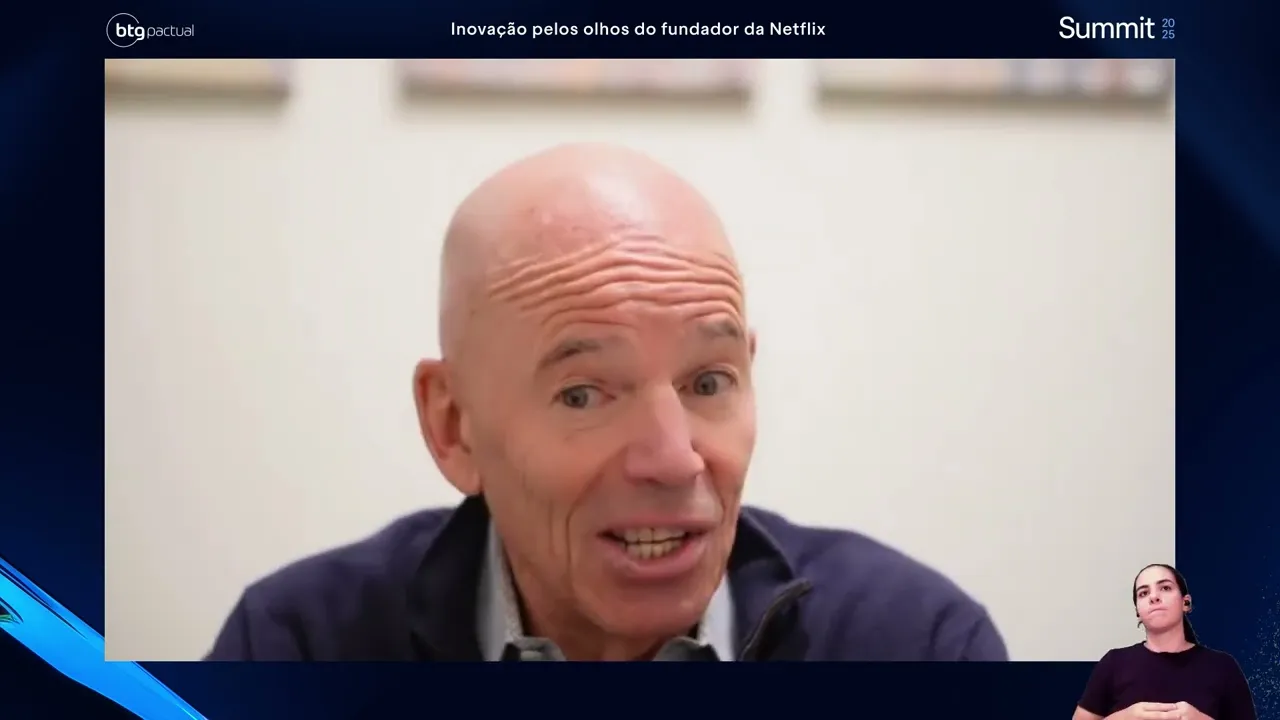
[Applause] Netflix Mark Rand the Netflix hello Mark well thank you hi Mark uh nice to see you I am can you hear me I can hear you can you hear me yeah yeah sure fantastic okay the stage is yours thank you very much thank you very much and thanks to everybody I'm sorry that I can't be with you in person today but to make it up to you I will take you someplace I'm going to take you to one of my favorite places in the world and it might surprise you what this favorite place is
because it's not some beautiful beach uh it's not magnificent mountains it's actually in a city and more importantly it's a building and before I go too much further why don't I show you uh what this building is uh this is the Renaissance Tower in Dallas Texas and in case you're wondering why is it that this is a favorite place of Mark Randolph well there's a simple explanation it's not because of its beautiful architecture it's not because at one point this was the tallest building in Dallas it's because for many years this building was the headquarters
of the Blockbuster Corporation the world's largest video store and more importantly a meeting took place here almost 25 years ago that profoundly changed the shape of my life as an entrepreneur as well as the trajectory of this little company that I was running at the time called Netflix now back in the year 2000 Netflix was in a very different place than the Netflix you know today uh we were young we were about 2 and 1/2 years old we were small we had perhaps a hundred employees and that year we were on track to do $5
million in Revenue now unfortunately we are also on track to have accumulated $50 million in losses and that is not what we mean in Silicon Valley by a repeatable scalable business model and so we did what prudent entrepreneurs do when they're faced with that type of a circumstance we decided to pursue strategic Alternatives and you may know that that's code for we have got to sell this company and we've got to sell it fast now the obvious strategic alternative was Blockbuster but back in 2000 Blockbuster was in a very different place than we were we
had 100 employees Blockbuster had 60,000 employees they had 9,000 stores we were on track that year to do $5 million in Revenue they were on track to do $6 billion in Revenue so when we called them to try and get a meeting nothing we tried emails we tried goet no response and so we went on with our business uh until they finally called and they happened to call when we were on a corporate retreat we were at a small ranch up in the Foothills outside of Santa Barbara California and you may know that in Silicon
Valley we're pretty casual and so when you go on a retreat you've got to work at it a little bit and all that I had with me was t-shirts shorts and sandals and that's when Blockbuster called and said we'd like to see you tomorrow in Dallas and I remember thinking there is no way that we can get from this Ranch to Dallas by tomorrow uh and that's why we found the next day that we were on a chartered corporate jet which when you're $50 million in debt I guess they consider that just a rounding error
but anyway we flew to Dallas we were ushered up to the 26th or 27th story of this building into a conference room that felt like it was a size of a football pitch and we made our presentation that we would combine forces that we would run the online business they would run the stores and we would build a blended model which we knew from our research was the killer app and meeting was going great I mean they were asking good questions and they were leaning in until they asked the big question how much I mean
what are we talking here and we of course had practiced on the plane and my co-founder Reed Hastings uh leaned confidently forward and said $50 million and there was was dumbfounded silence in the room at I think at the hubris that this little company at the depths of the dotc Meltdown could possibly be worth $50 million and the meeting went downhill pretty quickly after that and it was a long quiet ride in the taxi back to the airport and an even quieter ride in the plane back to Santa Barbara and I remember just being completely
crushed because I was so confident that if we could just get this meeting that Blockbuster was going to save us but now Blockbuster wasn't going to save us they were going to compete with us and I knew that there was no easy way out that if we were going to get out of this we had to do it ourselves or as my father used to tell me sometimes Mark you know sometimes the only way out is through and that's what we did we laid people off we focused our business we did everything we could to
get to being cash flow positive and eventually we made it and eventually we passed Blockbuster and revenue and eventually Blockbuster went into bankruptcy and now almost 25 years later the company that Blockbuster could have purchased for $50 million has a market capitalization north of $300 billion and the company that used to have 60,000 employees 9,000 stores has one store left and there's an interesting moral that comes from this story and it sort of depends upon where you're sitting now if you're an entrepreneur this is an inspiring story because just a handful of entrepreneurs with no
experience in the video business took down a $6 billion category leading company but what if you were the $6 billion category leading company well then it's a different story isn't it because then it says you never know who's going to be coming after you and you can guess that when they come after you they're not going to do the things you do well they're going to do the things that you do poorly or don't do or can't do or are scared to do but whether you're a big company or a small one really the message
is the same and it's simply this that if you are unwilling to disrupt yourself I can guarantee that that there's someone who is willing to disrupt your business for you now Netflix was certainly a disruptive story but Netflix was just one of seven companies that I've had a hand in starting and since leaving Netflix quite a few years ago I've had a chance to work with scores of other early stage companies in my role as an advisor and a mentor and an angel investor I've spoken to hundreds if not thousands of early stage companies I
travel the world now meeting with companies big and small talking about disruption and Innovation and I've learned some simple truths about what it takes for the small companies to take down the big ones but equally what does it take for the big companies to defend themselves against the small ones and just to dispel some myths you do not need to be in Silicon Valley to be an innovator I now work with companies all over the world including in Brazil including throughout Latin America in cities big in towns that are small there's amazing things happening there
are no barriers anymore you do not need any kind of special training you do not need business degrees you do not need to have a MERS in computer science some of the best entrepreneurs I know have very little education one of of my favorite entrepreneurs drove an ambulance in Los Angeles he fought forest fires in Montana and then he started his company another one has dreadlocks down to his waist and he began a music streaming service really anyone could do this and you don't even need to be particularly smart I've learned some of the best
innovators are not the a students or the B students they're the C students they're people who've managed to get through their education without having all the risk-taking squeezed out of them but these are the things you don't need what do you need and they're also extremely simple and they're ones that you already know to start you need two things number one you need to have a tolerance for risk-taking but I don't mean the scary and dangerous risk you can see in the illustration here I mean the risk taking that comes from doing something when you
don't know in advance how it's going to turn out by being willing to start down a path when you can't see around the corner and know where that path leads but you can't just wander blindly you need to have a guiding principle you need a North star you need an idea and as we'll talk a bit more about this afternoon not just one idea you might need hundreds of ideas but don't worry they do not need to be big ideas for example my son started his first company when he was eight years old when he
realized that the candy bar that he could buy for 10 cents at the grocery store could be sold the next day at school for a dollar I mean candy Arbitrage it does not need to be an original idea think of the unbelievable Innovation that has come from this simple book seller and they've been selling books since they inv vented the printing press it does not need to be a complicated idea the Post-it note is just a piece of paper but this piece of paper turns over more than a billion dollars a year and now I'm
going to go out in a limb and I'm going to say it doesn't even need to be a good idea because after all what is a good idea now just by way of illustration about how often people wonder about what is a good idea when I came to my wife and told her the idea that eventually became Netflix she thought that was the stupidest idea she had ever heard but we've all had that experience haven't we where you you wake up in the morning and you've got this great idea and you come rushing into your
kitchen and you tell your partner and they shake their head or you run into the office and you tell your board or you tell your team and they all say the same thing that will never work and then of course they're helpful and they tell you all the reasons it's so stupid and why should it be so hard to tell a good idea from a bad idea why is it that people tell us an idea we're sure can't miss but fails or one we think is ridiculous and succeeds well to help us understand that I'd
like to introduce you to somebody it's a gentleman named William Goldman now if you don't recognize the name I'm not surprised William Goldman is a Hollywood guy he's a Hollywood writer and if you're not familiar with his name you might be familiar with his work uh for people of my generation he's perhaps most famous for writing a movie called Butch Cassidy and the Sundance Kid uh if you're a little younger he wrote a movie called Princess Bride he's written probably 20 or 30 movies in all he's won two Academy Awards for screenwriting but ironically he's
most famous for three words and he he wrote in his Memoirs nobody knows anything nobody knows anything now he was talking about Hollywood about how no one can tell how well a movie is going to do until after it's already done it that you can have a can't miss script you can have an aist actor you can have an award-winning director and you can have a100 million budget and still end up with a complete flop or you can have amateur actors a firsttime director no script at all and end up with a movie like Blair
Witch Project which cost $35,000 to make but has since grossed more than $250 million now how could that be well it's simply because nobody knows anything and it is true in Hollywood but it is true any place that people are trying to do things that have not been done before now I mentioned earlier that I was a part of oops I mentioned earlier that I was a part of starting seven companies now two of the companies on this list have had multi-billion dollar market caps three of them had IPOs one of them was a complete
crash and burn but if you had asked me which one would be which in advance no one could have told you I couldn't have told you because truly nobody knows anything and if no one knows anything if it's impossible to know a good idea until you've actually done it well you only have one way to go you have to take that risk and you have to do something you have to make something you have to build something you have to test something you have to try something you're going to learn more in one hour of
doing it than you are in a month of thinking about the problem or studying this or putting together a task force and don't even get me started on business plans which I think are the single biggest waste of time in all of business if you are going to try something you have to get out there and do it but it all has to start with an idea as I mentioned not just one you're going to need hundreds of ideas because you never know which is the one that's going to hit now some people get all
screwed up by this and they're always wondering well gosh ideas where how do I come up with so many ideas where do ideas come from and it's true that those of us who do this for a living actually do have some tried and true techniques we use for ideation and they're pretty straightforward um obviously we look at new technologies my most recent um company was a big data company but I'm also working of course in Ai and blockchain you can look at current trends maybe health care or climate change education or try and catch some
other breaking wave you can look at new business models and say can we apply a new business model to an old problem but there is a much simpler way to come up with ideas and it's so simple I'm going to teach it to you now in a matter of minutes and I'm confident that every single person listening to this can use this technique to come up with an idea today which who knows could be the one that transforms your business and it's remarkably simple all it involves is looking for pain it involves training yourself to
see the world as an imperfect place to constantly be asking yourself what's wrong and not always seeing everything as perfect but as imperfect but don't try and solve problems that you don't know well leave serving curing malaria to The Gates Foundation try and look at things you know well problems in your job problems your customers could be happing and you will be amazed that once you begin looking for problems it's almost impossible for the ideas to start popping into your head but I don't want you to take my word for it I'm going to give
you an example and I'm going to give you an example from many years ago when I was in university and as you can tell by looking at me this was quite a while ago this was uh nearly 40 years ago that right wow yeah a long time ago um and back then uh my summer job I was a house painter I painted houses and this was a simpler time we did not have the internet we did not have ai we did not have robotics we didn't have self-driving cars there was no streaming video the current
big innovation back then was we finally had remote control for the television and back then 40 years ago when I used to go to the store to buy the paint paint used to come in a container that looked like this that's right uh primitive isn't it well now let's Flash Forward 40 years to just this last summer or northern hemisphere summer and I was charged with painting my daughter's bedroom and uh it came time to drive to the store to buy the paint and it was interesting because now we do live in a different time
we do have the internet we do have a streaming video we do have self-driving cars in fact we have the internet and the streaming video inside of the self-driving cars so it was very interesting to me that when I got to the store to buy the paint that paint now comes in a container that looks like this that's right no change 40 years later now is that because they've determined that this is the very best possible way to deliver paint well I hope not because anyone who's painted before knows how flawed this product is I
mean to start you have to open it and it requires a very specialized tool to open this camp of paint um and it's called a screwdriver and I challenge you to think of any other consumer product requires a screwdriver to open but that's okay I own a screwdriver so you now use a screwdriver and you PL pry off the lid of the can and you carefully put it aside uh and now you have to stir the paint and luckily there's a second specialized tool you can see it in the background of the picture here it's
called a stick and we use that to stir the paint which does it pretty well now you carefully put that aside and now you have to pour the paint and as you can see it has a easy pour spout no but it's okay when you pour it out it's fine it's when you tip the can back up that the trouble starts because number one if you're not careful paint spills down the side of the can where it gets on your legs or on your hands or on the floor or second paint fills up this little
lip that you can see that the lid fills into and more about that in a later in a minute now I'm not going to belabor the painting experience you've all been there U you have to put down drop cloths you've got to put tape around your windows uh you have to paint very carefully and then you have to do the trim and you have a roller and you can't quite tell where you've painted or not when you're done you need a razor blade to scrape the window and the whole thing is a disaster but it's
okay I'm finished so now I take my tray of paint and I pour it back in the can and now I have to seal the can back up and luckily there's another specialized tool for sealing my can of paint it's called a hammer and I put the lid on and I give it a few hits with the hammer and I'd forgotten about all the paint that's in the lip and it it sprays out all over my clothes all over the floor and all over my freshly painted wall of a different color now as I told
that story I'm curious whether anybody was thinking this is silly why do they sell paint like that why can't they sell it I don't know in the kind of container that milk comes in or that laundry detergent comes in with a little spout or why isn't there maybe an aftermarket lid with a spout built into it or maybe a magnetic stir in the bottom why isn't there why can't there be or why don't I maybe you found these ideas just popping in your head and this is a problem that happened to me imagine what happens
when you apply that frustration and that search for pain to the things that are happening to you because you see ideas do not spring out of thin air in some mythical Eureka moment you have to be looking for them and they don't always come when you expect them the idea for what became Netflix didn't come to us in a video store it didn't come in some momentary frustration over a late fee we were looking for a long time for that idea and we actually found it while we were car pooling now this story goes back
even further I mean nearly 30 years ago and two friends and I had started a very small very geeky little software company and we were working in happy obscurity for about 6 months and then a wonderful thing happened our little company got Acquired and it was a great outcome because our investors made some money uh our stock options were now worth some more and we were all going to get jobs at this big software company that had acquired us but for me there happen to be two bonuses the first is that I was going to
go work directly for the CEO and founder of this big company a gentleman named Reed Hastings who's plays a fairly important role in the story going forward but the second wonderful thing is it turns out that Reed and I lived in the same town and so we began commuting to work together it was a commute of about an hour and we did this for about six months until lightning struck again uh an even bigger company bought our big software company and once again a great outcome the investors made even more money our stock options were
worth even more but probably the best thing that happened to me is that I got fired but before you too feel too sorry for me this is not that awful Walk of Shame fired where you're walking across the parking lot carrying a box with all your things and everyone's looking out the window at you no this is Silicon Valley golden handcuffs fired uh where they they bring me into the Human Resources office and they're explaining how it's all going to work and I've heard this all before so I wasn't really paying attention until I go
wait wait wait this isn't what I expected so these two companies are going to merge it's going to take six months but you need me to keep coming to work for that whole time and I go they go yes but please and I go but you're going to keep paying me and my stock will keep vesting go yes Mark nothing changes and I go and I get to keep my office with my fast internet and my conference room and my whiteboard yes nothing changes but I don't need to do anything and they said no we
already have a head of marketing uh just be available and I said well sign me up for that job I'm going to use the next 6 months to start my next company now my friend friend Reed Hastings he was in the same circumstance he was also going to be made redundant as they euphemistically put it but he didn't want to start another company he wanted to change the world he was going to go back to school for education and become a philanthropist which he's done but once you're an entrepreneur you're always an entrepreneur and Reed
wanted to keep his hands in and so we came to an agreement that together we'd come up with an idea that I would start and run the company he would be my angel investor and the chair of my board and we'd both get exactly what we wanted but all we needed was that idea and we did have a process and the process worked something like this every morning Reed would pick me up at my house in Santa Cruz and together we would drive up and over the Santa Cruz mountains to our office in Sunny Vil
and the ride went the same way every time rer picked me up and before we'd even gotten out of my driveway I'd be ready I'd say Okay Reed I've got one for you personalized shampoo people are going to cut off a lock of their hair they're going to mail it to us we're going to have a team of Ace hair scientists who're going to formulate a custom blend just for them and then they're going to subscribe to it and I'd sit back and Reed wouldn't say anything he would just be staring out the window as
if he hadn't heard me but I knew that behind those eyes there was rapid fire calculations taking place of costs and benefits and risks and rewards and it might take five minutes it might take 10 minutes but eventually he'd turn to me and go that will never work and then he would lay into me with all the reasons it was such a terrible idea but I was ready and I would come right back at him with all the reasons I had my research had shown this was a can't miss idea we would argue all the
way to the office and if need be we'd argue all the way home and next day I'd pitch him a new one personalized Sporting Goods vitamins custom dog food and I pitched him dozens if out hundreds of ideas and then one day I pitched him this crazy idea okay Reed video rental by mail people will come to our website they'll pick out a movie we'll mail it to them they'll keep it for a week and mail it back and this was back in 1997 and if you remember back then video rental came on VHS cassettes
big big heavy expensive we realized okay this is not going to fly that idea goodbye out the window into a big pile with the shampoo and the dog food until we had one of those lucky breaks about two months later I was getting ready to pitch another one and Reed stopped me he said wait wait wait I heard about this new technology it's in test Market it's called a DVD it's a little disc the size of a music CD and it holds a movie and we begin brainstorming what this meant could this perhaps allow us
to dust off that old video rental by mail idea because now maybe we could mail the disc using the postal service and then here's we did something quintessentially entrepreneurial we did not go to the office and begin working on the business plan we did not begin working on our pitch deck or applying to Beyond Shark Tank or Devil's whatever it is we turn the car around midc commute to try and Collide that idea with reality to find out that day whether there was any promise in this we went down to try and buy a DVD
we couldn't find one because it was still in test market so we settled for buying a used music CD went a few doors down and bought a little pink gift envelope like you'd mail a greeting card in put the CD in the envelope addressed it to Reed's house bought a stamp and dropped it in the mail slot and went to work and the very next morning when Reed picked me up he didn't need to say anything he just held up an unbroken CD that had gotten to his house in less than 24 hours for the
price of a postage stamp and that was the moment we said wow this just might work so Reed wrote a check for $2 million I spent six months hiring a team of Engineers building a simple e-commerce website that our kids could do now in a few minutes but on April 14th 1998 we launched a little company that you now know as Netflix now when we launched Netflix does not did not look the way it looks now I mean for one it was DVD only there was no streaming if you wanted a movie we mailed it
to you in that little red envelope and there wasn't a lot of business model Innovation I mean there was due dates and there was late fees and so it was really quite interesting because when I was pitching this idea when I was raising money when I was hiring people Everyone told me that will never work so it was interesting that after we launched they were right it was a terrible idea it definitely didn't work was really hard to get someone to rent from us and if I could get them to rent from us once it
was very unlikely they would rent from us again but we kept trying I had so many great ideas of things we could try to try and get video rental by mail to work and my problem though was at the time I was a bit of a perfectionist so we would do these tests and they would be works of art we'd have custom photography we would lovingly craft every single word of copy we would check every link we would stress test the site and it might take us a month and then we would launch this test
and it would fail and we'd look at each other a little sheepishly and say well maybe we should go a little faster we kind of wasted some time so we'd cut a few Corners we do a test in two weeks and it would fail okay faster we do a test in a week and then a test every other day and pretty soon we were testing multiple things every single day and as you can imagine when you're going that fast things are getting pretty sloppy we would have the wrong image or the watermark would still be
on or the Greek type would still be in Greek we would have dead lengths we would crash the sight but there was incredible Insight that came from that experience because what we learned is even as our tests got worse and worse and sloppier and sloppier it didn't matter because if it was a bad idea then no matter how beautiful the test was it wasn't going to make it a good idea but if there was even a glimmer of a good idea it was amazing because no matter how bad the test was people still would raise
their hands they'd sit up and pay attention they'd knock on the door they'd reboot the site they would call us they were signaling loud and clear that we were on to something and then we knew what to fix and that Insight was so profound that it shaped the entire future of Netflix and I believe it's the principle that has shaped the entire future of Silicon Valley and it's simply this it is not about having good ideas it is about building a a process and a system and a culture to try lots of bad ones that's
it you can't tell success is proportionate to how many things you try and the number of things you try is proportionate to how quickly cheaply and easily you can try them it's not about having good ideas it's about building a system to try lots and lots of bad ones but I know what some of you are probably thinking that's easy for me to say but you have some critical business that you can't afford to take those types of risks and have your test be anything but perfect well I'd like to introduce you to a concept
that I actually learned from Jeff Bezos who as you know is the founder and uh chair of um Amazon and what Jeff taught me was that fundamentally there are two types of decisions there is what he described as one-way door decisions and a one-way door decision is one where when you make that decision you have stepped through that door it slams shut and locks behind you there is no going back so before you step through that one-way door you would better be sure you know what you're doing you'd better have a pretty good idea of
what's going to happen that it's not going to harm your customer data your customer Health your customer finances but he says there's also decisions which are two-way doors where you can make the decision step through and if you don't like what you see turn around and step right back no harm no foul and he says the problem is is that so many companies require that they have some one-way door decisions and they become really good at making those one-way door decisions and pretty soon they're making all their decisions that way every decision even the most
trivial is studied and planned and approved and what a surprise it takes months you become not you become very rigid you just can't move quickly the trick is to recognize that in my opinion 99% of the decisions you make every day are two-way door decisions and that is the key to being able to innovate even if you're in an industry or have a company which is dealing with one piece of it which is very very sensitive to risk-taking but listen Netflix was taking these risks we were taking hundreds of risks but you know eventually you
get to the point where you're running out of time you're running out of money and we still had not Sol solve the problem of how to make video rental by mail work but luckily we had a few ideas left one of them hinged from the fact that at the time we probably had two or three hundred, DVDs in our warehouse and I remember one day being in the warehouse with Reed and we were commenting about how what a waste it was that all these movies were sitting in the warehouse I wonder if we could store
them at our customers houses let them keep the movies when they're done with it they can mail it back and we'll send them a new one there's no due dates there's no late fees but rather than charge them each time they exchange a movie let's just make it a subscription it's all you can eat and what was amazing is that when we combined these two crazy ideas it worked all of a sudden our business took off all of a sudden we seem to have cracked the code we converted our entire business over to this no
due dates no late fees subscription model and that marked the point where Netflix in some ways stopped being a startup and became a real company but if you had asked me back on April 14th 1998 Mark what do you think will be the business model which ultimately allows was your company to succeed I never could have told you no due dates no late fees subscription bottle um in fact if you had made that part of a multiple choice problem I would have had a one and three chance of getting it right in fact on April
14th 1998 I wasn't even thinking about what the business model might be that would transform our business I was worrying whether this simple e-commerce website we' spent six months building was actually going to work and I can remember it very clearly because we were all gathered in my office which was this tiny room and we were going it was our launch day and on one side of the room we had a big table and we had some champagne buckets and we had champagne glasses we were going to toast our success on day one and on
the other side of the room we had a computer set up and our CTO had set it up that a bell would ring every time an order came in and I remember at 800 a.m. on April 14th 1998 our CTO leaned forward and he hit a few keys and we were live and we all looked around kind of expectantly and luckily we didn't have to wait long and all of a sudden ding our first order and we all cheered and we were in the middle of pouring the champagne and all of a sudden ding ding
ding three three more orders I couldn't believe it this was so spectacular and we were all toasting and laughing and some time went by and we went it's awfully quiet is this thing uh plugged in uh something wrong and it turns out that in the first five minutes of being in business we had crashed all of our servers so rather than my memory of April 14th 1998 be celebrating myself success with champagne it was pushing a shopping cart up and down the aisles of an electronic Superstore while we piled in all the components to limp
our servers along that long first day but we made it now we ended day one with 300 orders 300 orders that was my entire first month forecast but a few years later once we had the no due dates no late fees we had 300,000 subscribers it blew me away there's just no possible way I ever imagined we would have 300,000 customers so imagine how I feel now Netflix has 300 million subscribers we have customers in almost every country in the world we make our own TV shows produce our own movies Netflix is a verb and
I promise you I never saw any of that coming you know it's very strange to me because people come up to me and go Mark wow Netflix you've got to be so proud and it's funny because I am proud but I'm not quite sure what to be proud of is it that I was smart well no I mean as I explained most of my ideas were bad ones is it persistence well I'll take a little bit of pride in my persistence because you don't keep trying one failed idea after another without some degree of persistence
but no the thing that I'm proudest of is something a little bit different what I'm proudest of is my optimism because I am an optimist I am an optimist's Optimist Optimist and I'm not a glass half full Optimist I'm a glass overflowing Optimist and just by way of example of what I mean I mentioned earlier that I do a little bit of Angel Investing and uh since we're among friends I'll tell you a secret I'm a terrible angel investor and I shouldn't be a terrible angel investor I have great deal flow I have enough experience
to evaluate the team and the Tex stack and to see whether they're adequately capitalized but no I've got a personality floor I'll be sitting there listening to the pitch and inside my head I'm going oh this will never work but then before I can stop myself I'll have jumped up I'll have grabbed the Whiteboard marker and I'll be at the Whiteboard going here here is how we can make this happen my person ality flaw I like every idea that I hear and that's a terrible attribute for an angel investor so you know earlier when I
told you you only need two things if you want to be more in Innovative either for your early stage company or for your late Stage Company I wasn't being fully forthcoming you need three things yes you need that tolerance for risk if you are unwilling to start down that path because you can't see around the corner if you want to stay and study the problem for a few months to make sure you understand what you're in for well by the time you finally get up the courage to start you'll turn the corner and there'll be
a hundred people ahead of you and yes you do need to have an idea and as I've explained you need to have hundreds of ideas because you never know which of those ideas is the one that's gonna totally transform your business but the third thing you have to have is confidence you have to believe you have to be an optimist because when everyone tells you that will never work when you wake up in the morning with a great idea and come running to the kitchen and tell your partner or come to the office and tell
the board or tell your team and they all tell you that will never work well most of the time they're going to be right but not always you have to have that confidence that I'm on the verge of figuring this out now I'd like to introduce you to one more person this morning and it's a gentleman perhaps a bit better well known than William Goldman it's a gentleman named Nolan Bushnell and the reason I wanted you to meet Nolan is because he um is an entrepreneur he's an entrepreneurs entrepreneur he was considered the father of
the video game he founded a company called Atari but he went on after that to found I think 18 more companies but it's something he said that I want to share with you because it's always resonated with me and it's simply this everyone who's taken a shower has had an idea it's the person who gets out of the shower dries off and does something about it that makes a difference now I've been where you're sitting more times than you can imagine and I know how it is to be at a conference like this I mean
first of all you're away from the office and away from the distractions you're getting a chance to share ideas with your peers you're hearing from speakers who hope hopefully can give you different ways of approaching a problem and then it happens you have this great idea but then I also know what happens when you get back to your office and you have that long list of emails you have all the calls you have to return you have the crisis dour and that great idea you had poof it's gone so maybe this conference we try something
a little different the next time you have that idea when it pops in your head don't put it off get out of the shower dry off and do something build something make something test something try something get out there and Collide your idea with reality as quickly as you can because that is the key to truly making problem progress on solving an important problem and being more Innovative in what your business is and if you get up in the morning and you have this great idea and you come rushing into the office pardon me you
rush down to the kitchen and you tell your partner or you rush to the office and you tell your board or you tell your team and they all tell you that will never work well I welcome you to call me because as you know I like every idea that I hear thanks so much for your time this afternoon please go out and try something new keep the ideas coming and I have tremendous confidence in all of you thanks very much good luck [Music] thank you thank you Mark thank you very much blue hour Johnny Walker
Blue Label [Music]




![Whiskey Blues Music -BEST OLD SCHOOL BLUES MUSIC ALL TIME - Beautiful Relaxing Blues Songs [ Album ]](https://img.youtube.com/vi/dRA19AKYOfs/maxresdefault.jpg)