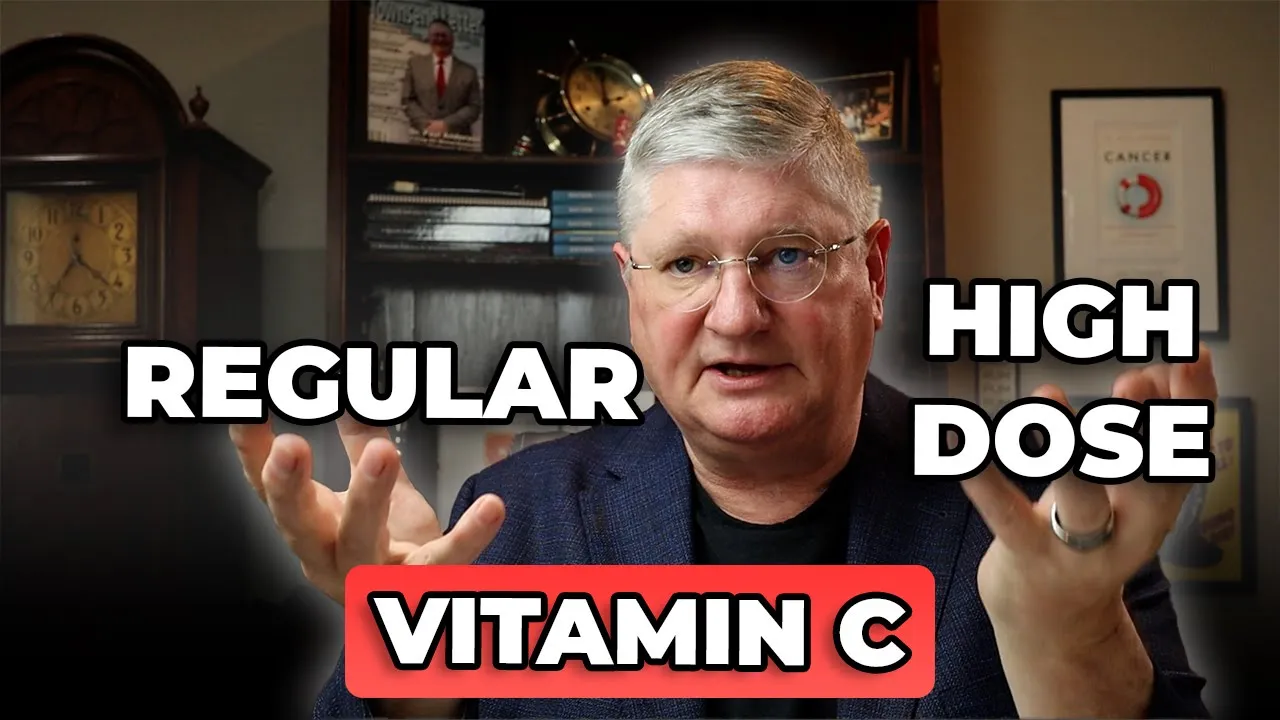
low doses tends to be an antioxidant effect high doses tend to be a pro-oxidant effect so you might say well prox sounds maybe unhealthy why would I be doing that well hey it's Dr R welcome to the YouTube channel and I talk about all things integrative and other types of medical interventions today we're going to talk about intervenous vitamin C one of my favorite topics we got tons of questions so one of the questions that we got was what is the difference between a regular dose and a high dose of intravenous vitamin C well high
dose vitamin C and vitamin C in general is a very useful type of a treatment in many types of settings but there have been some controversies or questions or other things around it so I want to get into just a few things on this topic we have a playlist that we'll link down below I want to talk about the differences between intravenous vitamin C that might be given at a let's say regular dose or low dose and that of a high dose and what makes it different now the first thing is terminology wise I'm going
to use our standard terms that we might use in infections or in the world of oncology integrative oncology for high do vitamin C and the reason I say that is during covid there were Publications talking about the use of quote unquote highd do vitamin C in hospitalized covid patients and we have some other videos on that but that high dose was not really high dose as we see it in the world especially of oncology and acute infectious disease at least so what we're going to first do is look at what makes oral vitamin C and
IV vitamin C different and then we'll talk about IV vitamin C and how the doses kind of break down and what the difference is for them the first thing is is that you can certainly take Vitamin C orally in pills or powders or liquids you can eat it in food that's how you should be getting it and vitamin C has a limit to how much you absorb orally now that limit can be quite broad people who are really used to taking vitamin C may have a higher uh limit than other people do but the main
limitation normally is that too much vitamin C can cause loose stools or diarrhea and that's when you know you're not absorbing it anymore when you put it in someone's vein you're going around the digestive tract and so that person now with the intravenous vitamin C no longer is going to have the GI issues where they're going to get say loose stools Etc but the blood is going to get the vitamin C directly so there's no digesting or absorbing of it so this topic that I wanted to answer the question of what's high and low dose
is about intravenous vitamin C so we talk about oral vitamin C on other YouTube videos and you can check those out so once we get into the vein there is a range of doses that can be used so 1,000 mg is 1 gam it is very very common in mult multivitamin type IV therapy to have 1 2 3 4 5 G so 1, to 5,000 milligrams of Vitamin C in those IVs and then there are even strategies that might go to 7,000 or 10,000 millgram or 7 to 10 gram Etc all of those are considered
in the normal dose or lowd dose vitamin C rain and then there's kind of a skip if you look at the research over to doses that are around 25 gram and 50 gam and 75 and 100 so higher than 25 G and those are normally considered quote unquote high dose now one of the reasons why some of the co papers that got published we're looking at what they called high do vitamin C is is that they were giving a gram every hour so in 24 hours that would be 24 G which puts you into that
high dose category students will often ask what what happens in the middle you know what if it's 15 G or 20 G you know where is the dividing line well the dividing line is a bit arbitrary because a lot of it has to do with your metabolism and your body size so if we are treating a child we use pediatric dosing strategies that adjust the dose down and so high dose for a child is going to be very very different than high dose for a smaller adult which is going to be very different from high
dose for a larger adult like myself so to get a high dose I might need more than a smaller person would for example so that's why there's this range and it actually breaks down into a body weight adjusted dose but we don't really need to get into that so you can usually consider uh low numers single digits low double digits so you know 1 to 10 G 10 to 15 G are still considered low dose 25 or so grams and higher are generally consider hios well if I'm putting it in the vein what why would
I care how much I'm putting in well there's a difference in the biology and the biochemistry of vitamin C at lower doses at lower doses it's going to mainly function as what it normally does an antioxidant so our cells are going to take it up and use it as one of the primary antioxidants which vitamin C is so we have that right when we get to higher doses so let's say in the average adult were somewhere 25 50 75 grams you bigger doses when you hit a certain point you start to overwhelm the elimination of
the vitamin C and so the blood levels stay higher when that happens at higher doses you have what's called an oxidative effect now it's not quite that simple but that's the bottom line if you want to really get it down to the simplest terms low doses tends to be an antioxidant effect high doses tend to be a prooxidant effect so you might say well prooxidant sounds maybe unhealthy why would I be doing doing that well the reason we might use a prooxidative dose or something right on the line there would be as we said maybe
an acut or chronic infectious case possibly to support somebody during cancer where a prooxidant uh approach might be synergistic with the other therapies they're having or may help their immune system generally dealing with cancer Etc so if we're looking for an oxidative effect we at least need high dose for part of that if we're looking for a supportive antioxidant effect we use lower doses for that the next question related to this was that a person had written in and uh the team picked up the question and they said so I've seen research that talks about
low dose versus high dose intravenous vitamin C in cancer patients can you explain why they would be used differently well there's a number of reasons why you might do low dose versus high dose with cancer patients the lowd do literature there's a handful of papers really it's not like there's you know hundred of papers on this but there's a handful of papers low dose meaning somewhere between 7 10 12 G low fairly low dose so 7,000 to 10,000 milligram which is fairly lowd dose for IV those are all looking at quality of life Improvement in
a patient with cancer usually Advanced cancer and so in many people where their goals are to help with their General quality of life Etc and maybe they have other reasons they can't get high do vitamin c lower dose strategies have been shown in the research to still be beneficial to overall quality of life so what is quality of life they include different scales to use for this but it could be things like are you sleeping well what are your pain levels like are you able to be you know conscious and present with your loved ones
are you able to be mobile to the degree that you physically can be mobile things like that are quality of life measures so vitamin C at lowd dose is often used to improve quality of life at high do the research generally and again these are in the oxidative ranges high do vitamin C is more along the lines of trying to help the immune system irritate and aggravate the cancer cells proper and so that the immune system has an easier time dealing with and seeing the cancer cells Etc so higher doses are considered kind of anti-cancer
quote unquote and they have a role there so things to consider around that are is it safe to do these things well the first thing is you want to make sure that you have a provider who is doing intravenous therapies under the laws and rules of wherever it is that you live so here in the US we have particular rules that are you know enforced by the federal and state governments Etc around IB therapy so you want to make sure whoever it is is licensed to do these things but also has the experience to do
it the next thing is if you're doing especially high does vitamin C you need to check a few things in the labs the first thing is uh you would do a metabolic panel to check your kidney function because you put a high dose of vitamin C in someone it's a temporary strain on the kidney so if somebody has very poor kidney function we often will not give them a high dose of vitamin C until the kidneys rebound Etc the next thing would be beyond the metabolic panel looking at the kidney functions Etc would be a
G6PD enzyme test you can be genetically deficient in that enzyme and if you're deficient in G6PD enzyme you are not supposed to have oxidative treatments because you can have hemolysis in your blood your your red blood cells will explode and that would be terribly bad so we always screen people for that enzyme deficiency and again if they have it they just don't get high dose vitamin C and then there's a few other tests that are done just to make sure it's all safe the next thing that we are concerned about when we're giving higher doses
of Vitamin C is it tends to be in an ivy solution that is uh what they call hyper osmolar High osmolarity which can temporarily dehydrate the person now there's ways to mitigate that but if person's already dehydrated they can get nauseated and headaches and things like that if they get vitamin C too rapidly or if they're not hydrated ahead of time most people can just drink water enough before during and after the vitamin C I be and they'll be fine in some of our more frail patients we'll actually give them hydrating fluids before just to
kind of get them level and then we'll move on to intravenous hos vitamin C so we have Labs that we check we have physical parameters and markers like dehydration hydration status Etc and then there's things such as how fast do we administer it and all that that are kind of technically operated based on uh how you're doing on that particular day the next thing is because it's often used with either an infectious disease with say antibiotics on board or in cancer with maybe chemotherapies and things how does it uh work and play is it synergistic
or is it you know uh confrontational with these other drugs well we'll do a whole topic on vitamin C and chemotherapy but the short answer is is that most of the research shows that vitamin C is actually synergistic with most chemotherapies and then if you look at as we might use vitamin C in somebody who's got an infectious disease maybe chronic infection and they might be on antibiotics vitamin C is actually synergistic with some antibiotics and it's it's neutral with the rest of them it they can be generally used together now there are Logistics to
any intravenous therapy so remember the first thing is do it with somebody who knows what they're doing not only you know are they licensed and certified to do this type of IV Therapy but do they have experience with it there's a lot of people who might do General IV Therapy like hydration services but they're not used to managing say high does oxidative treatments like hos vitamin C and it's whatever you know they are licensed to do and they're up to do but we have seen in certain cases where uh a clinic might be really good
at certain IV Therapy but highest vitamin C they just don't normally do it's something that there's a lot of nuance to medically so you do want to have a clinic that's used to doing it and they can deal with how your body is on any given day there the next question is well how long do I do it well that totally depends why you're doing it in general if you're doing high do intervenous vitamin C and you're doing it in the case of support for cancer therapies we what we have seen and in some research
that I was involved in previously in humans what we generally saw was if you're going to do high do vitamin C you usually have to do about two a week over the course of about 7 to 10 weeks before you can really tell how much it's doing if you just do one IV Therapy it's fine it's not going to hurt you but in order to get an effect you need to do it over a particular amount of time and so that means you're going to have to go in somewhere to get the IV vitamin C
you're going to be in the clinic and you're going to be sitting us drinking water and relaxing and getting your IV but you're going to be there for a certain amount of time and depending on the dose it may be a little over an hour it might be a few hours depending on how high the dose is how big you are how hydrated you are and what your tolerance is so there are some logistical things around it as well you just want to make sure that you find a clinic that's going to do the proper
pre-testing and is used to doing high do vitamin C not just IVs in general and has experience with managing the potential side effects and and individualities that we all have around needing high dose vitamin C or how we tolerate it Etc all right well I hope that answers the questions that we got it around High versus lowd do vitamin C probably talk about lowd do specifically in other uh settings but remember lowd do is usually a single digit number of grams maybe small double digits so you know one two 3 4 5 G maybe up
to 10 15 G high dose is usually considered about 25 or or higher and uh that can be divided up in a number of different ways depending on whether it's in a hospital or in an outpatient setting all right I'm Dr a you can go take a look at our vitamin c playlist on the YouTube channel you can take a look we're going to link some other things here and I will see you all on the next video thanks a lot