[Music] [Applause] buddies hello and welcome back to buddies without organ a podcast about de las quitari and all things in between i'm shawn i am joined here by matt and our new and exclusive third buddy corey hey buddies how's it going [Laughter] uh it's going great we had 20 minutes of wrestling with zencaster and skype before getting to this point so i think we're all in like peak podcast mood right now um we've also because of um time differences before you being in australia we've we are recording at a time which is inconvenient for all
three of us but For different reasons and if that isn't democracy i don't know what is and speaking of democracy not that this is the current events podcast but our last episode we recorded it i think it was the day after uh the capital hill insurrection and we're recording this podcast about again about half an hour 20 minutes after donald trump was found not guilty for Inciting a writer ah great that's fantastic isn't it so um my favorite thing about the whole day was i was following the guardian update sort of live getting ready to
join the our call and my my favorite update i saw was that his his defense team said that trump was a victim of cancelled culture we should make me laugh for about an hour um but this is not a current events Podcast this is not a donald trump podcast we are not uh we we we are metaphysicians all of us here as as a result of studying delays and we are going to be well this is going to be a little bit different from our last few episodes actually because um up to this point each
episode has been about a concept or A an idea in de les and qataris philosophy but this one we are going to be talking about specifically talking about a single essay a single written work of this we're talking about uh the geology of morals um which is of course from their um book a thousand plateaus it is to give it its full title actually let me just behind me and get my uh i didn't want to Break slow but i feel like maybe one thing we need to do is we need to have corey introduce
himself oh my god yes we do i'm so sorry i have been drinking yeah that's what 20 minutes of podcasting does it's really nice to have you with us corey i'm so sorry corey i'm just happy to be here no um all right so yeah i'm cory i Publish under corey j white i write science fiction and so it's probably been about three years that i've been getting into uh philosophy and theory and uh my first introduction was through uh podcasts actually so for for a long time i i'm happy to admit that i thought
it was one guy first name delusion last name guitarian so you know brilliant yeah last year i think that's Probably that's probably what they want to they they want to be known that's probably a melded entity exactly so yeah last year was going to be the year when i actually started reading the heavy primary texts um and you know 2020 happened so instead of being getting into uh to losing qatari properly this year and now i'm here and learning from the two of the best In the business um but yeah no so um i definitely
did not have any sort of uh formal training in this but i just find philosophy and theory it sparks all kinds of thoughts and ideas for me um so a lot of what i when i started getting into philosophy it was um when i had a story idea or i was working on a book i would uh latch onto like essays or ideas that um i thought could Help me with my writing um so yeah after starting off with that and having absolutely no foundation this is the time when i start building the foundation and
hopefully starting to understand some of this stuff better than just the um the surface level i've been latching on to recently well the the whole ambition with uh this podcast is to i mean one of the reasons why i Start why i started it while i um asked matt if you wanted to do this with me i was was largely for the same reasons actually about her de les is someone who had kind of like i'd read and was interested in and found um provocative and wanted to understand better so i'm really glad to have
you on board uh with us cory and you know i hope that this is the service that we're delivering uh to our listeners as well That because this is um this is i think all of us um to some degree or another getting to no delays in real time episode by episode so yeah i hope that everything uh i hope it all goes well as i'm sure it will and if not we'll just block you on twitter right so we uh we are going to be talking about uh to give it its full title 10
000 Bc the geology of morals who does the earth think it is and matt you are going to be kicking us off tonight by telling us a little bit about structuralism yeah um i mean i think i can i guess i can i just i wanted to add that i can appreciate this the desire to get into duluth and grottery and i think that my arrival at their work was very similar as a as a As a young philosopher philosophy i wish uh photography undergrad um coming across them both and not really knowing where to
start and jumping in the deep end and it taking about six years to actually get any sort of grasp on the thing but i think that this this chapter in a way that we're looking at is kind of the primary reason why that's so difficult um i think a thousand plus was the book That i started with and have only very very recently managed to kind of get my head around some things because there's so much background here but um it's not given up front and i think that the geology of morals as a chapter
is kind of their encapsulation of why they've why they've done this why they continue to do this to us so i think yeah maybe a starting point As or at least some sort of like background that i can maybe provide for our listeners as much as ourselves is that this uh essay is kind of like a this sort of heretical uh well post structuralist text i guess that people that are vaguely familiar with liz and guttery will really know that they are classed under that rubric of the post of post-structuralism Um and most probably don't
even think about what that means i know i didn't really think about what it meant for a long long time but this book i think this chapter rather really gets to the heart of well i guess the book in general too really gets the heart of what they're challenging um in terms of structuralism so probably best to say something a little bit about structuralism Um and i guess that structuralism begins from uh an attempt to understand quite literally the the somewhat arbitrary structures that give signs meaning signs being understood in a very uh general sense
i guess as sort of time goes on um signs whether that's images um it's literal signs or i guess at the very start it's Uh words and language more generally um and there's a guy called ferdinand de saucer who i may be mispronouncing you never know with french names but um this isn't angelo anyway um but he's a linguist and a semitician and he thought this i mean i guess you can't really you probably can't put a definitive founding a starting point on structuralism he's kind of one of the first theorists to really you know
give it a A grounding which is that he takes the sign and he breaks it down into two halves and he says that we have the signifier and the signifies and this kind of simple deconstruction is what constitutes a sign uh of what constitutes a sign that describes like a basic semiotic relation that we basically we deploy intuitively every day so to give a start At the very bottom because we probably should um if i pick up a pen and say this is a pen everything is right with the world and no one's going to
probably come at me and disagree with me the signifier is that which points and the signifiers that which is being pointed to so the signifier is the word pen and what is being signified is this Ink-based writing instrument but then you can say well why is a pen called a pen and if we think about it there's not really any material relationship where um between the pen between the word pen and the object it describes and this becomes really apparent for sorcerer and a lot of the other structuralists because i mean very evidently if i
if i we can we can agree that we call this thing a Pen if you talk to someone who speaks french or german or any other language they'll likely have their own word for it and so you know in that sense if we all have different words for the same thing then what is what is what is sort of because what that we we might have a shared meaning of what this thing is and does but it's not really there's no sort of material basis there So what sorcerer i guess saucer argues is that we
we understand very intuitively that that relationship between signifier and signified only works because the pen as sign is captured within this like sprawling informative structure that we call language and that's it that's all there is so in this sense a pen doesn't just signify an object in itself by its whole web of relations we call Things different things not to to describe them in themselves but rather to distinguish them from other things so we call a pen a pen to so we can identify a pen but also so we can distinguish pens from paper and
paper from desks and desks from rooms and rooms from houses etc etc and that's basically how we build a language or so the structuralists say and so it sort of seems like one of Those very very obvious points but it actually has quite complex implications and for the structuralists this basically affects our understanding of language and therefore society more broadly like quite utterly so it's as we kind of said it's not a materials now it's announced of language there's no material relation that explains why a pen is called a pen and that makes the naming
of a pen Totally arbitrary so language is structural then and it explains itself um kind of in that like when you talk about a house you can't really you you can you can talk about the thing in itself you can talk about the different parts but you if you start taking away walls you're not really going to have a house much longer it's structural because we use words to explain words And there's no sort of hidden substrate that we can kind of get back to like some sort of foundational truth we're basically beings that are
trapped in language and that insight basically has a huge impact on a lot of philosophy in the 20th century and we can sort of we can look to people like jacques derrida who very famously didn't just reconstruct language systems but also Deconstructs them you can also look at someone like michelle foucault who does something very similar but with history so whilst there whilst derrida says there's no out there's nothing outside the text or outside of language um we can still find interesting trajectories of thought when we consider how language is constructed over time so in
doing so we may be able to get Back to some sort of material foundation actually which which does explain if not the words themselves then the opposing relations that demand new terms be constructed and it's through that kind of process um that we can also deconstruct language to then you know produce new meanings as well within it we can learn the rules of language and then recombine things and produce You know new news um all kinds of neologisms to describe maybe new concepts or new ways of thinking about things that we didn't have previously or
we can go the other way and that's something that jacques lacan did very famously where he takes a a similar approach but with you know a structuralist approach to psychoanalysis and so he gets and says that you know we actually have to get out of language and the baggage of its arbitrariness so To speak so he does that by turning to mathematics now for the laws and gratuity the arbitrariness of naming naming things allows them to have a lot more fun with language so if language isn't without a material foundation it then it essentially does
start to look like a house of cards but for de luz especially singular um this doesn't necessarily make the Structure of language fragile like the structure of a house would be you can play with the foundations and make these strange constructions while still making a kind of sense even if that sense is nonsense and this is what he does in his book that's a few books prior to a thousand plateaus it's called the logic of sense where he explores how nonsense still has a structure sorry still has a function Within the structure of language despite
maybe the structuralist attempts to rationalize it and he explains how this application doesn't actually undermine sense but can actually expand its possibilities so in in this well in this sense or in this nonsense he he starts his book by looking at alice in wonderland um and tries to see it as its kind of own philosophical text So it's as if lewis carroll is a kind of it's kind of like a kind of non-euclidean linguistics it might not follow the standard rules of language and its structure of grammar but it can still be used to express
truths and meanings and wrapping our head around that leads us to some strange and interesting places and that's basically where post-structuralism comes in And that's something that i think that the geology of morals chapter in this book does really uh well kind of introducing from the very beginning it's clearly a very promiscuous text that uses various sorts of language interchangeably shifting from the fictional to the philosophy to the philosophical to the geological to the structuralists and it even has This sort of narrative framing device where you know we kind of begin in the midst of
like a sort of post conan doyle fiction where we see this sense and nonsense become intertwined we're introduced to professor challenger a character lifted straight from arthur conan doyle's various tales who is used to him you know embodies his own name He's there to challenge and oppose the neatly structured relations that otherwise provide us with consistent meaning and challenges could be most famous at least for the losing guaterrias being the the man that made the earth scream which is a a a story a story of of conan dawes where he shows challenger drilling down into
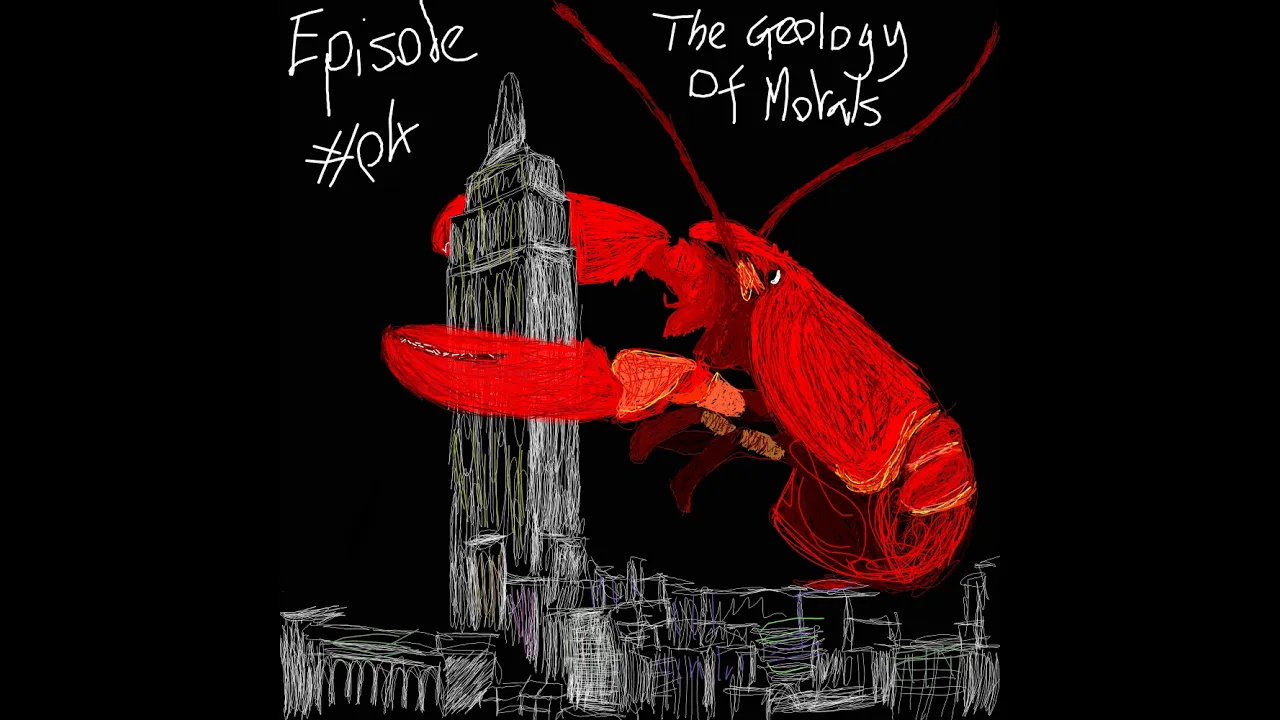
the earth to get to the core and instead of Finding a molten core he finds a sort of the brain of some living creature like the uh the earth is actually some kind of cosmic uh permit crab or something and he basically drives a shunt into its brain and makes this you know that lets out this cosmic scream and that's basically what you know delusional kind of using that sort of heretical figure in their text Um to drive a kind of a shaft down through the structuralist idea of language um he's he's he's he's not
into you know it's challengers as a sort of conceptual persona as we probably call it elsewhere is is not interested in reconstructing histories or stratas he takes he wants to take on the world on its own terms in its totality and he engages with language in much the Same way so he places the convivial and the technical side by size and what happens in this kind of post-structuralist play is that the signifier and the signify can no longer be wrestled apart we can kind of i think this text is often kind of associated like where
it's kind of held up as an example of theory fiction but the point is maybe that i mean i kind of hate that as a term Personally because the theory and fiction are kind of can't they can't be split anymore when where though they're kind of joined by a hyphen the they're no longer you know the theory the theoretical part of this text and the fictional part of the text are no longer you know that which points on that which is pointed to but they kind of become this Reconstitution of a singular sign as a
part of language as a multiple that when added up becomes one becomes its own thing and this is similarly how the earth kind of becomes a body without organs when we explore its depths we have to kind of organize all the dirt we dig up perhaps for our own sanity but in doing so we kind of all we kind of have to be aware of the fact we also undermine the process itself And this is why this chapter maybe that we're kind of going to go into and explore now and i will give way to
my my esteemed colleagues is that you know i guess this is to preface the fact of why it's just dizzying rigging experience because if we were to to approach this text like diligent little readers that we sort of are hoping ourselves to be breaking down its references and movements We would we'd end up kind of losing the movement of it and the force of his presentation which is to say that in our attempts to to render it more legible we'd maybe start annotating it and adding footnotes for every aspect that's not immediately clear to the
average reader but in doing so we'd probably render it even more eligible there'd be so many like uh you know different signposts that it would just become this absolute Mess of some sort of like um pepe silver sort of uh yarn working basement somewhere that would just drive anyone that tried to you know make sense of it insane and i think that's that's what listening to try want to do here they want to they want to show you that that kind of approach to understanding isn't always cracked up to be and that's kind of the
double binds We get this concept of a double bind in this chapter and that's what they're talking about to analyze the content of this text we lose the power of its expression but in embracing the power of its expression we have to sacrifice the lucidity of some of its content and that kind of observation is basically scalable we can apply it to theory fiction on the one hand as that kind of like you know kind of Kind of cleft concept which cannot be understood either as a composite or as a singular entity without losing kind
of the true meaning of its gesture but we can also apply it to the earth itself so who does the earth think it is well what is the earth beyond the limits of our knowledge and what influence does this unknown entity have on our attempts to Stratify and break it down and that's kind of the huge question that they're asking here on which point having set you up for having set you up somewhat short i'll probably defer to you oh gee thanks well i think i i um i think before that before um i get
into the nitty-gritty of it uh i do have this uh as as you'll notice if you refer to the google doc I did put in after mac's introduction five minutes of initial observations question mark so before before we um we dive into it um yeah let's just have a short conversation i like us and i'm actually going to keep an eye on the time here of just like five minutes of just like what did it feel to read this text uh corey if you'd like to Go first yeah okay so i think when sean first
suggested this essay he said like we'll have some fun with this one and like you know i'm an idiot so i thought that what he meant was it was going to be a nice light easy essay to ease me into this project oh a poor foolish child [Laughter] but no and it's not easy at all but it is fun And i think like um you know what matt was saying about the um like you know obviously the theory fiction part of it is that uh by returning to those professor challenger sections as the essay continues
they just keep on bringing you back to this like kind of fun substrate like it doesn't matter if you kind of get lost in all the geological talk um because there's still this other Narrative that you like it's so ridiculous that it just kind of gives you a bit of a breathing room in the middle of all this really dense theory and it like kind of you know gives you more energy to carry on that's how i felt yes that's actually exactly um exactly how i felt about it as well that the the portions where
uh um and we are going to talk about this in a little bit More detail uh later on but the portions where the camera kind of pulls back and it does go back to challenger like tormenting all of these interlocutors uh or like a tormenting this audience with this mag crap is coming out with about um about the strata about epistrate and power strata and coding and decoding and so on Like after like these long like page long paragraphs where it does become very difficult to follow um you do then get the fun bits where
it's suddenly a bit rude the uh um but yeah yes um yeah well you do the and they are and indeed like the phrase i thought of as well it is mo it is breathing room it is almost like moments of mercy from jules and qatari because it is um It it's much more diff it's very difficult it is a difficult essay to read just like an inner plain sense of the word it is difficult to read this essay and the i did more than once find myself just lost in the midst of the technical
jargon that they were using and have had to like much more so than the other things we've read here i have had to sort of like go back to the text Read it through several times with a pencil in hand underlining stuff and then referring to the uh the delusionary dictionary which i have which didn't help that much because like frequently i'll just be like i'll look up like okay let's just get a nice like definition of this stratification and immediately point to me you know to sort of like have the definitions of Like amelia
and assemblage and and so on so when i flip to those and then they become the whole thing becomes a kind of you know paratextual nightmare um so it's really yeah it's a hard work this isn't it uh and just just um yeah i know you've already talked about it but just kicking the ball over to your uh court for a moment just when you first encountered this Reading it what was it like for you gosh um i don't think i even remember um i think that's kind of why i've actually really interested to hear
your thoughts on it because it's it is the sort of i i kind of feel like now that i'm more familiar with it i kind of see what it's trying to do and i kind of feel like it wants to humiliate me it's kind of like this utter like um i don't know it's like i mean what it Always makes me think of and what was kind of making me think of in um in hearing your responses was that you know it it does force you to do that like that you know having to go
back and stop and look at what these different things mean whether in kind of their initial wherever the term is actually coming from in the wider world or how de las and guatemala are using it and It always just makes me think of this maybe it might be somewhat of an urban myth um urban legend rather probably is a myth and legend but um i remember hearing once that uh leibniz was supposedly the last person ever to have like have have categorically known everything i've heard this yeah yeah like like apparently his life like he
owned every Printed book in uh in his had been printed you know in his lifetime like in his library he effectively owned all the knowledge there was to know like to own in his lifetime if that makes sense um and that's kind of interesting that especially i mean that's probably that's something we should say for a further podcast of leibniz influence on Delusionatory but you know i feel like that delusion guttery actually are very aware of that fact that we're you know we're sort of a few hundred years past that now and no one's going
to be in a position um probably not even them to you know be able to actually understand all the words that they're using here because they're they're pulling it from so many different sources and that kind Of tells us something about you know who who you know not just who does the earth think he is but who do we think we are um that all all the knowledge that we've kind of accumulated is is just you know you could never you could never synthesize it all um and i think but i think they find that
maybe quite freeing and so it's like it almost feels like i feel like For me a thousand platters is like a rite of passage now that's how i kind of look back on it but it's like it's like it's ego death it's like you've maybe you've looked at some philosophical history okay here's a thousand plateaus ready to have like your whole sense of that you know things torn apart um and i find it quite useful for that so like that's my I'm and i remember maybe the first time i read it that's how i felt
and it's only now i've come to appreciate that like that's kind of what they wanted me to feel at least at least i hope so they're not just being for the sake of it well because or they are being touched for the sake of it but because yeah i think that that ties into the the theory fiction angle in that um The way that they use professor challenger who is a fictional character as the like narrative frame but then they start to bring in these other thinkers and these like real real thinkers real scientists so
it as a kind of hyperstationary element to the essay like if you're not familiar with arthur conan doyle's work then maybe professor challenger is just as real as these other people that are Being referenced in the endnotes um so i think it's like it's definitely them it feels like it's them showing off in a lot of ways like here are all the books that we've read and we're not just gonna dryly reference it in this essay we're actually gonna like put them in the room with professor challenger yelling at each other Just because we're going
to have fun and we're going to challenge you yeah i also wonder there's maybe this other side to it that if even in in in trying to encapsulate so much science and other kinds of um uh forms of understanding it kind of actually like roots back around and becomes an almost a cultive text again um because because there's i mean one thing i've actually always kept in mind In reading this is that um my i should say that all of my knowledge of this essay and any like entry point i've found to it comes from
robin makai who did a seminar on this this chapter a couple of years ago and i remember he said something when he studied it when he was at warwick university being taught by the ever infamous nick land and he shared this anecdote that Was like them nickland apparently always insisted the best way to read um well not just not just this chapter but the entire book was to kind of take the last two words of every paragraph and apparently if you do that to the german the ideology of morals you get third eye will produce
necessary foundation through touch we sense differential speeds to come which is incredibly lucid for something That sounds like like like you can treat this text like the i ching almost maybe like you know it's it's got that kind of strangely mystical element to it and i kind of really like that about it that maybe it kind of exacerbates that whole theory fiction vibe that despite everything it's kind of thrown together there's so many different ways of approaching it and reading it and it's Probably all about as valid as each other right so i'm pressing ever
onward and indeed ever downwards um i'm going to talk for a bit about stratification because a great deal of what this text is dealing with is um the geological like the actual literal scientific geological process of stratification And then applying the the concepts and the imagery uh and and just like the literal literal non-metaphorical processes of stratification to different orders of strata for wanting a bit it's better for want of a better term rather so um this is going to be a little bit exegetical uh i i i'm afraid i am going to be just
Trying to wrestle with actually what is it that's being uh conveyed in this text uh for a little bit so the letters of qatari or rather challenger begins with the earth which they describe as the deed territorialized the glacial the giant molecule which is a body without organs uh quoting from them this body without organs and it's interesting that they say A rather than the and this rather than the this body without organs is permeated by unformed unstable matters by flows in all directions by free intensities and nomadic singularities by mad or transitory particles and
upon this earth occurs stratification which they describe as being both beneficial And unfortunate and the listener might remember our first episode when we talked about the body without organs and which and again you know the essay that we talked about there is from a thousand plateaus it's from um how do you make yourself a body of our tokens which isn't easy i will say easily easier essay than the geology of marvel's but what you might remember from this Is the um you get this um [Music] uh i will say dichotomy actually this dichotomy between the
strata and the body of our organs or the plain of consistency uh and th however strata are ambiguous i suppose how the body without organs is ambiguous as well because one can't help but live on the strata for at least some of the time and there are worse Fates than staying on the strata as well the the pursuit of the body without organs um as as we covered in that episode can be destructive in in more ways than one uh diluted guitar i go on to say strata are layers belts they consist of giving form
to matters of imprisoning intensities or locking singularities into systems of resonance Or redundancy of producing upon the earth of the mole producing upon the body of the earth rather molecules large and small and organizing them into molar aggregates strata are acts of capture they are like black holes or occlusions striving to seize whatever comes within their reach and we can and i think that you know we should We we should take what's being discussed here very literally they are talking about geology here they are talking about the earth itself and how the layers upon the
earth are formed when we dig down into the earth we encounter layers of artifacts and we also encounter the depository layers of inhuman natural Processes and mechanisms and what's interesting as well here is by digging downward we encounter the past right the further down we go the deeper into uh the deeper into time we are traveling and conversely uh the past creates the future by a building up of the strata of the layers and what's significant as well is that the layers aren't separate from each other each strata Is the substratum of the neck strata
and again like i i am aware i am just like reading long bits from the text here but i i honestly don't know i don't know another way around this because this is so [ __ ] difficult um quote the layers uh the layers are the strata they come at least in pairs one serving as sub stratum for the other the surface of Stratification is a machinic assemblage distinct from the strata the assemblage is between two layers between two strata on one side it faces the strata in this direction the assemblage is an inter stratum
but the other side faces something else the body without organs or plane of consistency here it is a metastratum And as well as this the strata are all in a state of communication with one another that they borrow from one another they draw the molecular material out of each other and and again what the lords and grotharia tell us is that um although that they although they borrow each strata like borrows molecular material from the substratum and the substratum is in its own right it is its own strata There's no guarantee that the molecules will
be the same uh in this process of drawing up from uh from underneath and i think there's a way of um and matt you used some very good metaphors of talking about structure earlier where because this is an at least this is up to the lizard guitar would actually like puts it here we should think of stratification as like their Direct challenge to structuralism and and i'm dealing with this perhaps like a somewhat superficial level here because um oh that's just where where i am with this at the moment but if you think of the
term structure in the very literal sense structure it implies and establishment and distinctions into parts where foundation and floors and walls windows ceilings They are only themselves for as much as they're themselves and not something else the window isn't the wall the the floor isn't the ceiling and so on uh but the strata on the other hand are a ceaseless chemical process at every level and within every with and within every level as well within every layer and and i am and and people who have closed read this essay before will Realize i am skipping
over a lot of the minutiae of of um how they actually describe how the straw to operate and how they communicate with one another that is just because i i i'm sorry i don't get it like a lot of it does just it's just so opaque to me still and i spent i spent today kind of going over again And without much head unfortunately um but i think like there are things that we can draw from it all the same without without getting too lost in the minutia and um and and one thing that really
stuck out to me throughout is and again to refer to um our most recent episode the last episode on our desiring machines uh one of the points that they make very clear in that essay is that they are very very they Challenge the notion of clear distinctions between uh the natural the human uh between the natural and human and between the human and the artificial and instead they describe um in the schizophrenics walk this kind of continuum of desiring machinery of desiring production and how how there aren't excuse me how there aren't uh essential breakages
between these different realms At least in my that was my reading of it excuse me and i think we do see something similar here uh the communication between pastrata and the orders of strata in front of a better term because they do distinguish between the geological the organic and the human and but at the same time there is continuum between them at least in my at least in my reading And if we see strata as instantiating the movement of time we also see a profound continuity of history with itself with history communicating with itself with
with molecular materials being transmitted through the strata up and up and up uh they tell us as well in like very typically provocative to learn language the strata are judgments of god Stratification in general is the entire system of the judgment of god but the earth or the body without organs constantly eludes that judgment flees and becomes uh de-stratified decoded de-territorialized and as i said like when they talk about strata like those although they are they're using geological language uh but they and they are talking about it very literally i'll talk a lot of this
is them as philosophers Talking about geology but they do clearly have their like explicitly have their eye on the stratification that exists in the human order although they project that term and they say it's not really about the human it's about the novel um distribution of content and expression and that's something else we're going to get on to later in this episode but in terms of thinking about how can We like maybe understand a good example of stratification and especially this idea of this kind of like continual communication of the deeper strata moving upwards uh
this this leads me to a micro section which i haven't titled sean's tenuous anecdotes about north korea um [Laughter] so there's a reason so like um like North korea is fascinating right like and the reason why it's fascinating is because it has all of the aesthetic trappings of stalinism but also it's clearly not stalinism is it like there's something like it it's it's like stalinism that's like been left out in the sun too long and it's gone off like it's it is it's very weird and it's and it's developed Um that's actually a really good
metaphor really is because like it's grown cultures on it like there's things living on this like style of this strata which clearly are distinct from stalinism but are related to it all the same right and the and what we get with north korea right is you it's kind of like the deepest strata you have is korean Nationalism uh in the context of the anti-japanese anti-colonial struggle right let's call that strata zero and then atop that strata uh and each strata is a substratum from an extra so the top bat strata you get this this new
strata comes along which is the stalinist strata and that leeches up molecular material from the strata beneath it and then In turn the next strata atop it leeches up molecular material from that and that's that's the that's the dutch a song gun structure so so when you look at north korea and it is worth like pointing out if this is just a little bit anecdotal korea no longer like even like constitutionally defines itself as a marxist leninist state pursuing Communism like those aren't words they use for themselves anymore they wrote all about their uh constitution
they like that like the ideology of north korea is juche which means like self-dependence self-mastery or tarki and and song gun which means military first like it's um although we could also have a conversation about why it is the Like western media insists on describing north korea as a communist state uh which it doesn't even call itself anyway um but so but but at the same time if you do look at north korea you can identify kind of like these different molecular flows like rising up through the strata like although like it's not soviet-style communism
you can still see where it was you can still see Those those flows still moving through it but in the same time you can see like a preponderance of that deep deeper layer of the korea the korean nationalist layer uh like um transmitting its material upwards and and i think like and and especially this notion of kind of like uh continuity with the past like we see about like this deep historical layer in uh In north korea of this you know absolute assertion of its national distinctiveness against the hostile foreign power the japanese the americans
whatever like um you see this deep historical layer is still influencing everything that happens up above it and is actually kind of acting to recode and re-territorialize all of the codes and territories that Lie above it and the uh and i think we can like use this kind of language of the strata as a way of kind of like encounter of accounting for why north korea is as weird as it is and why you have this kind of like this um chemical compound of nationalism and stalinism as well as these like totally idiosyncratic elements that
are completely unique to it like Like the cultism around the kim family and so on and how these are all how would you communicate with one another and not necessarily always communicate hierarchically with each other how they do laterally transmit material between each other and this is as well as this you know this is um all the way back to nietzsche who is like such an important influence on de los Like i think it's in the gay angel where he's where he well he's talking i think it is the gay science where he talks about
sort of like why why binaries are dumb and he's because one of the things he points out is you know so like well what if like what if history or human or humanity or whatever isn't binary because most things actually aren't like if you know Anything about chemistry for instance it's not like you have like how chemical reactions work it's not it's not binaries that have nothing to do with it it's a cut it's a multiple confluence of different distinct factors coming together and reacting with one another to produce a distinct and unique kind of
chemical event i just wanted to say like i think what you're saying about Stratification as an alternative to structuralism i think that could be a really interesting uh i guess lens through which to view history or any number of things because i mean structuralism as you were saying it um it implies a sort of deliberate planned like you know it's a structure so someone planned it someone built it someone thought about how it was going to be put together Whereas the stratification suggests an accumulation over time so one of the things that um they say
in the uh essay is that um it's only the uh outer layer of the crystal that can be deterio de territorialized because it has to come into contact with something else so i really like the idea that like um each time you have one of these strata It's sitting sitting against another strata and yeah there is a leaking between those two sections and it's like the the leaching the transfer the communication between strata it's unplanned by definition it is just organic so instead of saying like i'm going to take this out of that idea or
that piece of history or whatever it's more about studying it And seeing what it offers yeah and and and although i like i i talked about north korea there but like you could just as easily talk about um and britain with like you know sort of like how you know this like deep historical lake you know sort of like you know monarchy and aristocracy is still sort of like despite their you know their antiquity are still like Very like prevalent like overwriting factors at like any level of like meaningful so like political life and the
united states which you know like i think i like by one of my pet theories is that most of the pathologies of of of of united states are explicable if you view it as like a chunk of like 70 of like a 18th century enlightenment Thought that got broken off from the rest of um continental sort of like thinking just like implant like like a crystal just like implanted in sort of like a chemical solution and just left to grow without other factors coming into it which is what you end up with like the like
the strange um absolute individualism of the american ideology uh and the and Again you know something you can be extremely little of this you know the fact that the american constitution is the only one in the world that has never undergone a revision like it's it's had bits added to it it's never been revised which is obviously just like incredibly unhealthy for a democracy but anyway uh matt matt you had something you wanted to say yeah i I kind of really like that idea of um i mean i think that's the maybe there's the one
thing that i kind of wanted to pull out the other side of this maybe is that there's it's not i mean and it's probably it's one way of actually setting up before i know what you want to talk about next but um when you were talking about north korea and i think it's like a really it's a really interesting way of trying to Understand the development of our nation that actually makes a lot of sense but i guess then part of it is like how does that sort of development work at the level of ideology
like and i feel like it feels it feels very similar to how they how they should say dollars and groceries think about like capitalism right when they talk about these things like um they talk about how you know i think Maybe if it's if it's probably in anti-odipus but um that you know it's it's full of contradictions but the contradictions don't solve anything they that's what you know that's what drives it and it's like that in itself is this kind of you know that's these these straw coming together they might not actually make any sense
next one another but it's kind of that meeting and that kind Of fishing where where it's precisely the fact that they don't connect and blend together also you know perfectly that you know then produces a new layer and then we kind of yeah you accumulate stuff but i also think there's like this flip side to reading it as again it kind of comes back to the fact that this essay is at this chapter rather there's like a sort of a humiliating read I kind of think like it's also trying to humiliate structuralism like you get
this it kind of reminds me of um zeno's paradox um or what i think what he calls his dichotomy like pre-socratic thinker who has this basically whole way of like um it sounds kind of ridiculous but it's kind of fun to think about where he basically puts Forward the notion that there's no such thing as movement um you can't you know movement is impossible and the way that he argues this is like he uses he actually uses like a um uh sort of it like the hair and the torts and the hair sort of like
a vibe but instead of a hair it's achilles and they sort of say you know well achilles is the fastest runner and and Our tortoise is very slow so we're going to give the tortoise a bit of a head start and as we kind of like try and understand how this race is going to run well you know we know that the torch is going to set off it's probably going to advance like a meter and then achilles is going to be able to get up to where the tour started but then when you start
actually breaking if you try and break down Both of their races and hold them side by side you kind of end up breaking it down to smaller and smaller chunks so like before and i guess i mean it's it's it's probably not worth actually explaining the whole xenos paradox but it kind of feels like what they're doing here is somewhat similar that you know that if it when they're digging down into the strata Or whether it's the losing guttery or the structuralists in general in digging down to the layers of meaning that constitutes society you
know what are they trying to get to what's the if we're trying to get to the core and that's the kind of goal we're going to get from a to b but then you kind of say well well but first before you get there you have to go through you have to go through this store and you have to go Through well this substrate and that's sub substrata and the way that zeno has it is that you know you can never actually get to the end because you end up like just dividing the journey up
so you go well first you have to get halfway but if we can get halfway actually have to go according to the way and before we get a quarter of the way you have to go in out of the way and then and just so on and so on and so On so actually you don't end up moving anywhere and it says sort of like play on on physics and it kind of is this quite you know it's it's a kind of really influential philosophical point of the priest of critics but it's kind of also
like just a bit of a humiliation of how we end up studying things like i guess for any if we have any phd student listeners i mean the one thing i always hear from phd Students is the kind of terror of not of not being able to know to read everything and that you there's always another book to read and that kind of actually is what you know it stops you from actually getting anywhere of making any kind of final point because you feel like you have to get the totality of the thing but i
feel like that's kind of like as much as julius and kochari kind of are doing that they go into the Levels the the depth of levels of language and trying to fully explicate their geological thinking it kind of gets in the way it wasn't just like you know when i'm very aware that you sort of you're adding these points of um of self-deprecation and your explanations shortened but i guess again it's like you know i don't i don't i think it's it's it's not it's kind of the point like the The fact that you can't
understand it all in one go is because i almost feel like um is not meant to and i think you've made an actually a very diligent attempt to do so and again very very clear but i think there's always kind of like the the flip side of it right is that like when we try and actually fully understand the text we miss the flow of it right that if you actually just sort of if you try And how do you think that flow from a to b without stratifying it into half quarter eighth 16th whatever
um that's kind of like the thing an issue here that they're kind of both like they're actually going through the task of of uncovering all the smaller fragments of that knowledge and at the same time being like kind of demonstrating why it's so irritating to do that like in Actually going down to the level of detail you kind of miss the bigger picture that we kind of want and want to try and understand and i guess it's like that they have those two contradicting points that kind of held together and i guess that's kind of
like you know i think that's why the example of north korea is a good one right because i guess in the level of ideology in complicating the development of the Country in that way there's kind of no way to fault it you can't get back to any initial point where you're like well you know this is some sort of moment that like that delegitimizes it you can't do it because if you're going to be like the sort of diligent political historian you kind of have to go through the complexity of the whole thing and it
stops any sort of Any sort of actual task from taking place leotard has the same critique of marx marx takes spend so long trying to actually get the total picture of capital he'll never reach the end of it he traps himself in capitalism by precisely trying to describe every aspect of it and i i i don't know i kind of maybe feel like that's That's kind of what's going on here but that maybe is the flip side to like this i don't know maybe that i i hope maybe to be my podcast and due diligence
that maybe sets you up for i know what you sort of plan to talk about next but maybe that's something that we can sort of bear in mind as we go forwards yes yeah that does does help a bit actually although like again i'm just gonna go back into exegetical mode a Little bit here but yeah we should like i feel like that's kind of what i want to say right i want to sort of say like it's kind of not the point but actually it is like it's not it's not to denounce either side
like what they're doing is they're trying to they're trying to do both and they're kind of forcing us to do both to do the exegetical work at the same time be like realize how it holds us back like and Yeah anyway exactly so and and indeed you know the language they use it because like the next point i've got on here is talking about um double articulation uh as they put it but um stratification proceeds by a double articulation and this is where we get the infamous line god as a lobster or a double pincer
a double bind eat your [ __ ] heart out Jordan oh thinking exactly the same thing uh double articulation is something so complicated but delusionary only speak of it relatively in terms of particular examples and not general concepts and again just going to read a chunk out here the first articulation chooses or deducts from unstable particle flows metastable Molecular or crazy or quasi-molecular units substances upon which it imposes a statistical order of connections and successions forms the second articulation establishes functional compact stable structures forms and constructs the molar compounds in which these structures are simultaneously
actualized substances in a geological stratum for example the first articulation Is the process of sedimentation which deposits units of cyclic sediment according to a statistical order flesh with its succession of sandstone and schist or skist the second articulation is the folding that sets up a stable functional structure and affects the passage from sediment to sedimentary rock uh so what isn't being discussed here is a Distinction between substance and form exactly because substances are already formed substances are formed matters forms again quoting here forms imply a code modes of coding and decoding substances as formed matters
refer to territorialities and degrees of territorialization and deteritorialization each articulation has a code and a Territoriality therefore each possesses both form and substance it's my own words its forms and substance all the way down to the body without organs the point is that substance only takes meaning in the context of the strata beyond or beneath the strata is unformed matter Which is not sheer substance or pure substance it's it's pre-substantial it's the body without organs um to have substance is already to be coded and territorialized so what we see here is um on the one
hand like what we see here is the less equatorial placing human social phenomena in the context of it like this greater natural cosmic process but there's also like this deep Complication of any attempt to as you put it really well then matt in the attempt to kind of like cut your way down to the bedrock of me or of of of meaning because no matter how far you cut you never arrive at uh at you know i'll be atom at that the um the uncuttable final point of beginning because no matter how far you go
into the strata it's it's always form and substance it's All it's always something to which a form has been applied no matter where you end up and over and eventually culminating at the bottom without organs but the bother about organs is not like the final level of strata it's something kind of like cata in my understanding of these it is a categorical other it is the outside it's it's it's where Um territoriality and code goes to die almost right like it's it's um and again you know this is uh although in like uh at least
i remember my like lay reading of their lives in pretoria when i first encountered them like it was like uh i had this uncomplicated picture of that sort of like oh territorialization is bad because that's fascism and dear territorialization is good because That's anarchism or something like that but like no it's it's it's not it's not as simple as that and again to go back to our first episode to go back to their essay how to make yourself a body without organs like you you can just like completely destroy yourself by pursuing the body without
organs like you can just you you can just uh you won't Necessarily survive that and you know but you know begin and i s and that essay begins with it was like litany of like fail failed bodies right you know sort of like a biscuit skitter body of a drug addicted body your masochistic body and so on and you know there's also the warnings that um the pursuit of deterritorialization can result in you just turning yourself into a kind Of like cancerous fascist as well like you can you can go too fast or and indeed
both too too slowly because they also state that um maximum deceleration is always also a way of obtaining the body without organs um ah god i did have some like more bits here of like trying to do kind of exegetical stuff talking about like epistrate and parastrata But i'll be honest like as indeed i have literally written in my notes this bit is really hard but i don't think i get it um well related to related to substances and forms there's a section that i quoted that i think is uh quite close to one of
the quotes you had um since substances are nothing other than formed matters formless substances are inconceivable although it is possible in certain Instances to conceive of some substanceless forms and i just love that like it's um one of those things where it's like conceive of a substanceless form it sounds like one of brian eno's oblique strategies it's just like it's a cure it's just pure idea fuel i love it like just you know like have a have a couple of drinks and spend a lazy afternoon trying to Conceive of some stops and still spots like
we'll see what happens i think if you drink enough i think your body naturally produces substances but let's form the substances i don't know but yeah although i have i don't know my brain did just immediately produce the thought there's like for god's sake brian some of us have like have work in them um yeah so uh actually no i think i i Think i am actually going to just sort of like come to sort of like uh to let matt um pick up the thread there because i i think i think we i think
i have reached my own border without organs though in terms of how far i think i can go with this i do really like i mean i like the or i think you i think you've done a really good job and it actually made me think of um that this is probably gonna i'm gonna Like show my hand in doing this again for a sort of secondary uh detour on my own part i've been reading a lot of the greeks with the groups um uh which i've never bothered to do before i don't know i
got like really i got really into priests of cracks and for some reason for the first time but anyway i was actually reading for my sins plato's republic Today like in the midst of actually doing the sort of the the uh the geology of moral stuff and actually found it sort of maybe quite clarifying on this point or as if to say maybe what doesn't qatari doing in this sort of endless in that kind of humiliation of structuralism they're kind of like showing how um how complex or how more complicated it's The kind of relationship
that plato describes isn't it i guess to clarify that like in the in in his allegory of the cave right which i guess most people are it's probably one of the first things we always sort of come across in terms of philosophy like you know we're all the the sense that if people are strapped to a wall in a cave uh you can't move your head you see shadows playing on the wall and a light Source that's making them happen you don't really know any you don't know anything of the world around you so you've
built up your own kind of language to make sense of what's before you and um socrates via plato is kind of saying that um well you know there can be someone who breaks free and they kind of escape into the light and when you go out and see the world Outside and see the kind of manufactured forms that are producing these shadows it can be this like you know that's you know that well that's when you see the truth of things but actually that can be a really horrific journey um and i guess the one
part that i kind of didn't actually realize that going to in such detail having never read it firsthand before is this whole thing of like um uh you know that it could be difficult To go from the dark to the light and it can also be very difficult to go from the light to the dark when you when if you don't have this sense of uh the the that kind of journey that transversal journey between worlds and understandings can be quite traumatic and but they kind of say that you know if if you manage to
escape the cave and see the world's truly is and leave and go into the light That's not the end of it that you're then sort of obliged to go back into the cave and try and you know show more people what's going on around you and kind of like i was i think the baju kind of makes the point that that's you know that's politics you have philosophies kind of understanding things but the political maneuvers when you go back into the cave and i kind of feel like that's the Similar sort of thing that they're
saying with deterioration and territorialization you know we're we're all kind of can be territorialized in strata and sort of stuck in place and to deteriorate it could be this kind of horrifying thing but i think when people talk about delusional reading maybe like we lose that later point that plato makes right that you by all means we can sort of i mean we should well yeah as you kind of said Sean we shouldn't fetishize the territorialization um because it can it can break you but if you do manage to kind of get there and break
yourself free you're kind of obliged to then return to the territories you kind of have to show others how it's done and how to do it well um and i guess they're kind of like they're that i don't know how exactly they're This their project of a thousand platters maybe relates to that um it doesn't feel like they're being the most responsible to territorial isis because it's gonna drive you mad but i think that's kind of that kind of is um i think what they're at least trying to do is show how we can at
least engage in that kind of process In the present sort of you know post-structuralist post-modernity even that when we have this whole you know what is it to to to leave the the you know plato's cave in the 21st century we were about two and a half thousand years on from that kind of allegory and things are you know it's kind of the leibniz point again it's it's not as simple as As figuring out that this object is casting that shadow um we're kind of all stuck to dif in different caves with different shadows it's
a different you know we can to actually get the truth of things is kind of the hardest thing in the world but i think that what they actually end up doing here which find really interesting is kind of showing how we can nonetheless kind of have fun with that process you know like what When we actually engage in this kind of um attempt to do the impossible right which i guess is unpick content and expression as they call it even if we fail absolutely um there's something to be gained from the process or even sort
of the the entanglement and i guess the one thing that i wanted to um i mean this i it probably should add me up front to that this is something that I actually have struggled i do continue to struggle with myself in this chapter where they they introduce um helmshlev or i don't know how to pronounce his name i think it's lev and he's kind of this um you know if he's structured or post-structureless but he comes after sorcerer and sorcerer if we sort of say in the beginning has this the signifier and the signified
will Uh helmsler kind of complicates that relation somewhat and it's not just signifier and signified it's content and expression and there's the content of expression there's the expression of content there's like a further layer that he has he adds to that kind of understanding of the sign and i've never managed to get my head around it honestly there's graphs that i've seen and diagrams for trying to Explain it but i think the best example that i have in in approaching this chapter is maybe magritte's really famous 1929 painting called the treachery of images which everyone
else probably knows as you know this is not a pipe painting and you know he says he said he paints a picture of a pipe and he says in french pipe or whatever it is he says it's not a pipe and he's right we know it's not a Pipe it's not an actual pipe but we kind of understand that it's a painting of a pipe and that signifies a pipe all the same so we know in kind of in that sort of treachery he's he's he's basically demonstrating that fundamental structure is the point right that
this is this this is the signified it's not the signifier but i think it also demonstrates how far down That kind of thinking goes so what the painting does then is it kind of highlights that semi-automatic relation it kind of makes us laugh in the process but we kind of get caught up in the slippage actually so the signified a pipe is kind of impossibly torn from its signifier a painting of a pipe but there's also a further tearing that Results whereby the word pipe is also still present and that's made just as ridiculous of
the other two so we're kind of aware that the painting of a pipe's not a pipe and the word pipe's barely a pipe either so what are we and there's no actually not any pipe presence so what are we even talking about are we just kind of driving ourselves mad in circles but what magritte kind of effectively Deploys i think is that is it in sort of deploying two signifiers for pipe simultaneously without the signified he kind of shows how that kind of paradoxical relation can be made so clear and yet nothing changes nothing the
world doesn't fall down around us we can have an essentially a nonsense painting a surrealist painting and still sort of gain some sort of Meaning from it we kind of gain the meaning of it of its we get we get a sense of it's nonsense if that makes sense and i guess that's partly maybe how we can understand that kind of double bind double articulation this is a there's a painting that is at once expressing sense and nonsense and i guess what is what sort of saves it from like falling in itself Is that we
can kind of appreciate the painting's content which is this it's kind of cascading mess of a signifying relations and basically it's sort of deterioration but we can also appreciate its expression it's all the the aesthetic qualities of the painting as a painting outside of the world kind of in its own frame so in that sense it's kind of like it's It's d territorialization territorialized and you have that kind of feedback loop which i think is what doesn't guitare are calling in this in this chapter the plane of consistency so what allows us to appreciate the
relationship between content and expression is precisely the sort of the innate distinction from one another that's nonetheless dependent on the friction Between the sort of disturbs us and we can kind of frame that maybe in geological terms like they do we can say that magritte's painting erodes meaning erodes the meaning associated with each signifier but the painting itself sort of provides space some sort of boundaries for sedimentation to occur so i guess like and i kind of ended up actually getting really caught up as this probably like just happens in the Process of reading this
chapter like with the [ __ ] like what is sedimentation and i guess i kind of understood it in my head as just like when like if you have sand in water sedimentation is like what happens when it all sort of settles on the bottom but then i kind of clicked on the wikipedia page for it as you're kind of bound to do and then they also talk about like Centrifugal acceleration as if to say that you could actually get sedimentation from shaking things up so much which which because i mean i'm not a scientist
never really thought about that before and that kind of maybe just further demonstrates the sort of paradoxes and contradictions that kind of happen and are on display in this chapter like we can laugh at the other the utter crisis of meaning on display where the Content and which maybe liz and kotari are using to describe they called the abstract machine i'm not sure if that's correct or not but it's kind of my sense anyway and because it's contained in the boundaries of the painting or expression or as they put the plain of consistency that's kind
of yeah we get this double bind again and i think maybe that's it's Worth pointing as kind of as sean's done a few times back to our first episode when we were talking about the body without organs i think we discussed like what spinoza calls nature naturing and i guess that's precisely what's occurring here you know nature naturing is like it sounds like a tautology but actually no it's you know Nature is maybe the content and nature is it is its expression and if we you can't really cleft some sort of the distinction between the
two but it's there in some sort of abstract sense and understanding that we can't really separate them is kind of like i think but then kind of all i don't know i mean i'm starting to get tied knots around myself anyway but i think maybe that if to at least to end On it may be a sort of a a buoyant and maybe joyful sense of defeat i'm trying to preserve for my own sanity if we're trying to struggle to like follow the twists and turns i kind of always fall back on the obstacle this
is not just an observation for this book but also a book that um i read in the reading group um uh uh or a psychonopedia by resume gustani which is very much kind of Post adolescerian book very much like a thousand platters i think in its own way and the way the best way i think of understanding both of these books or and lots of others like them that seem so contradictory and don't really have a sort of settled internal consistency other than the fact that they are books like that in itself is that the
plan of consistency is the pages the content is just doing what it wants To do but i think that it's you know it's it's it's doing what it's the point is i think and i kind of want to pause and emphasize it is that this book like others is doing rather than explaining what it's trying to describe so it's not just it's not just saying here's what i think you know it asks the question who does the earth think it is rather than just explaining It to us it kind of it it it shows through
like this wild ride through the earth sciences in all of their glory how impossible that question is to answer it doesn't explain that we don't have a 10 sense of the totality of the earth it does it by kind of humiliating the actual language that it's trying to deal it like deal with it kind of It's it's a self-undermining con contradictory text that actually i think is really when you kind of get a sense of what it's trying to do it becomes all the more clarifying for its confusion it's you know it's it's demonstrating its
thesis through the very explication of its thesis it's it's it's written it's kind of like like i always talk about cyclonypedia as a bad book If you're going to judge it on the on the relative to other books it's a bad book but it it it the point it makes is like it doesn't want to be a good book it doesn't want to be stratified into that kind of like you know if not the judgment of god the judgment of some literary critic it wants to do away with judgment and just have the intensity of
shifting from one place to the other and If we don't if we don't get anything more out of the of this chapter than that i think we could at least sort of clout claw back some sort of win at least that's my feeling i think that the title of the essay works just as well if you read it in a sassy voice like who does the earth think it is totally yeah it's it's there's so many ways you can read that question and i think they're all valid Like no matter what tone and attitude then
they should all go here what well actually this is um maybe a a little bit uh tangential of course it's tangential there's a podcast it's half past ten at night now but um just before we get down to your section corey like one thing that um uh you you already mentioned i think offhandedly earlier how um it's a sign this is a scientific Or text that uses scientific language but might as well be an occult text and one thing that um has reminded me a little bit actually is um because i i've been reading um
idris shah's book on um sufi's at the moment called the sufis and one of the things that um shah kind of like states like repeatedly through that is that um there was no point him writing a book About sufism because sufism is something that can't exist as like a written express teaching it is pure it is only really existence as this kind of like experiential relationship with uh with a with a shake with a master and so this is kind of like strange feeling almost reading this book that you become at least this is how
i'm feeling about it at the moment But developing this awareness that sean might very well be just like lying to you um but but that being the point really that sort of like because he's he's being quite open with you about the fact that there's no way that he can express um the sufi relationship or the sufi experience to you in this book and there's almost this feeling so so why is he writing this then like is He is he lying to me about what sufism is like is that part of this and and that
the thing is with um a lot of occult literature actually like they would often like literally genuinely do that they would have um we'll call their blinds written into them which would be passages which were deliberately intended like mislead you if you weren't In direct contact with a master who could guide you through it and so there is this um this tradition like in in uh at least in esoteric literature of of underminings of the written words in that way of undermining the actual book itself uh deliberately as a way of kind of of and
in so doing there's kind of like a way of expressing You know sort of like um you know the reason why you went to this book to read is because you wanted to understand this mystical truth and the book tells you up front well of course you can't actually understand it by reading this book but you press ahead and read the book anyway event almost feels eyes at the fact that you slowly come to realize that the book is actually just lying to you about [ __ ] um because even though it's been very Upfront
about the fact that sort of like you won't get that far by reading this uh you can only discover the mystery at the heart you saw like by following the path of a milestone or something like that but i i don't i don't know it is actually fairly tangential no no i think that's that's that's i think that's that's the brilliant way of thinking about it like because because it's that's that's Kind of what i've sort of wanted to get across in the way without being like it's a way when you you've said it in
a way that i didn't think i could without sounding like a smoke [ __ ] like because it's it's like this is a book that's it's it's it's a post-structuralist book about structuralism there's so much structuralism in here to the point that it shows you how like how we need to get beyond structuralism Like it's it's it's sort of it's the lie is that if you try and actually do a structures reading of this text you just it's they they want they're going to drive you mad and they want to you're you are you have
you have been got like if you to to kind of get the flows of the book is to kind of be on the joke that is this is so structuralist as to as to Necessitate and move away from it which like i think that maybe they're trying to do right they're trying to they're trying to write an entire french tradition out of itself by showing how ridiculous it can be um and i think that's i think it's you know that's totally i don't it's i guess that's yeah i think it's totally like that kind of
esoteric reading of the book i think is perfect i think that's totally what they're trying To do um but they're probably actually trying to doing more than that too but i think it's a really strong undercurrent that doesn't get said enough because people want to try and pretend you know like sort of say well no i get it but no actually yeah probably you're not really meant to like if you get it you're probably like you're the person They want to actually frustrate the most well that last night i watched the first episode of adam
curtis's new series um can't get you out of my head and it sounds very much like um the discordians it's like they they made this completely ridiculous conspiracy theory about the bavarian illuminati because they wanted to show how ridiculous conspiracy conspiracy theories are and of course the illuminati becomes the Most well-known most often recited conspiracy theory of them all um don't completely completely backfired in it yeah i think that's that's that's a large part of their whole well of their influence too i think that's maybe even i think a lot of us people that do
eagles guitar are very aware of their successes like the cciu and i guess it's similar sort of thing there's a that i Know a lot of people do take it very very seriously and there is a lot of serious sort of like thinking in there and at the same time like you kind of to actually separate the joke from the actual point being made isn't is is far from simple but i feel like there's a definite undercurrent of that same thing and i think i mean we talk about a bunch of things where we where
That they have there's been monstrous children born of this kind of enterprise that's um sort of yeah it totally undermines whatever it was trying to be achieved in the first place but yeah that's what happens when you play with this kind of post-structuralist fire i think yeah so going back to like the form and expression i think that kind of that ties directly Back into the theory fiction uh element of the essay because my thinking is that an essay about content and expression seems very deliberate that they chose to put that into a narrative framing
device um you know the the essay itself worked as a sort of made a metaphor for the content of the essay right i guess i should say the expression of the essay taxes made a metaphor for the content um It's like they they used a form of expression that brings attention to itself and that reinforced the content of the essay to the reader and um i think that had to have been deliberate and um yeah because for me as a fiction writer and a fiction reader more than a theory reader it was the metaphors that
i picked up on as Having the most meaning and everything about the stratification pretty much went over my head but there are a lot of the other metaphors that worked for me there was one section in particular that reminded me that this book is one half of capitalism and schizophrenia quote here the shock of the hammer and the anvil broke his arms and legs at the elbows and knees which until that moment He had not possessed in this way he received the articulation specific to the new human form that was that was to spread across
the earth a form dedicated to work his arm became folded with a view to work um and i just loved that like those kind of um metaphors that they add throughout the um throughout the essay about like the Territorialization of the human body those all really jumped out of me and then interestingly you see a deterritorialization of challenges body as the as the framing device kind of carries forward um like first of all we see a perhaps slightly over the top man giving a lecture but um the students see his authority challenged uh the lecture
becoming a puppet show a Shambles and then he insults us into a lobster it's um yeah he becomes deterritorialized while the audience watches it's um yeah it's it's both ridiculous and fun but also again he's just reinforcing the messages inside the essay oh and the other thing i wanted to mention um that it reminded me of a recent Interview with mackenzie walk that i read where she was talking about theory as a literary genre so yeah again tying in the the theory fiction element and the theory element i just really like this about theory in
general and so what she said is um what's the art if i can say that what's the literary dimension of writing theory it's a genre of literature marx is a Literary genius we sort of lose track of that creating language to describe new situations but in ways that don't lose track of their genesis and genealogy to write theory as a literary genre to tackle that rather than recycle these terms we picked up from the great famous names and i feel like that's possibly a huge part of Duluth and glottary's work is um re-territorializing these these
old names and concepts and creating entirely new ones i think this essay in particular and their work more generally would be a great example of theory as literature as the simply work discussed yeah i think that's that's super important to um does especially and i think this is something we even entertained Maybe discussing on a future episode but i always just think that the last book that dillas wrote before he died was um essays clinical and critical where he quite literally tries to make that sort of distinction i mean he discusses i think in his
book um uh coldness and cruelty uh which is like an intro a long introduction he wrote to um venus And furs and he talks about the strange relationship of how um masochism is a kind of pathology is born from literature and how literature crosses over into all the critical crosses over into the clinical um and i feel like that's precisely the sort of like transversal relationship he wanted To encourage and i think that's we sort of see the other side of it here where they're trying to like do almost like cut-ups almost like take all
all these different threads out of very technical language from the earth sciences and produce a new challenger story out of it um is yeah i think it's i think it's probably one of my favorite things about their philosophy actually it's also like what makes a lot of it so difficult half The time but when it's it's it's a truly like creative endeavor for sure yeah and uh one thing that like very specific point to mention i want to mention is the fact that um like at the end of this the at the end of this
essay they are just um quoting at length lovecraft which i like despite which i was embarrassed to realize that i i didn't Know like up until this point that deliza guitaree like had red lovecraft because i knew you know i knew they loved american literature and read all sorts of like weird crap like that and obviously i knew about crafty and influence on uh ccru and all of that but i actually didn't realize until i got to this that they were just like they quote at length um through the Gates to the silver key which
is um uh and again it's uh you could equally imagine professor challenger actually turning well as indeed you arguably he does turning out to be an advertisement or randolph carter one of his dream journeys something like that and yeah and um they're precisely kind of like what happens in lovecraft's um uh randall carter stories it's not Randolph this is randall carter uh is is he is this this uh he's the only like i think he is maybe one or two like one of two or three recurring characters in lovecraft stories but he you know is
someone who precisely does like journeys beyond the realms of like human understanding and human language into the realm of uh into the world of dreams into the realm Or into the great like dark cosmic realms and like them like insisting kind of throughout this essay that um no matter how you can't like you can never quite escape you cannot be connect we will really only ever be able to comprehend the strata on the terms of creating new strata because like all that lies outside the The of the strata is the body of our organs which
in a certain sense in it is unknowable really in the sense or rather it is like the limitation of our stand standard ways of knowing and there is just something fundamentally love crafting about this you know the the the the notion that um uh there is this unknowable outside which We can't ever re we can't grasp from as much as we choose to remain sane maybe matter that we will or that the only ones among us who can grasp it is is the mad is the schizo um who is this obviously this figure who plays
such an important and indeed we could probably do probably could and at some point should do an episode specifically about the losing guitary and the schizophrenic The image of the schizophrenic and there is just something like really just like really freaking love crafting about this not like there's only these people who we can only these people who be considered to be mad they're the only ones who can actually get outside of all of this uh and and and strut upon the body of our organs rather than among the strata maybe maybe Do you think i
kind of i'm now regretting and i wish that i'd read back against the silver key but maybe i'm gonna throw this and with the assumption that you're both probably more familiar with it than i am but my in my memory of that story i guess spoilers for people that haven't read it it's the um like isn't it it's preface on the fact that randolph carter is his he goes missing right and There's like this adventure to and maybe i'm also where there's another story that's very similar at least with the similar title anyway um he
goes missing and there's like some sort of quest arranged to try or i mean so there's like um try to organize some sort of like a private detective mission to try and get him back And in the process at the end when they're trying to like find out what happened to him it turns out he's already there he's just like this other kind of being um as if he's kind of traveled through time he he he went missing we're going back in time as and and re-emerged as this strange chimerical creature and then he's there
and then i can't really remember what Happens at the end which i feel like is always the sign of a good lovecraft story because half the protagonists don't seem to remember what happens at the end either but um i wonder if that's maybe like part how that maybe relates to what happens in this chapter even right like there's kind of this this this going back in time and i mean challenge is kind the same Right he's kind of described as this sort of simian um i think i think i think conan doyle describes him that
way to just show that he's sort of some sort of brute but doesn't guitar take it very literally and like he is potentially some sort of like chimerical creature who's part a part human part whatever and he kind of becomes a similar sort of figure where he's like he's he's had to As if to say he's humiliates this whole structure something and he and he humiliates the earth again as he sort of did in his in the previous doyle story by sort of going back in time becoming this strange neanderthal hybrids and traveling through the
eons to come and humiliate us all in our sort of simplistic All-too-human nature um it's like it's like a vague thought that fired off and i don't know if you even if being more familiar with it that you maybe think there's some sort of reading there that we could make this as being it's kind of our own lovecraftian story in that sort of shape-shifting time-shifting sense i think it definitely um again even if arthur conan doyle is the starting point By the end it definitely becomes something closer to look after him but i've not read
that story in particular but uh the actual the the transformation towards the end put me in mind that borrows all american de-anxietized men which i could not quote at once because of the language involved but wherein someone someone turns a human into some giant slug type creature because a giant slob type creature can't Have all the anxieties that a human can yeah i think i think that's even part of the whole literary fascination for dealers with american literature because i mean the one and again it's probably something we should come back to and rather than
sort of go down the rabbit hole but i'm my i think my favorite thing that and it kind of was also another form of humiliation because my sort of philosophical journey begins With a love of bataille and i like battali's philosophy more than this then his sort of is his fiction and actually had a friend who reads story of the eye for the first time and they were sort of talking about how it's just so over the top there's just nothing left it's like there's no well i guess this is precisely delicious point it's like
there's There's no secrets there it's just all laid out in all of its kind of gruesome bodily glory but delus kind of hates that about french literature and it's kind of like its transgressiveness is just to be really explicit and actually prefers the american tradition um because it it knows how to keep a secret it knows how to keep things from its audience in a way that actually Provokes more intrigue and kind of more fear than just describing sort of some psychological uh book length skeletal adventure it's actually far more effective at least he thinks
to keep some secrets and i think that's maybe partly another way of seeing of understanding his own approach to philosophy that it's not all about clear explication actually having some secrets to be delved into is what kind of makes that Your work more timeless maybe it's interesting what you say about the transgressiveness of french literature because there is a movement i've noticed on twitter of people who are writing transgraphic fiction and it just seems to me that it's a terrible starting point for fiction writing it's the aim to do something transgressive it seems like something
That needs to just happen otherwise you do end up with this yeah empty logical yeah a book length piece of eschatology or poor goal yeah i think i think it's i mean yeah i i agree and i kind of feel like it's it's yeah it's but it's an interesting i wouldn't i wonder if that's if that's what this book is even if a thousand plateaus is their scatological adventure It's like um because i guess that's partly it like it's kind of this leotardian critique too that i always think about leotard and the british economy talking
about like how you can you can enjoy swallowing the [ __ ] of capital that we these these sort of marxist academics need to stop shaming the proletariat for enjoying the kind of the Mod cons the capitalism provides for them it it it it does them precisely to enjoy them and i kind of wonder if the the thoughts and guitar are kind of doing the reverse sort of here by saying like no we as much as we kind of hate this overwrought totally unliterary type of philosophy we're very aware that it is also very enjoyable
to get into the the sort of depths of things and pick out every Single you know try and try and understand the significance of every other word um it is something that's quite thrilling in its own sense even if they kind of want to destroy at the same time which i guess yeah that's again that's the double bind right that's the double band of the whole book maybe i think that might be a as good a place as any To uh bring it to a conclusion uh tonight um so yeah okay let's let's let's round
up the uh the very the various things uh matt where can people find you uh people can find me on twitter at xenogothic or i blog over at xenogothic.com and corey where can people find you you can find me on twitter at cj white or uh my website is coreyjaywhite.com Uh so anything that you want to uh plug fiction wise do you have anything coming out very soon the the paperback edition of my uh debut novel repo virtual is out in april so the hardback and the audio book is available now because people prefer those
friendly paperbacks yep coming out trolley uh and uh you can find me on twitter at home tonight um that's more or less It really uh i don't know like i don't know how that quick i'm gonna be with editing i i this can record this on the saturday night so we see how active i feel on a sunday morning uh to try and maybe try and get i might try and get this all done in there in 24 hours but the um in fact i'll have to because we release it on monday damn it yeah
so i'll try and get this uh yes so This will so this should be you should be hearing this on the monday and i have actually i've subscribed to acid horizon on patreon uh and if you do that and i will and i'm planning on joining the them or for the uh difference in repetition reading group which i think starts uh as a week today on saturday so i don't know you might be able to see my face Like in on a zoom call or something like that if you want to say hi i don't
know um i'm just doing it because i want to try and understand dela's better and they seem fun anyway uh so um thank you everybody for listening and uh until uh next time oh god we don't have a sign off yet do we i don't know until next time goodbye and stay healthy bye [Applause] [Music] buddies without organs bunnies without organs [Music] you