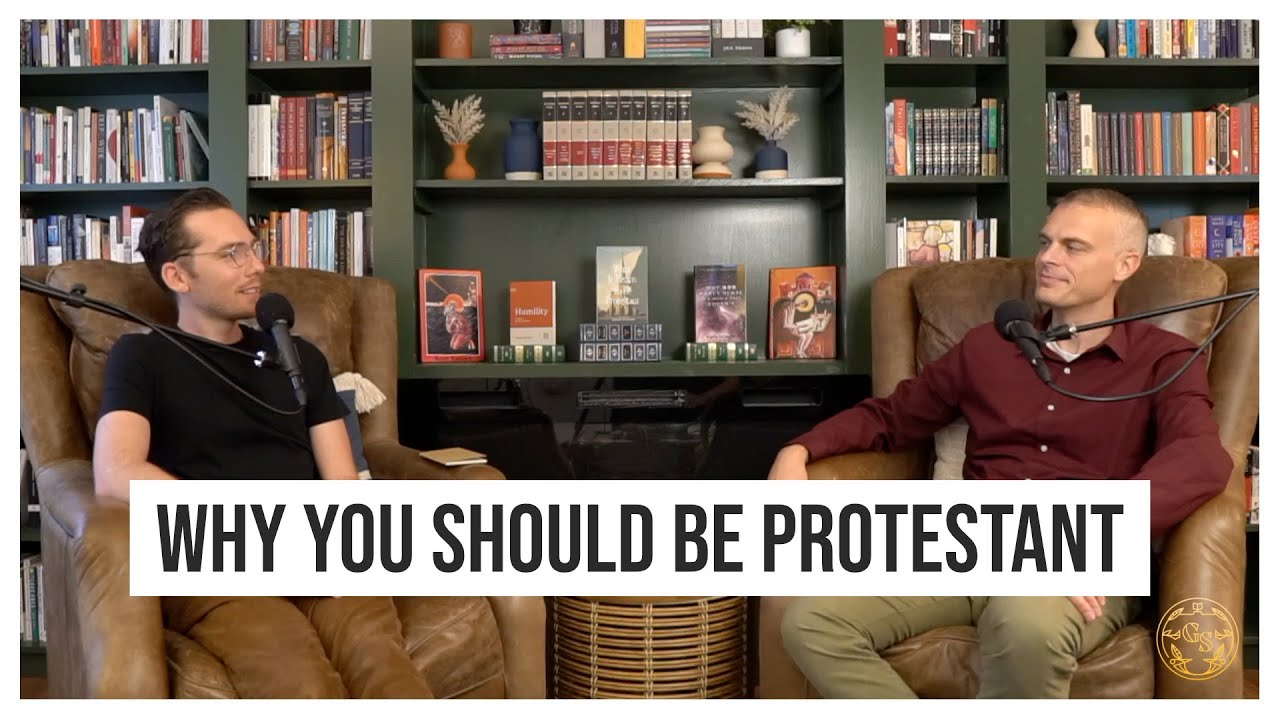
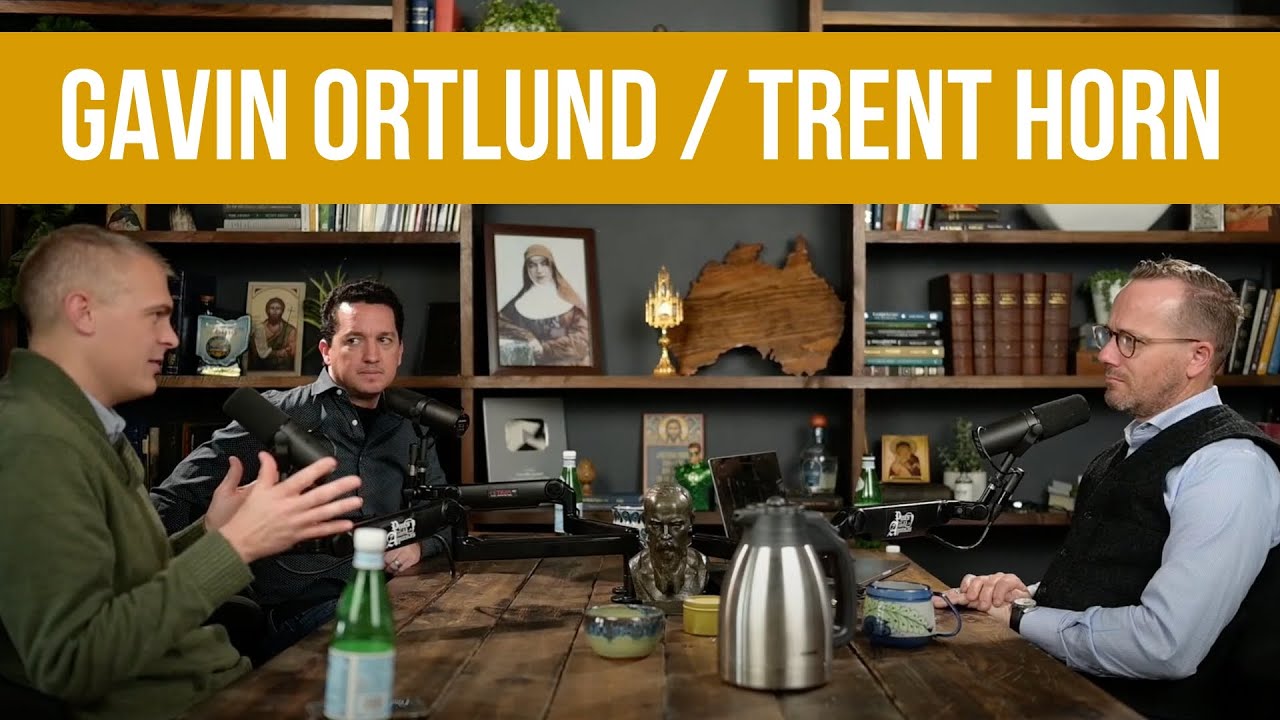
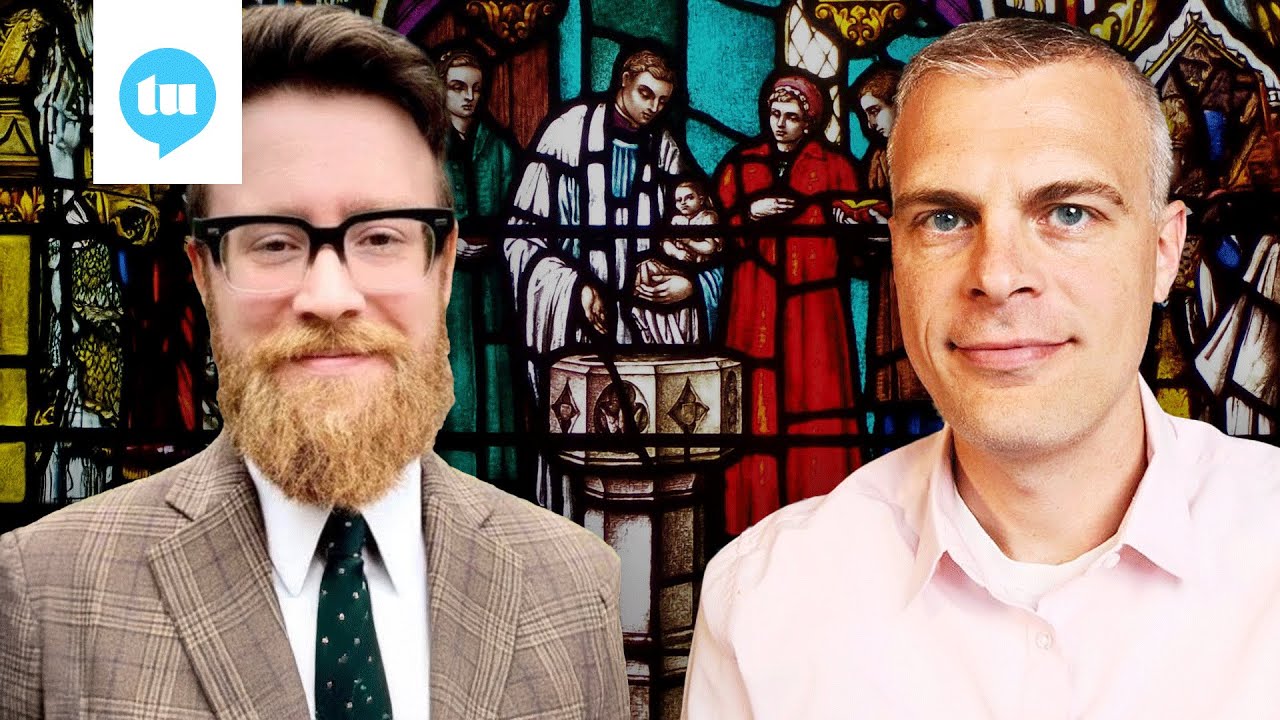
Hey everybody I just had a great discussion with redeemed Zoomer uh really great Channel fascinating he's got lots of interest in Christian Unity different denominations ecumenism those kinds of questions we had a great discussion it was so quick paced and interesting that I thought I think people would be interested he was happy for me to share it on my channel too so I'm going to put it up here and Dive Right In in one second I don't think you'll get bored it was a really interesting discussion what we got into is the mainline denominations which
is of interest to him and me too and we were kind of reflecting upon the difference between the mainline denominations and the Evangelical churches that have broken away and in some ways that split raises larger questions about other kinds of splits within Christianity so it's a really Interesting discussion that I think if you're interested in my channel you'll you'll definitely not want to miss this discussion so I'll Dive Right In but the one thing I want to do first is give an another book recommendation I always get questions about you know what are good resources
to read especially classical Protestant texts you're always talking about the magisterial Protestants well who specifically you know should we read here is an awesome resource that just Came out from Crossway it's Stephen charnock his existence and attributes of God I'll hold it up so you can see brand new edition it's a little bit of a glare there but this is a just a classic Puritan text but this is a new addition that has all kinds of cool features Stephen charnock one of the great 17th century Puritan theologians I'd done work on his view of Christ's
intercession and he is he's just like the Puritans so theologically Rich and penetrating and at the same time so devotionally rich that's what you get in this book he goes through God's existence and then God's attributes like wisdom patience eternity and so forth and he just teases them out with Incredible devotional richness as well it's really a feast this is a new set two volumes edited by Mark Jones and it's got an uh each discourse has an introductory summary that explains chernok's approach and Then there's explanatory comments there's an updated uh basically footnotes so you
can tell where charnock is quoting from in this Edition in ways that you can't in earlier ones it's also got modernized language so punctuation spelling phrases things like this have been updated so it really is if you want to get charnock that's the addition to get and it's a really worthwhile you know I really can't commend enough reading these Classic texts you'll find them so helpful so I'll put a link to that check it out in the video description without any further Ado here is our discussion hope you enjoy foreign [Music] guys I'm radeem Zoomer
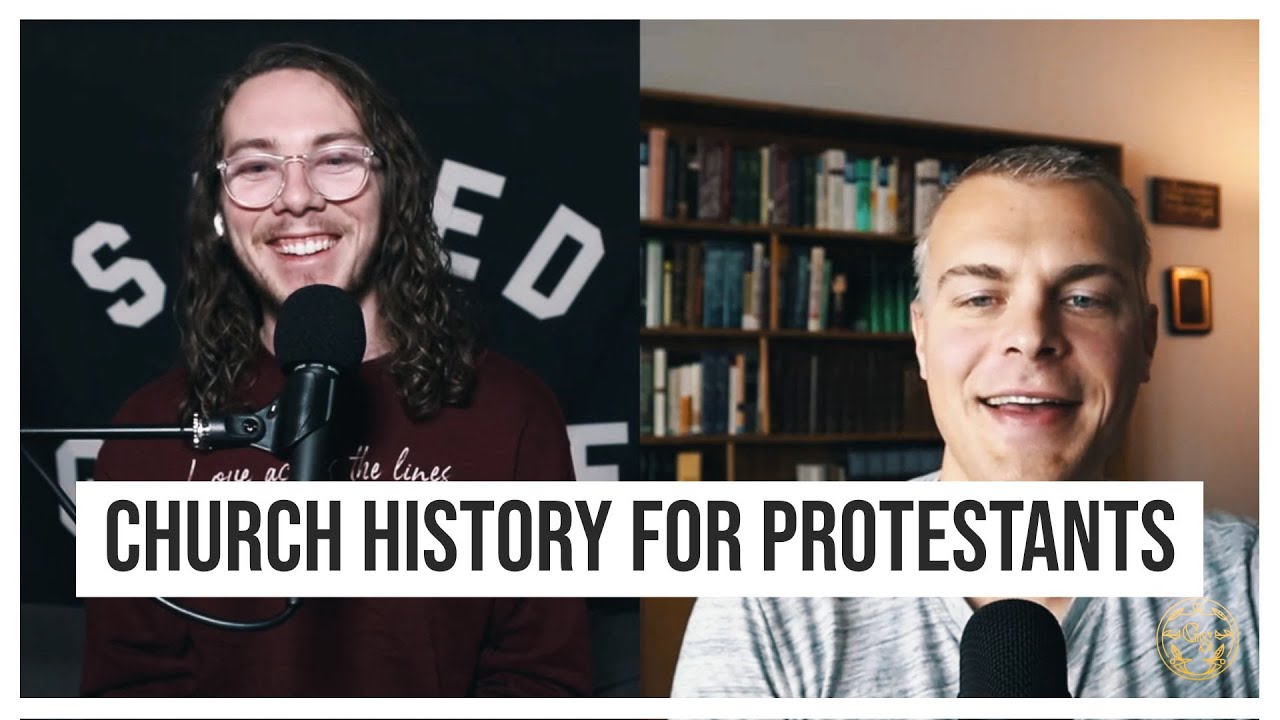
and today I am honored to be joined by the Dr Gavin ortland he is a um he is a Baptist Minister he has a great YouTube channel called Truth unites that all of you Should follow I'm leaving a link in the description to it and he does a lot of work about recovering the classical Protestant faith and engaging with other Christian traditions and pursuing an ironic sort of Christian Unity so Dr ortlin do you want to introduce yourself yeah yeah thanks for having me on your channel I'm really looking forward to this yeah you you
kind of summed up some of my YouTube work I'm also a father we have five kids Um and then my academic work which is another side that kind of comes into YouTube a little bit but it's not my main thing is in historical Theology and then I've gotten into apologetics kind of cultural apologetics a little bit as well so that's some of the other work that I do great so I was thinking we should discuss Christian Unity like what's the right way to do it what's the wrong way to do it and how should the
various Christian Traditions engage so you've done a lot of videos on this especially one about um engaging with like uh the Apologetics of Catholic and Orthodox especially Eastern Orthodox people who say there needs to be just one true church and that the visible church needs to be one United organization and one United tradition so um briefly why why do you disagree with that why do you think the Church of Christ doesn't necessarily Need to be one unified organization or maybe why shouldn't it be okay yeah I like to use the word institution to describe this
one visible institution and my basic argument against that is just the principles of the New Testament for how we are to discern the church it just seems to me I've done videos on this and kind of gone through some of these passages where it seems like Jesus and the apostles command us to recognize the True church by spiritual fruit so Matthew 7 and Matthew 12 Jesus says the the good tree cannot produce bad fruit and vice versa it's like a metaphysical principle Satan doesn't do uh the fruits of the spirit he can't do that stuff
so where you see that or or in Matthew 12 there's the same teaching about a good tree and a good fruit and that's in the context of an exorcism where you know basically Jesus is holding people accountable to say a Kingdom divided against itself cannot stand Satan doesn't cast out demons if this is a legitimate exorcism you should recognize it as such and then you think about the test of Paul in First Corinthians 12 3 where he says basically if someone is speaking saying Jesus is Lord that's from the Holy Spirit and people can't say
Jesus is cursed from the holy spirit so there's a doctrinal test there as well with the lordship of Christ you think about uh Mark 9 where There's a man casting out demons in Jesus name and the disciples try to stop him because he's not one of us and Jesus says don't stop him whoever is not against us is for us so the exorcism done in the Name of Christ the disciples are commanded to see that as fundamentally on their team he's for us and these are the kinds of principles that people misunderstand and think that
we're arguing for universalism we're not arguing we're just saying we're not Saying the church is everywhere or that all religions are true or that you know it doesn't matter if you're a Buddhist or a Baptist or anything like that we're just saying it's not one institution rather we recognize the true church in multiple institutions because in multiple institutions we see genuine glory to Jesus Christ First Corinthians 12 3 genuine spiritual fruit that the holy spirit is bearing Matthew 7 Mark 9 Etc so that's my a brief canvassing of Kind of gosh there's so much more
we can unpack and I I really want to hear your thoughts about all this too but that's kind of a first stab of putting it out on the table yeah that verse you quoted from Mark that's usually the exegetical basis I use to say why the church doesn't need to be one institution I also think Protestants are the most honest because um Catholics Orthodox Oriental Orthodox all claim were the one true church no We're the one true church and the Protestants are the ones that say we're not necessarily the one true church now then the
question is how do you discern the true church from the false Church um that's always been a bit tougher of a question for Protestants than for like the other um Apostolic organizations what I would say I think what the um reformers would say too is just the Nicene Creed and the churches like wherever the word of God Is preached in the sacraments are administered but what would you say is the um if we if we need to do some gatekeeping of course gatekeep is like a bad word in our pluralistic culture but if we need
to do some gatekeeping how do you discern the true church from the false Church Which churches are True Churches okay yeah this is this is a tough one for sure it's you know I I want to I want to humble myself before the complexity and challenge of this Question I'll give a positive statement and then all that's broad then I'll start to hone in on the edges and then you know you can share your thoughts too if you want but I'd say the positive statement I would say here's a definition of the church where Christ
is present in word and Sacrament okay brief pithy succinct you know so so word and Sacrament are both needed and as Protestants we believe in two sacraments the Lord's supper or the Eucharist and Baptism so by this definition um the the Muslims Who start having dreams in which Jesus reveals himself to them and they are baptized into the name of the father Son and Holy Spirit and they are gathering in in covenantal community to worship Christ and to partake at the Lord's supper and hear the word of God and worship the Trinity where this is
happening despite the it might look so different from other churches and other cultures it might Have no formal institutional connection through a line of Bishops doesn't matter it's the true church because you see Christ and his gospel present in word and Sacrament same with all kinds of other circumstances where you know people in a remote Village come into contact with the internet and through this they are exposed to the gospel and the same thing happens you have in a Revival and the demons are cast out and so forth you can see the true church Advancing
in these kinds of contexts so Protestants are able to affirm that now the question then you're asking is here kind of where are the edges now that's tricky I did write a whole book called finding the right Hills to die on I have a chapter on the first ranked doctrines that's kind of what we're getting into here what are those first ranked doctrines if it helps locate us a little bit I would include things like it's hard to be exhaustive it's hard to give You like the 17 things you have to have I certainly think
what you've pointed out to some of the early Creeds apostle Nicene and athanasian Creeds are you know a great kind of starting point to get us thinking about this those are also historically occasioned so they're not they're also not going to be exhaustive though you know they're not going to cover everything you might want to look at um so to but to give some examples I Would say the Trinity is an is a cardinal Doctrine because this is the the very identity of God it's like do you worship Jesus well that's pretty foundational is Jesus
God you know so so that's so that would distinguish us from saying like a Mormon church for example is a part of the one true church and that's a boundary that you know different Christians might approach that a little differently but that I would identify myself as saying well that Would be a boundary marker there um but then if we're including like the major Protestant Traditions you know all these other things that divide like baptism or views of church and government those are those are important they matter but they're not demarcating the one true church
for from a false church or something like that so I don't know that's just a kind of an initial stab at that but I'm happy for us to keep kind of finessing this if you want To keep working through this yeah sure I like the work you do on theological triage and I think it's important to distinguish between heresy and heterodoxy um like I would Define heresy as we don't worship the same God that's why the issues about the Trinity are about the nature of Christ himself would be issues of heresy versus not heresy and
heterodoxy I would Define more as we worship the same God but not in ways That are compatible it's like um and that's why um a lot of my fellow reformed people get mad at me for this but I say that despite their errors Catholic and Orthodox Christians are indeed Christian because they worship the same God that we do and they would agree with all the creedal Essentials now obviously some of their beliefs I would consider heterodox but not heretical because I don't see any um reason in scripture or in Um Church tradition pre-reformation that says
you need to believe salvation is by faith alone to be saved or to be a true church totally I'm with you on that I'm totally with you yeah you know I I think sometimes contemporary Protestants uh forget how generous our Protestant forebearers were about this kind of thing because they think oh to be Protestant is to be sectarian and kind of reject the majority of people Baptized in the name of the Trinity who are alive today but uh you know the reformers were not like that I've just been doing some work on that this morning
I give a few examples in Luther was very clear in saying the church that is under the papacy in his day is a member of the body of Christ it is a true church now he said the hierarchy is totally corrupt and evil and you know ravenous wolves are eating the Sheep but it's a church You know Calvin same thing he said in the institutes he said uh when we say to the papists you're not the one true church we're not saying there's no True Churches among you um poker Richard hooker later in the Anglican
tradition same thing turretin in the reformed tradition same thing that's standard Fair classical Protestant Outlook and so you know I I think it's just totally consistent with our Protestant history for us to say That and that's not downplaying the differences this doesn't mean that we're saying oh well these differences are no big deal I find in the YouTube Arena a lot of the commenters seem to think in All or Nothing categories like you're either damned to hell or everything is Grand it's like well no there's you know intermediate options of we could have serious errors
that require practical separation while still saying yeah I think you'd probably be in heaven and I Think you're a fellow Christian and we can partner in ways and we can be friends you know so that's I don't know to me that's a little bit of that ironic approach that I try to take right um like some people will say oh this church teaches something unbiblical and therefore it's not a true church okay how do you define unbiblical that the church isn't gonna say hey we're an unbiblical church it's like when you say They're unbiblical you
mean they disagree with you on an interpretation of scripture and where do you draw the line between things that are okay to disagree on and things that are not okay to disagree on I think you need some sort of objective standard and that's why like you said even though the Creeds aren't exhaustive they're the closest we have to an objective standard of um which matters are trivial more trivial in which matters are more essential Um now something I would like to talk about is I think a lot of the reason that people are a lot
of people in the modern world are flocking to like Catholicism in eastern Orthodoxy is because they need something historically rooted and they've been convinced for various reasons that protestantism is not historically rooted and with the way the direction the culture is going the loss of like goodness truth and Beauty in the culture people people are more Than ever seeing the value of a historically rooted Faith so I know you've done a lot of work in demonstrating that protestantism is indeed historically rooted just as much as Catholicism and Orthodoxy and anytime like I've always been a
big fan of your channel ever since I discovered at any time someone asks me like um I need something historically rooted isn't the Catholic or Orthodox or whatever churches aren't they the one True church I always Point them to your work explain that protestantism has just as much of a historical claim as all the others um but why do you think um why do you think protestantism is seen as not having historic Roots because I have some ideas I want to hear your thoughts yeah yeah yeah well I I I'll be curious yours too I
think it is an intelligible concern that we should Consider I mean you know one of the things I love is about Philip schaff I love his vision of protestantism in the 19th century great church historian has lectured the principle of protestantism 1845 same year Newman converted to Catholicism I have to think what Newman Cardinal Newman is to Catholics Chef is to Protestants he gives us this vision of organic development throughout church history and how protestantism relates to Prior church history Um shaft oh I lost my train of thought what would you say your question again
I'm so sorry it's okay so now I don't know much about shaft so you could tell me about him a bit but why why do so many people have this idea that protestantism is not historical for you okay thank you it's the end of a long day here um so I think it's a totally intelligible claim because of how many contemporary Protestants function it's Just true I mean so one of the things I brought in shaft because shaft one of the things he says is to be a Protestant Christian isn't to say protestantism is perfect
and he just talks about the importance of recognizing where protestantism has errors that have crept in but he says the best way to deal with those errors is on Protestant principles and so this idea of continually reforming semper refer Manda but I would say a big reason for this perception is Just that what what he and his colleague Nevin were so concerned about in the 19th century the sectarianism was this John Williamson Evan yeah I'm trying to think of if the I don't I can't recall his middle name off the top of my head but
I think so he he and chaff are often Associated they taught together at a university of Mercersburg their theology that's the guy I am a huge fan of John Williamson Nevin and his book the mystical presence on the Lord's Supper just as an aside that's him that is oh yeah people have to read these guys they don't realize all the richness to the Protestant tradition Nevin and shaft they're amazing they're they're like I said I think their theology is often summarized as Mercersburg theology they're offering a vision of protestantism that is really robust and it
deals with a lot of these contemporary objections and like I said I think he is for Protestants what Newman is for Catholics this kind of contemporary expression of how this tradition functions in its organic unfolding throughout church history so I would just say I think to answer your question um what shaft acknowledges there is a reason for this perception namely a lot of Protestants have just gone too far we've we've responded rightly against errors in One Direction but like so many Like so much of human history a lot not all but a lot have just
gone too far in the other direction and he is I have a great metaphor I want to say at some point about that but I kind of want to hear your thoughts about this too right so my thoughts and this is something I've talked about for as long as I've had a platform is that um protestantism is at a huge disadvantage ever since the confessional Protestants were estranged from their Own historic institutions I'm talking about the mainline Protestant churches the mainline Protestant churches are the ones with a more more direct routes in the Reformation that's
why if you go to like the old historic Protestant church at the center of your town chances are it's a Mainline Protestant church and um for the most part the mainline churches are not committed to Orthodoxy now I am a Mainline Protestant I'm in the Presbyterian Church USA Um but my goal is to try and restore it because there's clearly a very big problem with just there's no enforcement of true Doctrine like they have they they're confessional on paper like the Westminster Confession is still one of the pcosa's confessions but they don't enforce adherence to
it so most of the Presbyterians who actually do believe the Westminster Confession or most of the anglicans that do believe the 39 articles are estranged from their Respective Mainline institutions so that's why um both Catholicism and Orthodoxy have really old historically rooted institutions that they can claim for their own but because of most most confessional Protestants don't have those to nearly the same extent it's a lot harder for protestantism today um to claim historic roots and I always get really annoyed when there's these memes about like here's a Catholic Church it's beautiful here's a Protestant
church it's ugly it's like that's not really true um it's it's more of a old versus new thing rather than a Catholic versus a Protestant thing old old Baptist Churches from the 1900s look like beautiful cathedrals and modern Catholic churches look like gyms but um the difference is that most of the old Protestant churches are no longer in the Hands of confessional Protestant Protestants anymore because of the whole Mainline Evangelical split so when people see that difference it's a it's a subconscious signal that makes a lot of people think um protestantism is not historically rooted
and I think if the best way for Protestants to reclaim its historical rootedness is to try and reclaim the mainline church so what do you think about that that that's fascinating well I will I would like to make one comment that's not kind of a comprehensive response but it just it takes what you're saying kind of extends a little bit from it so you're one of the things you're talking about is um The Drift from confessionalism now I would want to look I would want to broaden it even Beyond just the main line just to
uh in some ways I almost think of it as even bigger than that of just a drift away from kind of Historically rooted confessional protestantism which could even be like in an Evangelical context or something like that but there's so much drift away from that and the thing that I'd like to say this is the metaphor from Shaft that struck me is as Protestants we can just acknowledge that and say hey that's a problem we need to work at it and we can address that on Protestant principles you know that's one of the things shaft
is saying here's a metaphor that he Gives that or actually he doesn't give this this metaphor I thought of when I was reading Chef nice nice and it really helped me so imagine a married couple okay let's suppose for the sake of argument that the husband is to blame for a divorce that occurs in their 50s they're in their 50s the husband is totally at fault he's abusive or something like this and in their subsequent uh divorce both parties are serious diminished both of their lives Are diminished substantially because of the departure the husband becomes
more socially awkward he doesn't know how to dress he forgets his grandkids birthdays he's got all kinds of problems the the wife now that she's separated has financial problems uh stuff falls apart around the house she doesn't know how to fix it you know you can pick think of like 10 different examples of how this happens now the fact that it was the husband's fault That they got divorced doesn't mean that the wife has not been diminished right so what you can say is as a Protestant this split was justified we were Justified to depart
from the claims of Rome but we've still been diminished in some ways because of the overarching outflow of history and um you know and so in other words then you just say okay what do we do about That and I think the answer to that is the Protestant principles semper refer Manda always reforming solo scriptura we looked at the scripture as our North Star only that's infallible and we go through and so forth so it's an imperfect metaphor but it's trying to get it that thing of like we can acknowledge our own errors our own
contributions without compromise of protestant convictions I don't know so that I don't Know I think that's a I think it's a really good metaphor and it can also be applied to the whole Mainline Evangelical split like the reason Evangelical denominations like the PCA or the acna exist is because the mainline churches were getting theologically liberal and the conservatives Left For Better or For Worse if you ask me it was for worse it's like even though in some of the situations you could say it made sense It's understandable even though I disagree with it it's understandable
why they left but they still were diminished in many ways because they lost a lot of their seminaries a lot of their resources a lot of their historic churches they lost a ton now the difference is um I think because Protestant churches are reformable unlike um the non-protestant churches I think it's possible it's very hard but I think It's possible to try and reverse that split and to try and redeem the the mainline churches um so I'm right now I'm in the PC USA um I sent 95 Theses to the PC USA a couple months
ago just about calling for a return to confessional Christianity I got a lot more positive responses than I expected so I think it's possible to um redeem the mainline churches but in order for that to happen a lot of evangelism could be on board a lot of Evangelicals need to um be willing to like join these churches that might not be the most comfortable for them to be in because I feel like a lot of a lot of the reason why protestantism is so fractured is this radical individualism where people are more concerned with being
an environment where they're as comfortable as possible rather than striving for the kingdom overall so do you think Um retaking the mainline churches for Christ is a worthwhile goal my instinct is that it's always good to tilt in the direction of reforming and remaining rather than separating and starting and that we are way too quick to go to the second of those two generally speaking but there are some times where you just have to but here's the thing that is useful in my mind I don't have I'm not Able to give a definitive answer to
your question fully but I can say this the need for humility you know even if even if and when it is necessary to separate from a more rooted tradition that has a lot of institutional backing say it like a Mainline denomination because I think it's brilliant what you just said about how the same metaphor applies to the mainline and Evangelical split it's so true but so then even when it does you get to that final point it's like just War Theory where it's like it's very rare to actually be a just War you have to
hit all these conditions but even when you get to that point you still need humility to know this much um even where it's Justified to depart that doesn't mean we're not going to make a lot of mistakes as we go you know and so that's where you're going to be looking over your shoulder and saying it's like um every Revolution this is true in other outside of the Church too just in in human history it's so easy to kind of Swing the pendulum to the opposite side and you just make all kinds of errors in
the opposite direction you know so I don't really have a definitive answer to you but I'm just reflecting out loud I guess with you about the need for humility that whatever what whatever you think and whenever you do get to that point where separation is Justified you need to do so with Incredible fear and trembling Before God knowing how fallible we all are right I think that um what you just said is not just theoretical it's what actually happened I'm speaking from a presbyterian context so the PCA for example the PCA is the largest confessional
Presbyterian denomination um in America at least so they split from the PC USA in order to uphold the essentials like the um salvation by faith alone and the authority of Scripture which is great but in departing from the more traditional denomination I feel like a lot of Presbyterians in the these denominations like the PCA don't have a very good understanding of the reform tradition anymore um that's why a lot of them in practice don't value the sacraments don't value Church Tradition at all and are just sort of like broad evangelicals who sprinkle water on their
babies but don't Know why they do that yeah it's a stereotype but it's what I've seen in a lot of PCA churches yeah you know one one not to be too pietistic about this with all these injunctions to humility but if I may hit the Bell again here on this point is like let's suppose it's this kind of difference between like PCA PC USA or let's suppose even it's a different tradition or a different kind of difference let's say it's like um you Know on the one hand You've Got High Church let's say in a
certain Town there's two churches and one of them is this really liturgical High Church Rich theology beautiful building lots of rootedness in church history and then there's another church that's a church plant very low church now let's just say for the sake of argument that the low Church um it's a non-denom and it's charismatic let's just say for the sake of argument They're doing really good at getting people into the church who wouldn't ordinarily go to church like their Ministries their social efforts their evangelism is so emphasized and so part of their life and so
part of their DNA that like people the whole town is being affected and Christianity is being introduced to so many parts of the culture from their efforts okay but but their worship is a little shallow and Theological okay now Let's say the high church has really great preaching there they have an internship at their Church where they go through the church fathers and they do at catechesis and it's like robust and power it's like a seminary in a church you know it's amazing but they're not having as big of a of an impact now the
the thing that will happen in our flesh is it'll be so easy for each Church to look down on the other and the high church is going to look down and Say those people are so shallow and the low church is going to look down in them and say those people don't care about evangelism but I think what humility will do is cause us to say we actually have something to learn from the other their flaws are going to be more visible and we're it's going to be easy for us to see their flaws but
we have something to learn so the the high church is going to be able to say you know what we can Learn a thing or two about how to reach our community and get people in the doors of the church and you know evangelize and the low church is going to say you know what we need to take some preaching lessons and we need to learn about liturgy and church history you know and and then the kingdom of God is strengthened by each learning from the other if that humility is present that seems to me
to be just be a basic perennial need that I think does Dovetail into your comments about where the conservative reactionary groups need to have more humility to learn from the very groups they're departing even while they criticize and eat too often that humility isn't there right um I agree with what you're saying that a lot of times in in reality these high Church main lines and these low Church evangelicals um have opposite strengths where one is strong the other is weak and vice versa But I think that like that's sort of the consequence of this
split these sort of christianities in a machine like the you know Paul said that the church is a body with many different parts many different abilities I feel like it's the machine that's sort of been split in half and ever since then it correlates roughly with the decline of Christianity in America I think the um both types of those churches you mentioned have important abilities that Could influence the um the culture for Christ but by themselves I question their ability to do so like they used to so if you think of the church as like
a pie and like part of the pie is like you know evangelism and um connections to universities and hospitals and um an intellectual tradition I feel like what the um the conservatives did was they took a slice out of the pie and now the conservatives just have that slice And now like let's say the slices evangelism and the authority of scripture let's say it's two slices and now the mainline churches have everything except those two slices and in both cases um there's some impotency and some and some weakness there that I think um there needs
to be some sort of ideally in an ideal idealistic World a reunification where they both um like you said humility and repent of all Their flaws and learn from each other in a more practical World um they both try to try to learn from each other that's why in my Theses that I sent to the my denomination I said we need to actually learn from evangelicals how to have an impact on people and on my social media most of my followers are Evangelical I'm like yeah you guys need to be a bit more Mainline in
your thinking in in your practice But how would you say what what do you do like see the scenario I envisioned is in which the high Church the low Church they're both Orthodox you know they're they're both basically Evangelical in their theology in the sense of they believe in the authority of scripture they hold to an Orthodoxy of sexuality that's kind of what I'm envisioning what do you do when the pieces of the pie aren't there at all and the you know like the the institution you're Connected to doesn't even believe in evangelism because they
think evangelism is imperialistic and they think it's domineering they think no we didn't see yeah that that does happen and you get I've seen it I've seen it um it's it's hard what do you do um well I still think that um everything the when I'm talking about the main line I'm talking about the more theologically liberal ones that do not have an orthodox view of sexuality or Even the essentials of Christianity I feel like everything they don't have the conservative denominations do have and um everything that conservative denominations don't have the main line does
have so the conservative denominations the Evangelical denominations tend to have much more of a passion for evangelism and for influencing the culture for Christ they and they have a lot more of a willingness too but because of their Lack of historical rootedness I would say they have less of an ability to and for the more liberal main lines it's the reverse because they're connected to so many like universities because they run like food pantries in every single neighborhood they have a lot more ability to influence the culture for Christ but a lot less willingness to
because of their lack of Orthodoxy so I think um it's We need to sort of combine their abilities to have churches that are both able and willing to profoundly influence the culture on a large scale yeah well I I'm tracking with you and to me it's going to take a lot of wisdom along the way to know kind of in in your own unique context where you're at what that looks like because I can imagine scenarios in which you you're at a relatively conservative Mainline church that's open to growing in certain areas And it's still
within Orthodoxy and you're you're going to be able to work there fruitfully for the good of the Church of Christ or and whereas the conservatives want nothing to do with it they're so sectarian and feisty they just want to attack other Christians all the time that I see that kind of thing or but I can imagine another context in which it's sort of the opposite where the conservatives are saying hey we need to Learn more we need to grow you know there's all these kinds of movements for theological retrieval oh yeah for Baptists who want
to learn liturgy that's so they're they're like hey we need to learn and grow whereas the the mainline context might be one where the people are saying like no we think you're bigots and we don't want anything to do with you right so in that scenario so I feel like it's going to take wisdom to know okay you know what does this Look like for me and to me it'll it might differ from one context to another yeah it's it's really hard to do it will take a lot of wisdom like you said now I
think the best strategy and what I've been trying to Rally up with whatever resources I have is for those looking for a historically rooted Church to move into the more conservative congregations in the main line knowing that those are gonna be the ones that last because theologically liberal churches always Die out if if you don't believe in anything there's no motivation to go to church that's why the main lines are always shrinking and um it's really easy to actually have an influence within the main line because they're just so desperate for leadership positions because um
there's usually like 10 old people in a congregation and they hand out leadership positions like free candy so I think the The way to do that is I think conservatives might need to make the first move in terms of the humility um but I think if people start moving back into some of the more Orthodox churches within the main line and just start forming connections there within a generation I think it'd be possible for the main line to be restored and once the main line is restored then there can be reunification with its Evangelical Counterparts
I love the goal of that one of my worries is what about like ordinate I take ordination vows really seriously so if you're in a context where ordination in a particular denomination requires you to affirm things that your conscience forbids you know that could be a deal breaker right out of the gate um so because some of these Mainline denominations their doctrinal standards are such that you know as an Evangelical You're dead in the water before you even start so that would be a barrier but if you can if if you're able to function in
that context I mean you know as long as you're not compromising your conscience I think working for reform and good is a wonderful thing yeah it's kind of a case-by-case basis I've heard some denominations some of the liberal denominations are more strict with enforcing their adherence to Liberalism than others I know in my denomination um it's really the the Liberals that are dishonest with their ordination vows and of course I mean theologically liberal not politically liberal because in order to be ordained even in the PC USA which is generally a liberal denomination you need to
confess the authority of scripture you need to confess that the Westminster and the other confessions are a faithful interpretation of the Scripture it's just that a lot of people confess it with their fingers crossed so the uh like I've seen ordinations happening the ordination vows are pretty simple it's just do you affirm the Bible to you from the Westminster Confession it's the same almost the same as a PCA church um maybe less emphasis on strict adherence to the confessions um so the only dishonesty would be from those who do not affirm the essentials Of Christianity
and that's what's been happening that's sort of how the main lines go hijacked because of people who were dishonest and pretended to be um faithful ministers but really they had they had an agenda to try and change the beliefs of the church my only comment is I I love the instinct to work for reform and renewal where you are I think that's a healthy Instinct um and I will say again where one does separate humility is needed in that Movement so that you don't realizing the Temptations and dangers that await you in any Act of
Separation as they so often come in I will only add the the caveat though that there are churches do go apostate individual denominations do sometimes I was in New York City last week and I walked by a church I won't mention what kind of church it was and the there was a flyer for coming to worship there and the the the words were a god-optional community Yes I've I've seen those really the appeal is oh just come for this community and God is optional and like so you know that's like an extreme example but you
you get you can get to a point where you can just say in good conscience this is like apostasy I just can't be a part of this I just to be faithful to the gospel I have to separate and so there I just want to leave room for the legitimacy of that act when it does become necessary and Then it would just be a matter of doing that with great humility and faithfulness to the Lord and his word it seems to me yeah now that is a tough question because of course there's different stages of
progressivism like I once made a video where I divided it into five stages where the whole God optional thing that is would be stage five out of five the um highest level ten out of five yeah um but um where where does uh Denomination as a whole become apostate so like in the United Methodist Church and the Episcopal Church in the PC USA the denomination as a whole does not kick out churches who say um oh it's a god optional drag queen Story Hour but at the same time in those very same denominations you have
um conservative churches that explicitly teach that the Bible is infallible and that marriage is between a man and a woman so like let's say you're in a Conservative congregation in one of those Mainline denominations is that a true church um well this gets into some of the differences between the Protestant denominations because as a Baptist versus a presbyterian we construe the relationship of different churches to each other a little differently so I guess it would kind of depend on how you answer that and then your conscience is going to need to work through kind of
You know I here's what I would counsel people on if they're wrestling with this question in real life you know when do I leave if I'm on like stage three or four or two or whatever is like we never want to leave out a pride or preference we never want to leave like oh this is a tertiary Doctrine but I just really don't like it or something it's like there's all kinds of bad reasons to leave but there is this principle in the New Testament you see in like second Corinthians for example that light and
darkness have no fellowship and it can get to a point where you just realize to be faithful to Jesus Christ I can't be in fellowship with this particular group because they have fundamentally denied that gospel in some way or another and so I I don't know exactly where that line will be for each particular person I think it's good to kind of leave room for the complexities of real life in this yeah but I just do want to leave Room sometimes that does become necessary yeah maybe it's because I grew up in New York I
grew up in a super secular atheist community so I think I have like a higher threshold for what I'm willing to tolerate than a lot of than evangelicals would but now I agree with what you're saying that if it gets to the point where it's actual heresy yeah you can't fellowship with that the question I want all like conservative theological theologically conservative Christians to consider is any time there's been a denomination split in recent years it's always been the conservatives departing from the liberal Mainline thing every split has been a split into the original one
and the conservative one there's basically no examples of liberals splitting off and running away because they don't want to be with the conservatives like we always um conservatives always make fun of Liberals and say oh you're just a bunch of sensitive snowflakes but in practice that's not actually what's happened in practice every split has been the conservatives leaving so the question that I think we all need to ponder is why is that mm-hmm yeah that's a good question well I mean part of that might just be the liberal ethos you know liberals tend to be
more kind of inclusive and accepting and as You put it there sometimes like you mentioned sometimes they're just desperate for leadership so they're kind of just they're not as distinctive theologically in general you know but I don't think that's the only reason so I think that's a fair question to wrestle with what what this is slightly off topic but just one parenthetical thought that I do think is worth saying is that sometimes we have an expectation for what kind of church will be real Evangelistically effective or will have the best possible cultural reach and sometimes
I'm surprised at the way that plays out there are some churches that have that are very low church but have huge cultural reach and cultural opportunities meanwhile there's lots of churches that are extraordinarily High liturgy ornate beautiful architecture Etc and are unbelievably effective at evangelism so you know I Guess I also just want to I guess qualify my own earlier comments to just leave room for this too that we don't we can't always anticipate exactly what the strengths and weaknesses will be sometimes they're a little surprising yeah definitely so another thing I want to talk
about before we go is like what do you what do you think is the best way for different like denominations to sort of view each other like do you think it's a good thing that We have a diversity of denominations is there sort of a beauty and diversity or in a Ideal World would it be better if we could all just be the same thing more or less I definitely don't think formal ruptures which that is part of what denominations are are ideal so you know I think we need to acknowledge that in an Ideal
World we would have a perfect Unity um but I would say that in an imperfect World denominations can be I don't want To call them the lesser of two evils but I guess I could call them like a practical way of negotiating our theological differences that will have less collateral damage for the kingdom of God because what you want is situations where people are not you know and here's where we can hold the our non-protestant friends feet to the fire here because they've got these statements of saying it's just one institution I mean that's I
I my book I'm working on on protestantism I send it off to the publisher at the end of this month I document this in the Eastern Orthodox tradition that is the universal view to my awareness throughout the medieval tradition or tradition and up until uh you know the confession of decithius in the 17th century basically up until the 19th century even then it's way majority position basically if you're not Eastern Orthodox you are damned to Hell zero Exceptions okay and then you've got magisterial teaching from the Catholics to the same effect in the at the
Council of Florence and the Unum sanctum places like this where they're saying all the non-catholics are damned to hell so like that you know I think we kind of need to hold their feet to the fire because they're going to try to say oh no you know well yeah we're the one true church but you know we don't know where the church isn't and try to qualify that in All these ways those qualifications are modern deviations from the Outlook so lest we get too criticized for having good nominations the nominations are better than that then
I'm nations are better than just saying everybody else is not the church and they're all damned you know but what the good of denominations is we can follow our conscience and uh with that but just recognize and say you know we think those other people are wrong and what They're doing but they're still the church and they're still Christians we can partner together so I would say how do we view each other you know I I honestly feel in my heart toward Noble Traditions like the Presbyterian tradition the Lutheran the Anglican Etc like they're almost
like older siblings you know they're these honorable things that in my heart I look up to and I feel like wow I love this I I reverence this I honor this even where I disagree I'm Learning and I'm listening and I think just that you know this is a simple point but just to say there should be love there should be love for other Christians in other Traditions boy that's simple but it's important to say because sometimes it's not the way it is yeah I think there's a delicate balance because I feel like what the
Evangelical world has tried to do in the past now 30 or 50 years has been to try and remove Denominational distinctives and say oh we're all just Christian we're not but I feel like the result of that has been least common denominator uh Christianity lowest common denominator where it ends up just being a bit anti-intellectual anti-doctrinal because they're worried if it gets too doctrinal then it'll just divide at the same time a lot of people idolize their own doctrines and will anathematize anyone else you see that in some of the most conservative like or I
Would say cage stage reformed parts of the internet where it's like anyone who's not um doesn't follow the Pope John MacArthur is damned so um well I think the best way to do it is I every time I see someone start to really appreciate their own distinctive tradition whether it's Baptist or Lutheran or Methodist they end up becoming more committed to Christianity as a whole because they start seeing There's a lot of there's this whole intellectual tradition I just found out about so how do we um like I think it'd be better if it was
like it used to be where you'd have a bunch of Presbyterians and a bunch of methodists and a bunch of Baptists and a bunch of lutherans rather than everyone's just Christian but um there's no distinctive so how do you get People to appreciate their own tradition and other Traditions while still maintaining a form of catholicity and ecumen ecumenism well I I love what you're saying and and to to extend from your comments to say that it doesn't mean we downplay our own distinctive tradition so to to to to Value catholicity doesn't mean that I as
a Baptist say oh well let's just kind of excise that word Baptist from our vocabulary and not think about the Distinctive contributions of Baptists um I can look back at Baptist history and I can look at you know John Bunyan's Pilgrims Progress and say God has used this book in so many powerful ways or adonim judson's missionary efforts in China or in India and say this is so wonderful but then I can look at the contributions of other Traditions like Hermann bovik and the whole Dutch reformed tradition like wow I can learn so much from
that so we don't want to Downplay the differences I mean I'm with you I that's what my book on triage is trying to do is trying to simultaneously push forward these two values on the one hand Unity but at the same time this ethos of Doctrine matters we should tremble before the word of God and we should care and so you know one thing we can do is just what is counter-cultural now and that's respectfully argue uh you know nobody's iron Yeah right I mean because that's counter-cultural our culture doesn't do that right now our
culture just demeans and attacks you know Republicans and Democrats don't argue with each other they just interact with each other Doug Wilson said it's sumo wrestling um yeah so what I like to say is that um I would rather someone disagree with me strongly on a doctrinal point and be able to give intellectual biblical reasons why then say Oh I don't care it Doesn't matter if it's not an essential for being saved it doesn't matter and I know a lot of people who are like that and it's like I would rather you strongly disagree with
me and explain why like if someone's a I don't know like like someone's a cradle Baptist I know that you have very good biblical intellectual reasons for being a cradle Baptist I'd much rather have a discussion about that than someone say and it doesn't matter where the baptism Issue is not essential to Salvation so let's just forget about it and my analogy for that is um someone who's like a huge Star Wars nerd will argue a lot over like you know which Star Wars Trilogy is better and they'll be passionate about it and someone who
doesn't care about Star Wars will not um will not bother to argue because they don't care so the more like of course this is not always true I'm not saying argumentative people are the The standard that definitely not um but the more willing someone is to [Music] um think about the distinctives the more someone thinks about something the more it shows the more they care about it yes so yeah just to agree with you briefly Jacob has a great passage in Christianity and liberalism where he critiques Luther on this and the Lord's Supper but then
he Says but way better that Luther had that view than if he had said oh this matter is a trifle let's not worry about it and he says indifferentism produces no Heroes of the faith and what I say from that in the book is better to be wrong than indifferent yes um and what Tim Keller always talks about is like if you say Doctrine and Dogma doesn't matter that's a Doctrine That's a Dogma so you always you can always relativize the relative visors and um I think because I think iron sharpens iron I think the
best way for Christianity to go forward is you know let's start actually going into our respective Traditions even if we have arguments that we'll respectfully argue like I would not want a Methodist Pastor to start preaching the Five Points of Calvinism I know there's some calvinist methodists but um I don't know I would Not want a um a Lutheran Pastor to start preaching a spiritual presence view of the Lord's Supper then he wouldn't be Lutheran he wouldn't be honoring his own tradition um I wouldn't want a Baptist pastor to while still being Baptist to suddenly
talk about like why the Covenant demands infant baptism or something like I don't necessarily want everyone to become Presbyterian I want everyone first and foremost to be to be Christian I also Want everyone to be um cured to care about being of course intellectual tradition and I think the Traditions will become more um intellectually rigorous if they engage with each other in debates because iron sharpens iron and all Doctrine has developed out of some historical debate including the Trinity including salvation by faith alone it's always questions and debates that arise from those questions that actually
cause Doctrine to be created I I agree with you and I but I would also just leave a little space for if and it's rare but if we can come together that is a good thing so like if people like there are these movements in Protestant churches like in India and elsewhere where different denominations have been unified and formed like a basically a merger denomination that's large so like if we're if we're respectfully arguing about our Differences and like a uh I don't know like a Methodist and a presbyterian a church are just arguing and
arguing and the Holy Spirit is pleased through that argumentation to bring about an agreement then cool I mean that's great I would say yeah but but that should never be compromise that should never be just be saying well let's just because it doesn't matter anymore so but it is cool to be open if we can make progress at Times yeah now agreement is good I think it's important to focus on like the Cradle Essentials that we all agree on usually what happens when denominations do like a merger um is that it ends up just conforming
to the beliefs of one denomination like the reason lutherans in America tend to be kind of isolationist and Jordan Cooper who I know you've talked to before um talks about this is because back when the Lutheran reformed Churches United in Europe they ended up just being reformed churches and the lutherans ended up being persecuted not to flee to America um and that's why the American Lutheran Churches don't do as much ecumenical dialogue as the other ones and that's why no one knows what lutherans believe they're probably just um Catholic Protestants or something and um as
a presbyterian I understand why lutherans don't want to unite with Presbyterians because of the history and A lot of Presbyterians feel the same way lutherans feel about us like we feel about um some reformed Baptists because um in like the Gospel Coalition or Ligonier when Presbyterians and and before Baptists have become part of the same organizations it's ended up becoming like effectively Baptist and it's not like we don't want Unity Christian Unity with Baptists when um we also sort of lose some of our Um traditional distinctives and that's why a lot of um a lot
of more Evangelical Presbyterians are will be more clueless about the classic reform view of the sacraments for example so I agree with you that it's important to have agreement um and understand where we have agreement but also there can be I'm sure you would already acknowledge this there can be like danger of if two Denominations just unite it often ends up just becoming like one one of them oh it can happen for sure that yeah that would be a way an example of doing it badly I've also seen times where it isn't that like I
can't remember the name but some of these large I don't know if merger is the right word but in India and places like this where they've been able to carve out space that allows for both groups but those but that's not Necessarily like a Baptist to Presbyterian kind of Union it's a different kind of thing but I will say too another thing that helps me think about this is there's a distinction between a church and a parachurch Ministry so things like Gospel Coalition Ligonier they're not churches and so they don't have so I think I
think that's healthy to have things like that we're two different churches can partner for social causes they can go You know advocate for something and Society together or for Evangelistic purposes they can go share the gospel together like a presbyterian and a Baptist could go do door-to-door evangelism together cool but you know there's no so so those kinds of Partnerships that are outside of the church to me are another positive thing to think about how what does that look like for us great any final questions you have for me Oh man great job on your
YouTube channel did you what was it like when you're you're you had a recent video that canvassed all of the Christian denominations and it just blew up what was that like experiencing that yeah I was really not expecting that like before that um like just I don't know in 2022 I was a small theology nerd on Instagram that's what I was um I was Instagram theology nerd who Made a bunch of posts with colored circles and um I was just like a college student and yeah I wasn't expecting to do anything more than that but
then when I made that video that got like millions of views which I was not expecting at all that was that video was meant to be filler between a previous video I had made and another video that's coming up it was meant to just be filler I made it in like just one night after I got home From a flight but um once that happened I was like dang now a lot of people are actually coming to me with questions and I I am not I don't have credentials to like answer them so that's why
I'm having conversations like with you I need to I want to make some connections with people who do have credentials because I don't yeah yeah that's awesome man well you're doing great stuff I love it yeah well do you take do you take from the Popularity of that video this positive encouraging thought that I wonder about is that well it shows there's a hunger for there's an interest and hunger in Christian history Christian unity and different Christian traditions I think so um I think the reason that it got a lot of views was because a
lot of people are wondering what the difference is between Christian denominations are but there is aren't very many resources explaining it like People will maybe explain their own denomination but everyone's like um if you look on Wikipedia what's a Lutheran it was founded by Martin Luther okay thanks so um a lot of people are curious about religion I I find that even though gen Z is like the least religious generation because it's been so estranged from religion they have a lot of curiosity about it and that's what I want the focus of like my channel
to be is Answering the questions that everyone's thinking but I don't know how well equipped I am to answer it because given that I've not gone to Seminary I'm just um listened to YouTubers like you and Dr Jordan Cooper and occasionally read books but I don't read as much as I should well that's great well I love the thought of partnering and you know working together and in any way that we can Um here's a last quick question for you if you could change one thing about the state of Christian discourse and dialogue right now
and just snap your fingers and change something what would you change um there's kind of something we already went over but I would say Christians need to be a lot more slower to anathematize one another because um and I know you've talked about this In your theological triage but they pick like the worst Hills to die on I would even go so far as saying I'm dropping a bomb at the end of it's not really a bomb even if a Christian is wrong about something like sexuality um if they believe you correct them on that
you don't anathematize them for that because especially if they're like a new Christian who's who's just learning and stuff if it's like a famous Pastor you Could be a bit more harsh the more influence someone has the more harshly they should be judged but I believed a lot of leftist things for two years after my conversion because of just where I grew up um I don't think I would save the moment I realized marriage is between a man and a woman right so I I was saved when I believe that Jesus is Lord so if
I could change one thing and I would apply this specifically to Specifically to Catholics I a lot of reformed people who I love disagree with me on this but I think we all need to not anathematize each other I think Rome has extended some olive branches we're still waiting on the Orthodox Churches Rome has extended some olive branches I think we should take them great great answer all right well thanks for coming on yeah my pleasure I love talking keep up the great work and let's let's stay in touch And keep talking absolutely God bless
[Music]