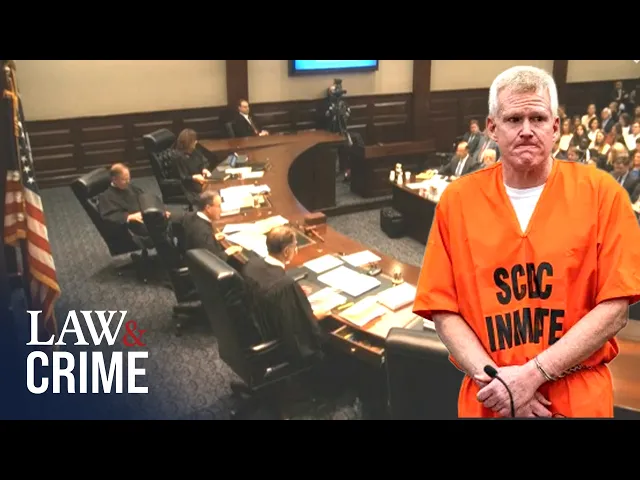
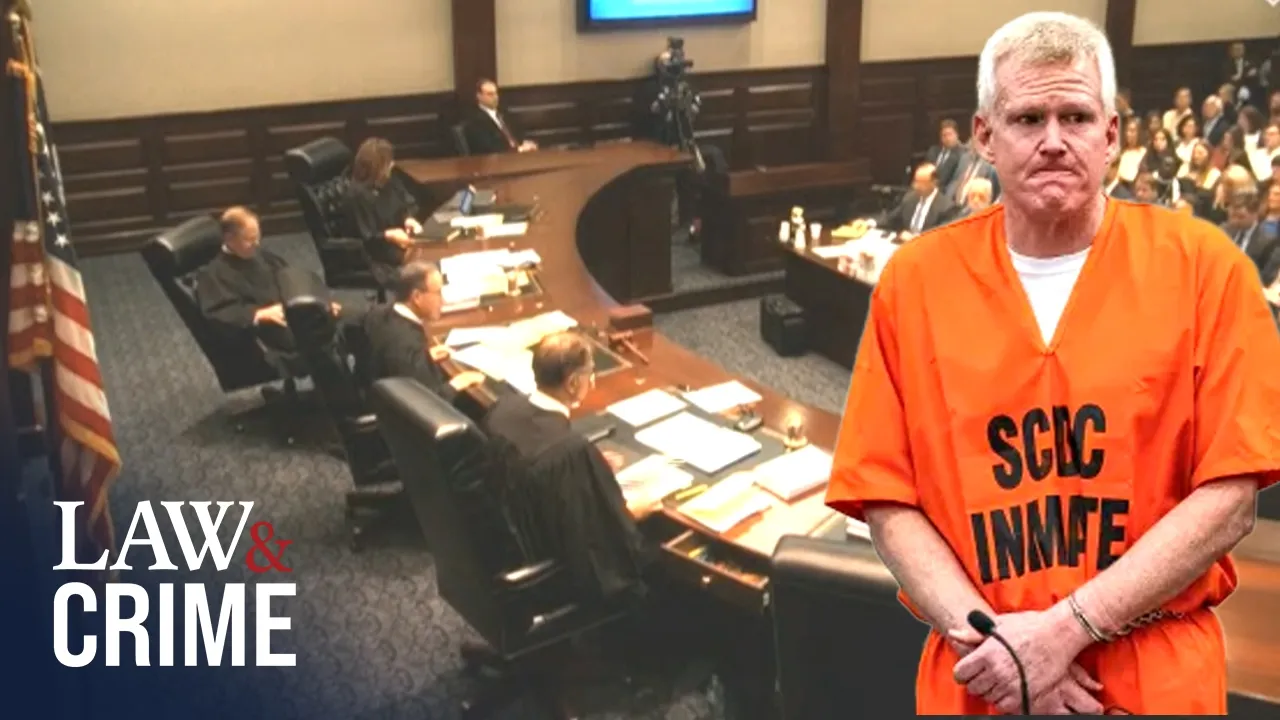
Good morning. Please be seated. The case for oral argument this morning, State versus Murdoch. I believe the clerk of court, Miss Howard, has already instructed to turn off your cell phones. If you have not, please do so. The courts in South Carolina are open, and we appreciate those who are present and here to observe, not participate. For those present who are not arguing in this case, please do not disrupt the proceedings. Any outburst or disruption will result in sanctions for contempt of court. As we proceed with the argument, just want to notify council that on
the primary argument as you begin your 20 minute aotment. Five minutes will be given without court interruption. So you'll have five minutes before we jump in with questions. It's going to be tough, Chief. And we'll have to show some restraint to do that at the end of the first issue on the Post-trial motion for a new trial based on alleged misconduct of the clerk of court. And before we get to the underlying trial evidentiary challenges in that matter, we will take a short break. And I believe Mr. Harputin, you're going to handle the first issue.
Yes, your honor. We're ready to proceed. Please court, your honor. Yes, sir. Good morning. Good morning. And as I understand your instructions, I get five minutes without being interrupted. That's right. Wow. Uh well, first of all, I want to thank the court um for I know what has been a very diligent effort to wade through this record. Uh a six-week trial and then a post trial hearing that went a few days with additional two hearings I think with additional record. So this is not uh a simple matter. But before I get to that, I I
I want to just remark on this. Um, as I came into this courtroom this morning, I'm reminded that half a century ago, I sat right about there as Justice, Chief Justice Woodro Lewis had us stand and hold our hands up to be sworn in as new members of the bar. All of us could fit in this room. That's how long ago that was. But one of the things that impressed me that day was the oath. And part of that oath was that we swore to uphold the Constitution. And as I stand here today, I'm honored
to be arguing about how to interpret that constitution, the Sixth Amendment specifically. And in my I my opinion, I I would I would suggest the Sixth Amendment may be the most important amendment because the first amendment, which gives you the right to speak without government interference, or the second amendment, which gives you the right to carry a weapon or have a weapon without government interference, mean nothing without the right to a fair trial and a fair jury. So this matter we're discussing this morning, a fair trial, a jury not poisoned by outside influences, I would
submit to you is 51 years ago as I stood there, I did not realize what I was swearing to do, but I do today. And that is to defend Alec Murdo's right to a fair trial. And I've got to admit, in the 51 years since then, I've never seen a factual pattern like this where the clerk of court where the clerk of court sets out to influence the verdict to get a guilty verdict for financial gain. Now, I do want to go to um the record fairly quickly uh and summarize it so that there's no
misunderstandings. Ronda Mcavine, who's the Barnwwell clerk of court, was asked by Becky Hill, the Colton clerk of court, to assist her during the Murdoch trial. She testified under oath that she was told by Miss Hill, that she might she being Miss Hill might write a book because she needed a lakehouse. A guilty verdict would sell more books. That was said before December of 22. We didn't pick a jury until January of 23. the best way to sell books was a guilty verdict. A guilty verdict would be better for the sale of books. So, she explained
she had a financial incentive for a guilty verdict. She also made comments to her like, "Don't be fooled by the evidence presented by Mr. Murdo's lawyer. Watch him closely just before he testifies. Look at his actions. Look at his movements. identical to the statements that I'm going to read you in just a moment by the jurors as they were questioned. Juror P, on the day Mr. Murdall was taking the stand, Becky Hill made a comment, "Watch his body language." Juror X, prior to Mr. Murdo's testimony, Juror X heard Becky Hill say words to the effect
of, "Looks like the defendant's going to testify. This is an important day. This is an epic day." It was It's rare for a defendant to testify. Jur Z, watch his actions. watch him closely. In addition to that, juror Z said uh in an affidavit and affirmed in court That Miss Hill told her not to be fooled by the evidence presented by Mr. Murd's lawyers, attorneys, which he understood to mean Mr. Murd would like would lie when he testified and that Miss Hill instructed the jury to watch him murd closely immediately before he testified, including look
at his actions, look at his movements, which juror Z understood to mean he was guilty. Alternate juror 741. Before the defense put up their case, Miss Hill told the jurors, "The defense is about to do their side. They're going to say things that will try to confuse you. Don't let them confuse you or convince you or throw you off." Hill told juror 741 741 Murdo was going to testify before he testified. That's what the juror said under oath. That's what the clerk of court of Barnwell County said under oath. Judge Tol from the bench said
at the conclusion of the hearing asked the question, did the clerk of court did clerk of court hill make comments to any juror which expressed her opinion as to what the verdict would be? Ms. Hill denies doing so and so the question becomes her denial cred is her was her denial credible. I find the Kirka court is not completely credible as a witness. Miss Hill was attracted by the siren call of celebrity. She wanted to write a book about the trial and expressed that as early as November 22, Long before the trial began. She denies
that this is so, but I find that she stated to the clerk of court Ronda Mleine and others her desire for a guilty verdict because it would sell books. She made comments about Murdoch's demeanor as he testified. She made some of those comments before he testified to at least one and maybe more jurors. The clerk of court allowed public attention of the moment to overcome her duty. Can we consider the egg juror's affidavit? I'd like you to. Well, in the record, of course, you you mentioned on during the hearing she's across the street. Judge Tol
said no, she's not going to testify. She let the alternate juror testify to to for impeachment of Miss Hill. That's what her stated reason for was in the in the during the hearing. Uh what was the rationale for her not allowing the egg juror to testify? I don't know because as you point out, if juror 741 was uh uh to impeach Becky Hill's credibility, um now she of course she was not a deliberating juror. Well, neither was the alternate, correct? Who did testify? Correct. So, my question is this, and I'm sure Mr. Waters will cover
this. Um, if the egg juror's testimony was just as theoretically impeaching as Juror 70 or the alternate juror testimony 741, why wasn't the egg juror allowed to testify? And I'm not sure that she stated a coherent reason otherwise other other than she wasn't going to remember now. But she said her affidavit is in the record. So we know what she said. Miss Hill said and we now know what Miss Hill said she didn't say. Yes. So I take that to mean that it was considered. The egg juror's affidavit was considered by the court and we
can consider it. In our defense, if when you look at the record, remember we were starting off with no one was going to examine anyone under Judge Tol's initial order and then it was a moving target. Then there was going to be some that were going to be examined. We weren't going to be allowed to examined. Then we were allowed to examine. So it was it was an evolving process. um if she in fact considered the egg ladies affidavit, she did not cite it in her order just as she did not site site juror Z
or 741's statements about do not be fooled um comments about how the attorneys are going to try. state argues in its brief uh that judge toll in making specific finding as to certain things jurors did say was an implicit rejection of the other statements the jurors said Miss Hill made. What's your response to that? Well, I would say that's wholly uh unsupported by the record. I mean, a judge in an order is going to say what they considered and and they should say what they didn't consider and why. um this this implicit implicitly I mean
the the statements by 7:41 uh by juror Z and by the egg lady all had bearing on uh clerk hills credibility and what happened is critical uh and and and let me say this also even if you didn't have what they said if a judge as the jury came in on the day Mr. Murdo was going to testify said, "It's an important day. It's an epic day. You better watch how he testifies." And doesn't say that about any other witness except some sort of charge at the end of the case or maybe before, but specifically
points that out. Mr. Harpit, let me ask you this. Um, Judge Tull placed the burden on your client uh to prove prejudice in this case. Does Green establish um in a case with external influence on a jury a different standard and burden of proof than Rimmer and the fourth circuit jurist? No, it does not. It is consistent with Rimer. All Green says is we're not going to go through this burden shifting or Any of this until we determine whether the statement was inconsequential. I say inconsequential or consequential. Um and if it is inconsequential, we're not
going to go through this analysis. That's all it said. And I'd point out in green um the process used by Judge Tol of calling all the witnesses up and asking if it had any influence. Uh Judge Hill in a footnote in the Court of Appeals Green decision points out that 606B, he says it's not raised in this case, but you know, should we be asking jurors anything about verdicts? Um, and that's another complicating factor with the process that Judge Tol used. So, um, that's an interesting point because rule 606B says that you can't consider the
effect of something on jurors because otherwise you're invading the Yes, sir. the thought processes of the jury. But how could the state rebut the presumption without doing that? Well, I mean, I think very simply, uh, all the other cases that you look at, if you look at like Parker versus Gladen, where a a deputy says he's an evil fellow and, you know, he's guilty, right? Um, they say this, you can't rebut that. That's not rebutable. Um, and so he gets a new trial. But, but in Parker versus Gladen, they talked about the prejudice. Uh well
it's it's a it's the prejudice is apparent if you use the standard some of these cases use which is the uh hypothetical juror. It would it would objectively would it influence the hypothetical juror. I mean I think that's that's the and and that's what the state has to do is say these comments would not affect the hypothetical juror. But in your brief you also say that the presumption ought to be irreutable. Are are you standing by that here today? Are you wanting us to follow Rimmer and Parker and say it is rebuttable, but you have
to use the objective standard on an average juror uh in considering the effect? Well, it's it is I would concede that it should be rebuttable, but in a situation like Parker versus Gladen, I don't know how you rebut it. I mean it may just be it's rebutable but may may not be any way to rebut it. So in some circumstances the conduct can be so reprehensible and egregious it becomes a de facto structural error. Well I read your opinion rea uh court of appeals on structural error Um where the judge refused to let the defendant
testify in a death penalty case. And I've digested um or as my wife would say dig digested not digested I'm sorry um that case and the structural error analysis and I must say Mr. Griffin and Mr. Barber and I uh have had a significant discussion on whether that would be structural error as opposed to not letting a defendant testify in a death penalty case. Um, it could be. Um, but I don't think we need to go there for this opinion, for this case. I think the clerk of court tells everybody that'll listen, I need a
guilty verdict. She tells everybody so I can make money. She tells everybody so I can buy a lakehouse. Um, and then she proceeds to talk to jurors not about inconsequential things, but h, you know, focus on the how to how to view the defendant's testimony. And a juror Z and a juror 741 into the egg lady. Don't believe him. Don't believe his lawyers. I mean, that's I submit more than enough to meet the Parker versus Gladen standard or the Cameron standard or um the uh um I think it's Bennett, the case we looked at um
I just looked at yesterday. Um all of those are cases in which there's no question what was said wasn't inconsequential, wasn't neutral. It's an it was an effective influence. Is it a finding of fact or a conclusion of law by Judge Tol where she wrote on page 31 of the record, "This court further finds that the improper comments made by clerk Hill were limited in subject and not overt as to opinion." I know you say that language was put in there by the state in its proposed order. I don't want to talk about that because
she signed the order. But is her finding that the statements were limited in subject and not overt as to opinion a conclusion of fact or law? That's a conclusion of fact which gives rise to a conclusion of law. But um that statement is wholly unsupported by the record. Um and it I would submit an abuse of discretion. And how about her finding that those comments were cured by Judge Newman's overall jury instruction that the verdict was to be based on the evidence presented and the law as he gave it and not on anything else. Well,
then you would never have as long as a judge gave the appropriate uh charge at the end of the case, you'd never have a case of jury tampering. Um, you could have somebody bribing a juror and uh, according to her reasoning, they they yeah, I took the money, but I'm not going to do what I said I do. I I mean, it's it's I don't believe uh for a minute that that uh that that is an appropriate Analysis of the law. Whether I believe it or not is really irrelevant. So, the allocation of the burden
of proof is not dispositive in your judgment. Even if it was erroneously assigned to you, you believe you met that burden of establishing prejudice because of the nature and frequency, the pervasiveness of these comments by the clerk. If you use the analysis in both the court of appeals decision of Green and then the Supreme Court uh uh decision in Green, if you if you look at the analysis, that's exactly what it is. We're not going to there's not going to be any burden shifting or anything if if it's innocuous. But if it is something other
than that, then the burden does shift to the state. Um and and we've met our burden. There's no second she had a two-prong test. Second prong was, you know, did it affect the verdict? Well, I mean, if somebody had that can't that can't work for rule 606b for one, but more importantly, you're asking jurors to unpack for you what influenced their verdict. What how did they get there, which you can't do under 606 feet and people can't do period. I mean, if somebody had walked in there with a gun and threatened everybody um and then
left and the jurors were pulled a year later saying, "No, you know, I thought the evidence was overwhelming. It didn't matter whether somebody walked in with a Gun or not." And overwhelming evidence um is not uh the standard. Um you know, this Sixth Amendment, I was going to go somewhere historical. I'm not going to do that. But um yeah, I am. The sixth amendment was based on, as you know, English uh common law. In the trial of Aaron Burr in 1807 for treason, this is not for killing Hamilton. This is for trying to sell part
of the United States to Mexico. He was a piece of work. Justice Chief Justice Marshall quoted from Lord Cook or Ko who said, "A juror must be as indifferent as he stands unsworn. His verdict must be based upon the evidence developed at the trial. This is true regardless of the heinousness of the crime charged, the apparent guilt of the offender, and the station in life which he occupies. It can't say it any clearer." And that's what the Sixth Amendment guarantees. And that didn't happen in this case. We we understand that everyone, regardless of the heinousness
of the offense, The uh character of the accused or the apparent guilt of the accused in no manner diminishes the right to a fair trial in your effort to set up that this is a a man for all seasons moment. We understand the gravity of the situation and the entitlement of every individual to a fair and impartial trial. Your honor, I never doubted that for a moment. I think I was saying that more from me than you. Um because it's such a great quote and again came up during Aaron Burr's trial who's such a terrible
person. Um but even he was entitled to a fair jury. Um, you know, we quote in our brief and I want to uh expand on it just a little bit. If you look at United States versus Elbaz, which is a fourth circuit case written by our own Jay Richardson, um, he details what Remmer requires, what the, you know, to trigger the presumption, the defendant must introduce competent evidence of extrajudicial juror contacts that are more than innocuous intervention. I submit we've done that in this case. Um but the presumptions were butable. The government defeats the presumption
by establishing there exists no reasonable possibility that the jury's verdict was influenced by an improper communication which was not done in this case if you and you should exclude um well at least one I would point out juror Z said it did. I mean if we're going to go that way um now it may have been ambivalent. uh judge tool uh says I said in the record it can be both pressure from the jurors and what Kirk Hill said but I Don't think we need to go there because 606B um and almost all the cases
about external influence don't allow you to ask the jurors questions about how they got where they got part of Parker versus Gladen was six amendment was violated because the baiff there who said this person's guilty, this wicked fellow, whatever, became a witness in the case. Is that what you're saying? Clerk Hill became in this case. Well, not necessarily. What What I'm saying Parker versus Gladen, um, you only need 10 or 12 to get a conviction. And the Oregon Supreme Court said, well, we had 10 that weren't influenced by whatever whatever the baiff said. The Supreme
Court said very clearly doesn't matter. You're entitled to 12 impartial jurors. Also, that was the case in which the uh United States Supreme Court uh adopted through the 14th amendment the sixth amendment to the states. So, um that's the reason I like Parker because it's got so many different levels that are very helpful in this case. And in Parker, did it take took 10 to convict in Oregon, right? Yes, sir. Uh how about uh Judge Tol's finding that even if the state uh have The had the burden um she found any possible presumption of prejudice
was overcome by the facts and the court's findings. She did she did conditionally rule that if I'm wrong about the burden then the state has overcome that burden. Well the presumption excuse me two things. one, she doesn't detail what that overwhelming evidence is. Um, and you're going to hear from Mr. Griffin in just a moment as to how underwhelming that evidence is. Um, number one. Number two, that can't the level of if if if the level of evidence dictates whether or not you get a fair jury, then again, we go back to what Judge Marshall
said. no matter how heinous, no matter how overwhelming the evidence, you're still entitled to a fair trial. I mean, if only the people that may be innocent um get a fair trial, then our constitution isn't working. I don't care. I would submit this court shouldn't care. No one should care when there's a Sixth Amendment violation like Becky Hill committed in this case. And and let me say this, I know my time's up. We spent months getting ready for this trial. weeks, six weeks trying this trial, more more months finding jurors to talk to and find
out if the court could talk to her, talk to them. We had more hearings, more briefing. Nobody wants to do this again less than we do. But that's not the issue. It's not how much trouble it's going to be. It's what is Alec Murdo guaranteed to under the Sixth Amendment. Thank you, sir. Thank you, sir. Good morning, Miss Waters. Good to see you, sir. Good morning, Chief Justice Kitridge. And may it please the court. Um, I'll start out with my uh five minutes. And I I'll start by saying I also agree that O's are important.
That's something I always talk about with juries and the importance of their oath. And I think that that's also recognized very strongly in this court's case law and case law of other uh jurisdictions. Uh and that this court has expressed that jurors are presumed to take that oath very seriously that they're presumed to be people of ordinary firmness that they are not presumed to blow with the winds of every opinion that swirls around them. And so I think that's an important place to start when we look at this particular case. And when we look at
this particular case, what we are talking about is what Justice Tol described as a few fleeting comments. And in the face of that, we have to consider a six-week trial with almost 90 witnesses with almost 600 exhibits uh with uh Judge Newman, uh with the entire prosecution team, with the entire defense team, and all of that uh presentation over six weeks. And to to get there uh and to do what ultimately is is the analysis is we have to assume that at some point prior to deliberation during the presentation of evidence with all of that
going on uh some jurors like Well you know I didn't know what I was going to do but Miss uh Becky said uh you know watch his body language and that made the difference. And I would I would submit to you that that is simply not a uh a finding that is justified in this evidence. is not a finding that's justified under what we know about jurors and it's not a finding that's justified by what uh the jurors said in this particular case. Now to sort of uh detail my uh my analysis in my free
five minutes that I that I have here uh before uh the questioning comes is we have 606 and we've got two issues. We got number one is what happened and then we've got number two which is how do we analyze that particular issue and when we start with what happened that is obviously a credibility and factf finding effort by the uh trial court. This court is very clear uh that the trial court because this is not like a trial this is a a procedure that is in the discretion of the trial court and ultimately any
credibility findings fact findings uh this court respectfully would defer to. And so to determine that, what exactly happened? And this uh court ultimately credited uh the 11 jurors. And so what do we have with those 11 jurors? We have one juror saying that um Miss Hill said, "This is an epic day and uh the defendant is going to testify." All right. And then we have another juror who says, "Watch his body language." And beyond that, the court clearly did not credit juror Z. And I'll get into more about that, but there's plenty of the support
in the record why the the court could uh not credit what Jur said. Uh Jersey uh was ambivalent. Her answers were all over the place. None of the other jurors uh heard all those egregious statements. She couldn't even remember all of these egregious statements when she was on the stand. She said, "I don't I don't remember them." All of these things that really would take this analysis into a different level, she didn't remember. So, when we bo when we boil it down to what happened, we're talking about epic day. All right. Epic day. Everybody in
the courtroom knew it was an epic day. That is not that is not news to anyone. Everybody knew it was an epic day. Uh it is rare for a defendant to testify. That on its face is a neutral comment. That is not necessarily a comment one way or the other. And if anything, we've we've seen where instances of a jury in deliberation considering the fact that a defendant didn't testify saying, you know, he must be guilty because he didn't testify. That's actually been uh a a a an inference that goes more in favor of the
defendant than against him, the fact that he's testifying. But again, it's rare that that a defendant will testify. That ultimately is a neutral statement as well. And then watch his body language. Again, that is what was found. Not don't get fooled by his comments or or anything like that. That was not what was found uh by the trial court. Just a neutral comment of watch's body language. And so that is the the facts, the three facts that we have to ultimately assess. So when we move on from there, then the analysis is how do we
analyze that? And first of all, we have the discussion of whether or not there's a presumption of prejudice. Uh Justice Tol of course found based on this court's clear case law that there was not. But I would agree, I would submit to you that not only because of the alternative findings, but just because of a general analysis that regardless of who had the Burden, that presumption of prejudice was overcome in this particular case. And I'll talk more about that in a second. But I think ultimately the legal analysis, whichever way you go, I don't think
is going to be dispositive because of the relatively uh um non-aggregious nature of these comments. They are nothing like the comments that were in uh the cases uh that have um um led to reversal. So let's talk a little bit about uh more of the findings that were there. Um, in looking at the evidentiary hearing that was done, uh, we had, of course, Miss Hill testify and the and the judge found that she was not, uh, completely credible. Um, we had Miss Rhonda testify. The court did not credit that testimony because Miss Rhonda conceded over
and over again that she absolutely heard nothing whatsoever of Mr. Waters, I want to stop you right there um, since your five minutes is up uh, and and talk a little bit more about Jersey. Yes, ma'am. You're saying these are innocuous comments um not to be fooled u and look at his actions, look at his movements. Um the court seems to seems to believe Jersey when she says in her affidavit and when she testifies that these comments were made to her. However, she goes on in her affidavit to say not to be fooled, which I
understood to mean Mr. Murdoch would lie when he testified. look at his actions, look at his movements, which I understood to mean that he was guilty. Um, the juror is testifying in her affidavit that uh that the effect on her was significant. Why Why can the court how can the court find that certain comments that she made, take them and incorporate them in the order but not believe what she says about the effect? Well, two things about that. I think that first of all, Justice Tol did not credit any comment any of the egregious comments
that she didn't even remember herself on the stand such as won't get fooled. The only comment that was credited was what was testified by juror P, which is watch his body language. And and let me and and and I want you to finish your answer, but I I want to ask you this. Uh so far as the comments are concerned, are we limited? Is this court limited to only the comments that are included in Judge Tol's order? Or are we able to consider all the comments that are included in the affidavit? Uh even the egg
juror affidavit? Well, what I would say to that is is the case law is clear that the trial court has the discretion to conduct this hearing and ultimately make credibility findings which under typical appellet law this court would defer to. And so my argument to that is is if you look at Justice Tol's order, both her oral order and her written order, she credited the 11 and did not credit juror Z and did not give Any credence to 741 the alternate and uh or the egg lady which of course did not testify. Now, there was
uh on page 808 of the record where she says, "I think we've got in terms of what she says, Miss Hill says, and what Miss Hill says, she says uh that's on page 808 of the record and talking about the egg lady uh juror, but ultimately uh you I I would submit that this court um in in appellet review uh does need to defer to credibility and factual findings of the trial court. And the trial court only found the 11 credible. Well, then help us understand the ostensible inconsistency when the trial court finds portions of
juror Z's affidavit credible and just carves out and doesn't deal with the part uh that dovetales with the alternate juror's testimony which is far more prejuditial. Sure. How do we do that? Well, so we're looking for I would submit from an appellet court's uh standard of review, we're looking for support in the record uh for those findings. And so when you look at juror Z, okay, and first of all, you look at the 11 which she did credit and none of those 11 heard any of these other egregious comments or anything uh like that. None
of them. What do we do about the order that doesn't even mention that juror Z did in fact testify about the comment? Don't let the defense confuse you. Well, I think that uh when you look at the order in her specific paragraph on Jersey Z, what she says is that Jersey was ambivalent and and ultimately as she goes through the analysis of what Jur Z says, she's not crediting that testimony. And again, I think there's support in the record for that. There may be, and that that may carry the day for you, right? assume that
we find that that statement was made. Do you still have a path to victory that don't uh don't be fooled? At the end of the state's case, before the defense presents it case, the statement was made, do not be confused, do not be misled by defense and its council. Right. Well, I would say and and this is like everything in this, it is a question of degree. Okay. and uh and there could if if the clerk had come in there and held a gun to their heads and said, "You better vote guilty or I'm going
to shoot you all." I probably wouldn't even be arguing that's not structural error. Okay? But everything is a question of degree. I I'm not going to concede that if those statements uh were credited and are part of the the review that our path to victory is not harder. But I think you have to look at that in the context of this entire trial and when those particular statements were made, right? And I think context is important, too. You you can we all can cherrypick some of these that are on the surface innocuous. Epic day, big
day. Uh and when viewed in isolation, they don't move the needle arguably. But when those seemingly innocuous statements are considered in the aftermath of the originating statement, not to be confused and misled by the defense, those initial innocuous statements take on a very nefarious message. I I could not argue otherwise that that would absolutely be a question of degree. However, I don't believe that that just ends the inquiry right there because you still have to analyze it uh in in the context of all of the factors and everything that went on. And so to look
at that, let's let's look at all of the things and and let's assume that we're limiting to to what I contend Justice Tol found, which again when I say innocuous, I'm saying relatively not egregious. I'm not saying that the the clerk should be saying watch his body language. Okay? But that is a far different comment from what you're talking about right there. But even if we add that in, we're still talking about a limited uh you know, number of of of jurors who saw that. Um, and then we're putting that in the context of where
that occurred. Okay? It occurred during the middle of the defense case. Not during deliberations, not right before deliberations, but in the middle of the defense case. It occurred during I think we counted no less than 60 times that this jury was told by Judge Newman uh to only you know rely on the evidence to not talk about the case to not have external influence and all the rest of that. And we have to credit that. We also have to again put that in the context that when and if that that occurred and even assuming that
there was a one bit beyond that that it was attenuated from the actual point of deliberation by the rest of the defense case by uh the entirety of the uh um of the uh state's reply case by all of the closing arguments of council and by judge Newman's very detailed charge. And so while that would be uh different, I don't think that that is fatal when you look at the entirety of this six-week trial and again go back to what I said uh ultimately at the beginning of my argument here is is that for that
to happen you'd have to uh to uh conclude that with all of that going on with this massive evidentiary uh presentation with multiple instructions from the trial judge with all these arguments so you're distinguishing a day and a half long burglary third trial trial from this trial? No sir. But what I am saying is is that I do think time matters. I don't think but but you would agree that at the end of a Berg third trial with a guilty verdict uh the judge finds out that the clerk of court was back in the jury
room saying something like uh well that defendant's not going to testify but uh I just want to let you know this Is the fifth time he's been up here for a burglary third so don't uh I just want you to know that egregious or not your honor if that were the case I would be very hardressed to argue you otherwise. Okay. So, help me out with this. If we craft a standard based on the length of a trial and heavens heavens knowbody wants to try this case again. H how do we create a standard based
on a lengthy trial versus a dayong trial when the constitutional right is the same? I absolutely the constitutional right is the same and what I'm not asking is this court craft a different standard for a long trial versus a short trial. What I am saying is what is relevant to the ultimate inquiry that this court engages in is the timing of when these comments took place. Okay. Well, let's talk about that and and I'll weave in some questions about the egg juror. Uh, Miss Mavine, the Barnwal County Clerk of Court, said she didn't hear any
of these comments made in front of jurors, but the comments made to Miss Mavine by Miss Hill were remarkably the same as those related by the jurors. For example, watch him closely. U, look at his actions. Look at his movements. Miss Hill was saying that to staff and to Miss Mine. You you agree that's what she testified, right? That's what she testified to. does match almost exactly what these jurors said Miss Hill told them. Correct. It is. Okay. So, explain to me how we pass go under your theory. How do we how do we accept
the fact that Judge Tol maybe didn't mention all these things in her order, but they were supported by an impartial witness, that being the clerk of court from Barnwell. Well, two things about that. I don't think we can get past what you've what you've recognized that uh uh clerk of court from Barnwell heard nothing going to a juror or she would have uh brought that to the court's attention, but the consistency of the comments or the similar nature of the comments is striking. Well, and then my my second part that I would say about this
is that all of this arose months and months and months after trial and and the courts have been rel, you know, historically reluctant because of that passage in time, because of the fact that jurors vote one day and one day only and don't have to uh um ascent to their verdict and and and vote him guilty every single day for the rest of their lives. And so I think that that passage of time uh is uh is something that is relevant as well when this case is being talked about incessantly out in out in the
world. And so I think that that's something as well that uh that you know Justice Tol can consider in deciding uh what is what actually happened and the best evidence Of what actually happened and whether or not it is whether you look at what the juror said about it not to get to the 606 uh aspect of it or if you're objectively standing back and making that factual finding of this is what happened and this is uh whether or not there's a prejuditial effect. uh that is why uh justice tool credited those 11 jurors and
that is I I would submit to you the the realm of what this court needs to consider. I want to ask you a question about this u idea that you expressed that this uh event or the these moments when the when the clerk spoke to the jurors uh should be considered insignificant uh when viewed among the entire trial whether it's a long or short trial. um the there's not there's no eyewitness, there's no DNA, there's no one thing on the part of the state that they could re that you could rely on to show him
guilty. So, you had to piece together a whole bunch of different stuff. We'll talk about uh a lot of that stuff uh in the next phase, but Yes. but you spent, you know, most of that six weeks was you piecing together small pieces of evidence to put together an argument that he did it. on his side. Now, of course, he doesn't have the burden and doesn't even isn't even required to testify, but on his side, whether he's guilty or innocent boils down to one moment, one thing, and that's when Ell uh sat up on the
stand and said, "I didn't do it." So, what I'm wondering is you're wanting us to consider the statements um by the juror, by the clerk to be insignificant, but they but those statements go to the only thing that the defendant really had. I mean, the defendant can argue that you didn't piece it all together, but really the defendant's argument boils down to the one thing that the clerk of court addressed. So, we can look at all this context if you want to, but the jurors knew that if Ell was telling the truth, he's not guilty.
If he's lying, he is guilty. And that's where the clerk of court's statements appear to focus. How do you respond to that? Well, I I would say that I while I understand that that obviously is is was very important the defendant taking the stand, it wasn't as simple as just getting up there and saying, "I didn't do it." Okay. And and while there was a long piecing it together of all of that, the defendant's testimony was also very long over the course of two days. And so, I I don't think that that it that you
can just view the defendant's uh um testimony entirely in isolation of this entire trial. I don't think any analysis has ever ever said that we're going to ignore the entirety of what went on. Certainly, the defendant's testimony was important, but they had been raising all kinds of issues as to lack of motive, as to other possible motives, as to the boat case, as to the cowboys, and all these other things along the way as well. Um, so again, saying this is an epic day, saying it's rare for defendants to testify, those were all statements that
everybody in that courtroom knew, everybody in that Courthouse knew. Um, so while I hear what you're saying, I think that this is you can't take out the fact that this was a complex matter with a lot of complex issues. And you know, to the extent though that the we you've you've made some fine points about how we should interpret the statements. But if the statements, as and Justice Kits was alluding to this, if the statements kind of collectively go to the point you should not believe him, to me it's hard to separate that from the
critical issue in the case. Um, but I want to bring up one other thing. You point out in the very beginning of your argument um that uh the the trial court here found that Becky Hill was not credible. Now, that's a soft statement. That's like that's almost like Richard Nixon or Bill Clinton, whoever it was, said mistakes were made. Um, sometimes people are not credible because they didn't get a good look at what occurred. Sometimes people are not credible because they don't remember what they saw. Right here. If Becky Hill is in is not credible,
it's not because she didn't see it. It's not because she doesn't remember it. It's because she's a liar. Is that right? I would say that ultimately she said she was not completely credible and yes. Yes, sir. So, there's only one way that Becky Hill can be not credible, and that is that she is a liar. I think that uh Justice Tol did not credit parts of her testimony uh as she looked at everything. Now, she didn't specifically find that she is a liar. Uh but ultimately, she didn't credit that testimony. But what I think is
important is that neither Justice Tol nor the state relies on Becky Hill. What we rely on is what is most important, and that is the 11. the overwhelming majority of these jurors who sat there and looked uh Justice Tol in the eye, who judged their demeanor, who judged their credibility and and who ultimately were clear as a bell that there was no sort of improper influence on their verdict. And when you look at these questions and and you know whether or not they went beyond uh 606B, ultimately they were questions about impartiality. And I think
there is a distinction and Justice Tol made this distinction that that when she phrased these questions, first of all, she had the four exact questions that were in green, which I understand the footnote uh Justice Hill when you were um on the court of appeals, but they were the same four questions from the record in state versus Green. So that was a reasonable uh set of questions to ask. I see I'm out of time, but you premise your response that she relied on 11. Mhm. In Ethier, this court overruled Vestri versus Orcin exterminating and that
a party is entitled, and that was a civil case, 12 impartial jurors, not 11. Yes, sir. So, how do we deal with that? because ultimately the 11 were credible and Z was not and that is what uh Justice Tol clearly found and when we look and how do we handle Miss Hill with as I think Miss Harput referred to one of the comments that Miss Hill was um attracted by the siren call of celebrity. There's another quote in the trial court's order. She allowed her desire for public attention to overcome her duty to her oath
of office and her oath as a witness. Yes, sir. How do how do we deal with that and pick and choose what parts of her testimony we accept or don't accept? We just refer to the trial court. Well, I think when we look at Miss Hill, and again, I'm not here to justify or to defend Miss Hill. Miss Hill, of course, said she didn't do, you know, any of these things, uh, other than, you know, occasional just everybody pay attention. You need coffee and things like that. Um, but so I think that ultimately Miss Hill
is uh is she didn't admit to any of those things. So, you have to look at uh jur. Jur is what's really in play as to whether or not Miss Hill went beyond uh What we say and what the trial court found was the the area of of what this court is to consider and whether it was something far more egregious. And even beyond that, even beyond that, even if you take some of what Jer Z said, even if you take uh some of what Miss Becky said, even if you take some of what Miss
Rhonda said, when you do that analysis and you put it in the entire context of thing and and when you put it in the entire context of this entire trial and you put it in the context of where it occurred and everything that went on after that point, then there the state has overthrown prejudice. And as Justice Hull said, uh, she finds it, uh, she did not find that a full a few foolish and fleeting comments in the entirety of this trial would be enough to have infected this verdict and to make it unfair. I
completely agree that that somebody's entire to all 12 jurors, but this is a credibility finding that 11 told the truth and one did not and the 11 uh set the standard of what this court should consider and those comments were not egregious. Okay. Can I please? Yes, sir. Justice James. And we may have some other questions as well. One second, please. M a few. You go ahead. No, you go ahead. Um the juror jury of 11 versus 12. Um in the defendant's brief, he argues that Judge Tol studiously avoided Parker versus Gladen. Mhm. And I
think that's the case where it took a vote of 10 out of 12 to find somebody guilty. Correct. Um there is no mention of Parker versus Gladen in this order. Is that still good law? Yes, sir. And I'm not concerned. Okay. So, but you you said several times, and I would too if I were you, that 11 jurors said, "No, my verdict was my verdict." Right. Um, so that takes me I just want to you can respond to the Parker versus Gladen part in a moment, but you also need to explain to me about the
egg juror. She was removed from this jury on the day deliberations began. Is that correct? Yes, sir. So, she was not an alternate. She was a sitting juror. Correct. And so she was there and removed minutes before they began talking about the case, began deliberating. Correct. Correct. And she said uh in her affidavit um that her ex-husband called her as she was getting on the bus to ride to the courthouse that morning. That upset her because she had a restraining order prohibiting him from contacting her. So she called or she spoke to Miss Hill. Correct.
Yes, sir. And Miss Hill told her according to the egg juror, the Murdoch probably got to him. You agree that's what she said in her affidavit? That's what she said in her affidavit. Okay. And then Miss Hill asked her if she was leaning one way or the other. And the juror, egg juror said, "Uh, Mr. Waters closing was good, but I still have questions." And she said, "What kind of questions?" And she told Miss Hill she had questions about the guns. I suppose couldn't find them or they were too used. And then Miss Hill asked
her what makes you think he's innocent. And she said the video at the kennels. Uh, and then she said, "Miss Hill said, everything the defendant has said has been lies and you should be forget about the guns. They will never be seen again." Are those uh fleeting comments or are those egregious? Your honor, those would be hard pressed to defend. Yes, sir. That would be much different from what I'm arguing this record. And then Miss Hill told her that the four person should just go in and Ask for a raise of hands and this will
be over and done with and everybody needs to be on the same page. So I'm struggling number one with why the egg juror wasn't allowed to testify because that was directly impeaching of Miss Hill's testimony that she said nothing. Correct. Yes. Uh and Judge Tol did say that the egg juror's affidavit is in the record. So we know what she said, Miss Hill said. So can we consider that affidavit? Ultimately, I think uh that uh Justice Tol when she made her ruling on and again within the discretion of the trial court as the case law
allows her to do to set the the the tenor of this inquiry was only looking at the uh the jurors who actually uh deliberate deliberated and I think ultimately we got to the alternate because the ultimate was there to the end. The difference with the egg lady, and we have to uh remember this too when we look at the implicit rejection of all of that, is that the egg lady was and that it wasn't like she just got kicked off that morning. That was the product of a couple of days of inc camera hearings that
ultimately disclosed that this egg lady juror who initially said she had not talked about the case. Uh it was ultimately discovered that she had and all of this stuff about you know the Facebook and all that other stuff uh Judge Judge Newman was very clear was not the basis for her removal. It was a basis the basis for her removal was her violation of the when somebody delivered a refrigerator. Correct. And she they said she was talking about the case. That's correct. And then and that was after she denied it and then ultimately it came
to pass that that was not the case and Judge uh Newman uh removed her frankly for that misconduct. And so that in and of itself is support in the record as a basis in the record for uh Justice Tol's rejection of of the credibility of all of that. Um and this is a person again who wrote a book afterwards and months and months have gone on when all of this stuff started percolating up. I think that's all relevant to consider as well. Justice Hill, Mr. Waters, you talked a lot about the timing of this case
and the length of it. Um, now the clerk is the public official who jurors have their first contact with from the courthouse and their last. Uh, she's the administrative face of of the court essentially. Uh, her name's on the letter head of the jury summons that the jurors get. She swears in the jurors. She swears in all the witnesses as they're about to testify. uh she coordinates the juror schedule. She's the liaison between the court and the jury. She's their guide or their sherpa, so to speak. She's their point person and she reads the verdict
and she signs their paychecks at the end of the trial. Now, justice is supposed to be uh blind. We all know that. But court officials when it comes to the merits of a case are supposed to be mute. That's the ideal. That's the aspiration. Even our constitution prohibits the trial judge from commenting on the facts of the case in open court. Yes, sir. Now, after a six-w weekek trial, it's only human nature that these jurors might become bonded to this person. So, you've talked about the timing and I'd like to talk to about the source
of these comments and where they occurred, which was in the jury room. So, can you comment on that? Yes, sir. So, I I I absolutely hear what you're saying. I think though that that um uh maybe overstates not and I don't at all distinguish or disagree with you about the what a clerk should do and the role that they serve and all the rest of that. But I do think that that overstates what is supposed what Justice Tol was supposed to do and what this court is supposed to review and that is the specific circumstances
that occurred here. And I think that that um that um maybe overstates uh Miss Becky's sort of influence in all of this uh at this point in time. Uh the jury uh actually the person who handled the juror's day today was Bill Pulk uh not Miss Becky. And in fact, as Miss Rhonda testified, Miss Becky got sick and Miss Rhonda was at the trial more than Miss Becky was. Um, and so while certainly some of those factors may exist, I think when you look, and this is what I argued before, when you look at what
was going on in this courthouse, when you look at the entirety of the specific facts here, when you look at Judge Newman on the stand, who was really, if you want to say, the sherpa, the shepherd of these jurors is Judge Newman, not Becky Hill. when you look at the entirety of this record, I I don't think that while you're exactly right that the clerk has that neutral role and serves those functions that uh in this particular instance, Miss Becky's uh uh influence was that large and there's no evidence of that in the record. And
to go back to what uh Justice um James was saying is uh you know this is part of the rejection of that credibility that all of those detailed things just so above above and beyond the pale that uh the egg lady says happened and all of that um all of that contact. No other juror no other juror said anything like that. And those were the jurors that uh Justice Tol uh found credible. And again, that has support in the record that Miss Becky has just decided egg lady of all people is the person that she's
going to go through all of this with and not have similar conversations or similar things like that with all of these other jurors. And again, that in and of itself is supporting the record for us to put those aside and focus on what the 11 said, not that 11's good enough, but that 11 are credible and that rejects these claims of the others that all have credibility issues that have support in the record. The circumstances of this issue are not lost on us. Um, in the courtroom, we have an excellent attorney general with a very
professional and competent team of prosecutors, including you, Mr. Waters. On the defense side, we have an extremely competent top drawer uh, representation. We've got a superb trial court judge. And out in the hallway, we have a rogue clerk of court. And even if we accept the truncated version of what you characterize as innocuous statements, even you acknowledge it was improper. Perhaps not improper to the point of reversal, but you acknowledge it was improper. Absolutely. And let and if I could respond very quickly. Well, I just I I want to make the note because in my
position as chief justice, I have to deal with the clerks of court in 46 counties. And the overwhelming majority of our clerks of court are dedicated, conscientious public servants who discharge the duties of their office with integrity and do not act like this. And I'll give you the final word. Thank you, uh, Chief Justice. I think what you just said highlights and proves my point when you went through all of the players in this trial and and the relative, uh, insignificance of Miss Becky. And as I said before, with all that going on that some
jurors really like, oh, well, you know, Miss Becky said, "Watch his body language." That that is going to make The difference. what you just said of all that went on is why uh not the truncated version and I understand your point with that but what the record reflects and what justice tool uh found is what really happened that was the extent of it I don't mean to imply they were innocuous what I mean to imply is that they were neutral on their face not proper but neutral in their face and not egregious thank you so
much appreciate the fine arguments from both sides at this time before we go to the you can do the reply Now, on this issue, I thought we're going to do the reply at the end. What's the What was your understanding, Mr. Barber? Uh, Mr. Chief Justice, that the reply would be at the end of That's mine, too. So, we'll take a say 10-minute break. Everybody stretch their legs, restroom break, and then we'll be back in 10 minutes. Thank you. Thank you. Be seated. We move to phase two of the oral argument. Mr. Griffin, are you
going to be arguing the evidentiary issues? I am, John. We're ready to hear from you, sir. And good morning, Chief Justice Kitridge, members of the court. I'm Jim Griffin. I'm here representing the appellent Alec Murdoch. This appeal presents five fundamental evidentiary errors that individually and cumulatively denied Alec Murdoch a fair Trial. First, the court admitted test admitted testimony from a cell phone forensic evidence who confessed that he had never actually done a physical experimentation like the one about which he testified and knew nothing more than anyone else in the courtroom. Two, the court admitted gunshot
residue evidence from a blue raincoat despite the fact that the only connecting witness definitively testified that what she saw was a blue tarp and could not be confused with a rain jacket. Three, the trial court admitted unfairly prejuditial evidence over six days regarding financial crimes spanning six years. The crimes that were committed by the appellants. Four, the prosecution violated Doyle v. Ohio by repeatedly impeaching Mr. Murdoch regarding his post Miranda silence after being arrested on the murder charges. And five, the court admitted firearms identification testimony based upon unprecedented methodology that the expert himself could not
state to any reasonable degree of certainty during the council hearing. In the uh interest of time on that fifth issue, I intend to rely on the briefs unless the court has any questions about about that about that evidence. Um the evidence in this case did not conclusively prove defendants's guilt such that no other rational conclusion could be reached. Therefore, none of these errors were harmless beyond a reasonable doubt. There were no eyewitnesses to Maggie and Paul's murders. The murder weapons were never found. The forensic evidence does Not support Allan's guilt. All crime scene criminologists experts
testified that whoever shot and killed Paul um shot him in the head. His brains hit the ceiling and blood and brain matter would have been on the guns and on the shooter. That was without a doubt. And there was no brain or blood matter found on Alex person, his clothes, inside his Suburban, inside his home. They checked they checked the bathtubs nowhere. that there were trace amounts of DNA found on on Alex's clothing that were consistent with his explanation that he checked them for signs of life. There was minimal GSR, gunshot revenue residue on Alex,
which also was consistent by the sleds on testimony, consistent with him going back to the house, getting a shotgun um for personal protection and waiting for uh law enforcement to arrive. Alex Murdoch's interactions with others after he left the kennels that night and before he returned and called 911 were normal. He talked to his son, Buster. He talked to his brother, John Marvin. He talked to another lawyer, Chris Wilson, about the case. They all said his demeanor was normal. Visiting his mother, there was nothing out of the ordinary about his demeanor. There's no time of
death established. The coroner did a finger test under the armpit. Um, the state relies exclusively on cell phone data inside the phone to establish a time of death, which was unreliable in our opinion. the the cell phone data showed at 8:45 uh p.m. There's a kennel video and Alec had lied about previously in his interviews about being at the kennel um with his family, but there's a kennel video at 8:45, but there's nothing on the video that would lead someone to believe that there's a a murder about to happen. It portrays a normal family. At
8:49, Paul's phone, Paul used his phone for the last time. Um it had very little battery left on it. At 8:55 there was some um some action on Maggie's phone and at 9:06 Maggie's phone registered um movement for the last time some 20 minutes after Alec testified that he left the kennel. Um we submitted an expert on acoustical testing and it was uncontradicted that if you're in the house with the door closed and the TV on, air conditioner on, you could not hear gunshots down at the kennels. And then Alex testimony himself denied killing his
wife and son. So this was not an overwhelming evidence case. This was a very close case. And the cell phone and GPS data frankly pointed to his innocence, not his guilt as the as I will explain in a moment. And that brings me to the first issue that I'd like to address is that the state was allowed to present expert opinion testimony about a about a test that was done during the middle of trial from a from a cell phone forensic expert, a deputy from Charleston who had previously been in uh testified about chain of
custody and other issues that During the weekend after after our expert testified and it's in critical to know that Maggie's phone was found on the side of the road about a quarter of a mile down Moselle Road and 15 ft off the side of the road. And when we finally got the GPS data during trial from from General Motors and the OnStar data, Alec went by that location doing 42 miles an hour at 9:08 p.m. As I mentioned earlier, Maggie's last phone activity when orientation change in the phone was at 9:06. The question is, if
Alec had thrown the phone out at 9:08, would it have registered an orientation change, would it have would there been anything in the phone to um to record him tossing the phone out? And and the testimony that the defense presented was Mika Sturgis talked about the rise to weight feature. He did an incourt demonstration. I don't I was going to bring my phone on people, but if you lift it up, it lights up. All of us have. What's your theory as to when the phone was tossed out of the window of some by by someone?
What does the timeline show? I I take it your your argument is that when you toss the phone at some point it's going to uh the raise to wait feature will activate. So So my question is on the timeline that we have and it's pretty it's extensive. What is your theory as to when the phone was tossed? So, Justice James, I with all due respect, I I want to rephrase it. I think that's asking the wrong question. Okay. I think the right question is would the phone turn on and record any sort of activity if
Alec threw it out the window at 9:08? Yeah, I know you say that, but I'm talking about in the timeline that we have and the cell phone extractions that we do have, when when was the phone tossed? Well, I mean, what I mean, the states, you know, so you you could say one explanation, it was tossed at 9006 cuz that's when it registered. Or you could say at 9:06 it was down at the kennel. We don't know. Honestly, we don't know. We don't know how it got put on the side of the road. There's there's
no witnesses. But what's so critical to our defense is that at 9:08 when Alec Murdoch goes by that exact same spot at 42 miles an hour um if he had thrown the phone out the window, what would have happened? And and the state says they were just replying to our expert Mika Sturgis who said he's not qualified to say whether it would the light would come on or not, whether it would register anything. Similar question. I don't think you have to have a theory. That's the state's burden. But when we're looking at your argument that
um uh uh Alec didn't throw the phone out when he drove by because it didn't light up. That raises the question of how it got there. Somebody put it there without and and it did and it never lit up. So the point that you're making is it's wrong for the state to be able to prove that it might not light up. But to me, it looks like it definitely didn't light up because whoever put it there, unless it was at 9:06, the phone did not light up. That though it's I'm raising the question of whether
this even makes any difference. Well, it it makes tremendous difference because if Alec threw the phone out at at at 9:08 when he when he goes by that location, um our evidence, not through our cell phone forensic person, but through our u accident reconstruction acoustical guy, Mike Sutton with Accident Reconstruction U institute in Raleigh, North Carolina says that phone at 42 miles an hour will tumble and when it tumbles that raise to wake feature. So, we did put in the evidence through two witnesses, both qualified, about what they testified. I got that. But let's just
hypothesize that ELC didn't do it. He didn't throw the He didn't have the phone in his hand when he rode by 908. Somebody came along at 9:20, these roving marauders, you call them or whatever, and they killed the the uh Maggie and Paul, and then they put they were responsible for getting the phone to where it ended up. Wouldn't the phone have lit up then? It depends on how it was placed. If we don't know whether it would have lit up then, we also don't know whether it would have lit up at 908. Well, here's
that's why I'm asking why this even makes any difference. Here's what we know at 9008. Alec car is going by that spot at 42 miles an hour. Did the Marauders go by and and pull over? Were they walking? I mean, we don't know. There is no evidence in the record. What there is evidence in the record is he went by that spot at 42 miles an hour, didn't slow down, didn't speed up. And if he had tossed the phone out, it would have tumbled and all it has to do is go upright and the the
rise to wake feature would come on and and and so what to combat that, they had a guy sit around the weekend throwing a phone around his office from Friday. cross-examined him very thoroughly um and and said, you know, he said he recorded nothing about his experiment. He wasn't an engineer. Um he didn't know more than anybody else and he didn't testify to anything you couldn't look up on Google. So, how what's the harm in that? I mean, your cross-examination seemed to be very effective. Well, the harm is the expert opinion he was allowed to
express that says it was possible that the phone would not illuminate if thrown from a vehicle going 42 miles an hour. The harm was when Mr. Waters gets up in this closing argument and says Paul Managol got up here and testified as to the issues and to the fact that there's no guarantee more like in fact more likely than not if the phone is violently thrown or flipped out or whatever it's going to Light up. I mean, that was critical to their defense to address, you know, our exculpatory evidence that we went by there at
42 miles an hour and if we had tossed the phone out, it it would have shown something. If they wanted to test that, they needed to put an expert in a car doing 42 miles an hour, throwing it out the window, and then checking the the phone to see what happens and do it multiple times. But you you don't sit around an office as if you're playing cornhole with a bean bag all weekend and then come to court and say sometimes it lights up and sometimes it doesn't light up. And therefore I conclude that you
know it more likely than not it wouldn't have litten up if Alec Murdoch went by there at 42 miles an hour. This is certainly an unc unconventional moment at the trial. And you know, I was reflecting back on 10 years of trying cases, none of which were six weeks long. And you know, in in the state's reply, everybody's tired. Everybody's ready for the case to go to jury. It's almost like there's this unwritten rule of evidence that at that point in the trial, you can pretty much do whatever you want. Um, but the question is
what what did they do? And you you're saying when they stood up to speak to judge judge Newman they said we got an expert in their brief they here they talk about it simply being an experiment. Judge Newman listens to all this and he calls it an experiment. He doesn't call it expert testimony. He he says pageuh 6721 he did not provide scientific testimony. He conducted an experiment and told the jury about it. And I'm just wondering, do we really need to go through a 702 analysis here or should we be talking about the admissibility
of an experiment? Well, I believe this court's opinion in state v. White in 2009 that Justice Kitridge wrote, there's no distinction between So, it's an opinion testimony. Well, that was an opinion. That was an opinion based on the um work of a drug dog. Right. So, and here we have an opinion testimony that when Alec Murdoch goes by that location at 42 miles an hour, it's the light may come on, may not come on. More likely than it won't come on. So, that's the opinion testimony. Um, that and and that is whether it's scientific or
experience, it doesn't matter under the analysis, but it had to be proven to be reliable and it wasn't. Um, the next Griffin, I'd like for you to address the 404B issue. um if you don't mind. Yes, sir. Do you believe any of the evidence about the defendant's financial crimes could have been admitted under 404B as motive evidence? No, not not a bit, your honor. Not as motive evidence. And I and I have some questions. I'm sure we all do for Mr. Waters in terms of the expanse that was allowed under 404B. Well, what about like
Miss Securing's testimony for example on the day of the discovery of the theft of the Ferris fees? What about the impending motion to compel hearing in the so-called boat case a few days later that would have arguably exposed the extent of his financial misdeeds? Why wouldn't that have some relevance for 404b motive purposes? Well, we have the benefit of uh extensive uh in camera hearing. Well, not in camera, but but hearing outside the presence of the jury and where all of these matters were testified to Miss Ms. um secondur said that on June 7th, she
went to confront Alec about, you know, this Ferris fee. Now understand this Ferris fee is a one-off situation from all his other scams and schemes. This was attorney's fees that were due to the law firm that he diverted to himself. That's the Ferris fee. And that's what was their concern. And their testimony was they weren't concerned that he was stealing money from the firm. They were concerned that he was hiding money from civil discovery from the boating case. And they they didn't want any part of that. She also says when she's in there talking to
him, he gets a phone call. They put his dad back in the hospital and I took my my CFO hat on and I put my friend hat on, my mama hat on and I started comforting him and that was the end of it. So until the moment of the call about the impending uh declining health of the father, we're in the motive territory. But once the urgency was removed by that phone call, it somehow's off the table. I still don't think it's motive because what the the the cases cited by the state and any Case
that you look to for motive it has to and and the cases that admit these type evidence in a murder case is that the person murdered is either the victim, the person's murdered is a threat to report the crime, the person murdered has life insurance or or the the murderer is is bound to benefit financially to get himself or herself out of the financial hole. I mean, none of those typical motive issues are present. What what was present is this claim of of sympathy, which in in West Virginia v. McInness, and that really is the
closest case that we can find about this, your honor. I mean, they reversed a murder conviction for letting extensive financial crimes, evidence, and other information in and and I and I would read to your honor the conclusion from the court in the West West Virginia Supreme Court. It says, "The cumulative admission of the evidence under 404B, however, presents us with a likelihood that the jury convicted the defendant because of his character and not because of the evidence surrounding the murder. In these circumstances, these errors cannot be regarded as harmless. And and the and and you
can't just peacemail it either. I mean, we spent there 10 witnesses over six days, 38 transactions. Was there any 404B evidence that was profered by the state that was disallowed? No, your honor, not that I can recall. Um and and then you know so you have 404 B analysis and you have 403 and and and really the the unfair prejudice just by the weight and the extent of of that evidence. Um it the sheer volume 38 transactions 9.97 million 10 separate witnesses in State V. James. I know it's a little different because State v. James
involved prior burglary convictions with an enhancement, but court the the conviction was reversed where seven burglary convictions were admitted when they only required two. And and the and there were limiting instructions given and and um and the court said that was it was it was not harmless error when you pile on that much. And this was piling on. Let me ask you a question about the the the legal point of whether there's a logical connection or some logical relevancy using the language our cases have used. Um I mean you make a lot of good arguments
that it makes no sense like this. He would never have done it for this reason. And obviously those arguments are in in part at least for the jury to iron out, right? I mean you made them to the jury and that they decide whether this makes sense in terms of a motive. And but what I'm asking is to what extent does the trial judge when looking at a theory of motive that isn't 100% solid? To what extent does the trial judge analyze the believability, The ultimate usefulness of the theory of motive before admitting the evidence?
I just to continue a second, you know, in Lyall, we we said um that the trial judge has to clearly perceive the connection. In um in Perry, we of course quoted that, but we also talked about use the trial judge using a rigid scrutiny. I mean really in Ly and Perry though the question was not the existence of a logical connection because in Perry there clearly was one. I mean, in La there clearly was one and in Perry there clearly was not one. At least the majority said so. But in both cases, the the real
question was unfair prejudice. And I'm just wondering if this idea that the motive theory doesn't work is really a question of unfair prejudice as opposed to a question of logical relevancy. Well, it's it is it's both. You have to do both analysis. Um, Chief Justice Kitridge asked me if if if it was motive evidence. I don't believe it is motive evidence. It's certainly um unfairly prejuditial under 403 and and I was to answer your question, Justice Fu, I was about to cite to Lyall the standard in Lyall, which is a very high standard and and
what you have and I think it should require and I believe the law makes it require more than a prosecutor's best theory. I mean, there has to be some Evidence to support it. Um, that and and it has to be like a life insurance policy, a windfall, things of that nature. or the I hate to use this example, but perhaps this looming cloud uh storm cloud so forth would have given him motive to do harm to someone who was going to blow the whistle on him instead of That's right. You according to you too many
degrees of separation of murdering his wife and child. Well, that that if if there was evidence of that and and that's in the case law. Yeah. if if there were a threat to report for sure, but none of that exists. Was there any evidence that Maggie was getting wind of these financial misdeeds? Uh she she did have a bounce check or two, right? I I believe she perhaps was there was there any evidence that she yes was going to confront him about uh money? None whatsoever. None whatsoever. And Paul though, who's described as the detective,
uh, was there any evidence that he had any information about his financial misdeeds as opposed to him hoarding pills? No, your honor. It was only his drug use Paul was aware of. I want to branch off for a moment. On page 600, excuse me, 6,340 of the record, Mr. Waters uh was cross-examining Mr. Murdoch. uh and it if you read it, it is very very compelling cross-examination. Of course, Mr. Murdoch's on the stand, so his credibility is in question. Uh let's assume that this financial crimes evidence came in in reply, right? Because a series of
questions that Mr. Mr. Waters asked Mr. Murdoch was uh used you lie basically suggesting he lies with ease. Correct. Seamlessly lies about everything. Um did you lie to your brothers? Did you lie to their wives? Did you lie to Marian Proctor? Did you lie to Bart Proctor? And all these answers were yes. Did you lie to the Brandsteaders? Did you lie to Chris Wilson? Did you lie to them about the Kennels? Did you lie to Mark Ball? So when his credibility comes into question then right could this financial evidence have come in in reply I
know that's not what we have here but uh doesn't it kind of open the door or maybe you would have chosen not to put him on The stand had the financial stuff not come in initially. Well there two points with that one. Yeah I don't think we we cited case law that we don't wave our right to challenge that by putting him on the stand to address it. But to answer your question specifically, under 608b, your honor, you are not permitted to put in extrinsic evidence of these things. You can ask him about it, but
you can't then take six days and 10 witnesses. I mean, you ask him the question and if he answers it, you got it. If he denies it, you're stuck with it. That's what under 608b. You're allowed to cross-examine him, but you're not allowed to introduce extrinsic evidence. What if the questions had been more expansive? Did you lie to your partners about not stealing $9.7 million? I mean, it becomes it's a different dynamic, I understand, but what I'm trying to search for is would this have come in anyway. Well, I I I do believe under 608
it it's fair ground for cross-examination on his credibility, but I but then you get to 403 analysis. Excuse me. you're stuck with his answer, which would have been yes. Yeah. Yeah. But you don't get to then start putting up 10 witnesses to prove something that he's admitted to. You get a new trial is coming in, but it's only at least under 608 if he testifies. If he testifies and and in that event, You get another limiting instruction that says you can only use this to an analyze his credibility. Correct. Thank y'all. Oh, wait a minute.
We're just getting started. We about the weapons. Yeah. We have a question. We want you to argue about the admissibility of the weapons that were seized and introduced that were from Miselle. Yes. So, um, in the the weapons that were introduced in the evidence evidence that were seized from the home, um, there was no, uh, testimony from anybody, even their their beyond that, the experts admitted that he could not identify it as a murder weapon. Well, he he he said he couldn't include them or exclude them. And so, as we said, these guns, um, we
know nothing more about them today than than we did, you know, any other day. Yet, they were allowed to put those in the in the evidence. And and we've got State v. McConnell and and another case where I think McConnell where they put 22 caliber bullets in evidence on a shooting case and and the person was shot and killed with 357 Magnum. And that case was reversed. that case was reversed. Um there was another case that we also cited um lost my place in my notes but that what was the purpose as you understand it
for the admission of the weapons that were seized from Miselle The to prejudice Alec Murdoch I mean that was the purpose it had no it made nothing more relevant or not relevant I mean didn't you suggest though that the police who investigated this had failed to do a complete job and and in particular that they had failed to uh properly seek out and find the murder weapons. Absolutely. And that stands wouldn't wouldn't simply wouldn't wouldn't uh a simple response to that suggestion be we looked at every 12 gauge and 300 blackout weapon on the property
and here for them. Here's pictures of four of them. Um, but you don't put them into evidence. You can have Greer testify, "I tested all these guns. I don't know anything more about them today than I did yesterday. I can't include them or exclude them." I mean, that I mean, that's that testimony is perfectly appropriate, but after they were put into evidence, were they ever used or referenced again, uh, touched again? Absolutely. the attorney general picks it up, holds it up, pretends that he's shooting um somebody um he picks up the 300 blackout and and
reenacts the you know the crime. They're they're they're Mr. Kenzie used them. Well, they can be used for demonstrative purposes. You just object to them going back into the jury room. Is that what you're saying? We did object to them going into evidence for sure. and and they they could have had a demonstrative they could have had a you know demonstrative exhibit to to demonstrate to the jury, but that's not what these were. These went into the jury and they did an incourt reenactment with them. Mr. Griffin, I interrupted you a little while ago to
segue to the 404B issue and I think you were either at or near the conclusion of your argument regarding the cell phone experiment. Right. And if I cut you off, I didn't mean to. And I want to give you an opportunity if you want to finish any thoughts you had on that issue. It seemed very important to you and I want to give you that opportunity. I was um done with the cell phone. I was going to go to the blue tarp and then the Doyle v Ohio issues, but I'll I'll rely upon the briefs
and Mr. Barber may be able to address it on reply, but but I'm happy to set up here and answer any questions about those issues. I got a question. So, we have a question. U help me out here. Um Mr. The evidence was Mr. Murdoch didn't use his phone from 8:09 to 8:40 something 8:50 maybe 9:00. Right. Right. Uh which was unusual for him. um that according to the evidence, what does it mean in the testimony of the cell phone extraction witness when uh A call was in the Verizon records but not on Mr. Murdoch's
extraction? What does that mean? It's there's a series I mean I made a series of notes. This call was not on his extraction. It was on Maggie Murdock's extraction, but not his. Um 905 calls Randolph not on extraction. Does that mean that the inference is that he physically deleted it on his phone? I I believe so. And there were there were probably 10 or 12 or more phone calls that were deleted if that's what the explanation is about not on his extraction. I I believe that is the case that the that the information was deleted
from his phone for some reason or another. And this goes to circumstantial evidence of something uh that he deleted the call. Was there any explanation at trial from your side? Not that you were required to give one uh as to why those calls weren't on his extraction. It was there's no testimony about that at Okay. All right. I have thoughts about that, but it's not in the record. All right. Justice Hill has a question. Maggie's phone did not record steps at time and you make a point about that. But you also the location data got
overridden. Did that override the step data too? That did not override the the step data. Okay. And and that's that was maintained in a different place, but the the GPS data is pinging constantly and there's only so much room and and SLED did not put that phone in a Faraday bag, which we I didn't know what a Faraday bag was before this case, but they give them away at conferences, so it's not it's it's not unique. Thank you. All right. No further questions. Thank you so much, Mr. Griffin, appreciate it. Yes, sir. Mr. Waters. Thank
you, Chief Justice. And may I please the court? Um, I'll start out by saying, and again, I'm not going to, unless this court would like me to, to go through the extensive facts that were presented here. But fundamentally, our case boiled down to four important points. Number one was motive. And I know we'll talk about that and and I believe that the motive was very compelling here and and we'll go into that, but the motive pointed to Alec Murdoch. Number two was the means to commit this crime and what the evidence showed were two family
weapons were used to commit this crime, both of which could not be accounted for after the crime was over with. Number three, opportunity. And this was huge. that timeline that was very detailed that frankly the defendant tried to use to uh Exhulpy actually was very inculpatory and showed that not only was he at the crime scene with the victims just moments before they died but importantly had been lying about that to anyone who would listen. And that uh that evidence was particularly strong when you look at the fact that when we look at that kind
of evidence, we look at uh we look at patterns. And what was also so important about him being there is that his phone showed no activity as Justice James mentioned from about 809 to 902. And then from 902 to 9:04 he had uh 283 steps far far more than he ever had in any uh comparable period during the review period that we had. So you had that evidence of opportunity showing that he was the one who had the opportunity to to commit these crimes and then finally you had multiple uh um acts of guilty consciousness
of the various things that he told law enforcement and all the rest of it. So that's classic case. It may have been a long case and put it all together, but it boils down to basic good old how do you determine how who did somebody? Motive, means, opportunity, and acts of guilty consciousness. And I think the evidence uh was was very strong with all of that. We started with the cell phone uh evidence and I'll I'll go to that as well since that's what council started with. And I want to start out by saying first
of all that this is clearly not preserved. I'm going to talk about that very briefly because as uh Chief Justice Kitridge pointed out earlier this was a an old school judge. You got old school lawyers, old school prosecutors. And just Judge Newman made it very clear at The beginning of this case what he expected with objections that they be timely and that they be specific. Okay. Okay. So, this is not a case where preservation is a gotcha moment. Uh, this is a case where uh the judge was very clear about what he expected with that
and the parties that were trying this case are ones who understood that very well. So, I think if there's ever a case to look at error preservation issues we've raised throughout this brief, this is that case to do that. But beyond that, let's look at what happened during the uh the defense case. They called an expert who uh Mr. Sergis who is a former in North Carolina deputy who has digital forensic examiner training in Celbrite and and Apple and he was qualified in cell phone forensics and while he was on the stand he used an
unidentified iPhone with an unidentified iOS operating system to uh demonstrate for the jury that just a general motion will cause the raised awake feature to turn on. And they emphasize that over and over again that all it took was a general a gentle motion. Just a gentle motion is all it took. And they did that that demonstration on the stand. And so the state in reply called a deputy who had extensive training in uh digital forensic examination, same exact training, who was qualified without objection in the same exact cell phone forensics. And what was more
important here was he was here to correct fundamentally what was a misleading statement from the defense uh examiner Because what he knows and he knows how these f uh these things are programmed. He knows how they work. And the implication that if only a general uh movement will turn it on that necessarily a more violent one like slinging it like a Frisbee will turn it on is false because the phones are designed and programmed. The accelerometer in there are programmed so that while a gentle normal uh motion when somebody wants to look at their phone
will trigger it, violent motion will not. So that your phone's not constantly coming on when you're jogging or running or doing anything like that. People don't look at their phone like that. Okay? And so the phones are designed to do that. So he did the exact same thing that the defense examiner did except for he did it much better because first of all he used the exact same model iPhone. He used a similar iOS version that was used and he uh manipulated it multiple times in many different uh um categories and it was there to
ultimately disabuse the notion that if it comes on gently, it necessarily is going to come on when you sling it because it just doesn't. And that is how iPhones work. And so when he was in cross-examination and Mr. Griffin did a great job of cross-examining him and at one point he says, "Well, I don't know anything about anybody else." Well, maybe that was an inopportune answer, but that's not the end of it because he went on after that to testify. I have expertise in how cell phones work. I can tell you about the knowledge databases.
I can tell you the ways iPhones uh the software is written, what kind of code it's written on, and I can tell you how data is stored on it, and the program that's involved in it, the programming That's involved in it. And frankly, his testimony proves the point because he made sure that the jury understood that just because a general a gentle raised awake, a general motion will trigger the raised awake doesn't mean that a violent motion will do that. In fact, it's more likely that it won't and the phones are designed specifically to do
that. That is an expertise that is beyond the knowledge of the average person. And again, this is not one I think uh as as we talked about before where you need to apply the council factors and all the rest of it. Um when you're talking about sort of an experiential type of testimony, the the ultimate test is reliability. And he had the same exact qualifications, the same background, and was qualified in the same manner. But his testimony was sometimes it does, sometimes it doesn't. That's correct. And that's the reality of of of how it works
because again, these things are programmed uh to to react to different types of inputs. And it's not a an absolute uh guarantee, but the point that was important about that was that just because a gentle motion might turn it on doesn't mean that a violent one would. In fact, it's more likely that it won't because the pro phone's programmed to do that like throwing it like a Frisbee. This is probably not relevant to much, but why this phone being taken from the scene and why not Paul's? Why not just leave hers there, too? Well, that's
very interesting. Was there any I know is there evidence I think there's evidence that it was raised to wake at some point and put back down. Yes. And that was at 9002 9004 something like that. Correct. So so the the evidence if you look at that timeline and and I could go into it in great detail but what the evidence showed and what the reasonable inferences uh from it were was number one had Maggie's uh passcode. Uh, he did not have Paul's passcode. You might need to stick closer to the mic. My apologize. All right.
So, he did not have Paul's uh passcode. Paul's phone. Paul's laying face down and his phone is laying just on the outside of his rear end, outside of his pocket. And in fact, the defendant told police that he picked up the phone uh or he tried to turn Paul over and the phone just popped out. Okay. But what's interesting about that is what's so crucial about the time of death and the forensic timeline as we called it establishing that time of death is that Paul was actively in a conversation with his buddy Rogan Gibson. And
that's who the G the Kindle video was for. But he never completed that conversation. And both Paul and Maggie's phone go silent forever and ever. Amen. At 8:49 about 30 seconds apart. Well, Rogan continues to try to contact Paul. All right. And so when uh when um we look at uh contact on Paul's Phone, there is somebody who actually looked at it and the backlight came on which is indicative of somebody the Face ID not recognizing who it was. But as we know those phones will display like messages coming in. And very interestingly, Alec Murdoch
in the wake of the brutal murders of his wife and son, yeah, he calls his brother, but then before he starts calling all these other family members, he's blowing up Rogan Gibson's phone. Okay. So, the inference is is that he saw that he can't get into Paul's phone, but he's concerned about Rogan. The other inference is is that he takes Maggie's phone with him because we see steps on on her phone. And we also see activity of the orientation changing. And that orientation will only be logged if the backlight is on. And so, when he
gets to uh to um back to the house, that's all of a sudden when his phone comes alive. From 9:02 to 9:06, there are 283 steps. But at the same time, we're seeing orientation changes and he is calling Maggie's phone. In fact, we can see an orientation change 2 seconds before the call comes in, which is certainly susceptible to the inference that whoever's calling is looking to see that call come in. Like somebody who's manufacturing an albat, like somebody who tells the police in this first interview, look at my phone. I was calling Maggie. He
calls her multiple times while he is running around like a chicken with his head cut off and then jumps in the car. And even though he said that Maggie came home because uh he asked her or she was worried about him and and Marian Proctor testified that Maggie came home to go visit Miss Libby. Uh after all of that and he's blowing up her phone, he doesn't take the hundred yards down to the kennels to drive by there. So again, not to argue the facts, but all of this uh was was very indicative when you
look at this timeline of ALC looking at Paul's phone, leaving it there, taking Maggie's phone, taking it up there, start manufacturing, making sure those calls are coming in, and then as he's leaving out the in a in a haste, he's leaving out of the uh um Moselle, slinging the phone out on the road. And the reason why the backlight uh there was an orientation change for that is because the backlight didn't come on. And that was the point of McManle's testimony. I'm not asking you specifically. I want to change gears to 404. I'm not asking
you specifically in this case because I know you believe your your motive is uh is very plausible. But uh in general, how plausible does motive have to be? I mean, could a prosecutor u want evidence in and work backwards from there? Uh how does a trial judge analyze that? Well, I I think that the the trial judge is fundamentally the the gatekeeper and and ultimately has to analyze that under the 404 test, which is it relevant? Uh is there uh is it fall under an exception? Is there a logical connection? Um is the clear and
convincing and is it uh um you know the 403 analysis. Uh I think that um so not just not just the evidence you're trying to admit as motive, but the motive itself has to go through a 404 analysis. Is that your what you're saying to me? Well, I'm saying that the the evidence that's being presented, every bit of it, Yes, has to go through that and be part of that 404 analysis. But I think here and I I'll talk about this that there's an unbroken chain and that's why the extent which it was extensive, but
there's a reason why and it's it's not it wasn't overkill. It wasn't cumulative. But yes, the trial judge is is absolutely uh the gatekeeper for that. Now, what we did here, and I think this is the best practice, is uh we wrote a detailed pre-trial motion and laid it entirely out. Wrote out every bit of it. Wrote out the entire theory and put that out for the defense and said, "Judge, defense, this is what we're planning on doing." And in opening, I was very careful. I just said, "There's going to be things going on in
his life." I didn't talk at all about that. And then we did the inc camera hearing and we were very careful. And before I even broached those subjects, I raised that to the trial judge uh to ensure that the the entirety of that was being considered. Was there any 404B that was disallowed? There was. So there was 404 uh of evidence of an affair that Mary and Proctor uh and Maggie's concern about affair that he excluded as as too remote. Uh and then uh there was a side of the road and narcotics evidence, but ultimately
that eventually came into play because of uh opening the door. Was there any 404B related to financial crimes that was disallowed? Um, I I think no, but I think that uh that that's what concerns me and I want to just gently push back and give you an opportunity to respond. Yes, the judge is a gatekeeper. Uh unlike the federal counterpart of 404B, our case law has said that our version of 404B is a rule of exclusion, not inclusion. And the gate here was just left open. And I couldn't find any example of financial crime evidence
that was excluded. And the granular detail in the expansiveness of which everything under the sun was allowed is arguably problematic. even the nature of the victims. There there many examples here and I want you to respond. I'll just share one. I think his name is Tony Satderfield, right? Was testifying. Well, we had to hear about the disabled brother. How is that relate to motive evidence? that appears to be that not only uh is he a thief with a motive for murder, he's a despicable low-life character. I mean, the very evil that 404B is designed to
prevent and then ultimately 403 is the final safeguard. Right. Well, first of all, I'll say that this was not never argued nor presented as propensity evidence. And frankly, this court has recognized and other courts have recognized that that the the less likelihood of propensity when there's a vast difference between the type of 404 crime and the crime it Issued. You know, once once a stealing white collar lawyer, always a wife and son murderer, that's never was the inference and all the rest of it. Satderfield was independently re relevant and we streamline this inquiry intentionally and
the defense made their general objection to the 404, but never did once we kind of crossed through that door. We presented all of that in camera. ever made any specific like, you know, limit this part, limit that part. We tried to streamline it all. The only reason Satderfield was the was a witness who testified specifically was because Satderfield was one of the factors in the gathering storm. Satderfield, of course, there had testified that um appellent had reached out to him and that he had reached out to Appalent in the months leading up to the murders,
I think even in June of 2021, asking about uh the case and about the settlement. And Alec, of course, is uh lying to him and saying, "Yeah, I'm still working on the case. I'm still going." Uh but the reality is is that he stole almost $3.4 million and has spent it two years ago. But what did one of the Satderfield children's stat u status as mentally disabled have to do with any of that? Well, I think the the point of that was just sort of the background of how Alec had interacted with them and and
how he this was a a a family that was close to him. Did the fact that the the the young man was dis disabled add to the fact that he stole? I think what it added to again was we had a witness who was testifying for independent purposes and that was just a background fact of of the pressures on Alec because he had taken this family under his wing. A family who had one individual that he had told, "I'm going to help you. I'm going to take care of you." One of whom had special needs.
He had spent all of that money. They're asking questions about it. The sympathy directed toward the victims of the crime is not related to the motive. if he's a thief and that was the motive for doing it. This extraneous information that tugs at your heartstrings, right, is not related to that. And like when I asked you the question earlier, you responded by immediately segueing back to the financial crime itself, right? Not this extraneous stuff of every granular detail. Yes, sir. of his acts of theft. Right. And and I will just say in putting that in
that was just we had a witness testifying that was part of the background information that witness testified to. Uh and that uh again it was part of his interactions with this family that was part of the pressures uh one of a myriad of factors that were all coming to a head in in June of 2021. If you had condensed your theory of motive, right, The whole gathering storm thing down to the essentials and left out all the stuff that the chief justice and Justice James were talking about in my view, you could have done that
in about an hour and a half or two hours. You took 12 and a half hours to do it. Um, and you're so then you're taking that condensed version, you're presenting it to the judge to try to establish a logical connection. This is following up on something Justice Ferdin asked and also asked the same question of Jim Griffin, right? What is the level of inquiry that the trial judge goes into to kind of get to the legitimacy of the theory of motive? Obviously, the jury would be the ultimate uh decision maker on that. But to
what extent should the trial judge question whether it's a valid and legitimate theory of motive? Well, I think that that the the words of the logical connection are there and I think that it as far as the trial and the clear and convincing nature of the evidence, but I think as long as it is a passable theory of motive and that and that motive is logically connected to the underlying crime, then ultimately, as you say, it's for the in all the cases that we've that that I think we've looked at this logical connection question, it's
been either easy, yes, there's a logical connection, or easy, no, there's not one. right here. It's not easy. It's debatable. Right. Your honor, I I would say and and if if you'll permit me, I'll go through why these are all connected and why why This this is a unique situation and it demands it's a complicated situation and