hello everyone welcome to business school 101 nowadays cultural diversity is important because our workplaces schools and other areas of our lives increasingly consist of various cultural racial and ethnic groups we can learn from one another but we must first have a level of understanding about each other in order to facilitate collaboration and cooperation learning about other cultures helps us understand different perspectives within the world we live it also helps dispel negative stereotypes and personal biases about different groups additionally cultural diversity makes our world a more interesting place to live as people from diverse cultures contribute
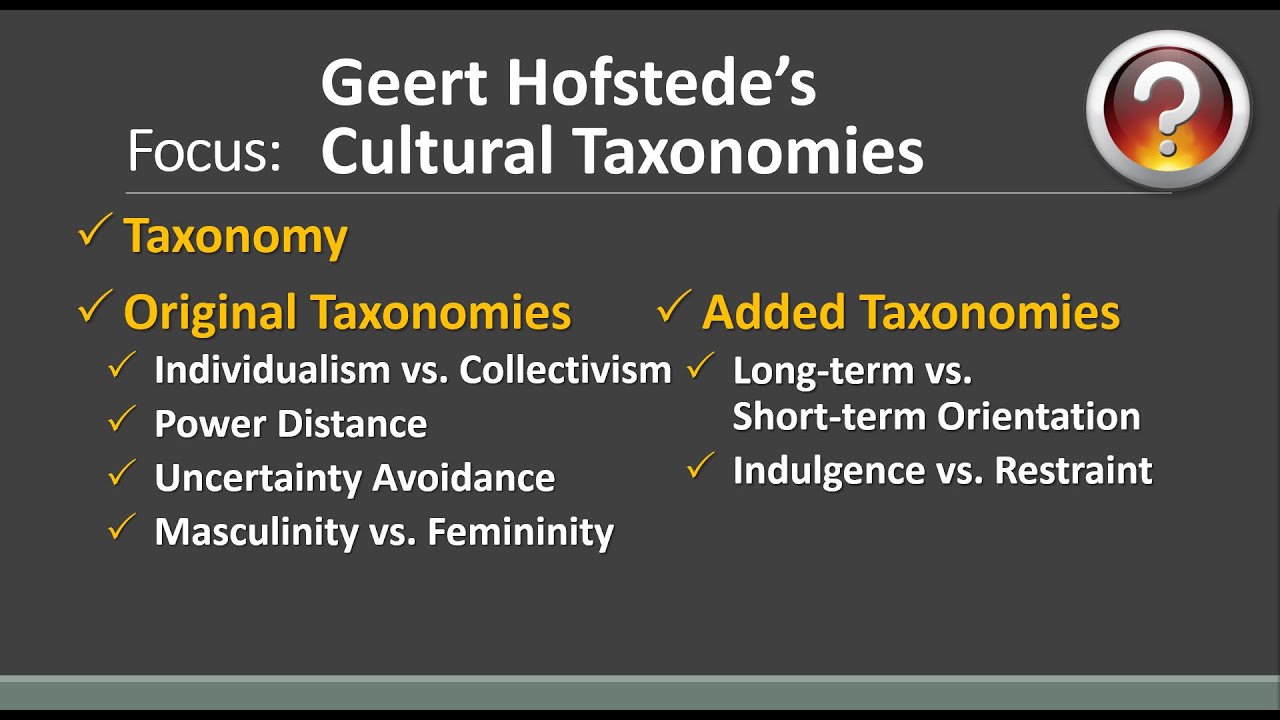
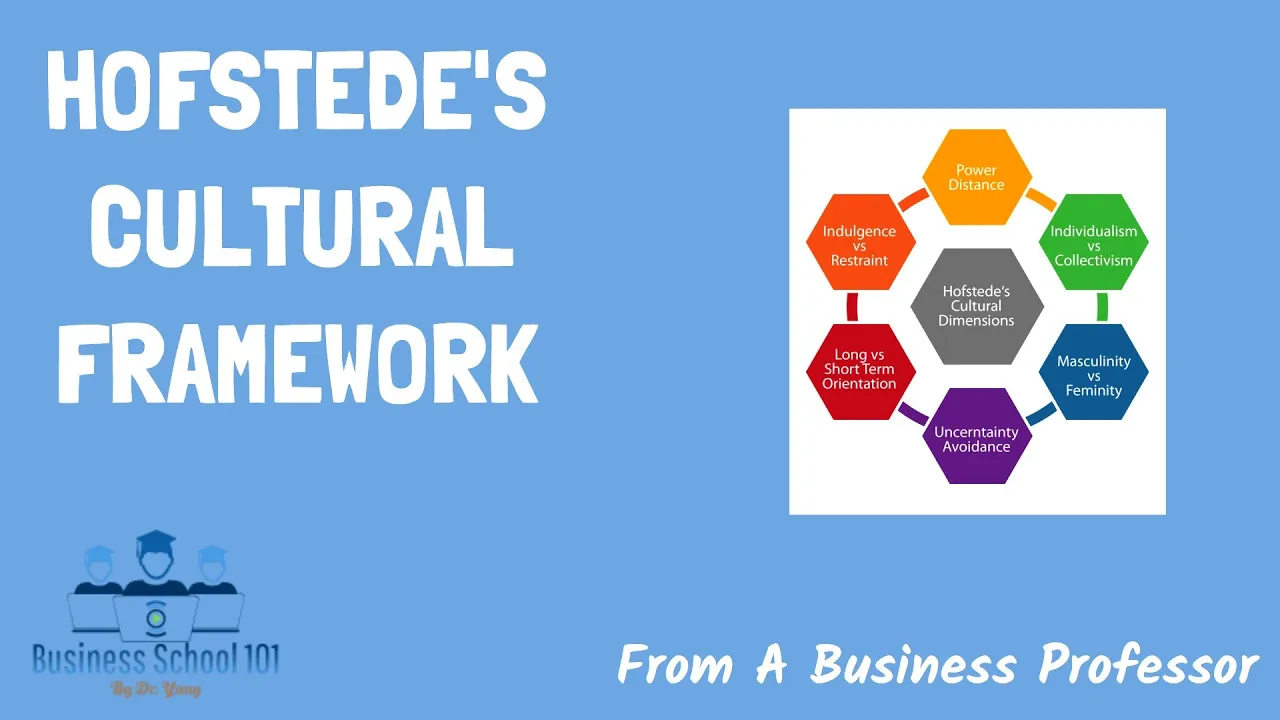
different ways of thinking new knowledge and various experiences in order to better understand different cultures scholars have tried various methods to analyze and categorize them today we are going to study one of the most applicable approaches to understanding cultures hofstede's cultural framework geared hofstede is a dutch social psychologist he formerly worked for ibm for many years due to that experience he had a chance to conduct a cross-cultural study of more than 110 000 employees working in ibm subsidiaries in 40 different countries that study provided the fundamental empirical support for his cultural framework the hofstede cultural
framework consists of the following six dimensions number one power distance index power distance refers to how openly a society or culture either accepts or rejects differences between people like hierarchies in the workplace in politics and so on high power distance cultures openly accept that a boss is higher and therefore deserves more formal respect and authority examples of these cultures include japan mexico and the philippines in japan and mexico the senior person is like a father figure and is automatically given respect and usually loyalty without question in southern europe latin america and much of asia power
is an integral part of the social equation people of these cultures tend to accept relationships of servitude an individual's status age and seniority command respect because they are the ones who give orders to lower ranked people subordinates expect to be told what to do and won't take initiative or speak their minds unless a manager explicitly asks for their opinion at the other end of the spectrum are low power distance cultures in which superiors and subordinates are more likely to see each other as equals countries who practice this culture include austria and denmark not all cultures
view power in the same way in sweden norway and israel for example respect for equality is a warranty of freedom subordinates and managers alike often have freedom to speak their minds number two individualism versus collectivism the individualism versus collectivism dimension considers the degree to which societies are integrated into groups as well as their perceived obligations and dependence on groups it can also refer to people's tendencies to take care of themselves and their immediate circle of family or friends perhaps at the expense of the overall society in individualistic cultures what counts most is self-realization initiating alone
sweating alone and achieving alone are what win applause competition is a fuel for success under the individualism culture the united states and northern europe societies are often labeled as individualistic other examples of high individualism cultures include australia and the united kingdom on the other hand group goals take precedence over an individual's goal in collectivist societies basically individual members render loyalty to the group and the group takes care of the individual members rather than prioritizing me the us identity prevails the most important part of being in a collectivist society is pursuing the common goals beliefs and
values of the group as a whole so much so that in some cases it's nearly impossible for outsiders to join the group cultures that prize collectivism over the individualism include singapore korea mexico and arab nations number three uncertainty avoidance index the uncertainty avoidance index considers the extent to which uncertainty and ambiguity are tolerated this dimension considers how unknown situations and unexpected events are dealt with people who have high uncertainty avoidance generally prefer to steer clear of conflict and competition they tend to appreciate very clear instructions in the workplace sharply defined rules and rituals are used
to complete tasks stability and what is known are preferred to instability and the unknown company cultures in these types of countries may show a preference for low-risk decisions and employees in these companies are less willing to exhibit aggressiveness japan and france are often considered clear examples of such societies in countries with low uncertainty avoidance people are more willing to take risks companies may appear less formal and structured and thinking outside of the box is valued examples of these cultures include denmark singapore australia and to a lesser extent the united states members of these cultures usually
require less formal rules to interact number four masculinity versus femininity the masculinity versus femininity dimension is also referred to as tough versus tender and it considers the preference of society for achievement behavior attitude towards gender equality etc in masculine oriented cultures gender roles are usually crisply defined men tend to be more focused on performance ambition and material success they maintain tough and independent personas while women cultivate modesty and quality of life areas like japan and latin america are examples of masculine oriented cultures by contrast feminine oriented cultures are thought to highlight feminine values such as
concern for all emphasis on the quality of life and a focus on relationships in these cultures both genders swap roles with the focus on quality of life service and independence the scandinavian cultures rank as feminine as do cultures in switzerland and new zealand the united states is actually more moderate its score is ranked in the middle between masculine and feminine classifications number five long-term orientation versus short-term orientation the long-term orientation versus short-term orientation dimension considers the extent to which society views its time horizon long-term orientation focuses on the distant future by delaying short-term success in
order to achieve long-term success in other words long-term orientation emphasizes perseverance and growth in contrast short-term orientation focuses on the near future by delivering short-term success and emphasizing the present this dimension was added by hofstede after the original four we just covered it resulted in an effort to understand the difference in thinking between the east and the west because certain values are associated with each orientation the long-term orientation values perseverance thriftiness and having a sense of shame these are evident in traditional eastern cultures based on these values it's easy to see why a japanese ceo
is likely to apologize or take the blame for a faulty product or process in addition you can also use this to explain why asian american families generally have a significant higher saving rate than american families of other ethnicities short-term orientation values tradition only to the extent of fulfilling social obligations or providing gifts and favors these cultures are more likely to be focused on the immediate impact of an issue not surprisingly the united kingdom and the united states rank low on the long-term orientation scale number six indulgence versus restraint this dimension was added in 2010 in
order to capture more recent research conducted around themes of happiness indulgence indicates that a society allows relatively free gratification related to having fun in life conversely restraint indicates that a society suppresses gratification of needs and regulates it through social norms in other words an indulgent society is one that values the satisfaction of human needs and desires in contrast a restrained society sees a value in curbing one's desires and withholding pleasures to align more with societal norms in a country with a low indulgence rating citizens are more likely to feel powerless as if their experiences are
not determined by their own actions but rather by situations that happen to them in a high indulgence country freedom of speech is highly valued and people are more likely to experience positive emotions in a low indulgence country however there is often a more visible police force and maintaining national order is a higher priority countries in eastern europe including russia and some asian countries have low indulgence ratings indicating a restrained culture often in these countries there is a pervading idea that indulgence is somewhat wrong while much of western europe falls in the middle most anglo-western nations
have a high indulgence rating indicating that individuals in these countries tend to place a higher importance on leisure in other words they tend to act and spend money as they please although hofstede's cultural framework is very useful to us in understanding the different cultures of the world it also suffers some limitations here are the three major restrictions first hofstede assumes there is a one-to-one correspondence between culture and a nation-state but as we all know many countries have more than one culture especially in countries with multiple ethnic groups hofstede's model does not capture this distinction second
hofstede's research may have been culturally bound the original research team was only composed of europeans and americans the questions they ask ibm employees and their analysis of the answers may have been shaped by their own cultural biases and concerns so it is not surprising that hofstede's results confirm western stereotypes because it was westerners who undertook the research third hofstede's informants worked not only within a single industry the computer industry but also within one company ibm at the time ibm was renowned for its strong corporate culture and employee selection procedures making it possible for the employees
values to be different than the values of the cultures from which the employees came also certain social classes such as unskilled manual workers were excluded from hofstede's example now let's do a quick review of today's topic understanding the cultural diversity of the world allows for a better chance of successful communication and relationship management it is important to be flexible in social encounters as people from different cultures demonstrate different preferences although hofstede's cultural framework suffers many limitations it is still considered one of the most valuable and practical tools for us to understand the cultural differences in
the world so what do you think about hofstede's cultural framework which of these dimensions is the most interesting to you please leave your thoughts in a comment below as always this channel aims to educate college students on matters related to the business world in hopes that you can apply the information to your own lives i hope that you guys enjoyed this video and if you did make sure to give it a thumbs up also please don't forget to subscribe to my channel and click the notification bell so that you can be the first to know
when i upload new content thanks for watching and i'll see you next time










![Organizational Culture Explained [2023]](https://img.youtube.com/vi/6uLN9dVfOBI/maxresdefault.jpg)