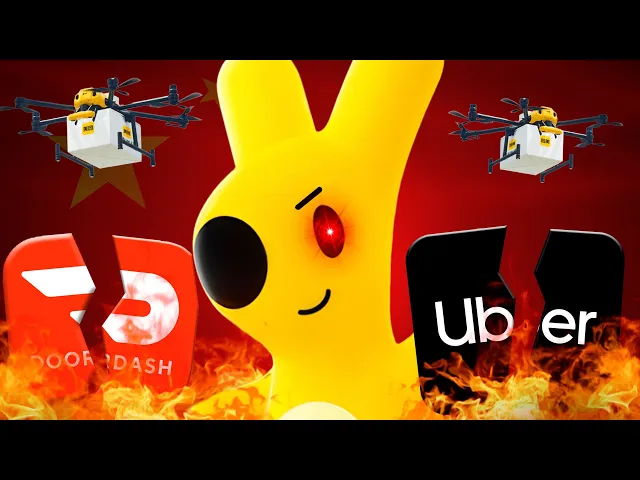
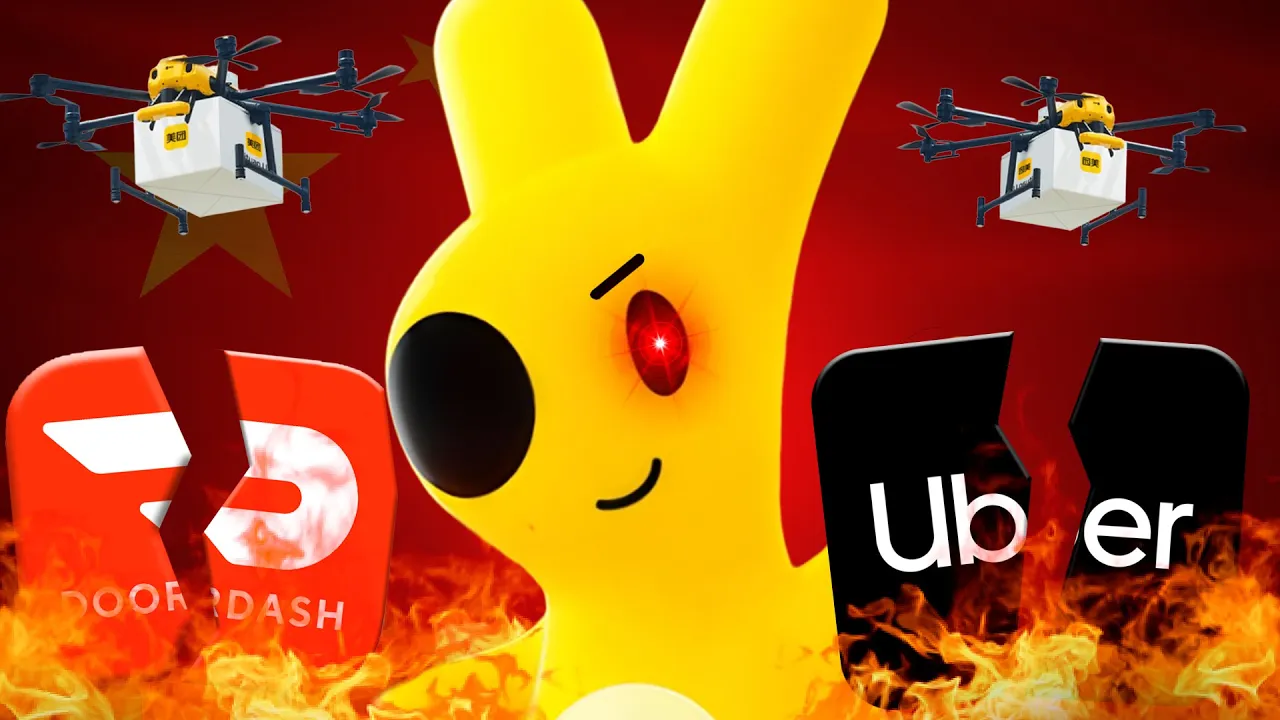
What if I told you that the biggest threat to Uber isn't coming from Silicon Valley, but from a Chinese company you've probably never heard of? With 500 million active users, Mytoan processes more food deliveries in a single day than DoorDash handles in a week. After conquering China, Mytoan is now expanding globally with a $1 billion investment in Brazil and rapid growth in Saudi Arabia.
This isn't just another business story; it's a blueprint for how Chinese tech giants are rewriting the rules of global competition. In 2011, China saw a tough business battle. Over 5,000 group buying websites started across the country, all wanting the same customer.
These sites offered daily deals like Groupon in America. Most closed within months. Mytoan was one of these companies, started by Wang Jing in 2010.
At first, it looked like another Groupon copy with similar deals and website design, but its approach was different. The competition was so strong that people called it the Thousand Regiments War, named after a Chinese military campaign. Each day, sales teams visited restaurants and shops trying to get exclusive deals.
Most founders had a simple plan: copy Groupon and spend money on big discounts in cities like Beijing and Shanghai. They offered 50% to 70% off at popular places to get users fast. Wang Jing did things differently.
While others fought in big cities, Mytoan focused on smaller cities with millions of possible customers but less competition. It cost less to get new users, and local businesses were more open to working together. Mytoan built better business relationships.
Other websites often delayed payments or made unfair deals. Mytoan paid quickly and made clear contracts. Mr Cien, who owned a small restaurant in Hefei, found that Mytoan's weekly payments helped him plan his business better.
This built trust and a long-term partnership. While others hired large sales teams, Mytoan created good systems. They tracked which deals worked best and focused on those.
They measured everything and used data to make their choices. This worked well. Each month in 2011, hundreds of websites closed after using up their money on discounts and marketing without making profits.
By early 2012, most competitors were gone. Of the 5,000-plus companies that started, only a few survived. Mytoan was one of them, made stronger by the tough competition.
Three things helped Mytoan survive: going to smaller markets instead of crowded cities, building good relationships with fair terms, and focusing on running well rather than spending too much money. Wang Jing later said, "In business, you must always expect strong competition. If you plan for an easy path, you will fail when hard times come.
" In China's tech world, Wang Jing was once called the copycat king. People used this name because he made Chinese versions of Western platforms. But is this label fair?
His story shows there's more to understand. Wang studied computer engineering at Tsinghua University, one of China's best schools. Later, he went to the United States to study at the University of Delaware, experiencing the American tech scene when social media was just starting.
His first big project showed how he worked. In 2005, he created Xiao NE, a Facebook-like network for Chinese students that quickly gained tens of thousands of users. He sold it for just $2 million, a choice he regretted when it became Renren, worth over $7 billion by 2011.
His second project, Ban Fu, in 2007, was China's first Twitter-like platform, but it was shut down by the government during political troubles in 2009. These early problems taught Wang important lessons about China's internet market. "I learned that copying to China only works as a starting point," Wang said in an interview.
"The real work starts after that. You need to rebuild almost everything to fit Chinese users and market conditions. " This insight shaped how Wang built Mytoan in 2010.
While it started like Groupon, Wang made big changes from the beginning. He saw that Chinese customers cared more about price, used mobile phones more, and liked food deals more than American users. Mytoan built strong ties with restaurants and local businesses, trained them to use digital tools, and created systems to help small businesses track results.
His way of running the business was different from Silicon Valley companies, too. While many focused on growth at any cost, Wang balanced growth with efficiency. He tracked detailed information on customer costs and revenue.
This data-focused approach helped Mytoan avoid overspending, which destroyed many competitors. Wang described his business thinking as playing a long game rather than looking for quick wins. This meant making choices that might reduce short-term profits but would strengthen the company over many years.
Mytoan invested early in its own payment system and delivery network—expensive moves that later became big advantages. Most companies die not because they lack vision, but because they lack patience. "We're building something that will last for decades, not just months," Wang told his team during a hard time in 2013.
By 2015, Mytoan had transformed from a simple Groupon copy into something new. The company created technology for managing thousands of delivery drivers in real time, developed systems to predict restaurant popularity at different times, and built an experience designed for Chinese preferences. His early projects taught him that changing Western business models required an understanding of local needs.
He mixed the best parts of Silicon Valley approaches with Chinese business practices. While investors saw Mytoan as a successful Groupon-type company, Wang had bigger plans that few people recognized at the time. In the U.
S. and Europe, tech companies usually focused on doing one thing well. Facebook connected friends, Uber gave rides, and Airbnb offered places to stay.
Wang wanted to build what Chinese tech leaders call a "super app," like a digital tool that combines many services users need daily. People in China use their phones for everything. A Mytoan product manager said they don't want 20 different apps; they want one app that does it all.
different apps for 20 different services. They want one app that does it all. This led to Myto's first big step beyond group buying in 2012: movie tickets.
This surprised many analysts. The link wasn't clear at first, but Wang saw that users who bought restaurant deals also went to movies, creating a natural connection between services. The movie ticket feature grew fast, making it easy to check movie types, watch trailers, read reviews, and buy tickets—all in the same app people already used for restaurant deals.
This brought millions of users, and soon MyTuan was selling more movie tickets than any other platform in China. By 2013, the company grew again, adding hotel bookings and food delivery. These services shared something important: they were all local lifestyle services people used often.
Each addition came naturally from user behavior. Someone finding a restaurant might need a ride there, or someone watching a movie might want dinner nearby. Wang explained this plan with a simple goal: help people eat better and live better by connecting them to local businesses and services.
This goal guided all growth decisions. The service helped people enjoy daily life and connected them with local businesses. It fit into MyTuan's system.
The strength of this plan came from the network it created. Each new service brought new users, attracting more businesses, which then attracted even more users. The app learned from users and made suggestions.
If you bought movie tickets for Friday night, it might suggest nearby restaurants for dinner before the show, creating a smooth experience from one service to the next. This created strong data benefits. MyTuan learned what restaurants people liked, what movies they watched, where they stayed when traveling, and what activities they enjoyed.
This helped them suggest better services and build stronger user loyalty. But even with this success, Wang Jing knew that building a true super app needed something more. To truly lead China's local services market, they needed a partner with matching strengths.
This led to what would become the most important move in MyTuan's history: a merger that would change the company forever. By 2015, MyTuan had grown into a major force in China's tech world, but it wasn't alone. Another company called Dianping had become just as powerful.
Dianping started in 2003, much earlier than MyTuan, and worked a lot like Yelp in America. It let people rate restaurants and leave reviews. By 2015, it had information on more than 6 million businesses across China.
The two companies fought intensely for market dominance. Both spent enormous amounts on discounts and special offers to attract users. This spending was spiraling out of control without generating profit.
"We were spending about 2 yuan for every 1 yuan we made," a former manager later revealed, highlighting the unsustainable business model that demanded a strategic change. The competition escalated when China's tech giants entered the fray. Alibaba invested $1.
25 billion in MyTuan, while Tencent backed Dianping with hundreds of millions. A competition between startups quickly escalated into a battle between China's leading tech giants. Each company complemented the others' weaknesses, creating a perfect strategic partnership.
Dianping brought extensive restaurant reviews accumulated over many years and a strong market presence in major affluent cities like Shanghai, Beijing, and Guangzhou. Meanwhile, MyTuan offered superior food delivery capabilities through its robust network of drivers and a commanding position in smaller Chinese cities that were previously underserved by Dianping. Then came the surprise.
On October 8th, 2015, MyTuan and Dianping announced their merger, shocking China's tech industry. They combined; MyTuan Dianping was instantly valued at $15 billion, making it one of China's most valuable tech startups. Wang Jing from MyTuan would serve as CEO, while Cang Tao from Dianping became co-founder and senior executive.
Both Tencent and Alibaba remained as investors, though Tencent held a larger stake. The merger created a comprehensive platform where users could search for restaurants, read reviews through Dianping's interface, and order food delivery via MyTuan's system. A tech analyst explained, "Before the merger, it was like having Yelp and DoorDash as separate apps.
" After the merger, those services combined, creating something much more powerful than either one alone. The strategic combination solved their cash-burning problem. Instead of competing against each other, they could focus on improving services and negotiating better terms with restaurants as the now dominant platform in many cities.
The newly formed MyTuan immediately became China's fourth most valuable startup, behind only Xiaomi, Didi, and Lu. com. With over 200 million active users across more than 1,000 cities, the 2015 merger created a dominant O2O (online to offline) platform.
This union also strengthened their position against other competitors. In subsequent years, the company gradually simplified its brand back to MyTuan. Though the Dianping app continues as a separate service, by 2018, their combined growth enabled an IPO on the Hong Kong stock exchange, raising $4.
2 billion. With its combined capabilities, MyTuan positioned itself to move beyond connecting people with restaurants and local services, ready to become a true technology innovator in areas like artificial intelligence and autonomous delivery systems. Every day, MyTuan handles more than 60 million delivery orders.
This creates a huge challenge that old methods can't solve. Well, think about coordinating millions of deliveries, thousands of restaurants, and millions of customers, all wanting their food to arrive quickly and hot. It's a math problem too complex for humans to solve alone.
To manage this huge operation, MyTuan built an intelligent real-time dispatch system. Like a conductor leading a complex symphony, the system handles countless factors through machine learning to make the best decisions. It assigns delivery people to orders and plans routes by looking at traffic, distance, order size, and weather—all at once.
"Our dispatch system can make 2. 9 billion decisions per hour," a MyTuan engineer said at a tech conference. "It works at a scale and speed no human team could match.
" In 2023, Maittoan improved its AI by buying Lightyear, a startup that works on machine learning and autonomous systems. This brought new talent and technology that sped up Maittoan's self-driving delivery development. The company has tested self-driving delivery systems in many Chinese cities.
Maittoan's delivery robots now move through office buildings, shopping malls, and university campuses. These robots move around pedestrians, use elevators, and find delivery locations with great accuracy. Maittoan's self-driving delivery goes beyond ground robots.
The company uses delivery drones in several Chinese cities. These drones carry food and small packages directly to customers, flying over traffic jams and reaching places hard for human couriers to get to. "My KFC really came in via the drone.
Yo, China's different. Yo, I got my KFC through a drone! " By the end of 2024, Maittoan's drones had set up 53 delivery routes and completed over 450,000 customer deliveries.
Their self-driving vehicles and robots had made nearly 5 million deliveries on the ground. The money side makes sense. While human courier deliveries cost Maittoan about $4 per order, drone deliveries cost just 20 cents after the first technology investment, creating a service that's both better and cheaper.
Maittoan has developed its own AI language model trained for local services and shopping. This AI system helps with everything from answering customer questions to suggesting restaurants. Food suggestions come from AI systems that know your past orders, time of day, weather, and local food trends.
When you place an order, AI decides when restaurants should start cooking to make sure food is at the right temperature when it arrives. The company's AI work goes beyond improving current services. Maittoan is getting ready for a future where self-driving delivery becomes normal.
They've filed over 30,000 patents, many related to self-driving delivery systems and artificial intelligence, as it grows internationally. While competitors like Uber Eats and DoorDash are just starting to test self-driving delivery, Maittoan has years of real experience and millions of completed self-driving deliveries. In 2023, Maittoan quietly made a move that showed its big plans for the world.
The company started a new service called Kita in Hong Kong. This wasn't just adding another city; it was the first step in a larger plan to compete with companies like Uber and DoorDash around the world. Hong Kong made sense as the first step outside mainland China.
The city feels familiar but also different and lets Maittoan test how its services would work in a more international setting. The company had to change its app, adjust how it worked with restaurants, and build a new team that understood the local market. "We chose Hong Kong as our first international market because it's a bridge between China and the rest of the world," said a Maittoan executive.
"It helps us learn important lessons before we expand to places that are even more different from our home market. " After testing in Hong Kong, Maittoan moved to Saudi Arabia. The Saudi food delivery market was growing fast but wasn't as competitive as Europe or North America.
It was perfect for testing Kita's approach in a different culture. Kita's launch in Saudi Arabia in early 2024 showed Maittoan's commitment to global growth. The company removed delivery fees for most orders, offered huge discounts on first orders, and quickly built a network of delivery drivers across major Saudi cities.
"When Kita arrived in Riyadh, I was skeptical," said Fahad, a local restaurant owner. "But their commission structure allowed me to keep prices lower than with other apps, and my order volume doubled within weeks. " This approach worked well.
In just four months, Kita got about 10% of Saudi Arabia's food delivery market, becoming the third-largest delivery platform, behind only Jahez and HungerStation—a big achievement for a new entrant. Kita's business model is different from American delivery apps. While Uber Eats and DoorDash often charge 30% to 40% more than pickup prices through delivery fees, service fees, and higher menu prices, Kita takes smaller commissions from restaurants, usually 10% to 15% compared to the 25% to 30% American platforms charge.
Kita makes up for this by handling more orders and running its delivery network more efficiently while collecting valuable data for other services. Maittoan's membership program provides another advantage called Godmember internationally. It offers benefits across multiple services, including food delivery discounts, hotel deals, and reduced fees for other services.
Maittoan invested $1 billion in Brazil's food delivery market in 2024, targeting the country's large population and growing middle class and competing with Uber in the region. The expansion shows Maittoan is ready to compete in major markets where American tech companies already dominate. The company uses its technology advantage and efficient business model to disrupt markets controlled by Western companies.
Maittoan's AI system for matching drivers with orders outperforms many competitors, and its experience managing millions of drivers in China provides great operational knowledge. With a market value exceeding $100 billion and strong backing, Maittoan has plenty of resources to invest in new markets, even without immediate profit. With operations in Hong Kong, Saudi Arabia, and soon Brazil, Maittoan is positioning itself as the first Chinese consumer tech company with true global reach, competing directly with American giants like Uber.
Foreign! Foreign! Foreign!