Nature doesn’t seem to have a purpose. If it is survival, it is pretty terrible at it. 99.
9% of all the species that have ever existed are extinct. We humans, however, cannot get up in the morning without a purpose. So one of the most fundamental questions in philosophy is: what is the purpose of humanity?
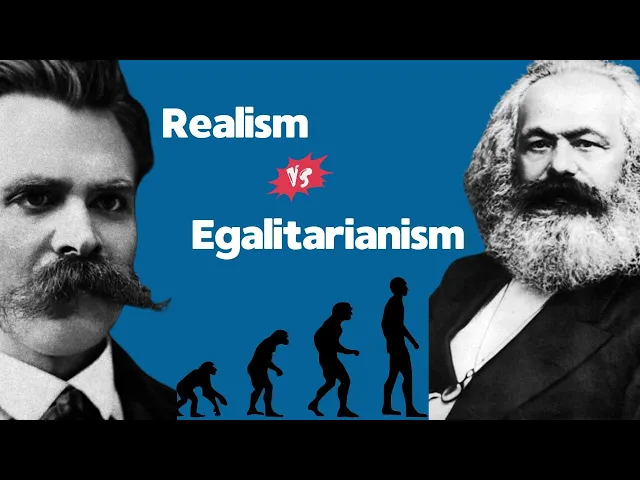
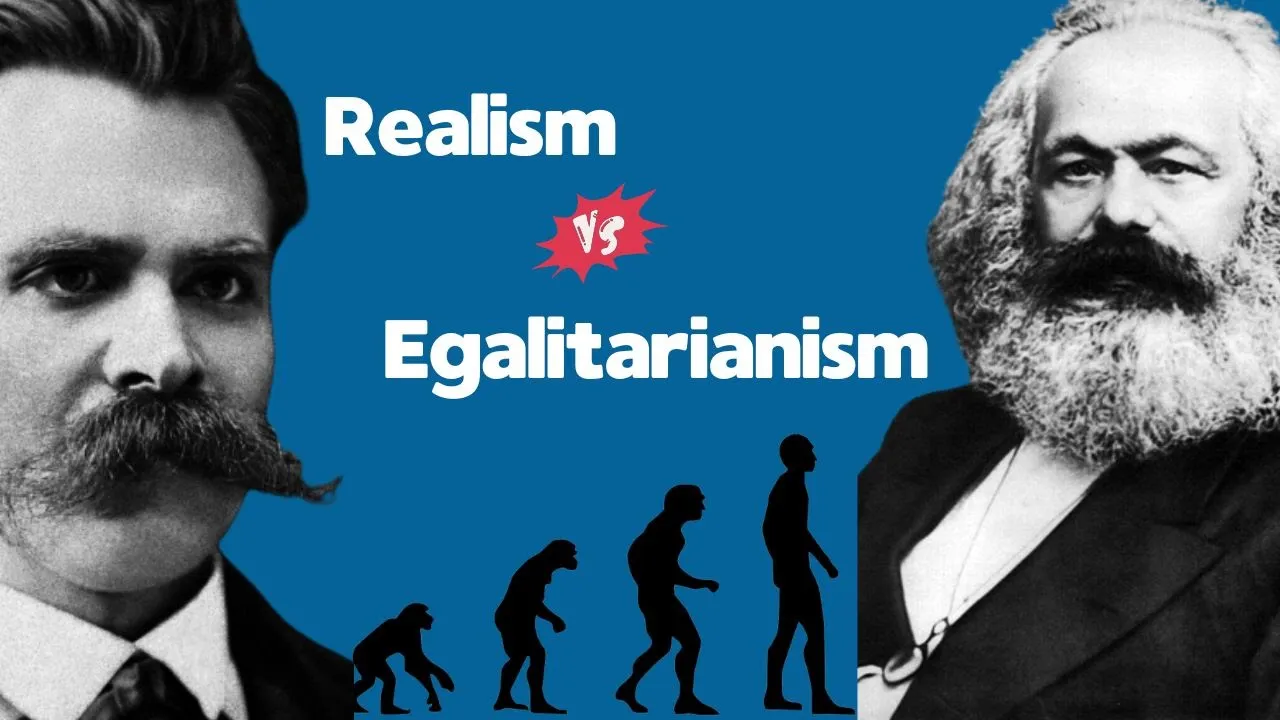
There are two schools. The philosophy of realism says the purpose of human civilisation is competition, the survival of the fittest. The humanist school of philosophy, on the other hand, argues that the purpose of humanity is not competition but cooperation.
The humanists point at history saying that we are increasingly becoming cooperative as a species and will inevitably end up as one single human civilisation in some distant future. This leads me to the second question. Are humans becoming like ants and bees?
The invention of agriculture turned predominantly carnivorous humans into a mainly herbivores species and population exploded. Carnivorous species have a much smaller population, while herbivorous species grow enormous in numbers because their food source, i. e.
plants are more abundant than animals. 7,000 years ago there were an estimated 5 million people and today over 8 billion. Farming also turned cities into beehives.
All ancient civilisations were built around river, simply because of agriculture. 7,000 years ago, the largest city had a population of 1,000. Today there are at least 500 cities with a minimum of 1 million people.
But there was also a programming or software update to allow humans to cooperate. Storytelling is the glue that bonds millions of people to walk in the same direction. While ants and bees are wired on a DNA level to cooperate, humans are wired on a software or psychological level.
We tell stories. So in this video, I will look at the history of philosophical ideas to understand whether we are a competitive species or cooperative species. Are we the first mammal to mimic insects with millions of members and even billions in the case of India and China cooperating inside a single colony?
Realism In philosophy there are two opposing schools: realism and humanism. Realism has its roots in nature, in the harsh reality of survival of the fittest. Nature is hierarchical, the strongest wins the race.
In evolutionary biology, the most successful animals or species are those that can adapt to change. Survival is like a game of chess, some win and some lose. Today realism is most visible in geopolitics.
But let’s look at the history of realism. Confucius (551–479 BCE) argued that social hierarchies are the best way to run a society harmoniously. Within a family, the wife and children obey the man who protects and provides for them.
In society, the ruler at the top and a strict hierarchy of power. But to make sure the brightest people rise to the top, China held civil service exams to recruit the best people for the top jobs. His philosophy influenced Chinese kingdoms for centuries and millennia.
Today, Singapore is seen as an example of Confucian meritocracy. Another influential realist philosopher was Sun Tsu (544-496 BCE) who in his book, the Art of War, employs nature’s tactics, such as camouflage, deception and even submission to survive or dominate others, especially in wars. His philosophy was to win, not through fairness or equality, but through deception.
Machiavelli (1469-1527) in his book The Prince advises the rulers to use any methods available to them to achieve their goal of maximising power to dominate other humans. A ruler must be like a savage lion when necessary, and a cunning fox when necessary. Despite living centuries before Darwin, Machiavelli understood the savage nature of human politics.
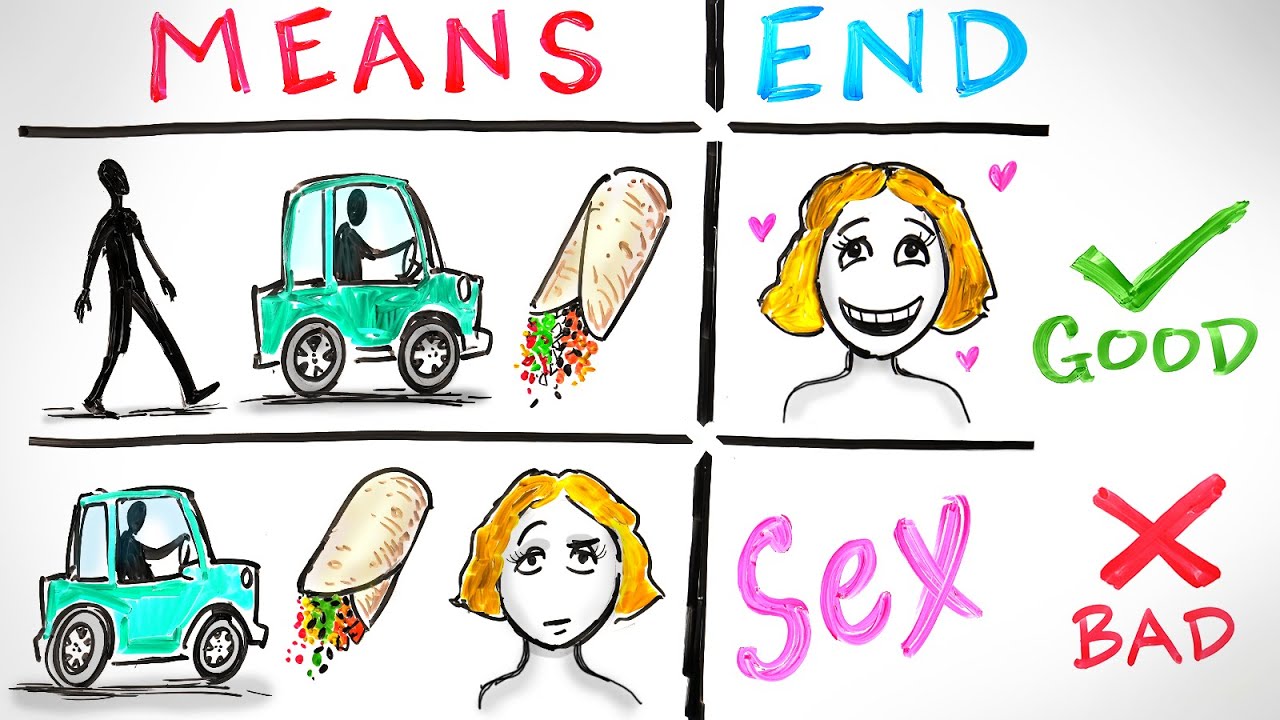
Today he is famous for saying that the end justifies the means. Politics is not about equality or fairness, but it’s about winning and conquering. Thomas Hobbes (1588-1679), in his book Leviathan, argued that only a civilised state can protect humans from each other.
Quote: "Life in the state of nature is solitary, poor, nasty, brutish and short. ” To escape this horrible state of nature, humans have made a contract with their governing rulers, in return for their obedience, the state protect them and their property. Just like Machiavelli, Hobbes believed humans were in essence savage animals that needed taming with brute force.
So Confucius argued that the most peaceful system was based on hierarchy where everyone knows their place. Sun Tzu drew on the animal kingdom saying deception was better than honesty. Machiavelli went even further saying that deception combined with brute force are justified to tame humans.
Hobbes argued a civilised state has every right to tame the unruly humans. So realists argue that life is short and one must compete in order to win. While realism was the dominant idea in political philosophy, there was a growing voice among philosophers arguing for equality.
Humanism Humanism, on the other hand, has its roots in religions, especially monotheistic religions like Christianity that states all humans created equal. Modern humanism is the product of the 18th century European Enlightenment which believe that as rational animals we own the earth. Humanism has a few babies of its own like socialism seeking economic equality, feminism fighting for gender equality, liberalism seeking equal freedom and postmodernism seeking cultural equality.
So in short humanism favours cooperation among all humans. The first true humanist might be Mozi who lived in the 4th century BC in China. At the time Confucianism was the dominant philosophy in China in which society was divided based on ranks and hierarchies, so Mozi believed in universal reciprocation.
Quote: “Universal love is really the way of the sage-kings. It is what gives peace to the rulers and sustenance to the people. ” Another early figure was the 6th century Persian philosopher Mazdak who promoted economic equality among all people.
He even protested against the rich men having many wives while the poor having no wife. In the west, Christianity, and Judaism at its core believed God created all humans equally. Augustine of Hippo (354-430 CE) believed all humans have the same free will to choose between good and evil.
Thomas Aquinas (1225-74), argued, quote: “By nature all men are equal in liberty. ” Voltaire (1694-1777) believed in a kind of universal individual liberty. Unlike Machiavelli’s iron rule, he believed in open scepticism and freedom of expression for all, so anyone could criticise or even rebel against the dominant traditions and dogmas.
The Church or the state should not hold absolute power. Instead everyone, despite their socio-economic status, deserves the right to have an education and access to knowledge. Today, liberal democracies in the west follow the principles of free speech and individual autonomy, ideas that were promoted by Voltaire, so he is often considered the father of liberal individualism.
Jean-Jacque Rousseau (1712-1778) famously said: He believed that the country people were naturally nicer, friendlier and fairer, but once people migrated to the cities instead of becoming more civilised, ironically they turned into selfish animals. So he believed we humans are innately good and just but society makes us unjust and unequal. Unlike Hobbes, Rousseau in his famous book, the Social Contract argued that legitimacy of a government doesn’t come from them or god but from the people.
He is said to have influenced the French Revolution in 1789, in which the anti-monarchy revolutionaries toppled the king and France became a republic for a short while. Its slogan of liberty, equality and fraternity resulted in three major ideologies of socialism, liberalism and nationalism. So Rousseau’s egalitarian approach had a huge influence on political history.
Karl Marx (1818-1883) believed that a communist society where everyone is equal, not only desirable but it was inevitable. He argued that the history of humanity has been nothing but a struggle among the haves and have-nots. He emphasised material resources as the basis of all conflicts, so to remove human conflict, equal distribution of wealth and resources were paramount.
His method of destroying capitalism and feudalism through brute force led to many revolutions, such as the Russian, Chinese and Cuban to name a few. To sum up, political realists argue that since life’s too short, it is all about winning, conquering and dominating others, so they didn’t trust all humans, therefore they promoted a more robust political regime that didn’t allow people to be free to challenge the ruler or the state. Sun Tzu used deception, Machiavelli justified repression and Hobbes promoted state control, and Confucius offered a natural hierarchy based on power and intelligence.
Humanists, on the other hand, argue that since life is too short, let’s all be more equal, fairer and nicer to each other. Mozi argued for an equal universal education, Rousseau for equal political participation and Voltaire for equal freedom of expression and Marx for equal wealth distribution. So which school is winning?
A humanist utopia Marx predicted that communism was not only desirable but it was also inevitable given that course of history. While most of the Marxist experiments in the USSR, China and the rest of the world failed to create true equality, there is a good chance Marx’s dream might come true, not through political revolutions as he suggested but through science labs. Some argue that humans have an innate urge for equality, fairness, justice, and kindness.
Humankind is called kind for a reason. However, biology stands in the way of equality. Evolution dictates that we are all born unequal in beauty, talent, intellect, and physical strength, which contribute to societies being dominated by those who are naturally blessed, either with lots of talent or beauty, speech, physical strength, better health, intelligence etc.
In fact evolution favours inequality because in order for a species to evolve, it has to mutate in many forms and the ones who survive get to procreate and ones who die out leave nothing behind. So Marxism failed simply because of biology, because it is impossible to create equality among grown ups. How about as children?
Another reason Marxism failed was family, where most of us are born into, which has stood the test of time. Socialist experiments like the Kibbutz in Israel where children are raised communally have been successful to some extent but they have not abolished family entirely or have not spread to other countries. The Kibbutz only amounts to about 2% of Israeli population.
The same goes in China. During the Cultural Revolution, there was an attempt to destroy family as a unit. For example children would be spying on their parents, which led to many parents brutally murdered in front of them.
But it also failed. Today China sees family as the strongest unit in keeping a cohesive and stable society and have even allowed families to have multiple children. But despite the communists’ failure to demolish it completely, family has been in decline for decades, which suggest a future ant-like existence seems inevitable.
Birthrate has fallen in most developed countries. With the fall of birthrate, there is no need for family anymore. Women now work alongside men.
Everyone is a taxpayer now. While socialist experiments in the Soviet Union as well as China failed to create a truly equal society, here comes science to the rescue. Science Just as nature seems to be purposeless, so is science.
Science is not some benevolent enterprise to serve humanity, instead most science labs are driven by corporate money, and military power and state control. If science does have a purpose, it’s efficiency. How to solve a problem in the most efficient way.
Cure terrible illness? Here are the medicines. Destroy a Japanese city within a second?
No problem, here is the bomb to do it. Science is amoral. For every medical discovery or invention that cures human suffering, science has also discovered or invented weapons, biological or otherwise that inflict human misery in equal measure.
So to bring it a full circle, we are heading towards an efficient system driven by science and technology. For instance, transport system, delivery system, communication system and production systems in factories all run on efficiency. In a few centuries, we won’t be distinguishable from a colony of ants.
Our efficient cousins are not chimps or gorillas but ants. It’s possible, in a few centuries in the future, humans might produce lab babies who are identical in all attributes, physical and cognitive abilities, to create a more egalitarian utopia, like the one envisioned in The Brave New World of Aldous Huxley. Once you produce babies outside the natural process, equality is a lot easier to achieve.
Identical babies are more likely to produce identical adults, and eventually a society ruled by a queen and billions of taxpayers. This has already been done in the past. Ancient India introduced a cast system with roles for the rulers, soldiers, priests, workers and so on.
But today, our capability is so much better that we can program it to be more efficient, predictable and everlasting. Also important to note that today we humans are so addicted to sugar, like bees to nectars. Today’s social media is conditioning us to consume, think, behave and have fun in the same way.
AI technology is only going to make it stronger. What about happiness? If babies produced in labs, drugs are also produced in labs.
Huxley has “soma” as the drug that makes everyone happy. But there is one big elephant in the room I have not discussed. Nuclear bomb.
The weapon that can annihilate the entire species has been with us for 70 years. So it is possible that instead of achieving equality in a lab, we might vaporise in some distant future and go extinct like dinosaurs. As Buddhists say, nothing lasts forever.
Dinosaurs existing for 165 millions years thought they would be around forever. We humans have only been around for less than a million year. So will we survive another 164 million years?
Conclusion History shows that most humans have cooperated within a tribe, family, cities, empires and civilisations in order to compete with other tribes and empires. Today, most citizens within a country pay tax, follow rules, vote, etc to the same authority. So the purpose of human civilisation has always been cooperation inside the tribe for the sake of competing with external tribes.
Today, however, cooperation between nations is only growing, i. e trade, communication, finance, law etc. The majority of us humans are mere working taxpayers ruled by a minority at the top.
Some colonies I mean countries are nicer, cleaner and some are not. While the majority of us are conditioned to believe in equality, the ruling elite take their cues from Confucius, Sun Tsu, Machiavelli and Hobbes. While the queen bees might not be conscious, our queens i.
e. the ruling elite are certainly conscious and realists in their use of surveillance, media deception, or whatever brute force needed to make us conform as dutiful taxpayers. So 99% of us believe in humanist vision of all being equal, the 1% at the top make sure we continue cooperating.
Farming turned humans into the pollinators of wheat, rice and other plants. As a result, human population exploded and today most people live in urban jungles. It took bees and ants at least 40 million years to create sophisticated hives and colonies and it has taken humans just 7,000 years to create thousands of sophisticated cities almost as good as beehives and underground colonies.
Why? We tell stories. Stories bring millions and billions of us together.
But unlike ants and bees, humans are converging into one giant colony. It’s only a matter of time, perhaps in a few centuries when the entire humanity turns into a one giant colony, with a queen, i. e.
a few science labs producing billions of identical, submissive tax payers.