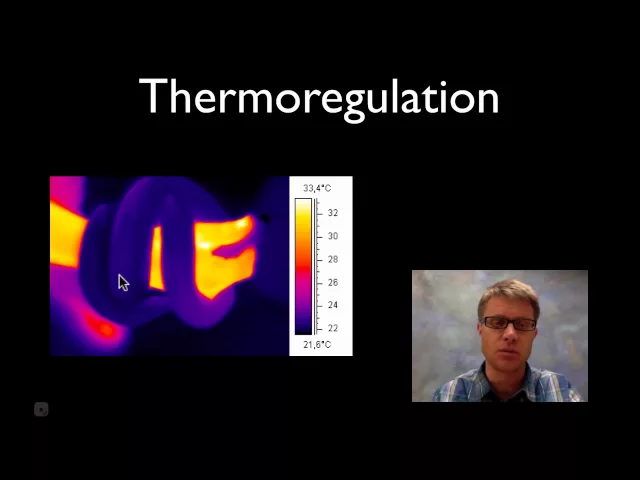
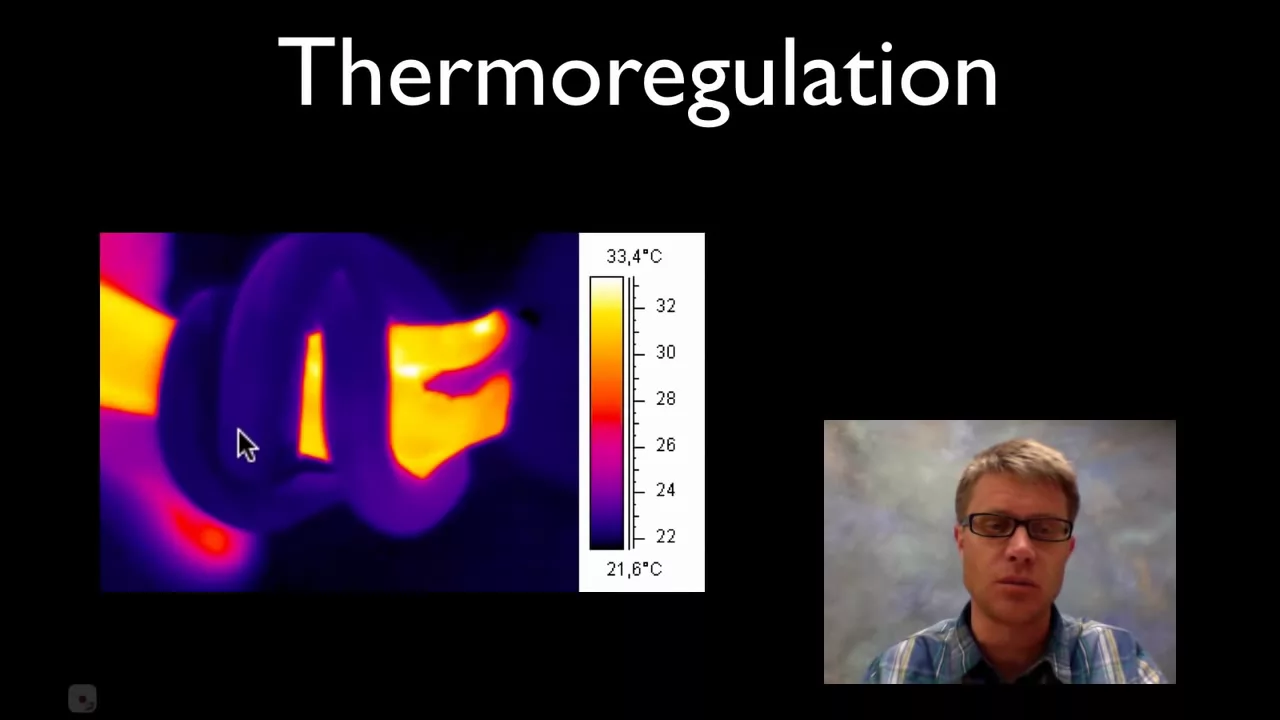
hi it's Mr Anderson and welcome to the thermo regulation podcast basically I'm going to talk about how organisms regulate their internal temperature or not so basically this right here is a thermal image of a human arm you can kind of see that right here and it's holding on to a snake and so um this shows us the temperature over here so again our internal body temperature is going to be around 37° C what's the temperature of the snake well temperature of the snake is around room temperature and that's because they're an ectotherm and so before
we get to that let's talk about heat um if we have a candle right here and then you've got your hand right here um there are basically ways that you can transfer heat from your um candle to your hand and so one way you could do that would be to stick your finger right in the flame and when you do that the molecules of the flame are going to interact with the molecules of your finger and that's conduction so it's actually going to heat you up that way um there's other ways that we can transfer
heat though if you sit right here and you're not touching the actual flame you're still going to feel a little bit of heat but if you put your finger way above the flame like this it's going to be way more painful up here than it is on the side and the reason why is a second way that we can transfer heat and that is through convection now what's convection that's movement of fluids what's the fluid that's actually heating up your finger it's the air it's getting really hot hot air rises and so it's going to
heat heat you up way up here at the top so that's two ways we could transfer heat next way we could transfer heat is if you were to put your finger over here and then we were have a vacuum in here you still would get a little bit of heat it wouldn't be a lot but you get a little bit of heat from the candle over here and that's through radiation radiation is important because if this is the Sun and this is you on the earth that light is moving through the vacuum that is space
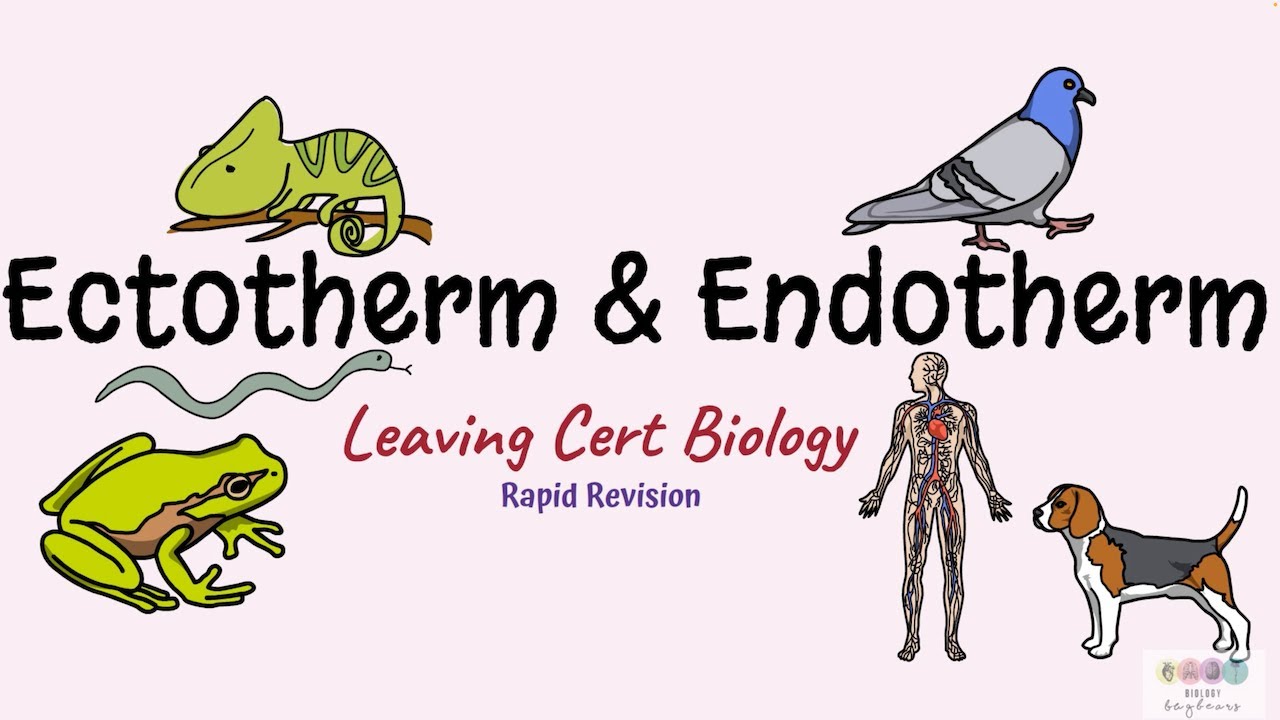
and it's eventually getting to you and so these are all ways that we can get warm we can get warm by the radiation of the Sun or the movement of air or even touching like a a warm Rock something like that but there's another way that we can actually generate heat since we're living things and that is through respiration so through metabolism we can generate a little bit of heat and so life has evolved two different strategies in order to uh interact with heat and the first strategy is called ectotherm and that basically means heat
from outside these things right here are ectotherms and so these are turtles what do that mean they derive their temperature from their surroundings so they're going to be the same temperature as room temperature and so what's the advantage of that the advantage of that is that they don't have to burn up any energy creating heat inside themselves and so you don't have to feed a turtle that often if you're a big snake you might eat once a month or once a year if you eat something big enough because they don't require a huge amount of
energy now what's the disadvantage of that if it's really really cold then all of the metabolism all the enzymes inside your body are going to go slowly as well and so lots of times they'll warm themselves up in the morning by climbing up on a rock or basking in front of the sun if you're an endotherm like this ground squirrel right here you don't have to worry about that you're good to go but uh and the reason why is that you're generating heat inside you you have metabolism going so what is the temperature of this
ground squirrel it's probably close to ours and if it's cold out it's probably close to ours and if it's really warm out it stays close to ours as well and so the Advan vage of being an endotherm is that your internal temperature is always going to be exactly the same what's the disadvantage of that you have to constantly eat over and over and over and over again okay so uh how do we maintain this since we're endotherms well basically we use a negative feedback loop and so the way you sense it is using something called
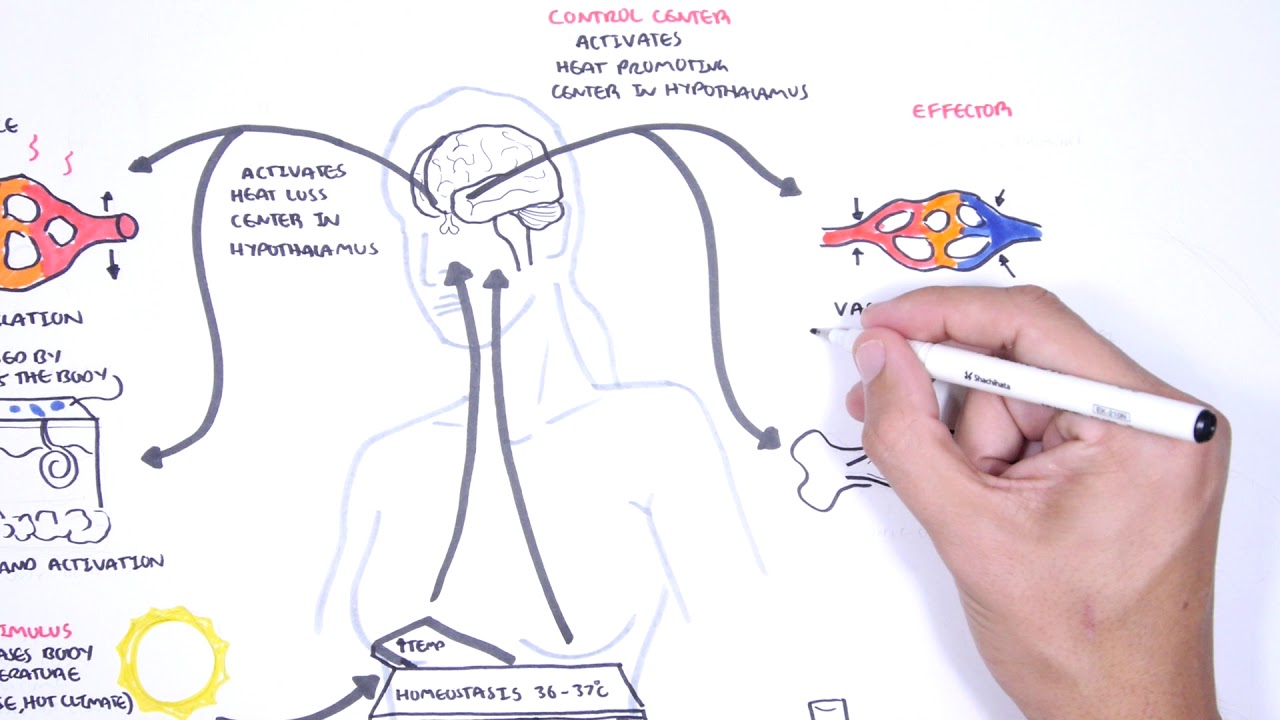
your hypothalamus and so basically on the underside of your brain you have a hypothalamus it constantly is figuring out what our body temperature is and so if our temperature were to go too high goes above a set point basically we're going to react to that we're going to react to that in a number of ways one way we can react to that again if we get too hot is that we're going to start to sweat another way that we're going to do that is we're going to start to vasodilate we're going to dilate the capillaries
so we're going to move more blood near the surface of our body so we can lose that as heat that's going to bring our temperature down again let's say it goes too low what do we do well if it goes too low then we're going to start to get goosebumps we're going to hold that skin into in close to ourselves we we're also going to start to Vaso constrict we're going to hold that body that temperature close to our body and so basically that's going to raise our temperature back to that set point and we're
constantly doing that and the advantage of that is to keep our body temperature close to this set point and that's a perfect set point for all the enzymes inside our body to work and so that's Thermo regulation and I hope that's helpful