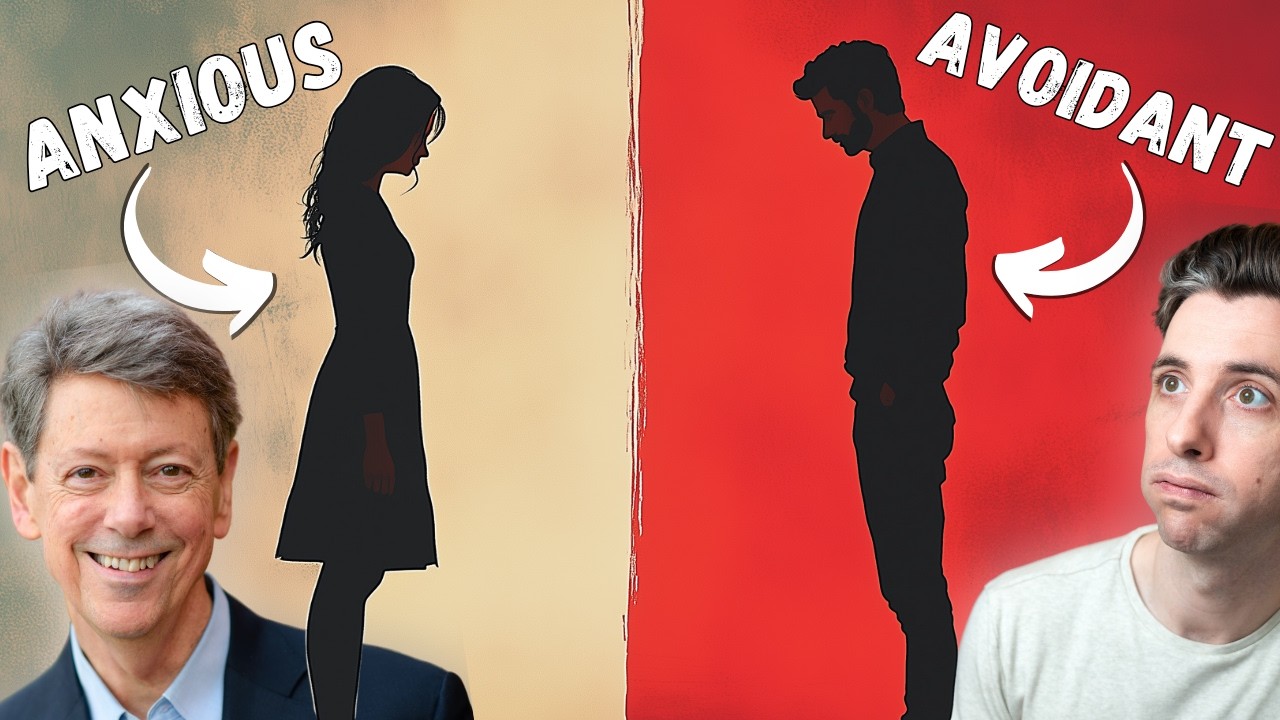
hey guys I'm Heidi PRI welcome back to my Channel or welcome if you're new here this month on this channel we're talking about integrity and a lot of what integrity means is being able to own what we are contributing to our relationship Dynamics for better and also for worse and so something that I feel like is really common which I want to focus a lot of attention on this week in particular is the dynamic that crops up between anxious avoidant couples where each person ends up looking at the other after a series of conflicts in
the relationship and thinking very convincingly to themselves the other person is 100% of the problem and so what we're doing with this series is highlighting some of the issues that you might be bringing into a dynamic like this that you aren't noticing yourself bringing in because they are emanating from a blind spot so without further Ado we're going to get into five blind spots that are pretty common For Those Who air aoid on the attachment Spectrum the first blind spot is what I call the hostility blind spot if you have an avoidant attachment style what
that means in part is that very early on in life when you expressed emotional needs or vulnerability you were predictably met with hostility from your caregivers now this does not mean that your caregivers were necessarily malicious or meant any sort of harm towards you it could be that but it could also just be that they eles were not particularly comfortable with their own vulnerability and so they didn't know how to mirror yours back to you so what you learned to do was adapt to a slightly more hostile than average emotional environment and you learned to
do that in a couple of ways one was you learn to suppress a lot of your more vulnerable feelings so that they never even came into your awareness in the first place so that there is no risk of you expressing them and getting rejected but another mechanism that we often develop in these environments is is just starting to kind of tune out on a low level things like hostility being directed at us and so as we grow up it feels like we're more resilient to this than the average person like we might have this sense
that it's just not that important to me what other people think of me or other people's judgments just kind of roll off of me to an extent but what we aren't realizing is that this is an adaptation and that other people do not have the same adaptation as us and so when we are in more kind of tough love hostile environments we might actually Thrive but for other people those environments are very painful and I find that on average avoidantly attached people are not super aware of when they are giving off hostile Vibes so when
their body language or their tone is communicating contempt and hostility and the problem is that especially if you have a partner who airs anxiously at attached they are hyper sensitive to tones of hostility and contempt and to be clear securely attached people are also very sensitive to this they just have a little bit more self- protection in place so they're more likely to back off when they feel these Vibes than they are to get disregulated and ask for you to regulate them but what I really encourage you to check in on if you have an
avoidant attachment style and you find yourself in a lot of conflict heavy relationships is are you aware of how you come off on a physical and emotional level in these conflicts so what I generally find is that one of the big reasons why avoidance tend to think I am not contributing anything to this Dynamic that is messing it up and it's my partner's irrationality that needs to be check is because they are dissociated from The Vibes that they are giving off in their relationship and often those vibes are quite contemptuous and quite hostile and their
partner who might seem to be overreacting out of nowhere is actually reacting to that energy not just and in a lot of cases not at all to the words that you are actually saying so as silly as this sounds if you really want to work on this something you could try doing is videotaping the next time you get into a conflict obviously with the other person's consent and then watching that video back with the sound off and asking yourself what emotions would I feel like this person was giving off if all I were paying attention
to was their body language same goes for sitting in front of a mirror in an argument it's just probably going to take you out of the experience a little bit more but looking just at your physiology and your facial expressions ask yourself what vibe am I giving off here and how might someone who is sensitive to contempt or criticism or hostility be responding to that kind of vibe and that might give you a lot of information on where your partner's perceived irrationality is coming from or they're getting really disregulated in a way that you don't
understand because you can't see anything wrong with what you're saying again checking in on that body language and on how you're coming across not just what you are saying might get you a long way towards understanding what they are reacting to including in circumstances where they are not even conscious of the fact that that's what they're reacting to Second blind spot I encourage you to check in on if you are avoidantly attached is what I call the proximity seeking blind spot so a big part of what helps us form attachment relationships is people's desire to
stay in contact with each other and to pursue each other right to go out of their way to make each other feel wanted to set out dates to find times to get together and very often if we air avoidant we have a tendency to want the other person to kind of fit themselves into our lives as opposed to doing that proximity seeking ourselves and going out and trying to fit ourselves into somebody else's life in equal measure and the reason this is a blind spot is because it ends up heavily contributing to which types of
Partners you attract so kind of rule of thumb I like to defer to here is that as guarded as you are is as unbounded of a person you are likely to attract right because if you're giving off a lot of signals that you don't necessarily have a lot of time to give to somebody you don't want to take a lot of initiative on figuring out how you can fit into their lives what a secure person is going to do when they look at that is go okay never mind you don't seem to have the space
for me in your life so maybe we'll just be friends or I won't pursue dating you or something like that but someone who feels like their selfworth is hinged upon getting you to like them is going to be very willing to step over their own boundaries to gain your approval but that means that you are necessarily attracting someone who is not particularly boundar and that is generally going to make a lot of conflict pretty challenging to repair so you need to make sure that you are doing enough of the proximity seeking enough of the flexibility
enough of the rearranging your schedule and your lifestyle to accommodate the other person as they are doing for you and this is how we start achieving true balance in relationships and start finding people to have relationships with who are balanced in return but we can't have it both ways we cannot have someone who molds entirely around our lives and what works for us and also expect to have a relationship that is equal between two people who are showing up as their adult selves we either have to put in an equal amount of work or we
have to accept that the dynamic is probably not going to be a particularly healthy one and something that I want to point out here is that you might not be aware of the extent to which you are distanced or not compromising in your relationships so this might need to be something that you start drawing some conscious attention to and going okay for every date my partner plans how many dates am I planning for every night they stay at my place how many nights am I staying at their place how much personal information am I disclosing
to them relative to how much they're disclosing to me how often am I going to them for support and co-regulation relative to how many times they are coming to me for support and co-regulation and if there's a really big imbalance in that area that might be a little bit of a yellow flag to just draw your attention to the fact that you might not be doing enough of that vulnerability and that proximity seeking inside of the relationship to attract a healthy partner blind spot number three is the you are not okay blind spot so avoidant
patterning is to have this internalized worldview that I am okay I'm good I can take care of myself and regulate my own emotions but other people are generally not okay especially people who I am attached to they need me to give to them and they need me to help them become okay and so often we can be in the dating stages with someone and find them to be quite competent and quite capable of taking care of themselves but then once we become attached or once our attachment triggers come online we flip back into that worldview
of believing that we are competent and the other person is not and the problem with this is that it gets really difficult to resolve ongoing conflicts if we believe the other person to be incompetent because we won't even give them a fair shot at resolution we will assume that we have to figure out the entire problem on our own and then present them with the solution as opposed to tuning into where we feel vulnerable or what we're uncertain about and then being willing to bring those things into the dynamic as unfinished products hear out from
our partner what's going on for them and then work together to find solutions that we could not have found if we each kept our side of things only to ourselves so the first person I got into a relationship with when I was in a more secure place in my life was someone who aired a bit avoidant and after our first argument this person went away and wrote me this extremely long letter laying out all of the things they were struggling with inside of the relationship and the reasons why they believed they had to take a
huge step back from the relationship and they handed me this letter and I read it and just looked at them and went well why don't we just talk about this why don't we just figure out how to make more room for these things and inside of the relationship so that we both feel comfortable and then kind of find a new equilibrium or balance that works for us both and first they looked at me like I was speaking Mandarin but then we did exactly that and things went beautifully back to a new normal but this is
very often a blind spot for those of us who a avoidant the understanding that we could go to our partners with our problems without having a solution to them in place and just see what might happen if we explored the problem together and found a creative solution in order to do that we have to flip out of that I am okay you are not okay worldview because if we believe that our partners are not competent or capable of helping us work with our problems we're not going to be going to them with them and then
we're not going to be finding the solutions that could actually get worked with so if you find yourself in Conflict Cycles with your partner that you're struggling to resolve really ask yourself am I looking at this person as a competent and capable adult who I could bring my Str TR and vulnerabilities to or am I seeing them as a helpless child and sometimes it's going to sober us up and go you know what I can talk to this person or let me try it and just see what happens but other times maybe we're going to
try it out and find that our partner is quite upset by us bringing our problems to them or trying to involve them in the problem solving process in which case we want to be looking at blind spot number four which is the fear of criticism slash need to be seen as perfect blind spot so to have an avoidant attachment style is to have it laced deeply into your unconscious mind that you are worthy of love in so far as you are taking care of yourself and your system believes if I am taking great care of
myself and I keep my life running smoothly someone is going to come along they are going to appreciate this perfect life that I've developed and that is what love is the problem is that that is not what love is what secure love is is two people seeing each other's challenges and struggles and supporting each other through them and a secure person is naturally going to come along and look for those things in you and go oh I wonder where this person is struggling or where they need support as well as seeing your strengths because that's
what secure love is it's a very balanced Affair versus Partners who want to idealize you if someone comes along and they go oh wow everything you're doing is perfect that's going to match your model of reality which says I'm okay you're not okay right and the problem is when you're operating out of that model you're now picking Partners who are kind of willfully blind to your challenges and struggles and vulnerabilities and so they might really struggle as the relationship progresses if you start bringing those things to the table because they have this idealized version of
you in their mind that doesn't struggle with anything and so it might actually be very dysregulating for them if you are to start bringing those things into the dynamic but but because you are so accustomed to dissociating from or downplaying the areas in which you're struggling it's probably going to be a lot more comfortable for you to be in the type of dynamic where your partner never brings those things up than it is for you to be in a more secure Dynamic where someone is actively noticing the things that you're struggling with them pointing those
things out might feel like criticism or like they're implying you are not perfect or good enough for them when in reality they might actually just be showing up with compassion and care and so what we need to do to work through this blind spot is to start getting more comfortable being seen holistically so not just for the areas where we are killing it and knocking it out of the ballpark and exhibiting our strengths which are of course all areas that we also need to have seen and recognized inside of relationships but also the areas where
we are unfinished products and where we're just looking for someone who's willing to come along for the ride as we move towards our own development so again someone who is not going to idealize us but who is going to actively be looking for and responding to the areas where we need their help and support as well and then the fifth and last blind spot we're going to talk about today is the Attunement blind spot so earlier on in this video we talked about that experience of being adapted to slightly more emotionally hostile environments and where
this really shows up is the way that we learn to navigate relationships so in environments where the relational glue that keeps people together is not sharing their feelings and staying present and attuned to one another on an emotional level what often happens is you learn to navigate relationships very subtly through a series of rules that you are continuously developing inside of your mind or you can think of this as kind of a string of if then reasoning statements so this might look like as a child if mom looks happy in the mornings then I will
go approach her for a Hut if mom looks unhappy then I will keep my distance to avoid getting rejected and again this is not conscious right but it's the way that your mind starts gathering information because it actually works in your environment and adapting to it so that you can minimize your risk of rejection and as you go through life you start doing this very naturally you start observing people's behavioral patterns and naturally adapting how you relate to them based on those patterns and generally because this was probably true in the environments you grew up
in if someone seems like they're struggling emotionally you might feel like the polite thing to do is to back off not ask too many questions and give them their privacy or for other avoidance it's going to feel like time to hop in and do the I'm okay you're not okay thing where I caretake this person but the important thing to keep in mind is that when you learn to navigate relationships this way through observation and adaptation rather than emotional Attunement and connection you develop a blind spot around the fact that that is actually a really
important part of what makes relationships work so once again we're right back to that first issue of the avoidant person not understanding why their partner is so upset about the words they're saying well they might be completely and totally dissociated from the vibe that they are giving off and so what we want to draw our attention to here is practicing the art of emotional Attunement and I have a whole video on this that I will link in the description of this one but essentially what Attunement allows us to do is to stay in an interpersonal
flow with someone where we don't have to be in that state especially in Conflict where we are analyzing the other person and trying to figure out what to do or say to them by making sense of what they're bringing into us something that I notice is really common in Conflict Dynamics is that avoidantly attached people will not even be looking at their partner in the middle of a heated conflict they will be looking off into space kind of squinting and trying to figure out okay why is this person saying this what's the solution here and
this is in most cases quite well intentioned because the only model you might have for relational repair if you adapted to those more hostile emotional environments is figuring out all the logic bringing it to the table and then everyone agreeing on it but in more secure relationships that is only half of what you need to stay healthy within them and the other half of what you need is to be able to sit in front of your partner and connect with put them on an emotional level and actually open yourself up to feeling things alongside your
partner so that you can get into this flow so that they feel as though you are attuning to their experience and responding in the moment to what's going on for them emotionally again I have a video that breaks this process down to the nitty-gritty details that you can find in the description so I'm not going to go too into how to do the atunement dance but what I just want to do is bring it to your attention as an important piece that you might be missing so trying to navigate personal relationships without being attuned to
the other person is kind of like trying to dance to a song If you can't hear the music you can memorize all the dance moves but there's something that your body just needs to be deeply connected to and in a flow state with in order for the dance to not look super awkward and weird and that is the same case for connecting to another human being in order for the connection to actually flow naturally and authentically and for conflict to get resolved at the emotional level that it exists at you have to be able to
hear the music of your connection with this person and you can only hear the music through attuning to them and getting a felt sense in your body of what is happening for the other person emotionally which you can only do if you are looking them in the eyes in these challenging situations and actually staying on the page with them in your emotional body not just in your mind and then eventually when you're able to marry these Concepts so you're able to sit with people's emotional bodies and respond to them from your emotional body and you're
also able to make sense of why you're getting into these conflict Cycles this is where you start finding those Holistic Solutions to conflicts that actually make the problem go away instead of just temporarily disappear and then come back up the second something else goes wrong all right I am going to leave it at that for today but as always let me know in the comments section any thoughts feelings questions you have coming up as you've gone through this video I love you guys I hope you're taking care of yourselves and each other and I will
see you back here again really soon [Music]