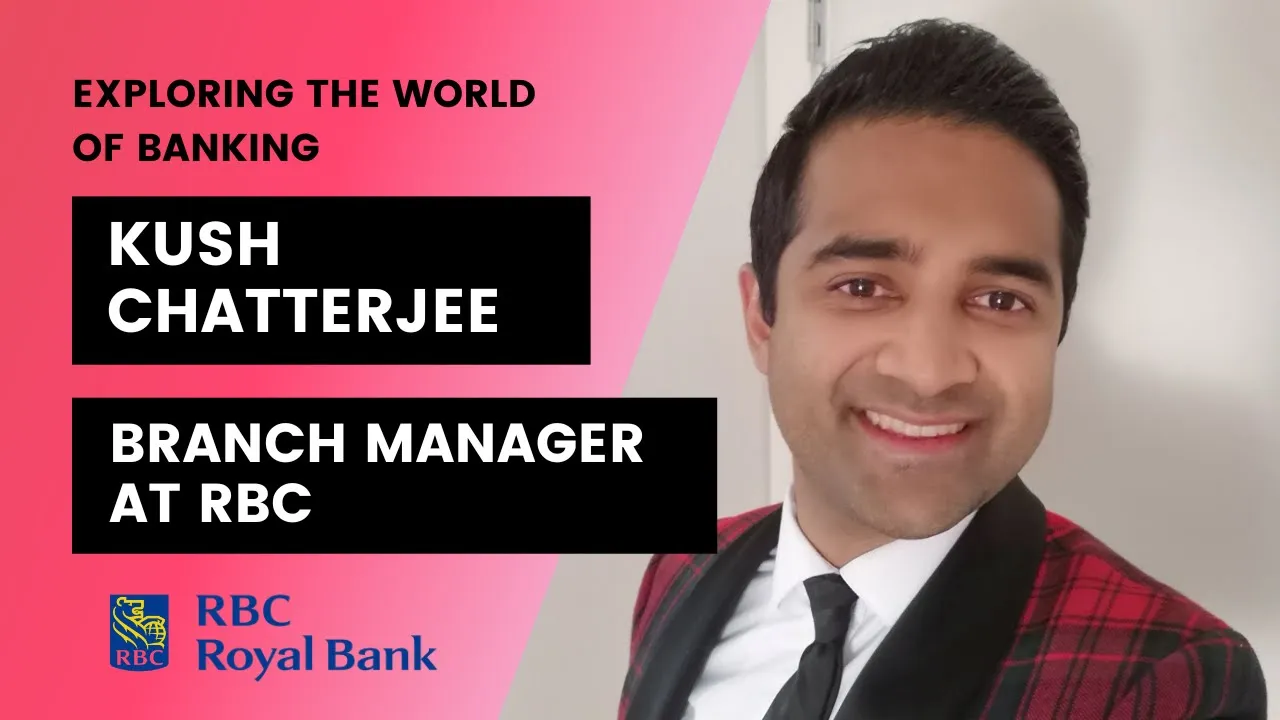
foreign [Music] Universe podcast the cast get it the cast my name is Alina and I'm the founder of illuminate where we Mentor job Seekers and help employers to Fast Track their business goals I interview a celebrity cast of incredible individuals who have truly inspiring careers we're talking about their work Journey the process of taking the lead to create a life and career they love and what happens when they push aside their fears and doubts to unleash their fullest potential today we speak with Kush Chatterjee who will tell us all about a career in banking Kush
has a background in Health Sciences from Simon Fraser University and now is a branch manager at Royal Bank Canada Canada's largest bank with over 17 million clients worldwide over 86 000 full-time employees and over 1300 branches hi Kush thank you so much for coming on to our show today it is such an honor to have you here our first question for you is Kush tell us about your story let's start from the very beginning how did your post-secondary experience lead you to where you are today so that's a great question Alina you know it's really
important to have an education and I think you know in University you learn so much more and you're really impacted by so many of the people that you communicate with and your professors that you meet so I started my post-secondary career at SFU and I was in the business program so my major was in economics so for the first two years I loved it I joined because my parents were like oh you're good at math you love stats let's do it so I was like sure why not so first two years it was awesome to
be honest I actually switched my major into Sciences because I didn't find it challenging enough and because of that I got bored and I wasn't very on top of my work because I just didn't find it interesting and so I switched to sciences and I am really happy I did because you know what you really have to love what you do especially in your education and so I switched over into the science program and man was a very different different than business there's a lot of work lots of time in school but it really prepared
Me For the Working World because there's a lot of stuff that you have to do with flexibility and the liberal learning that I received I really had the opportunity to get more out of my University career that while when I communicate with my clients with my staff members I'm able to relate a lot of the things that I've learned it taught me how to Pivot from one different line of work or different industry to another one and there's a lot of crossover the interdisciplinary line of work that we do even at our Branch level is
it happens all the time and you have to be able to communicate across different fields and different jargons and things like that it's more about making those neural connections when you when you learn something when we learn math When We're Young it's not because we're going to be mathematicians it's because we're creating these neural Pathways that your brain kind of now has the understanding of this is how we're going to learn so I'm a huge fan of Education I always tell my staff train as much as you can learn new things Even in our different
roles that we take you have to have a requirement of learning or a certificate before you can actually get into that which actually helps out in many different ways so it's a very very important part of my career and that's kind of what pushed me to go into banking so was banking your first job out of school banking was actually one of my jobs during school so before I even graduated I started working as a what's called a mobile teller at the time with Bank of Montreal and I did it alongside school because you know
as a student I need to make some money and I had a great opportunity to work part-time and kind of on my own schedule because it was on call so I could take jobs or I could decline them but it gave me an opportunity to do both at the same time and it helped because especially on the weekends when there was no school it gave me some extra cash on the side and so let's talk about a setback we talked about your success so far I want to switch the lens a little bit what was
a setback that you've encountered in your career that has been transformational and what valuable lessons did you take away from it that you can share with our audience today where do I start how many setbacks have I had okay so I think the the biggest setback that I would say like the one thing about setbacks is we have to make mistakes to learn from them and that's just human nature we need to make mistakes and we should take that as an opportunity for learning so when I worked at Bank of Montreal I had a brand
new manager which I didn't necessarily get along with but at the same time I gave me an opportunity to learn how to deal with people that I don't necessarily get along with and we're not going to get along with everyone that we work with or that we interact with but we have to learn to communicate with them where it's productive so it created a setback where I could with a working environment I didn't want to be in anymore because their values didn't align with mine anymore and it was a great opportunity because it actually opened
the doors for me to go into RBC because one of the managers at the time had an opportunity for me to work there and I interviewed and their values aligned with mine and still here to this day which is great but it really taught me that there isn't one way of going into a specific line of work or if even if you are in that work you don't necessarily have to be there because you have any kind of loyalty per se but the your values should matter more than necessarily money you're chasing or a title
or the Loyalty of tenure but really it taught me a way that even if you're in a specific job or even if you're you know dealing with a specific type of person that your values should come in front of everything because we can always chase money it's kind of like a forever thing you can always chase the money but your values are something that you can you can't really change too many of those and when you find people that align with your values you can do so much more it Crea it becomes from a job
to a career at that point absolutely I completely agree with what you say I think a lot of times when folks think about a career they're not really understanding the difference between a job and a career a job is is something that you get assigned to and you complete it but a career involves moves it involves the sponsors people sponsors Champions values and people skills which is so important and this leads me into my next next question for you so as we know the job market is constantly changing and evolving in fact in today's job
market some of the most in-demand jobs didn't even exist five or ten years ago what are the main traits and skills an individual should develop to succeed in this fast changing labor that's a great question I was thinking about that today actually because I think the idea of success is something that we need to Define I was on I was on a business trip with some of my work colleagues and one of my work colleagues said to me so how what did what did you do to become successful and in my mind I'm like what
did I do and what does that even mean like what are they talking about so I I think it's really important to define success for yourself success is different for every other person some people take success as let's say you know earning money money is a form of success for some people for me money is a tool for happiness to for me to achieve happiness so how could I make the money that I need to to be happy and what are those traits so my biggest treat that I realized when I started becoming more successful
was I really loved my job and I still love my job and that passion has driven a lot of success because it doesn't feel like I'm coming to work because I'm dragging myself to work I'm excited to come to work I'm excited to the people I work with and the impact that I'm doing that passion drives to areas of focus it also leads to Innovation it also leads for you to challenging not only you know the people that you work with but challenging yourself I think it's really important to look at those quote unquote values
because those are all the value systems so that's something that I really try to focus on not only the things I do at work but outside of work how can I create a better value system for myself where I'm driven by the people around me and the people that I get to impact you know have a better outcome right so that's kind of the way I think of it is more of those traits should more come from you from inside it shouldn't be someone telling you what you need to do but that drive that you
get from from yourself so here is a tricky scenario that I've personally encountered graduating from school I've always envisioned working at you know a big corporation like RBC or Deloitte you'll be doing really cool stuff as a junior staff I'm thinking I'll be making presentations to Executives I'm going to change the future of companies I'm going to be on Fortune top 30 under 30. that was my vision graduating out of school but the reality is when you enter into a company and you're at a junior role you're oftentimes assigned to very Junior tasks as well
so for example fixing spreadsheets or making PowerPoints so in that scenario how should someone keep themselves motivated and that is true when you do join a company you do get put into roles that you might not feel like it has a lot of impact but I think you also have to always think about your job in a big picture think of your job as a mosaic of the company without your job being completed it could have a ripple effect on things that you might see is more impactful but you always have to see the lens
of okay if I was to let's say do a PowerPoint presentation regarding the smaller task why am I doing that what is the reason that I'm doing this and I would talk to my boss about it hey I feel like this job that I'm doing is not a really big impact for the company what is it that I'm doing and why am I doing it I think you really need to think about the why and the thing about all these Junior jobs is when I go back the day and I think about how I was
when I first started first job I always felt like oh this isn't enough but now when I come to today these are all stepping stones in your journey to your development so think of it as an opportunity that you need to start building a strong Foundation if you don't build that strong Foundation when you get to that point where now you're expected to do more and there's only one of you that can do it it's very stressful if you haven't had all that training and development from before and you can really hone in those opportunities
so I think I would say before you decide to run learn to walk and really understand that foundation and then when you get to that level where you have more knowledge then you can start questioning and saying you know what I don't think this is something that I necessarily need to do I could do something else but I would say take baby steps first because if you're new to the company and you tell them oh I can run the company on my own they will question it because you don't have the experience yet but it's
really important that you do question that and I have employees even to this day that feel like they can just achieve a lot and accelerate and I always love that passion but I always want them to learn that it is a journey and it does take time I would never want to put someone in a place where they're expected to do a lot and feel stressed out and in turn they will leave the company because that stress leaves to demotivation so we want to make sure everyone's prepared to take on that next role so you
might not feel like it's important now but it's probably the most important thing you will do to get to where you are absolutely thank you so much for sharing that analogy learning how to walk before you learn how to run I think there's an element of patience humility and also servant leadership in what you described as well and my next question for you Kush is landing a job is super competitive in today's market what are some tips you can get in terms of crafting a standout cover letter or resume how can an individual especially one
just starting out in their career leverage LinkedIn and the power of networking to build strong connections and a personal brand that sells I'm very happy you talked about LinkedIn it's it's something that we love using it's it's a great software but cover letter and resume so my recommendation and we see cover letters and resumes all day every day that's what we go through I've noticed the most impact of cover letters and resumes are people that take the time to research the actual role that they're applying for and cut their resume to a page and even
though they've done other jobs they don't necessarily describe those jobs they might have a one-liner that I worked here but the descriptions that they're adding on are things that are going to impact their interview or the things that are going to relate to the role they're going to go into even for myself I interviewed recently for a role last month and during the interview I sent out an internal resume and I didn't describe my role my managers who are going to interview me know what my role is so I'm not going to describe my role
I'm just going to put this is what I did and so that way it cut my resume to a smaller length and if they had questions during the interview they will ask those questions if you leave a little bit of that mystery out then people don't know what to ask you everything's on your resume what's the point for the interview less is more sometimes what I would do is focus in the specific areas that you want to talk about so now you're steering the interview in your direction but also the biggest part is your resume
and cover letter is to get that interview once you have the interview you can talk a little bit more about yourself but my biggest recommendation research the role and be very short and concise if you understand how many resumes people go through if you have like a five page resume it's probably going to be left on someone's desk for a long time do your best to optimize your resume and cover letter and with LinkedIn go to LinkedIn find out who that hiring manager is learn about them if you're not comfortable with contacting them at least
find out what they did to get to where they are and that way you can use that as a question you know what I checked out your LinkedIn page and I saw that you did this this and this can you tell me about your journey so now you're showing interest that I actually took the time to research who you are and I wanted to know what do I need to do to get there so it shows not only that level of research but shows that you have a question that's related to that specific individuals there's
many ways of using those resources now let's talk about the interview this is also an area where a lot of applicants fail to prepare write or make avoidable mistakes what are some tips you have so that an applicant can face the interview and build an impression I'll give you a little bit of a secret during an interview when you're in the interview you have to understand that the people that are interviewing you they're looking for a specific individual not necessarily an individual that has a massive education a massive repertoire of clients or skills those are
all requirements to get your foot in the door they're looking to see who is the person in front of me will they work well on my team because if you hire someone that doesn't fit on your team you're not impacting one person you're impacting your whole team that creates a lot of issues the biggest thing about an interview you want to talk about your values Your Role is there's training there's requirements of certification there's so many different ways that you can learn things on the job what we can't teach you is the values that you
bring to the table that's something that is a key aspect of why you get hired because if you have those values and you talk about those values and you're able to really illustrate that to the hiring manager then you're already a foot in the door you've already done the hardest job is to talk about yourself all the other areas that they're going to ask about where did you work things like that that's a given that's fact you want to really use your values to kind of illustrate what you're bringing to the table and how will
you work on that team some of the best interviews that I've seen is the interviewer will not talk about themselves all the time they'll say when I worked on my team when I did this with this large group what I'm going to bring to your team it shows that you have a team mentality not just about you you there will be some times that you say this is what I did it's the education I have but having that mind frame from I to we it shows that you're able to work on a team so now
you're talking about teamwork already but also interviews are stressful I've been in many different interviews I've seen people interviews where things really get difficult my recommendation before you even start take a deep breath and whatever happens happens take your time don't rush anything if you need to reschedule the interview you can but the biggest thing is just talk about your values why you want to be there and really take the time to research that role so that you can say okay maybe you don't want to get into a role and decide oh why did I
why am I here I don't like this job so take the time to research that role ahead of time and here's a trick that I learned when I got my job at Deloitte that was my first official job out of college I've heard that people love talking about themselves and sometimes I wonder you know the interviewer has to interview 10 or 20 people a day wonder if they get tired of listening so what I did in my Deloitte interview was I actually made the conversation 50 50 where I asked a lot of the questions to
the interviewer and my partner that ended up hiring me actually talked a lot about his journey himself and we ended up making a really personal meaningful connection as well so what are some good questions to ask an interviewer so I see some great questions and you know what that's a great experience because now it's no longer an interview because the interview people always see is back and forth someone asked a question another person has an answer the conversation is the most important part because you're going to have a conversation day to day with your manager
with your partners with your employees you want it to flow like a conversation not like a question and answer interview so the biggest thing is yeah try your best to do 50 50. you might not get there there might be specific questions about you but you want to frame it in a way that you can then flip that question back to them they might say you know what we're only going to let you have questions at the end which is a very practical thing where they'll only ask questions for the specific areas it might be
a case study where you don't have specific questions that you can ask back and forth but at the end ask some questions that are specific to that person we're specific to how they would react to it like flip some of those questions back on them a lot of questions can be turned around but I think the biggest questions that I can see is most impactful is talk about a personal experience talk about an experience where you felt like you didn't do a really good job on and how did you change because that shows challenge management
and change management as well as take the time to talk about your organizational skills because that's the first thing to go in any job is you know things get messy but talking about organizational skills but also talking to your interviewer about how do you stay organized in your day it doesn't necessarily have to be at work it could even be at home it kind of shows that person is thinking about more than just work that they're thinking of things that will affect their personal life as well it becomes more of a conversation because you can
relate now instead of just talking about work I love that advice and now let's say the individual gets the job what can they do to start off their career on their right foot so if it's a team-based I'd get to know team the first thing I would I would do I would meet every individual and just ask about them it doesn't necessarily have to be about work they could be outside of work getting to know people it shows that you have an interest it's not just oh they have to talk to me because I'm part
of their team it shows that you can relate to them and it's trying to build trust the biggest thing that I've seen at work is that when people trust each other there's not a lot of lag time of going back and forth and saying oh I don't know if we should do this if someone trusts you instantly they'll either get the job done or they won't ask too many questions I have a great example of one of my hires here at the branch my very good friend who's a manager in cocotland said hey I have
this individual that wants to move to Richmond I know you do you want to take her at home very well and I trust him and without question I interviewed her but I knew already in the back of my mind that I was going to hire her because this person came highly recommended so you want to build that level of trust with your staff as well and your manager because if you are deciding to go into a new role that trust goes a long way that doesn't necessarily have to be by doing a great job all
the time it could be just understanding that person going to them at a time of need but you want to build trust early on in your career it goes a long way because you expected to do a job you're expected to do it well that's an expectation but you're not expected to necessarily talk about other people's lives and communicate and build a relationship you want to start it off on the right foot you never know it might go another way but you want to try your best to stay on track build that trust and that
trust will go a long way if you can maintain it I would definitely start with just introducing yourself to your team wow that was phenomenal thank you so much kush for being on our show and until next time thank you so much foreign


![Visual Calculations in Power BI - DAX Made Easy! [Full Course]](https://img.youtube.com/vi/JITM2iW2uLQ/maxresdefault.jpg)