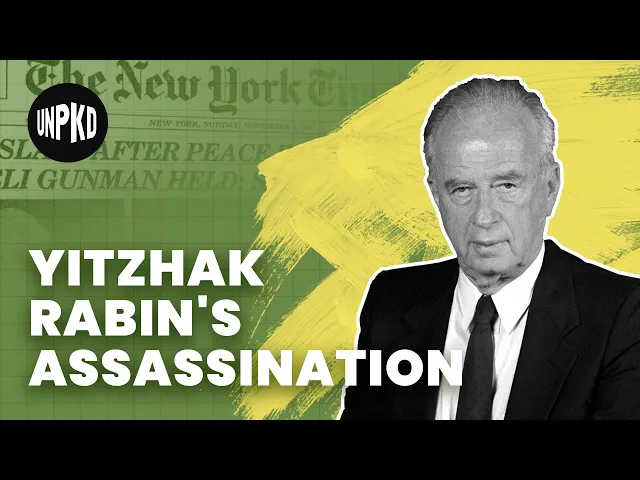
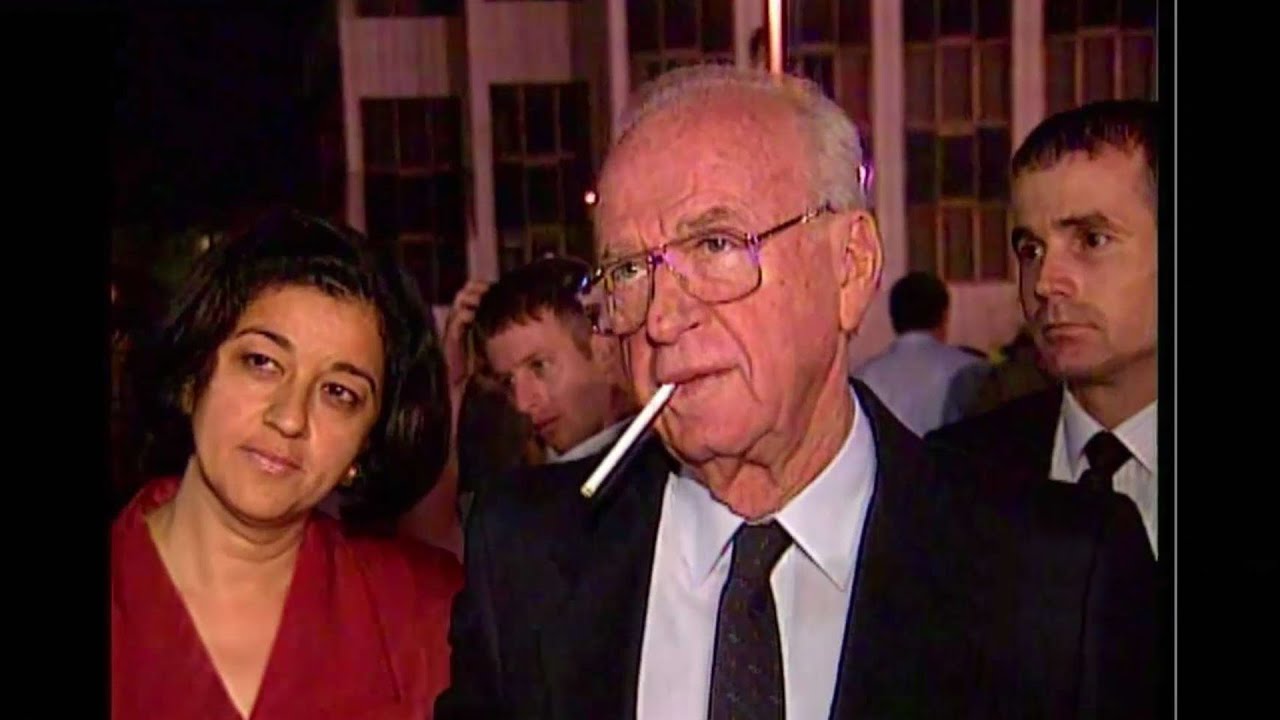
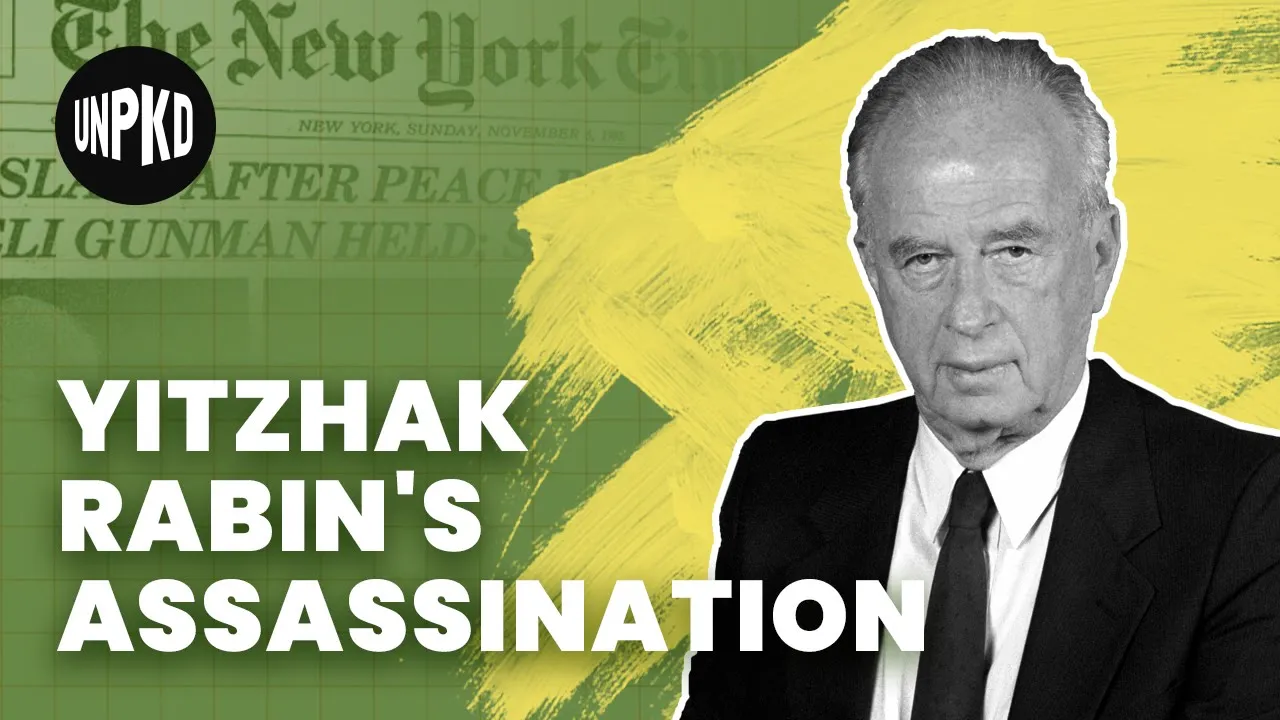
- Yitzhak Rabin, Israel's fifth prime minister, was a complicated figure, both revered and reviled. Ultimately, he was a man of paradoxes. A war hero and a peace-making icon.
Hawk-ish and Dove-ish, yet pragmatic. Socially awkward, yet a dignified international statesman who's credited with engineering some of Israel's boldest geopolitical decisions. Now, when you think of Rabin, these apparent contradictions may not be what comes to mind.
It's likely you think of his dramatic assassination. But who was Yitzhak Rabin? And what made him Israel's most paradoxical and, perhaps, most famous politician?
Let's dive in. (upbeat music) Rabin was born in Jerusalem on March 1st, 1922. A secular Jew, Rabin studied at a prestigious agricultural school where he befriended Yigal Allon, a future leader of the Palmach, the elite strike force of Israel's pre-state Zionist militia.
In 1941, just shy of his 20th birthday, Rabin began to transition from farmer to the front lines. That year, Rabin joined his friend Allon in the Palmach where he blossomed into a distinguished leader. In 1946, tensions were high between British officials in the mandate and Jewish establishment figures and underground leaders.
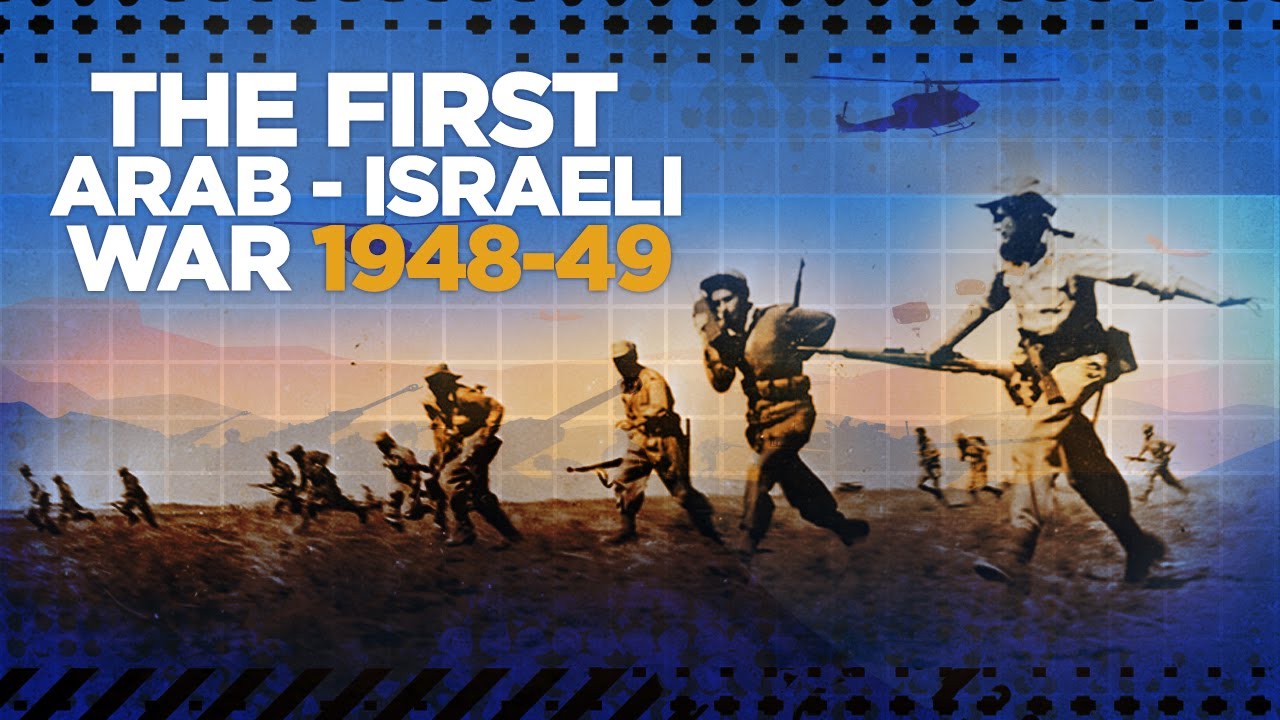
Caught up in their struggle for liberation, Rabin was arrested during Black Saturday, a massive British operation to crack down on Jewish resistance. He was detained in a British prison for five months. After his release in 1947, Rabin was appointed chief of operations of the Palmach, setting the stage for his key involvement in the 1948 Arab-Israeli War.
The war for Israel's independence was where Rabin would really make a name for himself as one of the Israel Defense Forces key leaders. During the war, Rabin directed Israeli operations in Jerusalem and fought the Egyptian forces in the Negev. With an impressive military resume built up during Israel's fight for independence, literally building and defending a country, Rabin continued to move up the ranks.
In 1964, Rabin was named the IDF's Chief of Staff by Levi Eshkol, Israel's third prime minister. In this role, Rabin, along with Ezer Weizman, chief of the Israeli Air Force, helped build up the IDF's air fleet. This was critical, as the year 1967 brought on unique military challenges for Israel.
With the prospect of five Arab armies planning to attack the Jewish state, Rabin helped mastermind 1967's preemptive strike that destroyed Egyptian and Syrian airbases and allowed Israel to achieve an impressive military victory in less than a week. For most Israelis, the war was cause for celebration. For Rabin, though, it was anxiety inducing.
On the surface, he was a stoic, principled, bold leader. He was trusted and relied upon by top Israeli brass. But dig a bit deeper and you find a much more complex person.
He felt responsible for bringing Israel into its first major war since 1948, a war that saw about 4,000 military deaths. During the war, and actually, right from the start, Rabin couldn't handle the pressure. His anxiety and exhaustion nearly caused a nervous breakdown.
According to historical accounts, his concerned wife Leah called the IDF's surgeon general to give Rabin a sedative to help him sleep. The contradiction is striking. Rabin's most brilliant military success nearly wrecked him emotionally.
Shortly after the war, on June 28th, 1967, Rabin gave a famous speech at the Hebrew University in Jerusalem where he tried to articulate his inner strife. "The whole nation was swept by joy, "and yet we encounter a strange phenomenon "among the fighters," he said. "The fighters in the front lines saw with their own eyes "not just the glory of victory but also its price.
"Their comrades fell next to them, covered in blood. " After spending a few years in Washington, DC, serving as his nation's ambassador to the United States, Rabin returned to Israel. On June 3rd, 1974, he made history, becoming Israel's first prime minister to be born there, and fifth overall.
As a leader, Rabin held on to secular principles. Still, though, he felt a deep connection to Jerusalem and understood its standing as a historical place for Jews. Take for instance his stance on a major issue of the time.
What should Israel do with the post-1967 war territory it had acquired that included Golan Heights, East Jerusalem, and the West Bank, which together doubled the country's size. On April 23, 1974, Rabin was speaking to a crowd of Orthodox Zionists on the matter. "On Jerusalem, I will not compromise.
"That is my focal point. "Ramallah is not a question of life and death for me. " And what about the historical land of Israel?
Well, on this, Rabin was pretty blunt, revealing his secular belief system. "For me, the Bible is not a land registry "of the Middle East. "It is a book that provides education in values, "and its purposes are different.
" Rabin's first tenure as prime minister ended disappointingly with a convoluted financial scandal. An Israeli journalist broke a story that Rabin and his wife Leah had opened and maintained a joint bank account in Washington, DC, during Rabin's time serving there as Israeli ambassador. This was a breach of Israeli currency regulations at the time and prompted a hefty fine and public humiliation.
So in 1977, Rabin withdrew from his party's leadership and watched as his rival Peres replaced him. Following his departure, Rabin's Labour Party would go on to lose in the 1977 elections to the more right-leaning Likud Party headed by Menachem Begin, who became prime minister. Rabin then served as a Knesset member on the Foreign Affairs and Defense Committee for seven years under Begin.
Then, from 1984 to 1990, Rabin was appointed minister of defense in several national unity governments led by Prime Minister Yitzhak Shamir and non other than his old buddy Peres. During that period, Rabin oversaw Israel's reaction to the First Intifada, a Palestinian uprising that broke out in 1987. Over the next four years, the IDF reported more than 3,600 attacks with Molotov cocktails, 100 with hand grenades, and 600 with guns or other explosives.
The violence was directed at Israeli soldiers and civilians alike. During this period, 16 Israeli civilians and 11 soldiers were killed by Palestinians in the West Bank and Gaza while more than 1,400 Israeli civilians and 1,700 Israeli soldiers were injured. Approximately 1,100 Palestinians were killed in clashes with Israeli troops.
The situation during this period was untenable to say the least and posed a challenging security problem that wasn't going away. In response, Rabin, who was desperate to stop the killing of Israelis, controversially authorized the use of force and beatings against violent instigators. Rabin The Bone-Breaker was a nickname popularized in the Israeli and Palestinian media.
And this was more than a nickname because he actually ordered troops to break bones as a strategy for ending these demonstrations. His reputation as a fierce, strong military man was alive and well. Then, in 1992, Rabin was reelected.
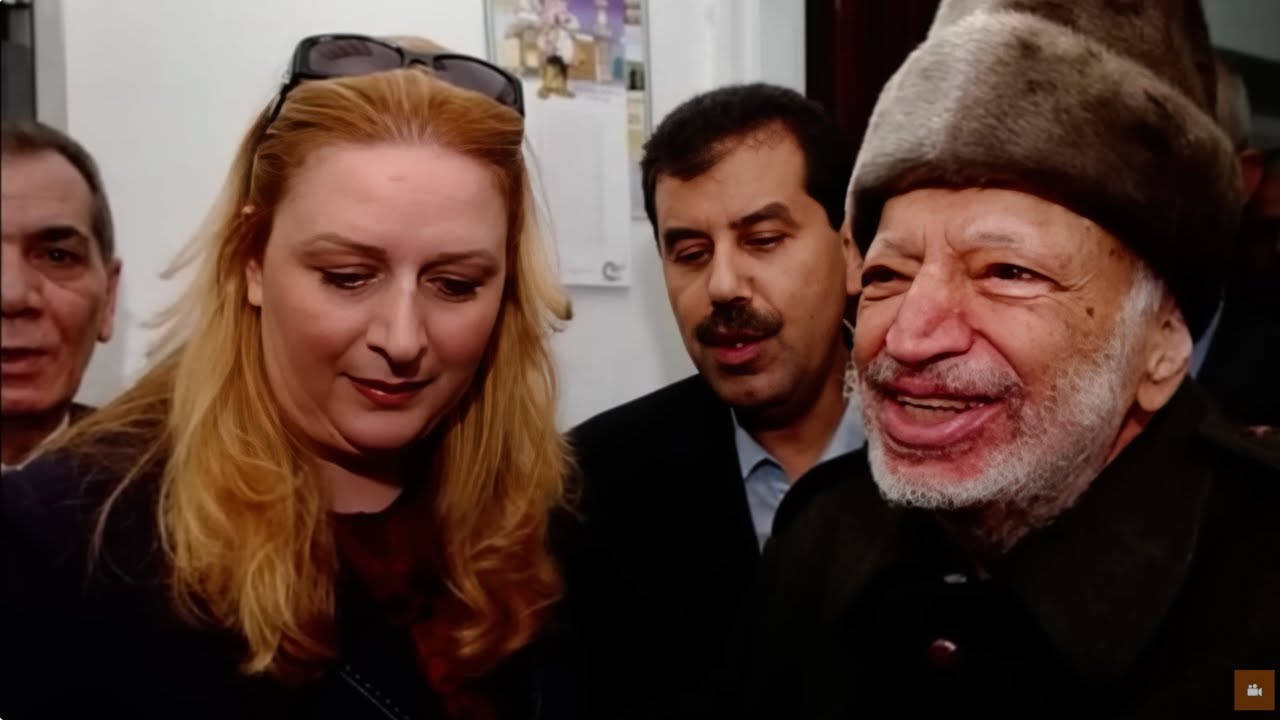
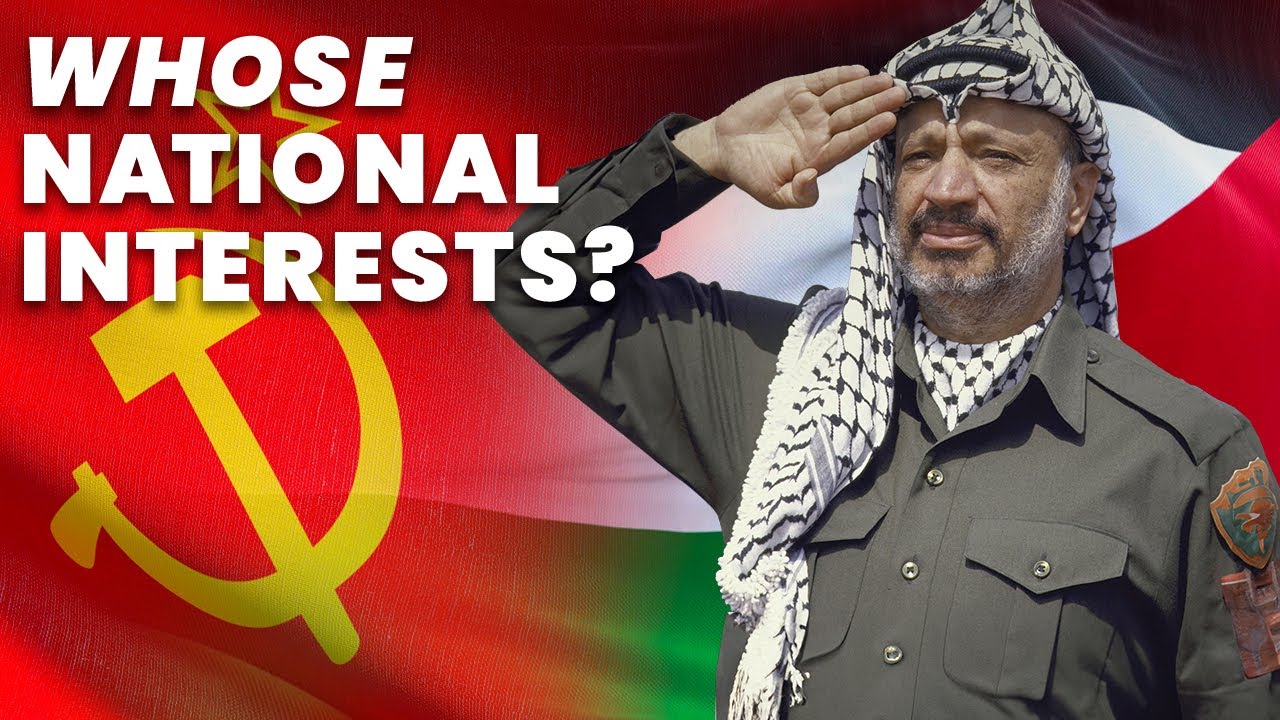
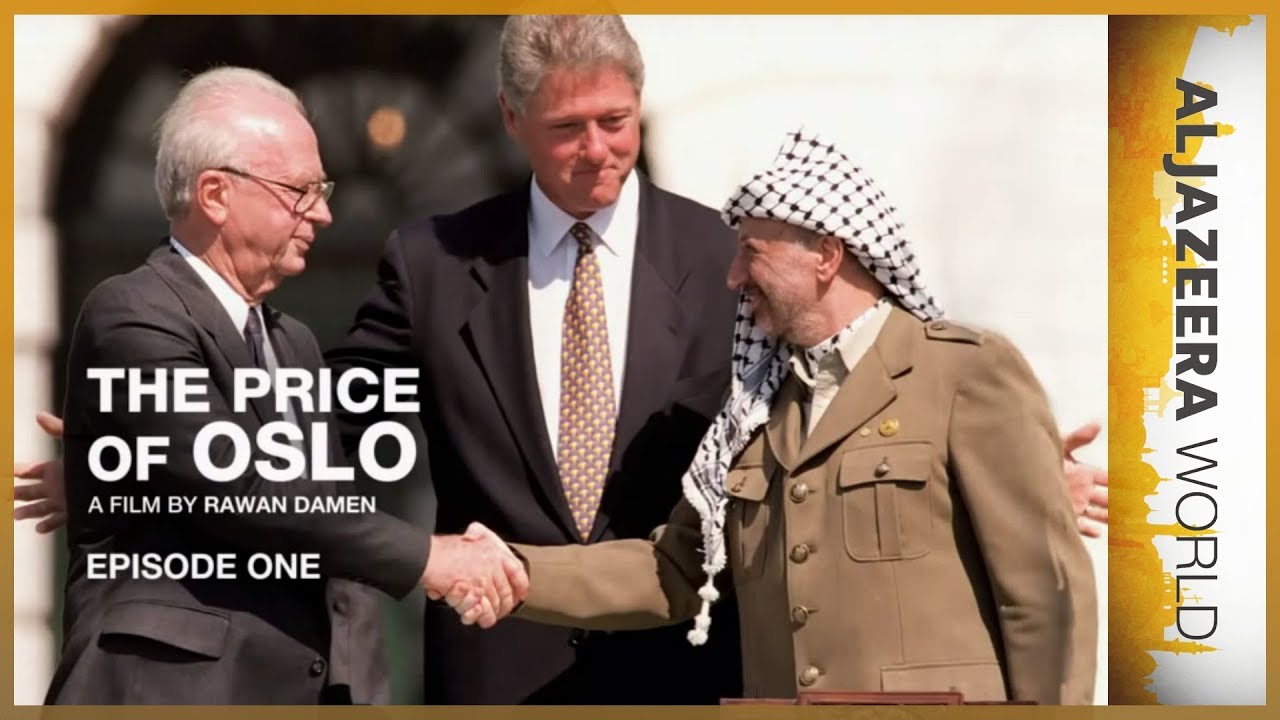
During this second-go-round as prime minister, Rabin, a man who had seen much war, appeared to have a singular mission: peace. Rabin oversaw the initiation of the Oslo process, a shaky peace proposal, with Palestinian leader Yasser Arafat. The process divided Israelis.
Some feared that concessions and a peace process would actually lead to more terror and war, not peace. The thinking was that if the Palestinians weren't sincere, they'd ultimately use their new autonomy to perpetrate more violence against Israelis. But other Israelis were optimistic and saw a hope for a brighter, more peaceful future with Palestinian neighbors, and potentially a separate state for Palestinians.
For ardent religious nationalists, giving up biblically ordained Jewish lands to create a Palestinian state was fundamentally wrong. In September of 1993, the Oslo process reached a climactic point. With cameras clicking, Rabin shook hands with Arafat on the White House lawn, President Bill Clinton standing between them as the prospect of peace between Israelis and Palestinians appeared bright on the world stage.
In 1995, he gave a famous speech to the Knesset where he argued that land concessions were necessary for achieving peace. Also during this speech Rabin even thanked Peres, his rival and partner, for his integral role in the Oslo process, which was tremendous for their relationship. He did not publicly endorse a future Palestinian state and his exact feelings were never actually made entirely clear.
The majority of the Israeli public still didn't support this idea, mostly out of security concerns. But the natural endgame of Rabin's Oslo peace process was a potential two-state solution. Sadly, though, he'd never get to see it through.
Now let's break down what was going on in Israel during the Oslo peace process. Not everyone was in favor of what Rabin was up to. Actually, that's an understatement.
Many Israelis and Palestinians were fervent in their opposition. Palestinian terror attacks, especially suicide bombings, were pervasive, occurring almost daily. From January to August 1995, 40 Israeli civilians were killed by Palestinian suicide bombers.
Widespread protest in Israel voiced displeasure with land concessions and the peace deal, citing serious security concerns. In some extreme cases, this included hateful rhetoric, even death threats in Rabin's direction. Some right-wing Jewish extremists cited misapplied religious Law to radicalize young religious Jews.
They said that if someone is pursuing Jews with the intent of harming, in order to prevent it, Jews are obligated to kill the pursuer, and a young Orthodox law student named Yigal Amir was drinking the Kool-Aid. In his estimation, Rabin, who was negotiating with Arafat, the mastermind behind the murder of Israeli athletes at the 1972 Munich Summer Olympics and countless other terrorist attacks, was someone who meant Jews harm. Amir believed that Rabin giving more land to Arafat would only continue to lead to more terror, as it had before.
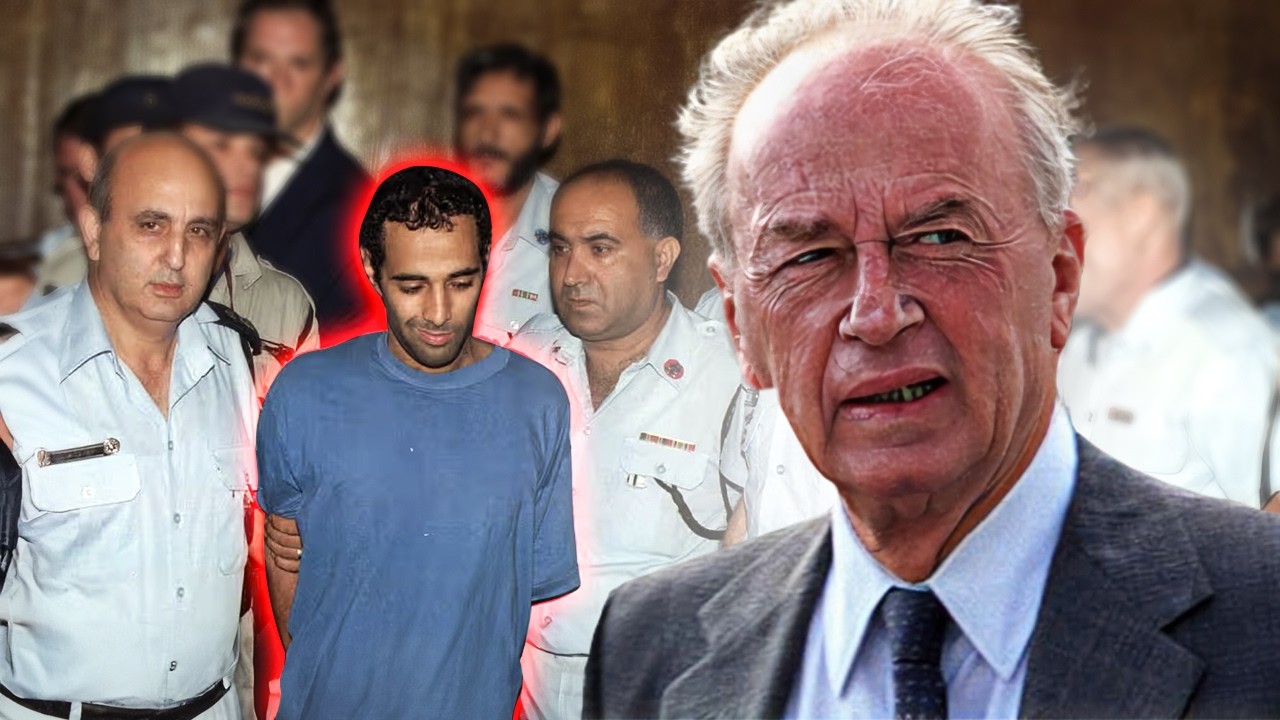
He saw Rabin as a man with a death sentence hanging over him. On November 4th, 1995, Amir went to an enormous peace rally where Rabin and the supporters of Oslo were gathered. Amir shot and killed Rabin as he was entering his car.
Rabin's aids had urged him to wear a bulletproof vest but he refused, saying, "If there comes a time "when I would need a bulletproof vest, "I no longer want to be prime minister of this country. " It was the first political assassination of its kind in Israel, and the fact that it was perpetrated by a Jew rocked Israel's psyche, not to mention, played an important role in derailing the Oslo peace process, which was never fully ratified. Think of the event as the JFK assassination of Israel.
If you walk the streets of Israel and ask people to remember where they were when they received news of Rabin's assassination, they'll recall it in detail. Putting the kids to bed, watching TV, out with friends. Everyone remembers.
Rabin's funeral was packed with world leaders. US President Bill Clinton, a key mediator of the Oslo process, spoke. Clinton's emotional eulogy ended with two words in Hebrew, "Shalom, Haver.
" Goodbye, friend. Rabin's legacy is a complicated profound one. Paradoxes abound.
Savvy military man, Israel's most well-known peace-seeking icon, a winner of the Nobel Peace Prize, anxiety-ridden in private but bold and respected on the world's stage. So sure, we can call him paradoxical, but another way to look at Rabin is as a man who evolved over time and adapted to different political eras to his benefit or to his detriment, depending on how you look at it. Thanks for watching, see you guys next week.