this session and next session we're going to be studying a topic called Outreach methodologies Outreach methodologies is important because it helps us to connect with people to meet people to engage with people so that we have the opportunity to build genuine lifegiving relationships with them and possibly through that by the spirit's leading we have the opportunity to share the gospel now I want to be very clear the most important thing we can do is to make disciples when it comes to outreach we are to share the gospel remember evangelism definition it's sharing the good news
of Jesus Christ and the power of the Holy Spirit Holy Spirit and leaving the results to God we want to do that over and over and over again share the good news of Jesus and the power of the Holy Spirit and lead the results to God that is making disciples and then we help those new disciples to grow in their faith to understand scripture more to pray more to become more and more like Jesus that's discipl making and what those disciples make disciples who make disciples who make disciples that's when reproduction happens and that's when
new churches are started and the kingdom of God is expanded that's our goal Outreach methodologies helps us to connect with these people in the first place what do I mean by that I I I often describe new churches as being the best kept secret in town that's not a good description if you're a new church plet you don't want to be a secret you want to be something that people would love and want to be a part of but too often they don't even know we exist so Outreach methodologies give us the opportunity to connect
with people and to start those relationships and that's important because remember that's the example that Jesus gave us look back at what we talked about when it comes to the Bible remember Henry blackaby the story of my friend who was Henry's neighbor and uh they did Bible study together at the end Henry would always wi end the study with the Bible is first and foremost a book about relationships and he kept saying that because we have to understand what we're here for why did God leave us on this Earth Earth is to be in relationship
with others to tell more people about him and that's what we need to do we need to be in relationship and Paul even talked about how he did that he said I have become all things to all men that I might by all means save some that's the Apostle Paul saying I need to do what I can to engage with people where they are to the Jews he became a Jew to the Greeks he was like a Greek to people that made tents he made tents alongside them he went to where the people were and
connected with them so here's what I want you to understand about Outreach methodology it's about three things relationships relationships relationships we are trying to meet people and connect with people in order to have the opportunity to tell them the good news about Jesus now and I don't want you to get stuck on this topic and think that's everything there is is just building relationships one of the things we assess Church Planters on is are they good building witnessing relationships most Church planners are great at building witnessing relationships but not all of them are great at
actually sharing the gospel and giving people an opportunity to respond that is essential so what we talk about that we talk about it when it comes to outreach methodologies and we'll talk about it later when we talk about partnership development when we're doing the gospel presentation when we're telling people about Jesus we need to do what we call do the ask do the ask that means actually ask them if they feel led to respond to what the holy spirit is saying to them do they want to say yes to Jesus too many people are afraid
of sharing this question with others they shy away from it and they do this for a few reasons one is they're afraid what if what if they get upset with me or what if they don't like me and what if my friendship ends with them uh remember that video we we watched a pen Gillette who said you know the one that if you watch the link as I asked where he said hey uh if we really believe this is true how could we not tell people about Jesus how could we not ask them to respond
so don't shy away from this do the ask don't be afraid and don't say Well they're not going to respond I just know they won't I know I know they they don't they don't want to to respond to it so the other side of do the ask is don't say no for people um I want to tell you a story about another friend of mine uh his name is Ray Woodard and Ry is phenomenal I I wish I had time to tell you about all the the things I've seen in his life he is just
a man of God he lives by faith God blesses him in ways I give him a hard time about how how how hard I work to do some stuff and God just blesses him and and he works hard don't get me wrong but but he just seems to have this opportunity to see God working uh in ways that we would all love to see at times I get to see it I just raise one of those guys it just seems to happen to more and he shared the story in the past about when he was
in college and he would uh he was a college not excuse me not as a student but as a college Minister and he would go and take a student with them and they would go knock on doors in the dorms and they would look for the opportunity to share the gospel with people and uh tell them about Jesus and see if they felt led to respond to what Jesus was saying to them through the Holy Spirit and uh one day he was out with this student and they were knocking on doors and nobody wanted to
talk to him doors being slammed people not opening doors and they knock and knock and knock and nothing nothing came about it and Ray was getting a little tired of it and he said to the to the student that was with him hey you know it God's clearly not doing something tonight we just we should stop we should probably go home and the student's like no no no he goes we need to do one more I want I I just I wanna I want us to do one more I want to try and Ray said
well okay but if we knock on this door it's going to be your turn you've seen me share with others in the past now you get to tell people about Jesus and see if they want to respond the students like no no no no no and Ray's like look I'm telling you we're going to knock on the door and you need to sa the student's like no he says I'm going to knock on the door and if you don't say something we're going to stand there and look really silly because neither one of us is
going to be talking so sure enough they get to the next door and they knock on the door and the student opens the door and nobody says anything it's just dead silent they're just standing there Ray's waiting for the student the student scared to say anything to the other student and finally the student that's with him just blurts out he said do you know that Jesus died for your sins and if you were to die tonight you would go to hell forever and live without him yes would you like to pray to receive him as
your lord and savior right now yes I would and raay look at this kind of dumbfounded about how it went they they said well can we come in and talk and so they go in they stand down they talk with this guy and they clearly present the gospel and he understands it he's able to share back they've talked quite a bit long time and this young man praised to receiv Jesus Christ as his Lord and Savior and they've been there quite a while and built some Rapport and so Ry feels brave enough to ask him
and he he says to the person who just prayed to receive Jesus he said you know I got to tell you something he goes can I be very candid with you he goes oh yeah yeah tell me anything ask me anything and he goes that presentation was like the worst presentation of the go goel in the history of gospel presentations yet you prayed to receive Jesus and make him the Lord of your life what happened and the student said well you know it's interesting he said I've had the same roommate for the last couple years
he's he believes in Jesus he's always talking Jesus this and Jesus that and he's going to Bible study he's going to church he's doing all these things and I was more more and more interested in learning more and more but he never asked me if I wanted to become a Christian he never asked me if that was something I wanted to do in my life so when when he asked me that I couldn't say yes fast enough see now imagine what would have happened if they had said no for that guy yeah no we're just
going to quit you know he's we're you know people aren't responding instead they did the ask and he said yes toes Jesus uh who do we know how many people are out there that are waiting for us to give them the opportunity to respond to the reason for the hope that we have we need to do the ask so what we're going to look at is how to connect with more of those people so that we can have those opportunities now one of the things we want to talk about when we're doing Outreach methodologies we
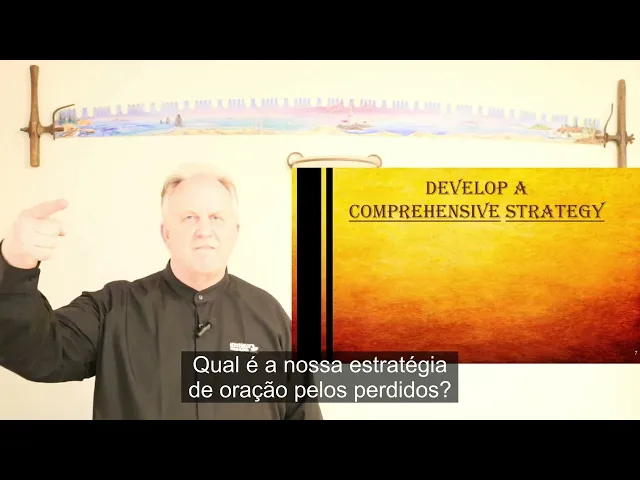
want to De develop a comprehensive strategy for outreach and by a comprehensive strategy I mean there are four areas we want to cover the one we keep coming back to prayer what is our prayer strategy for the Lost how are we going to pray for God to open their hearts to the gospel when I pray for for church planners I pray for their Community I pray that the Holy Spirit goes ahead of time and draws people to himself so people are ready to respond the second thing we want to talk about in a comprehensive strategy
is image so how do you present yourself to the community in the things that you do and we'll talk about about that some and then we're going to talk about strategic planning we're going to we're going to talk about all sorts of different Outreach ideas and ways to connect with the community and there's been a debate some in the past I don't care quite as much but about our church is missional and and your church is attractional what they mean by that is we go out and serve people and we we do we're not all
about the big event and and and advertising and others are like hey you know you do these big events and people come and connect and you get to share the gospel the reality is that churches are both if they're doing it right they are on Mission together but they're also doing something in Sharing something that is attractive to people that's what we mean by attractional we're not trying to wow them or fake them out we're trying to share with them things that are amazing about being a part of this community that belongs to God and
then the fourth area that we're going to look at after prayer image Strat strategic planning is communication what are the ways that we get the word out there what types of communication do we use to engage with people so let's go through those one by one first of all I'm going to remind you of this again prayer is not preparation for the battle prayer is the battle let's not give lip service to prayer let's actually do prayer let's pray as if their lives depended upon it because it does it's the holy spirit that does the
work in them that draws them to himself gives them the opportunity to respond but it's the Holy Spirit doing the work so let's plead with the holy spirit that he will go forward and touch these lies and draw people to him himself we do a prayer through a lot of different ways we've already had a session on prayer I'm just going to touch these quickly going on prayer walks having prayer Partners every every Church planter should have at least 50 prayer Partners who will pray for them and we even talk about uh having what we
call the hit squad and what I mean by the hit squad are the ones that are you really are your core praying people that you know if you're going to go share with John and Susie you can text this group and they will all stop what they're doing and pray for that gospel opportunity uh use bless every home where you get to pray for each home and pray for the people in those homes by name evangelism only prayer Gatherings uh getting together for no other reason but to pray for the lost to pray for them
to come in faith uh it's important to pray for people who are ailing people who are sick people who have had bad things happen to and people who are suffering in many ways but we do want to pray that people will come to Faith in Jesus Christ and sometimes the only way to make sure we do that is to not pray for other stuffs they were just going to get together and pray for this or at least making sure that a big time of our prayer time together is devoted to that and then praying for
event via Zoom or webcasting video streaming while they're going on so having prayer Partners praying for you as you do these Outreach events as you do these Outreach methodologies that we're going to talk about have a prayer team gathered nearby or even remotely and watching the event praying for the event there's a lot of other things we can talk about in prayer but as I say we've already dedicated a session to that uh the next thing we want to talk about is image you have one two well actually three kinds of image you can have
a good image a bad image or no image a good image means when people think of your church they have a positive impression not only of you but of who Jesus is one of the worst things for people coming to Christ is they know too many Christians and they have a bad image of who the church is and who Christians are and that's not what we should be putting out there it should be a positive one another one that may be equally as bad as the bad image is no image we've been in communities where
we've started a church and because of the things I'm going to share with you about the ways we've engaged the community in six months everybody in that town knew who who this new church was and they had a very positive image about it but there were other churches in town that were literally a hundred years old that nobody knew existed in the community they had no image they they kind of they became inward focused they became the hudle mass and nobody else even knew they were there uh fortunately that's something you can overcome uh the
bad image is tougher and can take longer but the no image be intentional and present who you are to the community so how do we do that we look at a number of things the first thing we want to do when we're looking at what kind of image we want to communicate is we want to look at the focus community and what I mean by that is a place or people group where we're going to plant the church so uh if we're saying we want to be a church for college students and we're planting in
a retirement home we're probably miss a line there we need to understand who our focus group is that we're sharing the gospel with now we want everyone to come in faith in Jesus Christ I get that I agree with that but you also have to understand you're going to be more effective in most situations reading reaching certain people groups or certain groups of people in certain communities so we want to know what's in that focused Community the second thing is we need to understand our current congregation we don't need to communicate we're something different than
we are and we also need to understand what what God has gifted us to be what God has gifted us to do and what we're passionate about so what are some things that we can bring to serve this community that others either can't do or they aren't doing it even if they can let's understand who we are as a congregation so that we can present that to the community so those kind of things can even play into what kind of name we might have your name communicates a lot now we've had some churches that would
have names that were two lines long like there were so many words that took up two lines when I look at that I can tell you that's usually an African church that's how they tend to name their churches yet the church planners who we've had many Church planners from Africa uh I won't name all the countries but several countries in Africa and when I talk to them they aren't just wanting to reach people from Africa they say we want to be a multiethnic church we want to reach angl and Hispanics and slavics and they want
to do all this but they've named thems in such a way that it only seems like something for Africans so we've challenged them to go out and do some things in the community to figure out a better name for themselves and we can talk about some of that later uh even the the kind of logo and font that you might use uh gives an image is it something that looks set and stagnant or is it something that shows motion now going back to the name idea because this also has the logo idea at one point
I was working with somebody who wanted to plant a military church and uh he came up with the name for his church of A Mighty Fortress Like A Mighty Fortress Is Our God now again I I grew GRE up in Baptist Churches have served in Baptist Churches but in college I sang in a choir at Pacific Lutheran University choir of the West and our Anthem our Encore our main song which let you know pretty much we were done was A Mighty Fortress Is Our God by Martin Luther I love that song it would just we
had incredible voices and Harmony in that group it was just an amazing thing but I told myself said I'm a little concerned about that being your name in the community and so I said you need to go out and test it in the community and he and he did and I'll just go ahead and tell you one of the ways we test the community is we will we'll take like 50 Starbucks cards that have five bucks each on them nowadays you might have to put a bit more on them and we'll take a clipboard that
has like five questions on it and we'll say hey if you could answer these five questions for me won't take about a couple minutes I'll give you this Starbucks card and uh so could I ask you that and one of those we ask is which of these names do you like the best for the church and which do you like the least and so he goes out and he tests his name and he came back after doing that survey and he goes Gary they hated the name I said why he says A Mighty Fortress sounds
like ain't nobody getting in and ain't nobody getting out it was not communicating what I wanted even though it was a military Community well that had to do with his name his logo his font all that together which gets into our next thing which is imagery just things that you people see when they're with you what are what are your signs like what are your decorations like what what is it like when they come in what are what are you projecting and even down to what are you projecting and how well you care for the
place you're going into um if you meet in a school and you're setting up and taking down uh your church service in the school you need to go in early enough that you can check the bathrooms and make sure they're actually clean now I know there's custodians for that but sometimes cleaning for fifth graders is not the same level of clean that we want for a young family that's bringing their newborn in there they want to know this place is spotless and so everything from the signs to to is there garbage in the parking lot
when you come up outside are they warmly greeted all those kind of things paint an image of who you are and then another one is in terms of language you know I mean how do you talk about it do does your language reflect the vision of your church the who you want your church to be does your language talk about pastoring and serving and leading the community or does it talk in terms of Us and Them does it talk about the saved and the Heathen what does your language communicate am I welcome here if I
don't know Jesus and I'm just trying to figure this out all that comes out in our language another thing that that communicates image is vision mission and values now we haven't taking the time to go through those things but I'll give you a brief description a vision is what you want your church to become what you believe God has told you is the future of this church say 20 years from now what will it look like when that church is fully functioning engaging the community like how many people will be there what kind of activities
are going on and how is the gospel being shared and groups being multiplied and churches being planted how are all these things happen it's like writing a newspaper article in the future about what we will see there that's the vision the mission is shorter I often talk about the Miss Mission passing the T-shirt test the mission is what we're going to do now for the next five years say so that we can become the vision that we want to be in 20 years so in church planning I often talk about the mission as planting the
gospel planting the gospel that's very intentional word and imagery there PL planting meaning church planting but how are we doing is by planting the gospel the good news of Jesus Christ so in three those three words we're saying we're going to be about making disciples that's going to result in new churches that's planting the gospel that's our mission now our values these are not biblical statements we need to have those too we have we have core theological beliefs that's different than what I'm talking about here I'm talking about core values and core values are how
we do what we're going to do in order to become what we're going to become I'll say that again core values are how we do what we do in order to become what we're going to become so how we do our values what we do is Mission and what we're going to become is Vision here's what I mean by how we do things um one of the core values I've had in a church that I've LED in the past is said we value risk and failure versus the status quo qu we value risk and failure
versus the status quo now you might hear that and say well does he want his church to fail no what I'm saying is I'd rather try and fail than just sit stagnant and not get anywhere we're going to take risks even if we fall flat on our face we just don't want to do the same failures twice in a row so we want to learn from those failures and do better next time uh we value Effectiveness over efficiency that's another core value value we value Effectiveness over efficiency what that means is yes we want to
do things well we want to do things with Excellence but we don't want to be so focused on being excellent that we never get out there and get things done we want to reach people even if it's not perfect the way we did it we want to engage in Ministry even if it's a bit messy so we want to be effective more than we want to be efficient or everything's got to be checked up off every time we do everything so those are some values examples so all those things communicate who you are to community
that's the image now this next section that we're going to do is going to be one we're going to spend probably the biggest chunk of time on uh we may do part of it this time and and part of it next time but that's going to be strategic planning uh tips for how we're going to engage the community Through the activities that we do so as I shared before we talked about prayer image and we also talked about our strategic planning and that's what we're going to focus on next now when it comes to strategic
planning before I give you some examples of things we're going to do I'm going to talk a lot about things to understand when you do planting now we're we're when we're doing these Outreach events now I'm going to give you a link here you can see it on your screen and this link will actually take you to much of what I'm sharing today but one of the important things that'll have in it are appendices that share several different Outreach ideas ways to engage with the community uh in addition to that uh you will then after
that see some communication meth methods now because the limitations of time even though we're taking two sessions to do this I won't be able to unpack all of those with you but I want to give you some tips that are good to know as you're deciding which activities to do so here we go so first of all when it comes to strategic planning you need to determine what kind of approach you're taking as a church plant now if you're trying to have a bigger church that has a larger Gathering and by bigger I don't mean
thousands maybe it is but maybe it's 100 maybe it's 200 you're not just talking a house church if you're trying to do that there really two main approaches to that one is what we call crowd de core and the other is core to crowd the crowd DEC core idea is let's just have huge events and maybe a huge launch and do everything we can but we haven't really built up a core discipleship base we haven't built core small groups those kinds of things U but we're going to get the crowd and then we're going to
try to turn them into the core turn them into the church through discipl making so go big in order to get small and then build on that the other method is core to crowd and that's the idea of hey we're going to gather some people we're going to start a Bible study and then we're going to gather some we're going to start another Bible study and then another or maybe we'll start with three but we'll keep adding to that and we'll keep building this core larger and larger and maybe build a launch Team uh to
launch a new church so we've had some healthy base to build a new church on now some people are really effective at the crowd Decor uh I'll be very honest I haven't seen that work a lot in the Northwest in my experience I know there's churches that have done it but most of the church plants that we've worked with have built the quarter crowd they've started by making disciples starting small groups and then growing to a larger Gathering um that's one approach is to have the larger Church another one is more organic method and uh
there's a book called t for Te which means training for training and the book t for T talks a lot about what's been happening in certain places in the world where church planning movements rapidly growing reproduction of churches was happening and it's much more organic it's house churches it's sharing the gospel with people and just a few weeks in uh they they're already starting another group and another group and another group and it spreads like wildfire and there's some great things about that but there's also some challenges uh those that have led those movements have
said they've been 100 miles wide and an inch deep so you have to be very intentional about discipling people to grow in their faith when you're in a organic movement like that some organic movements move much slower and they do do pour more into the disciples over time but they don't grow with the same speed kind of a variation of the first two the the bigger church and the organic one is house churches with a celebration service so that might be a group that has uh one two three they may have a few small groups
or home groups or life groups but then they get together and have a celebration service maybe once a month uh there's even a a combination strategy of this that I've I've heard and seen people use is they'll they'll basically start these house churches and when they get up to to three house churches they'll get together once a month when they get to four or maybe five then they'll they'll get together for a larger Gathering twice a month and once they're up to six or more then they launch out do weekly services so they use the
more organic approach to move to the larger service so after you determine your approach one of the other things that's important to use is servant evangelism servant evangelism uh servant evangelism is an incredibly important uh process in sharing the gospel the phrase that's often used in serving evangelism is that we just want to show you God's love in a practical way I I'll say that again we just want to show you God's love in a practical way uh there's a man named Steve shogren who popularized this and I believe the book was conspiracy of kindness
and where they would share all these different ways to serve the community and when you look at the appendix that I gave you the link for you'll see many ideas of servant evangelism so let me just give you an example um uh a couple of ideas one is maybe you're you have a group that adopts at church and they a school and they go to serve that school another one is my a group I led we went in and we we clean bathrooms in a strip mall so You' got store owners and managers and even
people who are supposed to clean the ba bathroom that that day they didn't have to and we made sure that we cleaned them better than they'd ever been cleaned and as we did it we said hey we just want you to know we want to show you God's love in a practical way and after we clean your bathroom and everybody else's bathroom we're going to gather the parking lot over there and we're going to pray for all of you we're going to pray for you we're going to pray that God blesses your business and we
also would like to know how may we pray for you specifically what could what would you ask us to pray for and uh we had people open up we had people breaking down in tears my sister's dying from cancer can you pray for her uh I'm struggling my marriage can you pray for me and my wife those kinds of things people opened up in ways they never would to a stranger because we showed them that we love them and some even tried to tip us or pay them pay us we're like absolutely not because you
know we love you and we want to show you that in a practical way and if you pay us um that kind of takes away some of our blessing this is our way to bless you because your business blesses our community and so we just want to give back to you so that's an important thing to do and we'll talk more about it now one of the things that helps that happen is something we've used quite a bit it came out of Fellowship Bible Church in Little Rock Arkansas and they're called common cause groups which
is um not just a normal life group where you get together and study God's word and prayer which which is important but it's a it's a group that has a rhythm and the rhythm of this is play study serve study play study serve study they do that over a four-week period and then they repeat play study serve study so in those groups they get together and they do something fun the first week um you'll see one of our principles later I'll probably skip through with them but it's called barbecue first always start something new with
a party it's much easier to invite somebody to to something fun you're doing than saying hey we're starting a study on 2 Thessalonians are you interested they'll be like what's a second Thessalonian they don't even don't even know but if you say Hey My My common cause group or my group or my home group you don't have to use the title my group we're going bowling this week or we're going to play miniature golf this week I one one group I led that there was a guy in the group who was taking comedy lessons and
unfortunately my travels took me away on the night they did this but the rest of the group went to a comedy club and watched him do his comedy routine which was his final exam for his comedy class that he was in so that was the play for them that week then the second week and the fourth week we studied God's word together we pray together we do a meal together so we're together you know a couple hours and so we get did quite a bit of study time as matter of fact we probably spend as
much time studying God's word in those two weeks as a normal group would do over four and then the important week for a common cause grp group is the third week and that's the serve week every group has to have a cause and as I mentioned before some ad doed schools some did food banks some would clean up Parks uh I led a group that what we did was we served other Church plants and so we would we would find what they were doing in their community and it wasn't always on the night of our
group sometimes we'd have to go on a Saturday or whatever and we would do whatever they need sometimes it was lead something but a lot of times it was picking up garbage after a meal or flipping hamburgers or doing child care or praying in another area while they Outreach things going on just different ways to engage the community uh common cause groups I can't tell you how many of our church plants have done I really don't know it's quite a few and some have even used in the early stages for how they do worship they
will actually do their Sunday morning worship by having a community event for fun having worship one week and then serving the next week and then worship the next now some of you may think oh you can't do that but it's very effective way to engage the community you can do that and then over time they would shift that to being a part of the rest of their Ministry and would have worship on a regular basis some of them don't ever make the switch they just stay that way forever another way that you can uh be
strategic in your planning is have what we call Community Advocates and so what I mean by a community advocate your community's already got a lot of stuff going on and the main thing they don't have enough is enough of is volunteers and so we want to be the best volunteers now a word of caution if you're a church planner you can volunteer for everything so much that you never get your church off the ground you don't have any time to plant your church but if you mobilize your people to be in different places and you
can do that too you can effectively serve the community we've had huge Community festivals tens of thousands of people where we we had Church plants start off picking up garbage after all the people that came to the event and over time they end up serving in more and more ways till eventually they're running the place uh we've had a church plant going to a very tough part of the city and businesses didn't want them there because they were a lot of businesses but over time by serving those bus people that are owning businesses uh some
of the less reputable businesses left the area and the community became revitalized clear to the point where leaders from that church were invited to open a coffee shop in the community uh they had had a coffee truck truck and they they said hey we want you to we want you to put your coffee shop in here we don't have one if you can imagine a part of Seattle without a coffee shop but it was such a rough part of town Starbucks bu had left and so they started that coffee shop and they they also went
on to serve in different ways they were on the community council and there was a revital revitalization thing going on in the community they were part of that part of the business group they were they had leaders in every aspect to that Community because they started by serving in the community being advocates for the community um another way that you can serve is through recovery Ministries um there's a group called Celebrate Recovery that came out of Saddleback Church and and there's other ones out there as safe Ministries which is setting atcts free eternally or set
Free Ministries set free uh started out of Uka California and became a they're no they they would argue with this they would say we're not a recovery Ministry we're A discipleship Ministry which they are but they help people that need recovery and uh so those are great ways whether that's your whole church Focus or a Ministry that you offer uh a lot of these groups they just can't find a place to meet so you can invite them in or you can start groups I started one uh in a church plant that I was leading and
to be very Frank the things you normally deal with in a Recovery Group I've never done I've never had drugs or alcohol or tobacco those kinds of things that just never interested me thank God for that um but we had many people who are recovering drug addicts and alcoholics that were in a group and I remember one week I had had to I had to leave and travel somewhere and I asked one of the guys in the group to lead the group and he was scared to do it but he did it and even though
he's he had never done anything like that before when I came back the following week they're like would it be okay if he L our group from now on now I didn't take offense at that that was a dream for me because they could relate to him he had been through what they were going through just an incredible way to engage the community you can do that through recovery um so here's some other things that we want you uh to do in having your comprehensive strategy make sure that you've planned it in Seasons you planned
uh for uh things to happen in order don't just go well that looks good that looks good different things build on other things like we talk about um in our communities we talk about the importance of seed sewing in a church plant C cultivation and harvest seed sewing cultivation and harvest seed sewing might be like having a block party and hundreds of people might come you've got hot dogs Inflatables you've got games you got prizes you got music uh hopefully you're sharing the gospel at some point you give a gospel presentation and here's what I
will tell you you could have 600 people come to that block party and you know how many people will show up the next Sunday probably not any of them maybe a few and and if you don't have a realistic expectation about that you're going to be very depressed you're going to be man we had hundreds of people what happens if they all show up at church this Sunday well they don't normally you did something fun for them in the community and you helped improve your image and God's image in the community making him famous to
the community by his people blessing the community and doing all this for free um but they didn't really all feel this connection or need to go to church now if they were looking for a church or they kind of felt that pulling that might happen but that's usually the minority um a cultivation event might be something more like a sports camp and if you do that right you do a sports camp where you you have different events going on for the kids and you set up a coffee area for the parents where they can keep
an eye on their kids remember you're strangers to them so we tell them hey we want you to come we want you to hang out uh we'll have a Bree to there and we'll have chairs and shade and you can just sit there and enjoy and you can see your kids are having fun we we're not trying to hide from you at all what we're doing come join us and then you have some key leaders usually the pastor and his wife and other great adult leaders who are there in that coffee shop hanging out with
these people and building relationships and then at the end of the week you have them come back together ideally when you have worship and you have a celebration banquet uh an event when you normally would have worship and the place where you would have your worship service and as you do that um you have videos and of everybody's you got to have everybody's kid in the video at least a few times you know different pictures of them and every kid should get some kind of award make it something funny some maybe some maybe get you
know great athletes but it's usually something that they're good at you know he's the super encourager of the week you know things like that so every kid goes home with some prizes and an award maybe you even have a a guest professional athlete that you interview at the event who talks about being an athlete but also about what it means to live by faith and be a disciple of Jesus Christ so those kind of events get them in the door have more time where you're getting to build a relationship with them other than just here's
a quick hot dog or hamburger and bounce house you're getting longer conversations over multiple days culminating and them coming to see where you worship and then we have what we would call a harvest event and what we mean by that is this is an event where they really decide if they're in or out and connect and I'll talk more about that probably in the in part two of this session uh and one of the examples of that is what we call Community dinners and we'll talk more about that later so we want to do that
we want to do build on those things and you build over time and there's certain Seasons where it's more effective things in the spring taking advantage of Easter fall when school comes back some Christmas events we can do all those kind of things build and even in summer uh the churches I led grew in summer because we did so much fun stuff in summer our church plant actually grew in size when a lot of churches would go down in summer there's things you can do but you have to be strategic about it so what are
some other principles Beyond being having the comprehensive strategy um one is be honest about who you can reach and and here's what I mean by this don't try to portray yourself as not as someone you're not I talked about that a little bit earlier but don't give images of every being young and cool and hip if your churches people my age I mean I know I'm pretty cool and hip but I'm a 64 year old guy I shouldn't be putting pictures in of my church of 20s somethings unless I've got some in the group um
I shouldn't be portraying great diversity if my church is not now those are all things I want and things I've been blessed to have in my churches but I should communicate in my my Outreach stuff that I send out and way I talk about communicate what's going on the other part is I shouldn't have this really flashy big event and then when they come to church on Sunday we've got we've got storage stuff sitting in the Hall and nobody swept and there's garbage outside and the bathrooms stink and and and uh we don't have anybody
tell them which door to go we've locked all the doors except one that only the the regulars know this is the door you go through we got to do things right so don't bait and switch instead make sure that we're delivering what we've communicated another one and I'll probably end with this one for this part of the study is do Outreach for what you can handle like if I were to ask the average Church planner if you were to have a big event and connect with a lot of people how many people would you want
to come on Sunday and be a part of your worshiper how many people would you want to come to your event and they're like what a crazy question I want everybody to come I'm like well do you because if you do a harvest event where there's one we're going to talk about where 50% on average of the people that come to this thing become a part of the church so if you had a thousand people come can you really handle that many and if you don't it's going to cost you in ways that you might
not understand so here's what I mean about doing Outreach but for what you can handle it's reverse engineering so start with how many small group leaders you have in your church so maybe your new church you can do five small groups uh because you got four leaders one of them being yourself you could lead a couple groups you can do five groups and let's say that those five groups can handle 15 people a piece to start with you want some room for growth maybe get up 20 25 people before you multiply the groups and have
new leaders so 5 time 15 is 75 so we're hoping in this process to gain 795 new people as a part of our church so if I want 75 people in my church how many people do I want to come to the event well it's pretty simple uh if 50% of the people that come stay you need twice as many as the 75 to come so your goal would be to have 150 people come to the event if we do that well then how what do we have to do to get 150 people there and
there's a lot more strategy that goes into it but one of the things we done in the past a lot of mailers and they still have some Effectiveness but now we use a lot more with social media and web searches and and uh chat GPT searches those kinds of things um but we would need we would need a a 100 touch excuse me a thousand Touches for everybody that would come so order to get I'll get this right a 100 Touches for everybody that would come so if we had 150 people we wanted that means
we needed to contact 15,000 homes in order to get 150 people so that tells us how much marketing to do and you don't want to do too much on that and one of these when we did the uh the community dinners I'm going to talk about in the next time uh we were doing it in Hawaii I know tough duty but I have a good friends that are planting a church there and it is tough Ministry work in Hawaii and they need all the help they can get from Mission teams and partners but we did
this we did this community dinner and we knew that in Hawaii they're big on Ohana which is family they're when the family comes the family comes and the families a lot of them are big and so we intentionally aimed for a small area trying to get that 150 in order to gain 75 and so we did our our Marketing in a small area and 350 people signed up and came to the events and I'll tell you more how that works later the problem was well they only had enough people in time to follow up with
150 so they still retain their 75 which was phenomenal but 200 of the people really never got ministered to in the way they had hoped and so those people never connect with the church and we kind of wasted that opportunity because maybe we didn't make the best first impression so that's what I mean about planning for what you can handle uh and when you're doing the Harvest events so that's going to be it for our first half of the study we'll come back and we'll talk more about some more strategic ideas as well as communication
ideas as we get into part two