- Science is very data driven. And with data we can apply science, and science is giving us different answers than we thought we would. Let me give you an example.
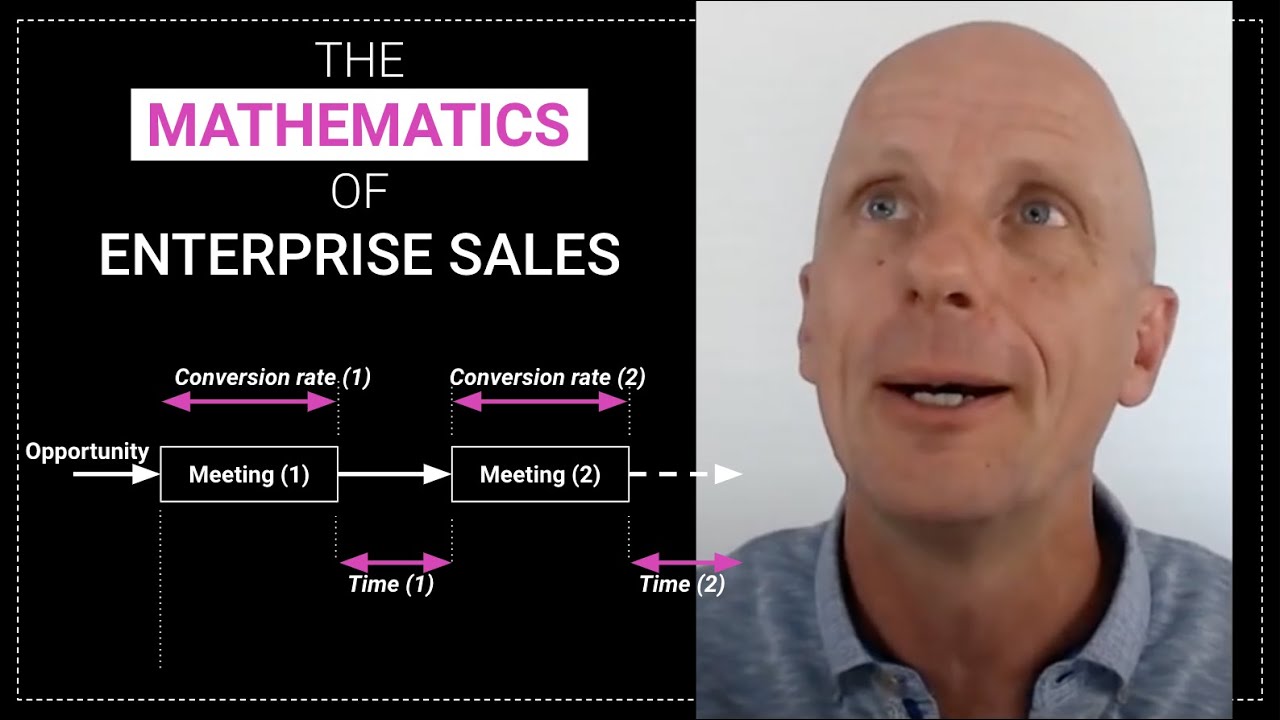
In here I have a pipeline, and what I'm gonna do in this pipeline, I'm gonna take 500 leads. These leads are like people visiting a website, and when they take an action on our website, we're gonna call that an MQL. Now let's say that these 500 leads as they're coming in, that only 10%, converts in taking an action on a website.
Out of those 10%, let's say that 20%, after review of who they are, what is their email address? Are they applicable or not? Let's say that we get some bot traffic out of there and 20% converts into what we call an SQL.
Now, as the SQLs, we have a conversation with them and they turned out to be a potential opportunity. Let's say that only 50% of those people are actually really a sales accepted lead, or a qualified opportunity that sales says, "You know what? I think that we can help them solve their problem.
" Out of those 50%, let's say that the win rate is 20%, one out of every five. Now, as we close them, let's assume that we given this, a very conventional 20% discount. Now, in a discount that means that minus 20%, I got 80% of the value left times $10,000, which in this case is the presumed annual contract value.
If I calculate this all out, that is about $8,000 left in recurring value. That means 500 leads, generate $8,000 of recurring value. Now let's apply some magic.
What I'm gonna show you, is that if I target a hundred people, not because they are a fit, but because they are a pain, then my conversion rate is a little bit different. If I really go after people who have a problem and they have a pain, and I address them with that, I believe that, that 10% essentially becomes 20%. That means that people now are more qualified because they're more qualified, automatically because that improved, the next thing improves.
That conversion rate will grow to 30%. Meaning those who actually came to me or to our website, really had a problem. They really looked at some of the solutions and that means that the show rate also went up.
In other words, when I set up a meeting with them, 60% of those people actually showed up on a meeting. And as a result, I have people showing up, they were more qualified because they had a pain. The win rate now goes up from 20% to 25%, from one in five to one in four.
And because of that, my discount level may be alternate changes as well. And so let's say I had given this case 0% discount, because they had a pain, they had a solution that they wanted to buy. If you calculate this out, that actually comes out, to almost the exact same revenue, but I only took 100.
Now, i get you say Jacco, You target that the pain, but I want to show you what this does. What it does is, I had fewer meetings here. That means I didn't have to have all my AE's having all these meetings.
I had fewer calls that needed to be made down here. An email, Steve Devin that needs to be written. This machine has started to run more effective.
I got the same amount and by doing it more efficiently, I use lesser effort. This is a real focus for the next years. We need to be able to achieve the same amount of revenue.
By working more efficiently. We call this is work smarter, not harder. And a trick down here is not to just go after people who have a fit or are a fit, but go after the people actually have a pain by putting more research, into targeting those people that you want to sell to rather than sending cold outbound emails.
This gives you the math behind it and why it makes much more sense to do it the right way, and be more efficient. Fewer emails, fewer calls yet the same amount of revenue.