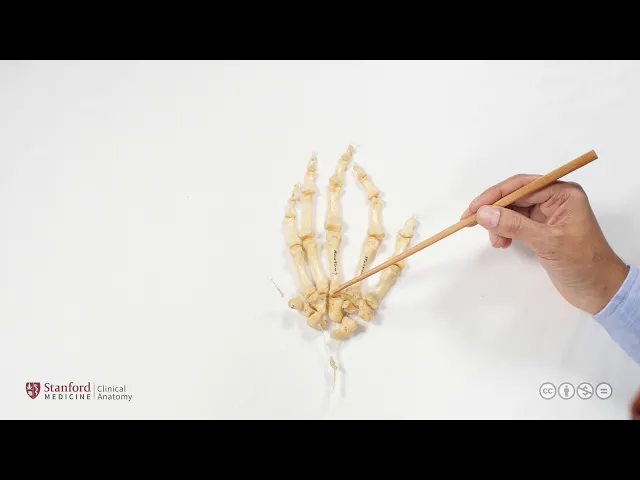
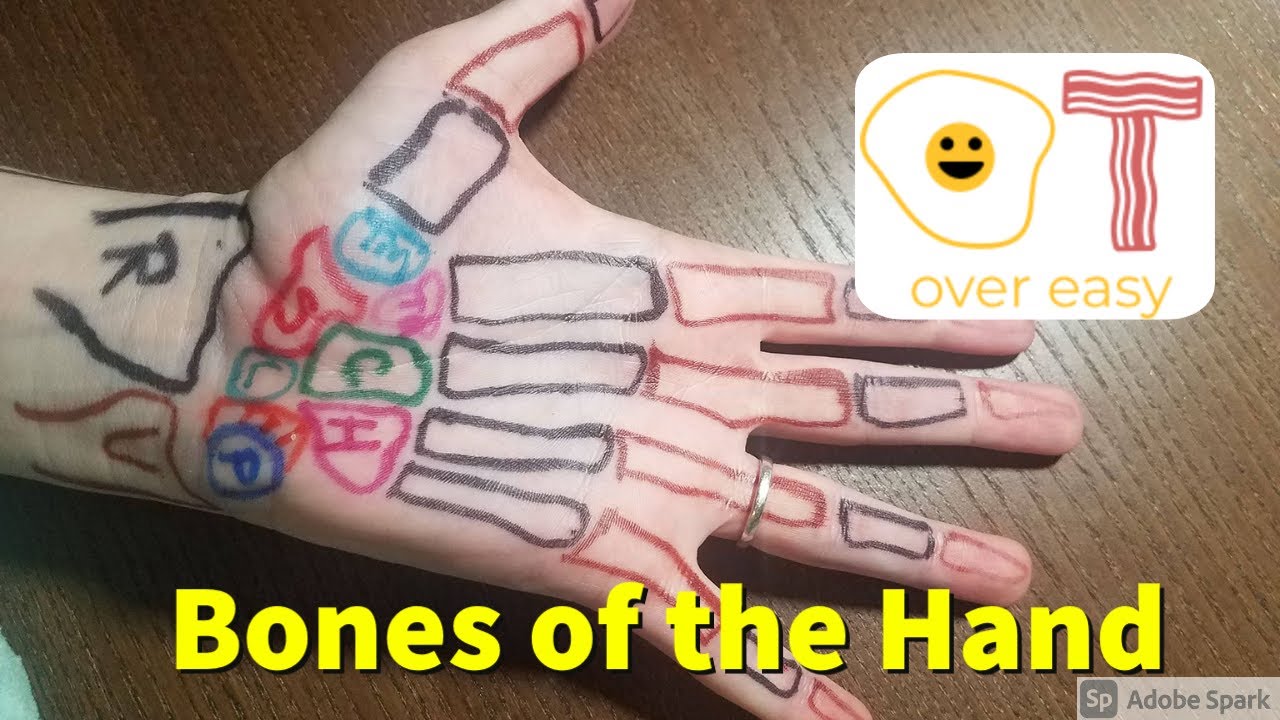
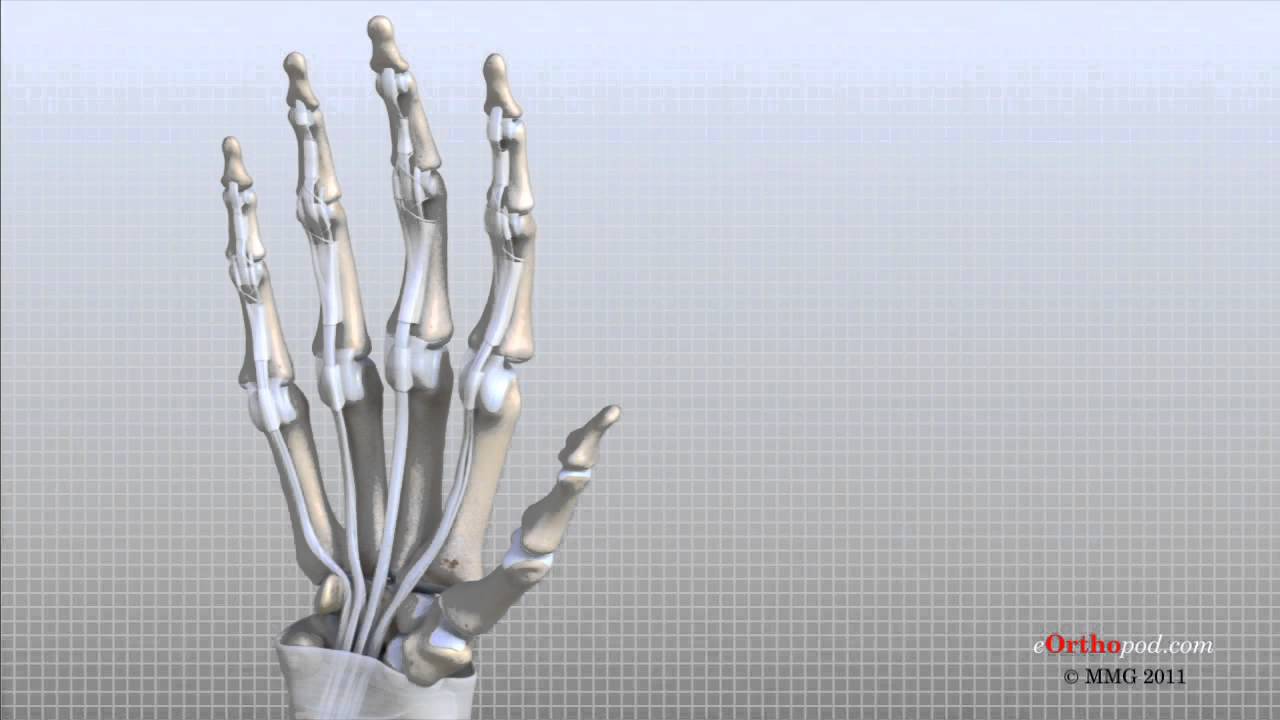
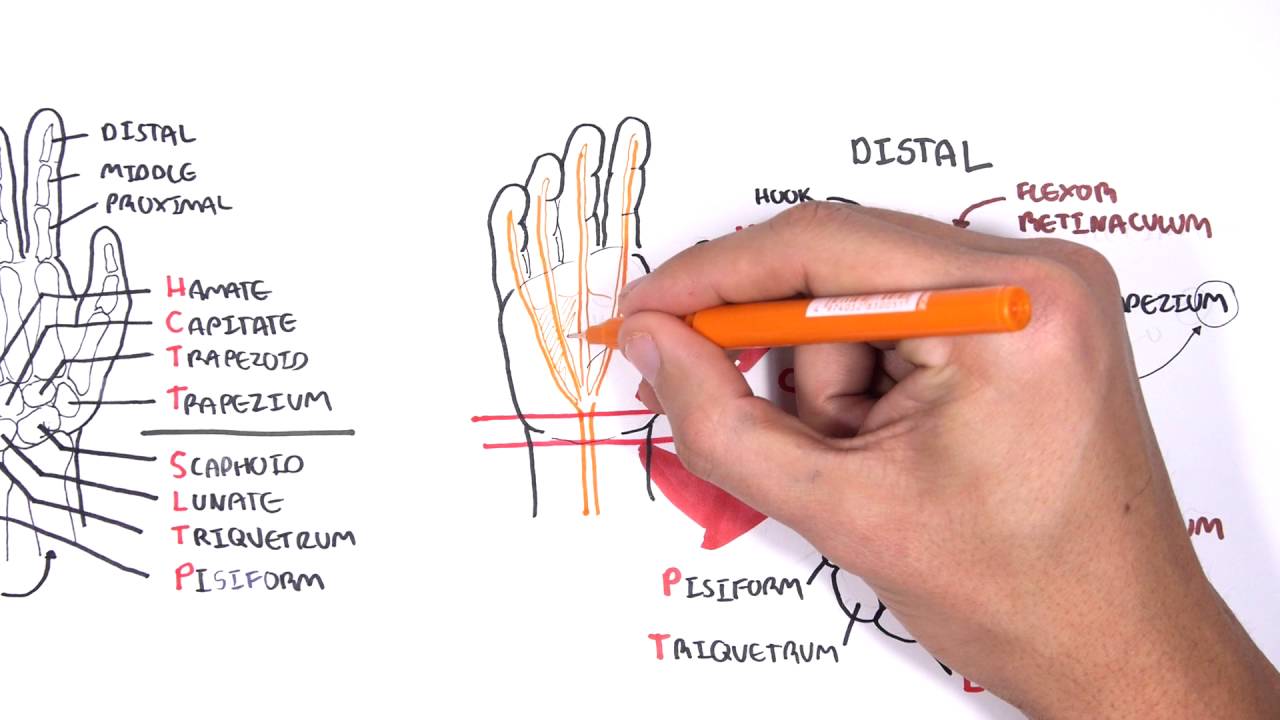
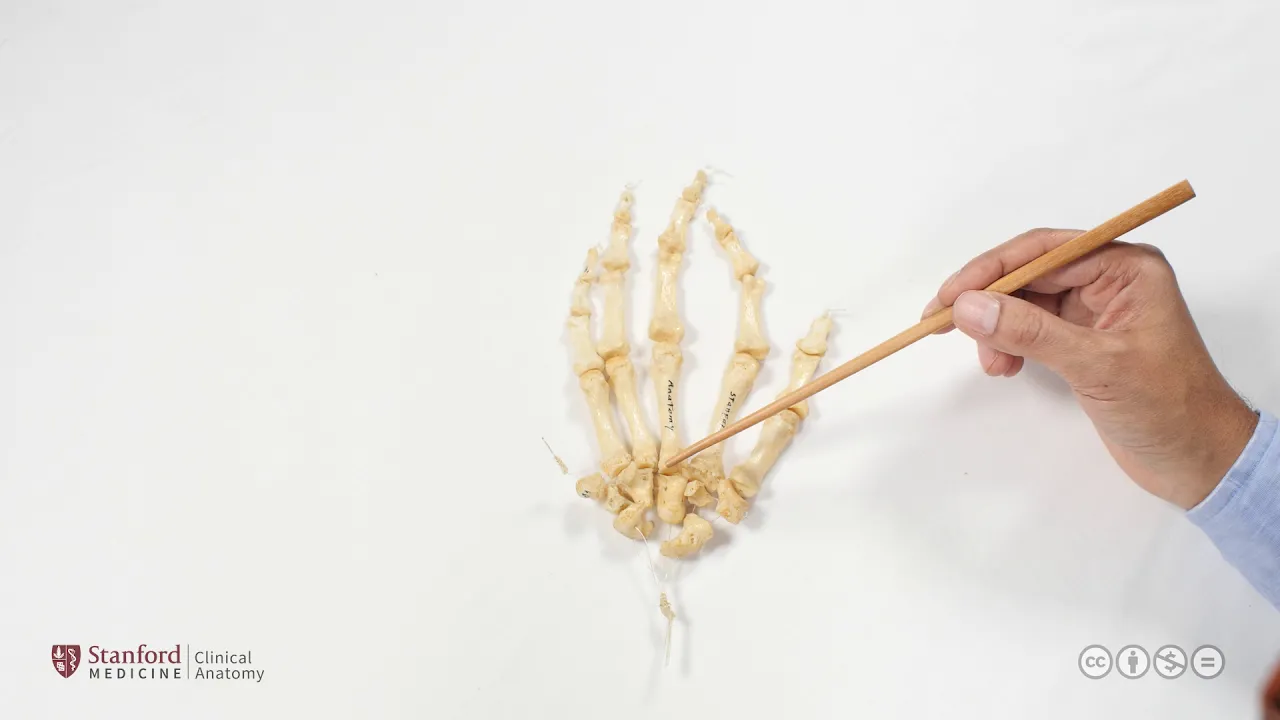
[Music] this is the skeleton of the right hand we're looking at a Palmer view so this is the anterior view in the anatomical position of the hand this is the area of the wrist and we see the carpal bones from a Palmer viewpoint that is from an anterior view point in the anatomical position similarly the metacarpals also are seen from there an tears on their interior surfaces note that these have a slight concavity on their interior surfaces likewise the phalanges also are seen from their anterior view point and they also have a slight concavity in
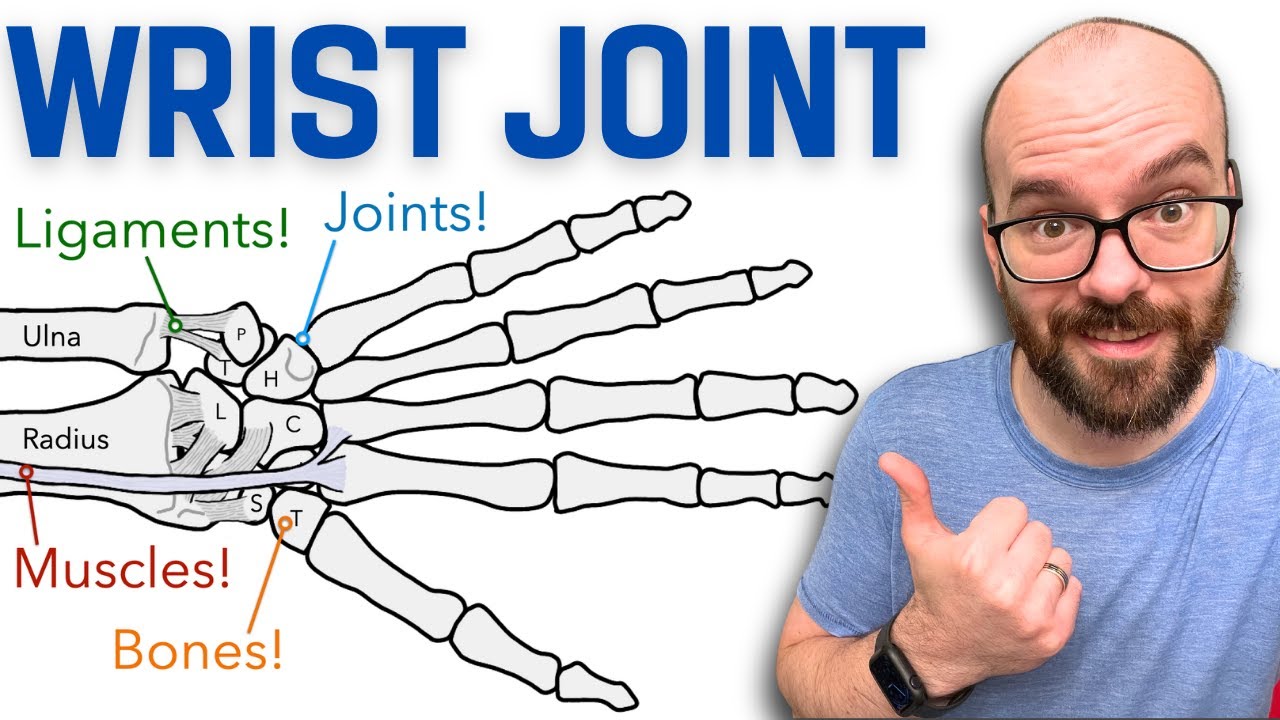
each of these phalanges the carpal bones articulate with the distal end of the radius and ulna as seen here like this to form the wrist joint the radius and ulna both articulate with the proximal carpal bones that are seen here this one is the scaphoid this is the lunate these are the two prominent carpal bones that are often injured either in a fracture or a dislocation and therefore are of great clinical significance and they articulate with the distal end of the radius and then the ulna articulates more medially with some of the other bones of
the proximal row and these proximal row carpal bones then articulate with the distal carpal bones over here the distal carpal bones then articulate with the base of the metacarpals to form the carpal metacarpal joints and these joints are situated here the carpal metacarpal joint of the thumb which is seen here is highly mobile and it allows for the unique functions of the human thumb this joint also has a very high protection for wear and tear and degenerative osteoarthritis which is fairly unique because the other of carpal metacarpal joints don't have the same predilection the metacarpal
bones at their distal ends then articulate with the basis of the proximal phalanx or phalanges this is the proximal phalanx of the thumb and note that the thumb has only to a proximal and distal phalanx in contrast to the fingers which have three phalanges in each case a proximal a middle and a distal phalanges these joints are known as the metacarpal phalangeal joints and they have two different axes of movement you can either flex and extend these joints or you can also move the in side to side and there's a little bit of rotational element
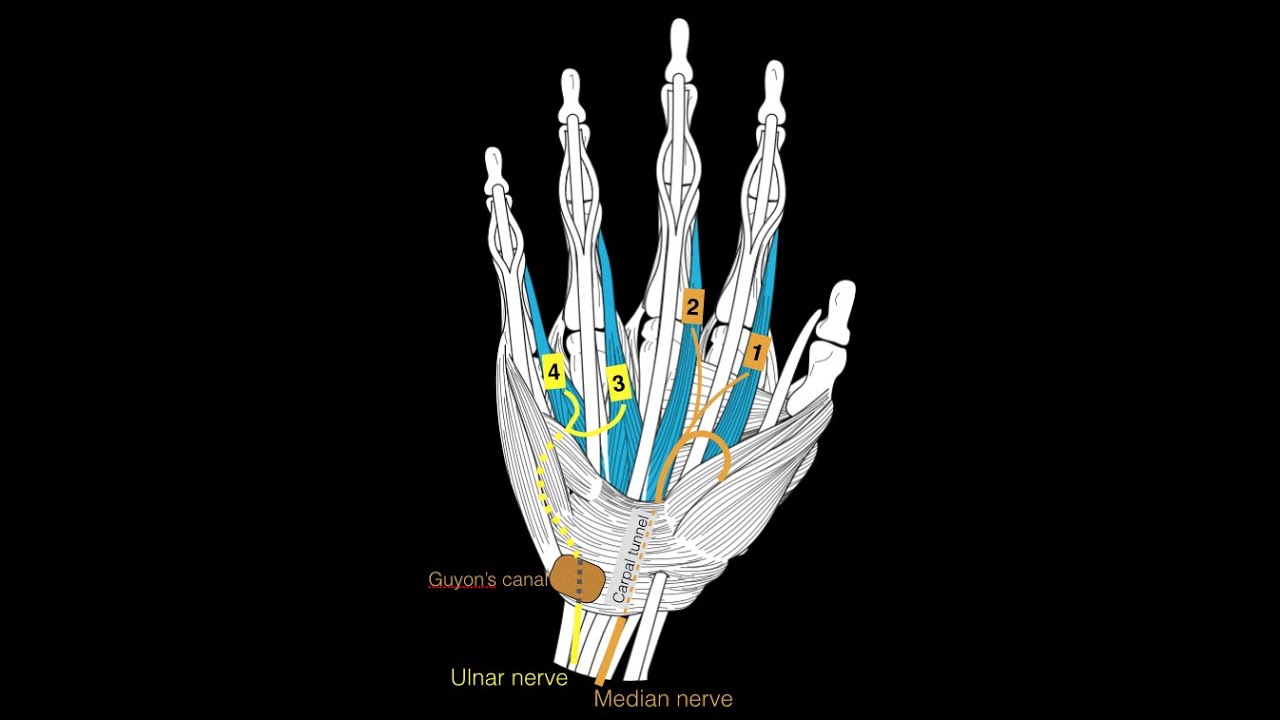
as well the joints between the phalanges are known as interphalangeal joints collectively the one in the thumb since there's only one joint is just called interphalangeal joint the ones in the fingers are either called proximal interphalangeal joints like this one and this one or the distal interphalangeal joints which is between the last two or the most distal the middle and the distal phalanx these joints the interphalangeal joints have the movement of flexion and extension in the metacarpal region of the skeleton we have the interossei muscles these are muscles that take attachment to adjacent bones and
so and they are situated in the gap between the bones and therefore they are called interosseous muscles and there are Palmer interosseous muscles and then there are dorsal interossei muscles based on their exact location and these muscles cross the metacarpophalangeal joints to attach onto the base of the proximal phalanges the palmar interossei muscles collectively bring the fingers towards the middle finger what is known as abduction whereas the dorsal interossei I take these fingers away from the middle finger in what is known as the movement of abduction of the fingers [Music] you