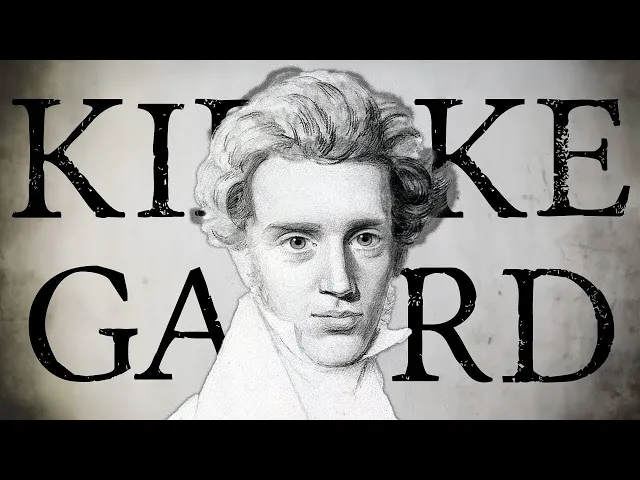
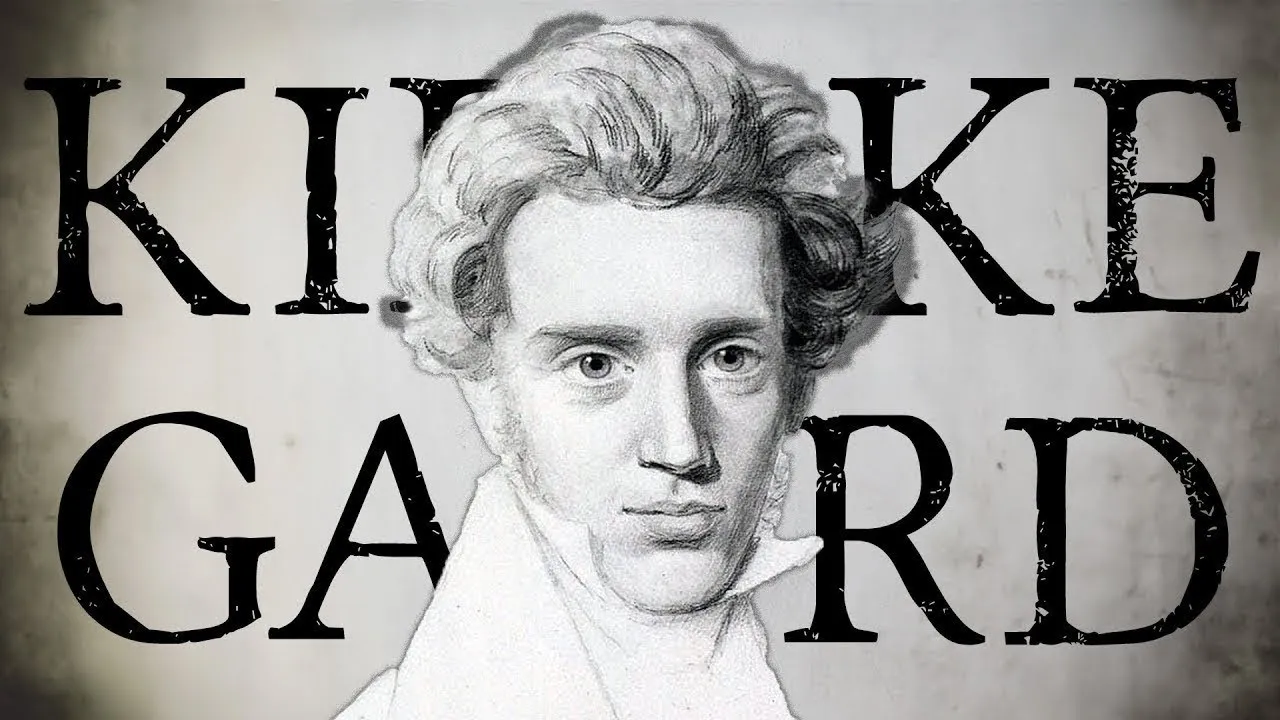
soaring Kierkegaard is best known as the father of existentialism but unlike many of his existentialist peers from Nietzsche to kamu Kierkegaard was not an atheist he was a devout Christian but was precisely in this faith that kierkegaard's existentialism expressed itself his attitude towards Christianity was surprisingly similar to niches like Nietzsche he had much love for Jesus and little respect for the church with its priest LED heard disillusioned with this all Too Human Institution there are two choices atheism and mysticism Kierkegaard shows the path of the mystical across his career The Core theme of kirkegaard's work
is Faith and Faith for Kierkegaard is above all a personal relationship with a personal God another central element of kierkegaard's philosophy is a preference for passion over reason he saw Faith as the highest passion it was something you lived it was something that required action rather than logic and reason the church disgusted him by keeping its congregation like children his Works were all dedicated to that single individual because because it was only in the individual that the intense passion of Faith could work itself out kicker guide's work as a philosopher was to ignite the same
passion for Living Faith in his readers he designed an elaborate stylistic method he called indirect communication this method used pseudonyms and various stylistic devices to force readers to think for themselves the many narrators in a single work contradicted each other and so this style forced the responsibility back under reader to think things through kierkegaard's philosophical model was Socrates in his master's dissertation Kierkegaard examined that the ancient Athenian philosopher's use of ironic questioning is Socratic irony forced his fellow citizens to think for themselves Kierkegaard designed his indirect communication to do the same like Socrates Kierkegaard wanted
to awaken a passion for living philosophy in his readers both thinkers wanted their readers listener to go beyond the shallow ways of the crowd they wanted them to become true individuals Kierkegaard saw himself as a Christian Missionary in Christendom his task was to convert members of the crowd into true individuals of Faith this work of Kierkegaard is usually divided into three key phases the first authorship the second authorship and direct attack on the church in the last year of his life there have been few philosophers as fertile as Soren Kierkegaard after finishing University in 1841
at the age of 28. Kierkegaard started his writing career in a very deliberate way first set of Works published between 1843 and 1846 he called his authorship or in hindsight his first authorship it began with his greatest Masterpiece either or in February 1843 eight months later he published three books in one day one of these books Was Fear and Trembling another one of his great masterpieces the next June he published four books in a month in total he wrote 16 books in the space of three years like Alexander Hamilton Kierkegaard wrote like he was running
out of time and this is no coincidence we can trace the origins of this prodigious writing career all the way back to the Youth of his father when Soren's Father Michael was a starving Shepherd boy on the jotlin teeth he cursed God and for the rest of his life Kierkegaard senior was racked with guilt he passed this guilt onto his children and he came to believe that because of his blasphemy he would lose all his kids before the age of Jesus's death at third 33 Soren grew up in the oppressive Gloom of his father's Melancholy
he inherited his father's guilt the fact that Michael had lost two wives and five children before Soren turned 21 didn't help matters on his 34th birthday kirkegaard expressed his shock at being alive in his journal how strange that I have turned 34. it is utterly inconceivable to me I was so sure that I would die before or on this birthday that I could actually be tempted to suppose that my birthday was erroneously recorded and that I will still die on my 34th this shadow of impending death was the fire driving kierkegaard's creative output but it
wasn't the only one the other major influence was this broken engagement to Regine Olsen they first met in 1837 when Olsen was 15 and Kierkegaard 24. they got engaged in 1839 but within a year Soren had called after marriage the reason for this abrupt break was never explained in his journals we find mention of a terrible secret he was harboring and couldn't face telling her Olsen put it down to his religious vocation we could also put it down to an avoidant attachment style or if we were feeling cynical we could pin it down to a
question of money Michael Kierkegaard had left his son an inheritance this inheritance was enough to support kierkegon alone but not a wife and kids and so it may have been then that kierkegaard's need for freedom and his writing aspirations tipped the scales towards going solo we don't know the calls but the combination of this fatal engagement and death Shadow was a powerful cocktail for his creativity the first stage of kierkegaard's writing career saw the Dane write 16 books in three years his phase ended with the book concluding unscientific PostScript in 1846 just two months shy
of his 34th birthday the essence of this phase is best illustrated by kierkegaard's stages of life the first authorship explores three different value systems three ways of being kicker guide calls them the aesthetic the ethical and the religious stages the static stage is the first of kierkegaard's three stages On Life's way the aesthetic individual is one of the quintessential types of modernity and it is probably more recognizable to us today than it was in kierkegaard's time the aesthetic stage is associated with the nihilism of hedonism this is all that there is then we best be
making the most of it this isn't just the sensual Hedonism of a Don Juan but the intellectual and cultural Hedonism of the Dandy or the Bohemian there is an intellectual distance to the aesthetic way of being and this as Kirky guy tells us in either or is because for the estate boredom is the root of all evil the motivation of the athlete is not a positive moving towards pleasure it's a negative moving away from boredom the life of the estate is one distraction after another another exhibition another movie another party another Rave whatever it is
that keeps things moving Ralph follow Emerson once wrote that when skating over thin ice our safety is in our speed this person has not yet committed to life they value possibility over actual reality they use irony sarcasm and skepticism to keep life at a distance it is a fundamentally egotistical way of being by filling life with distraction and keeping an ironic distance even from these distractions the aesthetic individual keeps life at Bay the ethical is the second stage in kierkegaard's three-fold stages On Life's way the self-centering aesthetical stage of being gives way to the ethical
this new stage connects into society and either or Kierkegaard uses marriage as the archetypal idea of this ethical stage marriage demands that we relate to another individual in an open intimate and honest way and it also demands commitment we have to enter into the world no more staying aloof in the space of infinite opportunity marriage is a definitive step into life this is emblematic of the ethical stage in general which is a call for us to enter into the world the word ethical in Kierkegaard is connected to hegel's idea of sit like these are the
traditional morals of the society basically the social norms to be ethical is to be good it means following society's tablets of Good and Evil these social norms justify our actions within the society the measure of an action in the ethical stage is how well it conforms to the tablet of values these values are easily communicated and offer us clear ways of deciding whether an act is right or wrong the ethical individual sees the aesthetical life as selfish the aesthetical individual fails to acknowledge their social debt and their communal existence they are living in a narcissistic
Fantasy Land rather than living in the real world nowhere is the ethical ideal more unmistakable than in the advice of Jordan Peterson he tells us to make our beds to pick up a heavy burden to carry our cross Peterson's brand of self-help is a bridge between the aesthetical and the article thousands and thousands of people who've been shunted by the brunt of life's meaninglessness and absurdity have found a new lease on life a new tablet of values thanks to Jordan Peterson in more ways than one Peterson is a kierkega guard for the 21st century psychologist
Peterson in contrast to the culture Warrior Peterson encourages people to become responsible he encourages them to take steps to improve their life and the lives of those around them in short he encourages them to enter the ethical stage the final stage on kierkegaard's hierarchy is the religious stage the best way of illustrating this stage is the biblical example of Abraham and Isaac which Kierkegaard explores in depth in his second Masterpiece fear and trembling for kicker guide being religious is not about joining a local congregation faith is a central element of kierkegaard's thought this is something
we must live the Bible was not the last word on faith it's not something that's all worked out for us and we can set aside that's the Prejudice for reason and logic speaking Kierkegaard says that every individual must do the work of faith for themselves and not just once but again and again throughout their life faith is a choice we make as individuals and it is an excruciating choice choice is a massive burden of responsibility on this Choice hangs the individual's Eternal salvation or damnation and this is where kirkegaard talks about his famous idea of
anxiety anxiety is the awareness of the Titanic magnitude of this choice of Faith it's a double-sided emotion on the one hand you have the Dreadful responsibility of choosing for eternity on the flip side you have the exhilarating freedom of choosing for yourself this Choice happens in time in a single moment and this moment is where Time and Eternity intersect as the individual through the choice creates a self that will be judged for eternity the religious stage is beyond the ethical Stage IT transcends the ethical stage what we see in the story of Abraham is that
Faith requires us to go beyond the ethical and go straight to the source to God God for Kierkegaard is the ultimate source of Ethics so when it comes down to deciding what is good and what is evil God has the final word and if he so chooses God can suspend the ethical this is what happens in the story of Abraham god without any explanation asks Abraham to kill his son Isaac it's an impossible horrible choice for a father it is also as Kirky guy tells us an inexcusable action from the point of view of ethics
and the ethical stage there is no sensible justification for Abraham's action but this is what faith means for Kierkegaard Faith goes beyond the ethical the religious stage demands that we listen not to the cultural ethics but to their Source this source of Ethics is God now the obvious question is how do you know the voice in your head is God how do you know you aren't another deluded not case killing their child because they heard some voices in their head because there is no rational explanation that can justify Faith Kierkegaard says we cannot know we
must take a leap of faith and that is why the title of the book on Abraham is fear and trembling because this is exactly what we're going to be feeling in a moment of faith it is a cataclysmic crisis and this is The Impossible Choice the Kierkegaard is speaking to God cannot be held accountable to Logic the path of Fate is antagonistic to the path of reason they do not point the same way as Hegel claimed they cannot be synthesized we must choose Kierkegaard says we cannot believe by virtue of reason the only way to
believe is by virtue of the Absurd the belief of faith is an affront to reason looking at the progression of the stages we can see a clear Evolution the aesthetical stage focuses on the individual the ethical stage focuses on the community and finally the religious stage focuses on God each layer is nested in the greater reality of the next stage we are connecting with higher and higher spheres in the hierarchy of being Kierkegaard had always intended to become a pastor after finishing his first authorship with the rising done he could knuckle down to the real
work of his religious life but for some bizarre reason he picked a fight with a Copenhagen newspaper its name was the Corsair and it was famous for literary satter Kierkegaard insulted the reputation of the paper and dared them to satirize him and satirize him they did for the next year kirkegaard was the subject of vicious ridicule they didn't go after the works but after the man betraying him as the center of the world as a hunched man and this hunched figure on a woman's back presumably Regine Olson with a stick in his hand this attack
devastated Kierkegaard wherever he went he was ruthlessly mocked he gave up on his beloved walks through the city streets where he used to talk with people from all walks of life because of all this Kierkegaard postponed his quiet religious life a little longer and renewed his creative efforts the attack by the Corsair was the impetus behind the second authorship just as Regine Olson and his father's curse had driven the first authorship his second authorship dropped the satire and parody though not the pseudonyms and with it Kierkegaard focused on the creation of positive Christian discourses kicker
guide wrote The Works of his second authorship between 1846 and 1855. it was different from the first authorship in many ways unlike the first phase of his work the Contours of the second stage were not mapped out in advance it was a fireless prodigious face in two of these years 1852 and 1853 Kierkegaard produced nothing at all the shadow of the Corsair Affair is everywhere in these later works the isolated personal faith of the individual was the first authorship's centerpiece but with this new phase Kierkegaard is thinking of the relationship between the true individual and
the broader society and he's also considering the nature of this broader Society it began with a review of a novel called the two ages kicker guide used this review to critique the Modern Age and steamrolling of the individual this sensible age devoid of passion was created an indifferent and Abstract public he called The Crowd following this review was works of love this book highlights the distinction between two Greek words for love IRAs and Agape Eros or desire is a selfish form of love even if it isn't self-centered it is still directed at an exclusionary we
this we is the collection of people with a personal inclination towards whether they are lovers friends or family in contrast to this selfish love there is agape this form of love isn't an inclination but a duty it's not a preferential love of the people we are fond of but a universal love it is love of the neighbor irrelevant of who they are this is the love that Christ exemplified in the gospels this love is a spiritual Duty rather than a psychological inclination and it can only come to be as a gift from God rather than
from the attraction between human beings sickness unto death approaches the same theme of the individual and the society from a different angle this masterpiece of the second authorship is about despair despair is the opposite of faith it is when we are faced with the anxious choice and choose wrong it's choosing an inauthentic life rather than the life of the self a theme that John Paul Sartre will pick up a century later with his idea of bad faith despair is the way of those who gain the world and lose their soul kicker guide says the people
who give in to despair Pawn themselves to the world and he writes that if you have lived in despair then whatever else you won or lost for you everything is lost eternity does not acknowledge you the Kierkegaard of the second authorship sounds more and more like an Old Testament Prophet like these ancient prophets he tries to call people back to the true Faith he criticizes the established religion as having lost its way he warns the people about the wickedness of the society he encourages them to align their lives with God and to change their ways
from the review of the two ages and works of love to sickness unto death and practice of Christianity kierkegaard's intensity gears up this increasingly sharp criticism reaches a shrill peak in the last year of kierkegaard's life in this Final Phase Kierkegaard sets aside his method of indirect communication and with the gloves off his Attack under church and unchristen them reaches a fever pitch one of the bones kirkegaard had to pick was political he attacked the church for being too connected to the state he argued that this was creating perverse incentives that had nothing to do
with being Christian in the kierkeg guardian on the religious side Kierkegaard had many more things to say he believed that the popular conception of Christianity demanded too little of its adherence he argued the congregations keep individuals like children since the individuals were disinclined to take Initiative for their own relationship with God this soft Christianity clashed with kierkegaard's Old Testament Prophet Vibe he wanted a more offensive Christianity he wanted to address the problem of becoming a Christian head on this task of the individual stood in stark contrast to the Monstrous illusion we call Christendom Kierkegaard painted
himself as a Christian Missionary in the midst of Christendom in Christianity for the existentialist Kierkegaard had always been the individual here the single individual Christianity was being reduced to a fashionable tradition that the herd dipped into once a week this stood in stark contrast to the herculeans struggle with eternity at stake in kierkegaard's Christianity this last phase of kierkegaard's work was published in various newspapers and a series of his own self-published pamphlets called the moment before publishing the 10th issue of this pamphlet Kierkegaard collapsed in the street a few days later he was in hospital
where just over month later on the 11th of November 1855 he died at the age of 42 from a form of tuberculosis that's everything for this episode of the living philosophy I'd like to thank Shane chrysantheater and all the other patrons for their support of the channel if you'd like to get access to weekly bonus episodes monthly q and A's and to get your name in the credits Like These Fine people then you can head over to patreon as ever if you have any thoughts insights or feedback I'd love to hear from you down in
the comments otherwise I shall see you next time thank you for watching