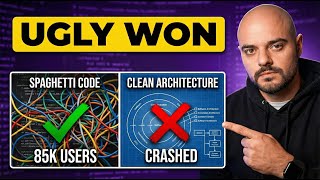
many people talk about how nice is to be a software engineer like you make good money and you have these offices with free food and a day in the life of of software engineer what they don't talk about it's about the ugly side of things and so today together with bden uh we want to talk about the actual reality of the job not the Frappuccino not the hipster glasses not the New York City lifestyle but actually real life stuff that developers have to deal with on a daily basis that nobody wants to talk about if
you don't know us my name is D this is Ban he's my brother in Co founder together senior Dev so B them what's the first har reality developers have to deal with so number one without any further ad you it's competition anxiety what does competition anxiety mean well the number one thing that happens when you are Developer is that you see all this you see the boot camps you see a lot of people kind getting into the field and it very much feels like there is someone um pretty much everywhere with remote work going for
your job so you live with this constant fear of you know am I going to still be relevant in two years are they going to fire someone with a lower salary because again there's all the boot camps are pushing people there's all this online course movement and the Cs graduates plus the people that are already in the field and so it feels like you're constantly competing against everybody else uh because again in the industry everything moves so fast so you're always feeling that it's someone that will you know will take your job yes B there's
a lot of competition anxiety and I talk to developers on a daily basis on the phone on calls and what I see it's that layoff like the recent layoffs that happened in 2022 2023 2024 we're moving into 2025 and companies are still laying off software engineers then there was uh AI coming in and putting more anxiety more pressure on developers like hey we will you know automate your job all together and I think a lot of people are kind of trying to a lot of developers are trying to suck it up but there is this
so much downward there's so much pressure on the average developer like basically if you are out of a job you know and you go to you go to LinkedIn and you see a developer job and you see 500 applicant right and that's kind of the kind of reality that people have to deal with the Google jobs the Netflix jobs all those fancy jobs the reality is they are hyper competitive I think Google was hiring like 0.02% or something like that of everybody that applied I think it was easier to get into Howard University than to
get into Google many times as a software engineer you feel like there's always someone smarter than you and you feel like Expendable you feel like you know they can get rid of you and find someone better tomorrow right and this is also few by all these you know udmi ques and boot camps promising people you know you're going to be a developer in you know in in eight weeks we're going to make you uh a software engineer that can make 100K and this never really stopped I mean we thought it's going to stop because of
layoffs and everything no this is the same messaging developers see and I think this is something that you really struggle with I remember back in my developer days I had a lot of you know competition anxiety you go to meetups and you don't talk to people not because you're a but because you you think you're you know everybody's so much better than you and you know just by talking with them that that reality you know you're going to have a conversation with them they're going to know so much more than you and you know you're
going to have to suck it up the problem with competition anxiety is that it also affect your your confidence and job security because if you don't have job security because you feel like someone else you know there's so many people that are so good maybe you don't find something in three years um especially as an adult you might get commitments you might have a family you might have a mortgage and it's extremely hard for people to just relax because they feel like um they have no safety or they cannot provide that safety for themselves first
and maybe for others because it's always like am I going to have job am I going to be good enough to be hir about 10 years from now five years from now which is not a long time we got into this to build a long life career you know maybe you want to been to this 40 years and this is your life code this is uh you know the way you pay your bills and I think that's that's such a fear that you you wake up to every day um and now that we're here some
tips to to deal with competition anxiety it's number one to understand this comes from a kind of a scarcity mindset where you think W there are like this little number of jobs and everybody's going for them and everybody's smed on me and it also comes from social media right where again you see all these people talking about the stuff they know you see maybe your some of your friends getting promoted you feel like you're falling behind you have to understand it's all an illusion you have to look at all the good things you do on
a daily basis you have to look at the value you add and you have to understand it doesn't really matter there are plenty of good companies out there right and there are plenty of jobs and as long as you are able to deliver value as long as you are able with your coding skills to get something from requirement to production right as long as that's a truth right and this is what we advise people when you feel like you're in a storm when you feel like you are you're feeling very anxious you think nothing works
remember if you're able to write code if you're able to solve problems you will always have a job in any economy in any world AI it's you know it's not going to solve that AI is more of an assistant but it cannot lead right the problem solving uh process so just remember as long as you can solve problems with code you will have a job and forget about this competition anxiety because it's all in your mind and remember try try to do it anything today where you don't interact with a software system like try to
I don't know buy something try to talk to your friends everything runs with software so trust me you will never run out of work and the better you are at it the more value you have try to do this is something I used to call myself just try to do anything that without touching a piece of softare like you go into your car there's software you go to I know McDonald's to get to get some cash there's software there software everywhere yeah they going to cross the street and the traffic like runs on software exactly
uh B on to point number two number two is taken for granted and B I think you can talk a lot about this because I mean you've been taken for granted more than once but I think what we refer with this is that as a software engineer you know you work very hard and you can put hours hours in hours and weekends into something to just see it you know thrown away without any any feelings and it's not that you feel Expendable like they can get rid of you it's that your work it's also Expendable
and and if there are problems you know developers going to solve it don't worry the it you know the it guys are going to that guys and girls whatever are going to figure it out right um so there is this general feeling and I remember from my writing from my writing code um um writing code years like there is little empathy there is little empathy for the developer right developers pay the price for the sales for the management teams over promising right and we are kind of you know all the work ends up on your
on your desk and when everything goes well you know they close the deal because it saves people right we we get little visibility for all the stuff that kind of enable the deal uh can you you know B where what can you say about being taken for granted well I mean exactly what you said so I used to work uh in this company where we were building software for for small businesses and every time they close a big deal you know there would be a parade of the Sal people out telling how they did the
deal uh but to be honest you know as a developer you'll grind out code we'll put out amazing features and the moment you finish the feature they' come on and ask for work or even worse you had bugs in it so you would feel like you're just Trad mailling your work is not really visible and you know the safe people or even product would make such a big deal about the steel L clothes and how you know how they did this and ABC and they have bonuses as a developer you would sometimes pull all Nars
and you wake up next day to more work and there'll be incidents and they ask for features that are so exciting and when they build these features it wouldn't be because you know you you crunch your neurons to to really pull this thing through it would be because the you know Sal or product had this crazy idea and that's what actually broke it and the actual work to make that crazy idea reality all the mini problems you had to solve the thousands of things things you had to to deal with to just make it visible
um they would ignore it like oh yeah now it's on the screen and now I can do ABC with it um and it'll just put you more work so um it would be extremely hard and you know I remember like they would close a big sale or give bonuses to Sal people I would have to you know write down everything I did and make my work visible and sit down with my manager explain you why I want the 500 bucks rate yeah and there's also the the Visionary founder idea where especially in startups there is
the founder or co-founder who have the vision and kind of all the Merit goes to the they the ones visible but then there's a team of hundreds of people that made everything possible and one thing I want to talk about here it's about the invisible work like the work the problems that you prevented because people see the problems you solve at software Engineers but they don't see like you mention all the micro decisions and all the little problems that you avoid it happening like and this is something that we need to leave and we need
to to to suck it up which is why we advise everybody and specifically like the students we work with but every developer to really ask for the money don't be afraid to ask to be paid because after you know that's the most marriage you're going to get I mean you might get some some Applause in a demo or you know when you're going to present your stuff but you're not going to get a lot beyond that and this is why you have to make sure that you get paid fairly and that you get paid well
for the job you're making because there are no bonuses for develop there are no end of quet performance bonus like Sal people have exactly you you solve a lot of problems that are not even visible you solve a lot of problems that you can't explain and a lot of times you don't get work you don't get paid for problems you avoid so if you design a system in a better way um maybe you know that maybe your maybe your immediate like your your manager your boss might understand that sometimes they don't even understand it um
so you need to put a lot of work into making that visible because if you don't nobody knows about it it's again it's very easy to show as a safe person that I closed you know these five people this week but it's extremely hard as a developer to show why I've been working on accessibility or security or scalability for the last um the last five days or why I've been moving or removing technical depth so we can actually extend the system few months from now like first of all they don't most people don't even think
like that they even understand why you're doing this um and you know maybe someone takes that piece of code and they add a new feature to it and they did so fast because you left it in a very good state so there's so much unvisible it's so much unknown and that's why you need to make an extra effort to show what you're doing to show your value and get paid this is one of the things that we work a lot with with our MN especially in their CVS but not only that in their interviews that
they're making it's to put an extra effort in quantifying and showing the impact of the work you've done and I know a lot of people talk about this but in the end this is not about you know the the number of features you ship but this is a mindset right understand that especially if you want to get to C Dev it's not only about what you do and what you know but it's about who knows about what you do and what you know right it's 50% doing the job 50% selling it and if you ignore
the selling part because I know we tend to ignore it as software Engineers because we are very analytic analytical and we like to look at the face value like hey what is this you know don't don't come to me with with sales but you cannot ignore you cannot ignore that you you are operating in a in a political organization any company it's a political group right and part of that it's the impression that people have about you now I'm not saying you should become a political animal that's not what we indicate right we do exactly
the opposite of the Senor dep we teach people how to improve their technical skills first but you need to be both a sa person a politician and a producer 5050 you need both if not you're going to be the talented person that has a desk in a corner nobody knows about they work loud nobody gets no merit you know works hard but gets little out of it yeah so I remember what happens is because you're taking for granted you also your your the quality of the work will decrease you see all these people getting married
get demotivated um you're putting a lot of hours and you're turning out code it feels like it's never ended and you will also if you don't take care of this really soon you will end up losing passion for what you do you'll end up doing less you'll end up just like shipping stuff out there just not caring about it and uh your work will get worse so you got to be very careful you got to solve this very early on because if you don't get paid for the work you're doing or if you didn't get
the Merit like the the the people you know telling you hey you've done a good job that's very important you will stop doing your best you need this to keep going you need this to to keep being passionate about what you're doing you need to feel like hey I'm getting paid for it start being mediocre yeah you kind of Disconnect and you kind of hardass your job and this is why I think one of the quickest fixs just like competition anxiety for software Engineers who you know you want to stop being you know taken for
granted is to really advocate for yourself and to tell to yourself hey you know what I'm wored and I know what I'm wored right it's it's enough this is enough I'm going to ask for what I think I deserve I'm gonna ask for the money and if this company doesn't give it to me you know there will be other companies and you need to have this mindset at all times because if not this this the problem with this competition Society taken for granted other stuff that we're going to talk about is that it messes up
your mind and it messes up your confidence and without confidence you cannot get anything done this is a job where it's imperative that you believe think you can do it you feel useful so you can give your best okay number three the Sprint meat grinder what what does that mean so I guess the best example is to to go again back to one of my first jobs where I used to be working mostly on the front end and they had another five people uh no three people in my team they're all front and developers and
you find yourself in every Sprint competing for who's going to deliver the most tickets and you see people around you maybe delivering three tickets and maybe you delivered one or maybe you couldn't even close a single ticket that spren because it was something complex and you feel this pressure of okay there's this Sprint I need I need to deliver tickets and you take the tickets and I hope it's a ticket I can deliver on and then your manager maybe your your your boss they didn't directly compare you with your with your PS but you do
feel that pressure of okay but this person they closed three tickets that print and five the spin before and I just did two and you feel like you're just on a on a t you're just running uh you know and spinning your your dices so that hopefully in the next Sprint you deliver uh you get a ticket you can deliver on and then you mentally always compare yourself with um all the other people in your agile so it becomes this whole agile that sounds very idealistic and very cool it actually becomes sort of a pron
of a Kind yeah and I can recall actually in the last uh few weeks two developers that uh that we were we were coaching one of them and this is a real situation went on a on a longer holiday I think it was three weeks pay time off or holiday paid holiday when they came back they had like a disciplinary meeting with their manager who was comparing literally the the the number of tickets they were the living they weren't looking at the scope the context what was the no it was about you know this person
did three tickets and you did one and you're going to get in trouble and this was a very this was a respectable company it was some kind of startup where you say Hey you know maybe they are not so professional they don't understand how things go right so this is a reality and another developer who you know spent um spent a few weeks with one ticket because she was just getting avoided on stuff and then she you know she saw like people you know the manager not talking to her that much and how is that
ticket going what have you been doing and I think this is the same as competition anxiety but inside the company B and what what would you say what are some ways to kind of get out of this Sprint mid grinder and this this anxiety this this pressure to deliver tickets and to be compared based on like the tickets you delivered and constantly feel like you know you have something back on your back someone on your back watching on how much stuff you're delivering and every day at work it's just this this um Race Against Time
you know the thing is you do not choose the culture of the company you work for the team you work for and if you're a manager or you know the people around you have this it's a very competitive environment not a collaborative one and people start looking at how many tickets you delivered then you you have no choice but to to play the game right now what I want you to do is do not obsess about the number of tickets you're delivering but do keep an eye on the scoreboard okay so if you for example
if there is like the people around you that are doing six seven tickets and you're stuck in one big ticket then try to get other small tasks so you can actually you know compensate for that okay so you need and this goes back to being taken for granted compettion aniy like you need to be aware of the game that's being played and you need to play a little we don't advise you to be overly political as always but we do advise you keep an eye on the environment around you keep an eye on okay this
is you know second week of the Sprint what have I delivered the Demo's coming in two days I need something to show for it and if I cannot show this ticket maybe I can pick something small that I can add to my um uh to my um to my to-do list that I can talk about and kind of compensate okay on to number four the general gatekeeping this is very interesting B and what we mean mean by gatekeeping is there is always I mean everybody in software every developer say a yeah we we are very
collaborative we like to help each other we win as a team but in the end a lot of people use um information hiding like you know there's a developer who built a certain system there's no documentation and that's a way for them to Ho power okay now we know we know this is not a good career strategy like holding information because when you when you are vital to a certain system you cannot be promoted right so you might feel safe because nobody knows about this and I need to fix it but in the long term
you will always be stuck there and they will promote some someone else right but this will happen this is a reality but when we say General gatekeeping is not gate gatekeeping only from other developers who don't want to on board you or there's no documentation and they don't want to sit down with you and have a pay programming because they feel like they're going to lose certain power that's one thing but also you know saes people who might be hiding information product managers who might be hiding information right so there is a general gatekeeping that
will you will feel like there's certain information that's being kind of hidden from you certain times Bon how can we deal with yeah so as you mentioned people use gatekeeping to become more replaceable so back from this we have this competition and people are insecure of their position and they're like well if I get if I build the system and nobody knows how to fix it only me then they will call me you know then I I'll become replaceable there's some career advice I think that goes into the Des make make yourself Irreplaceable but that's
again scarcity mindset applied to your career and that will make you feel uh poorer it will make you feel worthless in a way even if you do it because you'll feel like hey the moment they know this I'm out right they will eventually figure it out anyways and so the best way is to think of hey we're here to solve problem and if the people around me are going to get good at solving the problem I'm solving that's good I can overload that to them if they really want to do it and I can jump
on the next thing spend more time with product I can think of new things we can add or better ways to do something you'll never run out of problems to solve like literally if we would run out of problems to solve we be on the moon and we solve cancer and everything it's you know we live in Paradise that's not the case like look at the world there's so many things that I put broker and you got to apply that to hey there's always going to be more work and I'm here to if I help
the people around we solve these problems I can focus on other and there's an infinite number of problems you need to solve an infinite numbers of ways you can add value so you need to go from scarcity to abundancy and once you're there you'll realize hey I just want to get a better like together the craft and better as of course we are individuals we do compete to some level with everybody else in the sector but somebody mature understands that in the economy it's all about adding more value and they take way with do things
and what we know and they always think about the future well let's get better at then just you know teach people how to solve ABC so then I can focus on D or find out what D is because maybe we don't know yet but we can spend time thinking about it so in terms of gatekeeping like if you feel like someone it's gatekeeping information from you it it can be it has something to do with you that you make them feel a bit threatened that you are kind of they see you as a threat they
see you as someone that can replace them they don't want to share that information with you or it can be that they do this with with everybody and they see that this is their system maybe they have been wronged by the company at some point in time and they close themselves up so sometimes you can do something about it sometimes you cannot do something about it and this is why this video is called realities that you have to live with in a way every day even if you try your best these things won't go away
completely some things you just got to live with one very effective way to disarm and prevent gatekeeping in general is to build a relationship with that person to make them trust to build that trust a bit where they actually going to be willing to to share they don't see you as a competitor they see that you can work together and they are willing to give away give a bit away the other parts will come from your manager in the culture of the company that has to be aware of the BS Factor right and you can
you can influence that you can say Hey you can actually you can actually in meetings in team meetings say how can we make sure there's no B Factor here and that's when your a manager and other people will start being aware and that's again there will be a team effort to limit right information hoarding by certain individuals and going back to how do you build a relationship because people talk about building a relationship in the end what what a relationship is in the end it's trust I trust you you trust me how do you generate
trust by having repeated interactions in a consistent way where both both parties win right that can be just a chat it can be going for a coffee it can be having a little pay programming session and again this is not easy because nobody has time and that's why you will have to be proactive so you'll have to see certain individuals look around who has the power here who knows about microservices a who knows who's making the architecture decisions and you need to start building a relationship with those people by trying to interact with them trying
to have win-win exchanges with them as soon as possible and as often as possible and if someone helps you you got to recognize that married public now don't overdo it you want to be genuine if you overdo it people will smell it be like you're just you're just sugar coating everything and being too politically correct you don't want to be that person because that will actually decrease us they'll be like oh you're doing it to to show something but when someone helps you if someone helps you debug something in the deployment pipeline mention it in
this stand give made it when it's du and people will see that and see that you're not taking away their work you're actually making it visible so they will at some conscious level will want to help you again so number five it's framework slavery I think this is pretty straightforward and it's something at the senior Dev we talk about but it's this constant pressure of not knowing enough of new Frameworks new libraries new stuff being released it used to be new JavaScript Frameworks now it's like AI coding tools or it's whatever AI is going to
automate next and I think that that generates a lot of anxiety and a lot of pressure that you know you feel many times as a software engineer you feel like no matter how much you learn no matter how much you do it will never be enough and again I think this is because of several reasons number one is the false impression that you need to know everything and that you are paid for what you know not for what you can learn okay and I think you are paid for both you are paid in part for
the things you know but you're also paid based on your ability to solve problems when they come to you right number two it's again social media so if you feel like you have a bit of you know fear of missing out and shiny object syndrome and you feel like slave to this framework learning new things then maybe you should limit the people you see and you should limit the the number of newsletters you you read and I B I do this I really try to limit the amount of information I'm taking because there just too
much it's just too much exposure and actually a lot of that stuff is just noise and I think Point number three it's Focus not on Frameworks but on principles right and when you focus on principles you know that a lot of Frameworks are kind of trying to reinvent the wheel and you can actually see uh commonalities you know from the new stuff coming in which is just a combination of the old stuff and you have this pool of mental models right and this is what we try to teach actually with b s Dev we try
to teach people fundamentals and mental models that go beyond Frameworks and I think that's the only way only sustainable way for you to stay elevant to move toward senior principal and Beyond as a software engineer B than anything you like to add just to go back through a real life example I remember um a couple years ago I was interviewing for I think it was a front position it was and you know two of the five they asked me five interview questions two of them were what was the I think it was react 18 what
are the new features in the release and then I look them up after the interview tells me 70% of them are useless like you're never going to use that they say like oh we fixed the sedge case or we added you know use optimistic whatever like who's going to use that or if they do use it it's some underlying framework level that you never interact so they asked me that was one question and the other one was can you tell me exactly how and I remember this one really well Redux Tong works like the sagas
design of Redux I'm like I like how is that even relevant to the position like unless you really worked with it yesterday you might not recall it right then I explained my understanding of it with the mental model like hey you know it's probably some synchronous actions and there like some reducers probably it works and the person was surprised that I actually explained it well without I didn't work with sagas but I kind of knew how it would work but I'm like what who who asked that right so you will feel that press you will
feel that prly it happens every day to the people we work yeah and I think a good point you made that it's you know don't don't care like you know it's going to happen people are going to ask you stuff that's on the news because that's what people do you don't have to answer if you can answer because you know some principles like you mentioned that's awesome if not hey you know they will still hire you even if you don't know the shiny later stuff because they need people who can get things done right um
awesome Bon on to point number five the bonus what's the last one let's see no mentorship yeah this is a bit of a Easter egg from B and I because that's what we provide at sen we help developers like you through mentorship we help them fill up the thinkal gaps first understand what the think gaps are fill them up put in place a a plan with a clear path for them to move forward and have the mentorship they need because the truth is as a software engineer you will receive little to no mentorship companies say
that they like to say hey we Mentor you we going to give you this and that then you sign up there's a lot of work to do everybody's busy the senior is busy sometimes there's no senior in your team many times that senior person is overworked or they don't know how to Mentor they haven't learned maybe they are a great developer but not a great teacher so the reality of it is that you're going to spend a lot of time guessing you're going to spend a lot of time alone on the internet searching this course
watching this course and those things are good but nothing replaces having a good an experienced senior de guiding you throughout the way right and chpt won't replace that because AI by nature and computers by Nature are reactive Char GPT can be your assistant but not your guide and what people need in education and what developers actually need to make that transition towards a senior level faster it's a guide a mentor and there's not going to be a lot of that which is the reason why B and I are here so if you're interested in B
and I actually mentoring you and helping you reach your full potential as a software engineer then check out the website check out how we can help you check out the technal assessment in the comments and if we find a fit we would more than love to get you in to our community and help you move to the next level anything You' like to add yeah I mean coming back to uh one of my my latest positions I I was a principal engineer I remember and people would come to me especially say come to me with
with so much stuff they just throw at us everything oh this buttom broke oh we need to implement this and I was so born out and I remember one of the very seniors he was already at the VP level but still hands on like I've never seen a VP in software writing code every day you don't see those people that's someone that's really passionate been doing it for 30 years and they i c for Hobby and you know they just hit me down they s like B what's going and and I would be like I
he's like you stressed I he come to you right throwing all this stuff with you like he knew exactly what I was going through I'm like yes I can't I can't even anym look at my backlog and it's all it's all you know it's all like little kids just throwing stuff at me uh say people telling me Oh we should have like blockchain in the application we can even deploy it well and he told me look look look look look most of the stuff will never be done okay now you don't want to tell them
no because you're G to be the Grande developer just tell them yes let's put in a backlog um and that was uh that was amazing we talked for five minutes and it solved like it made better my last three weeks um I I would have never imagined there been a solution for that kind of thing I told yeah this is it you know just going to put up with this you tell me look they are very you know the people they get very excited in those meetings you go in you smile you agree without committing
and uh and let them come to you again in the background she never gets done if it wasn't important it is important we probably get it done because that's how it works he's been around for 30 years he knew that that's what's going to happen and that's that's the power of a mentor because a lot of knowledge it's not written it's not on the Internet it's not on videos I mean we try to put as much stuff as out there but there is a lot of of um knowledge that's specific to the situation coming from
someone I think I spent a few I spent thousands of dollars on you know conferences courses nothing helped me more than a mentor okay and I I I tried it all hackaton any kind of stuff with that being said we hope you like this video we just want to say we've been there we know this has reality is but if you are if you put your best foot forward you're going to make it out on the bright side this is still an amazing job we've been doing this for 11 years B and I and we
still love it if you like this video let us know in the comments and we will see you folks in the next one