hi everybody dr mike here in this video we're going to take a look at stress and specifically we're going to focus on something called the hypothalamic pituitary adrenal axis and we'll specifically focus on an important hormone called cortisol often referred to as our stress hormone so the first place we need to start is to define what stress actually is so stress is any potential or actual threat to homeostasis and remember what homeostasis is homeostasis is all the functions of our body whether it's blood pressure respiratory rate blood glucose they all have this happy healthy range
that they want to sit within now the body always tries to maintain this happy healthy range and that's called homeostasis sometimes there are external or internal triggers that try to push us out of homeostasis tries to push it too high or too low but luckily the body can respond to maintain homeostasis if it goes too high we bring it back down if it goes too low we bring it back up so anything that tries to kick us out of homeostasis we could term as a stressor right so that means anything external or internal so anything
that may try to kick our blood pressure out of whack or our blood glucose out of whack for example it could be determined or called a stressor now you're probably thinking well when i think stress i think emotional stress i think the stress of needing to finish an assignment or hand a work project in on time or just the general stresses of life and they are stresses and they are important because psychological stresses and these physiological stresses they all culminate on this important hormone called cortisol and cortisol is released to try and put us in
the best situation possible to deal with these stresses and maintain homeostasis all right when we talk about cortisol cortisol can have really important effects on the body and you can broadly base it on the systems so cortisol has effects on the nervous system on the immune system the cardiovascular system on the endocrine system so broad effects but you could probably break cortisol's effects down into behavioral and physiological so let's look at that so firstly what are the behavioral effects of cortisol so the behavioral effects of cortisol is that when cortisol is released it can help
increase awareness and arousal it can increase cognition it can increase analgesia if it needs to so what is all this referring to so think about it you're in some sort of stressful situation and it could be something internally is kicking the body out of homeostasis or trying to or something externally it could be emotional trying to kick the body out of homeostasis cortisol release can help make us more aware or aroused of that situation if we're more aware then we have a better understanding of that stressor and we can deal with it most appropriately increased
cognition again an understanding of what's happening in that scenario sometimes the stressful environment will stimulate the sympathetic nervous system and sometimes we're in a fight or flight response where we may have to actually engage physically with something or the stressor is some sort of trauma for example and it might result in pain and so cortisol can help with the analgesic response so this is to mitigate pain very important so see these are some behavioral responses when it comes to cortisol let's look at the physiological responses the physiological responses are broad they're multi-organ system covering and
so what we're going to find is cortisol will increase cardiovascular tone it increases respiratory rate so respo rate it increases metabolic intermediates but also decreases immune function it decreases digestion it decreases growth signals and it decreases reproduction or at least the need slash desire for reproduction now let's think about that stress the way i think about it is like this when you're stressed people think of the sympathetic nervous system that fight or flight response that is part of stress cortisol is entwined in the sympathetic nervous system but it's also separate to it and this is
how you should think about it the sympathetic nervous system will be activated to deal with that that stress immediately you'll either fight to get rid of the stress or run away to get rid of that stress and everything the sympathetic nervous system does is to deal with that in that moment now while cortisol is released in times of stress its effects are a little bit longer lasting they don't peak until around about 20 minutes after which may be a little bit too late to deal with the immediate stress but the way you should think about
cortisol is it helps deal with the stress in the moment and it helps deal with the stress immediately after and a little bit longer term after that now it'll make sense as we move through what i'm referring to so think about this if we increase cardiovascular tone we're increasing blood pressure blood being pushed around the body we're increasing respiratory rate as well these two things working together help to increase the amount of oxygen and nutrients being delivered to important tissues of the body tick stress response increasing in metabolic intermediates so these metabolic intermediates can include
things like glucose most predominantly glucose which is going to be mobilized from the liver predominantly into the bloodstream and now i've got this available energy source floating through the bloodstream perfect decreases immune function this costs a lot of energy the immune system and in a time of stress we want to redirect our resources to other parts of the body that may need it maybe muscles for example maybe other systems so we decrease immune function in that moment we decrease digestion this is parasympathetic this is resting this is the opposite to times of stress growth is
anabolic it's building and in this time we're in more of a catabolic state and reproduction is also that as well it is a parasympathetic response and it is that obvious desire to pass on to the next generation this is something that is a more longer term important goal but in the immediate we just want immediate survival so this is repressed as well so these are some of the effects that cortisol has what we need to talk about is cortisol where it's released what it does specifically they're very broad but we can talk more specifically about
what cortisol does so where we need to start is going to be at the brain so we've got the cerebrum here's one cerebral hemisphere we've got a mid-sagittal section looking at it laterally from the side cerebrum cerebellum brainstem midbrain pons medulla and most importantly sitting at the base of the brain we have the hypothalamus and its projection the pituitary gland this is where we're focusing on now so let's draw up the hypothalamus with the pituitary gland great let's label it hypothalamus and remember that the hypothalamus is the master regulator of both the nervous system and
the endocrine system it's the master regulator of the autonomic nervous system so that's the sympathetic final flight parasympathetic rest and digest but it's also the master regulator of the endocrine system and this is where we're starting to focus our attention now the hypothalamus has many varying nuclei so these are groups of cells that are really important the group of cells that we need to talk about are called the pvn the para ventricular nuclei next to the third ventricles right nuclei groups of bodies in the central nervous system cell bodies so the paraventricular nucleus are super
important it's also the nexus of stress anytime you have some sort of stressful stimuli and i'm just going to say stress is an overarching umbrella term here i'll go into the specifics shortly but any sort of stress for stimuli that's coming in will go to the paraventricular nuclei and importantly the way the paraventricular nuclear of the hypothalamus responds is it produces a 31 amino acid long peptide called corticotropin releasing hormone also known as corticotropin releasing factor let's write it up corticotropin releasing hormone like i said sometimes termed corticotropin releasing factor this is produced at the
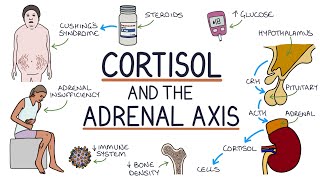
hypothalamus travels down this bloodstream this little portal system here that connects the hypothalamus to the pituitary gland specifically you have an anterior lobe or anterior aspect of the lobe and posterior aspect of the lobe crh will jump in travel down and get released at the anterior aspect of the pituitary gland and here it stimulates the release of another hormone which we call adrenocorticotropic hormone acth let's write it down adreno cortico tropic hormone now beautifully it's all in the name where does it go what does it do adreno goes to the adrenal gland cortico goes to
the cortex of the adrenal gland tropic tells you that it's going to stimulate the adrenal gland to release another hormone that other hormone is cortisol so acth is now in the systemic circulation the bloodstream it's floating through it's going to find very specific receptors to acth it's going to travel until it gets to the kidneys and most specifically till it gets to that little hat that sits on the kidneys called the adrenal gland now specifically i told you ac th is traveling to the adrenal gland but it's traveling to the cortex of the adrenal gland
that's the outer layer of the adrenal gland and specifically it's traveling to a zone area of the cortex called the zona fasciculata the zona fasciculata now the zona fasciculata is going to have receptors on it and these receptors are m c 2 r receptors melanocortin type ii receptors and they specifically will bind to or ac th will bind to these receptors again present at the zone of fascicular and what they do is they now stimulate a process termed steroidogenesis steroidogenesis is the production of steroid hormones from cholesterol and steroidal genesis will produce glucocorticoids glucocorticoids and
there's also mineralocorticoids but they're not the focus of stress response glucocorticoids are and the main glucocorticoid you need to know is that of cortisol so that means cortisol is going to be released at the zona fascicular now a couple of important points first important point cortisol is released into the systemic circulation so it can float around the body second important point is that the cortisol that's released starts to diffuse or percolate its way down to deeper aspects of the adrenal gland down into the medulla now what do you know about the medulla of the adrenal
gland it is filled with sympathetic neurons the sympathetic nervous system is a two neuron chain so this two neuron chain has one neuron going from the central nervous system out and then another neuron go into the target organ the first neuron releases acetylcholine second neuron releases adrenaline the only time this is different is the adrenal gland where you've got the first neuron coming out and it synapses with the medulla of the adrenal gland because the neurons in the medulla act as postganglionic neurons and they release adrenaline so now the cortisol that's diffused down stimulates the
medulla and the medulla is going to release adrenaline and this adrenaline is now also floating through the bloodstream cortisol adrenaline floating through the systemic circulation and this is going to stimulate all these adrenergic or adrenaline based receptors and you get a sympathetic nervous system response what type of response is that it's going to be a response to help you deal with that stress immediately so you get peripheral vasoconstriction blood vessels in your skin constrict shunting or pushing that blood to deeper aspects of the tissue like the muscle tissue so you can fight or run away
your respiratory rate increases more oxygen into the blood to be delivered to the tissues heart rate increases blood pressure increases again delivering oxygen and nutrients to the tissues pupils dilate so you can see more around you these are the effects of the sympathetic nervous system they're immediate they happen quickly so you can deal with the stress right then and there but like i said to you that's cortisol's job in the immediate to stimulate this but cortisol cortisol is investing in the future cortisol all its effects i'm going to talk about now to help you when
this is finished when this is dealt with that immediate stress and you're about to look at what's happening immediately after you're dealing with the aftermath of the stress response and even preparing for the next stress response so therefore what does cortisol do cortisol will travel through the bloodstream and because it's a steroid-based hormone based on cholesterol so it's lipid-like right fat like it's going to travel to cells of the body now we know that cells have a nucleus and in that nucleus you've got dna that need to be transcribed into genes and genes turn into
proteins and proteins well genes translate into proteins proteins do all the work in the body so we get this cortisol coming in now let's just say the this is cortisol cortisol because it's lipid based and cell membranes are lipid based they move straight in now there's going to be other hormones like amino acid based hormones they can't move straight through they need receptors on the surface but not cortisol cortisol moves straight in all the glucocorticoids moves straight in and what they do is they now need to bind to a receptor in the cytoplasm and the
receptor is a glucocorticoid receptor now the glucocorticoid receptor has a binding pocket but it also is part of a complex with other proteins one of the most important ones is one of the heat shock proteins once the glucocorticoid or cortisol binds hsp heat shock protein disassociates and buggers off goes somewhere else and now the glucocorticoid receptor is free to jump into the nucleus and it will bind to very specific promoter or what we call glucocorticoid response elements they're just promoters that help promote transcription of dna now can sometimes repress it as well but let's talk
about what this glucocorticoid receptor can transcribe so it's going to transcribe genes what type of genes what are these genes important for so there's a couple so one of the genes that it transcribes is important for or at least a couple of them are important for gluconeogenesis and this is phosphoenol pyruvate carboxy kinase pepsi k phosphate or pyruvate carboxy kinase it's super important because it basically turns oxaloacetate which is a product of the krebs cycle and ultimately turns it into pyruvate which we know is important for energy but it's also stimulated for gluconeogenesis so what's
gluconeogenesis glucose is glucose neo is new genesis is the beginning of read it backwards the beginning of new glucose this is the production of glucose from non-carbohydrate-based sources what's a non-carbohydrate-based source fatty acids so fatty acids glycerol and amino acids so gluconeogenesis happening in the liver stimulates fatty acids glycerol amino acids to jump into various aspects of metabolism to try and produce glucose now glucose is increasing in the bloodstream so this whole process leads to increased blood glucose levels increase blood glucose that's one of the outcomes of cortisol increased blood glucose now here's the thing
it makes sense because you go well it's a stressful situation we need energy in the bloodstream to be able to utilize to be utilized by tissues of the body to fight run away and so forth but here's the thing that's not really why it's there the increased blood glucose is there for the aftermath why because cortisol remember once the glucose is in the bloodstream in order for muscles and fat tissue to be able to utilize it we need insulin cortisol blunts the effects of insulin stops it from working now what else increases blood glucose levels
and stops insulin from working diabetes and therefore if cortisol is released too long over time i'm now talking chronic stress if you have chronic cortisol release chronic stress activation it leads to increased blood glucose levels without many tissues of the body being able to access it and this chronic increased blood glucose levels can damage blood vessels more specifically smaller blood vessels and this is not good this is very damaging and results in a diabetes like disease state or diabetes so not good but why are you probably thinking then why do we do it it's so
that once the stress response is finished and cortisol has been dropped off because cortisol gets released and then inhibited released inhibited so in the inhibition times insulin will work and the tissue can take it so once the stress response is finished we've got these wonderful building blocks these energy substrates available for the tissues to be able to go i'm going to regenerate now i'm going to repair i'm going to prepare myself for the next stressful situation so that's just one aspect of transcription that occurs another aspect of transcription is out of the immune system so
in actual fact glucocorticoid receptor can decrease the gene expression of certain immune products so decrease inflammation most specifically it's referring to aspects of acute inflammation short-term inflammation and it can decrease certain types of interferons and interleukins and tumor necrosis factors which we all know are important for the immune system so it can depress that it can also depress t cells as well which we know is important for cell mediated immunity now why is it doing this why would we want cortisol to suppress the immune system because it's energy hungry a lot of energy goes towards
the immune system so we need to divert that energy for the time being importantly it can promote wound healing so while it may suppress the immune system it can promote wound healing at least in the acute aspects of cortisol release but if cortisol is released for too long over time chronic stress you have chronic suppression of the immune system makes your body susceptible to infection that's the first thing and then it actually inhibits wound healing so it takes longer to repair and this is important because this is why we've sort of hijacked cortisol with very
synthetic types of cortisol so dexamethasone prednisone both of those are synthetic cortisols dexamethasone prednisone and dexamethasone for example is like 30 times stronger effect wise than that of cortisol and it's utilizing covert for example because of the systemic inflammation that occurs to suppress it right all right so that's what we've got there other types of things that can occur other types of transcription include that of decreasing osteoblasts and increasing osteoclasts so osteo means bone blast is referring to building building bone osteo clasts crushing bone bone is always constantly being remodeled building breaking down building breaking
down now what will happen here with the transcription is that cortisol can actually decrease osteoblast differentiation and increase osteoblast apoptosis so that's cell death so osteoblasts go down osteoclasts those that crush bone break it apart they get activated they increase so the overall effect of cortisol is to break the bone down and release the inorganics within that bone the inorganic minerals like calcium and phosphate why because they're important building blocks just like the glucose that we've now released into the bloodstream that can be utilized remember calcium is super important for neurons firing for muscles to
contract and also they're very important for vesicles to release products through exocytosis including neurotransmitters so now they're available in that pool in that blood system that we can utilize after this stress response and if they're not utilized after that cortisol drops back down it's thrown back into the bone brilliant but again times of stress if you're stressed chronically you're breaking the bone down significantly over time and it can result in osteoporosis so we've highlighted some of the important effects of cortisol but what i want to talk about now is what triggers this all i've said
is stress so what types of stress can trigger this whole process from occurring so let's now take a look up here we've got the hypothalamus and the paraventricular nuclei what's going to trigger it first thing the types of stresses i said can be anything pushing homeostasis out of whack so let's first talk about the organs or viscera of the body we're going to have look at the brain stem here midbrain pons medulla there's an aspect of the medulla in the dorsomedial aspect of the medulla so back here and that's called the nucleus of the solitary
tract and this is receiving afferents or input from the organs of the body now specifically it's receiving inputs from three cranial nerves these three cranial nerves are cranial nerve seven cranial nerve nine and cranial nerve ten now if you know your cranial nerves you'll know that seven is facial nine is glossopharyngeal and 10 is vagus and the way i like to think about these cranial nerves is they're going to be receiving information from the organs of our body from our mouth throat esophagus stomach heart lungs digestive system whole bunch of organs if there's anything kicking
them out of whack these signals go up up up up to the nucleus of the solitary tract and then that will project a signal to the paraventricular nuclei of the hypothalamus all right next thing i want to talk about is this area here called the laminar terminalis laminar terminalis now the laminar terminalis you can see sort of sits between the anterior commissure here and the optic chiasm here and it's a thin bit of tissue and it's really important because it picks up changes in osmotic pressure so osmotic changes now osmosis is referring to concentration changes
right so it picks up concentration changes of fluid floating around if the concentration goes up it's an indication that it's too concentrated and you may be dehydrated right so you've got a bucket of water with water and things dissolved in it if you just take the water out you're left with the dissolved substances and it's more concentrated so this will pick up changes in osmosis now again homeostasis if it goes too high it's kicking out of homeostasis sends a signal to the paraventricular nuclei and specifically this is where it's a little bit different instead of
triggering crh like the nucleus of the solitary tract did it actually triggers anti-diuretic hormone to be released now anti-diuretic hormone in the states is also known as vasopressin or arginine vasopressin and what it does anti-diuretic hormone anti-diuresis it opposes the output of urine or the output of fluid fluid loss so it maintains fluid reabsorption in the body holds on to fluid because why are we doing this osmotic changes we're thirsty we're dehydrated let's hold on to that fluid so that travels to the kidneys the tubules the collecting ducts puts holes in them we pull water
back into the body we maintain hydration now here's the other thing usually adh is transported from the hypothalamus through neurons to the posterior pituitary where it's released but in this scenario yes that also happens but adh can also jump into this portal system and it travels down with crh where it amplifies crh's effect on stimulating acth release so interestingly adh can stimulate acth release beautiful last thing i want to talk about well remember sympathetic nervous system is being activated throughout this whole time that feeds back as well don't forget but the last thing is the
limbic system so we're referring to areas of the prefrontal cortex prefrontal cortex and areas of the other areas of the limbic system like the amygdala and the hippocampus so they're not going to be located in these areas that i'm writing because they're going to overlap what i've got here but let's just write the amygdala and hippocampus all right so this is how you think about it prefrontal cortex that's really important in understanding cognition awareness amygdala is important for your emotional connection with situations hippocampus is important for your memory of these situations and so what can
happen is that cortisol that's being released can influence these and these can influence the release of cortisol and it can be this circuitry and feedback system which is very important so first the prefrontal cortex can inhibit aspects of cortisol release the amygdala can activate the hippocampus can inhibit but they can also do varying activity here as well so for example let's just say cortisol is released in a time of stress cortisol can move back to the brain undergo various changes in transcription in the prefrontal cortex so that you change the way that you are aware
or aroused by that stressful situation so if it happens again your response may be a little bit different the amygdala cortisol can change the way you have an emotional response your emotional attachment maybe if you have that stressful situation arise again you respond differently hippocampus your memory results in these flash bulb-like memories like a flashback where if the stressful situation happens again you have this memory that occurs and all of these can feed back to the paraventricular nucleus and stimulate the release of cortisol and therefore causal can go back and it can be this constant
feedback loop if it isn't broken importantly depressive states have been associated with varying levels of cortisol and these areas of the brain for example the hippocampus is important for depressive states and we've not we know that smaller hippocampi have been associated with depressive states and we think that's because or at least in part is that the hippocampus inhibits cortisol release if it's smaller it has less of an inhibitory effect and more cortisol can be released but then cortisol can feed back and alter the way that you have memories of stressful situations and it can lead
to this nasty feedback loop and cycle particularly when it comes to chronic stress situations so that's just one way we don't know a lot about it but that's just a summary of how cortisol can affect the way you perceive situations and deal with them in the future the way you have an emotional connection and also the way that you remember that situation as well so this is a quick run through of stress the hypothalamic pituitary adrenal axis and importantly cortisol