The story of oxygen on Earth seems simple at first glance. Early Earth didn't have molecular oxygen, but then once photosynthesis evolved, oxygen began building up in the atmosphere and oceans. And today, we have plenty of oxygen for animals like ourselves.
But let's take a deeper look at when oxygen levels rose. Because it wasn't a gradual increase after photosynthesis evolved. There were actually two major oxygenation events or periods in which global oxygen levels rose dramatically.
The first was the great oxidation event or the goe around 2. 4 billion years ago. And the second was the neopertoizoic oxygenation event or the noe around 700 million years ago.
But in reality, there's still a lot of uncertainty about the oxygen levels before, in between, and during these events. And the more we look into it, the more we find that oxygen didn't rise smoothly. It fluctuated over and over again for millions of years before stabilizing.
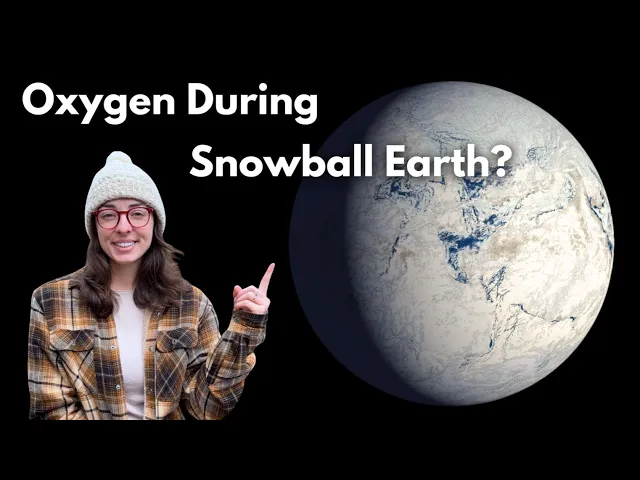
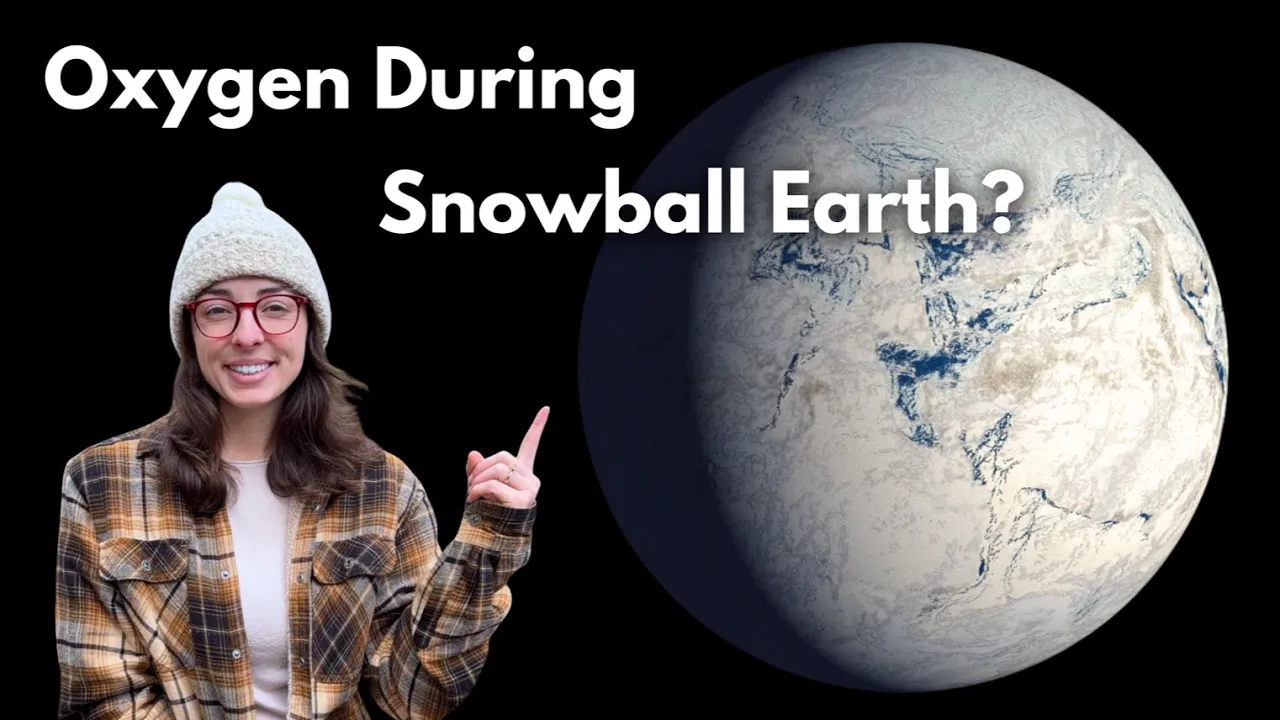
And one example of this was before and during Snowball Earth, a near global glaciation or ice age event that occurred around 720 to 630 million years ago. A brand new paper published in GSA's journal Geology used thallium isotopes to track deep ocean oxygen levels during this time interval. And what they found complicates the story of this event, specifically how early animals survived.
So just for context around timing, the first complex multisellular animal ecosystems appeared in the Ediaine period around 630 to 540 million years ago. So pretty soon after the snowball earth event. Thus the very first multisellular animals like primitive sponges evolved before this.
Most evidence suggests sometime between 800 and 600 million years ago. Potentially right in the middle of snowball Earth. However, one big question that remains is what were the oxygen levels at this time and were they stable enough to support the evolution of animals?
Enter thallium isotopes. This new study was able to use thallium isotopes to reconstruct oxygen levels in the oceans before and during Snowball Earth because thallium isotopes behave differently in oxygenated water, water containing oxygen versus anoxic water, water without oxygen. See, when there's oxygen present in seawater, manganese oxide minerals form on the seafloor and they preferentially grab one isotope of thallium over the other, leading to a distinct thallium isotope signature in those manganese oxide minerals.
This preferential preservation of one isotope over the other is called isotope fractionation. And more oxygen in the deep ocean leads to more manganese oxides and stronger thallium isotope fractionation. And that change gets preserved in the rock record.
And because thallium is extremely well mixed in the ocean and has what we call a long residence time, the average amount of time a molecule stays in seawater as opposed to getting deposited. It's able to give us global reconstructions of oxygen levels rather than just local. So with understanding the very basics of thallium geochemistry and how we use it to reconstruct oxygen conditions, what did the authors of the study find?
Well, based on thallium isotope measurements in rocks from the Tonian period which lasted from about a billion years ago to around 720 million years ago and rocks from the Cryogenian period which lasted from around 720 to 630 million years ago, deep ocean oxygen levels appear to have risen in the Tonian and then collapsed in the Cryogenian. And this is really important because it suggests that Earth's deep ocean may have been well oxygenated before we thought, tens of millions of years before the NOE. It also suggests that oxygen didn't rise steadily through snowball Earth.
It fluctuated dramatically. And given these unstable oxygen levels during a time when animals were just starting to evolve, it's possible that oxygen availability may not have been the primary limiting factor preventing animal evolution. In other words, the rise in oxygen may not have been the primary driver of animal evolution.
And this is a similar conclusion to what we found in a previous video I did, which I'll put up on the screen and link in the description box down below, where I went through a bunch of literature about animal evolution and the drivers of animal evolution. And a lot of those also point out that although we assumed that oxygen rose and then animals evolved, that simple story may not have actually been true. Which then begs the question, if oxygen wasn't the primary driver or limiting factor, why didn't they evolve much sooner?
Well, these new results suggest a more protracted rather than smooth path to animals. It seems that oxygen appeared. Then life may have experimented with complexity, multisellularity, and then oxygen disappeared or declined dramatically, and only resilient lineages survived.
And then oxygen increased again and stabilized and animal diversity exploded. This model could explain why early animals remained small and simple, why diversification lagged behind initial oxygenation, and why the big explosion of life was after the last snowball glaciation. The big picture is that oxygen on Earth is a nonlinear story.
But there is another perspective on why animals might have evolved during the seemingly inhospitable conditions of Snowball Earth that has nothing to do with oxygen and everything to do with water temperature and viscosity in which the thick viscosity of the water during this crazy near global ice age may have actually forced multisellularity in a way. But I won't get into that here as I have an entire video delving into that hypothesis which I will link down below as well as the GSA paper that I covered in this video. So go find those in the description below and thanks so much for watching.
I'll see you guys next time. Bye.