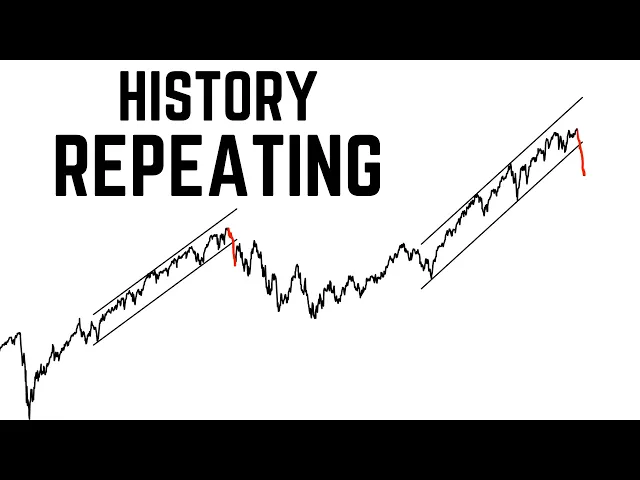
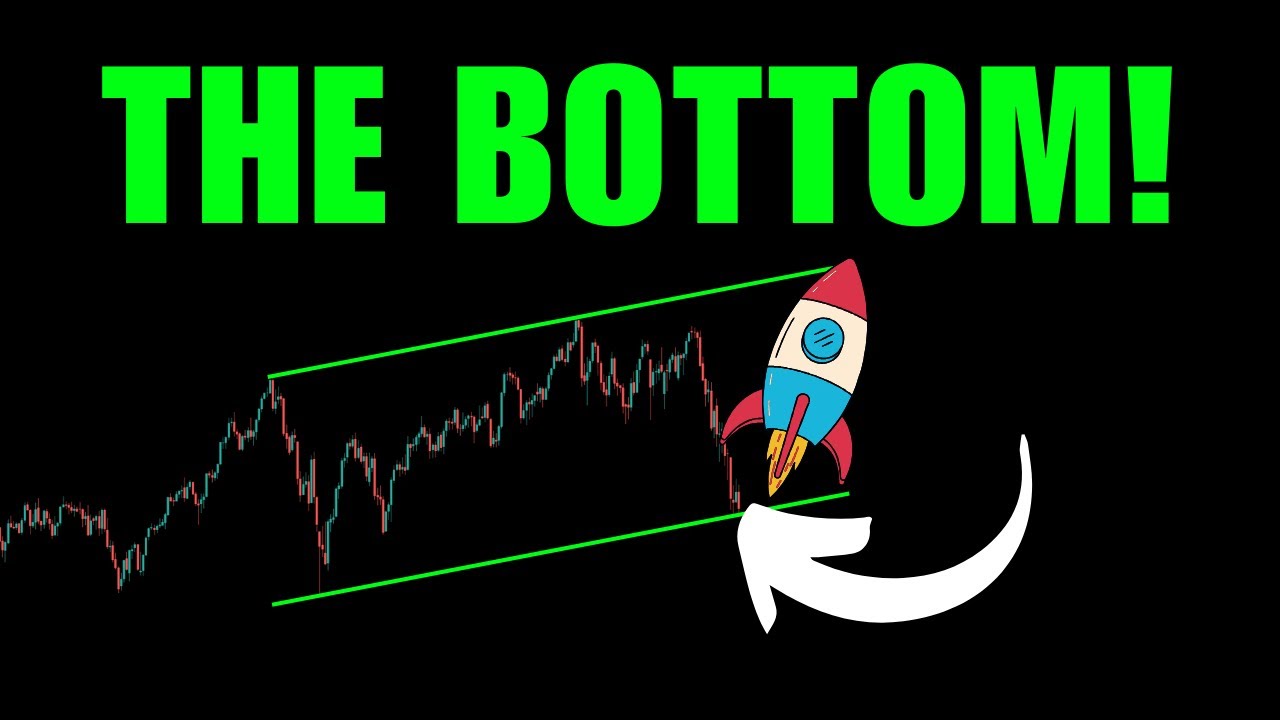
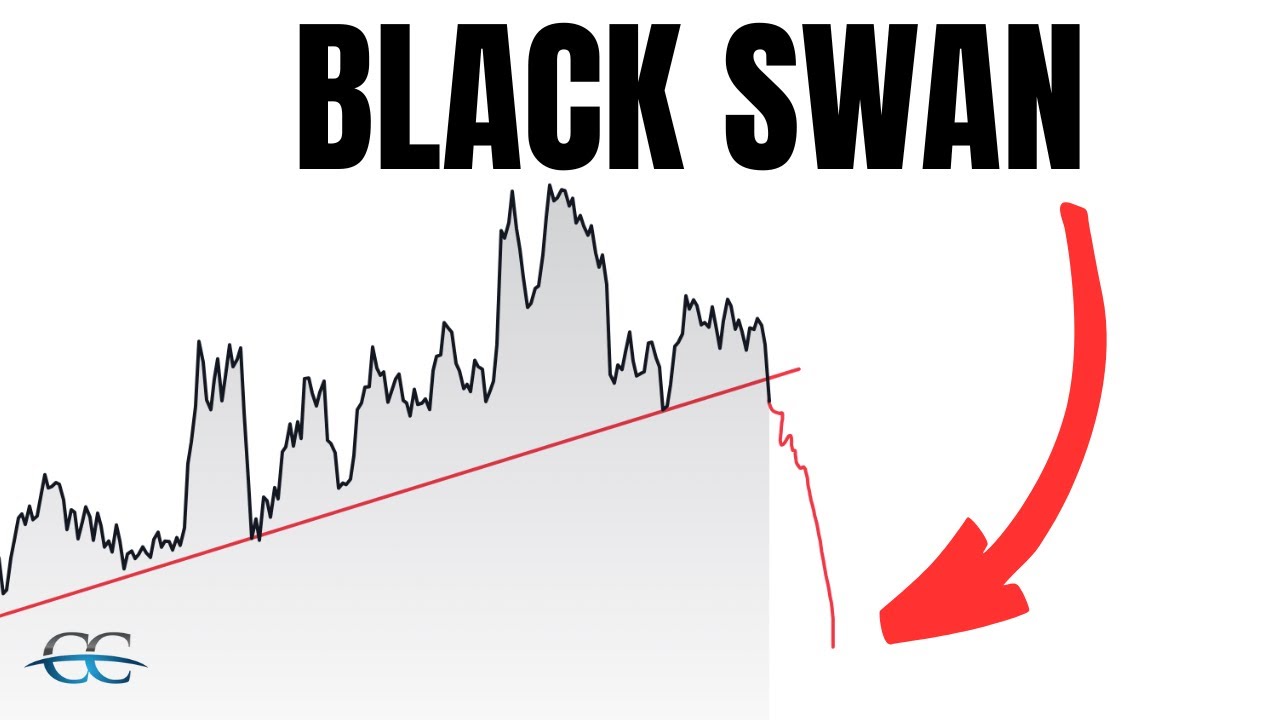
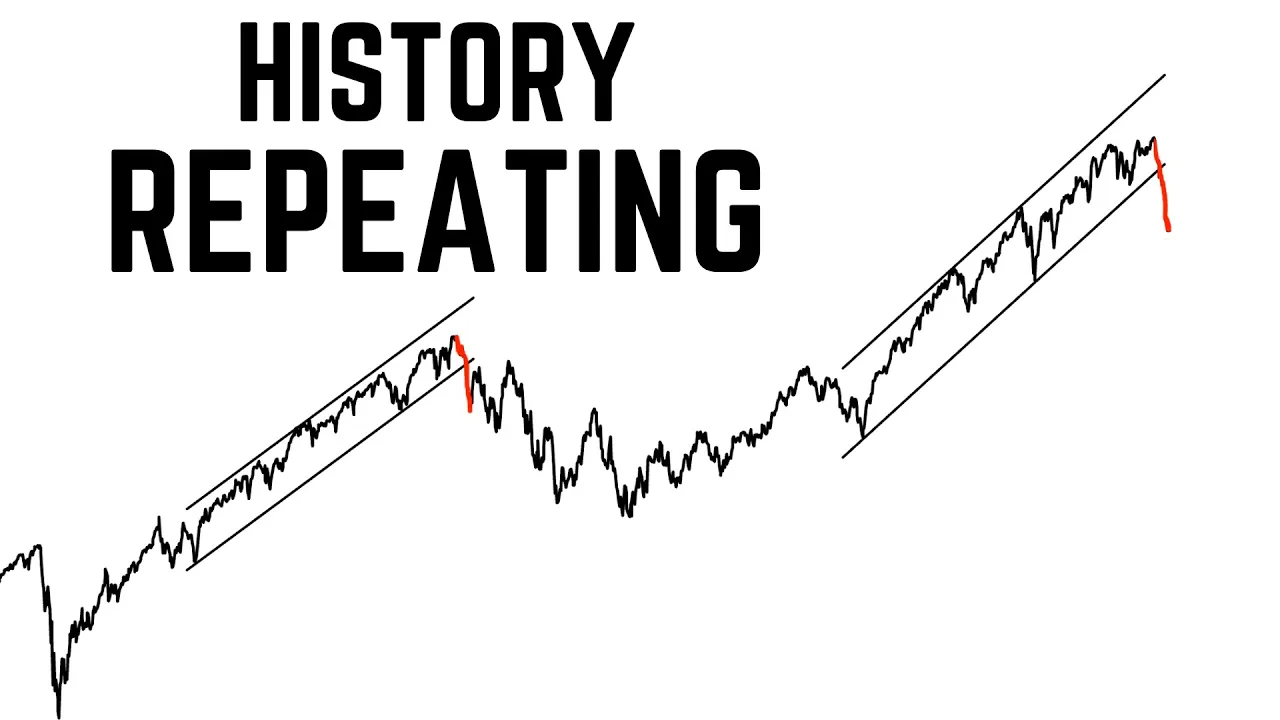
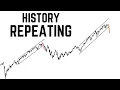
the s&p 500 index has just broken down a major price channel dating back to october of 2023 to many this is a mirror image of what happened in early 2022 when the s&p 500 also broke down a major price channel that had been respected over the two prior years today donald trump's new tariff policies have been the most clear catalyst for this decline which has been limited to the us stock market as indices like the dax the german stock market has actually printed record gains since the start of 2025 donald trump went as far as
saying that he wouldn't rule out a recession in 2025 which of course intensified the sell-off as investors readjusted their expectations of economic growth in the us under a president who seems less concerned about short-term economic prosperity goldman sachs for example has increased their probability of a recession occurring in the us over the next 12 months to 20% the same thing goes for most other banks with the average sitting at around 25% now that might look like a small shift but all of this has sparked real concerns of a recession occurring in the us for instance
when we look at google trends data for the term recession showing us the number of times that term has been typed into google we see it has spiked to the highest level since 2022 so with the combination of this steep stock market sell-off banks readjusting their probability of a recession and just a general widespread panic around one happening now is probably a good time to reassess whether all of these concerns are legitimate during a recession the average s&p 500 draw down is about 30% given we've only witnessed a 9% correction today if we're really heading
into a recession it could mean an additional 20% decline from current levels so let's understand exactly what happens in the scenario where a us recession occurs the most fundamental characteristic of a recession is that unemployment rises when we look at a chart of initial jobless claims in the united states and overlay the official us recessions all of them occurred with an increase in initial jobless claims in fact leading into every single recession you have initial jobless claims already begin to rise this is something that we've been watching very closely over the last few months and
currently we're not seeing a clear warning sign from the job market now of course we don't rely on just one indicator to assess the probability of a recession alongside the job market we also look at corporate profit margins because these two have a very close relationship between one another if corporate profit margins are rising it probably means that businesses are going to be hiring more people to expand their operations on the other hand if corporate profit margins are shrinking that increases the probability that businesses are going to be laying people off to cut down on
costs and remain solvent and we can clearly see that by looking at a chart of corporate profit margins going back to the 1950s in the year leading up to almost every single recession of the last 70 years corporate profit margins have declined today corporate profit margins are at all-time highs which to us means that businesses aren't really in a posture where they're looking to lay people off in a big way now donald trump's tariff policy could lead to a decline in profit margins in 2025 and ultimately that could lead to a recession in 2026 but
declining profit margins by themselves don't necessarily lead to a lower stock market we saw this for example between 1996 and 2000s and when we look at the stock market during that period it went on an absolutely massive run and only really declined during the 2001 recession the same thing happened in 2006 where corporate profit margins were declining and yet the stock market was still rising during that period it only peaked when the recession started so to us these widespread concerns about a recession seem a little bit premature just like they were in august of 2024
in september of 2022 and in june of 2022 all of these were moments where you had widespread concerns about a recession that did not play out for a recession when we look at when these widespread recession concerns occurred on the stock market all of them occurred following pretty significant stock market sell-offs just like today but marked significant market bottoms which for now still is our base case on the stock market today but still as traders we need to be open-minded to other scenarios happening we cannot remain stuck on just one vision we need to have
a specific strategy in place to avoid a larger draw down after all we've seen the stock market have much more significant draw downs than today without a recession occurring that was certainly the case in 2019 and 2022 but the s&p 500 declined by over 20% so i'm going to give you a sneak peek of our specific strategy at bravos research that will be determining our allocation to the market over the next few weeks the s&p 500 just reached oversold conditions according to the rsi this is a momentum indicator that does a great job at identifying
when price has reached extreme conditions an oversold rsi reading marked all of these significant bottoms on the s&p 500 so this tells us that either we're going to see a big rally with the stock market recovering all the way back up to all-time highs just like in all of these instances or we're going to see something like what happened in january of 2022 where the stock market only made a brief bounce after this oversold reading with stocks declining an additional 20% from that level now there is something that's similar about these two instances and we
can see that by adding the key moving averages on the s&p 500 in both cases the s&p 500 sliced through all of the key moving averages and hit oversold conditions in fact if we rewind to 2018 and 2020 we can see the market also had a steep sell-off slicing through the key moving averages reaching oversold conditions and again in both of these cases the market only witnessed a small bounce before continuing its move down so the last three similar technical setups did not end well for the s&p 500 at least in the near term so
on this next bounce we want to see the s&p 500 make a strong recovery back above all the key moving averages and we'll also be watching our leading market indicators that helped investors provide a warning in each of these cases if we get the same warning sign today we'll be adopting a much more defensive position at bravos research if you want to follow this market with us make sure to go to braavosresearch.com we take you through this market step by step and give you access to all of our trading decisions i look forward to seeing
you see you next time