- What's the hardest thing to master in medical aesthetics? I know there are endless complex procedures and anatomy to understand but actually what I think it is is the mind of your patient and particularly patient expectations. So that's what we're gonna be covering today.
How to get on the same page as your patient before you stick a needle into their precious face and puncture their complex psychology cause that's what it's all about. (upbeat music) So we've been surveying our audience and getting questions from you guys and one of the most common questions we get is how do we prevent underwhelm? Because your patient has an image in their head.
Quite often, particularly younger patients are very excited about what's attainable and they carry that excitement into the room and they really are hoping for the best and in many ways expecting the best. And you have to then somehow align them with what's actually possible. So how do I do that in my clinic?
Well the first thing to realize is many of the things your patients are actually saying for example, showing you photographs or the way they move their lips they're essentially trying to communicate a goal and that's fine, that's what they should do. You need to take that goal on board reflect it back to them, and then show them in your treatment plan the elements that you can and can't do. Because the truth is we can always get closer to the aesthetic goal.
Even if they want to look like an Angelina Jolie and they've only got thin lips. You can still edge people closer to that goal but you just have to be clear that you will not actually achieve it. Now, complete blunt honesty is essential, and sometimes with a very excitable patient I'll recommend doing that first and just basically completely destroying all hope before you then rebuild the hope in what you can actually achieve.
So you straightaway say, obviously Angelina Jolie has very different anatomy to you so we will never get you to look like that. You do understand that? Most patients actually do understand, that they're just hoping you can do more.
So first it's leveling the expectations down to nearly nothing. That's absolutely not attainable. But then you start to pick out the details and of what they've said and explain what you can do.
So I can't get you to that but let me show you how I can get you closer. A lot of patients really just want to get closer to their ideal. A lot of life's like that.
You never get exactly how you imagine but as long as you're on the route and getting closer to it, you're often really happy. So as long as you make that the goal of your treatment which is to get them closer, not to an absolute end point but closer to it and they understand that and are happy with that idea then most patients I find are actually quite happy with the results, even if it isn't the same as the picture that they brought. So essentially what I'm saying here is sell the journey towards the goal rather than actually achieving the full goal.
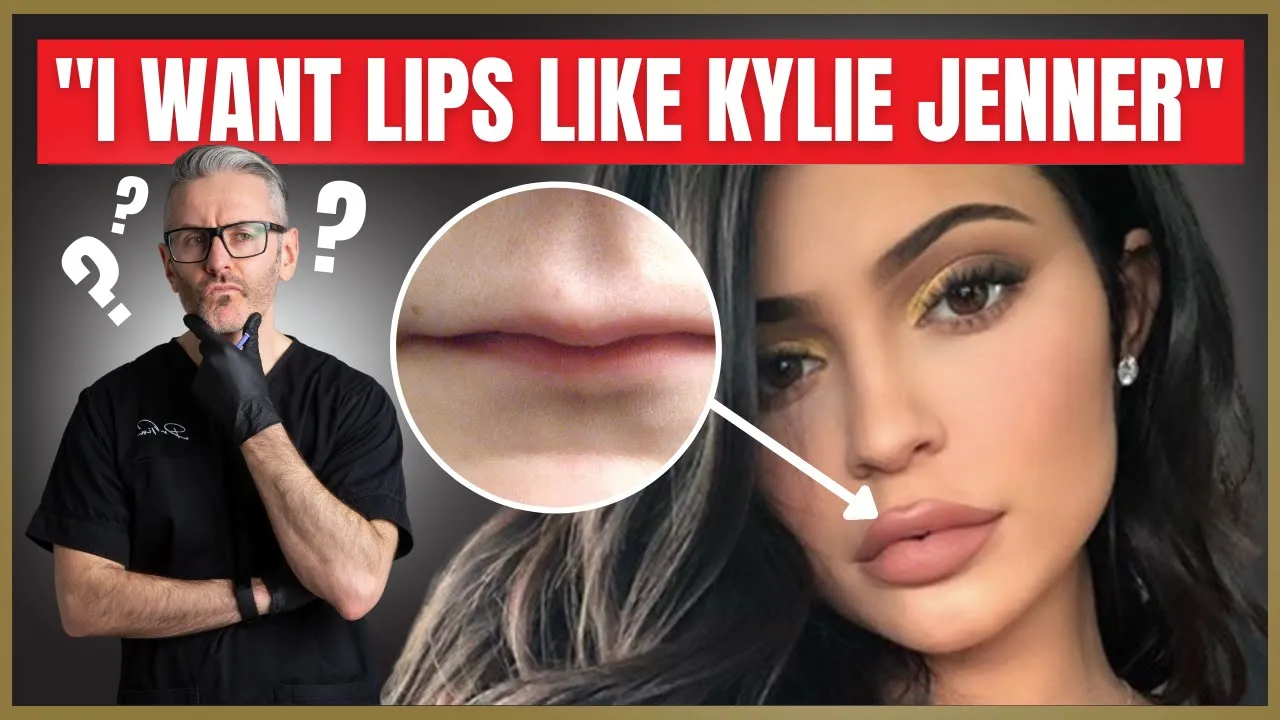
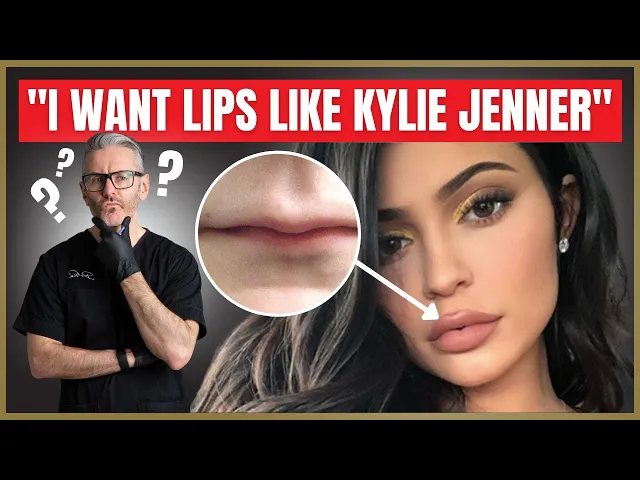
And most people are thrilled with that approach. Here's a very common question. Many of my younger clients bring photos of Kylie Jenner and ask if they can look like her and injectors ask is it actually possible to achieve this result?
Now I'll tell you what I do with Kylie Jenner. If someone asks me for a picture to look like her is I will get one of the video grabs, screen grabs out of their many videos that they do where you can see that it's really not quite right because there are many pictures where the dynamic image that you get from Kylie Jenner's face reveals that the filler or the product that's in there, it maybe an implant is actually causing other other problems and distortions. And really what they're after is the airbrushed end result of tons of photography.
So it's very important that you make people conscious that there's a lot of processing going on with people like Kylie Jenner that isn't about the needle and the filler and they're asking you to create a result with just one element that is ignoring the who knows how many thousands or millions of dollars that go into creating these images that essentially are not even what they look like. It's very important to ground them in reality. So find the worst looking picture you can find of them and make sure that they are conscious that what they're pursuing is essentially a mirage.
It's an illusion that you will never achieve with a needle. Having said that, remember that there is almost always something you can do to upgrade them. Cause I don't wanna just destroy all hope and leave them miserable.
I'm just grounding them before I actually teach them what I am capable of doing with my injections. And there's a lot of grounding in that whole process. I'm constantly saying what's not going to happen, not just what is gonna happen.
So hope that helps. Here's another great question. Lots of my patients are pushing me for more mls and I don't feel comfortable, what do I do?
Well, first thing is there is some congratulations for you that your patients do trust you to keep adding more. But remember you've got to be in tune with what the patient psychology is really after. So these people who ask for more when it's not actually suitable are still after some sort of change which they believe will make them better off.
So we must understand what is that change that they're after. And I, over the years have pieced together many of these drivers in patients. And what I do is essentially teach them about the drivers.
One of the most interesting ones is just the novelty of having lip filler. If you've never had lip filler before had a desire for it and then got a good result it can be a euphoric experience where you just want more of that, of that newness. It feels amazing walking around, shopping with your friends with these new lips and everyone says they look great and that unfortunately that feeling of newness does not last as long as the lip filler.
So you end up in a situation where you still have a good result but it's six months later and you just want that excitement of having another procedure. I call it the new handbag feeling with my female clients. And I'll say, just be aware, it's not like a handbag.
You're still carrying around the old one and we can't put it down cause there's nothing wrong with it. But I also can't re-treat you so that you get that excitement. And what I might do after that is then explore other ideas for beauty and other things that they have perceived in themselves.
And there may be other things I can do to help. Or it may just be about reminding them that they've already got that and maybe what they should do is look for that sense of novelty and excitement, which is a normal human need in things that are more sustainable. It could just be about spending more on makeup, different color lipsticks, anything that will make them feel special because that's part of what is exciting about being alive.
And so, but I'm not gonna do it with filler every time I meet them. So that's one thing I would do. Of course, you also have other people who are requesting for different reasons.
So always try and explore and unpack what the motivations are for your patients. Sometimes they're onto something aesthetically that they aren't describing very well because there are sometimes details in lips. You may have done a procedure, be happy with it and there's some missing component that they're asking for.
Maybe the proportion centrally is not quite as perfect as it could be. And you will meet a cohort of very artistic patients who often very aware of the details, who are chasing a a slightly better result that is actually attainable but it's just not on your radar yet. I would say this is quite a small niche but it's always worth paying attention to your patients and trying to get into their mind's eye to see what it is that they think is actually gonna make them more beautiful.
And then you need to validate that or not. You need to validate whether they're right or not. Is it actually gonna make them beautiful?
But of course importantly is it even attainable with injections? If those two criteria are met then you could do a procedure, but often one of them isn't. And then you just need to explain why it's not worth putting another needle in.
Of course, finally, you have dysmorphia. So for me, the key part of dysmorphia is that patients no matter what you do, are never happy. So I will often say that to people I only do these procedures to make sure that you are happier and healthier.
So if I do a procedure and it makes a good aesthetic difference I need to see that you are behaving as a happier person too and you are enjoying the result on some level or it becomes risky for me to retreat. So anyone who gets a good result who then comes back unsatisfied, wanting more I may have that conversation with them just to make them clear that the real purpose of these procedures is that they're living a happier life. Not that they have got however many mls of filler in their lips.
So I wanna see evidence that they're getting happier with procedures because what clinicians really don't want to do is treat patients who don't get happier because they are, that's not good for any of us. So I'm very clear about what the goal is and that is another way that I will say no to patients. I'll also give you one more tip for saying no, a lot of patients have this idea that we are obviously it's a business but that's all that we essentially care about.
So it's quite nice for patients to hear you say point blank, I don't wanna take your money for this. I don't think it's in your interests. And obviously, and what that basically makes them realize is that you're on their side and the reasons that you're saying no are actually for their benefit.
It's really important when you say no to a patient that they are very clear that you're doing it for their interests and not your interests. If you say things like, you know, it's my reputation at the end of of the day and I don't want people to think I've done this lip procedure on you then you're making yourself an adversary to your patients. So I will only ever say no because I believe I'm acting in their best interest, which is the medical model.
And but this is also much softer more gentle way of rejecting a patient that doesn't end up in you getting a one star review. This question, very interesting. Someone says that they find it hard to achieve the patient's ideal shape when they're presented with a patient who doesn't have lips that are actually like that.
So this is the gap between what the patient's hoping for and what they've actually got. And there are two elements to this. First is you can just simply realign their expectations.
But another interesting thing to think about is are you actually technically good enough to get the best out of those particular set of lips? So this actually relies on getting a concept of what the technical core of injections are. Every move you can make with a needle or every product that you can use to inject has certain qualities that enable you to get closer depending on how you use them to the aesthetic goal.
So the first thing before you realign your patient's expectations around your technical capabilities is to actually challenge yourself. Can you actually design a lip treatment that will get someone closer? So obviously no one is able to do everything like you could on Photoshop, for example, but you can definitely get closer by breaking the lips down into very fundamental components.
So we got fundamentals of the aesthetic, fundamentals of the anatomy, and fundamentals of your injection technique and products and all of that. If once you understand that core you can really design much better lip treatments. In fact, that just reminded me, I actually have a webinar where I'm gonna discuss a new structure I've developed, a new approach for treating lips that essentially breaks this all down into really fundamental components that enable you to become a designer of lip treatments rather than just an an executor of other people's treatment strategies.
So this is the difference between lip technique and lip design. It's a new concept and I think it's really fundamental to becoming a great injector. So we'll put the link in this show.
You can click on the link down below, you can sign up and I will teach you this new structure in a new free webinar, which I have launching.
![OLD LIPS: Best injection techniques & how to avoid the Homer Simpson look! [Aesthetics Mastery Show]](https://img.youtube.com/vi/Lz7rgVfPv98/maxresdefault.jpg)



![ADVANCED BOTOX ANATOMY: How to avoid nasty lower-face side effects [Aesthetics Mastery Show]](https://img.youtube.com/vi/GcRhACNBGnA/maxresdefault.jpg)

![NEEDLE DEPTH: How to choose best depth to avoid complications & get results [Aesthetic Mastery Show]](https://img.youtube.com/vi/VCztOZGageg/maxresdefault.jpg)