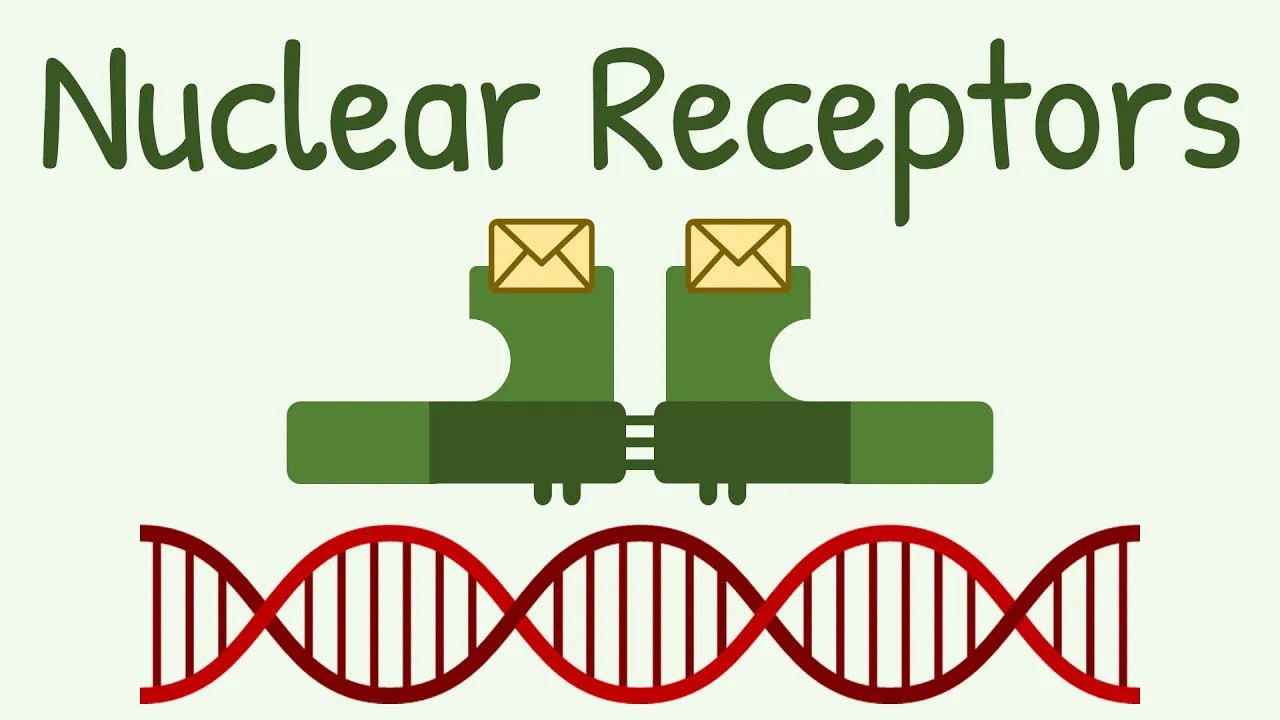
Hello, in this video we will learn about nuclear receptors. We will see some basics about them and the signaling by glucocorticoids. Let's get started.
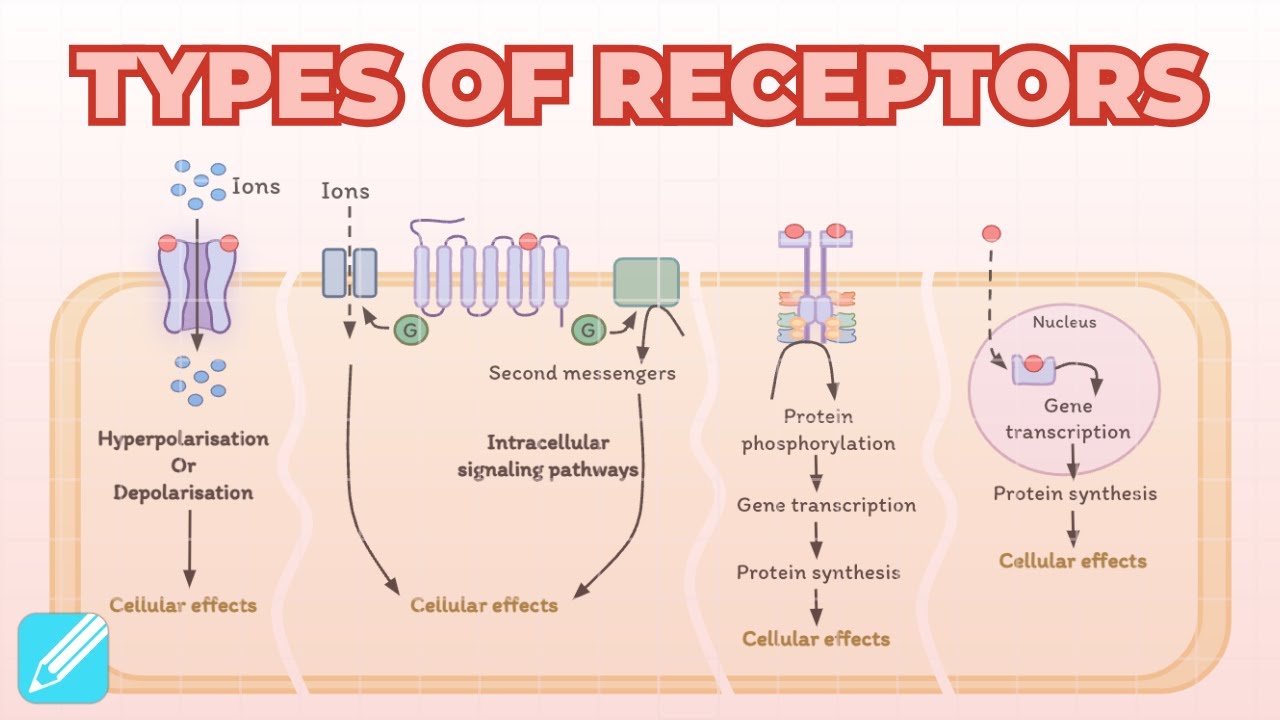
First of all, these receptors are located inside the cell, in contrast to other types of receptors which are located on the cell membrane. Their ligands are lipid soluble so they can cross the membrane and bind the receptor located inside the cell. These receptors are transcription factors.
This means they regulate gene expression and protein synthesis. There are two main subfamilies of these receptors. One family contains receptors for steroid hormones for example glucocorticoids, mineralocorticoids, androgens, estrogens, etc.
The other subfamily consists of receptors for vitamin D, thyroid hormones, and retinoic acid. Apart from these, other nuclear receptors recognize a wide range of xenobiotics and metabolites. Now let's talk about their exact locations.
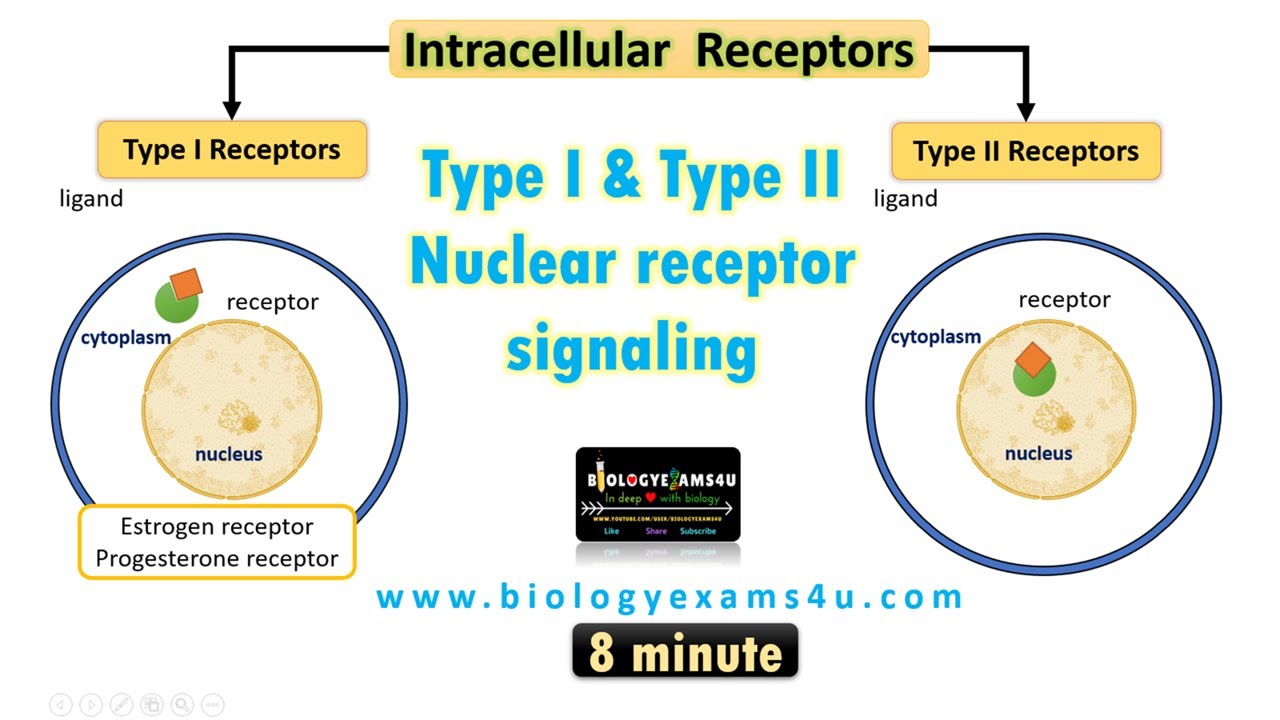
Different types of receptors are found at different sites under their inactive state. Glucocorticoid and mineralocorticoid receptors are located in the cytoplasm under resting conditions. Estrogen and progesterone receptor are found in the nucleus.
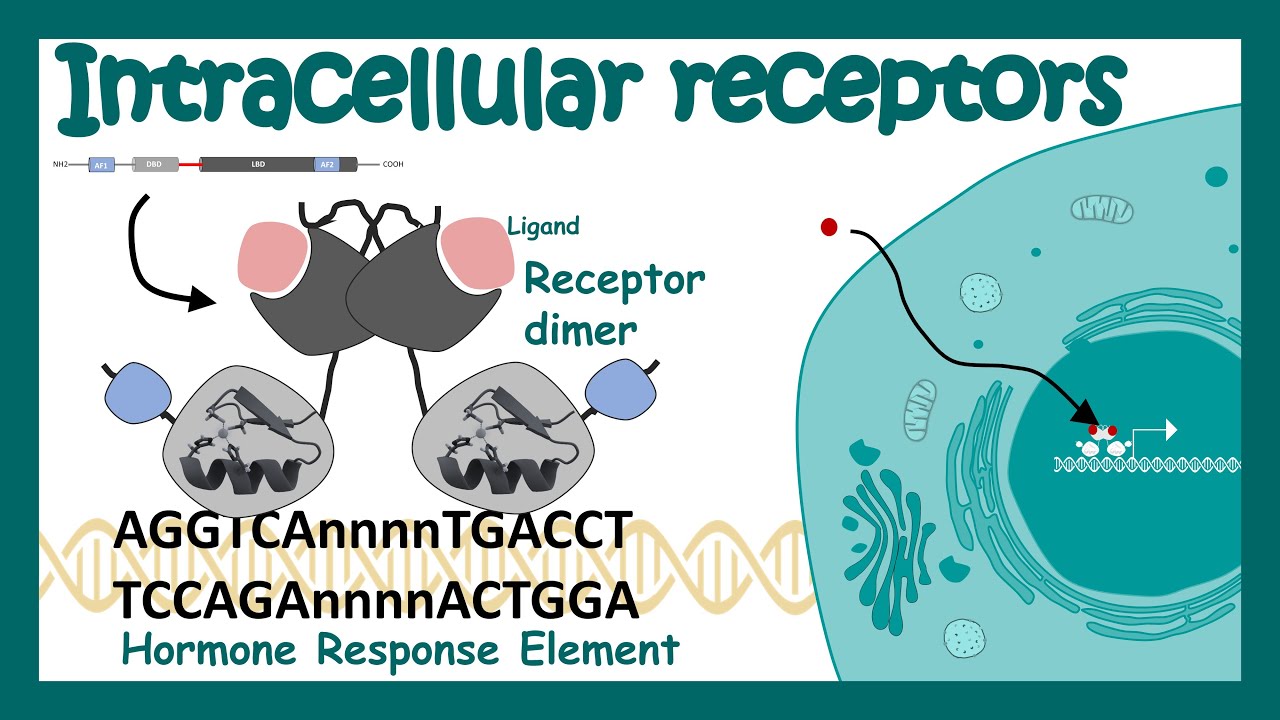
And receptors for thyroid hormone and retinoic acid are attached to DNA even under resting conditions. Now let's see the structure of the nuclear receptor. They have 3 main domains.
A ligand-binding domain where the ligand binds, a DNA binding domain that binds with DNA, and a transactivation domain that brings about change in DNA conformation to initiate transcription. So this was the basics about nuclear receptors. Now lets the signaling pathway for glucocorticoid receptor.
As we have already seen, they are found in the cytoplasm. Now, these receptors are inherently capable of binding with respective genes but under a resting state, their activity is prevented by a chaperone protein like heat shock proteins-90. The binding of a ligand with the ligand-binding domain causes a release of HSP-90.
Two of such receptors dimerize and get activated. Now the pair enters into the nucleus. It also binds with the coregulator.
The coregulator can be a co-activator or a co-repressor. Finally, the complex attaches to a specific region on the gene. In the case of glucocorticoids, it's glucocorticoid responsive element (GRE).
This binding facilitates or represses gene expression. If it's facilitation, mRNA is produced that goes to the cytoplasm and transcribed to respective protein. The protein then brings about changes in cellular activity.
Now. . .
the synthesis of proteins takes time. So the effect of nuclear receptors develops slowly and takes longer than other signaling pathways. However, once the effect has developed it also lasts longer.
That is because even when the stimulus is removed, the newly synthesized proteins will stay there for a while and work till they are degraded. So that was an example of signaling by nuclear receptors. Now let's have a quick summary.
Nuclear receptors are located inside the cell. They bind with a lipophilic ligand molecule. They are transcription factors.
They have a ligand-binding domain, DNA binding domain, and transactivation domain. Under resting state, glucocorticoid receptors are located in the cytoplasm and are bound to chaperone protein HSP-90. It prevents its activity.
Binding of glucocorticoid causes release of chaperone protein, dimerization, entry into the nucleus, binding with coregulator, binding with DNA, and modulation of transcriptional activity. Because of the involvement of protein synthesis, their effects are slow to appear and slow to disappear. That's it for this video.
If you feel this video will help your friends and colleagues, please share it with them too. And don't forget to subscribe because lots more to come. At nonstop neuron, learning medical concepts is as easy as watching cartoons.
Thanks for watching, see you in the next video.