[Music] [Applause] [Music] The power of observation and its influence on reality. **Introduction** The reality you experience can shift depending on how you choose to observe it. What if the universe itself shifts, adjusts, or even reconfigures itself based on where you direct your attention?
It sounds almost like something out of science fiction, doesn't it? But what if I told you that this isn't just an abstract idea or a theoretical possibility? It's a concept that has been proven by some of the most groundbreaking experiments in modern physics.
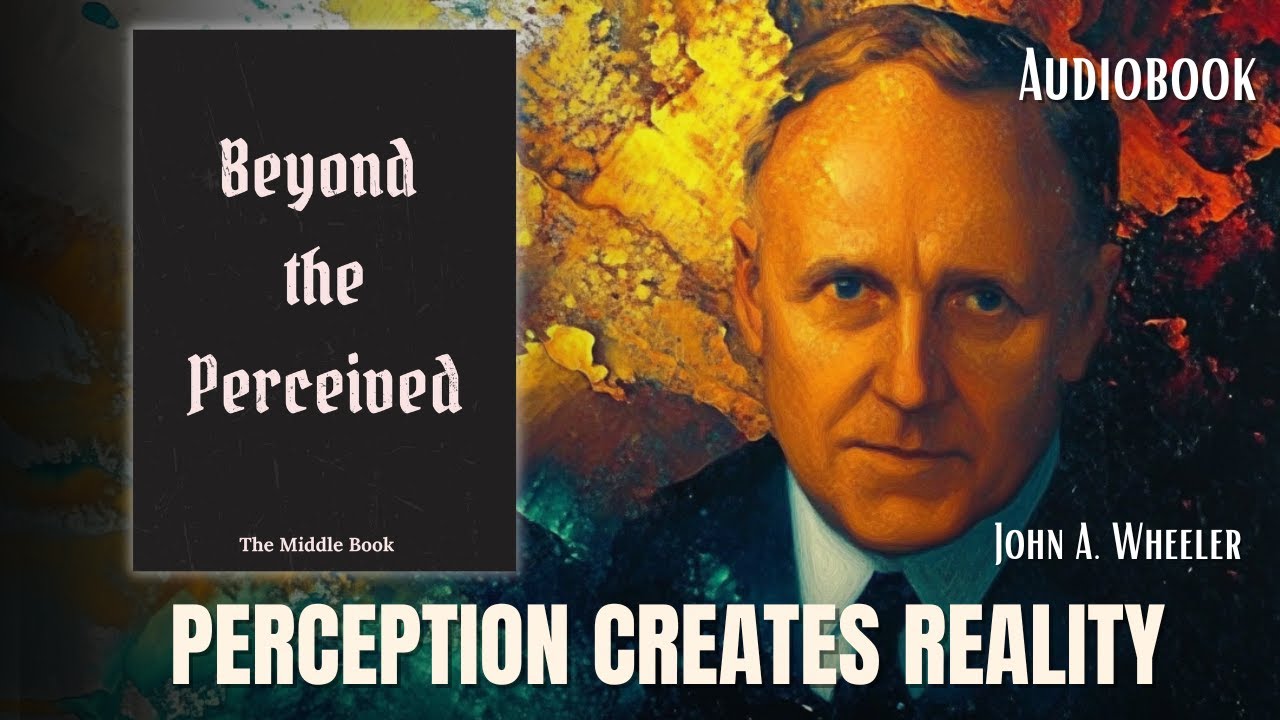
What if, in some mysterious way, your very act of observing is shaping the reality around you? This idea, known as the observer effect, proposed by American physicist John Wheeler, challenges everything we think we know about the nature of reality. For centuries, we have understood reality as something fixed, something that exists independently of our perception.
Objects are there whether we see them or not; the world unfolds whether we observe it or not. But what if, in some deep and profound way, this is not true? What if reality, at least in its most fundamental subatomic form, is not a passive static entity but something that is influenced by the very act of being observed?
This Revolutionary Insight was brought forward by physicist John Wheeler through his work, particularly in the realm of quantum mechanics. Wheeler suggested that we, as observers, are not mere bystanders in the universe but active participants in its creation. At the heart of this theory is the idea that reality is not a fixed, unchanging thing; instead, it exists in a state of potential, awaiting observation to collapse it into the form we experience.
This is not just a concept confined to the laboratory or the theoretical world of physics. The implications of the observer effect extend far beyond the subatomic world, opening the door to a profound understanding of how our perception and attention shape the very nature of our experiences. Imagine if the way you observe your world—your relationships, your challenges, your choices—could influence the outcome of those experiences.
What if simply shifting how you look at things could create new possibilities, new directions, and even new realities in your own life? This video will explore how this seemingly abstract idea of the observer effect isn't just about particles and experiments, but about you. It's about how the way you observe the world around you—how you perceive and interpret your daily experiences—has the potential to shape your reality in ways that are subtle yet powerful.
We will delve into how your attention, beliefs, and expectations influence not only the subatomic world but also your personal life, your relationships, and even your decisions. The observer effect offers a unique lens through which to view the world, one that calls us to reconsider how we interact with the universe, and ultimately how we understand our role within it. Are we simply observers, or are we co-creators, shaping the reality we experience by the very act of paying attention to it?
Keep reading, and let's explore how the power of your observation might just be the key to unlocking a whole new understanding of the world around you. **Chapter 1: The Observer Effect – How Our Perception Shapes the Universe** Imagine a reality where the simple act of observing something changes its very nature. In the world of quantum physics, this isn't just a philosophical musing; it's a fundamental principle that has been proven in some of the most famous experiments in science.
At the heart of this concept is the observer effect, a phenomenon that reveals how our perception influences the behavior of the smallest particles that make up everything in the universe. It turns out that when we observe certain subatomic particles, we don't just witness them; we actively shape their behavior. The most famous experiment illustrating this effect is the double-slit experiment—a mind-boggling study that challenges our understanding of reality.
In this experiment, particles like electrons are shot through two narrow slits in a barrier. When no one is observing them, the particles behave as if they are waves, passing through both slits at the same time and creating an interference pattern, much like ripples in water. But as soon as a scientist attempts to observe which slit the particle goes through, something extraordinary happens.
The particles behave like tiny solid objects or particles passing through only one slit, as if the very act of observation causes them to make a choice. This shift in behavior from wave-like to particle-like is the essence of the observer effect—the idea that particles don't have a definite state until they are observed. This discovery sent shock waves through the scientific community, as it challenged the very foundations of classical physics.
For centuries, we have thought of the universe as a fixed and predictable system—objects and events existing independently of our observation. We assume that the world is there whether we look at it or not and that it behaves the same way regardless of who is watching. But quantum physics, through the observer effect, suggests something far more mysterious: that the very act of observing can shape the nature of reality itself.
One of the most profound contributions to this idea came from physicist John Wheeler, who took the observer effect beyond the realm of tiny particles and proposed that the influence of the observer might extend to the entire universe. Wheeler famously said, "We are participants who bring the universe into existence. " What he was suggesting is nothing short of revolutionary—that the universe is not a fixed, static entity waiting to be discovered.
Instead, it is a dynamic process, constantly shaped and co-created by our perception of it. The universe doesn't just exist independently of us; we, as conscious observers, play an active role in its unfolding. In a sense, the act of observation, whether through scientific measurement or.
. . Our everyday awareness has the power to bring reality into existence, to collapse potential into form.
This idea upends the traditional view that reality exists independently of us, like an object sitting on a table, untouched by the observer. Instead, it suggests that the universe is not merely something we observe from the outside; it is something we participate in, shape, and influence. The observer effect forces us to reconsider the nature of reality itself.
Is it fixed and predetermined, or is it fluid, ever-changing, and co-created by our consciousness? The more we explore this concept, the more we realize that our understanding of the universe and our place within it is far from being static. The implications of the observer effect extend beyond the world of physics.
If our observation can alter the behavior of subatomic particles, what might this mean for how we perceive the world around us? Could our beliefs, our expectations, and the way we focus our attention influence not just the small, invisible particles that make up the universe, but the larger, tangible reality we experience every day? The observer effect invites us to rethink how much control we truly have over our experiences, and it challenges us to question whether we are merely passive observers of a pre-existing world or active participants in its creation.
What would happen if we began to see ourselves not as isolated individuals watching the world unfold, but as integral co-creators of the reality we experience? Could changing the way we observe the world actually change the world itself? John Wheeler's insights open up a fascinating new perspective on our relationship with the universe.
The observer effect teaches us that the universe is not just something to be observed; it is something that responds to us, shaped by our attention, our awareness, and the way we choose to engage with it. This revelation doesn't just transform the way we understand physics; it transforms the way we understand ourselves and our role in the grand cosmic dance. **Chapter 2: The Quantum Playground: How Observation Defies Reality** Step into the strange and fascinating world of quantum mechanics, where the rules we take for granted in everyday life no longer apply.
In this realm, particles don’t follow the neat, predictable paths we expect; instead, they exist in a state of uncertainty, almost as if they are unsure of themselves, floating between possibilities until we observe them. This uncertainty is not just a quirk of measurement; it's a fundamental feature of how the quantum world operates. In the microscopic realm, reality is far less certain and far more fluid than we could ever imagine.
At the heart of this mystery lies the concept of superposition, a principle that blows apart the way we think about the world. In the quantum world, particles like electrons do not exist in one specific state; instead, they exist in multiple states simultaneously. Think of it like this: imagine you're standing at a crossroads, and instead of choosing one direction to walk down, you simultaneously travel both paths at the same time.
It's only when you look—when you measure—that the particle decides which path to take, collapsing into one definite state. This is the essence of superposition—the idea that particles can be in several different states at once until observed. But this is where things get truly mind-bending.
As soon as we observe or measure a particle, it collapses from this cloud of probabilities into one concrete reality—a single state. Before we observe it, the particle's position, momentum, and even its behavior are not fixed; they are spread out over a range of possibilities. It's only when we look that it chooses one of those possibilities, bringing it into the world of definite, observable reality.
This paradox shakes the very foundation of how we understand cause and effect in the macroscopic world. In the quantum world, reality isn’t a solid, unchanging thing waiting to be discovered; it's a fluid, dynamic process that comes into being only when we observe it. What does this mean for us in our everyday lives?
We typically understand cause and effect as a clear-cut relationship: something happens, and this causes another thing to happen. But quantum mechanics challenges that simplicity. If particles exist in multiple states until they are observed, it suggests that reality is not as fixed as we think.
What we observe and how we observe it directly influences the outcome. This blurs the line between the subjective and the objective, between the observer and the observed. In our daily lives, we tend to think of ourselves as separate from the world around us, as if we are external observers simply watching the events unfold.
But in the quantum world, the act of observation itself is an integral part of how reality takes shape. This new perspective challenges the traditional understanding of causality and brings into question how much power we truly have in shaping the world around us. If reality is influenced by how we observe it at the subatomic level, does this mean that the act of observation itself can alter our macroscopic reality?
Could our thoughts, beliefs, and expectations influence more than just the quantum world? Could they affect the outcomes of our decisions, relationships, and experiences in ways we have yet to understand? In the quantum playground, observation is not a passive act; it is an active force that helps to shape and define reality.
The very nature of quantum uncertainty and superposition suggests that the universe is not a static, pre-existing thing; it is a living, breathing process—one that responds to our perception and engagement. Just as particles exist in multiple states until we observe them, so too might our experiences exist in a range of possibilities, waiting to be shaped by our awareness. This idea challenges our conventional thinking and invites us to reconsider our role in the universe—not as passive observers, but as active participants in the creation of reality.
Active participants co-creating the reality we experience with every thought, belief, and observation. What if, like the particles in the quantum world, our lives are a cloud of infinite possibilities, only collapsing into one particular reality when we focus our attention on it? The observer effect and the principles of quantum mechanics that support it push us to think bigger and deeper about the true nature of reality and our place in it.
Perhaps, in the end, we are not just observing the universe, but actively participating in the creation of it. **Chapter 3: Intellectual Virtue and Practical Wisdom** When we speak of virtue, it is essential to distinguish between two types: moral virtues and intellectual virtues. While moral virtues concern our character and the regulation of our desires and actions, intellectual virtues are those qualities of the mind that allow us to think well, understand the world around us, and make sound judgments.
Moral virtues guide us in how we act, whereas intellectual virtues guide us in how we think and reason, enabling us to discern what is truly good and how to achieve it. While both are indispensable to the good life, it is the intellectual virtues that allow us to navigate the complexity of the world with clarity, prudence, and wisdom. Among these intellectual virtues, there is one that stands out above the rest in terms of its importance for living a well-ordered life: phronesis, or practical wisdom.
Practical wisdom is not merely the ability to think abstractly or to possess theoretical knowledge; it is the virtue that enables us to apply reason to the concrete situations of daily life. While other intellectual virtues, such as understanding or knowledge, may equip us with facts or principles, it is phronesis that allows us to make the best possible decisions in the face of uncertainty, complexity, and conflicting desires. It is through phronesis that we can balance our rational understanding with the emotional and situational challenges that we face in our personal lives, our relationships, and our communities.
To understand phronesis, it is important to recognize that it is a kind of practical judgment—a capacity to discern the right course of action in situations that are often not clear-cut. Life is filled with moments in which we are called upon to make decisions that require more than just following rules or principles. Sometimes we must weigh competing goods, consider the long-term consequences of our actions, or navigate the tension between our desires and our duties.
In these moments, the intellectual virtue of phronesis allows us to act not only in accordance with reason, but in a way that takes into account the particularities of the situation. It is the virtue that empowers us to recognize when a strict application of a moral rule may not be appropriate and when flexibility, prudence, or even compromise may be necessary. Phronesis is, in a sense, the art of living well in the world.
It allows us to bring together our moral virtues—the courage to act, the generosity to give, and the temperance to moderate our desires—with the practical realities of life. This means that practical wisdom is not merely about choosing the right thing to do, but about choosing the right thing to do in the right way, at the right time, and in the right circumstances. It requires a deep understanding of human nature, a recognition of our limitations and vulnerabilities, and the ability to read a situation with nuance.
For example, a courageous person may not always act with phronesis, especially if their courage leads them to act recklessly or at the wrong moment. Similarly, a generous person may not always be wise in their giving if their generosity is misplaced or causes harm in the long run. In both cases, it is phronesis that ensures that these virtues are exercised correctly.
What sets practical wisdom apart from other intellectual virtues is its close relationship with experience and moral maturity. While we may learn facts and concepts through study, phronesis is cultivated through living, through engaging with the world in all its complexity, and learning from those experiences. This means that practical wisdom cannot be easily taught in a classroom or imparted through theory alone; it is developed over time through the gradual accumulation of experiences and the reflection upon them.
Just as a craftsman becomes skilled through years of practice and trial, so too does the wise person develop phronesis through careful, deliberate engagement with life's challenges. It is through practice, not mere knowledge, that we come to understand the intricacies of the human condition, to know what is truly worth pursuing, and to navigate the many paths life presents us with. However, phronesis is not just about making sound decisions; it is about integrating our rational understanding with our emotional desires.
We are not merely logical beings, and our desires, passions, and feelings often influence our decisions. The person who acts solely on reason, without regard for their emotional life, may become cold, detached, or out of touch with the reality of human existence. Conversely, the person who is governed only by their desires may act impulsively, with little regard for the long-term consequences of their actions.
It is phronesis that allows us to bring balance to these forces. It enables us to recognize when our emotions are in harmony with reason and when they may be distorting our judgment. Practical wisdom does not suppress emotions, but it tempers them, guiding us to act in ways that are consistent with our highest understanding of what is good.
This capacity to balance reason with emotion is particularly important in our relationships with others. We often find ourselves in situations where our emotional attachments—such as love, anger, or jealousy—come into conflict with our rational understanding of what is right. In these moments, phronesis provides the discernment needed to act with both understanding and empathy, to temper our emotional reactions in ways that promote harmony and understanding.
that respect both our own dignity and the dignity of others. For example, in a moment of anger, the wise person may recognize the emotional impulse but choose not to act on it, knowing that rash words or actions can harm relationships and create lasting regret. In contrast, a person without focus might go to anger, acting without consideration for the consequences or the needs of those around them.
In the end, the quality that enables us to live in accordance with our greatest potential as human beings is practical knowledge. It is a quality that manifests itself most fully in the choices we make on a daily basis, rather than in theoretical abstraction or speculative thought. We learn about the intricacies of human existence, the subtleties of our desires, and the needs of others through experiences that point us in the direction of decisions that advance our own and others'.
By doing so, it enables us to live well. By putting practical wisdom into practice, we not only improve our decision-making skills, but also develop into more moral, balanced, and compassionate people who can face life's obstacles with poise and clarity. Chapter 4: Observing Our Lives – Changing the Lens We Use What if your worldview, your interpretation of events, and your responses to circumstances were all active forces that shaped your reality, rather than merely passive reflections of it?
What if your expectations, ideas, and beliefs were fundamental to the creation of reality, rather than only describing it? This is the important concept that the observer effect highlights: that your perspective on life is not merely an objective one, but rather a potent instrument that has the ability to affect how things turn out. The way you perceive things is not only how they are; it is also how they develop.
It turns out that our perspective is really powerful. Our reality can be significantly shaped by the ideas we have about the world, other people, and ourselves. Consider this: if you go into a scenario thinking it will fail, you are likely to act in ways that increase the likelihood of failure, without realizing it.
Your expectations and beliefs cause a self-fulfilling prophecy that gradually affects your interactions, reactions, and behaviors. However, you can discover that things turn out differently if you approach that same scenario with confidence, openness, and potential. Your perception of the world determines how you interact with it and eventually what you encounter.
Consider your relationships. The way you see the people around you, whether with judgment, fear, empathy, or love, can drastically alter the way those relationships develop. If you approach someone with distrust, your behavior will likely reflect that, perhaps in the form of defensiveness or distance.
In turn, that person might respond in ways that reinforce your initial belief, creating a cycle of negativity. But if you shift your perception, choosing instead to observe them with empathy or curiosity, you may find that your interactions become more open, connected, and positive. This dynamic isn't just limited to relationships; it plays out in every area of life: at work, in personal growth, in health, and in how we experience the world.
Our expectations and perceptions are not just reflections of reality; they actively shape it. The key to harnessing this power lies in self-awareness—the ability to step back and observe how we are perceiving and reacting to our experiences. Are you aware of the lens you are using to view your life?
Are you stuck in limiting beliefs that color your interactions and choices, or can you shift that lens to see new possibilities? Often, we are so entrenched in our patterns of thinking and reacting that we don't realize the impact they have on our lives. We get caught in familiar loops of negative thought and expectation, believing, for example, that we are not capable of success or that relationships are doomed to fail.
But this habitual perception is not fixed; it can be changed. And by changing it, we can change the reality we experience. Think for a moment: how are you currently viewing your life?
Which beliefs are affecting your thoughts, and how are your thoughts affecting the way you behave? When you look at your situation, do you see it through a lens of limitation, or are you allowing yourself to develop and change? You possess the ability to change your perspective, which will enable you to begin seeing the world in fresh and empowering ways.
So how might the observer effect be used in your own life? Making a conscious decision about how you view and respond to circumstances is the first step. Pause and decide to watch with intention rather than responding reflexively to limiting ideas or old patterns.
Ask yourself, "What if this is an opportunity? " When confronted with a difficulty, for instance, rather than believing it would be difficult or that you will fail, ask yourself, "What if I could approach this with an open mind and curiosity? " This small change in viewpoint can lead to new opportunities and avenues you had not previously explored.
Seek out the possibilities rather than the challenges. Instead, anticipate progress rather than defeat. The more you intentionally choose how you view situations, the more you start to alter their course.
Increasing your awareness of your expectations and thoughts as they come up is another useful application. Keep an eye out for thoughts that limit you, such as "I can't do this" or "This will never work. " Gently change your concentration when you see yourself in these situations.
Think of fresh possibilities instead of ones that restrict you. This is choosing to view obstacles as chances for development, education, and change, rather than dismissing them or acting as though everything will be ideal. By doing this, you start to change the reality you live in and progressively build an environment that matches your new empowered perspective.
As you start to shift your lens of perception, you'll begin. . .
to see changes in how you engage with the world, you'll notice more opportunities, more positive outcomes, and more connections. In your relationship, life will no longer feel like a passive experience that's happening to you; it will feel like an active, dynamic interaction in which you are a creator, not just an observer. By becoming more aware of the lens you are using and by consciously choosing to shift it when needed, you begin to co-create your reality with the universe.
Every moment becomes a chance to choose how you perceive the world and, in doing so, how the world responds to you. Ultimately, the observer effect invites you to take responsibility for your life, not by controlling everything that happens, but by choosing how you observe and engage with it. Your thoughts, beliefs, and perceptions have the power to shape your reality in ways that you may not yet fully realize.
The more you practice this awareness, the more you will see that the power to transform your life has always been in your hands. By changing the way you observe, you can change the world you experience. Chapter 5: The Universe as a Participatory Experience—Co-Creating Reality with Every Thought and Action What if the universe isn't a static, pre-existing entity simply unfolding according to predetermined laws?
What if, instead, the universe is a dynamic, living process that evolves and shapes itself in response to our thoughts, beliefs, and actions? This is the revolutionary idea proposed by physicist John Wheeler, who suggested that we, as conscious observers, are not passive spectators of an unchanging world, but active participants in its creation. We are participants who bring the universe into existence.
Wheeler famously stated, challenging the conventional view of a fixed reality and offering a new way of understanding our role in the cosmos. This concept of the universe as a participatory system turns everything we thought we knew about reality on its head. Instead of being observers of a world that simply exists out there, we become co-creators, playing an integral role in the unfolding of life itself.
In Wheeler's framework, the universe is not a predetermined script waiting to be acted out; instead, it is an open-ended process where each decision, observation, and belief we make contributes to the ongoing creation of the reality we experience. Every moment is a brushstroke in the grand painting of existence, and our thoughts and actions are the tools that shape the outcome. Imagine that the reality you encounter every day—the people, the events, the circumstances—isn't just happening to you; it is, in a very real sense, shaped by you.
When you wake up each morning and begin your day, you are not simply a passive recipient of whatever the world throws your way; you are an active participant contributing to the flow of events through your perceptions, your choices, and your beliefs. What you observe and how you interpret it actively shapes what unfolds. The decisions you make, even in the smallest of moments, set the tone for the reality you experience.
This idea transforms you from a bystander in your own life into a creator, a participant in the dynamic unfolding of your personal universe. This participatory nature of reality extends beyond just your personal life; it ripples out to influence the world around you and even the collective reality we all share. Think about how the way you observe and interact with others can influence the world you collectively create.
If you observe the world with fear or distrust, you may find that those feelings are reflected back to you, shaping your interactions and relationships in ways that confirm your beliefs. But if you observe the world with openness, curiosity, and compassion, you may notice that your relationships become more connected and your experiences more fulfilling. You are not only co-creating your own reality but contributing to the larger collective reality that we all experience.
The dynamic interplay between thought and reality is what makes this process so powerful. Our thoughts are not just passive reflections of the world; they are the driving force that shapes it. What we believe, what we expect, and how we perceive the world directly influence what we experience.
If we hold limiting beliefs about ourselves, such as "I'm not good enough" or "I can't succeed," those beliefs will manifest in our lives, influencing our actions and interactions in ways that reinforce those thoughts. On the other hand, when we shift our thinking to one of possibility, abundance, and self-worth, we begin to see new opportunities, meet new people, and engage with life in ways that align with those beliefs. This interplay between thought and reality is not just theoretical; it plays out in real time every moment of every day.
Our minds are not separate from the world around us; they are intimately connected to it. The universe responds to us, to our attention, our focus, and our awareness. What we give energy to expands, and what we focus on grows.
This is the essence of co-creating our reality. By consciously choosing where to direct our thoughts and energy, we influence the direction our lives take. The idea that we are co-creators of our reality is both empowering and liberating.
It tells us that we are not at the mercy of a predetermined fate or a rigid world that exists independent of us. Instead, we are active participants, capable of influencing the course of our lives and the world around us. Every thought, every decision, and every action we take is a small but meaningful contribution to the unfolding of the universe itself.
When we become aware of this power, we realize that we have the ability to shape not only our personal experiences but also the collective reality we share with others. This perspective invites us to see the universe not as something outside of us—separate and distant—but as something intimately connected to us. Our own consciousness, as we shift our awareness, we begin to see that we are not separate from the world but an integral part of it, shaping, creating, and co-evolving with it every day.
The more we engage with this participatory view of reality, the more we begin to experience the world as an ongoing conversation, a dance between our thoughts, our actions, and the universe itself. In the end, the universe is not a passive backdrop to our lives; it is a dynamic co-created experience shaped by our perceptions and actions. Every time we choose to observe the world differently, to shift our mindset, or to change the lens through which we see things, we are contributing to the creation of a new reality.
We are not simply witnessing the unfolding of events; we are actively participating in it, shaping our lives and the world around us in ways that are profound, meaningful, and transformative. The universe is not something that just happens to us; it is something we help bring into existence moment by moment, with every thought, belief, and observation. **Chapter 6: The Power of Perception: How Shifting Your Lens Can Transform Your Life** For a little while, imagine that your vision of the world and yourself is dynamic and not fixed, that it has the ability to alter not only how you live your life but also the essence of the reality you construct.
It makes sense that altering our perceptions of and responses to ourselves, other people, and life events could lead to significant personal development and transformation. If reality is shaped by our perceptions of it, at its foundation, the observer effect demonstrates that we actively create our experiences rather than being passive recipients of whatever life throws at us. Every instant presents a chance to change how we see the world and, in turn, change our reality.
We discover that change doesn't always have to come from the outside. When we start to appreciate how much our perception shapes our surroundings, how we see our situation, how we see the world, and how we handle the difficulties we encounter are the keys to change. We can start to experience life in a whole new manner if we shift our perspective and learn to view ourselves and our lives through a lens of possibility, openness, and acceptance.
For us to undergo a transformation, our internal perspective, or how we view the world, needs to change rather than the outside environment. This shift in perception opens the door to personal growth. Think about how often you get stuck in patterns of thought that limit your potential.
You might see yourself as not good enough, too old, too inexperienced, or unworthy of success. These beliefs become self-fulfilling prophecies, coloring every action, every decision, and every interaction. But when you change how you see yourself, when you stop defining yourself by your past mistakes or perceived limitations and start observing your potential and your capacity for growth, everything begins to shift.
The way you approach challenges changes, your confidence grows, and your ability to make meaningful progress in your life expands. By shifting the way we observe ourselves and the world, we break free from the cycles of limitation and open ourselves up to new possibilities for growth, creativity, and fulfillment. One area where this shift in perception has profound implications is in our relationships.
Think about the people in your life—family, friends, colleagues. How often do your perceptions of them influence the way you interact with them? If you see someone through the lens of judgment, mistrust, or past grievances, your behavior toward them will reflect that.
You may find yourself defensive, distant, or even passive-aggressive. But if you shift your perception, if you choose to see them with empathy, curiosity, or compassion, you may notice a dramatic change in how the relationship unfolds. The observer effect tells us that the way we observe others influences their behavior and, consequently, how we interact with them.
When we change our perception of someone, we create the space for them to show up differently, too. This is not to say that we can change others directly, but our way of seeing them has a profound impact on how they respond to us. Our impressions are not passive in interactions; they influence how we interact with other people.
We construct a new reality when we view others through the prisms of understanding and possibility rather than fear or condemnation. Our interactions with ourselves are no different. How we interact with the world and how other people interact with us is influenced by how we view our own value, potential, and ability.
We may start to change not just our relationships but also the structure of our social reality. By becoming more conscious of how we see and engage with others, as well as how we see and engage with ourselves, we gain more power. The more we comprehend the observer effect, the more we take ownership of our perceptions of the world and, consequently, the world we create.
When we acknowledge that we are active contributors to its creation rather than merely passive viewers, it moves the focus of control from our external environment to our internal state. This awareness is empowering. We understand that how we see and respond to the environment impacts our experiences, and we are no longer at the mercy of outside forces.
We can decide to regard obstacles as opportunities, failures as teaching moments, and other people with empathy instead of condemnation. We can overcome restricting tendencies and start building a life that is in line with our greatest potential. By changing our perspective in these ways, the secret to maximizing the observer effect's potential in our lives is awareness-based empowerment.
We start to realize how much control we have over our experiences when we become aware of how we see and understand the world. We are now active participants in shaping our reality. Producers of our own reality, rather than passive objects of circumstance, this knowledge encourages us to take charge of the life we are building by choosing to change our focus, paying closer attention to the tales we tell ourselves, and intentionally monitoring it.
We become co-creators as we develop this knowledge, influencing our lives with each idea, conviction, and viewpoint. Our lives can be changed by altering our perspective on the world, not by altering the environment we live in. We can alter our connections to the outside world, our relationships, and our own experiences by altering our perceptions.
The observer effect is a powerful call to turn from passive observation into active involvement, to become aware creators of our own reality, and to recognize that every thought and action we do has the ability to influence the world we live in. In this sense, the cosmos is something we create moment by moment using the perspective we choose to view it through, rather than something that simply happens to us. Chapter 7: The Observer Effect in a Spiritual Context Bridging science and spirit, throughout human history, spiritual and philosophical traditions have offered an important fact: our inner consciousness shapes the universe.
The notion of non-duality, the teachings of mindfulness, and the conventional wisdom of Eastern philosophies have all frequently discussed how perception is crucial to the creation of reality. A remarkable scientific validation of these age-old teachings may be found in the physicist John Wheeler's hypothesis of the observer effect, which offers a new insight into the interconnectedness of all things and the power of our awareness. Consider the idea of non-duality, which appears in many spiritual traditions such as Advaita and Zen Buddhism.
Non-duality is the profound understanding that the observed and the observer are one and not separate entities. The traditional dualistic viewpoint holds that humans are distinct from the universe because we are autonomous observers who interact with an objective reality. But according to non-duality, this divide is a myth; a single coherent entity is formed by the inseparable connection between the observed and the observer.
The act of observation itself is a crucial part of the unfolding of the world. The observer effect, which maintains that reality is co-created by the observer rather than existing as a fixed, distinct object, is quite similar to this idea. Similar to how non-duality reveals that the separation between the self and the environment is a myth, quantum physics reveals that observation and the observed are not separate but rather intertwined in a continuous dynamic process.
This spiritual resonance with the observer effect can also be found in the practice of mindfulness, which encourages us to observe our thoughts, emotions, and experiences without judgment, without attachment to outcomes. In mindfulness, the emphasis is on being present, on observing without interference, and on allowing reality to unfold without the filters of ego and desire. In this practice, the very act of observing—of becoming aware of our thoughts and experiences without becoming them—creates a transformative shift in our relationship with the world.
Mindfulness teaches us that by changing how we observe, we change how we experience reality. This aligns perfectly with the observer effect, where simply observing reality can cause it to collapse into a specific form depending on how we choose to see it. The idea that we are what we perceive echoes throughout spiritual teachings, especially in the notion of self-realization.
In many traditions, the goal of spiritual practice is to shift from the limited perception of the ego to the expanded awareness of the true self—an awareness that recognizes the interconnectedness of all things. When we come to understand that we are not separate from the world, that our perception and the perceived are one, we begin to experience a shift in our consciousness. The world no longer appears as something separate from us but as a mirror of our own consciousness.
This is not merely a philosophical concept but a lived experience, one that can radically change the way we see ourselves and the world around us. Quantum physics, particularly the study of consciousness, is beginning to converge with these ancient spiritual teachings in surprising ways. In recent years, the study of quantum mechanics and the nature of consciousness has led scientists to explore the idea that the observer does not merely passively observe reality but actively participates in shaping it.
This has led to an exciting intersection between science and spirituality, where ideas about interconnectedness, non-duality, and the power of perception are finding support in the scientific community. Consciousness studies suggest that the mind is not just a passive receiver of information but an active creator, deeply involved in the formation of reality. This insight echoes spiritual traditions that have long taught that our awareness is not separate from the world but an integral part of it.
The observer effect, in this light, offers a fascinating bridge between quantum physics and spiritual consciousness. Just as quantum physics shows us that particles behave differently when they are observed, spiritual teachings have long suggested that the act of observing—whether through meditation, mindfulness, or conscious awareness—can shift our perception of reality and, in doing so, shape it. Both science and spirit, in their own ways, are pointing toward the same truth: that our consciousness is not just a passive bystander in the universe but an active participant in its unfolding.
By becoming aware of our role as observers, we begin to see that we are not merely experiencing life but are co-creating it with every thought, every perception, and every act of attention. As quantum physics and consciousness studies continue to evolve, they are beginning to offer scientific validation for spiritual insights that have been passed down for centuries. The more we understand about the quantum world, the more we see how deeply intertwined our awareness is with the fabric of reality itself.
The observer effect, then, is not. . .
Just a scientific discovery, it is a doorway to a deeper understanding of our place in the universe. It reveals that the world we experience is not an objective reality existing independently of us, but a participatory reality shaped by the very act of our observation. This understanding invites us to reconsider our role in the grand scheme of things.
We are not separate from the universe, observing it from the outside; we are part of it, observing, shaping, and creating it moment by moment, with every perception we hold. Conclusion: As we come to the end of this exploration, one thing becomes clear: we are not passive observers of the world; we are active participants in the ongoing creation of our reality. Just as quantum mechanics reveals that our observation can alter the behavior of subatomic particles, so too does our awareness and attention in everyday life have the power to shape the experiences and outcomes we encounter.
The observer effect shows us that reality is not a fixed and unchangeable structure; it is a fluid dynamic process that responds to how we engage with it. In every moment, we are co-creating the world around us with the lens through which we choose to observe it. This idea places a profound responsibility in our hands.
We are not victims of circumstances or passive bystanders to the unfolding of events in our lives. Instead, we hold the power to shape our experiences by shifting how we observe and respond to them. When we begin to recognize that our perception directly influences what we experience, we unlock the ability to change not only how we see the world but how the world reflects back to us.
Every thought, belief, and act of attention we direct toward our lives becomes a brushstroke in the masterpiece of our reality. The questions we ask ourselves, the beliefs we hold, and the way we perceive challenges and opportunities all determine the kind of world we inhabit. Now, I invite you to reflect on how you are observing your world.
Are you seeing life through a lens of limitation, fear, or doubt, or are you choosing to observe with curiosity, openness, and possibility? How do your beliefs about yourself, your circumstances, and others shape your reality? Could shifting your perception, even in small ways, create a different experience for you?
The observer effect is not just an abstract concept; it is a call to action. It asks us to take responsibility for how we see the world and to consciously choose a perspective that aligns with the life we truly want to create. As you go forward, consider this question: if you could truly understand that your observation shapes reality, how might you begin to observe your life differently?
What would happen if you observed your challenges as opportunities, your setbacks as lessons, and your relationships with empathy and openness? If you could shift your awareness even slightly, what new possibilities might arise in your life? The power to transform your reality lies within your perception, and as you become more mindful of how you observe the world, you begin to realize that you are not just a passive witness; you are an active creator of the life you experience.
The world is not something that simply happens to you; it is something you are shaping with every thought, belief, and act of attention. The observer effect teaches us that our awareness is far more powerful than we have ever realized. So, as you move through the world, remember this: you are not just observing reality; you are participating in its creation.
What will you choose to observe today, and how will that observation shape the world you experience tomorrow?



![Chris Langan - The Interview THEY Didn't Want You To See - CTMU [Full Version; Timestamps]](https://img.youtube.com/vi/9miVG2xT5jY/maxresdefault.jpg)