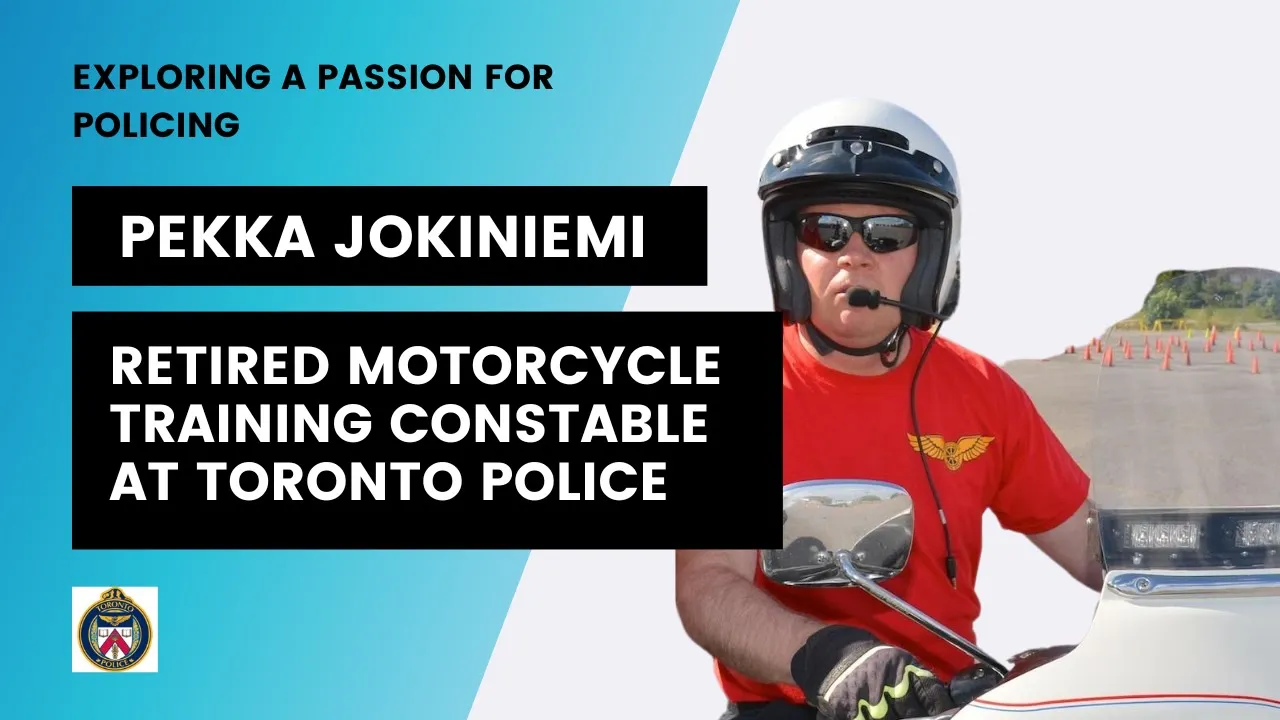
foreign [Music] welcome to the illuminae podcast the cast we're so excited to have you here and we really appreciate your time today so with that being said I'll just jump right into our first question for you today Pekka how has your post-secondary experience influenced your current position and career trajectory okay well for starters I'm retired now but I did I did spend 31 years as a police officer in the city of Toronto my post-secondary education there were elements of it that really really allowed me to excel within my career but by and large a lot
of my post-secondary education wasn't a big factor with my career and you probably don't want to hear that but and I'll explain why policing really important elements of the job are very much taught to you while you're working on the job now the one place where my post-secondary education or my post-secondary experience it helped me was when I was in grade 12 I was trying to figure out what I wanted to do with myself after school and we had a really good guidance counselor and guidance counselor brought me and sat me down and we've discussed
some of the different options I could have for work after I finished high school and we quickly realized that some of the jobs I wanted to do I wasn't going to be able to do just simply because I couldn't afford to go to university or college it was just a financial thing with with my family so we focused in on two different locations I guess one being the military and the other one being the police and I did work in both of those those sectors if I wouldn't have had that meeting and had that interaction
with the guidance counselor obviously who knows where I would have ended up going or doing but so that was a very positive thing to have happen and it was a really crucial in me getting into both of those career choices and then the other part I guess that I learned from school but not so much through the traditional school system was just the interaction I had with my peer groups as you know high school can be a tough place right and having those interaction with all the different groups at school taught me how to sort
of see different sides and have different opinions and learn what other people were thinking and not be so close-minded and just taking away what I thought was the right thing speaking to all these different groups allowed me to see things from the other side which you know moving forward getting into policing is a very very important part of the job you have to be able to take in the information that everybody's giving you sort it all out and then come up with a plan to fix the situation that you're dealing with right so I know
it's probably not the best answer but those are the two areas I would say the guidance counselor sort of sent me in the right path and then just having those interactions with my peer groups were probably the two most important parts of my post-secondary education experience yeah definitely that's a really interesting journey and thank you for bringing us along with you on that I love that maybe regardless of whether post-secondary had an effect on where you ended up it still played such a key role as you mentioned that guidance counts their meeting that set you
on the right direction and having all of those perspectives that as you said are so valuable to have in the police force as well so thank you for sharing that our next question is more about your current position so throughout your journey you've gained invaluable experience by working in various departments within the police force could you share some insights into distinct challenges and rewards associated with each role sure so I worked in a bunch of different departments or sub departments within the policing service that I was with so for example with our department when you
first start as a new officer you do what we call General Patrol duties so what most people see the uniform police cars driving around and a big thrust of that work is answering calls for service taking reports idea dealing with disputes and all the stuff you sort of see on TV right and so the challenges with that job were dealing with obviously people's problems it's an emotional roller coaster for you because you're unfortunately seeing people at their worst a lot of times or they're not so much at their worst but they're in the worst part
of their day or they're in their worst part of what's happened you know something financials happened to them they've lost their vehicle or they you know they're having Financial issues and then there's a dispute because of that and your job is to basically come in there and moderate and deal with the situation and try to help the people basically move on to the next part of their day right the challenges with that part of the job are quite difficult because it's emotionally taxing on you you're just dealing with other people's problems day in day out
over and over and over and over but the rewards of that obviously are that oftentimes it would happen to me you know weeks later and sometimes years later we would deal with so many people in a day you see these people and then you sort of tend to forget about them not because you're not important it's just you know it just becomes another face and oftentimes weeks months sometimes years later a person that I'd helped or I'd been to their house they come over and they approach you and they'd say oh you don't know if
you remember me or not but you're at our house we had this problem and we were so professional and you were so understanding and empathetic to what was happening with me and so you know it's it's a very rewarding thing to have a small little moment of somebody's time and then know that you had some sort of huge impact with them right so that that was a big part of the uniform part of the job and also getting to know all the people in your neighborhood some of the shop owners and people that you see
every day and they just learn to know that they can rely on you to be there and reform friendships and sometimes Partnerships with the different stakeholders in the communities and some of those people to this day I still know what I still interact with and so it's very rewarding that way with other parts of the job of for example working in in a detective capacity the challenges with that part of the job are that I found everything is very time consuming when you work in uniform you get a call for service you show up you
listen to you take the information in you develop a plan and typically it means you take a report or you know in some cases you arrest somebody or whatever the case may be so the turnaround time is is very quick when you get into detective type situations and big investigations they're very labor intensive and they're drawn out over time depending on the size of the investigation it could be several weeks or several months or several years so that was a big big challenge trying to get your head around the fact that you have way more
time now and you can get so much more involved and the detail is just so much more than it is when you're working uniform and then depending on what you're doing if you're in plain clothes or for example or under in an undercover capacity the hardest thing I had to get used to was you go from being very readily identifiable as a police officer to now your parents you don't look like a police officer at all and having to explain yourself all the time you know all I'm a police officer and then identify yourself all
the time which as soon as you show up typically uniform everybody knows who you are so that takes a while to get used to and then yeah the different things when you try to arrest somebody for example when you're not in a uniform obviously things change very dynamically Everything Changes because people don't understand what's happening so that can be a big big Challenge and then I would say the reward side of working on these big investigations are obviously have big results when you're again in uniform everything's almost like assembly line style work you come in
you do a piece and it's done and these big investigations even though it takes a lot of time the rewards are the result of your investigation is huge and a lot of times when you're in uniform you often wonder what happened to a case because you come in you do part of it it goes to the detectives and then you have no idea whatever happens with it when you're in a detective capacity you get to see the investigation rate from start all the way through the court process so it's very very much different right and
and so that was very rewarding because again you really really get to see all of the work that you did so yeah yeah definitely it's really interesting to see sort of both sides as you mentioned maybe like the emotional roller coaster that it might be to see the negative effects but then to have that overweight by the positive effects that you know you're having on the community and additionally the complexity of going undercover and in an investigative role there's a lot of heavy materials that you're dealing with at the end of the day it's really
important that you're motivated and passionate about what you do so that's amazing and thank you for sharing your Insight on that so for the next few questions I'm going to pass it off to Cece and you can go ahead and take the mic CeCe your opinion what is essential skills or qualities are necessary for individuals seeking to join the police force particularly those open to the possibility of working in different departments so there's a couple of key things that are very very important with policing as far as I'm concerned is English for example having a
good knowledge of not so much speaking English but being able to write English is very very important all of our reports are done in English we keep a duty book or a memo book and those are your notes and those notes are required can be required at a later date for core purposes to be used to refresh your memory in court so obviously you're writing all day you know you're writing in your book your memo book or your duty book then you're transposing that information onto reports on a computer so you're writing again just now
you're typing all your different thoughts obviously have to be transposed onto those reports that was a big big part of it and with your language skills and whatever language you speak clear communication skills are really important because you know you're dealing with people's situations and people's problems that they're having and so you have to be able to communicate or understand what they're telling you and then you basically have to be able to communicate to them what it is that you're going to do or what you're able to do so those are always the big big
things that you always have to have good knowledge of so communication skills I would say are very very important again English skills problem solving skills being able to critically think in a situation are very very important I mean the job is very much all about people so if you're dealing with people day in and day out understanding different people's personalities and how people react to different things that's obviously a big part of what you're doing and then I would probably say critical thinking I would say those are the the two or three biggest things I
can think of that are really really important because they are a part of everything that you do in a day right so being a police officer is really a people's job thank you and the next question I have for you here is your passion for motorcycles has not only driven you to excel in your field but also allowed you to train other officers in high-speed Pursuits at the driver training unit Al has finding a passion relevant to your work field contributed to your professional growth that's a good question there's an old saying that says if
you find passion in a job you'll never work another day in your life right and so being passionate about what it is that you do is very important because you're there for how many hours a day right and there's nothing worse than dragging your heels going into work every day so having a passion is very important I think it just helps you with everything when you're passionate about something you want to get very good at it and so you either practice a lot whether it's in athletics or really anything that you do and you want
to get better at it all the time so for me I was a fairly good driver and a fairly good motorcycle rider about when I started teaching it I wanted to be the best at what it was and not so much just the the driving side of it but also the teaching side of it because there's a lot of people who are very very good at driving or riding a motorcycle but they're not so good at the teaching component of it throughout the six or seven years I was at the training section every year I
always made a conscious effort to go and take a course and develop my teaching ability because teaching driving is very different than academics it's a very practical skill so just simple things like coaching positions learning where to stand when you're teaching something projecting your voice all of those things and what I quickly learned is not everybody learns the same way some people are auditory Learners some people are visual Learners some people are practical Learners so I would have never been able to learn those skills if I wouldn't have taken the time and taking those courses
to teach myself how to do that type of thing and again it all comes down to Passion if you don't have a passion for what it is that you do it's a very very long and boring you know 20 30 or 40 you'll however many years you choose to do your job right so yeah thank you for sharing how your passion drove you to become an expert in your field and how the passion was the driving force behind your learning can you discuss how the fluidity of being assigned to different departments within the police force
that's contributed to your performance and skill sets as an officer well I truly believe that any course that you take any type of Higher Learning that you set yourself on a path I think you can learn something from just about anybody if you're open-minded enough to to listen to what they have to say take in what they're telling you and and try to apply it and I think it has a huge impact as I was saying earlier working in a uniform capacity has its own set of problems and challenges and Rewards the detective or we
call it plain clothes or undercover side of the job has a very different thing you don't notice it at the time but towards the end of your career definitely the last couple of years that I was working you look back at all the different places that you worked all the little things that you picked up from all the people that had a lot to give you and it just makes your job very very easy because you don't struggle with things you feel very very comfortable you do a call for service and if you're working with
somebody who has less experience than you you watch them struggle a little bit and so having more experience and taking away different concepts that you've been taught or you've learned that just makes the job very very easy you're able to sit down be a good active listener you're able to go through all your catalog of all the information that you have in your head and that you've learned over the years and pick out the pieces that you need and apply them to the problem that's in front of you there's a younger officer you don't realize
that but towards the end of your career you realize how much you've learned and the knowledge that you've picked up and hopefully you're able to pass some of that information on to other people and continue to keep learning and even now that I'm retired I still try to keep active with different things as far as motorcycles go I've been doing some work now for the movies and some movie work doing this motorcycle riding again you I don't think anything of it and then when you get to a movie set and people see you ride and
they're like you know they're Blown Away they can't believe what they're seeing that's when you sort of sit back and you look back at all the things you've learned and go wow I guess I did learn a little bit from all the things that I've done right so yeah and just as a side note because I think it's a applicable I actually got a really really nice text last week from a young officer that I trained probably 15 years ago he came onto our course as a brand new motorcycle rider never ridden before and we
have a three week long course and he struggled and struggled and struggled and then we have a writing exam at the end of every week and he just barely got through but he met the level and the qualification that he needed to but he he really really struggled and he worked very very hard to to get through that course and I just got a really really nice text from him the other day he just successfully finished our instructors course so he's now one of our instructors so it's quite funny to watch the whole process just
come back to whatever you taught that person and it was elated that he was able to make that qualification and now he's going to be teaching the next generation of riders and so knowing that you're a small part of that is a you know it's pretty rewarding thing and obviously you've become good friends through the years but so yeah it's stuff like that is very very interesting very fun thank you and I'll pass it back to Sophie for the last question I love that story at the end where you receive the text from someone that
you trained yourself and it just shows that the things that you're putting into your work will go on to the Future and affect others even beyond your time at the police force so that's amazing and my last question for you today Becca so with your diverse experience in various roles what advice would you offer individuals who are interested in joining the police force with a specific role in mind such as aspiring to work at the detective office sure well the first thing I would say to most people who are looking to join the job is
you just have to realize as corny as it might sound it is very much a calling we don't make a lot of money I'm not going to complain about the money that I made over the years but if you're getting into the job to make money there's a lot of other places that you can make obviously more money but it's it's something that you really have to be as we talked about you have to be passionate about you have to enjoy being around people you have to enjoy talking to people you have to enjoy interacting
with people and that's on all levels that's with members of the public that's with the people that you work with our whole job to me in my opinion is people so if you're not a people person I'm not saying you can't do the job but I think you're going to find it harder than other people who are just a little more outgoing so yeah that would be a big big part of it you know make sure you're doing it for the right reasons because again it can be a very physically and mentally demanding job for
people my big concern always was I didn't want to leave the job better I always wanted to have a really good positive attitude when it came to people and the job because unfortunately like I said being in put into some of the situations that you're you're dealing with can have a very negative impact on you and so I just always wanted to have a very positive attitude with the people in the job so again I would say let's make sure you're doing it for the right reasons you're not doing it just because you want a
good steady job or your steady income do it because you really really want to help people and just enjoy the people that you spend time with and interact with and those are really probably the big key points I would say believe it or not it's a very fun it's a very rewarding job in a lot of ways and that's a very unique job there's not many other jobs that I think that you can go in and have so many different experiences and meet so many different people from so many different walks of life so yeah
that would be probably my key things I would say and just enjoy it because again you know I did 31 years and I it feels like not like yesterday but it certainly didn't feel like 31 years it felt probably like 10 years and you know all of a sudden you're retiring and you're moving on to the next chapter of your life so and that probably applies to any type of work every once in a while you just need to take a quick pause and take a look around and really take a good look at what
it is that you're doing and realize the impact that you're having with people right so yeah yeah definitely well thank you so much for sharing that that's definitely a very great wisdom that hopefully our listeners can learn from it is such a unique job which makes your insights so much more effective so thank you for sharing all that information about yourself and your career Journey that concludes all of our questions that we have for you today Pekka so we just want to thank you so much for your time and we really appreciate having you as
a guest on our podcast thank you [Music]