hi i want to talk to you today about socrates view of virtue and specifically his view on what is known as the unity of the virtues socrates as i mentioned last time does not articulate or defend any particular view but if you look at his criticisms of other people's views and if you realize that some of the views that appear at the end of dialogues are actually those held according to aristotle by the historical socrates you start realizing that what's going on here is not just plato depicting socrates and championing his views but actually subtly
undermining them at the end because it's really a socratic view that socrates begins raising questions about that occurs in the loki's it occurs in the comedies and the republic and a variety of other works so i want to focus on what seems to be the underlying socratic view it's something we can guess from the various things said by participants in the dialogues but it's also something and by the way not a variety of dialogues not just the lockheeds but the harmonies and a variety of others especially the protagoras which i'll talk about at the end
here but in addition to that we can get the testimony of aristotle who says this is socrates view and so we have at least some degree of confidence about what the historical figure socrates in fact thought so socrates i feel fairly confident in saying championed a doctrine of the unity of the virtues well what exactly does that mean it's not an obvious question to answer it's not entirely clear partly because he never does really articulate it or defend it so we're going to look at a variety of different interpretations of this i think there is
one that is pretty clearly what he had in mind but a lot of what he says is compatible with some of the other views too so let's take a look at how this develops we talked last time about socrates general view of ethics and his criticism of various definitions of courage of standing and fighting and not running away of courage being a wise endurance of the soul and finally near the end knowing what inspires fear or confidence this is one nissius puts forward and it seems actually in the end to be socrates's own historical position
well we examined that and we started thinking about false negatives and false positives are there cases of courage that don't involve knowledge of what inspires fear or confidence are there cases of knowing what inspires fear or confidence that are not cases of courage and we said well here's a starting point it looks like if you act without thinking doing something impulsively instinctively quickly without really thinking about it yet that's not based on knowledge so tossing yourself on that grenade thrown into the foxhole heroic action certainly a courageous action but it's hard to say that it
involves a knowledge of any kind it doesn't seem to even involve a belief or thought of any kind conversely it looks as if there can be false positives cases where i know what inspires fear or confidence i know what to fear and not to fear but i run away i end up acting in a cowardly fashion i've got the internal state of mind right but i don't have the external right and so it would appear that we have a problem but that is not how socrates himself objects to this in the dialogue socrates says well
look here's the problem with that definition if this is right then courage isn't just a part of virtue as we agreed it's all of virtue remember at the beginning of the lockhees the question is what is virtue how do we raise our children and educate them to make them good people and socrates says you're asking really what it is to be virtuous to know how to get there we have to know what it is what our target is and let's take just a little part of that courage it's only a part of virtue right yeah
yeah yeah but now it turns out wait a minute it's going to be all a virgin now that's a surprising thing to say why does he think so well here's the reason fear and confidence are directed at the future so knowing the grounds of fear and confidence depends on knowing about things that are going to be good and evil good and bad in the future but wait a minute knowing about what's good and evil good and bad in the future or what would be good or bad in other words well that's just knowing good and
evil that's just knowing what would be good what would be bad that's just knowing the difference between good and bad in general so in other words courage he says is just knowing good and evil if evil for you has some special religious connotation that just means bad here so translate that as knowing good and bad right being able to distinguish what would be a good outcome for a not good outcome courage is just knowing that knowing that specifically in the future about the future but wait a minute i won't know it in the future unless
i know it in the present or know it in the past it's just a question of judging what would be good or bad if it's actual or if it will be actual or if it was actual so it's not a question of future that doesn't matter what matters is just being able to distinguish good from bad good from evil but that means that if courage is knowledge of the grounds of fear and confidence it's knowing what to fear and what not to fear in other words that's a question of knowing what would be good or
bad but that's just a matter of knowing well what's better than what what to do and what not to do what's right and what's wrong what's good and bad that's virtue as a whole if i know what to do and what not to do presumably i'm virtuous i'm virtuous in every respect i'm generous i'm sincere i'm kind i'm i'm whatever you want to say because i know what to do and what not to do i know what's better than what i know how to make judgments and so i've got every virtue surely not just one
virtue and socrates says about wait i i thought we agreed that courage is just part of virtue it's not all a virtue this definition seems to make it all of virtue and so nissius and lockhees and the rest say well ah i guess we don't know what virtue is and socrates says that well it's not just a matter of courage here it's really an argument that socrates can apply to every single virtue and in some of the other dialogues does apply to other virtues every virtue is going to involve knowing what's good and bad what
would be good and bad what was good and bad and so on being able to distinguish good from evil right from wrong what's better than what and so on let's call that kind of knowledge of right and wrong good and bad what's better than what let's just call that wisdom so it turns out that courage according to this view would just become wisdom but so would every virtue so virtue in general would simply be wisdom and i think that's what socrates means by the unity of the virtues in the end i think socrates thinks that's
right that every virtue ends up being just wisdom courage is wisdom justice is wisdom self-control is wisdom and so on so that's the way this doctrine really i think is intended by socrates and intended well according to aristotle by the historical socrates as well as the character in certain dialogues courage piety wisdom self-control justice all the other virtues are the same they are really in the end simply wisdom simply a matter of knowing what to do and what not to do being able to distinguish good from bad right from wrong being able to say what's
better than what that's in the end what virtue comes to and that's all there is to say about it well if this is right then virtue simply is a knowledge of good and evil it's just the knowledge of right and wrong of good and bad of what to do what not to do of what's better than what well socrates raises in the protagoras this sort of issue explicitly in the lockheeds in the carmodies and some other dialogues it's really there below the surface you have to sort of guess at what the underlying view really is
but in the protagoras near the end of the dialogue it's put explicitly socrates raises this question to protagoras wisdom temperance courage justice and holiness or piety or righteousness the term is translated in various ways are five terms do they stand for a single reality or has he termed a particular entity underlying it a reality with its own separate function each different from the other so in the end are all these different terms for the same thing or are they terms for different things that's a question of whether there are a bunch of different virtues or
whether there is one virtue that we have a lot of different names for well that's the doctrine of the unity of virtues there is one fundamental virtue namely wisdom the knowledge of good and evil of what's better than what and that's what courage is it's what piety is generosity is temperance prudence justice they all in the end are simply a knowledge of good and evil well there are obviously other views so for example in the protagoras he seems to contrast it with this common sense view the virtues are distinct parts of a whole so think
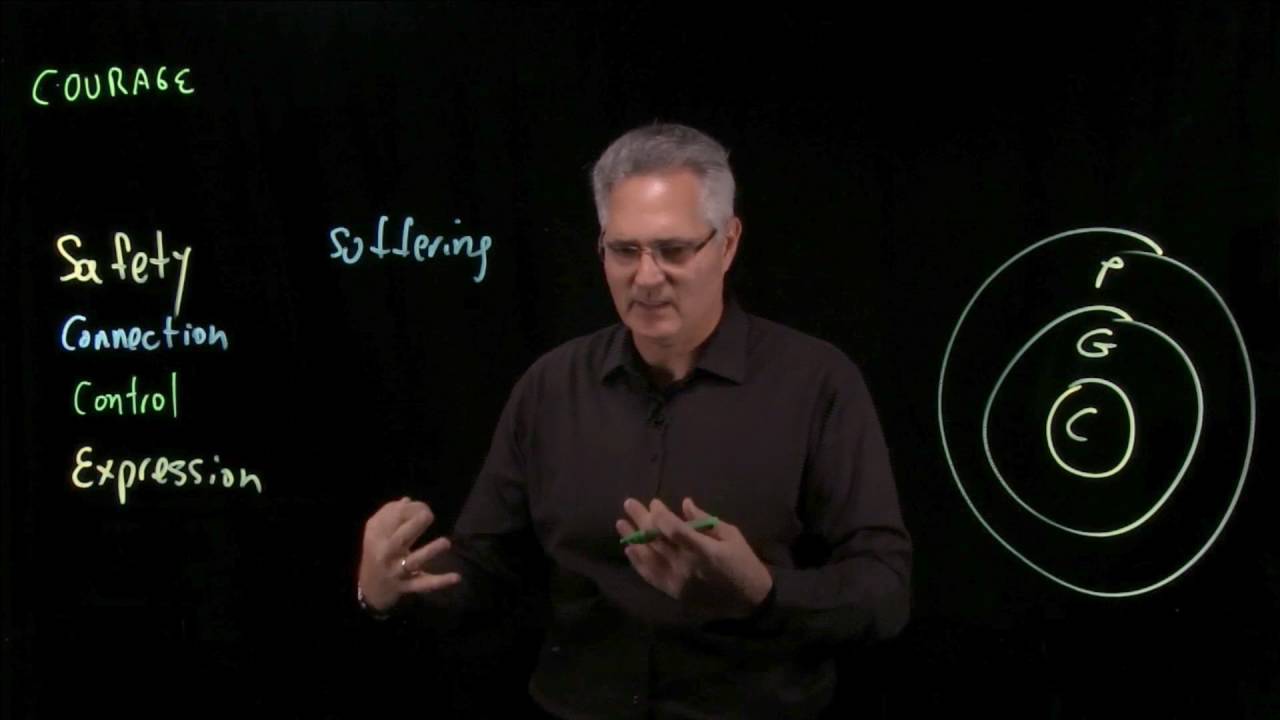
of this circle now that i reflect on it looks a bit like a basketball but anyway think of that basketball as virtues and then all of those segments as well parts of that and those might be distinct parts so maybe one of those parts is courage another is self-control another is justice another is generosity kindness and so on they're all different things they form parts of a whole which is virtue at large that might be one way to think of it and i think that is people's common sense view that's the view that protagoras defends
but socrates rejects that as we'll see he says no that can't be right in the end there is one thing that all of these different terms name now there are other options actually some scholars say those are really the only two choices either they all name the same thing or they name different things but we might think it's not so simple for example there's a way of interpreting what protagoras says by the end of that dialogue that suggests he doesn't just think they're separate compartments of virtue rather like those segments in that circle instead he
sees there as being a sort of core of virtue so you might think look there is a sense in which the virtues are unified but not in that they all end up being the same identical it's rather that they overlap so think of courage justice piety generosity temperance or self-control prudence and so on as being distinct but nevertheless overlapping maybe there is something that is at the core of all of them and maybe that is wisdom maybe you can't really be courageous without being wise because to really be courageous you have to be aware of
what you're doing and so you do have to know what to fear and what not to fear what's better than what the same thing is true of justice you have to know what a just response would be to let's say a crime or to an inequality or something else that calls up issues of various kinds of justice you have to know what to do and what not to do you have to know what arrangement would be better than what the same thing is true of generosity you have to know what kind of help would be
better than what other kind of help self-control what kind of pursuit would be better than some other kind of pursuit and so on well good so we could say yes that knowledge is at the core of all of these in the sense that they all require that wisdom is a necessary condition for every single virtue but that doesn't mean it just is that virtue you could say courage is more than just knowing you got to do it and the same thing with justice the same thing with piety generosity and so on it's not just knowing
hey i should give that baker some help it's like doing it right and so that would be a way of saying look they're distinct but they overlap they're unified in the following way they do overlap and at that core is wisdom so that's a position that i think protagoras hints at near the end of that dialogue and it seems that socrates wants to reject that too he wants to say wisdom isn't just a necessary condition for each virtue it is each virtue it is a sufficient condition if you want to think of it that way
not just a necessary condition for each virtue protagoras does give a kind of argument and i think it's worth looking at that argument for his position that they are not the same he says look here's what it comes down to socrates you can find many people who are unjust unholy intemperate ignorant but outstandingly courageous you could be very brave but unjust or unholy or lack generosity lack self-control and so on and it doesn't seem that hard to imagine people who have one of these virtues without another maybe they're courageous without well without being generous maybe
they're generous without being courageous and so on it looks like these are distinct things and intuitively indeed if you talk to people and say can you have one virtue without another could you be generous but not very honest for example intuitively so yeah i can imagine a generous liar i can imagine a truthful stingy person i i i don't see how these are the same thing it looks like they can come apart and in fact they come apart all the time there are people i admire for certain characteristics but i don't like other aspects of
their personality at all i think yeah they have this virtue they lack that one and so all of those ways of looking at things say these are different things you can have one virtue without having all of them you can have and in fact excel at some virtues without excelling at others and that's a plausible view well socrates responds to that with an argument and the argument is a bit subtle so i want to go through it in a little bit detail a little here is his idea the root of socrates response which goes on
for several pages and can be a little hard to follow but here's the key point nobody willingly meets or accepts what he thinks evil so socrates says look i think everybody does what they think of as good nobody does what they think of as bad nobody accepts it nobody meets it nobody does it they do things because they think that's the right thing to do what does it mean well if anybody does what is evil what is cowardly or intemperate or unjust and so on it's because they don't think it's the wrong thing to do
so if you do the wrong thing it's surely not because you think it's the wrong thing to do you think you're doing the right thing we all think we're living the right way we all think we're doing the right thing but look um some people aren't doing the right thing so they're doing the wrong thing but they don't think it's wrong what does that tell us they don't know what's right and what's wrong they lack knowledge of good and evil they ought to know that this is better than that but actually they don't know it
they choose the thing that is less good well nobody's willingly going to choose the thing that is less good and so if they choose the thing that's less good that means they don't know what's better than what they don't know that it's the less good thing they think it's better they're wrong they lack knowledge so what follows from that if you have wisdom you'll do the right thing if you do the wrong thing it's because you lack that knowledge it's because you lack wisdom so if you have wisdom conversely you'll do the right thing if
you have wisdom in other words you're going to be courageous you're going to be generous you're going to have self-control you are going to be just you will have each and every one of the virtues so it's not enough to say hey uh wisdom is the core of all these virtues they're all distinct but they all overlap on wisdom socrates says no if you've got wisdom then you will actually have courage you will have generosity you will have kindness and justice and self-control and why because you'll never knowingly choose the wrong thing if you choose
the wrong thing it's because you thought it was the right thing lack knowledge lack wisdom and so all failures to be virtuous are matters of ignorance ignorance of right and wrong of what's better than what and so it involves a lack of wisdom so if you have wisdom you'll have every other virtue well that's a surprising conclusion and so at first glance you might think that's that's rather odd now some scholars think here's the right picture unity of the virtues just means well yes there are distinct virtues we talk about but wisdom plays a special
role they're actually all connected so that if you have one then you have another why because if you have that one you have wisdom and if you have that wisdom you have others and so yes they're distinct things we don't in the end say piety and self-control and generosity and kindness and courage are all exactly the same thing but they're all so intimately related to wisdom that you can't have them without being wise and if you are wise you will have them so that's a way of trying to have your cake and eat it too
say these are different but they're also intimately connected that they all go together you might think well doesn't that make them the same typically the picture is no no no it's more like color concepts right i mean to understand the difference between red and black and white and blue and green and yellow you've got to kind of have the whole set of colors or at least all of whatever set your language gives you access to you kind of learn those together and so it's the same with virtue we learn to distinguish kindness from justice from
piety from generosity from courage and so on in something like the way we distinguish colors but really in the end it's we learn the whole set at once so maybe virtue is like that there's another way in which we might interpret it we could say here's another picture actually socrates is right that courage and righteousness and justice and self-control and so on are all the same thing um ultimately they are all wisdom but nevertheless they're distinct in the following way it's not just that they're the distinct and they overlap they really do just come down
to wisdom but wisdom in different kinds of contexts so another way of taking and i think making socrates's view sound more plausible is to say it's a matter of knowing good and evil right from wrong what's better than what but then applying that knowledge in various contexts now we know from contemporary psychology that people are actually kind of bad at transferring a skill across different contexts you may be very good at something in a certain setting but put you in a different setting and even though it's the same skill the same cognitive ability that would
really be operative in that context you don't see that and you don't do it and maybe virtue is like that so maybe courage is a matter of wisdom when facing danger facing fear maybe justice is courage when you're sorry maybe justice is wisdom when you're facing a situation of allocation or reciprocity maybe piety is a question of wisdom when you're thinking about your relationship to the larger universe and to the supernatural maybe self-control is a matter of wisdom as applied to your own drives and emotions and desires and maybe we could do that with every
single virtue so you'd say in the end yes courage is wisdom justice is wisdom piety is wisdom self-control is wisdom but on the other hand does that mean courage and justice are the same thing maybe not maybe courage is wisdom in the context of fear and threat maybe justice is a matter of wisdom in a different kind of context one of allocational reciprocity maybe self-control is wisdom but wisdom in the context of facing down my own desires my own emotions and that would be a way of saying look they are in the end the same
thing they're all wisdom so it is right to say courage is wisdom justice is wisdom and so on but it would be misleading to say courage is therefore self-control no it isn't it's a matter of applying wisdom in that setting and could someone apply it in this setting and not that setting well you could even grant protagoras that yeah maybe because we have the same abilities and actually we're rather bad at applying them in different contexts so maybe it is in the end wisdom but sometimes wisdom gets operated sometimes we apply it and we use
it and sometimes we don't it's still there right the person who faces that situation you might think there's well they still have the virtue wisdom but on the other hand they're not somehow applying it correctly in this context maybe we could say that maybe we don't want to but however we approach that question we're going to think maybe there is one virtue that's just applied in different kinds of settings and those settings are what differentiates the various virtues now let's return to socrates definition of virtue knowing good and evil what can we say about that
now not just knowing the grounds of fear and confidence but suppose we say every virtue courage self-control justice no matter what it's a matter of knowing good and evil good and bad right and wrong what's better than what are there false positives cases of knowing that that aren't cases of virtue are there cases of virtue that don't involve knowing that well those are good questions and hard questions so we can go back to the same strategy we used in thinking about a similar definition for courage nissius's definition of courage is a matter of knowing the
grounds of fear and confidence we could say well look um maybe sometimes i act and act virtuously without knowing but also can't i know what's better than what without doing it now socrates says no socrates says if i choose the wrong thing it's because i don't know it's the right thing i'm always trying to do the right thing i'm always trying to choose what's better but hey sometimes i'm wrong about it which shows i don't have wisdom i don't have the knowledge of what's better than what and so i never know what's better than what
and don't do it the assumption is i never meet or accept or do the worse in preference to the better but now you might deny that you might say well that's the underlying problem socrates that's not true sometimes i do know that this is better and i choose the worse anyway that is a problem known as the problem of weakness of will and we're going to talk about that separately but it looks as if at first glance yes i can actually know right from wrong i can know what's better than what and i can choose
the worse in preference the better and if that's possible which socrates denies but if it is possible we've got a problem that problem as i mentioned is the general problem of weakness of will can i know and not do can i know what i ought to do but not do it can i know what's better and choose the worse anyway well socrates says no socrates has to defend this definition if he's to think that the unity of virtues is correct and that all virtues amount to wisdom so he has to say you can't be virtuous
without knowing good from evil without knowing what's better than what and also you can't know good from evil you can't know what's better than what without being virtuous that means you can't know without doing knowing entails doing for him well that's why he doesn't in the end worry about that distinction between the internal and the external he says no look actually we've got one of them taking care of the other you get the internal right the knowledge part right you will get the behavior right you'll have the external part so he's denying that there can
be such a thing as weakness of will the greek for that is accrazia it's a matter of giving into temptation knowing the better and doing the worse sometimes it's been defined knowing what you ought to do and not doing it can you be in that position socrates says no and he has to say no to defend the doctrine of the unity of virtues the most famous statement maybe of weakness of will comes from paul in romans i don't understand my own actions says paul i don't do what i want i do the very thing i
hate i can will what's right but i can't do it for i don't do the good i want but the evil i don't want is what i do paul is saying look i know what's better than what i know what i ought to be doing i know the right thing to do and yet i can't bring myself to do it i end up being a stranger to myself because i don't understand it why do i do the wrong thing i know what's right and i don't do it that's the problem of weakness of will well
socrates says it's impossible can't be done now it sure feels like it can be done so why does he think that he says well weakness of will would mean knowing and not doing knowing the better choosing the worse he says nobody does that okay and we certainly don't want to say the person does the worse who stands at his post and then runs away as soon as danger appears yeah that person is not courageous so we don't want to ascribe virtue to them without the behavior socrates says if you don't behave the right way it's
because you don't know to behave the right way you're choosing the wrong thing because you don't know the right thing well that's a little counterintuitive but he gives us a defense of it he says look vice is ignorance it's always making a mistake about what's better than what why do i think so well the general principle is no one would in general choose the lesser good if i choose it it's because i think it's the right thing to do i think it's better and if i choose the worst thing therefore that's that's what's going on
i lack the knowledge that it's worse so i can't know that it's worse and yet choose it well at first glance you'd think that's very strange and paul seems to be saying but i do that all the time i give into temptation even though i know i shouldn't i mean surely that's a basic fact of human life socrates's response i think is something like this take the typical cases of that i'm on a diet let's say i'm trying to eat in a healthy fashion and then i see a delicious chocolate brownie that somebody offers me
i think i love brownies and i know that's really good i can smell it it's fantastic and i eat it anyway and i think maybe i even say as i'm taking it up to eat it oh i shouldn't do this and i eat it anyway well what's going on there socrates would say look there's a short-term pleasure right the wonderful burst of that chocolate flavor in your mouth but there's also the long-term health effect and so i'm trying to eat a healthy diet but there's that and that's a long-term consideration it's not as if i
take a bite of the brownie and i immediately get sick and there's a short-term bad thing that happens then it would be easy to avoid no there's a very long-term bad thing that might happen if i do enough of that instead there's a short-term pleasure a long-term cost to doing this kind of thing in general and socrates says look all i have to say is we're bad at comparing those short-term and long-term goods and evils faced with something in the short term i have no problem if i know i'm allergic to that food that even
though it tastes good to me that i'm going to get really sick of course i avoid it i said that's not hard if it's a question of long-term things well i can think about that more rationally and i don't have desire sort of impelling me to forget what i thought i knew but in the case of these long-term versus short-term good type of issues when they come into conflict then i'm bad at making these judgments so i should not be confident that i know the better and do do the worse actually i'm not very good
at that judgment especially when faced with temptation right there maybe in the abstract as long as there are no brownies around i say i should avoid food like that but then when you give me one all that kind of goes out the window i forget about all that and i suddenly say oh but that looks great and so what's going on there is i don't have that knowledge i choose the worst thing because at that moment at least i don't know that it's worse i'm saying the short-term pleasure is worth any long-term cost and i
might be wrong about that but in any case that's the decision i'm making we're not very good at judging the short term versus the long term so it's no surprise that we're often often giving in to temptation but it's because we're making the wrong judgment it's because we lack wisdom about comparing short-term and long-term goods psychologists have been able to predict a lot of things in life by giving children a marshmallow test they give them one marshmallow and sit it in front of them and say i'm going to leave the room i'm going to be
back in 10 minutes if that marshmallow is still there i'll give you another one but if you've eaten it that's it well the child thinks okay if i eat this and take the short-term pleasure i get one marshmallow if i wait if i resist that and resist the temptation of eating the marshmallow for 10 minutes then i get a second marshmallow and i double my pleasure double the fun and well then the psychologist observes and says can the child wait 10 minutes to get a greater benefit it's a short-term versus long-term consideration and the fact
is well a lot of kids can't do it they'll wait for a while and look and try not to look at the marshmallow in the end they eat it okay some children are able to resist and those end up going on to actually persist exhibit wise endurance in their lives and become more successful than the children who don't it's tied into all sorts of later outcomes in life well socrates is saying yeah look at that test that's a crucial test of wisdom as well as of persistence or endurance or courage or whatever you want to
say about it it's really a matter of knowing whether it's worth resisting that short-term pleasure for the sake of a long-term benefit and the child that can resist is able to make a wise judgment the two is better than one in this case and is able to resist the child who gives in at that moment at least is forgetting that two is better than one and so is no longer able to resist and so he's saying that child lacks wisdom it's not that they lack something else they know and they give into temptation anyway no
at that moment at least they don't know well as we'll see plato disagrees with socrates about this he doesn't think that's the right account of this at all and gives his own account in the republic but socrates at least thinks all things that look like violations that look like counter examples to this definition of virtue as knowing right from wrong knowing good and evil knowing what to do and what not to do or what's better than what all of those based on weakness of will are based on a mistake it's a question of long-term short-term
goods and we make lots of mistakes in evaluating those so how can we do better how can we do better in defining courage or defining virtue if we don't like what socrates ends up saying here maybe we do and we embrace the unity of virtues we think it's all wisdom in the end but what if we don't well we could say go back to the example of courage standing fighting not running away those are external behavioral criteria a wise endurance of the soul and knowing the grounds of fear and confidence those are purely internal the
problem that weakness of will brings out is that we need both the internal the knowledge let's say but also the external we need the behavior as well we need both you have to know that this is the right thing and you have to do the right thing so we need both external and internal so if we ask how would you define courage or how would you define self-control or justice or piety or a variety of other things there better be two parts an external part and an internal part you better do the right thing but
for the right reason and that's the key so when i've asked students this most recently the class said here's the definition acting that's the external part despite fear that's the internal part i feel fear internally and i do something despite that fear i overcome that fear in my action that's the external part well does that have false negatives or false positives are there cases of courage that don't involve acting despite fear let's say where there's no fear or there's no action are there cases of acting despite fear that are not cases of courage well i
leave that as an exercise for the viewer but here's the key point i want to make it looks like if we're not to go socrates's unity of the virtue's root in the end every virtue is just wisdom then we're going to say there had better be an external and an internal component there has to be the action part and the right reason part acting to overcome fear for example or acting despite a desire or a drive or an emotion in me that is pushing me to do the opposite it's going to have to have external
internal components both of those are going to be crucial to our understanding of what virtue is if we reject socrates idea of unity is okay you