alrighty friends welcome to my office today we're working on about a 70 grade which is comparable steepness to a double black diamond ski run heading down the mountain today we started on top of the mountain and are working down to the south fork of the yuba river it's uh about 2000 feet of vertical descent in half a mile it's a real peach to work on i just had to traverse down it's crazy cliffy rocky stuff and we're out here marking some trees right now we're about halfway down the mountain uh the top part i was
almost dying so uh couldn't really record much but hoping to share a little bit with you guys about timber cruising out here with the american conservation experience working with the united states forest service in tahoe national forest so let's learn a little bit about what the heck is timber cruising i didn't even know before i got into this job it was first week that i learned what we're actually doing out here so um it's a good time let's learn a little bit [Music] do [Music] [Applause] [Music] alrighty friends let's talk a bit about what i
do for my day job when i try to describe what i do in words many folks don't really understand what i do and how hard this job really can be unless they've done this job before hopefully through this video you'll understand a little bit more about the sustainable harvesting of trees and the hard work it takes to start the process of going from tree to two by four let's jump right into it we begin the process by selecting a proposed timber sale unit from a project map of the area after we have unit in mind
we set out into the field with a gps flagging tape and orange paint using these tools we precisely post the boundary of the timber sail unit that will eventually be sold to logging companies sometimes the virtual boundary on the map and the physical boundary in the field don't exactly line up so it's very very important to have a precise visual boundary before you take the next steps to physically delineate the boundary in the field we hike the whole perimeter of the unit as we tie flagging place points on a gps and paint a few trees
with orange dots after the boundary is set the next step is to select trees to be harvested this is where the real work begins armed with a paint gun and numerous cans of blue paint sometimes up to 25 pounds the crew sets out to inspect every tree within the unit and select trees to be harvested to mark we spray blue paint to make an even band around the tree and two marks at the base of the stump to prevent timber theft to the untrained eye it really might seem like we just select whatever tree we
feel like but we actually follow a very detailed prescription set by our district's silviculturist to put it generally we're only allowed to select trees of a certain size age health and species in the area of myself and the crew work there are typically five different conifer species that we mark sugar pines ponderosa pines douglas firs white furs and incense cedars as we go through the forest and select trees we make efforts to thin out species that are undesirable either due to them being shade tolerant and crowding non-shade tolerant species or being susceptible to diseases that
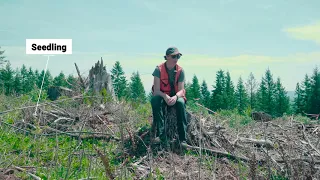
could spread throughout the stand we also try to leave clumps of similar robust trees to control erosion provide habitat for native wildlife encourage a more fire resilient ecosystem and leave a seed source for the next generation of trees as we work our way through the stand selecting trees to be harvested we yell out what species we mark to someone on the crew who is designated as the tallyer for the day this person has a very important job keeping track of every tree that is in the unit so that information can be included when the sale
occurs days we collectively mark over 1 000 trees so we really don't want to lose track of that progress and have to hike through and recount all of them italia also has another important role in the operation there are different frequencies for each species of tree that we mark when we finally reach that frequency say for example we mark our 700th dug fur the tallyer shouts out crews meaning it's time to cruise the tree it's funny in everyday life hearing the word cruise brings images of enjoying your time on a big ship sipping on a
margarita or joyriding around without a specific destination in mind but in forestry it has a completely different meaning when we cruise a tree it means we measure the diameter height and analyze the tree with scrutiny noting any defects diagnosing diseases and assessing the percent volume of merchantable wood in a tree considering all these issues this means scouring the tree with your eyes looking for fungal infections rot and other indicators of poor health and then coming to a decision on how that affects the wood within the tree our district's silviculturist then uses all the data we
collect to produce a statistical analysis of the health and value of the timber in the stand to include in timber cell documents so how exactly does chopping down a bunch of trees help nature i did say sustainable timber harvesting at the beginning of the video right well let's talk about that a little bit currently many of california's forests are severely overcrowded due to fire suppression strategies being used in our national forests for close to 100 years this is part of the reason why there have been so many large high-intensity wildfires in california in the last
few years now we have an understanding that forest ecosystems here actually need some low intensity fire as part of their natural cycle and management strategies are changing as a result before we adopted our fire suppression tactics fires used to burn in small pockets primarily on the forest floor calling weak trees controlling understory vegetation keeping fungal infections at a minimum and cycling nutrients throughout the ecosystem leaving the strongest fire resilient trees to pass on their seeds to the next generation but that's not how it is now this is where us timber markers step in instead of
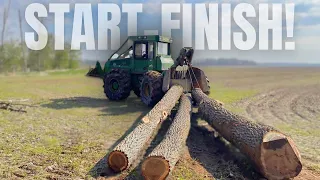
letting these high intensity burns continue we try our best to simulate what fire used to do for this stand as we select trees for harvest by clearing out unhealthy trees that connect the understory into the canopy of the older more fire resilient trees and then burning the understory after logging we give the established trees a fighting chance next time that a fire rolls through as we say in timber the choice is either you log it or lose it so all in all this job sounds pretty nice right walking through the woods for your whole day
listening to the wind whisper through the trees as bird songs surround you well i got some bad news it's definitely not all peaches and rainbows aside from the usual outdoor challenges such as dehydration and being far from help there are some very serious hazards that we always need to stay vigilant about as i said earlier as we mark through the unit we have to inspect every merchantable tree and that means every tree regardless of if it's on a cliff next to a hornet's nest or surrounded by poison oak not to toot my own horn here
but the timber crew goes into places that very few would ever even consider venturing most the time laughter and sarcasm are all that get us through to give a real example in the 200 acre unit we've been working in for a little over a month we start at the top of a mountain and descend to a river 2 000 feet below us in just half a mile of distance while working in this area we've had to cope with 90 slopes falling rocks cliffs hornets wasps poison oak rattlesnakes and even the paint we spray onto the
trees is toxic to humans try to dodge a spray on a 90 cliff but it's all just another day in the office for us in the timber group and we do it 40 hours a week just like any other job as for how i feel about it now we're traversing down a very very steep cliff with thick vegetation just another day in timber what a lovely lovely day now i just want to say thank you so much for coming to work with me today i hope you found this video to be interesting if you did
please leave me a like and subscribe down below so you can be here for more outdoor content just like this i'll see you on the next one stay groovy [Music] [Music] doug beautiful