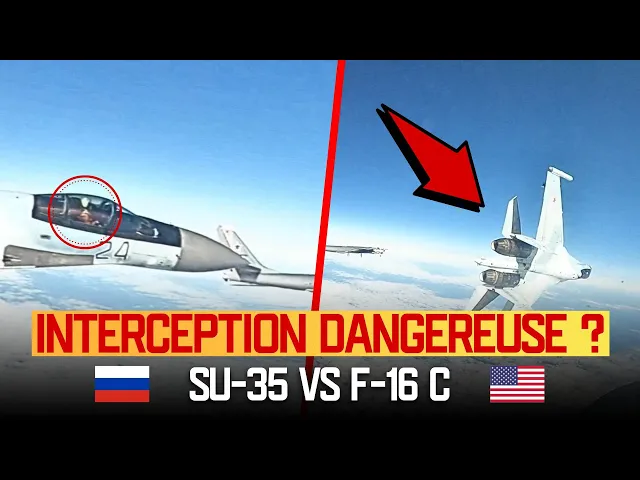
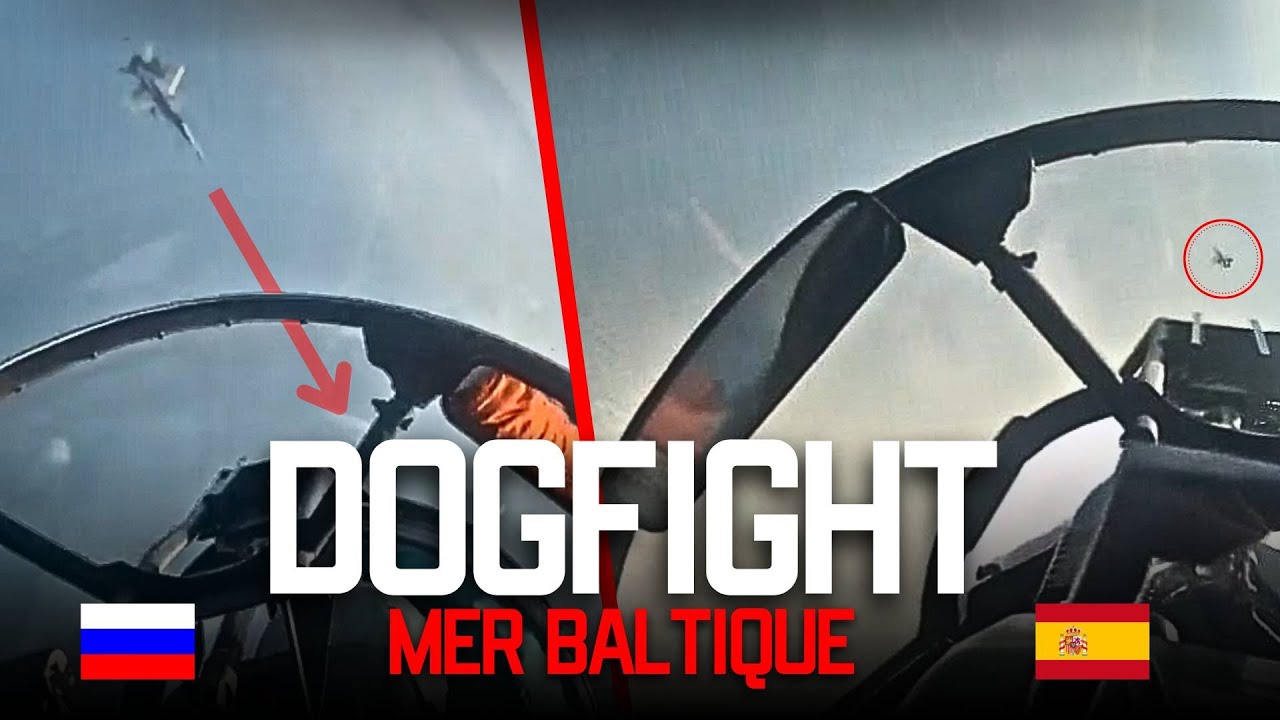
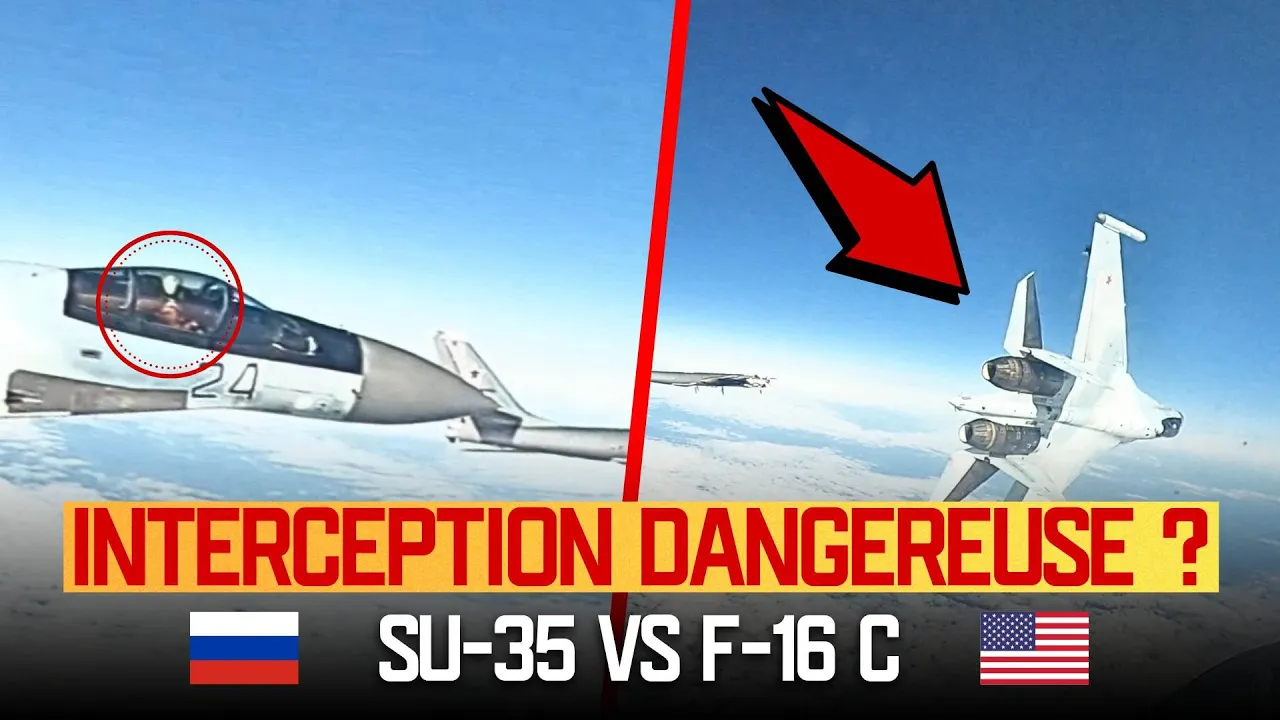
hello everyone There's really a lot going on at the moment and today take out the mittens take out the hats we're going to the Alaskan side between Siberia and Alaska to be precise you have the Bering Strait and the Bering Sea and as you know look at this map there are only a few kilometers between the United States and Russia and these images come from an interception which took place on September 23, they were released at the end of September communicated by the Americans with necessarily an objective behind us to show this interception from a
sucoil 35 on an F6C which is anything but professional and safe standard so be careful you have to be aware of what you don't know and sometimes information can hinder everything our judgment look for example with the case of double agents rather fashionable at the moment on the Lebanon side so we are going to concentrate on this short period where you see this Sucoil 35S of the 22nd Air Guard Regiment returned with a lot of relative speed this f18c formerly assigned to an aggressor squadron renamed this year Fighter Interceptor Squadron we will see that there
are some lessons to be learned from it and that this image teaches us a little more than what we might think come on jingle let's already lay the foundations we are in the Great North we have on one side of tu95 MS des berres the bears which arrive from the side of the American adise so the laad of Norade it is an area where you can be detected and you can be intercepted but you are in your right right it's exactly like on the taiwan side there is a big difference between the 12 nautical which
therefore means that it is your air space less than 12 nautical from the coast and beyond the 12 nautical for the defense of the country there is this detection and interception zone so you are likely to be intercepted but you are within your rights in relation to international law the Russians are aware of this the Chinese are also aware of this a few weeks ago with H6 on joint patrol with the Russians they came to this area and on the western side it's the same I spent a lot of time in areas more than 12
nautical miles from the coast we are going there it allows us to do intelligence photos also show his presence and tire the defender a little while testing his interception abilities so that's always done now generally what happens you have your detu 95 you have the sucoil 35 escort notice that no have no can eh these are planes which have a very large oil carrying capacity and they will be intercepted by df16 df22 of the F35 generally accompanied by refueling planes why not with a radar plane with an E3 in the area to guide the interception
and all these little people will come and gather, take photos, show that we are present, we take some photos, we see if there are any modifications to the aircraft, we possibly look at the armament, we make sure that it turn around so that it does not penetrate our famous 12 nautical and everyone leaves without bloodshed if you want except that there well our F16 is doing its classic procedure while it is in the process of getting closer while being quite far from the tu95 THIS F16 has a 360 camera I draw your attention to the
fact that these cameras tend to make things appear further away than they actually are if you have already used you know what I speaks and there arriving from the left you have the SUCO 35 the escort of the tu95 which arrives with a lot of relative speed comes to stand on the edge cuts the road to the F16 luckily it does not pass into the turbulence of Sillage and after that it is that which is very interesting going from the left to the right which is safer we are going to come back to the technique
where he overtakes and then reverses his turn come and stand in front of the F16 and the camera stops in certain sources the pilot of the F16 makes a little North American swear word in other sources we don't hear the sound so just before analyzing this interception frame by frame we are going to put a little bit of context which are our protagonists the f16c it's the old versions it's the block 30 it's the 18th Fighter interpreter Squadron which uses this it's formerly the 18th agressor Squadron it's them who are the former pilots who will
train the rest of the American army facing simulated Russian type threats so they are used to flying with camouflaged planes a bit like Russian planes and to recreate Russian combat tactics for that we had interesting photos with American planes painted like Russians intercepting Russian planes so there they changed their name the squadron repainted the planes why because normally it is rather the F22s based in Mondorf who make these interceptions the F22s are in such demand that some have left in the Middle East we talked about it a few weeks ago it was not by chance
and so now it's the old F16s which take care of making the interceptions on the Bering Sea side it takes off from Air Force Base which is a little bit inland in Alaska you are 40 km from fairbans 26 miles to be precise and when this land was written in 1943 it was simply called the 20 mile 26 satellite field it was renamed to 1948 Carl Ben Ellinson, named after a great pilot who died in 1929, a great pilot from the great American North, this pilot had been trained during the First World War and he
was the first pilot to reach Europe via the 'Arctic in 20h it's in 1928 and hold on tight the same year he also flew in the Antarctic so the first to have flown both all the way north and all the way south he died in a rescue operation in landing on a sort of iceberg to try to help evacuate the crew of a boat that was stuck in the ice that was the general knowledge minute but this track is a 1432 and hold on tight it is 4428 m long it is an absolutely gigantic runway
so we have the F16 of the F35 and also the broken 135 with the Air National Guard and hold on tight on this base the Americans are going to install a mini nuclear reactor which should be operational in 2027 because with the arrival of the F35 they have increased the base and the personnel and the number of families on site so yes there is an American desire to increase their presence to increase their volume to protect the Arctic to protect Alaska opposite Russia on its side the Russians well they came to us from the side
of the DIV stock to be precise from huglovoy then huglovoy it was built 1945 you have a runway 0321 much shorter 2500 m you are close to the sea level and you had in 2016 36 sucoil 35 which was based and even some sucoil 27 there you see that it is a SUCO 35 but look under the wings there is not much there we have the A11 of the missile infrared but it is not in flight with a large quantity of weapons which still shows us that contrary to the images there is no desire to
enter into combat and fight against the Americans at this moment- there are interceptions there are a lot of them look there are images with il38 il42 we had the h6 a few weeks ago in the China Sea there are also some sometimes with tension notably the Chinese who dropped interceptions glitter on maritime patrol planes so that's not quite how you should normally do it, it's forbidden but here let's go into the details of this interception which concerns me these are two things the first thing it is the fact that the F16 the pilot of the
F16 looks surprised what is his teammate doing where is he was he able to warn him but above all how is it that during an interception in the face of a you 95 you can accept to lose the tal the visual on its protection so this seems very strange to me and a weak signal from the part we will say of the professionalism of the Americans during its interceptions perhaps become too routine because it is a probable not to try to keep the awareness of the situation knowing where this armed sucoy 35 is located who
is there to protect the tu95 so there is perhaps a distribution of roles within the patrol of F16 the crew member has probably been debriefed but it is interesting to remember in these interceptions you can be the first dead in a skirmish so you have to move your head be very nervous after in terms of electronic warfare the other plane is so ready that in any case it must be screaming in your helmet at the level of the radar of the sucoil if this radar is on it is also possible that the radar turns off
to avoid giving too much information on its capabilities still it is the suoil passes we see the pilot of the sucoil looking straight ahead when you want to cross like that personally if I had to do it and I have already done for photo flights you will look at the plane that you want to avoid for anti-collision this must be very clear which respects anti-collision therefore the rather Western version if I pass like that very close to someone I look at them to make sure of the deconfliction on the other hand interesting point the Russian
passes with a little load factor this are aircraft that fly well with a positive load factor very poorly with a negative load factor so its trajectory like that still allows it to control well and once again it is probably extremely close because these 360 cameras tend to to make you believe that it is further than what it is in reality so it comes too close in combat in training generally we say no less than 150 m and with a relative speed like that there is no need coming like that it's it's dangerous imagine the F16
moves just before it would have been very complicated for the sucoil to avoid it if the F16 had gone a little to the left the sucoil would have found itself a little bit without an exit door at the given the speed of the roll rate and the movements so it's clearly not a situation for the future now interesting point look at the sucoil which reverses to the left thing you will never do in combat reversing a turn is committing suicide for after finding himself in front of the F16 and what will happen to the sukoy
pilot if he is in front of the F16 you will have understood it is impossible for him to keep the visual on the F7 from there it's is interesting to see how on both sides we had a failure to maintain the visual I can tell you about it by I had my boss killed once on a training flight due to a failure to maintain the visual so we reframed well at the 'the importance of this for everyone it's you the problem it's because every time you get on a plane you're out of control I don't
like you because you're dangerous that's true it allows us to see how this increase in tensions this bringing together of aircraft can simply lead at one time to an alignment of the rison plates remember the cheese plates which can lead us to an involuntary accident on the part of the crews why by habit by fatigue These are long flights due to overconfidence or lack of training. It's hard to tell from these images. Still, what we can say is that the UF 166 pilot probably did not anticipate the arrival. of su 35 which surely earned him
an interesting debriefing whether it was his responsibility or that of his teammate in all cases it is he who is surprised you can also tell me that it was perhaps voluntary on his part in this case I have a hard time seeing why he didn't move away slightly because it still happened so hard that I think that normally if he had seen it coming he would still move away a little towards the right to increase his chances of survival because it really didn't go far and besides you see that he reacts slightly after and not
before which reinforces my idea that he does not necessarily have it seen coming and the second point is this sucoil 35 pilot who makes an extremely aggressive approach who does not clearly keep in sight the reference he wants to avoid and then behind who comes to put himself in front when it would have been more logical to continue his turn to the right which perhaps he considers too aggressive, that's why he did but losing the visual again after scaring F6 like that is clearly taking risks because there is in the rules of engagement what we
call a no sty intent a hostile desire and it is not at the shelter this pilot of succ 35 that one day perhaps the American considers that it was a nostyle intention and shoots him a swier directly perfectly placed in his 6h so it is an interception which is rich in fact in return for experience we see clearly and although the standard is moving gently but surely that the crews although trained and well prepared well trained can make small errors at certain moments of the flight can allow themselves to be surprised and that behind for
the moment there is this desire on both sides to avoid escalation with the American who does not react too much with the sucoil which does not turn to return to seek an offensive position but remains very stable in front of the F 16 which immediately calms the face but it is also a reminder for everyone that the Americans have tension with the Russians well beyond Ukraine and that they have interests in the Far North Far North which is increasingly d news with the opening of new sea routes I will see you very soon on the
channel tomorrow we are releasing a video on my first solo flight in over 200 days I will take you with me above the Arcachon basin and then on Friday I think we are going to be a little interested in what is happening between Israel and Lebanon, do not hesitate to subscribe, do not hesitate to come and take a look at our site debrief.org whether for the fouerté seminar at the end of January whether it is the osgor seminar in May or simply for training in your company see you very soon F