[Music] So, welcome back to the Options Crash Course Strategy Series. It is nice to see you again! Today, my name is Jim Schultz.
In this video, we are going to cover the diagonal spread. Now, guys, this is probably my favorite low IV environment strategy. The flexibility and adaptability are second to none.
So, let's follow the same structure as what we've done so far. Let's talk about winners, let's talk about losers, and let's talk about everything in between. But before we do, let's remind ourselves how a diagonal spread sets up.
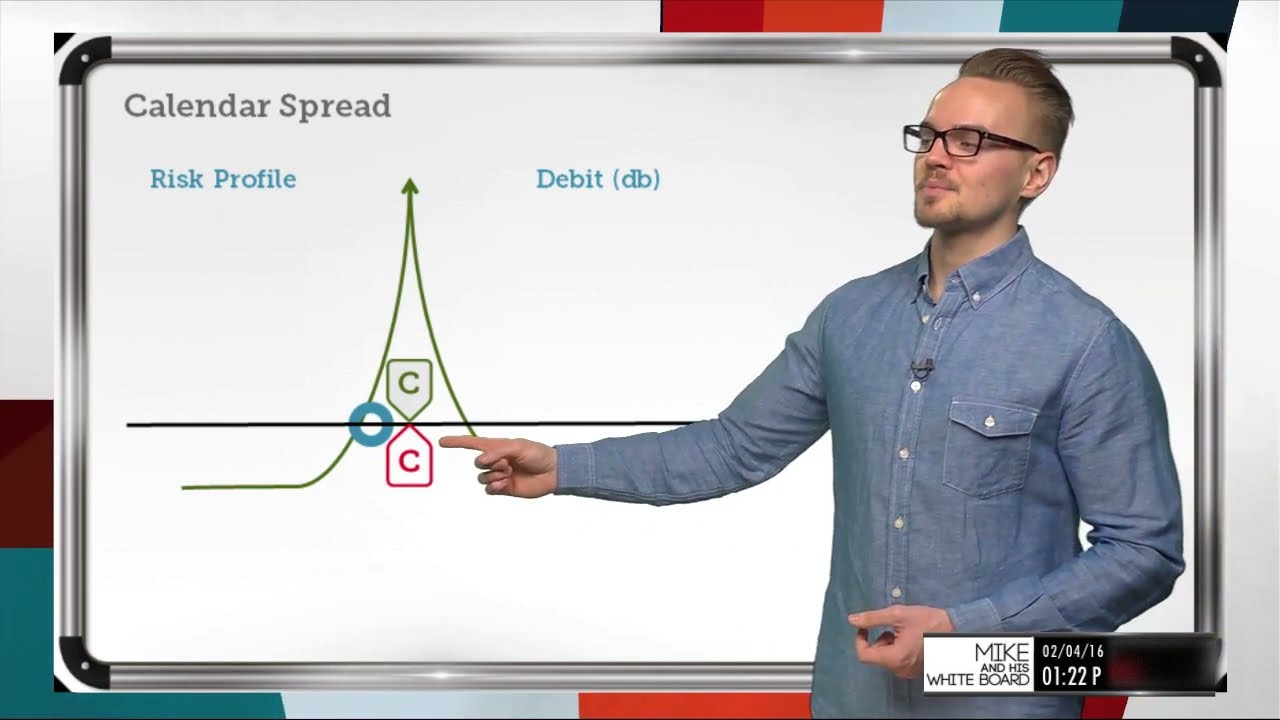
All right, so how does a diagonal spread set up? Well, first, let's remember that a diagonal spread is kind of a hybrid strategy. It is part vertical spread and it is part calendar spread.
So, you have both a directional component and a time component. What that means is if you get the stock move that you want, then you can get paid very quickly. It also means that you can benefit from the simple passage of time.
Now, our diagonal spreads here are a debit strategy. So, what that means is this: If you are bullish, you want to use call options; if you are bearish, you want to use put options. The way it sets up is as follows: You want to go into the back month and you want to buy an option that has a couple of strikes in the money.
Then, you want to step into the front month and you want to sell an option that is a couple of strikes out of the money. Now, that's probably about as clear as mud, so let's work through a couple of examples. Let’s suppose that you are bullish on Apple, and Apple is currently selling for $130.
The front month is February and the back month is March. What you might want to do is go into March and buy the 128 strike call; that's a couple of strikes in the money. Then, you go back into February and you sell maybe the 132 strike call that is a couple of strikes out of the money.
This would give you a $4 wide diagonal spread. Or, let's say you're bearish on the overall market; let's say you're bearish on the SPY. SPY is at $350.
The front month is still February and the back month is still March. The way you could set this guy up would be going into March and buying maybe a 353 put that is a few strikes in the money. Then, you step into February and maybe you sell the 348 put that is a couple of strikes out of the money.
Here, you would have on your hands a $5 wide put diagonal spread. Either way, guys—call diagonals, put diagonals, upside, downside, bullish pairs—I don't even care about any of that. Here is the most important part of the whole puzzle: you don't want to overpay for your diagonal spread.
You don't want to pay more than 75 percent the width of the spread. So, on our $4 wide diagonal in Apple, that would be about $3; on our $5 wide diagonal in SPY, that would be about $3. 75.
Why is it so important that you not overpay for your diagonal spread? Well, you need to remember that the width of the spread less the debit that you've paid—that's your profit potential. So, on that $4 wide diagonal in Apple, you pay $3; the maximum profit on that strategy is $1.
If you overpay, if you pay too much for your diagonal spread, you might find yourself having gotten the move that you wanted, and you didn't even make any money. You're not even profitable, and you're just left scratching your head. So, by all means, tinker with the strikes, play around with it a little bit until you get the risk-return trade-off that you want.
But if it doesn't set up, then it doesn't set up—just walk away and find something else. All right, so that's how a diagonal spread sets up. Now, the fun part: the winning trades.
How do we manage these? Well, it's actually pretty simple, and it's very similar to everything we've done to this point. We set our profit target right at about fifty percent of max profit.
So again, on that $4 wide diagonal spread, you pay $3; your maximum profit is $1. You're only looking to come away with fifty percent of that—so about fifty cents. That will be a winning trade: you book it, you close it, you move on, you find another opportunity.
All right, so now, unfortunately, the not-so-fun stuff—those losing trades, right? You put on a call diagonal and the stock goes down; you put on a put diagonal and the stock goes up. What do you do?
Well, this is the true beauty of the diagonal spread, because remember, you have distance between your short option and your long option. You have options, pun intended. All right, so you've basically got three options here.
Number one: you could roll that short option forward into like a weekly cycle and create for yourself sort of a mini diagonal spread. You'll be able to do this for a credit; this is probably the most standard adjustment to a diagonal spread. Number two: you could roll forward into a mini diagonal spread, but simultaneously you roll your short strike in, thus shrinking the width of the diagonal spread.
If you choose to do this, you will aggressively collect more credits, but you need to be mindful that you don't shrink the width so far that the net debit that you've paid exceeds the width of the diagonal spread. Because if you do that, you will be locking in a loss. Number three: you could also roll the short option all the way into the back.
. . Month with the long option, and this would create for yourself a vertical spread in that back month cycle.
Okay, so when do you make these adjustments if you don't get the move that you wanted? Well, this is largely going to be up to your discretion, but usually no sooner than 21 days to go and possibly even later in the cycle, because this is a defined risk strategy where your maximum loss is approximately the cost that you've paid for the diagonal spread. All right, so those are winners; those are losers.
What about everything in between? What about when you get to 21 days to go and you're kind of even? What about when you get close to expiration on that short option and you're kind of out of scratch?
What do you do? Well, this is very, very simple: roll that short option forward into a weekly cycle and go for that mini diagonal. Man, unless your directional bias has changed, take full advantage of the flexibility that you have with this strategy.
All right, guys, that's it! We made it to the end. That is the diagonal spread in eight minutes or less.
Be sure to save this video for future reference, and when you are ready, I will see you in the next video, which is going to be our first undefined risk strategy, the short strangle. We'll see you guys there!