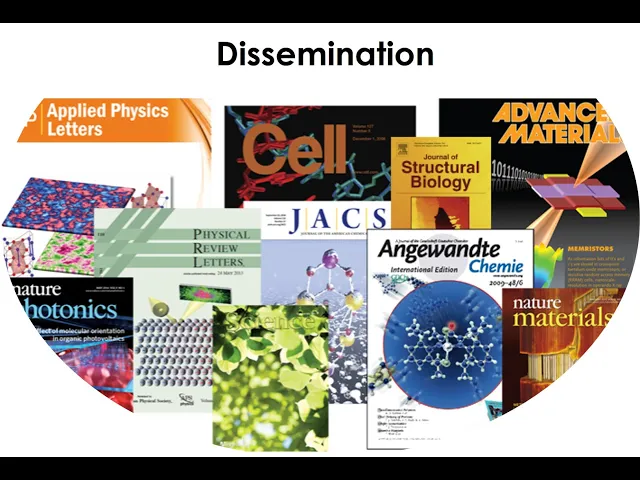
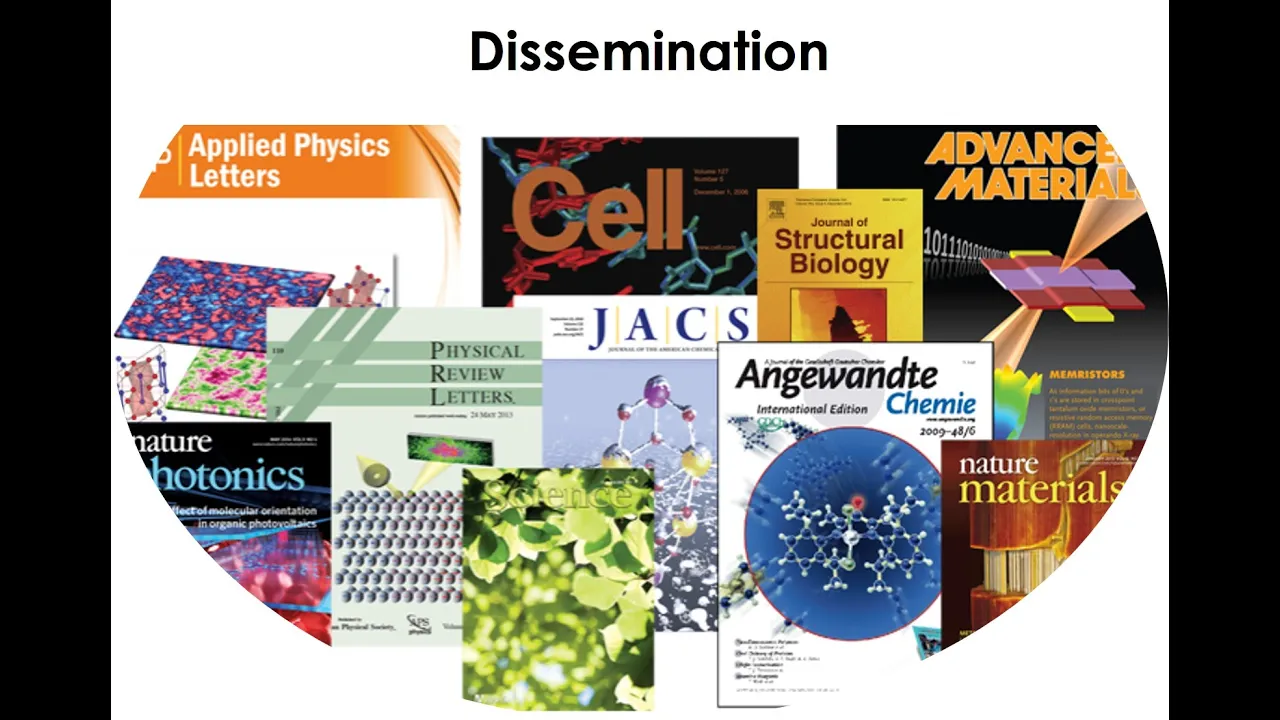
now you've completed your analysis and it's time to let others know what you have found and communicate with them about your findings there are a number of routes you can disseminate your findings you can make a presentation either with a poster or powerpoint in front of your friends or colleagues but better yet you can write a paper to publish in a relevant scientific journal so it would be useful to understand how a scientific paper is structured when the time comes for you to write one but it will be also useful when you need to read
one once you know what to expect from each section of a scientific paper so typically a scientific paper is composed of these seven separate sections a title abstract introduction methods results conclusion and discussion and reference so in the next slide we will take a look at each section in more detail one by one so a title can help you or others to determine if an article is interesting one or relevant in fact the title will be the first information you will see when you use bibliographic database to do a literature search so the information included
in the title will enable you to quickly determine if this paper will be relevant to your research or not so i'm using the pubmed i cut and pasted a title from one of the most recent paper i found using the keywords ocular manifestations and covet 19. so as shown here the title of the paper is ocular manifestations of hospitalized patients with confirmed 2019 novel coronavirus disease so one of the information you can find from a title typically contains the goal of the study so from the title of this study we can figure that the goal
of the study seems to find out or describe the ocular symptoms presented in the covait patients so once you know the goal of the study then you can also expect what their research hypothesis will be too by the way if this is your first time seeing such studies it may grab your attention immediately as efficient science students because covet 19 is mainly known to affect respiratory system but there has been a growing and consistent report that some of the covet patients are presented with symptoms in their eyes indicating there is a certain relationship between the
disease and the eye which has interesting findings in and of itself or vision scientists and another information you can find from a title can be a type of samples used [Music] in the study where the sample of subjects was the covet 19 patients sometimes a title indicates the type of research conducted even though it is not very clear from the title it looks like the study is mainly descriptive given the recency of the disease and is probably kind of a case report type of design which is one of the epidemiological research designs we will talk
about later and finally we may be able to find about a brief indication of the results in this study we can sort of see that they may have found some symptoms in the patient's eye but we do not know what kind of symptoms they are so in summary a title provides a reasonably complete description of the conductive study sometimes even foreshadows the findings so next you will find an abstract after the title in a scientific paper along with the title abstract will be very important for your literature review because it is more or less a
complete summary of the entire paper so as we can see the abstract is composed of the pretty much all the sections of a complete paper except the size of each section is just a miniature miniature of original sections for example the purpose here is basically a mini introduction and then the participants and methods is basically the the small method section and then you have results and conclusion sections where you can find in the original paper too so most of the time aftrack of a paper is included in the bibliographic database for free whereas a full
paper is not right so um you know knowing that the abstract is available for free sometimes you do not need to find the full article or otherwise you have to just buy those full paper so for a literature review you will read the title and abstract first to quickly filter out irrelevant studies to your research however when you write your own paper for your research this will be probably the last section of the paper to be written because you can write it only when you know everything about your research because abstract is pretty much a
complete paper in the introduction you can find theoretical background information such as a brief history of previous research and their results from which the current study arises so in this section you should be able to identify the rationale of the research so in other words why the authors to do what they do so which should be the same for you to write your own paper you should make it clear why you do what you do in the introduction you can also find a specific research question or hypothesis to be tested at the end of the
introduction in a real publication your research hypothesis is essentially the same as the goal of the study in the method section you will find the detailed information about how authors perform their experiment or research including the type of samples or subjects and how they were recruited also you will be able to find the information about specific techniques equipment or apparatus used in the research and the information about the experimental design and overall procedures can be found even though people um don't pay a good attention reading this section this section should include enough details about experiments
so that other researchers in the field can repeat the procedure when needed the next results section is at the heart of a heart of a scientific paper it contains the data presented in the form of tables and lower figures so in this section visualization visualization is the key to the presentation even though not very common more and more authors are asked to provide their raw data these days so whenever and wherever they are available make sure that you take time to analyze them on your own if you can and compare your own analysis with the
author's analysis conclusion and discussion sections are sometimes presented separately or they're combined under either conclusion or discussion or both so this section typically starts with a brief summary of the results section in a non-technical and more plain language this is the section where you can find the author's interpretation of the results by relating them with other previous research you can also find the implication of the research or suggestions of possible improvements or ideas for future research while reading this section try to understand what's presented in your own language and to take different perspectives from the
author's viewpoint whenever wherever you can the key is to remain skeptical throughout reading this section and at the end of the paper you will find the list of sources read by the authors and cited throughout the paper meaning that only the read and cited sources can be included in the reference section so the file list in this section is not the list of the entire collection of literature search so what's not cited in the main body text doesn't get included in the reference section therefore their entry should match each other and this is a formal
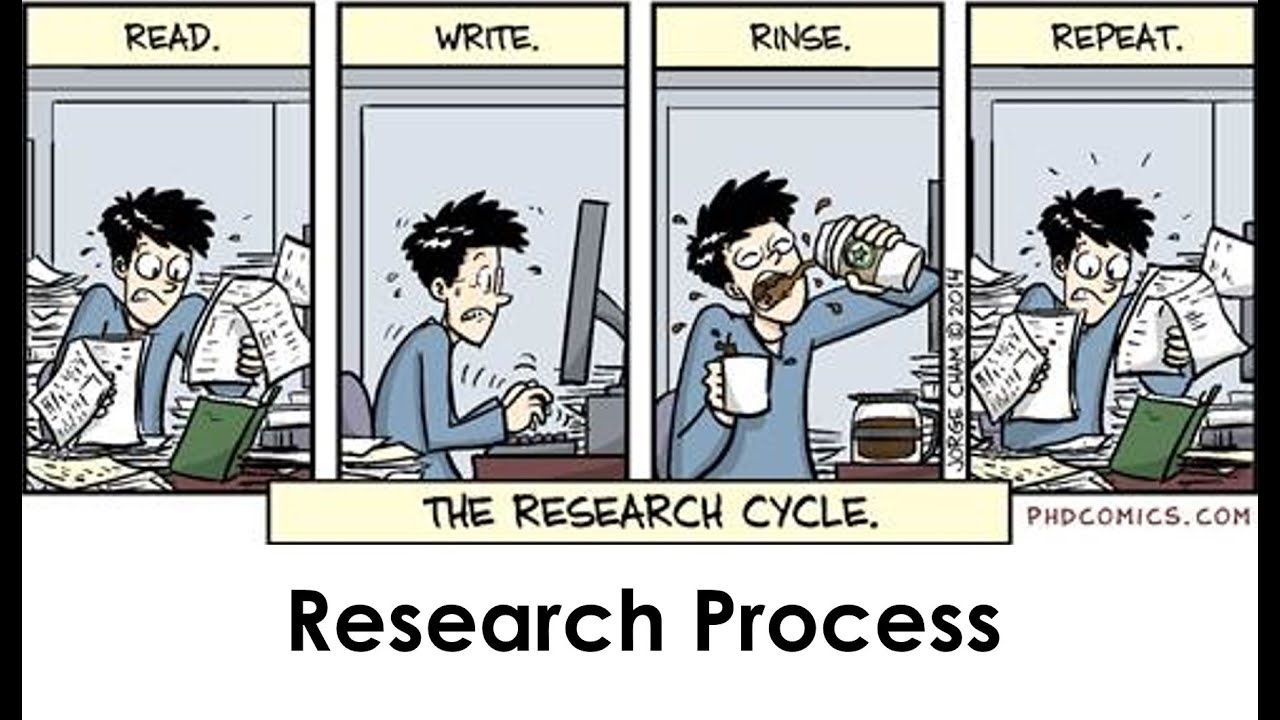
way to show how serious we are about treating the intellectual property and to acknowledge the intellectual ownership to the ideas that do not originate from us the style of reference is different from journal to journal but gcu recommends harvard style for students projects and dissertations and congratulations you've just completed a cycle of conducting a research in fact you've just opened up an infinite loop of conducting research and any good research should generate more questions or ideas for future research at the end of the cycle rather than closing the loop or hitting the dead end and
that's how science evolves and progresses next we will look at the different types of data and how to categorize them properly according to their type before we analyze them