Good morning. This is Horizon's Middle East and Africa. Our top stories this morning, a Swiss break through Wall Street futures and Asian stocks rising as the US and China claim progress on trade talks, although they are yet to announce any details on what's been agreed.
The dollar and oil also stronger. Mideast Commission. President Trump heading to the region today, seeking to tap into billions of dollars of investments and profit under pressure.
Saudi Aramco's net income declines as lower crude prices take a toll on the world's biggest oil exporter. Well, it has just gone across the Emirates, 17 out in Saudi Arabia University in Riyadh today and for the next couple of days. And of course, we are here tracking President Trump's movements to the region.
He will be landing here tomorrow morning. And we are very much looking forward to keeping you posted on everything that goes on this week, from deals to diplomacy and more. So that is why we're here on the ground.
But let's switch to the markets. A major breakthrough potentially this weekend with those U. S.
, China discussions taking place in Switzerland. Both sides citing good progress. And on the back of that, what you are seeing is a jump in futures this morning.
So futures up one and a half percent. Nasdaq futures up almost 2% on the optimism that has come out of those talks. Also, take a look at the Hang Seng were also trading in the green today.
And this is actually the eighth day in a row that you're seeing the Hang Seng advance its best run in the entire year. So, again, a risk off risk on mentality seems to be prevailing as it was in the last week. And that's continuing as we start of this week.
The U. S. seeing a bit of a push as well.
So about a 10th of a percent higher. We're actually up 0. 5% over the course of the month, even though the dollar is down 7% this year.
And then oil as well, reacting to some of the optimism that has come through this weekend. As you can see on the screens, up about half a percent this morning, about $64 is where we're trading, flipping over. We also had our results come through from Aramco yesterday.
We're going to be talking through that on the show. We are seeing a net profit decline come out of the state owned oil company, one of the largest in the world. And of course, at the dividends is has huge bearings on the Saudi budget.
And so we're going to talk about the Aramco earnings and the fact that they've had to trim the dividends and what that could potentially mean for Saudi finances later on in the show as well. And that's on the back of while lower oil prices, but also the fact that Saudi Arabia having withholding barrels from the market as part of the Opec+ strategy that has started to be unwound. Now back to our top news, though.
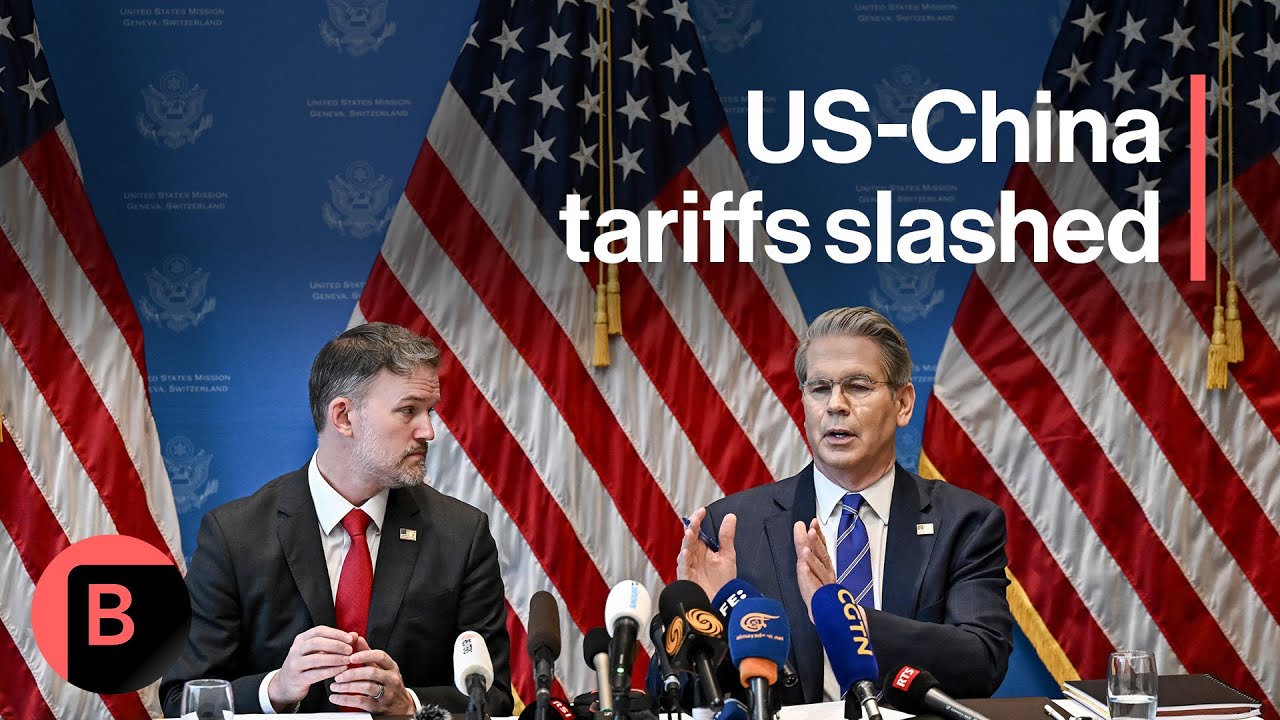
The US and China have both reported substantial progress after two days of talks in Switzerland aimed at de-escalating their trade war. I'm happy to report that we've made substantial progress between the United States and China in these very important trade talks. We will be giving details tomorrow.
But I can tell you that the talks were productive. The two sides held in-depth exchanges on trade and economic issues of their respective concern. The atmosphere of the meeting was candid, in-depth and constructive.
The meeting achieved substantial progress and reached important consensus. Let's get more with our chief North Asia correspondent, Stephen Engle. So, Stephen, markets are obviously reacting to the substantial progress news.
So a lot of optimism, but we don't have a lot of detail. Do we know what was discussed, the contours of what a potential trade deal could look like? Well, we know they were coming from a position of mutual distrust, right?
So progress, substantial progress is a good thing. We just don't have the details right now. As we just heard from the US Treasury secretary, Scott Bessant, who led the delegation along with Jamison Greer, the U.
S. trade representative in the middle, versus Julie Father, the vice premier of China, Xi Jinping's pointman on these trade issues, essentially that they are going to be meeting again and that there was some progress. We just don't know where that progress will be.
There's many contentious issues, Scott Besant said they will be announcing the details later Monday. I would assume once Donald Trump is briefed and then Holy Fung, the Chinese, a leader of their delegation, said that once obviously Xi Jinping is briefed as well, there will be some sort of joint statement from the two. They're speaking similar terminology as substantial progress.
But the one line that stood out to me was from Li Fung. At the end of that soundbite, you heard him say, We've reached important consensus. That would be a significant development if they've reached consensus on what the framework of some sort of trade deal would look like.
Would that mean a dropping of the tariffs from 145 to what Donald Trump said was 80%? Or what we heard from sources leading into the talks in Geneva over the weekend that perhaps the U. S.
would start at 60%. Any movement down would be a very significant move, obviously, because even Donald Trump has said 145, it can't go any higher than that. So there's been essentially a de-escalation of the heated rhetoric and an escalation of the level of dialogue.
And that's a good thing. Yeah, it's interesting that you sort of lay out where the tariff rate could end up one 45%, essentially prohibiting all forms of trade between the two sides, but even 80%, 6%, these are still high numbers. Stephen, what happens next?
Have they set a timeline for when the two sides are going to meet again? What can investors look forward to in terms of scheduling? Yeah.
So we're going to get the details of what substantial progress is and where did it come from. Was it on the fentanyl issue? Was it on the tariff rate?
We simply don't know until we get a complete readout from the White House on the talk as well as Beijing's readout. But so far, all the the messaging has been positive that they're moving forward. We did hear from President Trump on Friday ahead of the talks that perhaps these talks could be a precursor to having that long awaited phone call or video call between President Trump and President Xi Jinping, depending, he said, on what report what Scott Besant reports back to him.
But all indications are right now that the talks went well. They were behind closed doors. They were there was no political grandstanding in front of the various media from both countries.
So again, there seems to be a temperature. The temperature has dropped. So that could potentially lead.
I'm getting ahead of myself, the cart before the horse right now. But there could be a framework for definitely future talks, but possibly talks between Xi Jinping and Donald Trump in the coming days or weeks. Yeah.
Interesting. Definitely one to watch out for. Chief North Asia correspondent Stephen Engle.
Well, it's exclusive. U. S.
stock futures are higher as the U. S. what they're calling substantial progress on trade talks.
As Stephen was just telling to us as spring, an exit from havens such as gold. Joining us now is Institute of International Finance president and CEO Tim Adams. Tim, it really good to speak with you on our show.
Great to have you in our timezone. And I'm sorry that I'm not in Dubai to be with you in person, but actually I want to go back to a speech that the Treasury Secretary thought best and gave at your conference at the IMF conference in D. C.
a couple of weeks ago. It was a monumental speech. Parts of the media picked up on it.
Did you walk away from that speech with a better understanding of what exactly the Trump administration is trying to achieve? And were you were some of your concerns about uncertainty allayed? Sure.
Good morning, Jim. It's good to see you. Even though you're in Riyadh and I'm in Dubai.
Hope to see you in person again. And thanks for having me on this morning. It's great to be back in the region.
Yeah, it was it was an instrumental communication point for the administration and for a couple of reasons. One is it really cements Scott Bessant, the Treasury secretary's the key voice, the sober voice of reason on economic policy. And this administration, he's the person the markets should listen to.
Two, it was a reaffirmation of U. S. commitment to and leadership in the Bretton Woods institutions.
And three, it was a commitment to the U. S. dollar as a as the world's reserve currency.
Now, that doesn't mean the dollar won't move around a bit, depending on relative fundamentals, but it really was a commitment to not walk away from the dollar's historic role in U. S. markets, commodity pricing and such.
So Scott is the guy to listen to. And as you just heard in the lead in also the point person on US-China negotiations. Hmm.
Let me ask you about those China-U. S. negotiations.
If, for example, they settle on a tariff rate of 80% or 60%, whatever that number is, it's unclear at this point. We don't have details. Is that going to be enough to remove the uncertainty to the outlook because those are still prohibitive tariff levels?
Indeed. Those numbers don't work either. We essentially have an embargo in place now, and you see that just in the cargo traffic, which is grinding to a halt in the ports in the West Coast, the United States are soon going to be empty as well shelves.
So I think there is urgency on both sides to de-escalate. And I think what you heard in Geneva over the weekend was a de-escalation. Also setting up a process by which the two sides can discuss really a myriad of very complex topics.
And it will take months to work through these topics. There will be some short term deliverables there, something that I think on fentanyl that both sides can agree to. And that's certainly important to the president and to many of the United States.
But dealing with large global imbalances that have been intractable, have been around for decades is going to take time. It's a complex set of challenges, but I think both sides are committed to talking and I think committed to getting to the right outcome. Yeah, the dollar has been stabilizing and last couple of weeks we're actually up in the last month, half a percent is still down 7% on the year.
Do you see the weakness in the greenback as the beginning of a more structural move or just a knee jerk reaction to all of the uncertainty and questions about policy for the rest of this year? Well, I think it's a little of both. I do think that the markets have reacted with some concern about the stability of the U.
S. , kind of a future trajectory of U. S.
economic policy. And frankly, living in Washington every day is a new day, a new headline. So there's a bit of a daily shock that will dissipate over time.
The president will settle into a routine and the markets will become more accustomed to where this administration wants to go. But I do think the secretary was pretty adamant that the dollar's reserve role will will continue. That doesn't mean it won't move around occasionally, depending on relative fundamentals.
But I do think the administration is signaling and I wouldn't listen to anyone else other than the secretary or the president. There's a lot of voices that create a lot of noise in Washington about the dollar. I think the Treasury is the point person.
Yeah. At the same time, the U. S.
administration does seem to want to push through an extension of the tax cuts. But the Treasury secretary is also mindful of the size of the deficit. And I just wonder how they square the circle.
For as long as I've been speaking to IMF, you've been tracking global debt and saw that most recently your global debt monitor is showing that global that has reached a record high of $324 trillion. Just a stupendous figure. At what point should we start worrying and at what point is the US going to be the source of that worry with the size of their deficit?
You know, it's a sobering statistic, 330% of GDP globally. And, you know, households and corporates have stabilised in the last few years, but the sovereigns and sub sovereigns have certainly exploded. And that's a long cycle.
We've seen now for about 15 years and we see additional demands for borrowing in Europe. For example, as Europeans began to build out their defence and national security industrial base. So more borrowing on the way.
You know, Secretary Besson has said that he's adamant about getting the deficit down. I think he is indeed adamant. But the issues are large and intractable.
We will get a tax bill sometime this summer. It's not going to be in the next few weeks, but unfortunately I think the US fiscal trajectory is going to remain pretty harrowing and I think deficits are going to be large for the foreseeable future. Yeah.
A sobering thought. Well, it was a real pleasure to talk to you. Tim Adams, president and CEO of ISAF.
Thank you for joining us on the sets in Dubai. Now still ahead, as President Trump prepares for his Middle East visit, we'll speak to Long Island's university about what to expect and the political significance of his first major diplomatic mission. Much more ahead.
That is Bloomberg. Welcome back to Horizons Weekly stands Africa. I'm Joumanna Bercetche in Riyadh.
ABC News says the Trump administration is likely to accept a luxury jet from Qatar's royal family to replace Air Force One. ABC says it may be the most valuable gift ever received from a foreign government. However, Qatar says the report is inaccurate and no decision has been made.
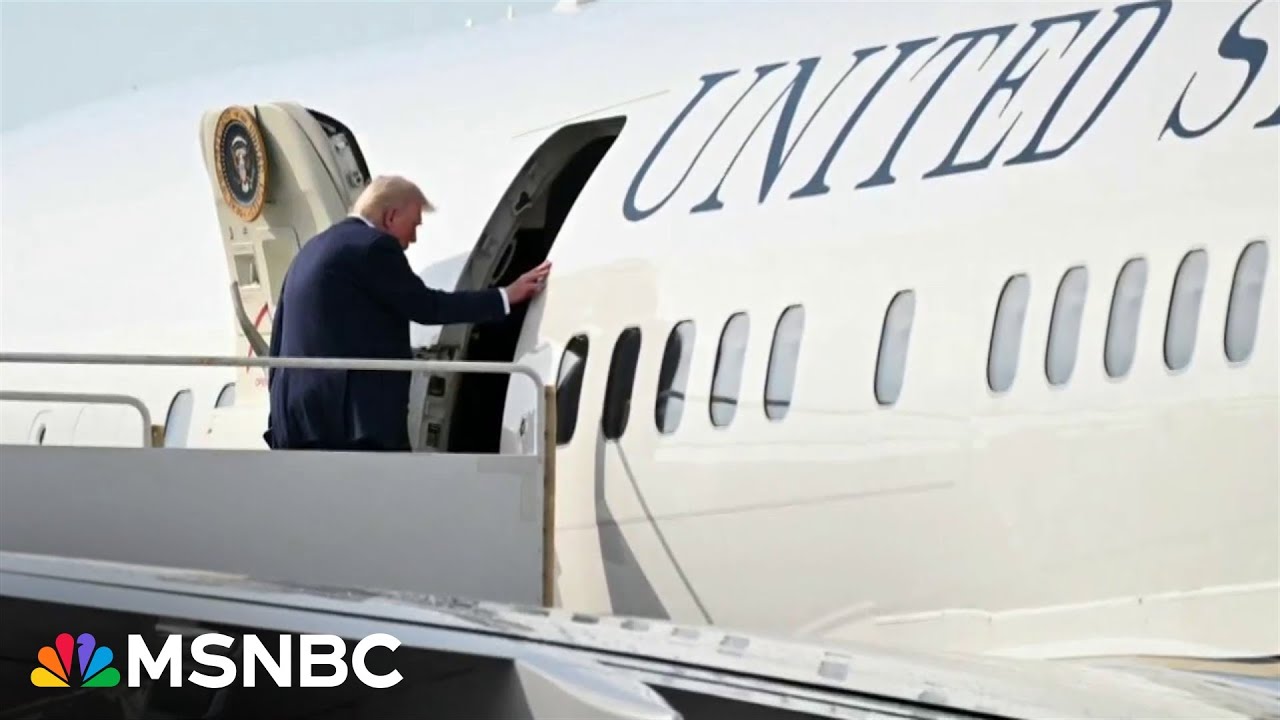
Trump inspected a Qatar. He owns Boeing jet in Florida in February, and the president has previously said he is unhappy with Boeing's delays delivering a new Air Force One. Now President Trump is expected to board Air Force One later today to depart for his first official diplomatic send of his second term.
With ups here in Saudi Arabia, as well as Qatar and the UAE. So just what we can expect out of this trip. Mean joins us now.
She's the director of international relations and diplomacy and an associate professor of political science at Long Island University. Maybe let's just start with that controversial piece of news that hit yesterday, ABC breaking that Qatar are willing to gift trump a luxury Boeing debt. And of course, later on, Qataris denied that this was going to be offered in the form of a gift.
But I just wonder whether this incident in itself and of course, it's been subjected to a lot of scrutiny back home within the West domestically. What this tells us about what President Trump may be looking to achieve through this trip here and also the significance of him coming here to the region. It absolutely is a minor and it's an interesting moment.
The president is traveling to Saudi Arabia, Qatar and the UAE. And this mission is really expected to focus on business deals and new investments in the region. He's also going to attend in Riyadh the summit of the global the Gulf Council cooperation.
And it's not just him who's headed there. He's alongside him will be the leadership of BlackRock and Citigroup and IBM. And so the focus is business, it's economics.
And that's really to tell us something. It's revealing that this administration is the first in the modern era to focus on the world through the lens of economics and business and not through strategic and diplomatic terms. That's really important for us to understand.
Now, it started when it was Crown Prince Mohammed bin Salman, who was the first foreign leader to speak to Trump after his inauguration. And in that call, he said that Saudi Arabia would be investing $600 billion in the U. S.
And so Trump said, you know, if you up it to 1 trillion, I'll come to Saudi Arabia first. And that's what happened. And it's indicative of Trump's promises during the campaign that this was going to be a new economic area.
We're going to see lots of deals, but I think we need to take a step back and ask ourselves what kind of deals are being struck here? Yes, this is a marker of the president's priorities, but it also comes right after his son, Eric Trump, was in the region. I'm talking about, you know, the personal Trump organization investments, the building of the of the Trump Tower and the resort and one in Dubai, one in Qatar and the cryptocurrencies.
And who's benefiting from that? From the Trump family. And during this this visit, you know, there's a lot of economic deals being being discussed now on the political front.
I think this is what we're not really focusing on. And we should that the travel to the region might be indicative of a reality that's becoming increasingly uncomfortable is that the U. S.
strategy in the region is actually failing. And the United States, especially this administration, needs the Gulf countries more than it's willing to admit. Now, remember, it relies on the Gulf War for as as interlocutors, for example, in negotiation, security partners, financial backers now present, for example, the Trump approach to this time without Arab help from the region, is really going to become destructive.
So there's the economic and the political play here. Dahlia, let me just jump back in just to also, you know, re the conflict of interest with the Trump Organization, What they say is that the president has stepped down from being involved at all in any of the operations of the Trump Organization. Of course, his sons are running ads and those are the ones who are inking the deals around the region.
So just to to give the White House perspective there, I but of course, it does raise a lot of questions about conflict of interest. Let me just ask you, though, what is in this trip for GCC countries when you talk about the Qataris potentially gifting President Trump a jets, we talk about Saudi Arabia potentially investing trillion in the U. S.
. UAE investing . 4 trillion in the U.
S. What did these countries get? What these countries get is a larger play in the region.
For example, what is happening not just in Gaza, but in Syria and Yemen. And the US has really, you know, strict understanding of how he wants this to play out. But I think more critically what is happening in Iran that the U.
S. , for example, the U. S.
and Israel for a while, we're talking about war and we're we're seeing a warming up of the United States towards Iran, which is what Saudi Arabia actually wants. We're seeing that Trump increasingly needs the Gulf countries for his tariff dispute with China. And, you know, the Gulf diplomats are actually benefiting from this moment because of how much Trump covets these multibillion dollar deals, not just, you know, for personal, perhaps personal gain, but also in terms of arms sales.
And so the yeah, yeah, even more to go to the region and we'd see a norm increased normalization discussion. It's going to require Trump to do what NBC wants, which is a recognition of the state of Palestine. And Trump did indicate that in the past few days.
So we're seeing interesting business and political deals being played. They are always a pleasure to have you on Long Island's University. Thank you so much.
And coming up, our exclusive interview with Bank of America's head of sub-Saharan Africa, Evelyn Ike, on investment opportunities in the region. This is Bloomberg. We're really facing a risk off environment of this time in Africa.
And what that means is we're seeing the potential for investments to slow. There's a direct consequence of sovereign debt, publicly issued sovereign debt increasing. So if we compare the cost of the average cost of sub-Saharan Africa, debt in 2021 was about 15%.
It's now about 18%. So there's a real and present increase and that so that's that's the we however, still have investors who are engaging in the region. We do have investors who are looking at particular sectors, especially where it relates to energy technology, infrastructure, particularly digital infrastructure.
And Yvonne, That brings me to the Africa CEO Forum. Of course, that is happening this week in just a few days. Can you talk about maybe some of those sectors that you mentioned?
Do you believe that those will be the sectors that investors continue to direct capital in, at least in the near term? Absolutely. So if we think about what's happening in the world today, there's this as you mentioned earlier, it's very clear that these are volatile times.
I would go further to say that there's quite a bit of chaos at the moment in all of that. At Bank of America, we do see opportunities in the face of those challenges. And those opportunities do exist in the areas of energy, in the areas of technology, also education, health care, and also food security.
So we see engaging with world leaders and investors, both internationally and in the local markets on those sectors at this time. What is driving it is clearly there's needs in the continent that are still need to be met. Africa remains relevant, relevant part of the solution for global growth and diversification of investment opportunities and risk.
And we see so so we see investors coming in looking at those sectors. And the manner in which investors are investing is continues to be diversified. Good morning.
This is Horizon's Middle East and Africa. Our top stories this morning, a Swiss break through Wall Street. Futures and Asian stocks rising as the U.
S. and China clean progress on trade talks, although they're yet to announce any details on what's been agreed. The dollar and oil also stronger.
Mideast mission. President Trump heading to the region today, seeking to tap into billions of dollars of investment and profit under pressure. Saudi Aramco's net income declines as lower crude prices take a toll on the world's biggest oil exporter.
It's just gone. 8:30 a. m.
across the emirates. It is 7:30 a. m.
in saudi arabia. I'm Joumanna Bercetche in riyadh. We are here tracking president trump's trip to the region over the next couple of days.
He will be landing tomorrow and we will be bringing you updates on all of the developments, those potential deals that will be announced in addition to any other breakthroughs. So really pivotal week for the region, which is why we are in Riyadh today. As for markets, you're seeing a lot of green on the screen on the back of those successful talks between the U.
S. and China over the course of this weekend in Switzerland. Both sides citing substantial progress.
So on the back of that, you've got S&P futures up one and a half percent, NASDAQ futures up almost 2%. Hang Seng also up almost 1% as well. So both sides trading well on the back of this.
Hang Seng advancing for an eighth day in the role that it's his best run for all of 2025. So inching higher day by day, risk on mood prevailing. The dollar also seeing a bit of love this morning, up about a 10th of a percent.
We are up about half a percent over the course of the last month. So recuperating some of the losses for this year. It is still down about 7%.
And then Brent, also in focus trading at $64, also up half a percent this morning as well. So with some of the positivity in markets, we are seeing some life come back to the energy space to switching over Aramco earnings. Also in focus yesterday, we'll speak shortly about that on the show.
But ultimately what we saw was a reduction in net profits and EBIDTA, as well as a slashing of that dividend payments, which does have knock on effects to the Saudi government because 97% of Aramco is still hold is still owned by the Saudi government and PIF. And so the transfer of that dividends an important source of revenue. The fact that the dividend has been slashed will have an impact as well on Saudi finances.
We'll talk more about that later. Now a candidate to run the African Development Bank says President Trump's plan to cut hundreds of millions of dollars of funding will have outsized repercussions. Samuel Mambo says he plans on engaging with the White House if he's elected to lead the lender later this month.
Joining us now from Kigali as Bloomberg's Ondiro Oganga And here to talk us through the effects of this cut. Where does that leave the African Development Bank and Africa in terms of funding options? Good morning to you.
So if you look at the US, they're the third largest donor to the African Development Bank after U. K. and then Germany.
And if you look at 2023, the bank disbursed . 5 billion to less developed countries. When the US pulls the plug on $555 million, then it means that the bank would have lost a third of its revenue.
They have to go back to the market and try to raise this money at a time where most of the countries are still recovering from COVID 19, that there's geopolitical tension, internal political volatility in that country coupled with slowed economic growth. It's going to be an uphill task for the bank. But the countries that are going to be most vulnerable, at least developed countries they can barely raise enough to finance their budget.
Debt burden is rising. Yields in the international market are high, so they can't for commercial borrowing. And also they are grappling with other issues that might not be necessarily popular in the mainstream media.
And so if this funding is taken away, then they have to contend with little funding and development. Financing is going to take a hit. This means hospitals, education, health care, access to infrastructure, one thing.
And so that's where some of these candidates come in. Some of my email saying that Africa needs to go back to the negotiating table with President Donald Trump and align priorities, because while justifying this cut, they say that the donation is not aligned to President Donald Trump's administration. Also, them are the candidate from our reserves is proposing tapping into financing from the Middle East.
They have assets of over $4 trillion. So tap into that, leverage the excess liquidity for low cost financing. Bloomberg's Ondiro Oganga Thank you so much for walking us through what could be quite consequential for the African continent.
Now the US and Iran will continue talks over the Islamic Republic's nuclear program after discussions in Amman described as encouraging by Washington and difficult but useful by Tehran. A senior Trump administration official says they agreed to continue working through technical details with another meeting to be scheduled soon. However, the US envoy, Steve Whitcomb Wyckoff, reportedly says Iran must dismantle its uranium enrichment program, something Tehran has rejected as a red line.
President Trump's push for peace in Ukraine is reaching a decisive moment, with Vladimir Zelensky challenging Vladimir Putin to engage in talks in Istanbul later this week. The Ukrainian leader says he hopes this time Putin won't be looking for excuses as to why he cannot make it. But the process remains surrounded by doubts, including the demand from Kiev and its European allies that Russia begin a 30 day cease fire on Monday.
President Trump is urging both leaders to talk without a cease fire. Hamas says it will release the last living American hostage it holds in Gaza after renewed talks with the US in recent days over a cease fire with Israel. The militant group says releasing an Israeli soldier and an Alexander who was a U.
S. citizen is a step towards a new cease fire agreement. Hamas did not say when Alexander could be released.
Meanwhile, Israel has endorsed a US plan by President Trump for a phased resumption of food distribution to Gaza's civilians. And coming up, we take a closer look at the relationship between Donald Trump and Saudi Arabia's crown prince as the U. S.
president prepares to visit the kingdom. That's next. This is Bloomberg.
But we do have a mandate, a maximum unemployment and price stability. And these are both very important. But one thing we've learned from history is that, you know, having well anchored inflation expectations, having the public have confidence that regardless of whatever is happening today, that inflation will come back to 2% and that we'll make sure that happens is very important for price stability and also for economic stability.
It helps actually, these are the actually helps reinforce our ability to achieve both of our goals. And, you know, given the uncertainty, given the experience of the past five years, you know, it's been very important to keep inflation expectations anchored, that it's been successful. It's really important to keep them that way in the future.
But given the uncertainty on tariffs and trade, how difficult is it to even have a projection for inflation in the future? Well, right now there's a lot of uncertainty about what's happening with trade policy or other policies. So for me, what's important is think through a lot of different scenarios.
Right now, the economy's in a really good place. In the US, unemployment's 4. 2%, inflation is 2.
3%. The other indicators show we're still pretty solid economy. So right now we have time.
You know, we're in a good place now, policies in place. Let's collect more data and information about what's happening with trade policy, What's his likely effects on the economy. And then once we have that more information, we can kind of think of, do we you know, what's that mean for the achievement of our goals and in our policy?
I know you don't like it when people say, look, the Fed seems unwilling, actually because of inflation, to act preemptively to bolster the labor market. So how would you explain the, you know, just contrasting the future? Well, right now, again, the labor market is is proven to be resilient and strong even through the data through April.
So what we you know, what we want to do is really get an idea of what the, you know, tariffs are going to be. Other policy decisions are run these through different scenarios, through our models and our analysis. Listen to what business and other leaders are telling us, what they're actually doing to in response to these policies and then come to a view of what's happening to employment, inflation and importantly, the risks to that outlook.
So, you know, once we have that better information, we can, you know, assess the situation and make decisions. So it's it's about getting the information so we understand the direction of travel for the economy and make the best decision possible. We don't.
But right now, you know, things are still quite in a good place. That was the New York Fed president John Williams speaking to Bloomberg's Francine LaCour at the rate of it conference. Now, Mohammad bin Salman will greet a welcome Trump back with a grand display of pageantry as the two look to monetize their relationship with deals being made on both sides.
Bloomberg's senior Middle East reporter, Sam David joins us now from Dubai. Some. Well, President Trump visited Saudi Arabia as his first official trip back in 2017.
And, of course, this is going to be his first major official trip to all of the major GCC countries, not just Saudi Arabia, it's also Qatar and the UAE. But, of course, 2017 was eight years ago. A lot has changed since then, especially in Saudi Arabia, which has undergone a massive economic and social transformation.
How does that change the set up for this trip? Absolutely good to be with you. I mean, let's remember, Saudi Arabia is going to be the first stop.
So that's a huge coup for, you know, for Riyadh and for the crown prince, Mohammed bin Salman. I mean, his relationship with President Trump goes back to 2017, as you said. But he was he first met him when he was deputy crown prince and and then shortly after Trump visited Riyadh.
So they hit it off instantly. And and the crown prince has remained very close to Trump, if it's even when he was out of office. And then obviously, he's close to members of his family.
I mean, a lot hangs on this trip for the crown prince. You know, as you said, I mean, Saudi Arabia is undergoing a huge economic transformation. It's made a lot of progress on the social front.
I mean, obviously, there's been progress in terms of starting new industries like tourism and other sectors. But there have been some difficulties and setbacks. And, you know, we see that with the low foreign direct investment that has gone into Saudi Arabia.
So the crown prince is hoping that will begin to change, you know, with this trip. Yeah. You know, one thing that is important to note is lower oil prices.
We saw it show up in Aramco earnings yesterday. You look at economic projections, fiscal projections for Saudi Arabia this year, and they are forecast to enter into a current account deficit. Why does that matter?
Because in the past, perhaps it would be it was easier for international, international institutions to come here and look, to get funds, look to get investments abroad. But nowadays, it's becoming increasingly more difficult for Saudi Arabia to come up with that funding for overseas investments. So how does that also change perhaps the dimension of this trip?
Absolutely. I mean, we say it. I say it in the story.
I mean, now, you know, Saudi Arabia has gone from the big spender abroad to the country that's actually in need of investment. So, I mean, the crown prince is going to look to leverage that to try to get as many deals signed with U. S.
companies. It's going to be difficult in the you know, as you said, the backdrop of, you know, the difficult economic situation globally with, you know, Trump's tariffs seen as potentially slowing, you know, the global economy, the low oil prices. I mean, we our chief economist, you know, said that Saudi Arabia needs 13 of oil to to balance its books.
So it's a it's a difficult situation. But there are economists, analysts that see potentially in the long term, I mean, if these deals end up materializing, there would be upside in the long term. Hmm.
What about on the political side of things? How can Saudi Arabia and the rest of the GCC nations help President Trump secure a diplomatic win, which is what he's seeking? Absolutely.
I mean, the deals that in the case of Saudi Arabia, I mean, are the foundation and the bases for for everything else. I mean, they're hoping that, you know, the big announcement on the deals will set the you know, the set the ground lay the ground for progress on the thorny, complicated geopolitical issues, particularly the multiple conflicts that are ongoing in the region. I mean, first and foremost, Gaza.
I mean, we've seen now that Hamas says it's going to release, you know, a U. S. Israeli hostage.
That's important. That's some movement. I mean, Saudi Arabia mainly is looking to get Trump on its side when it comes to resolving, you know, these big issues.
The way Saudi Arabia is going to present it to Trump is we share your vision for a prosperous, you know, Middle East where, you know, economic development leads the way. But in order to have that, we need to have an end to all these wars, mainly, you know, the cease fire in Gaza, a political solution in Yemen. Also, Saudi Arabia's going to look to, you know, convince President Trump that the transitions in Lebanon and Syria need to be given a chance.
So in a way, it is kind of diametrically opposed from what Israel is seeking at the moment, which is Israel is saying, you know, we need to keep going hard even against Iran itself if we're going to have long term peace. And the Saudis are saying, no, now now's the time to actually leverage what has been accomplished on the battle ground in order to, you know, to have long term peace. So so there's going to be tension there in terms of like, you know, the Israel and the hawkish elements in Trump's administration who are arguing one thing and the Saudis who are saying now is the time for peace.
And the Saudis are hoping, you know, the rapport and the chemistry between the crown prince and Trump can can help in that regard. Yeah. A senior Middle East reporter somewhere in Dubai.
Thank you very much for the reporting on our show. And you can read the full article on the terminal as well. Well, coming up, we speak to the CFO of Adnoc, Abu Dhabi's state owned oil company about the company's future growth amid Trump's tariff turmoil.
To be clear, that is Adnoc L and S logistics and services. That's next. This is Bloomberg.
Welcome back to Horizon's Middle East and Africa. I'm Joumanna Bercetche in Riyadh. Saudi Aramco reported a decline in profits in the first quarter as lower crude prices put pressure on the finances of the world's biggest oil exporter.
Net income slipped 4. 6% to 97. 5 billion riyals as free cash flow again failed to cover the dividend despite the total payout being lower, operating profit fell 5.
3%, but still beats analysts estimates. Let's discuss this further with Middle East energy markets reporter Anthony de Paola. First of all, just walk us through the highlights and the fact that we have seen a drop both in EBIDTA and in revenue.
What do these figures tell us about Aramco? What we were really looking for yesterday was that net figure. We did see that come in in dollars.
It was about 26 billion. So that's a quarter on quarter loss, a little bit up from the fourth quarter. So Aramco will take some solace in that.
But they've been really suffering based on the oil prices, as you said. Now, we did know that the dividend was going to be reduced from last year. They had that major payout they call the performance linked dividend.
And that's a component that was connected to the bumper profits they made in 2022 when the Russian invasion of Ukraine really upended the commodity markets and pushed prices up. So we knew that that bit was going to come out of the dividend. That was about 0 billion a quarter.
So we did drop down to 21 billion and change with a small performance linked component that was about $200 million. But what we're really going be looking for today is debt. We should be getting the longer, more complete, full quarterly report.
And then we've got a conference call with analysts later today. So we'll be listening to what the company the CFO has to say about their debt level. We didn't see the gearing.
That's a measure of the debt increase yesterday, but we don't know where the debt is yet. And we do know that they want to go back into the debt markets to raise more money. So we'll be looking for some more details on that today, Jomana.
Yeah, I thought it was interesting to note that their average realized the oil price for the quarter was $76. 3 a barrel. And of course, we're sitting way below that now.
So also perhaps indicative of what we could expect in terms of numbers for the rest of the year. So anything on guidance I would think would be closely watched. But Anthony, another big feature of these earnings is the dividend and the fact that it was cut by 0 billion.
They did tell us that the dividend cut was coming. What sort of an impact could that have on Saudi overall public finances? Yeah, of course, that's a factor that plays into the Saudi finances because the state is the biggest shareholder in Saudi Aramco between the government and the sovereign wealth fund, the they own about more than 97% of of Saudi Aramco.
So of course, that lack of extra dividend is going to play a role in the worsening state of the Saudi finances. Also, the fall in the oil price hurts the royalties and the taxes that they'll be getting from Aramco. So both of those factors don't look good.
You alluded to the what's going on in the future. Of course, you know, if we do see an improvement in those prices that would feed through potentially to that special component, which does remain in the Saudi dividend calculation, but it's a very small part now because they simply don't have the free cash flow because of this drop in oil prices. We've seen OPEC plus increasing production.
So that's going to help as the Saudis can sell more barrels. But unless that price comes up, which of course, you just talk to Sam about Trump's impending visit, Trump wants the oil price lower. We're looking at Brent today, close to 65.
Trump and the administration has been talking about prices. WTI, of course, for the US are closer to 50, so he may not be fully pleased with the with the drop in oil prices yet. So we'll have to see.
Do we have further to go or is demand going to improve or are we going to get those headwinds in the economy that really don't agree with this additional output from Opec+ that brings the oil price lower? So we've really got a lot to see come in coming up this year. Jomana Yeah, yeah.
So attention on dividend, debt and guidance. To sum it up, Bloomberg's Anthony Capella, thank you so much. Now, UAE state owned oil company ADNOC Logistics and Services has reported first quarter revenue of .
2 billion, a 41% year on year increase, but net profit was down 5% compared to 2024. So joining me now is Nicholas Leeson, chief Financial Officer of Adnoc. Allan, it's really good to have you with us.
Just talking through some of those numbers. A revenue increase of 41%, EBIDTA up 20% year on year. And of course there was that navigate the acquisition that took place in January of this year.
So talk us through where some of the tailwinds have come from this this quarter. Absolutely. And thanks for having me on, Joanna.
It's been another great quarter for us. Obviously, we're really glad to have the completion of the Navigator transaction that makes us a truly international business with platforms all around the world. We're in 19 cities across five continents now.
We've grown 41%. Even in the face of headwinds in energy, transportation rates, integration, integrated logistics has continued to grow really strongly. We made a bargain gain on acquisition on that navigator transaction, which means between the time we signed for the transaction and completed, the value of that business grew to an extent that we've paid less for the business than it was worth.
So again, that's a great transaction that adds a little bit of depreciation to our bottom line, which is why the net profit is slightly off. But we're maintaining our guidance on the net profit going forward. What about on the shipping side of the business?
Have the disruptions in shipping allowed you to raise your margins there? No, it's been a little bit the opposite at the moment. So we've seen LNG carrier rates a little weak, dry bulk weak in the face of, you know, concerns about what will happen with the global economy.
On tankers, we've also seen those rates weak in the first quarter, although very strong resurgence in recent weeks. So it's actually despite the relative weakness of shipping rates in the first quarter that we've done very well through the growth, through NAVIGATE, as well as that growth in integrated logistics and services. Yeah.
Yeah. How are tariffs expected to hit the maritime industry? A little different way.
So I think people have been very focused on US port fees. And what we've seen now is a lot more clarity on US port fees and that they will have quite a limited impact on our business financially going forward. In terms of tariffs, more broadly, I think for movement of physical product, there's the risk we'll see less physical product within that for energy, the outlook, if anything, might be positive because it could result in less efficient logistics and as a result of that, a lower supply of vessels.
Yeah. Nicholas Vincent, CFO of Adnoc Logistics and Services. Thank you so much for joining us.
That was it for Horizons, the Middle East and Africa. We are here all week. Stay with us for DAYBREAK.
Europe.