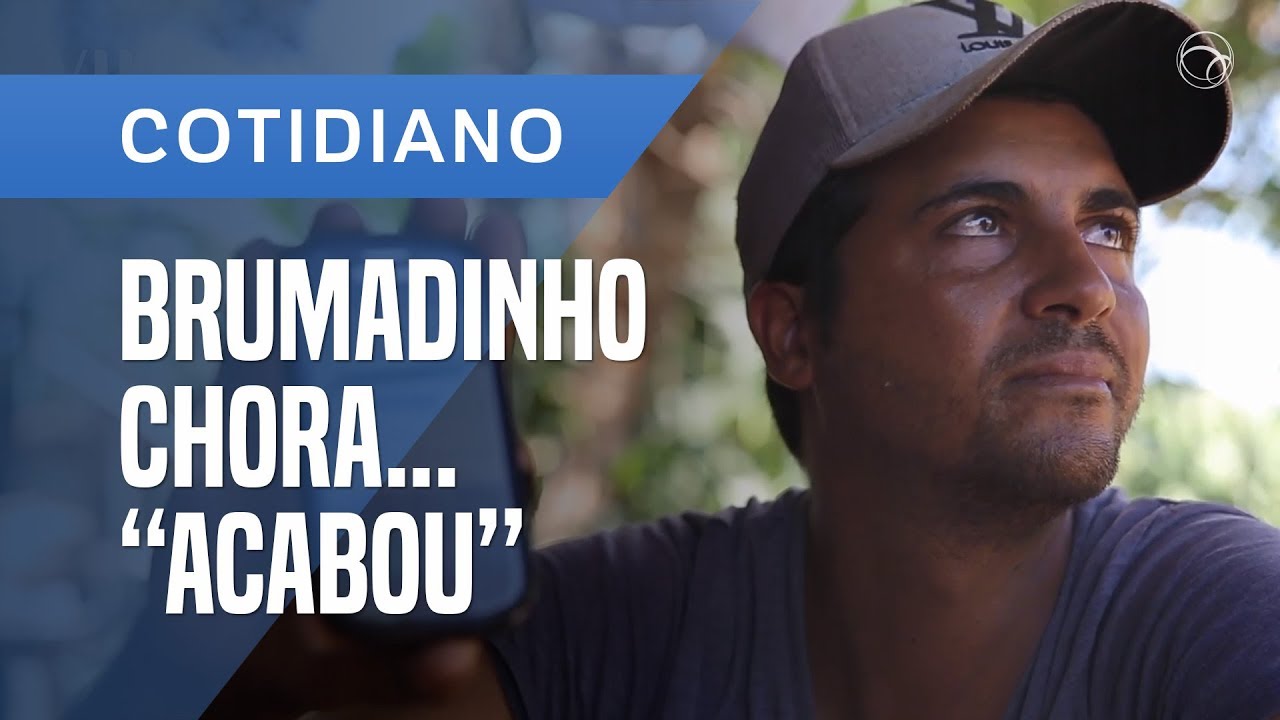
I'm on the search for my son. That they bring me back my son. What they did to him, they destroyed my life, destroyed his mother's life and his brothers'. - Who destroyed? Vale. With this mess they've done here. It ended my life, mine and of many fathers, many mothers who cry and many who've lost their lives. So I think that it's their obligation, they have to at least bring me back our son's body they took from us. That's all I want from them: I want to bury my son. I have the right to bury my
son. Because I wasn't supposed to bury him, he was supposed bury me. They turned that upside down. If it was my life I wouldn't care. Not his. One day I was having lunch. Normal stuff, watching MGTV. Then what happens is, the screen was out. There was a kind of spike in the TV screen and everything went back to normal. I thought the power was out. Then it went back to normal. And it was out again, that spike in the screen again. - You were here too, brother? There was me, him and his mother. - You
were watching too, right? Yeah. - Were you scared? No. I was like "Oh, there's a power outtage". I thought maybe that they were turning my generator on and off, as a joke, right? But it wasn't that. Then, soon after, my son in Belo Horizonte heard about it... And he warned us. I saw WhatsApp. He was telling me "Dad, please don't go to downtown. The Vale dam in Córrego do Feijão collapsed." "Downtown is going to be flooded, don't go down the street because it's dangerous!" The TV went off, like this, and all the lights were out.
It was about lunch time. Then I saw the girls that work at the public clinic crying, really, screaming on the street. I went and dropped my tupperware, what I was doing, and went there to know more. What were they doing, what happened? Then they turned to me and said "Oh Mrs. Vicentina, didn't you see? The dam collapsed." "We have to run, everybody has to get out of here. The dam collapsed." I was here at home, my husband was in Brumadinho. I was alone here. I know that all the windows, all the glass, started banging. That's
when I was saying to myself "Oh, dear", I was thinking that because I was all alone, right? Didn't say it, just thought it. It seemed like an earthquake was happening here. Something that never happend before. Not to mention all the glasses banging on eachother, the windows. I said "Huh, an earthquake in a place like this? There were never any tremors in here." I looked at the top of the shelf, all the things in the shelf were standing still. Then I went out on the land to see what was happening. I saw all the dust rising
all the way there on the other side. I was at home. Getting ready to go to my physical therapy, because I've been through a hip surgery. So the car was supposed to get me 1:30 p.m. When it was about 12:20 pm, around that, 12:25, there was a bang. As if it was coming from a transformer explosion. Then I was curling my hair, and the curling iron turned off because the lights were out. I said "Oh my God, it isn't even raining or anything, and a transformer exploded somewhere and now the lights are out?" But it
wasn't a transformer. It was the dam collapsing. We are now doing a mapping of the families who were directly hit by this tragedy. And also doing an assessment of the families in terms of damage, right? The thing now is quantifying what these people have lost. When the dam collapsed, around 1 o'clock there were news going around, in a WhatsApp group that a dam had collapsed in Brumadinho. So my mother called and informed me that my brother was here. Then I was immediately on the move with him to start a search, and to gather information. To
try locating them, to see if they were still alive, right? But then we couldn't find anything, we've been here since friday, looking. This place is full of people dressed as volunteers, who are from Vale. We already know that. Yeah, they are all here looking at us, but are actually from Vale. That's not cool. They're gathering what they are hearing from us, get it? Come here giving us some little food here, some little water there, to cover it up. Vale, they murdered my brother, my cousin and many other families who lost their loved ones here. They
killed our family, they didn't kill only my brother! They killed my mother, they killed my father, killed my other brother who's at the hospital with his wife. Who's at the ICU feeling sick. This is a crime, that the Federal Police should investigate and punish! And fullfill their role. I lost my brother, 100 thousand isn't going to bring my brother back, no! You understand? This is wrong for the environment in Brumadinho. The city leaders, who didn't have the competence to look at the dams inside Brumadinho, you understand? We have a mayor in Brumadinho who has turned
his back to this town, you understand? He thinks about money, he only thinks about material gain for himself, you understand? And I think this is all very wrong, what we are feeling firsthand here. There's the access from Tijuco to Córrego do Feijão to pass through. But Vale makes it hard. Instead of helping, they bring in bureocracy. So we are here isolated. Do you understand, how the community of Córrego do Feijão is isolated? How the community from Parque da Cachoeira is isolated? You understand? I'm very very mad, you understand? I am very indignant with Vale, you
understand? I want this company closed, you understand? Why doesn't Brazil shout? Let's put an end to dams! Let's get these mines and close Vale. A company that has no love for human beings. Vale's president, Fabio Schvartsman, says that company is a brazilian jewel and that it couldn't be condemned for the Brumadinho dam collapse, that he considers to be an accident. Vale is an extraordinary company. I joined them not long ago, but I can testify that it is one of the best, if not the best company that I've ever met in my entire life. It is
a brazilian jewel, that cannot be condemned for an accident that occured in one of its dams, as big as this tragedy was. Here at the gym, the donations are received, where they are screened to see if they are in storage condition. They are stocked consistently. Divided through food, clothing, water... Up there are some personal hygiene materials and cleaning supplies. So in truth what we do is: It's the receiving, stocking and distribution of donations. A lot of people died through this accident, so we have been seeing people's grief. We as a team, we have doctors, psychologists,
nurses, social workers. And we all have helped people together, so we have worked in a multidisciplinary way. It has been a multidisciplinary job and it has worked. We have civil firefighters here from Santa Catarina, from Rio Grande do Sul. You have volunteers that came from Pará, from the state of Rio, from the state of São Paulo... So you have a national commotion, if not international, to try and supply this population's demand. What motivates us to come here is to know that if I had someone from my family here, I would be doing the same thing
for that person, or a friend of mine. So, that's what moves me. It's the best part of working in the health field, to be able to help the next person. I think that's what gives things meaning. <i>Mud! </i> <i>The year barely started and we already face all of this drama</i> <i>One more dam opens up space and invades even the grass</i> <i>Sweeps everything away, showing the world the real workings</i> <i>Of a coward system, that lies, corrupts, bribes and deceives </i> <i>It was almost one’o clock, everything went away along with the greed</i> Like a lady was saying
today "Oh, but this helicopter is making so much noise, it's disturbing the community here too much." I said "No. They have to do their job. We, who have families down there, we want a body." Who is going to do that for us? The people with the Police and the Government. And so they can do that, they need the helicopters. In the first day there were a lot of helicopters and it was... a war zone. We're going right now to the support point. Then we'll see if we can find some bodies right there. <i>Now it's just
mud!</i> <i>In this freak show, the big lords showcase their sadness</i> <i>But backstage they soil themselves and hide behind their tables</i> <i>Despair hit along with dysentery when speaking of the “tragedy” </i> <i>They gather “Novo” with “Bozo”, in a charter flight, acting like clowns</i> <i>A ready-made speech, some disappointment and playing the part of the nice guy,</i> <i>The deceive you, even crying on TV showing how things are tough</i> <i>But the greatest insight is to try and mask the truth emanating:</i> <i>To make us forget that beyond Brumadinho, there was Mariana!</i> <i>Lost lives that aren’t coming back</i> <i>No money can
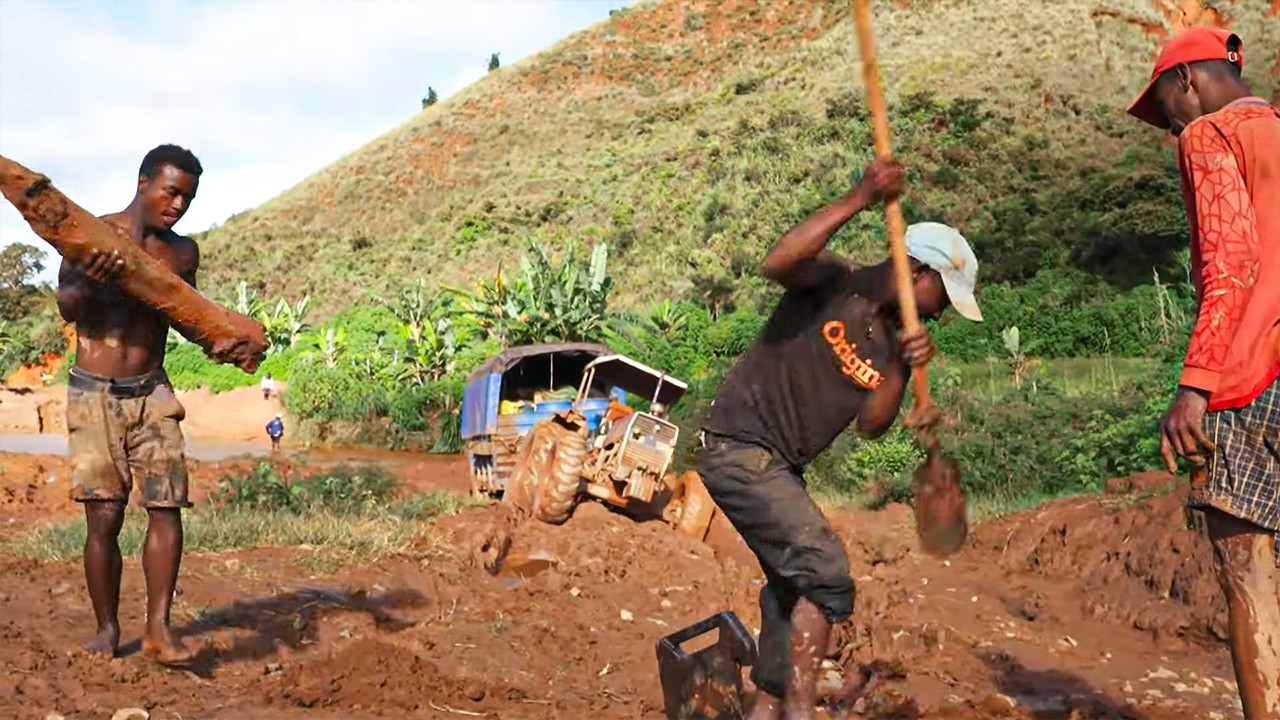
buy </i> <i>It only buys more mud, it pays in mud</i> The place is tough, the search is pretty complicated. The mud is still too soft, right? Our team doesn't exaclty get inside the mud. We work in searches in the margins to locate the victims. - In the mud, who get's there? - The spots are defined, body suspicion spots, the segments. They are plotted in the GPS. So a team comes, usually in a helicopter, right? Because even getting there is hard. Then that team removes the bodies. Some dislocate using bamboo and some with welding panels. Walking
is hard at the location. Everything was destroyed yesterday. There's a lot of mud so we go with these. Up with one, pull another, put it here on the front and go paying attention. How was today? Tiring. But what was there today? A search, still searching. Everyday the same? It's an endless search. People are saying today a body was found? Everyday we've been finding bodies. Everyday? Everyday we find them. Was today a day with an even higher number? No, not today. Not the highest, but we did find several bodies. Did you guys get inside the mud?
Yes. Have you ever been a part of any other operations like this one? Yeah, yes. Mariana. 2015 Mariana, I was there. And? The experience here is a lot different because of the number of victims. There's less environmental damage, but the human loss is substantial. Way, way beyond that. Today I'm at a loss of words to describe my suffering. <i>In this freak show, the big lords showcase their sadness</i> <i>But backstage they soil themselves and hide behind their tables</i> <i>Despair hit along with dysentery when speaking of the “tragedy” </i> <i>They gather “Novo” with “Bozo”, in a charter
flight, acting like clowns</i> <i>A ready-made speech, some disappointment and playing the part of the nice guy,</i> <i>The deceive you, even crying on TV showing how things are tough</i> <i>But the greatest insight is to try and mask the truth emanating:</i> <i>To make us forget that beyond Brumadinho, there was Mariana!</i> <i>Lost lives that aren’t coming back</i> <i>No money can buy </i> <i>It only buys more mud</i> Each step I took there, in that place, I was in my head, over at my subconscious "Am I stepping over someone I know?" A lot of times I got separated from my
team and I hid myself so I could throw up. Because that was too heavy. And that's a very bad memory. I have a grandson that is missing there. I have four nephews. Not even counting friends, cousins and acquaintances here. Third person in my family. At the dam. Also my friends from Brumadinho. And the outsourced workers who were my friends, neighbours and who worked at the dam. I wanted to ask you about the people you know. Even here, on your street, you said that there are a lot of people who are missing. There are. If you
could maybe situate where they live here. Yes. Even speaking of the firefighters, all the work they are doing. It's a job worthy of a standing ovation. Because they are working day and night, non stop. Only in the face of a storm, the rain, is that they take a break. But they are working, like this, tirelessly, fighting so that they can rescue at least the bodies, right? Those who disappeared, who are missing and buried. We have here some in the lower part here Wellington lived here, my mother-in-law's nephew. He's missing, not found. Right here at this
little green gate, Mrs. Marina is also missing. Until this day, the eleventh day, she's still missing. There's also my wife's sister-in-law, called Angelita, that still wasn't found to this day. Over there at that green gate there's lady Guiomar, too, she's also missing, she worked at the Nova Estância Inn. Still wasn't found. And there's more around here, if you look. Those who unfortunately are still missing. I lost a grandson. His mother lives there, look, in that house, over there. Right next to me. Thursday he was here with me until late. He got here from his job,
sat at the chair over there, and stayed, stayed, stayed, with me. Later he went to his house, came back here and was just chatting. Then he said "Grandma, I'm gonna leave now, I'll take a shower and go to bed." "Because I'm going to work at 5 am." "I have to pick up my baby girl, so I'll be going at 5 am to work extra hours." Yes. Then I said, "So go with God, don't you want to stay over here tonight? So you won't be alone?" "No, I'll set up the alarm on my phone to wake
up early and then I'll go." So he went, and I never saw him again. It was not an accident! It was not an accident! Andilene de Antonio Matar. Present! Present! Present! Andréia Ferreira Lima. Present! Present! Present! In Samarco's report, from the Fundão Mine, from Barra de Fundão, we verifyied that a lot of signals were given, right? Even some signals while the dam was still in it's early stages of operation. That is in our report, and that report is public. A lot of signals were given that were not sufficiently valued by the company. Now, the reason
those signals weren't valued, now that's a matter of organizational analysis. About three months, Vale held a meeting right inside this house. In that meeting they gave us some folders, these little square folders, and there's even two small books inside of them. Then they told us to gather all of the documents and everything and to put it inside of those folders. So that when the time comes and the siren rings, and the dam is in danger, when it's collapsing, we were supposed to run, go somewhere high, but we shoudn't forget to bring the documents. That means,
that's a case where Vale already knew this dam was going to collapse. The training in regards to the sirens became an obligation after Mariana. It was already in legislation but there was no oversight, right? After Mariana it started being inspected, so in a lot of places, not just here, in various other dams in the state, there was training, there were sirens right below the dams. But this showed that this process, with as much inspection as there was, doesn't work, right? So no sirens ever rang. Vale's director said it was taken by the mud before it
could ring. So what type of the engineering is the one that puts a siren on the way of the mud, right? It makes no sense. The siren should have given a signal. It didn't. This was a very beautiful area, well taken care of. There was only a stream in the middle, People would walk around all over there, there were paths up there. It's a lot of life that was lost there, isn't it? For nothing, right? I think if Vale had at least looked at it through the eyes of the people who lived in this area
down here and took them off here, right? Compensate them and get them out of here, it would've avoided this whole tragedy. The brazilian mining sector is today, as you might all know, a sector that, even underreported, is the one with most accidents, the sector with most sickness and is the sector that is most responsible for deaths in Brazil. Under all this mud there's a lot of bodies, there is. Because the 226 that are missing, no one knows where they are, right? So it's this way. It's tough, it turned it into a cemitery, right? This all
became a cemitery. It's not easy, you know. If it was already clear in that moment that our structures were absolutely fragilized, now it is clearer. They all had safety certificates. So how is it that one day you can issue a safety certificate and the next day a dam will simply fall apart? It's a dam that started operations in 1976. So it's a relatively old dam, it's 43 years old. So we have to check all of the monitoring of this dam through time. So that's a lot of documents we have to analyse before we can reach
a conclusion. A tragedy that was announced and spoken about many times. We spoke and they didn't listen to us, we screamed and they ignored us! Everybody knew even the path the mud would take. This was all stated on December 11 at the public hearning where the Brumadinho dam was licenced. That there was no accident, that was a murder. Of a lot of people, because the company knew that would collapse at any time. What we must analyze, in this specific case, is: What signals have been given, throughout the operation of this dam or its control process,
That haven't been, let's say, sufficiently valued so we can say if... So we can take some action. The workers warned them. Six months before, the workers told the company that water was leaking, that there were cracks. The company, again, keeps putting off dealing with their issues. About a month before they said that it was cracking, and water was leaking. It's been said that no repairs were being made. And water was leaking from under, those little holes leaking water. The workers I've interviewed also confirmed that there was some activity to urgently drain this dam. That is,
they knew about it and didn't inform the population. Oh, I think it shows a lack of responsibility, that they should have someone there to correct everything there, to oversee if the dam was in any danger, to be able to warn the locals. No one would tell us anything! The curious thing is that, 10 years ago Vale selected, between 109 dams they own in the state of Minas Gerais, Vale selected 8 to be a part of the "Barragens Zero" program. Amongst these 8 dams there was the Córrego do Feijão dam that just collapsed, and there was
also the Fundão dam that collapsed in 2015. To me that proves that they know, they've known for more than 10 years that they needed to recover all this waste. That there was a concrete threat of collapse. If it is outlined by the law, something that's coming up now because of Federal Police arrests, that in reality Vale actually had knowledge of hazardous conditions... That reaches levels of a magnitude... of a violent nature, because they did not warn the people that were in the Self-Rescue Zone. If there was any risk that they knew beforehand, it was their
obligation to not leave their workers in that region. To make them do their part somewhere else. Vale should have instantly warned Town Hall, warned the community: "We are in a situation that might result in..."; "We are doing everything we can"; "Get out of here". They didn't do it! <b>Now presenting: "Mud: Vale's Crime in Brazil"</b> In 1997, when it was privitized, Vale produced 114 million tonnes per year. Since then, the company began buying several stocks from other companies in their same market segment. In 2005 the production of iron ore reached a record of 240 million tonnes.
Today with headquarters in Brazil and present in 37 countries, Vale worries about quality of life and environmental preservation. <b>We're back to presenting: "Mud: Vale's Crime in Brazil"</b> Brumadinho's Disaster External Committee To start I'd like, da Silva deputy, if we could ask everyone for a small tribute to the victims of this sorrowful tragedy in Mariana. That we all might, in solidarity, take a minute of silence to honour all of these victims. Brumadinho's Disaster External Committee Shout out to our ancestors! Shout out to our ancestors. Shout out to all of the indigenous people, to all of the
black people who have died on this place. We know that it's since the 1500s when this ethnocide of traditional peoples and communities began. Here in a region of multiple mining companies. So this here is only repetition of a history of extermination. The Ferriferous Four-Side has a natural vegetation cover still extensive when compared to other regions in Minas Gerais. This piece of state delimited by these four mountainous regions, that pertain to the mining exploration activities... - Which are they? They are Serra da Moeda, the region of Gandarela, to the north we have Serra do Curral and
to the south there's Serra de Ouro Branco. This geographic space that we denominate Ferriferous Four-Side still gathers a good proportion of native vegetation. What happens is this ferriferous composition also made possible, throughout history, the formation of aquifers, right? Those are areas of water reserve that are today fundamental to supply the region around Belo Horizonte. So we are defining, and have been discussing for quite some time that this four-side can't be called simply ferriferous, but it is above all an aquiferous four-side. And the geological coincidence of iron ore with water puts us in a Public Health
concern situation, of survival and water security. Some areas have to be exempt from mining. A place with water springs can't be mined. Water runs, and contamination comes running alongside. The river communities, how are the people who depend on the water going to be? Water is the biggest contamination vehicle there is. Instead of clean water, we're having blood stained water, right? Because it's an immense sadness for our Pataxó nation. We came from a water droplet, right? A raindrop. And today men is completely touching our nature, so nature is throwing up all that waste, all those bad
things they're throwing in there. The Paraopeba river irrigated 48 municipalities, 5.17% of the São Francisco river basin, 1,350,000 people. The Paraopeba river offered 50% of the water supplying Belo Horizonte and its metropolitan region. So how are we going to be now? What I can say immediately: About 150 to 200 hectares of native vegetation have been buried by the mud. This is the first information we can already have on our hands. The second is: that watercourse, the stream that arrives in Paraopeba river, that one is gone, it's dead. The stretch of water of Paraopeba in which
all the dirt and mud arrived, don't know how many kilometers ahead, is also highly impacted and we still have to assess the size of said impact. To have at least some idea of how long it will take until it is recovered. The destruction of an aquifer is irreversible. Because it is an unique geoecosystem. So when you take a layer out of this geosystem, you expose the aquifer and it will never again offer this ecosystemic service. It's impossible to rebuild aquifers. It is impossible to rebuild springs, waterfalls. Mining means invariably destroying water resources. There is always
a possibility of recovery. I believe that adequate environmental recovery techniques can help this process, the speed of recovery of the impacted environment. It's not cheap, it takes a long time, and it needs to be integrated with the whole environmental aspect of all the surrounding landscape. Where are the forests that will allow for an increase in water extraction and recharge of the aquifers? How are the water sources? Where are the the tributary water courses that flow into Paraopeba river? All that has to be evaluated so as not to be just a planting of some saplings on
the river's banks. That alone won't do it. Mining, it's not just commodities: iron, copper, lead, zinc. It's also the limestone to make cement. Mining, more than 95% of mining in Brazil, which comes from the mining companies of Brazil, are smalll. They are micro, small and medium. The big companies in Brazil are just a few and far between. Today Brazil has more than 30 thousand mines, with one third of these mines having been legalized. What's the guarantee that society will have today, concerning these safety certificates being given to companies? The Regional Council of Engineering and Agronomy
(CREA)’s stance is shameful. With CREA’s stance I think we needed a group of Engineers to come in and contact the agency. CREA does not get into the deeper subjects. CREA does not use a basic principle of envionmental law. We say in environmental law, regarding the environment, the principle of precaution. The principle of precaution says that “If there’s no absolute certainty that it will not have a negative impact, do not do it.” In the last 3 years, precisely after the right after the dam collapse in Mariana, we've observed that environmental licensing has been completely destroyed. How
are you going to expect that this type of certificate doesn't carry any pressure from the entrepreneur who is the contractor? I mean, that should never happen. Audits shouldn't in any way be hired directly by those who have an interest and it should be better supervised. So how are you going to give the fox the key to the hen house? Environmental licensing needs to be discussed, it can't be loosened up. The community should be listened. Mining companies, they control the spaces of the State's eyes. They control the environmental agencies, the license concession process, they control the
State's Executive branch as well, right? It's known that 70% of Minas Gerais parlamentarians are financed by mining companies, right? And mining companies also stand in promminent positions in representation inside government agencies. The role of the executive government, here in Minas Gerais we had Fernando Pimentel from PT, it was really shameful, right? It was the government in which the Mariana crime happened, and the administration acted at all times to ensure the impunity of Vale. And they allowed all the environmental licensing so Vale could do what it does in our state. Public power. The authorities from public
power that help this mining companies to mantain this state of criminal routine. Almost all parties have people who have been financed by mining companies, and that way you guarantee a majority to cause this destruction in environmental licensing. To make things worse we even had a situation at the state assembly, in which we presented a bill named "Never Again a Sea of Mud", with more than 55 thousand signatures, asking for a regulation to be made, especially regarding the situation of the dams. One of the rules we requested was even that we shouldn't have any human crowding,
physical structures, communities, in a radius of about 10km from the dam. This, however, was not approved, and if it had been approved maybe we wouldn't have what happened in Brumadinho. May this episode serve as a warning and constant denunciation against environmental racism. May this episode serve as a warning and constant denunciation against the withdrawal of worker's rights. To bestow upon Vale, today under criminal investigation, the role of articulator and main informant on the state and condition of the victims constitutes a perverse and misplaced inversion of roles. Require that Vale stay in our town until they
properly repairs all victims, recovers all of their liabilities and then leaves us alone. So that we can consolidate economic alternatives based on good living and respect for nature. That's enough now. The Vale accident in Brumadinho grabs attention because this time the largest number of people who died were workers who were inside the mine. So the overflow of almost 300 workers who died, those were mine workers. In Brumadinho we have directors, we have Law School course coordinators who have been killed. I'm sorry for what I'm about to say. If it wasn't for a lot of Vale
workers dying, the outlook was not going to change. If only river folk had died, only community residents, nothing would change. What caused commotion was the way people were taken by surprise and the ammount of people affected from the Vale employees. I hope this touches the hearts of these leaders. They've messed with people's whose meat isn't so cheap anymore. Messed with white people, with people who've always been a part of the elite. They will have the means to poke the brazilian Bar Association, they will have the means to poke the Public Prosecutor's Office. We're here more
in expectation. That it doesn't happen here like it did in Mariana. Because people there are suffering to this day the consequences of the mining company. We become desensitized to it. Because it became routine, right? Environmental degradation and this type of impact, dams collapsing, it all became routine. - Not criminalizing these companies also became routine. Exactly. Then it's a new problem. I, for example, have asked the state's Public Prosecutors Office and demanded a lot of times: "We want these guys in jail, damn it!" What are we left within the limits of the law? I believe that
is unfortunately criminal law, still. Because when you threaten freedom, they are afraid. Only thing is criminal law is so selective. As much as the Judiciary is. With Samarco's criminal action, we had no one arrested. There was an ecological disaster there, but it didn't serve as a lesson. We realize today that lesson and work needs to be done in a different way. To think for example about seizing Vale's assests, To take away all their permits until all investigation is done. So something else that is really going to hurt them needs to be done, that needs to
be like a knife wound, something that is going to really cause damage, that hurts the flesh. They already go through the whole process knowing they are going to be fined, that they will need to pay up. Therefore, touching the financial aspect is proving itself ineffective. And there's more, recently the mayor of Mariana has brought us information: That these collected fines never got to the town. The ones paid by Samarco. What now? What should be done? Who's being fined, where is it going to? I think it's absurd to come here and talk about current problems. That
even regarding emergency support - people have lost everything, they have no income - and now they keep delaying negotiations with the Public Prosecutors Office, Refusing settlements, filling up on lawyers who are very well paid to muddle things up. People are still grieving. People are still suffering. And they need to understand their own condition as tragedy striken and understand all of the damage they've suffered. Victims need to be compensated and repaired, and the company must pay it. There's nothing to negotiate. What has been destroyed has to be rebuilt. Equally or better than it was before, this
is a right that people have. This money they are offering as a donation there, that I think is something to... Look, I shouldn't be telling you that there's already been problems amongst families because of these 100 thousand Reais. So what we want is to build a parcipative process with the victims so that this might arrive at the right time. We don't think that it's right for Vale to arrive on scene, get their receipts saying they've payed everyone, and that there's no more issues. It is Vale's problem and it won't be so easily solved. 100 thousand
doesn't pay for someone's life, no. Doesn't even begin to. No money pays for the life of a human being. We had a healthy life here, a peaceful place. Now it's all over. The community is over, my homeland is gone. About this accident, that I call a "work accident" because it happened during the work process. It wasn't a lightning strike, there was no windstorm, it wasn't an environmental issue. It happend during the work process. And when an accident happens at work the issue has to be characterized within the Labour Court, not within normal Courts. And what's
the result of that? If it's considered a normal accident, or as an environmental accident, it goes to normal Court. So workers, instead of being the worker who was affected by an accident during his work process, he will be a victim who goes to normal Court. And he will fight twenty years in court just to get anything. If it's a labour related lawsuit the process is more serious, on the Labour Court. The guarantees are clear, there's job stability, guaranteed compensations. There's a series of issues already consolidated in the scope of Labor Justice. Unfortunately fellow environmentalists, and
some fellow trade unionists, do not make that distinction. We are not minimizing the accident when we say that it is a work accident. We are doing the opposite: aggravating the accident. Because an accident at work only occurs in those proportions if the company didn't take concrete actions in order to prevent said accident. <i>Let me breathe...</i> <i>Clean water, I’ll go get it, wherever it is</i> <i>The world is dead at the hands of Monsanto</i> <i>Someone tampered with the meat now there’s only tears left</i> <i>To the one that eliminated a river, eveything is fair game</i> <i>Environmental crime or
a simple accident, you tell me</i> <i>Bribe buys silence but doesn’t stop the slaughter</i> <i>Genocide worth dollar bills has already taken millions</i> <i>Toxic gas at the atmosphere</i> <i>Imminent death can’t stop the greed of the beast</i> Oh my God! Throw her the rope! My first mission was to get in, feed the animals. We had no permission to rescue the animals. So we could only feed, medicate and let the rest of the team know about the animal's location so they could rescue the animal. So, a lot of people come here. Even yesterday. We got here all dirty and
someone came here with their nephew's picture, asking us "I saw a documentary on TV about your dog, I wonder if maybe he could find my nephew?" So you know, it's kind of sensitive to work with this. Our dogs have been helping locate the victims here in the Brumadinho catastrophe. Our dog right here, Vênus, she helped identify some bodies while doing her job. Euthanasia, that's only done by a group of veterinarians, right? More than one veterinarian. When dealing with an animal that has no more living conditions or quality of life. Then they are euthanized, in an
obviously legalized way, within all the ethics codes we have about the subject today. - Has it happened yet? It did happen, some animals have been euthanized already. - What about the animals? A lot of animals, a lot of them too. - Did any of them need to be put down? Yes. I personally didn't need to put any of them down, but I saw it happen. We also made rescues and saw them, too. - Stuck in the mud? Yes. - Around here, close by, or farther down? A lot of spots, right here in the mud. This
area has a lot of farms, a lot of ranches with animals. <i>Let’s go, let’s unite</i> <i>It’s time someone took over</i> <i>The bill from the mud, who’s mud is it?</i> <i>Consciousness and fight to react</i> <i>That’s our reason to go on</i> <i>Resurface from the mud, we’ll get out of the mud!</i> <i>Mud!</i> <i>And once again we're at the margins of the extractivist machine</i> <i>That prioritizes its mineral riches over human beings,</i> <i>Upstream dams,</i> <i>Upstream deception,</i> <i>Upstream deaths,</i> <i>Upstream blood and tears!</i> <i>Justice is what matters!</i> As soon as the dam collapsed, the Public Defender Office, from the State and also
other institutions, we moved here and we are beginning to give on-site assistance to deal with the situation of the affected victims. One of the catastrophes Vale brought upon us, as a camp, is the matter of the river. We used the river to bathe, wash clothes or even at leisure moments. Vale doesn't recognize the agricultural working class, the campers from Pátria Livre Camp, the people conected to the Rural Workers Without Land movement. These countrymen who produced, these farmers who produced on the Paraopeba baisin, around the river, who used the water for irrigation. Because they recognize that
the movement is an instrument of fight, even against the atrocities and crimes they have been commiting. There's also the indigenous people who live next to Paraopeba river. Who also have their water rituals, bathe in that water, and everything else. And who are now unable to have the life they had before, right? Their life changed drastically from one day to another. Our river is dead. We can't go fishing, we can't wash the dishes. We can't even perform our ritual, right? Our water ritual. Especially for indigenous peoples, the river is not just a water resource. For the
indigenous people the river is sacred. It's a lifesource, it's a father, it's a mother. So to see all that destroyed, it means that the enchanted spirits are being hurt. Because the river is related to us, right? We are all the time in contact with it. It's the same thing with a tree when we are taking care of it. So it becomes a part of the tribe's family. That dust over there gives you cancer, that dust gives you whatever damn hell. And what will Vale do for us? What will they do for the people that live
here? What are we getting? And I'm not asking for money, no. I want to know because they won't be planting some trees, won't do a fucking thing. - Nothing. And then we have to live here with bad smell, because there will be a bad smell. And the dust gives you skin cancer, there are children who can't be here because they have an infection. What are we going to do in this place? - What is Vale going to do with this? I am the one who asks, what are they going to do? How are they going
to recover all of this? Because I think it's going to be hard. There's no way to recover this, look at all this. Now with the way everything is spread out in Brumadinho, you have to go and get all of it. Put it in a conveyor belt. Like you do with ore, to transport ore from the mine to another area. Get the conveyor belt and take it all to Feijão's mine pit. Throw it all in Feijão's mine pit. I want to know how Vale is going to do it. If the State still accepts this type of
solution, that is leaving all the waste thrown where it is. If the operation is going to expensive, or cheap, that's the company's problem! They created a problem, now they fix it. So, this type of proceedings only justify that crime does indeed pay off. So it's worth a shot taking a risk. It's worth risking with, in a way, negligence. It's worth risking it with a completely outdated production mode. And with that you make it so more and more structures like this can collapse. Tomorrow, now, we are going to do something over there at the police station.
I'll go there to file a report about this car. And I'll get new documents, since it all stayed inside, we left only with the clothes on our bodies. There was no time to get anything. With three seconds we got away from this pole, stopped over there and the mud stopped right behind us and closed the street. - Three seconds? Yes, these trees there warned us, if it wasn't for them... - You heard the noise from the trees? If it was just the mud, it would all come in silence and kill everyone, right? Then the trees
came with a bang, breaking everything so we saw it. It was over there, look. At the time when we got a girl out, the mud was already there, look. We took the girl from there in the back. - What did it sound like? The noise? It was the sound of the trees breaking. - Strong? Strong. Same thing as a truck turning full of stones on the street, same way. - This water running through here, was this the stream? It used to be a stream, it went around the back of my house, here. Now it's moved
over there, but it used to be down here. Just a little. It was over this gully there, look. It was the place where we fished at night. Now, look. It's all clay. It's all just mud. Every time it rains on that mud, every time wind passes through that mud, all sorts of toxic things will rise. We made a calculation in 2017. We were exporting per brazilian inhabitant about 1.7 tonnes of iron ore in a year. Then there's people who turn to us and say: "Oh, don't you wanna have a cellphone? Don't you want to..." I
do, but look, 1.7 tonnes of iron ore, to me, in the year of 2017, shouldn't that be enough to pay for all the iron I'm going to use in all of my products, for the rest of my life, and all my generations after me? Brazil, in reality, is exporting iron ore and with it, environmentalists raise this question a lot, the fact that water goes with it. Together, because of the pipelines and everything. But I would add that beyond the water problem, with the pipelines, we are exporting jobs. Because once iron ore goes to metallurgy, once
it goes to the steel industry, it creates about a 100 new jobs. But instead of creating these jobposts here, in Brazil, we are creating it in other places of the world. We're never able to truly know: out of the ore that goes out of Brazil, How much of that is transformed into weapons and arms. When China begins paying over 150 dolars, a series of loosenings of environmental concessions began in order to start a large-scale production process. And this brought along a spike on an already big number of accidents, illnesses and deaths. We know now that
the Chinese stopped buying iron ore and the market went into crisis, right? And that's a disaster because dams get abandoned, safety gets abandoned, and it plays right into the disasters we are seeing happen now. Because the first thing companies slash are the costs for safety and for the environment. These mining companies don't follow work safety procedures. This leads to situations like we are living now, right? Through the years, but especially the last three accidents: Herculano, Brumadinho and Mariana. Samarco, Vale and Herculano mines collapsing and when we inspect them Unfortunately safety measures were not being followed.
That's why we use a concept, in this kind of accident, we use a concept from literature called "incubated organizational accident". It will... A complex system operation, as a tailings dam is, as a refinery, as an oil platform... It has to be monitored, right? And you have to understand the signals that are being given, you have to interpret these signals, so you can say if they are strong or weak. And then it's the company's interpretation, it's the company's decision. That's why we call it an "organizational accident". Because they are decisions that are being made throughout this
system's history, right? They are made by the organization. It’s what we call “announced accident”. Because the disasters that happened in Brumadinho and Mariana are consequences of the administration of the company Vale do Rio Doce, in the case of Samarco. Consequences of an archaic work process; a work process based on the low cost of the technology used; based on the overexploitation of labor; of excess working hours; rampant outsourcing of jobs inside dams and mining companies. Here is what's Vale's deal: they would rather pay the fines, than fix this business. Because that already reveals a lot of
poorly constructed dams, right? It's some people we have to evaluate. I believe our government should take a stand regarding this company. And they shouldn't be buying authority, as they've been doing so far. So this is my manifesto, okay? My indigination at Vale. Wherever a mining company usually starts operation, there's also usually resistance. People who lose their land obviously do not agree with this procedure. It's a mining system that is based on the destruction of the environment. It's based on overexploitation of labor; it's based on the export of products with low added value. That is, it's
an entire system that subordinates such immense wealth that we have in our country to the interests of imperialism, and this is a pattern that can't go on any longer. In general, the affected communities are poor communities, rural communities. Non-white communities, right? That may be indigenous, may be quilombolas, or simply a community part of a Brazilian peasantry. And the licensing rites were constituted as true rites of exclusion and even extermination of this population. To the extent that they represent depeasantization, in fact, right? Brumadinho was an essentially rural town. It was a town that lived off the
land, a city of agriculture in general. When mining came to town, people understood that mining would make you more money. So they started especializing themselves so they could work in mining. So there was a rural flight. These consequences that we are seeing today, they're typical of mining. Mining is an anthropophagic activity, right? It consumes entire geologies and it consumes social, cultural relations and all those territories. The territorial expansion that mining has today is a direct consequence of the compulsory displacement of indigenous nations, right? Of cities, of agrarian territories, of agricultural territories. It does not allow
for the organization of the other economies, it kills, it succumbs everything to nothing. This mining sector, and these companies, they came dominating the landscape. Taking the population and society hostage. Because they go directly in all instances and contaminate, co-opt, insert themselves, change laws that hinder things... So when this feeling of really realizing that there are people out there who even in the face of a tragedy, keep silent, this is an imposition. It is a dictatorship of the economic power of mining under our territory. It's impressive to see the level of control Vale holds, and expects
to hold, of all that. And how the government is always an enabler of that situation. So what happens here in Brumadinho is just that: mining, it's dominating. People think that it generates employment and that it generates "development". But this is very clear. You can see it, if you go there at Brumadinho's headquarters, Or here in Córrego do Feijão, in Parque da Cachoeira, everyone here who's a neighbour to a big mining complex like that. And there's poverty, and there's violence, and there's drugs. So all that talk about how mining brings development is bullshit. Go there to
the region of Carajás, go to every kind of mining cities there, so you can see. City governments are all manipulated, right, because the company finances their campaigns, and plays all their little games. Mining companies, they operate in schools. Vale provides environmental education and sustainability courses in public schools as a compensation measure. So they are in all spaces of public opinion formation, in addition to having millions of dollars to advertise. In addition to funding the campaigns of almost all politicians who were elected in 2014. Mining companies will speak full of praises about development, But have no
interest in the population and in human lives. <b>Now presenting: "Mud: Vale's Crime in Brazil"</b> Behind every evolution, there we are. Rediscoverers. We are inquisitive, we are restless, challengers. We believe there's no ideia in the world that can't be reinvented, reconceived, improved. How to evolve more? Be more efficient? More sustainable? It's by rediscovering these questions that we are seeing a new way to look at the future. Rethinking ways to use renewable energy in the entire world. Reimagining the processes to deliver high quality ore. Preserving an area of atlantic forest equal to 23 thousand Maracanãs. Discoveries changed
humanity, but it's rediscoveries that are making the world better. Vale. To rediscover is our nature. <b>We're back to presenting: "Mud: Vale's Crime in Brazil"</b> Much of the mining took place from the 70s onwards and accelerated in the 80s to the 90s. And this thing was kind of like that, since the 50s it was being prepared. So the thing is, you had far less mining activity than you do today. It was a time of dictatorship, the company was State owned, so there must have been accidents, or disasters, and we never learned about them. I don't believe
that "nothing ever happened". We understand that nationalization is the best option in this process, and what we see is that. Salaries have changed a lot from nationalization to privatization, so wages have fallen a lot with privatization. Vale is one of the companies that has the lowest salary in the region. We follow a different thought process. We follow the line of the right to say no to mining, we do not believe in mining for export 80% for commodities and stock exchange, to be accumulated in other countries at the expense of our environmental, social, future, water losses.
We have a different way of seeing it. We don't think about nationalization, because that would not be going deep. I don't think the problem is whether it's private or state owned. It doesn't mean that the state model is eminently concerned with society. Because the logic behind it is much bigger than that, the logic is that of capital, so whether it's a private or state company, their goal is the same, they want profit. So we’re not getting in, nationalizing the company, even more so with the government that we have. Now, if it's a State where, the
way our administration works today, where society doesn't have a say on anything, I don't know if things will get much better, I don't know, honestly. I'm back to the question of, for example, from a part of the left field of politics, a part of the left that defends this mining process, and is conniving with the way things have taken place. I wonder if they were managing these companies, wouldn't they be conniving with these matters as well? We also have a problem with injustice on a global level. Because companies from my country of origin invest in
countries like Brazil, knowing that here they can kill and destroy the environment without a problem. You will remain unscathed. It's very clear that Vale joined this logic as well. Vale has built up its assets with Minas Gerais ore, so the region of Carajás now has one of their borders to recover the environment here. And to think of another way of mining that has not yet been given to us. What type of mining do you want in the end, right? If we have technology that tells us that it's possible to mine without enbankments, why allow the
existence of tailings dams? So I think that's the question you should put forth now. I think mining is in question, and this whole production model is in question. The tailings system they put on dams has to change. You can separate iron ore while dry. Separating it dry, there's no danger. It’s mining in which you extract the water, and you will make a concentration of that extract that is not used, and then you are able to make piles of deposit. It’s not enough, therefore, to put new tecnologies to mine, to change the way to make dam
of mining tailings from upstream to downstream. It’s not enough doing it dry. It has to end, has to. The vocation of the state of Minas Gerais, it’s not the ore mining, it’s the mines of water. And here, Minas Gerais has the responsability of being the water tank of Brasil. For us, mining should be restricted to when strictly necessary for the collective interest. We should first harness all the iron ore in our scrap. We should have processes to reuse steel in the works at all times. “Oh, Minas need mining, there is no other way, it generates
a lot of jobs, and what else...” Today I think that the stunt in Minas’ growth is in big part a result of mining. The scale of production has to be discussed, because it affects the population not only with dams. It’s dust, it’s noise, it’s a train passing in the city, it’s detonations. So, mining can’t arrive as “mini-mining” and then later turn into “mega-mining”. "Because the price of ore has gone up" or "because the market is doing well." It’s not true that these workers want to work in mining. I have already said it in union’s meetings.
I don’t believe that a human being, with all our vocations, Has the vocation to explode mountain ranges, to watch water being contaminated, to watch everything get destroyed and destroyed, including health risks to these workers. I don’t believe this, this isn’t real. That’s the result of a system shoved down our throats, coming from various strategies in all the places where there's the guarantee of imposition. During the Mother Earth and Sister Water’s calls; during all the Biomes’ outcries, the Cerrado, the Atlantic Forest, the Amazon, the Caatinga, the Pampas, all the traditional and native peoples, that are being
sacrificed at the altar of God Market, of God Capital. Palliative or moderate stances are inadmissible. We need to recognize what’s at stake now... what’s in danger is the future of the humanity. We think that there shouldn’t be any more Vale. We already talked about where we stand on this, after all this tragedy and all severe impact it cause in Minas. Severe impact! The company should end their activities, they should pay for the damages with all their accumulated profit, this is also another calculation that needs to be done someday. Everything Vale has achieved, the stock market,
the shareholders, all of their exploration of Minas Gerais in the past 70 years. <i>A grey world, there’s no life, it doesn’t even seem like one day there was any</i> <i>Instead of green a dark landscape is drawn</i> <i>There’s no flowers, no fruits, all that is born dies</i> <i>The contaminated air, not even worms can develop</i> <i>It’s hard to breathe, the weather is dirty and muggy</i> <i>Intense heat, on the verge of unbearable</i> <i>There’s no rain, no water, I’m thirsty</i> <i>It’s like the land has changed and now it’s hostile towards us</i> <i>Storms and dust don’t give a break</i> <i>None
of the four seasons manifests itself anymore</i> <i>The grey once was grass, the green stood out before</i> <i>This rip was once a river, there was water before</i> <i>The soil is suffering as far as the eye can see</i> <i>Living nature, only lives in the memory</i> <i>It’s been awhile since I’ve heard birds singing</i> <i>Change, too drastic for human beings</i> <i>Those who are left now live in equality</i> <i>Gold and silver are worthless, just extra baggage</i> <i>Trash and luxury all in the same bag</i> <i>Diamonds and rubys aren’t worth a single ripped dolar bill.</i> Mining isn’t gonna last forever. When the
ore is over, the company will leave. And it’s perfectly clear that cities like Mariana e Brumadinho, that were totaly dependent on the mining companies, they will get into a deep crisis when that happens. If mining is over, jobs are over too. If mining is over, Corrégo do Feijão is over, Brumadinho is over too. The dependence on ore can be overcome. That’s because there were economical alternatives before Big Mining, large scale mining, established itself in citys. I think we should stop with the mining. Obviously, there are those cities that already depend on it, and in those
cases we cannot just say: “Let’s close the mines." Because it will turn into unemployement, it will turn into a revolution. But you got to imediately elaborate transformation strategies for these cities, so they can achieve economic diversification, and free themselves from mining. Vale says: “For a world with new values”. It’s their slogan. And we say: “There are values in the world that are not up for sale”. So for us, this license that they got now, it was in exchange for an asphalt road that they would build connecting Casa Branca to three-way junction Alberto Flores. For us,
I don’t drink asphalt, what I want is water, I want forests, biodiversity, quality of life. So we take a stand that some things are non-negotiable. And in the city of Brumadinho, you can count on your fingers the number of people with courage to take a stand. That’s because it’s a city that depends economically on mining activities. The city is hostage, because when the mining sector installs itself in the land, they make alternative economic development unfeasible. We have here the Rola Moça ridge, there are waterfalls, it’s an amazingly forest rich region. We have the Inhotim museum,
which despite all its contradictions, is still an important tourist spot. So, we have other economic alternatives, we're not just some loud hippies that keep saying "No, no and no". We know our region’s natural vocation is ecological turism, gastronomic turism, it’s the development of cooperatives of craftwork, of food production, of agriculture and of agroforests. We understand that with agroecology people will be able to self-sustain. They will have food, it’s starts there. Another thing is, selling bananas is much more lucrative than selling iron ore. Because the iron ore tonne is cheaper than the banana kilo. So if
you look at the proportion, it shows itself as a necessary calculation. A ton of good quality iron now must be about USD 90, so you can have an ideia of princing. So if you take the banana kilo and multiply it, make it a tonne, you'll see that selling bananas is much more profitable. “Oh, with no ore there’s no fork, Teca, you're not gonna have a notebook, we'll travel by foot...” Screw us! Because if we have no water, no landscape, no health, and no other possibilities that’s when we have no future. Oh, yeah, once I asked
at the legislative assembly, during a seminar that had everything to do with the subject of mining, and there was the line from the mining sector, and they told this story: That without it, there woudn’t be any bicycle and cars. I sign myself up to speak, and I said: "If you guys are saying that by 2020, as of 2020, we won’t have this amount of ore," "how are we going to make more bicycles and cars?" "If we will no longer have any ore because that’s finite?" The answer given by the sector was: “When we get there,
we'll look for new tecnologies to make cars and bicycles in another way.” And then I said: "Ok, and will you have the techniques and the tecnology to replace" "and rebuild everything that’s been lost?" Now, like this, with this amount of news about dams on the brink of colapse, we understand now that this is pressure from the market sector to demobilize people, and weaken the territory. That’s because people get scared, and go away, they move to the inner city because of it. And these territories are getting left with less and less defense. So there’s this cynical
game that’s being played. Which is precisely the case with the decomissioning, that’s actually simply selling the tailings. And this is being introduced to the population as a security measure, but in reality everything was planned all along. It’s not possible to remove everyone from this territory. Because that is all they want. Everything that the mining sector in Minas Gerais wants is: Everybody leaves, and finally they are free to do whatever they want. That’s why it wasn’t a surprise when a resolution, that usually faces resistance of the entire market sector, went out only 5 days after the
disaster. Where’s that normal, right? So it shows clearly that it was already planned. I believe that Vale will keep being just a logistics and transportation company in Brazil, of the ore market. The company will no longer have a mine pit very soon, because everything points to that. And why is it that now the company has 19 upstream dams and they’re about to deactivate them all? This decree ordered by SEMAG, in only two days ready to deactivate the dams, it’s something hard to swallow. So you want me to believe that SEMAG has prepared this ordinance in
two days? We understand there's a lot of suspicious things with SEMAG and Vale's actions since the beginning. We will solve the dam problem. “Great, we are wonderful. Now we‘ll take the waste, and use the waste for making bricks, we can use them”. That is, things that were key at first, like security, and no new dams with people in the self-rescue zones, and treating these problems with urgency, they went and said instead: “No, we want tailings, from now on tailings will be very useful, with them we will make bricks.” It’s not the tailings, they say it
is but it isn’t. It’s the fine ore, dust, that they throw with mud, and after it’s dry, they recover it again. The most expensive ore you can have. When they realized that new technologies are capable of separating tailings from ore, once again the voracious economic thought, to be able to make ore pellets, they woudn’t need to use all the ore that came from the mine, they could combine the purest ore with the ore removed from the tailings, and with that combination this would be enough for producing the ore pellets that will be sent to China,
and they considered this process as exportation. And there started this new trend, that we can see it happening, of using the tailings and bringing them to society, as if they were wonderful and now they will solve the dam problem by using the waste. A lot of people aren’t home because they are afraid. The fear is unwavering. I prefer the day over the night, because I’m afraid that another dam will colapse again, And if we are sleeping, there's no time to do anything. We are living a nightmare. So, I prefer the day, bacause in daytime everybody
can run, and everybody can go to the highest ground and yell at others to run. To see if there is time too, right? There is that as well, and run away. And in the night, when we are all sleeping, I ask how, how am I gonna escape death? Unfortunately, that will last for years to come. For now we find ourselves in a moment of a lot of commotion, right? Globally, but we know that this is the kind of thing that passes, people forget about it, especially those who are not from here. We, the people who
live here, will be living with this every day. And this will last for years, and years to come, for sure. And us, those who have the experience from Fundão in Mariana that destroyed the Doce river basin, we know that from now on the companies will come strongely, with judicial actions, they will make deals, they will go to the government, and do everything there. They didn’t pay fines, they didn’t make good reparations, they made horrible environmental reparations. That foundation Renova that is very... it's theirs, their own. It’s the same story, they inspect themseves, they make their
own studies, they make the recovery, and all they want is profit above everything and mud above everyone, unfortunately. My biggest concern is about what comes after this tragedy, because in a few days everybody will go back to being a human being and forget about this wave of kindness, and after that there’ll only be the locals, and the silence. We can leave our houses open here, there is no danger. There's a lot of cops in here. But, when all of this ends, it will be... Before this happened, seeing cops here was very rare. When all of
this is over, the sound of the chopper, the fire departement gone, all the policing gone... We’ll stay forgotten here. <b>Mud: Vale's Crime in Brazil</b> <b>The tragedy of Brumadinho.</b> <b>This film is dedicated to the families and friends of all those directly or indirectly affected by this tragedy and crime.</b>