Today we're talking about social media strategy. As a business owner, how do you figure out the right social strategy so that your content actually grows your business? This is the million-dollar question.
Now, it turns out there are only four different social media strategies that you should consider using as a business owner. So, in this video, I'm going to walk through the pros and cons of each one. And by the end, you will know exactly which social media strategy you should use to grow your business the fastest.
By the way, I'm Callaway. I have a million followers. I've done billions of views.
And I've also worked with hundreds of business owners behind the scenes to figure out their social media strategy. All right. Now, right off the bat, I'm going to introduce the four different social media strategies.
And as with anything, there are pros and cons to each of the four paths. You can win with any of them in any niche, but ideally, you want to go allin on just one. So, to start off, let's go through the four options.
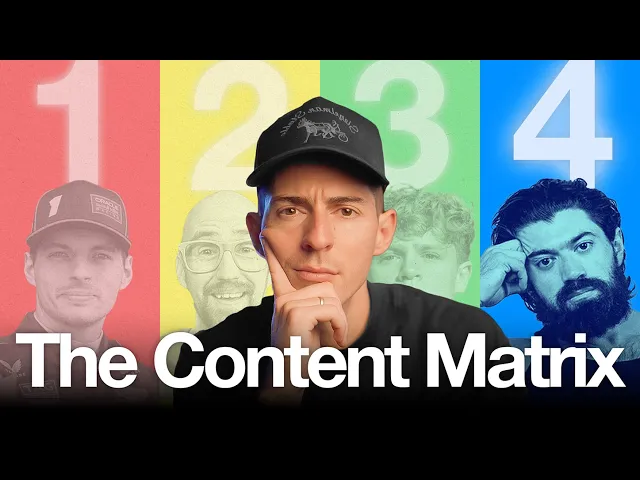
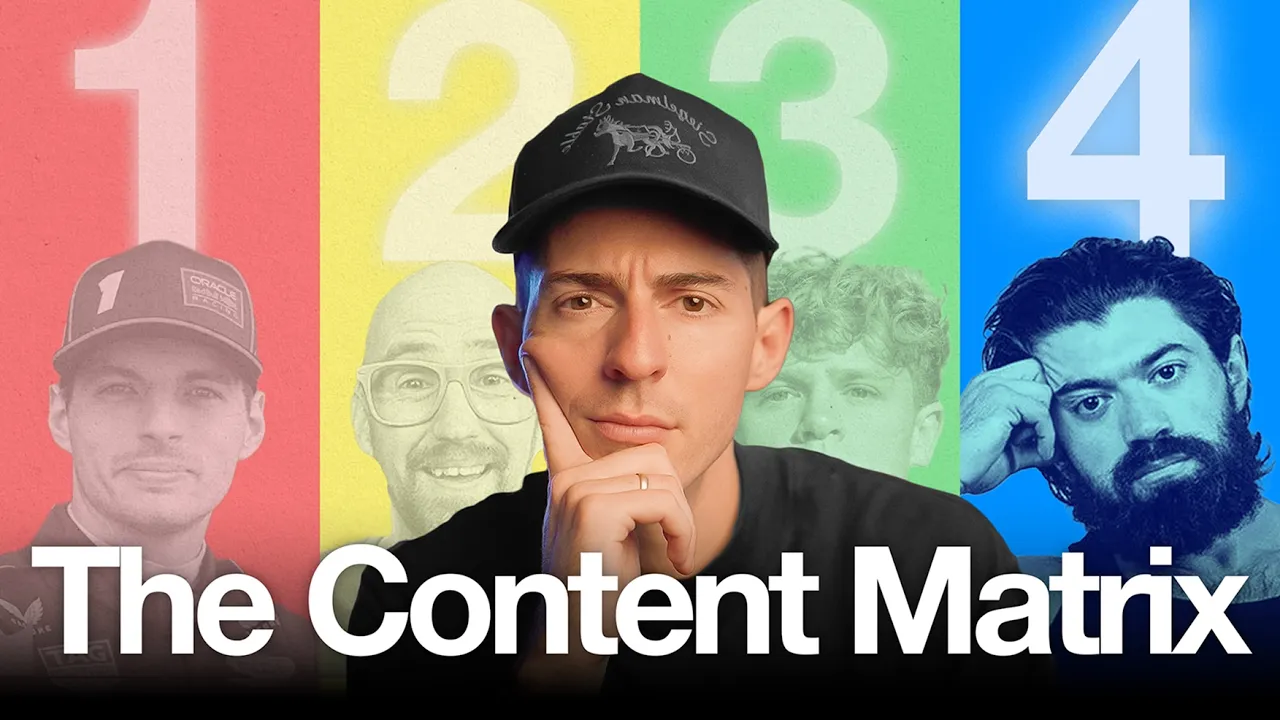
Really, you have a 2x two matrix. You've got individual personal brand and traditional brand account positioning on one side and then you've got entertainment verse education content on the other. This gives you four total strategies.
Strategy one, you could build a personal brand account making entertainment content in your niche. Strategy two, you could build a personal brand account making education content in your niche. Strategy three, you could build a traditional brand account making entertainment content.
And strategy four, you could build a traditional brand account making education content. So, those are the four options. Now, a few things to keep in mind as I go through this.
I'm approaching this exercise assuming your goal is to make money through content because my YouTube channel is specifically designed for business owners to use social media or YouTube to make a ton of money for their business. If you're an artist or you're not really looking to make money through content, this video is probably not for you. Okay, now let's break down those different factors to help you figure out which of the four boxes you should play in when it comes to your account positioning.
Individual personal brand versus traditional brand. This is really about where you want the trust to acrue from viewers. You're either going to position yourself as an individual personal brand with the trust acrewing to you as the messenger or you're going to position yourself as a traditional brand with the trust acrewing to the brand around a set of messages or beliefs.
This is Ronaldo verse Nike for example. Now, of course, traditional brand accounts will still have individuals literally making the content. So, some degree of trust is going to acrue to those faces and those characters.
But this decision is really a macro decision on where you want the value acrruel to go. Now on the content side, entertainment versus education, this is more of a decision of how you want the value transfer to happen in the content. On the entertainment side, value comes from a dopamine unlock in content that drives some emotional transfer.
Things like humor, fear, sadness, joy, curiosity. The goal with entertainment content always is to drive that emotional transfer. On the education side, the value comes from a utility unlock.
when you make content that drives a tactical value transfer, something the viewer can actually use to solve a painoint or problem. So, that's entertainment verse education. Now, like I said initially, you can win with any of those four strategies in any category, but you really have to pick one of the boxes and go allin.
And that's because the way you execute against each one varies significantly. If you're straddling or half in, half out, you're going to lose. All right.
Now, last thing to say before we get into the meat of how to pick, how to make the content, and all of that. To pick the right strategy, you first need to identify what business game you really want to play. Certain content strategies, certain boxes don't work if you're playing certain business games.
So, here are the two different business games you can play. The first game is the advertising game, otherwise known as brand deals and CPMs. In this game, brands and the social platforms pay you to make content that you post on your channels.
And really, this is just an advertising play. They pay you $1 to make your video because they think they can get $3 back when your viewers buy their products. Now, typically the advertising game works only if you're positioned as an individual personal brand.
Regardless of whether you make entertainment or education content, you have to be an individual personal brand. It doesn't work if you're positioned as a traditional brand account because competitors don't want to pay other brands to push their products and the other brands are not going to push them. So, if you're playing the advertising game and you want brand deals, you want the platforms to pay you, YouTube, Instagram, Tik Tok through CPMs, you have to be an individual personal brand account, whether or not you're entertainment or education content.
Now, the other business game, the one that most of the people watching this are trying to play, is called the conversion game. For this game, you have some product or service that you're trying to sell to your audience. You use free content to build awareness and trust, and then at some point, you try to convert some portion of those viewers to a paid offer.
And for this game, all four of the boxes, all four strategies are viable. Okay, so before I go any further, let's just review what I've covered so far. And by the way, all the crazy valuable non-obvious stuff, it's about to come next.
I just had to set the stage so everybody's on the same page. This is the summary. There are four main social media strategies split across a 2x2 matrix.
You could position yourself as a personal brand or traditional brand, and you could make entertainment or education content. That makes the four boxes. Then we have two different business games you could play.
There's the advertising game where you rent space on your content in exchange for dollars. And there's the conversion game where you use free content to try to convert viewers to buy your products and services. If you're positioned as an individual personal brand, both business games are viable.
You can play either. If you're positioned as a traditional brand, only the conversion game is going to be viable. The advertising game really isn't.
And just to prove my point that you can win any game in any niche across any of the four boxes, let's take a simple example. Let's go with travel. So, you've got the four options for personal brand making education content.
You've got someone like Cara and Nate. They've got 1. 1 million followers on Instagram, 4 million followers on YouTube.
Their channels are mostly educational tips and vlog breakdowns, giving you tactical things that you can do when you travel to different places. They monetize mostly through brand sponsorships, YouTube AdSense, and they also have a newsletter, which they sell ad space on as well. So, they're playing the advertising game a couple different ways.
For scale, they probably make5 to$10 million per year. Now, for personal brand travel on the entertainment side, you've got someone like Katarina at professional traveler. She monetizes mostly through travel related brand deals.
Again, playing the advertising game. And she gets deals from places like hotels, airlines, tourism boards, things like that. Now, her channel and her content is mostly cinematic travel vibes.
The reason it's an entertainment account is because her content is not tactically applicable for the traveler. If you see her lavishly lounging around Morocco, you're not going to get a tip for what to do. You just get inspired emotionally to want to go there.
You see the difference? One, Cara Nate is more educationally focused. You watch a video and you can tactically apply something they give you to go plan your own trip.
The other Katarina is more just vibes trying to create this emotional transfer to get you to travel. Now, on the traditional brand side, we have two as well. So, on the education content side, we have a brand like Lonely Planet, and this is a business that sells custom travel plans, among other things.
They use their free educational content to teach viewers a bit of a sampler, kind of like Karen Nate, what to do when you travel, where to go, etc. It's really a sample of the things that they sell on the custom and higher tiers. And then lastly, on the traditional brand entertainment side, you've got a brand like Wander.
And this is a business that rents luxury vacation homes in the US. Now, they use entertainment content to help expose future travelers to their properties and the experiences you can have. They're not educating viewers on travel tips or teaching people how to run luxury properties.
Their content is purely entertainment. It's trying to drive some emotional transfer, FOMO, inspiration, motivation to book. That's kind of where they play.
So, like I said, all four can work in the travel niche. All four of these are making seven figures. The two businesses are much, much bigger.
So, you can win with any of the four. You just have to pick which one you want to play based on the business game and then go from there. Okay, so hopefully that example was helpful in seeing the four boxes can work for any niche.
So, where do we go from here? The million-dollar question really is this. How do I pick which of those four boxes I should play in as a business owner with a specific business?
How do I know which one's going to work for me? And then also, once I do pick one, what content do I actually make in my box so that it actually works to convert? And I'm going to go through the answer to both of those questions right now.
By the way, if you're watching this and you're a business owner, which I hope you are, and you like the way I break these things down. I just make it simple for you to understand. I built a free community with 32,000 other business owners and 65 other trainings just like this across all different types of stuff with content and YouTube for free.
It's completely free. People are in there helping each other with content. It's honestly the best community and resource for business owners when it comes to content on the internet.
So, if you want to join, I got an invite link for you in the description. It's called Wavy World. Okay.
So, the big question on your mind right now after watching everything I went through so far is this. How do I figure out which of those four boxes I should play in for my business? And the way you decide that strategy is based on two very simple questions.
It's honestly shockingly simple. Once you have the framework, the first question is the bigger one, and this is how you decide whether or not you should make entertainment or education content. This is what you have to ask yourself.
Does the product or service that you sell require education for how that solution actually solves the problem for the viewer? Or is there embedded understanding in the product and solution? I'm going to explain exactly what that means.
But that question, underline that question, write it down on your paper. That is the only question that matters. So, let me explain.
If you're selling candy, if you have a candy brand or a chocolate brand, you don't need to educate the viewer on the problem that they want to snack or that your solution, your candy, will solve that problem. They understand that candy solves the snack craving. So there is an embedded understanding in the viewer's brain of how your solution could solve their problem.
So you don't have to educate them on how that solution works. So all you need to do with your content is make the viewer remember their problem that they're hungry and be aware of your solution that you make candy. And the easy way to do this at scale is to make entertainment content that creates an emotionally driven desire.
This is why Mr Beast entertainment content works so well to sell his chocolate feastables. It's also why Midday Squares skit entertainment content works so well to build their brand and sell their chocolate. It's because there is already an embedded understanding that chocolate solves the snack craving.
So, you don't have to educate people on something that they already know. Of course, they need to learn about your product and brand, but they don't need to be educated on how your product or brand solves their problem. See the difference?
Now, let's take a completely different scenario. Let's say you're selling custom tax solutions for small businesses. A business owner may not need education on the problem.
They know they're already paying too much in taxes, but they will definitely need education on how your custom tax solution better solves that problem than any alternative. So, with your content, you're going to need to make sure there's a clear path to that viewer and ultimate buyer learning or being educated on how your solutions work. If you just made entertainment content about taxes, like funny skits on business, that might get views because people are laughing, but it wouldn't actually move the needle towards conversion because the buyer wouldn't know how your solution solves their problem.
So, this whole thing, the decision between entertainment and education content really boils down to if your buyer needs education on how your solution solves their problem. If you don't need the buyer to have that education, you make entertainment content. If you do need the buyer to have that education, you make education content.
It really is this simple. Let me give you a few other examples to help this make more sense. Let's say you have a clothing brand.
There's already embedded understanding of how clothing works. So, you're going to make entertainment content. Skits, try-on hauls, vlogs, cinematic product shoots, any format designed to create an emotional feeling or vibe in the customer's eye.
You don't need to explain the manufacturing process to get the certain thread count on the clothing unless you're using a crazy different manufacturing process that needs to be educated because that's your selling point. But let's say you're a fashion stylist. There is no embedded understanding on how you work, how you build a wardrobe, which brands you like, what your taste is.
And so you're going to need to make education content to help educate the viewer and ultimately the buyer how your process differs. You're educating them on why and how your fashion sense is better so they can trust that your solution will solve their problem. You see the difference?
In both scenarios, of course, you have to make them aware of your product and brand. But with a clothing brand, you don't have to educate them on how to put a hoodie on. You put it over your head.
People get that. But if you're a fashion stylist, you have to educate them on your process, the brands you like, and the differences. So they know that buying your custom fashion styling advice will make a difference.
All right, let's take another example. What about software? If you're building a consumer app that mimics functionality that lots of people have seen before, let's say a retro camera app that takes a photo and applies a filter onto it, well then you're going to make entertainment content.
You don't need to explain how a filter works. People get it. What you do need to do is show the end result of the retro shots drive a feeling of nostalgia and make people want it emotionally.
But let's say you're building a new productivity app. You're going to need to make educational content about productivity, about daily routines, and specifically how your productivity app works differently than the baseline thing they're doing today. And so on and so on and so on.
You could go through every example. For certain categories, the product and solution understanding is embedded. So you don't need to make educational content.
In fact, entertainment content that drives emotion will work better. Here are some of the types of businesses and categories that really work better with entertainment content. things like consumer goods, consumables, CPG, clothing brands, basic consumer software, broadly understood business software, travel, some fitness use cases.
Now, obviously, it needs to be analyzed on a business by business basis, but just to try to give broad strokes. Typically, those categories have embedded solution understanding so you can make entertainment content and drive the most traction. Now on the other side, businesses that are better suited for educational content would be things likeformational products, agencies, consulting, coaching, niche formulas or frameworks, new or innovative methods, advanced software that has lots of bells and whistles, and so on.
By now, you probably get it, but just in case you don't, you want to ask yourself this. Does my buyer need to be educated on how my solution works to solve their problem? And again, I've said this 10 times.
Of course, in either scenario, they're going to have to become aware of your brand and product, but do they need to be educated on how the solution works? If no, you make entertainment content. If yes, you make education content.
Okay, so that is question one. Remember, I said there's really only two questions you have to go through to pick which box. That's question one.
That's how you pick the entertainment or education side. Now, question two is the positioning question. And this is really how you decide, do I position myself as an individual personal brand or as a traditional brand account?
And the question that leads to this decision is also very simple. What is the fastest path to getting the viewer to trust that your solution will solve their problem? Typically, trust occurs faster to the individual instead of the entity because people just tend to trust people more so than they trust amorphous brands.
This is why almost always you're going to have more success building an individual personal brand than a traditional one. This is why traditional brands use spokespeople. It's why they work with influencers.
It's why they have humans making a lot of their content today. People have recognized emotionally people buy from people and trust people faster than they trust brands. So the real question is in what cases, what businesses do you have to be building to not want to build an individual personal brand?
Cuz there are some exceptions. So let's go through that. The only times I would recommend building your social strategy under a traditional brand name instead of an individual personal brand, is if you're doing something in consumer, typically CPG or retail, and the buyers are going to need to remember that name when searching or looking for it in a store.
In these cases, it's super helpful to aggregate the equity around the brand name, especially if it's going to be sold in stores. Also, if the brand ethos is more easily communicated by a collective instead of an individual, it can often be good to aggregate the trust towards the brand, the set of messages and beliefs instead of one single individual. Still, even in those situations where you're building a social strategy under a brand account name, you still want to have one person or a small group of characters make the content so that you still get that pseudo trust person to person.
For example, when you look at a brand like Midday Squares, you can see they built their social strategy under a traditional brand name. It's @ Midday Squares. That's their handle.
But if you look under the hood, all the content is mostly hosted by the three founders. So, it's named individually, but it kind of acts like a pseudo personal brand. But the reason this traditional brand account positioning is very helpful is because it gives them a lot of negotiating leverage when they try to get their products placed in store and it helps acrew brand trust.
So, if you see it in the store, you're going to recognize the name Midday Squares. Are you going to remember to buy chocolate from Leslie, the founder, or from Midday Squares? Maybe at the very beginning when it's friends and family, you're going to remember Leslie.
But very quickly, when you're in the store, you want that brand recognition for people to buy. So, I'd say this in almost all scenarios, unless you're doing CPG, retail, or like traditional ecom, you're going to want to build an individual personal brand account. And somehow, if you're still confused on this individual versus personal brand, this should be the deciding factor.
If the buyer needs to trust you at all as the individual in order to make the purchase, you're going to build an individual personal brand. But if you're trying to get the buyer to trust the stamp of the brand, this amorphous logo or set of values, then build a traditional brand account, but still try to benefit from some of that persontoperson trust. Okay, so now we kind of know of the four boxes, which one should we play in?
So, where do we go now? Remember at the beginning of the video when I said there was two different business games you could play? If you're playing the conversion game, trying to convert people into your own products or services, you've got a clear picture of the four boxes.
If the customer needs education on how your solution works, you're making education content. If the customer doesn't need education on how your solution works, you're making entertainment content. If you as the individual need to be trusted to get somebody to buy, you're making an individual personal brand.
And if you're building CPG, retail, or ecom, or you're detached from the individual messenger, you might be building a traditional brand. And by the way, if you're still confused, leave a comment below describing your business and which of the four boxes you think you should be in based on what I went through. And then I'll jump in if you're confused and try to give you my guidance.
So that's the conversion game. But what if you're playing the advertising game where you monetize from brand deals? We know if you want to play advertising, you got to be an individual personal brand.
But should you make entertainment or education content? How do you decide? Here's how.
Think about the brands that would pay you for the brand deals in your category and imagine what type of content they would make on their own channels based on the 2x two strategy. Typically, brands are going to pay creators the most that'll drive the best conversion for their products. So, if the brand is going to require education on how their solutions solve the problem, that means the brand would have to make educational content.
And so if educational content will work best for them, then they're going to pay educational content creators to make content for them. See how those tie together? For example, if a beauty brand is crushing with educational makeup tutorials and they want to go pay creators to get more of that content, they're going to go to makeup creators that make educational content because that's proven to work if that's what's required to get their product explained.
But if you're trying to get Delta Airlines as a partner, well, nobody needs to be educated on how a plane works. they're probably going to make entertainment content and therefore they're going to pay entertainment creators in the travel space. The truth is, if you're an individual creator playing the advertising game, you can get paid in both scenarios, education and entertainment.
But most brands are going to pay more for large education creators because education is one step closer to purchase than awareness. And that brings up a really important concept that will tie this whole thing together. What you're looking at is the most important marketing graphic in the world.
and it illustrates exactly what I just went through. It's called the marketing funnel, but this is the Callaway marketing funnel. You're not going to see this in a Harvard textbook.
This is specifically how a viewer goes from content to purchase. This is the modern marketing funnel. You've got seven steps at the top.
Step one is awareness of the problem. Step two is awareness of the solution category. Step three is awareness of you as a brand or player in the category.
Step four is awareness that you as a brand or player have a solution for this problem. Step five is education on the solution category for the problem. Step six is education on your specific solution for this problem.
And step seven is conversion on your specific solution for this problem. This is the general flow a buyer goes through at the very top awareness all the way down to buying your product. But the reason this is different than most traditional marketing funnels is because not every buyer requires every step in the funnel depending on which business you have.
So let's take the chocolates example. I'm going to explain this in detail cuz I think this funnel makes it really clear where your content needs to live. Typically the average person is already aware of the problem.
That's step one. They're hungry. They have a craving.
They want some sugar. They're also aware of the solution category. They know there's a bunch of foods out there that can curb their craving.
Chocolate being one of They're aware of the category. Now, they're probably not aware of you as a brand in the space or that you make a solution for this problem. You make a chocolate bar that they might want.
Those are steps three and four. So, when it comes to being a chocolate brand making entertainment content, your only goal is to get as many people to step three and four, to be aware of your brand name, and to be aware that you make a chocolate bar that could solve that problem. Now, like I said, you're making entertainment content because when it comes to chocolate, the viewer doesn't need to be educated on how chocolate will solve their hunger craving.
That's already embedded in their mind. So, the user skips step five and six when they're buying a CPG, retail, or any product that's embedded in their mind. They go from 1 2 3 4 straight to 7.
But this works completely differently when we think about the tax example. For the tax example, the viewer is again aware of the problem that they pay way too much in taxes. And they might even be aware of some solutions on the market that they could use.
So they're aware of the category of solutions, but they are not aware of you. They're not aware of your solution. They don't have any education on how the solutions could be different or how your solution works.
So they have gaps in steps 3, four, five, and six. They're stuck at step two. And to get them to step seven, conversion, you got to get them all the way through steps 3 to six.
Now, the best way to do this is to make a ton of educational content at step five. and occasionally step six. Step five is helping them understand how different solutions work across the space, not just yours, but educating them broadly, giving them the most possible value.
And then every once in a while, you can infuse your own solution, which is step six. By making content at steps five and six, they become aware of you and your solution, steps three and four. And that's how you ascend them 1 2 3 4 5 6 all the way down to conversion, step seven.
So this really is how you think about your social media strategy regardless of the business that you have. And from here you can confidently decide which box to play in. But of course the real question after you pick the box is how do you know which content to make in your box so that it actually works well?
That really is the question at the bottom of the funnel. But most people don't even pick the right box. So we've got that covered.
Now it's how do I know what content to make in my box so that it works the best? And there are really two pieces here. The first one is studying what's already working in your box in your niche.
And this really is the cheat code of all cheat codes when it comes to content strategy. When you're trying to figure out what content to make, all you have to do is look at the other accounts in your niche using the same strategy and what's working for them. Now, before I talk through this strategy exercise, you probably would have looked at every type of account in your space, all four boxes.
So, if you had a fitness coaching program before you watched this video, you were probably looking at all different types of people in the fitness ecosystem. Individual athletes, other coaches, other fitness brands, gyms, the whole ecosystem. Don't do that.
The best way to win is to specifically analyze the channels in your strategy that are working in your niche. So, for example, if you run a social media agency and you've watched this video and you've thought, "All right, I want to make content. " You've decided the place you want to play individual personal brand education content.
That's what you've chosen. All you have to do to figure out which videos to make is to study the winning accounts in the social media space that are individual personal brands that make education content. That's all you have to do.
Don't look anywhere else but this blinders on. Find those people. Now, the easiest way to do this exercise is sand castles.
ai. You can find all the accounts. You can look at all their videos in one place.
Sort them by what's working best and get to the answer so much faster than any other way. And if you don't know which accounts to add, you don't know who makes the best content in social media, education, personal brand, all you have to do is find one. Typically, if you want to make content in that space, you're probably scrolling and consuming that content.
You've probably seen one person that makes good content in the space. You only need one. Take them, add them to Sandcastles, go to who they're following on Instagram or Tik Tok, scroll through that list, and then get to 10 to 20 accounts.
The more accounts you can find, the better. I'm telling you. Now, in this example, when you're trying to find which accounts to track, you don't want brand accounts and you don't want anyone brand or personal brand that makes entertainment content.
That's what you're avoiding. Those are the other three boxes. So, how do you know that?
Well, personal brand versus brand is pretty easy. If the handle is a brand, it's a brand. If it's a personal brand, it's a personal brand.
But the harder one is identifying is somebody making entertainment or education content. How do you actually tell if you don't know what you're looking for? Here's how you tell.
Click on the account, watch the last 10 videos, and ask yourself in those videos, were they giving me tactically helpful advice that I could go apply on my own or not? If yes, if you could apply that knowledge, they're an education account. If no, anything else, they're entertainment disguised as education.
So, what you're going to do is you're going to go through that exercise. You're going to find 10 to 20 accounts. Either you know 10 to 20, you find 10 to 20 on the feed, you pick one and look at who they're following.
whichever route you're going to get to 10 to 20 and you're going to build them in a list in Sandcastles. ai. Once you have that list, you're going to go to the videos tab on Sandcastles.
You're going to filter by that list and then you're going to sort by most viewed or highest outlier videos. This will give you a grid of all the best performing videos across all the best accounts in your strategy, in your niche. The answer for what to do is literally right there on a silver platter.
All you have to do is click into each video that you see and try to extract the topic, the key points, the hook, the format, anything that looks common across those that you see over and over, extract that out. That is a pattern that you want to recreate. And the reason why this is the answer and it works so well is because the viewers that are watching and engaging with these videos that you see in the Sandcastle's grid are the same viewers that you want to watch your stuff and buy your products and services.
It's the exact same. Now, this process I just described, it works for every niche. Entertainment, education, any business, it works for every single one of the boxes.
It's all you have to do. You don't have to go beyond this. All right.
Now, the last thing I promised that I would go through in this video are the attributes that you want to include whether you're making entertainment or education content. You have the strategy. You now have the lookike accounts.
You're tracking those accounts and mining for topics and hooks and formats. But when you go to actually make the videos, what attributes do you want those videos to have so that they actually work and convert people down the funnel for your business? Now, I covered this super in-depth in my video about social media game theory.
I'm going to link it below. If you go to the timestamp 1447, that's where I start breaking down first I go through the entertainment content, then I go through the education content and the four attributes for each one that you want to optimize for. Just to give you a summary in this video again, here it is.
For entertainment content, all you're going for is an emotional transfer. You want your videos to be highly shareworthy, drive insatiable curiosity with a massive total addressable market that ultimately lead in an emotional payoff. And I explained exactly how to make content with those attributes in that other video.
I'm not going to rehash the whole thing here. Go watch that other video if you want to see how. If you're making education content, all you're going for is a tactical value exchange.
Give the viewer something they can actually use to solve a problem they have. And for this, you want your content to be ontarget shareworthy, have a large ontarget total addressable market, and have a clear executable problem solution framework. Again, if you don't know what that means or how to apply it, go watch the other video where I explain step by step exactly how to make content with those attributes.
At this point, you should have everything you need to know exactly what social media strategy you should run. All right, guys. That is all I've got for this video.
As always, you can tell I'm out of breath. I'm trying my absolute best to just give you the free sauce that nobody is coming even close to on the internet to giving you. As a summary, here's what we covered in this video.
First, we talked about the four different social media strategies that you should be using as a business owner. They covered the 2x2 matrix, either an individual personal brand account, traditional brand account, entertainment content, or education content. Now, the way to choose which of those four boxes comes down to two main questions.
The first question, does your solution to the viewer's problem require education? and the second question, what is the best way to acrue viewer trust? Based on those two questions, you can pick which of the four boxes to play in.
We also covered the two different business games. You've got the advertising game or the awareness game and the conversion game. So now, at this point, you should have a very clear sense for which social media strategy you should be running.
To further illustrate this framework, we broke down Callaway's modern marketing funnel. And this really is the psychology flow for how viewers turn into buyers. Now, lastly, I broke down the exact steps for how to figure out what content to make in each of the boxes so that your viewers turn into buyers for your brand.
And guys, I cannot scream this any louder. I literally lost my voice. Just study what's already working in your box in your niche.
That is all you have to do. The answers are right there. The only way to do this efficiently is sand castles.
ai. That's why I built it. I worked with business owner after business owner struggling with their social media strategy and all they had to do was aggregate the accounts that are working in their space in their strategy and look at the videos that were outperforming.
Very hard to do this manually. Sand castles makes it super easy. When you're in Sandcastles and you have the list built and you're looking at that grid of videos, click into each one and mine for these things, the topics, the key facts, the hooks, the visual formats, the key visuals.
Try to find patterns that are working across those attributes. Now, I will have more videos in the future on YouTube about how to use sand castles to run this exact mining process. But for now, I've got a link below with 20 free demos and tutorials, 10 to 20 minutes long each, breaking down exactly how to do this, completely free.
It's linked below. So, if you want to learn how to run this strategy mining process in Sand Castles, everything I've described, I've got it teed up for you in the link below. And then lastly, one last thing.
If you guys like this video, you're a business owner, you like me breaking down these concepts, make sure to join Wavy World. 32,000 business owners, 65 free trainings. Nobody is giving away the sauce like this.
It's free. We got entrepreneurs in there helping each other grow, giving feedback. Is awesome.
It's really a great community. So, if you want to join that, I've got a free invite link below for you. All right.
We'll see you guys on the next one. Peace.