Russia is throwing nuclear threats around again. The country’s former president – Dmitry Medvedev – claimed that Russia would strike down on any Western country that sends troops into Ukraine as part of a NATO operation with nuclear strikes. His threat came in the early days of May 2024, with Medvedev claiming on social media that any response to such an action would come with a strike that is “not within Ukraine’s borders.
” Worse yet, he outlined just how damaging that strike would be, claiming it would be a “global catastrophe” from which no Western leader could hide. He's not alone in making those threats. Russia’s current president – Vladimir Putin – has repeatedly claimed that he could deploy tactical nuclear weapons in Ukraine.
But his threats escalated in May due to comments by various world leaders about the possibility of NATO troops entering Ukraine and how Ukraine uses the weapons that other nations provide to it. His response was simple: Russia will be ready. Putin issued a statement claiming that troops in Russia’s southern military district would run drills practicing the preparation and launch of “non-strategic nuclear weapons.
” To him, that’s a viable response to French President Emmanuel Macron’s claims that sending NATO troops into Ukraine isn’t out of the question, as well as British Foreign Secretary David Cameron’s claims that there’s nothing stopping Ukraine from using British-made weapons in Russia itself. The threat of nuclear war is higher than it’s been in decades. And if Russia were to strike against any member of NATO, that would inevitably lead to the United States entering the fray.
Any strike on a NATO ally in its territory is considered a strike on all NATO allies – per Article 5 of the NATO charter – meaning Putin following through on his threats would engulf most of the northern hemisphere in nuclear war. All of that may leave you asking a question – how would a nuclear war affect you personally? No matter what, it would always start with one country choosing to launch.
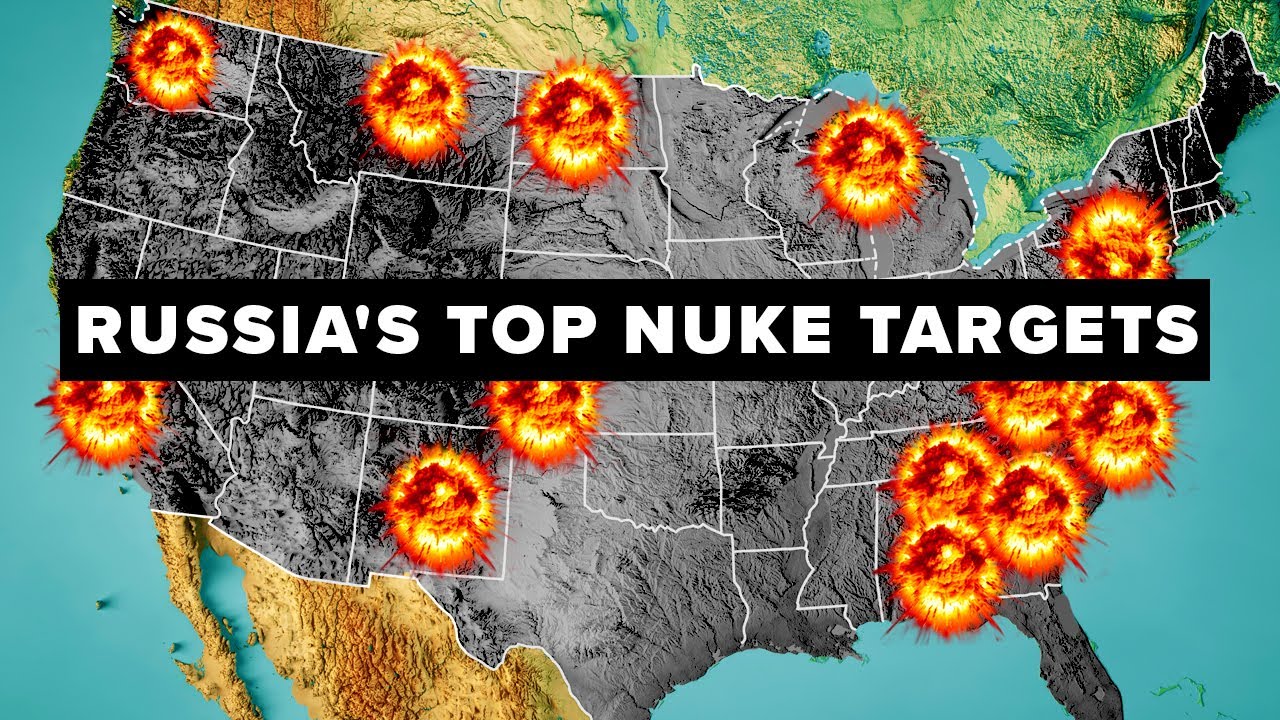
If that country is Russia, it would target every NATO member that has nuclear capabilities, with the United States being the chief target while France and the United Kingdom are also hit. Russia’s first launch would likely come from Rybachy. The home of several types of submarine-launched nuclear weapons – including the SS-N-6, SS-N-8, and SS-N-18 – Rybachy is a military base located just to the northwest of Canada.
Russia’s initial strike would likely see it send submarines into the North Pacific Ocean, and potentially the Arctic Ocean, to ensure its first missiles arrive in the United States as quickly as possible. The U. S.
would respond almost immediately. It would receive word of the launches almost as soon as they occur thanks to its Defense Support Program satellites. Operated by the U.
S. Military’s Space Force, these satellites are in constant geosynchronous orbits around the world, with the data beamed from them triggering America’s response. That response would be twofold.
The United States maintains a stockpile of nuclear missiles on what the Union of Concerned Scientists calls “hair-trigger alert. ” This means those missiles are in a constant state of readiness, allowing the country’s President to issue a command to launch within minutes. So, before Russia’s first volley of nukes even touches down in the United States, the U.
S. will have launched its hair-trigger missiles, in addition to preparing as many bases as possible to fire intercontinental ballistic missiles that will take around 30 minutes to arrive in Russia. The second response will be to activate the Ground-Based Midcourse Defense, or GMD, system.
This system is designed to destroy nuclear warheads when they’re in their midcourse phase, meaning they’ll be outside of the Earth’s atmosphere. The system is perfectly placed to attempt to intercept the initial Russian launch – 40 ground-based interceptors are stationed at Fort Greely in Alaska, near where Russia would launch its initial volley. But there’s a problem.
The GMD system is far from 100% effective. In scripted tests, it’s only reached an approximate 50% success rate, meaning at least half of Russia’s initial volley of nuclear warheads will break through. And there will be more coming.
Beyond the missiles launched from Rybachy, Russia will have shot hundreds of intercontinental ballistic missiles, or ICBMs, that will take about 30 minutes to reach the American mainland. The U. S.
will have responded in kind, with its missiles also en route to Russia. As for you… You might not even know any of this is happening until you start to see the telltale streaks of nuclear missiles bearing down on the United States. About 10 minutes after the launches from Rybachy and its submarines, the first of the warheads will strike.
However, the first missiles to arrive won’t be traditional nuclear bombs. They’ll be electromagnetic, or EMP, pulse weapons. The EMP warheads detonate at high altitudes above major cities, with each detonation releasing gamma rays that ionize the molecules in the air.
Positive ions and Compton electrons are produced, leading to a pulse of energy that also creates an exceptionally powerful electromagnetic field. All systems powered by electricity are at risk of shutting down immediately as a result of this pulse. Power grids, handheld devices, and even vehicles simply stop working.
And worst of all, it wouldn’t take many bombs to cause complete havoc in the United States. According to the Washington State Department of Health, U. S.
atmospheric tests in 1962 revealed just how far-reaching an EMP bomb’s effects can be. The U. S.
detonated a 1. 4-megaton nuclear weapon 250 miles above Johnston Island, with the EMP generated by that blast being observed as far away as Hawaii, which was 800 miles from the blast. Fuses and streetlights failed, with telephone services also being disrupted.
In a Russian nuclear attack, it would send several of these types of nuclear weapons, all detonating at high altitudes to disrupt American electrical devices. Depending on where you are relative to the detonations, you’ll likely see them in the skies. But the most obvious sign that something is wrong will be that your electronics stop working.
Your smartphone short circuits. The power goes down. Traffic lights stop working and many vehicles – particularly those that rely on electrical systems to run – will start crashing.
Worst of all, this will be a countrywide effect. Even if your phone manages to survive the initial blasts, the odds are that you won’t be able to communicate with your loved ones. That’s the point.
The EMP weapons shut down communication and hamper American military operations. It may even be able to prevent the launch of some nuclear weapons, though the hair-trigger warheads the U. S.
has on standby will have already started their journeys to Russia by the time the EMP nukes detonate. Thankfully, the EMP pulses won’t kill you. At least not directly.
Initial deaths will be indirect, stemming from incidents related to the shutdown of electronic equipment. Failing machinery in hospitals may kill some patients, with many dying as a result of car crashes when their vehicles fail. Railway networks and industrial facilities will also immediately shut down, as will water supplies, electricity grids, and computer networks.
Practically everything that makes modern living possible would disappear in an instant. On the ground, you, along with millions of other Americans, will panic. But after those initial detonations, you’ll have a few minutes of respite.
The world around you may be eerily silent or filled with the panicked screams of hundreds of people, depending on where you are. But the most prominent feeling in your gut will be one of confusion. What happened?
And why? You’ll get your answers about 20 minutes after the EMP nukes have detonated. That’s when the first of Russia’s ICBMs lands.
Those ICBMs target military command and control centers, along with every major city in the United States. Those cities are targeted for two reasons – they likely also contain military bases (or at least military personnel) and taking out key infrastructure will prevent the United States from quickly recovering from the nuclear blasts. Those ICBMs will vary from the previously mentioned SS-N-18 stationed at Rybachy, which is a silo-based ICBM that will be joined by SS-19, SS-27 Mod 1, and SS-27 Mod 2 ICBMs.
The latter can also be fired as mobile ICBMs, with literally hundreds arriving in the United States over the next hour. If you doubt that number, the Arms Control Association, or ACA, says that Russia has 1,549 strategically deployed nuclear weapons, with 95% of those weapons being continuously ready for combat use. That’s according to Valery Gerasimov, Russia’s Chief of General Staff, who made the claim in December 2021.
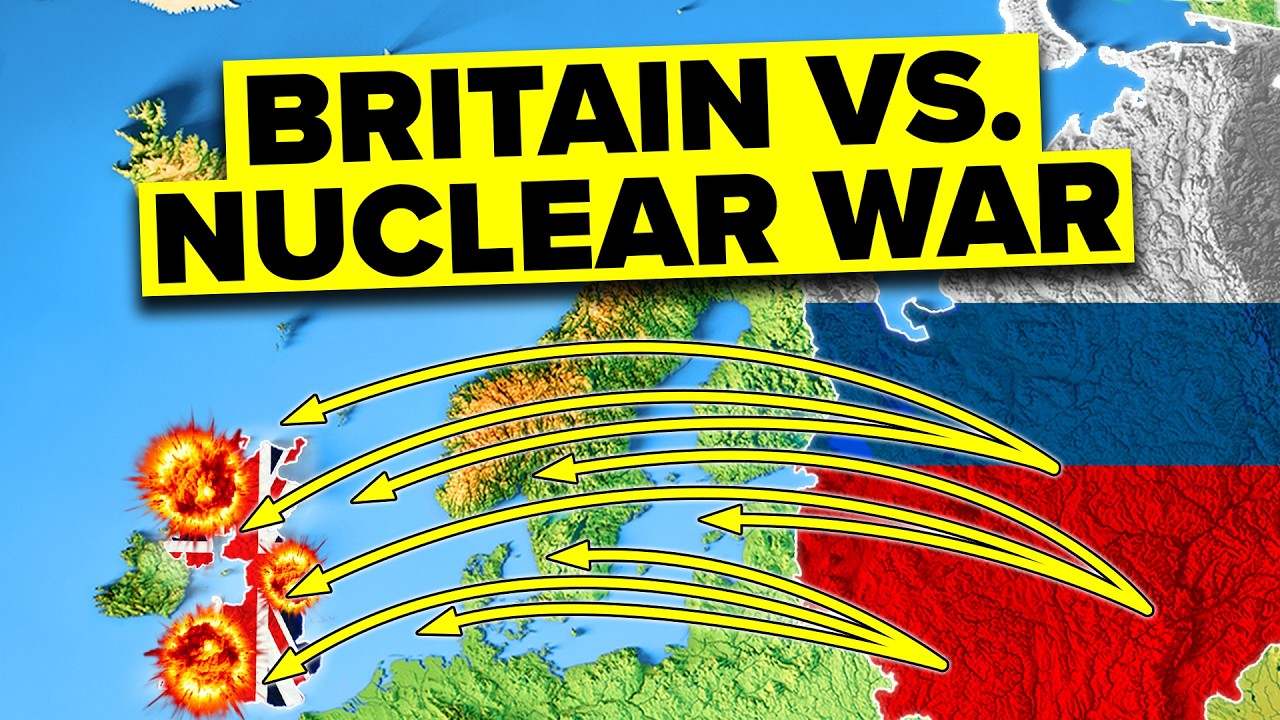
At the same time, the United States is being hit, Great Britain and France are also subjected to nuclear attacks. Both are nuclear-capable nations, though the number of weapons they have stockpiled pale in comparison to the United States and Russia. Worse yet for France and Britain, the 290 and 225 nukes they have respectively aren’t strategically deployed, according to the ACA.
They’re simply assigned for use if the need arises, with Russia’s pre-emptive strikes likely destroying either country’s ability to retaliate in any substantial way. All told, these ICBMs carry about 60% of Russia’s deployed nuclear warheads. Cruise missiles carrying nukes of their own will follow, with some taking several hours to reach their targets.
But no matter how long the missiles take the arrive, there’s little the United States can do to stop them. GMD has already been overwhelmed by the initial volley of EMP pulse weapons and is practically useless at this point. All that’s left for you is to wait for the blasts.
Each strike creates a massive nuclear blast that is almost as hot as the sun’s core and instantly incinerates anything (and anybody) in the immediate vicinity. However, those who are a decent distance from the strike zone aren’t safe either. Moderate skin burns are still possible, as is death or injury caused by the debris thrown up by the blast.
If you’re unfortunate to be looking at the blast as it happens, and you aren’t killed by the blast itself, your retinas may be seared. At the very least, you’ll experience damage to your eyes and possibly temporary blindness. Then come the shockwaves.
Nuclear weapons generate powerful shockwaves, leading to instant jumps in pressure. When combined with the dynamic pressure the blast itself causes, the shock wave can reverberate for miles, damaging buildings that are caught in their path. Those shockwaves also have the potential to kill you if you’re unlucky enough to be on the ground, tearing through your body and throwing you up into the air.
Is there anything you can do to protect yourself at this point? According to the Centers for Disease Control and Prevention, or CDC, those unfortunate to not be in a shelter or basement should immediately turn away from the blast, close their eyes, and drop to the floor. Lie face down, with your hands under your body, and simply wait.
You’ll likely feel two shockwaves pass over you, as well as intense heat. The latter could kill you no matter what you do, though those far enough away from the blast zone should be able to withstand the heat and, hopefully, not be crushed by debris that results from the shockwaves. It’s a minuscule defense against what you face.
But it’s the only thing you can do. And the danger isn’t over yet, as you face two more problems in the immediate aftermath of the blast: Radiation poisoning and firestorms. Any individual who’s near the blast site and somehow manages to survive both the initial fireball and the shockwaves the nuke generates will be exposed to extremely high doses of radiation.
In many cases, they’ll develop acute radiation syndrome. Radiation burns will start to show up on their skin without minutes, with other symptoms sometimes taking days, or even weeks, to appear. These can range from minor skin reddening to full-blown cancer, all depending on the distance from the blast, the amount of radiation it released, and even the type of radiation.
And you’re not safe if you’re miles away from the initial blast. Radioactive fallout from the blast can travel through the air for many miles, meaning the simple act of breathing puts you at risk. The same goes for eating food or drinking water – both will be contaminated due to radioactive fallout.
And worst of all, the odds are that there’s little you could do about either situation. Thanks to Russia’s EMP bombs, combined with the devastation caused by the nuclear blasts, emergency services will be slow to respond and will have their hands full dealing with thousands of people in crisis. That’s assuming the emergency services are even available.
The strikes could destroy them in an instant, with communication also being made difficult by the EMP blasts that have decimated the equipment these vital personnel use. As for firestorms, these will arise in the immediate aftermath of the blast. They’re created whenever a large number of smaller individual fires – such as those a nuclear explosion causes – coalesce to form a huge fire.
Think of them as flaming hurricanes. The many small fires heat the air to such a degree that they create hurricane-strength winds that pull inwards towards the larger fire those many small fires create. Those larger fire only gets stronger because of the air being fed towards them by the winds, fanning the flames until a firestorm occurs.
According to Atomic Archive, the blasts you’d likely face would create the perfect conditions for firestorms to occur. They’d certainly occur in areas that contain at least eight pounds of combustible materials, and there’s a strong possibility that half of the structures within the blast zone will all be on fire at the same time. The burning area will also easily span at least five square miles, and will likely be even larger.
The only thing that could prevent the firestorms from forming is if the wind in the area is above eight miles per hour. These firestorms will be almost as devastating as the blast itself. For context, the nuclear bomb dropped on Hiroshima created a firestorm that destroyed 4.
4 square miles of the city. That demonstrates how strong the heat generated by these firestorms is. They engulf huge areas of the city, battering them with storm-level winds and igniting practically everything they touch.
Glass will melt. Asphalt transforms into a flammable liquid akin to lava, and even the metals used to hold up structures may start to melt, depending on how strong the firestorm gets. If you’re caught in this storm, you have no chance of surviving.
So, if you happen to survive the initial blast and the shockwaves it generates, and you’re not immediately struck down by severe radiation poisoning and burns, you only have one option: Run. Run as far away from the blast zone as possible to lower the risk of getting swept up in a firestorm. Now, let’s say that you survive all of that.
As improbable as it may sound, it’s possible. A 1,000-kiloton nuclear bomb will cause burns on people up to seven miles away, and blindness in those who see the blast from up to 53 miles away. If you’re on the outskirts of a major city – or you live in a more rural area – there’s a chance that you could survive the initial blasts.
What then? It’s only going to get worse from there. The many firestorms that hundreds of nuclear weapons detonating on U.
S. soil create would send up huge plumes of smoke into the atmosphere. Adding to that will be all of the ash generated by burning cities.
And remember – this smoke and ash isn’t just coming from the United States. Russia will be experiencing the same devastation that you see in the U. S.
thanks to America’s retaliatory strikes. Worse yet, both Britain and France will likely be up in smoke thanks to preemptive Russian strikes. After all, Moscow doesn’t want those nuclear-capable nations supporting the United States due to Article 5 of the NATO charter.
All of this ash and smoke – up to 165 million tons of it – rises into the atmosphere and spreads, essentially blanketing the entire northern hemisphere in a giant umbrella through which the sun’s rays can barely penetrate. The atmospheric temperature drops rapidly, with plants also beginning to struggle – and eventually dying out – because they can’t conduct the photosynthesis process. Earth’s northern hemisphere enters nuclear winter.
The planet has experienced the effects of nuclear winter before, though on a much smaller scale than would be caused by the detonation of hundreds of nuclear weapons throughout the Northern Hemisphere. Take the eruption of the Indonesian volcano Krakatoa in 1883 as an example. That eruption was so powerful that it sent enough ash into the atmosphere to lower global temperatures by 2.
2 degrees Fahrenheit. That may not seem like much. But that sort of atmospheric temperature change can have remarkable effects.
Just 68 years before Krakatoa’s eruption, a similar eruption occurred at Mount Tambora. The results of the eruption? The year without summer.
In the United States, people reported experiencing temperatures that were between five and 10 degrees Fahrenheit lower than usual. Some areas even reported summer snow. The lower temperatures had a massive impact on agriculture, with crops dying due to frost and hundreds of thousands of people perishing throughout the world.
That is nothing compared to what would happen in the aftermath of a nuclear war. In their book “A Path Where No Man Thought,” late astronomer Carl Sagan and atmospheric scientist Richard Turco posit that there are six possible classes of nuclear winter, with the one you’d face depending on the scale of the nuclear war between Russia and the United States. In the best-case scenario – meaning each country only uses a small part of its nuclear arsenal – a minimal nuclear winter would occur.
That would mean very little smoke cloud cover and no long-term consequences for the rest of the world. The next case is a marginal nuclear winter, and even at that point, the outlook for the rest of the world would look grim. Temperatures in the northern hemisphere would decline by a few degrees, having a devastating effect on the agricultural centers that are still able to operate after the nuclear blasts.
Production would practically grind to a halt as crops die, leading to the famine deaths of millions. According to Sagan and Turco, the deaths resulting from this famine would be approximately equal to the number who died in the blasts. Move up to a nominal nuclear winter – which could occur if between 6,000 and 12,000 nuclear weapons are detonated – and temperature drops would reach 18.
3 degrees Fahrenheit. The entire northern hemisphere would be blanked with dark skies, as well as experiencing the effects of drought, starvation, and nuclear fallout. Though the smoke clouds would eventually dissipate, the ozone layer would be practically destroyed by the nuclear blasts, resulting in far more solar radiation reaching the Earth’s surface.
Ironically, this would make the northern hemisphere feel hotter than it was before, with that wild variance in temperatures continuing to wreak havoc on agricultural production. The classes keep getting worse, culminating in the sixth class – extreme nuclear winter. This may only occur if the entire world is engulfed in nuclear war, with the result being that most life on the planet, from humans to plants, would die in conditions where the Earth is blanketed in constant darkness.
Thankfully, extreme nuclear winter won’t be what you face in a nuclear war between Russia and the United States. However, a nominal nuclear winter is entirely possible – and even plausible – due to the sheer numbers of nukes both countries could deploy. What’s interesting here is that the nominal nuclear winter caused by the war won’t have a huge impact on the southern hemisphere.
At least, environmentally. The war would be contained in the northern hemisphere, with all major targets – the U. S.
, Russia, Britain, and France – being above the equator. All will experience nominal nuclear winter, as will every country in the northern hemisphere regardless of whether or not they’re caught in blasts. But that doesn’t mean the southern hemisphere will escape unscathed.
Though Sagan and Turco suggest there’ll be minimal environmental impact below the equator, the social and economic impacts would be enormous. After all, the northern hemisphere is responsible for much of the world’s food. The U.
S. alone produced 3. 03 metric tons of food per capita in 2021 – all gone thanks to nuclear winter.
The same goes for Canada’s 2. 84 metric tons, France’s 2. 40 metric tons, Russia’s 2.
22 metric tons, and China’s 1. 92 metric tons per capita. It would all be lost thanks to nuclear winter because all of those major food-producing countries are in the northern hemisphere.
The global economy would also collapse due to the havoc wreaked in the northern hemisphere. Russia and the United States would be practically destroyed, as would China. Though not the target of the nuclear blasts, it would be devastated by nuclear winter and the famines it causes.
The losses in those countries would impact the southern hemisphere enormously. No more support for Africa via the Belt and Road Initiative. No more relying on the U.
S. dollar as the world’s reserve currency. In the aftermath of nuclear winter, many of Earth’s cultural, scientific, and economic capitals will simply cease to exist.
In short, you would witness the complete breakdown of society if you were fortunate enough to survive both the blasts and the nuclear winter that followed. Fortunate may be a misnomer in this instance. Life would no longer resemble anything that you’ve ever known.
But at least you won’t be part of the five billion people – roughly 63% of the Earth’s population – that die as a result of the widespread famines that result from nuclear war. But you’d still face freezing temperatures. In a 2006 study published in the Journal of Geophysical Research, a group of scientists ran a modern climate model test based on the U.
S. and Russia deploying all of their active nuclear weapons against one another. They concluded that globally, average surface cooling would fall in the 44.
6-to-46. 4-degree Fahrenheit range. It would be even worse in North America – its surface temperatures could fall by as much as 68 degrees Fahrenheit.
So, even if you somehow survived the blasts, escaped the firestorms, didn’t have radiation poisoning, and somehow found a viable food source, you’d also have to deal with a desperate scramble to find warm shelter in a country where many of the structures have been devastated by nuclear war. All of that leaves us with a final question: Could you survive a full-scale nuclear war between the United States and Russia? The odds aren’t in your favor.
The initial blasts, coupled with the firestorms they create and the societal collapse that results, would kill many millions. Billions more will die as a result of widespread famine and drought, with cold temperatures claiming millions more who struggle to find shelter and warmth. All told, less than a quarter of the Earth’s population is likely to survive, and they would live in a world where the ozone layer has collapsed and global fish stocks are decimated.
Agriculture on any wide scale would not exist for decades, with the U. S. and Russia being among the worst affected.
After all, the Alliance for Science says that food calorie output in the U. S. would drop by 98.
9%, with Russia seeing a 99. 7% decline. China’s output would drop by 97.
2%, with calorie decline in the U. K. and France also being almost total.
Simply put, if the bombs don’t kill you, the nuclear winter – and many of its aftereffects – will. But this is a worst-case scenario that assumes both the U. S.
and Russia essentially fire their full arsenals of nuclear weapons at each other. Do you think there’s a possibility that could ever happen? And if it does, do you have a survival plan in place that might help you see out a nuclear winter?
Let us know in the comments and thank you for watching the video. Now go check out How Putin Is Preparing For Nuclear War or click this other video instead!





![Chris Langan - The Interview THEY Didn't Want You To See - CTMU [Full Version; Timestamps]](https://img.youtube.com/vi/9miVG2xT5jY/maxresdefault.jpg)