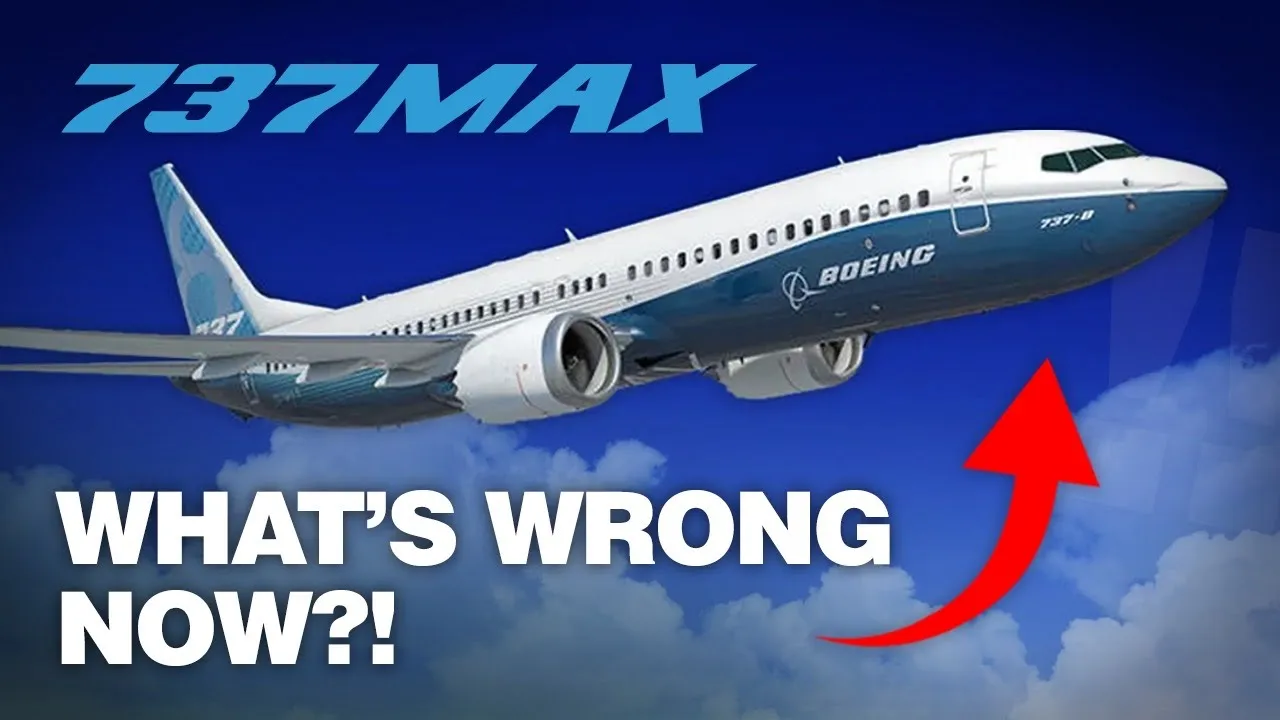
- [Petter] So far, this year, Boeing has had to deal with at least two separate issues affecting their Boeing 737 MAX production. - Once again there is an issue with a non-conforming part-- - So what is actually going on and, more importantly, are there safety concerns? Well, today I will really dive into these issues, Boeing's recent history and also some potentially worrying signs for their future.
So stay tuned. (playful chime) The Boeing 737 is Boeing's bread and butter aircraft. They make more 737s every month than all other aircraft types put together.
And with Airbus now working hard to increase their production of the A320 family due to skyrocketing demand that they are feeling, Boeing is also looking to ways to increase their output. Since almost the very beginning of the 737's production Boeing has been assembling them in their Renton facility where they now have three final assembly lines, all pumping out aircraft at the moment but because of the need to ramp up production, they are now also getting ready to start up a fourth production line, this time in Everett. Everett is located around 30 miles or 48 km north of Renton in Washington State and until now, Boeing has only been making their wide bodies there.
Now starting this new assembly line is a huge deal. They're using the same factory space where the old 747 assembly lines used to be and since they have also moved all of the 787 production down to South Carolina, they have plenty of space available but sending all the necessary 737 parts from Renton to Everett is turning out to be a much bigger challenge than Boeing might have initially thought it would be. Most of these parts are relatively small and they're not necessarily made in Renton but some of them are really big.
Boeing, for example, makes the wings of the 737 in Renton so now they would have to figure out a way to ship those ones up to Everett. Back in the day, there used to be a railway line linking the two sites together but this line was, unfortunately, decommissioned decades ago. Large sections of that line have now been turned into nice walking and biking trails instead so that's not going to be of much use for them.
Other railway lines are, of course, available but even if they manage to find a good workable connection, the need to package those huge wings for shipping is going to be something that Boeing has never really done before, so that's going to be a big challenge for them. And then we to the fuselage of the 737, which is the part that involves both of the recent production problems that has been reported on. Now the fuselage shipping already relies on rail to get up to Renton but it's when it comes to the production of the fuselage that things start to get really interesting and that's because Boeing doesn't actually make the 737 fuselages themselves.
They used to do that but since 2005 they have since instead been buying them from a subcontractor and the fact that they have is actually one of the key differences between Boeing and Airbus today. You see, on the face of it, Airbus have also been spreading the production and assembly of their aircraft over several different sites actually more sites than Boeing have but Airbus own all of these manufacturing sites themselves with a few minor exceptions. Boeing on the other hand have divested quite a lot of these sites to other companies and there is a reason for that.
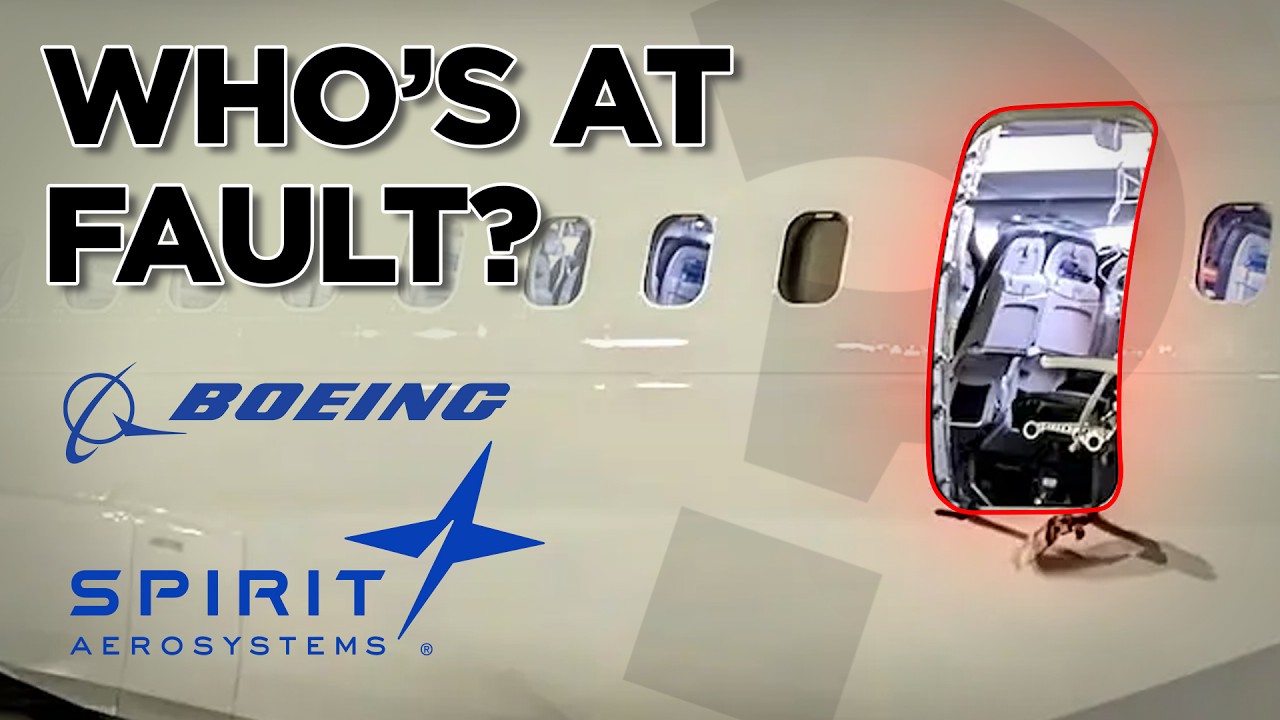
Now, to be honest here Airbus also tried to sell off some of their manufacturing sites but then they eventually changed their mind and we'll get back to why they did that later on. But this brings us to the subcontractor that is making the 737 fuselages, a company called Spirit AeroSystems, which is based in Wichita, Kansas. Now Spirit isn't just a Boeing supplier for their 737s.
They actually make structural parts for all Boeing jets but the 737 is a special case. Spirit makes 70% of the 737 structure, including the entire fuselage, nose to tail, well, to the base of the tail, to be exact, but the manufacturing plant in Wichita, which Spirit today calls home actually has a very long history within Boeing. During the second world war, Boeing Wichita, as it was known back then was one of the places where Boeing assembled their B-29 bombers and even after the war, Boeing continued making other large military planes there including the B-47 and even the B-52.
And if you wanna go back even further than the Second World War, well then this Wichita site was the base of Stearman Aircraft who started their production as early as in 1927. They were then bought by Boeing in 1943 and the site was included in the purchase. So if you're familiar with the wonderful Boeing-Stearman biplanes, yes, that's exactly where they were made.
In terms of airliners though, whether it was still Boeing Wichita or later, Spirit Aerosystems, this site ended up producing parts for all Boeing aircraft, including the part that Boeing calls section 41, which is the nose of the aircraft, including the cockpit. Obviously, like I said before, Spirit makes way more than that section for the 737 whose fuselage was always put together at this site but even in the case of the 787, Spirit makes nearly the entire front half of the fuselage as well as the cockpit and its subsystems. Today, Spirit employs over 11,000 people and that's only at its Wichita site.
Now I'm going to get back into the reason why Boeing let go of its Wichita division which led to the creation of Spirit a bit later in this video but what it's worth keeping in mind here is that, for all practical purposes, Boeing and Spirit are completely interlinked and neither of them have any intention to change that. This means that Boeing has no plans to switch production of the 737's fuselage to another site and with the 737 being key to the survival of both companies, any problems hitting it will have severe impacts for both of them. So what is exactly going on with the MAX production?
Well, I'll tell you all about that after this: If there's one thing that I am truly passionate about, it's teaching. Finding those tools who help light the flame of knowledge and excitement in someone's eyes is what any true instructor really lives for. And that's why I am so happy to have Speakly as the sponsor for this video.
You see, Speakly is exactly such a tool but for the world of languages instead. They use a method which is focused on teaching words and sentences based on real life situations, making it feel much more relevant and fun to learn which it's really all about. I am currently using Speakly to improve my Spanish.
Speakly's methods helps you to learn a language up to five times faster than a traditional method does which means that by practicing just 30 minutes per day, you can go from zero to solid speaking skills in as little as three to four months. The app is available on both iOS and Android. So if if you are interested in learning a new language, you'll get a free seven day of trial by clicking on the link below and if you then choose to sign up, the link will also give you an incredible 60% further discount.
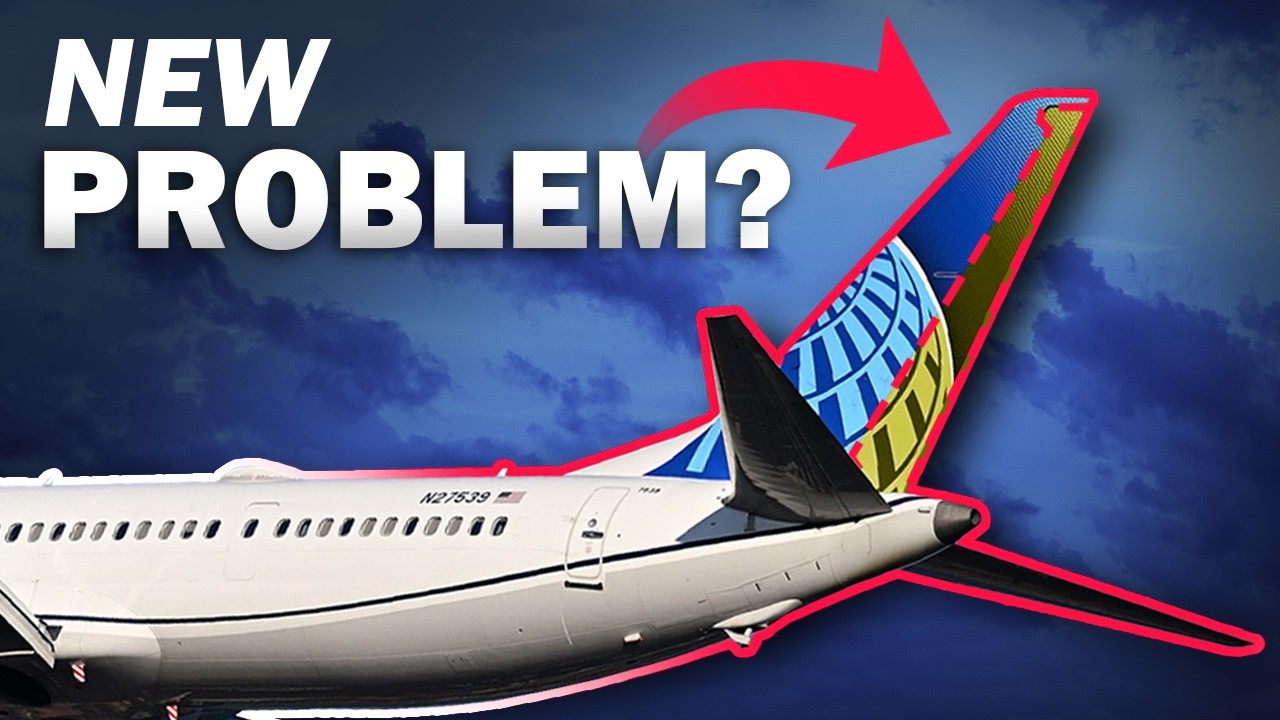
Now before I go any further, I want to really point out that the FAA has determined that neither of these two problems which I'm about to explain to you are safety of flight issues for the existing 737 fleet but even though that is the case, they obviously still need to be addressed properly. The first problem involves the fitting of the vertical stabilizer which is basically the vertical fin to the top rear of the fuselage where there are eight fittings between the two parts. A particularly eagle-eyed Spirit employee noticed that two of those eight fittings on one of the 737 fuselages were manufactured and installed differently than what the specifications called for.
After examining the problem, Spirit found that this sadly wasn't an isolated thing, it affected all 737 types currently in production except for the MAX 9 and the upcoming MAX 10. This meant that the problem also affected the P-8 Alpha Poseidon a military 737 which was based on the previous generation of 737-800s. The number of aircraft that are affected is still a little bit unclear but the problem goes back as far as to 2019.
Now, of course, production of the 737 was quite slow for some of that period because of the 737 MAX groundings but still this is a major headache. And, unfortunately, for both Spirit and Boeing, this is an expensive problem to fix. Spirit estimated that the cost of the repairs will go as high as to $100,000 to $150,000 per aircraft and that meant that Spirit expected to spend $31 million on repairs of only the fuselages that they had on its hands right when they found out the problem.
Now, later, they reported that they had managed to complete the rework of those fuselages within their $31 million budget but they also said that they expected a charge of $23 million extra, accounting for money that Boeing were likely going to charge them for repairs on affected aircraft that had already reached Boeing's own inventory. Remember Boeing still have a lot of 737s that are awaiting delivery, many of them to airlines in China and those planes obviously can't be delivered if they don't meet proper specifications so they all must be fixed. The next problem also involves the rear of the 737 fuselage.
This issue was revealed by The Air Current on the 23rd of Augusts and it has to do with snowmen. For anyone who uses machinery to drill holes, a snowman is a hole that you drill once then after you realize that it wasn't done properly, you drill a second hole a bit off to one side and the result is a hole that looks kind of like a snowman. In practice, the two holes that were found in the aft part of the affected fuselages were very close to each other so they were more of elongated holes than two distinct misaligned holes but the issue here is that this problem involves the aft pressure bulkhead.
As I'm sure most of you know, modern passenger aircraft are all pressurized which means that the fuselages are exposed to quite a bit of internal stress. If you imagine that the fuselage of an airliner is a pressurized cylindrical canister, well then, the aft pressure bulkhead is basically the part that is capping the end of that canister and, obviously, it has a quite important role so the building quality must be up to the very highest possible standard. After assembly of the aft pressure bulkhead, all of these elongated holes were covered with fasteners, in this case, rivets and this made it almost impossible to discover that problem in the first place.
Boeing's engineers actually noticed it by observing inconsistencies around some of the affected rivet heads. More thorough inspections later found snowman holes that would have been impossible to see with the naked eye. And if we include these, the number of elongated holes go quite high up.
In total, a 737 aft pressure bulkhead has around 4,000 holes and in the affected aircraft around 300 of those were found to be elongated. Again the FAA did not classify this as a flight safety issue but, of course, it needed to be fixed. Initially, Boeing found five aircraft that had this issue which were all MAX 8s and P-8 Poseidons but Boeing is now also checking the rest of their inventory to find out if this was actually the full extent of the problem.
And here are some both good and bad news. The good news is that inspecting fuselages even on aircraft that are a little bit further along in their build is relatively straightforward. Boeing are using X-ray equipment to do this which works as long as there's good access to at least one side of the pressure bulkhead but the bad news is that repairs are relatively difficult especially for completed or mostly completed aircraft and that's because on the cabin side of the aft pressure bulkhead, there are usually bits of galley equipment and even toilets, who all needs to be removed for this kind of work to be done.
Now when it comes to how this happened and how big of an effect this will have for Boeing's ongoing production, well then there are some more good but a little bit strange news. Spirit has been using three different sources for the aft pressure bulkheads, two subcontractors plus their own in-house production. So which one of these three do you think made the elongated holes?
Yeah, the answer is Spirit themselves. Only the bulkheads that Spirit had produced in-house were made in a way that could cause these elongated holes to happen and this is obviously something that both Spirit and Boeing are currently trying to get to the bottom of. But most importantly here, this means that Spirit can still continue delivering those fuselages to Boeing but only those that have aft pressure bulkheads made by their two subcontractors.
Of course, this issue can still potentially cause further delays as Boeing continue to inspect aircraft and potentially find more but something that's worth keeping in mind here is that since Spirit are so closely tied to Boeing, all of the problems that Boeing have had to deal with in recent years has also affected Spirit and maybe the key of the problem can be found in that relationship because, like Boeing, Spirit had to survive the grounding of the 737 MAX, the halt in production of the 787 for even longer than that and then, of course, the pandemic. In the years before that, well before the grounding of the 737 MAX, there were a lot of critics that argued that Boeing weren't properly sharing their profits with their suppliers and that included Spirit which was making them more vulnerable to crisis like that. So that could potentially be the reason why Spirit are now having these problems which are now coming back to bite Boeing in the ass.
Because obviously no matter if it's a subcontractor who have made these mistakes, Boeing are the ones who would have have to answer for the problems both to their customers and, obviously, also to their investors. For Spirit, these problems had a huge effect on their financial outlook and they have also had to strike a new contract with their workforce back in July which has drawn a lot of criticism but this all raises a very obvious question, which I alluded to earlier. Why does Spirit even exist in the first place?
Why did Boeing let go of its Wichita operations in 2005 and could Boeing absorb Spirit back into the company again since they obviously are so interlinked? Right, that's more than one question but let's take them from the top. Boeing underwent quite a few changes after they acquired McDonald Douglas back in the late 1990s.
Probably the most visible of those was moving their headquarters from their manufacturing and engineering roots in Seattle down to Chicago. Now the McDonald Douglas merger really deserves its own video, which I will do, in due time but one change that it brought with it which was much more important than that Chicago move was the new management's decision to divest, basically to get rid of anything that they saw as non-core operations. The theory was that you could break down the operations or departments of a company and then study how well each of them were doing and, of course, how much money they were making.
Then you should get rid of any operation or department that wasn't vital to the business or underperforming financially. Now, obviously, I'm oversimplifying this but all of this is based on a popular financial metric called return on net assets or RONA if you want to look it up. In this case, what Boeing's new McDonald Douglas management decided was that Boeing mainly made their money by assembling aircraft and integrating their systems, not by making aircraft parts.
Now there are quite a few critics of this approach, even from people with a financial background but right or wrong this is why Boeing arranged the sale of its Wichita division back in 2005, along with several other manufacturing operations. Ironically, Boeing later had to buy back some of those operations but its old Wichita division remained independent as Spirit AeroSystems. And Spirit didn't exactly sit still.
The Spirit of today is far from the same company that they were back in 2005. From the beginning, the idea was that Spirit would pursue other customers beside Boeing, trying to grow as an independent company, which kind of makes sense when you think of it and this meant that less than a year after breaking loose, Spirit bought the aeros-structures divisions of BAE Systems which have sites both in England and Scotland. And the funny thing here was that this company's main customer was, you guessed it, Airbus.
So today, Spirit AeroSystems Europe, as it's now called, makes structural parts for the Airbus A350, including composite fuselage sections and on top of that, in 2019, Spirit acquired another aero-structures operation, this time in Belfast, Northern Ireland. This operation previously belonged to Bombardier in Canada and they made the wings for the Bombardier C-Series which we now know as the Airbus A220. Spirit also makes Airbus A220 engine pylons and previously got contracts to make key parts of the Gulfstream business jets including wings although they have since sold that operation but to be fair to Boeing here, their argument was exactly that if Spirit divested from the main company, they would be able to chase customers and contracts that Boeing themselves wouldn't go for.
And on that, they were obviously completely on the money. Spirit are also involved in several military contracts including with Northrop Grumman for their brand new B-21 stealth bomber and with Bell for the V-280 army tiltrotor aircraft which are both really potentially lucrative contracts but despite all of this, Boeing remains Spirit's main customers, accounting for 65% of their revenue in 2022. The 737 alone is responsible for 58% of Spirit's work and to put that into perspective, Airbus accounted for 27% of Spirit's revenue during the same period but because of this global involvement, a remerger between Spirit and Boeing would be, well, complicated, to say the least, even if that deal wouldn't include Spirit's Airbus operation.
By now, many critics and even people within Boeing themselves agree that getting rid of Spirit was probably the single biggest mistake that Boeing ever made. And, of course, Boeing's own finances right now mean that realistically they just can't even afford to buy Spirit even if they wanted to. So in June, Boeing's CEO confirmed that an acquisition of Spirit was not going to happen.
To fix their current finances, NOTE Paragraph both of these two companies are now effectively locked into doing what they do best, which is to make more 737s. About a month after the problem with the vertical stabilizer fittings appeared, Spirit restarted deliveries of their reworked 737s, so they're working hard on it. That first problem caused delivery delays for 40 to 50 737s and that happened at a time when rebounding travel demand and pressure to compete with Airbus production increases made that delay really painful.
This is actually where Airbus showed that keeping fabrication work inhouse makes ramping up production less complicated and that's likely why they decided to stop trying to divest their supply line earlier on. Despite all of these hurdles though, if everything goes well and no new issues are found, Boeing could restart deliveries of their 737s to airlines in China as early as in late September, something that they haven't done since 2019 and that will be a huge deal for them. But in the longer term if Boeing wants to really boost their production high enough to really chase Airbus, building extra assembly lines as we saw in the beginning is only part of the equation.
Another part is looking after their suppliers and paying them well and that goes especially for those that are so intimately linked with Boeing's own success. Now John Ostrower in The Air Current have made a real deep dive into these issues and their causes and implications so if you want to find out more about that, I highly recommend to check out The Air Current. Now check out this video next which I think that you'll find really interesting and if you want to support my work, then consider sending a Super Thanks, buying some awesome merch or joining my awesome Patreon crew.
I just had another hangout with them last week and it was great. Have an absolutely fantastic day and I'll see you next time, bye-bye.