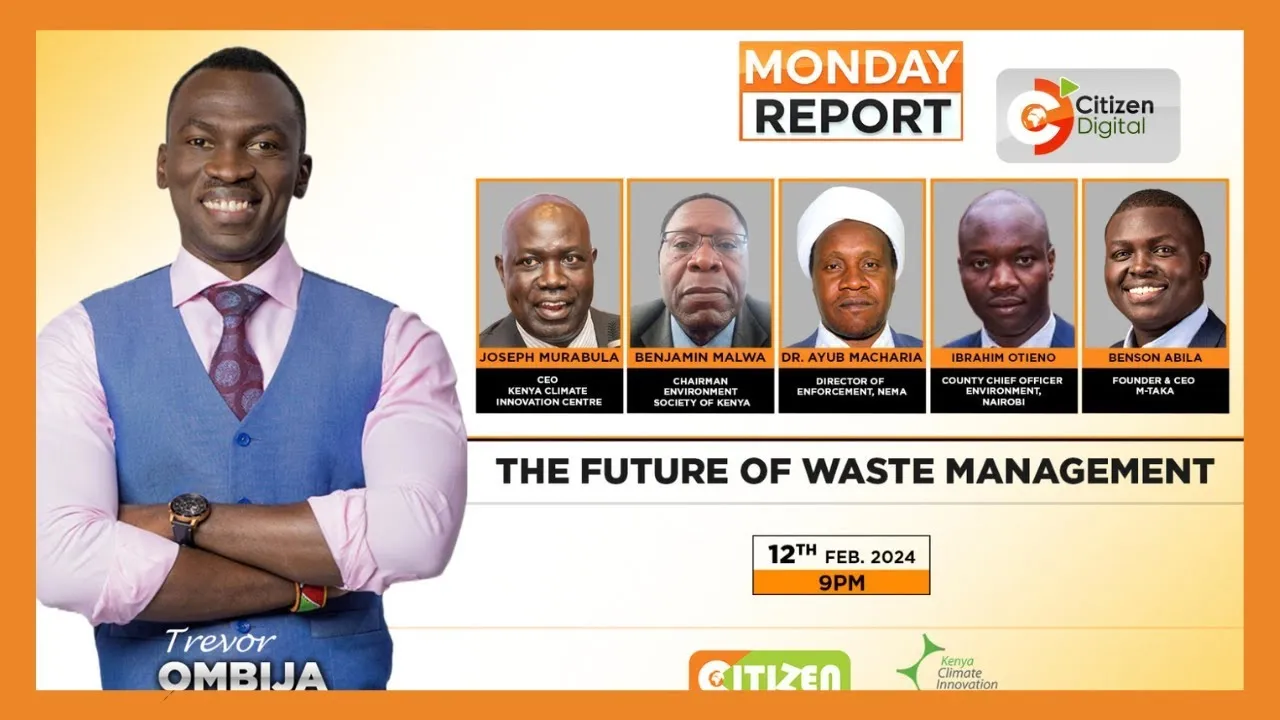
All right thank you for staying with the Monday report Town Hall session I see a lot of your feedback online as well let's now Engage The Audience when we talk about Waste Management here engineer Lazaro says plastic still RS Havoc despite the 2014 ban government should engage youth in recycling things like plastic Dan kazik Viana initiative Eric job says kindly ask Dr a to explain why nma is silent on most residential Buildings in kangela that have been spilling sea wage for years without any action taken against them a lot of feedback coming through let me
read just one more here then get into the conversation lyia C says Nairobi County generates over 3,000 tons of waste every day reducing it from Source reducing waste generated and reusing waste can work at household level PPP can also work for recycling but let me open the floor now to the audience and let's get A comment from you right yes start with your name right there and your concern in terms of Where Do We Go From Here what are the possible solutions or what is your concern okay thank you so much uh I am Mary
mongi an entrepreneur in Nairobi I'm in ecological Enterprise and um I'm directly affected by the waste um one I'll go to CPD um we never used to have the beans we used to have long time ago and uh when you you buy stuff around the Road like maze May eyes and uh you find people throwing out shells or uh the waste because the beans are not there we can bring back the beans again and then we label them organic nonorganic and uh clearly because the citizens are willing to comply another solution goes to the household
I've always separated waste myself for more than 10 years and um nonorganic goes somewhere else somebody else picks it and then only the nonorganic one that goes to the county Um another thing is the sea wage um we have always had issue I learn at tree nursery around abum and uh we don't do trees because the waste the sewage tamper with the water there we have tried to talk to Nar nothing has come out Nairobi County kindly talk to us talk to Citizen we are willing to work we are willing to help you and so
many organizations are out there kindly listen to them when they come to you and let's work together at the same time Engage the youth because because they have a lot of knowledge they have a lot of Innovations and I'm sure we can work together thank you thank you Mary there's another comment over there start with your name please H hello my name is mine was a question yes just under the concern so I would like to direct it to masar so as most individuals we know that uh we H for us West West doesn't seem
like a trouble to other but then It's rather a trouble for the state to handle it right so as a Nea What policies have you put in place for to St ahead to St ahead the parties to be you know compelled so that they can have you know time to you know participate in wte management okay that will come to you I come to you for a response yes go ahead okay my name is quen Africa I'm environmental human rights Defender and also a human rights Defender my questions goes to County government and Ne and
because my people are listening to me since 1978 around 40 acres of land which is the second largest dam site INRI so you people have suffered but I'm here to stand on the beh of the people of dandora d d s pollution air pollution green gas pollution Library of Medicine of medicine 2023 January 18 pollution miscar along Dora dite Fain and thenat diseases in respiratory diseases inhal neiz machine 42 clean and healthy environment 69 you never responded abortion GP SC machine go and Google we have a lot of problem okay so I think the best
okay we stop everything okay start with you from the county and then we Come uh thank you very much Trev and I think to the audience for uh very informative and of course uh very encouraging discussions and my sister here was really of course given a lot of issues that the people of dandora are suffering from um some of them will be handled by my colleagues in health but I think of course you've taken note of some of the issues that you're mentioning but let me first respond to an issue that was Raised by the
Kenya Institute of environmentalists one is that uh he said we not been able we not be able to generate waste from the facility that I think the people really need bad I think that is misinformation uh one before we started this project there is a visibility S as was done our waste we the calorific value that is talking about the gross calorific value of our was is around 7.44 megga per kilogram this varies by Around 23% because of the variations in Seasons so it comes to about 5.86 during wet season you only require waste with
a calorific value about 3.5 to be able to generate waste to be able to generate energy sorry so therefore we have enough energy in that wayte to be able to generate electricity so it is a fallacy number two we uh we we are saying we are going to waste you know public resources we actually having an invest it's more of a PPP project so the investor cannot really go come and bring such much a lot of money to do an investment for which he knows he's not going to be able to get a value for
money or return on investment so it's something that is really feasible it's something that I think we really need to do for us to alleviate some of the problems my sister here is just uh brought up because one we will be able to reduce actually we'll be able to reduce our greenhouse gas Emissions by 1.8 million uh tons CO2 equivalent for the duration for which the plant will be working number two based on the Kyo protocol CDM the clean development mechanisms and the rate at which we selling a t of CO2 uh for for at
exchange ratees of about 85 we can actually be able to generate about 864 million Kenya Shillings from the plant by just sale of what we would have cut down in terms of greenhouse gas emissions that the lady here is actually Crying that is what is causing these problems that is mentioning in dandora so we'll be able to reduce sorry greenhouse gas emissions just by having that plant there besides that of course in uh when we are doing this plant one of the key requirements is that it has to have a material recovery facility at the
beginning and this is at which point we'll accommodate most of the people that are already working at the final disposal and that's why I said the Governor saw it that it is important to have this facility within dandora so it also not just becomes a facility for Nairobi City County but it benefits first the people that have really been affected by waste that is dumped at the final Dora around dandora area so you believe this plant is where the solution lies for most of these issues yes uh because the way why why is there delay
of course uh it's a it's a it's a long process we also Trying to get people that are competent enough to undertake the facility there's one that's already existing it's in Ethiopia it's actually functional now um but of course I do want to digress a lot because somebody took us to court along the process so I'll leave it at that point but I know we had already started the process it's just that because of that court process that we are still uh not proceeding but with the timelines that I provided we'll be able to Actually
achieve this plant God willing and be able to alleviate some of the issues that Madame has raised okay Dr mashar thank you um also would like to respond to the question that uh the law is not enforceable it is very enforcable and uh you know when we are dealing with counties uh what the laws try to do is already the waste issues are devolved to the counties and so we prescribed what Counties are supposed to do and counties are willing to to deal with waste with waste issues uh the chief has said it and actually
when you look at our waste issues where where where actually is the problem the problem is number one infrastructure who is supposed to raise the infrastructure we say it's the county but do they have all the resources and after all you have said that waste is a 54 billion Uh business and so who is supposed to do this business it is the investors how shall we attract the investors it is through data we must have data so that we assure them that they are volumes when when the the investor see the volumes it is dling
a cot they will come and invest in the country and so that is uh what the law is doing so that uh we we attract the investors also don't forget that uh What waste are we really talking about our sustainable Waste Management policy indicates clearly that the waste that should go to Dora and not Dora the one we know it is a rad field is only 5% the other waste should all be recovered into organic fertilizer and then all the other synthetics we will have the Technologies to deal with them deal with diapers deal with
all manner of synthetics so that we are only dealing with 5% and in that Case we will even not need to open new land a lot of land as as as the the current uh the former system of Waste Management demanded now uh somebody has raised the issue of plastics and seage I want to address both Plastics is still a problem and uh why is plastic a problem it is us because we we still want to use the Plastics most of you in your homes you are still using the Plastics if you stop using the
Plastics It will not be a problem but what we are doing is that we are still enforcing and actually what we have done is we have devolved this function to the police regular police who are 100,000 strong men and women so that when they find anybody with a plastic bag definitely they are breaking the law and they'll be apprehended the same case goes for sewage where is this sewage coming from Gray Water and Sewage in our homes again since we have few n Officers we can enforce through the regular police and so when they walk
for patros they find anybody releasing waste water into the environment they they will be apprehended now the the the issue of what we are doing about the the waste is is very important because we have been talking about consumers there has been a lot of focus on encouraging people to manage waste properly how come they were not Heing how comes our our Kenyan people do not hear maybe we can say it's because we don't have infrastructure uh the guys come and mix the waste now we have changed that landscape into incentive based Waste Management okay
of course it applies to the synthetics but we know that we can be able to to handle the the rest of the the Organics because people have Technologies like black soer flies they can do normal composting yeah all that Okay now about Dora uh we are working with the county we we we are there many times to check what what is happening we have issued them Improvement notices I know there even court rulings on theora and actually believe uh Chief there is something happening we know that as we fix the problem there is that suffering
but it is being addressed I can assure you let me bringa on this yes go ahead yeah thank you TR I think the listening To everybody I think what comes out clearly is that the challenges they are um but but I think the a lot of us are looking at these challenges as a public sector H sort of challenges and that's why I think um lots of questions that have come through have been to iub a friend from Nar and my friend from the county what I'm here to do is to encourage you to see
this as an opportunity for the private sector because the other side of of a challenge Is actually call an opportunity is it's only a market opportunity if you are solving a real um a real problem and and what has come out clearly that there are real problems I think literally everybody who spoke everybody who gave um uh who asked a question presented a real problem uh as an organization that um supports Enterprises our role is to encourage people especially the private sector to see these challenges as opportunity be there the challenge of Climate change be
there the challenge of Waste Management here probably if you allow me TR this is probably the the time when I could announce that as KCC we are actually looking to to the private sector we have a call for application that is open right now asking people uh in the private sector to bring solutions that we can support um that call is open I think uh it's open until the 15th oh until the 29th of this month uh So if you go to our social media platforms you will see quite a lot of instructions on how
you can access this opportunity what we're basically looking for is innovations that solve these challenges that we've had we've had over here so please see this as an opportunity think through see if you have an innovation that can solve this uh this challenge and we will be able to support you to actualize your dream you know basically solve this solve this Challenge we've been doing this for 11 years so we have a track record in terms of um supporting people to see opportunities around challenges and um solve uh innovatively solve uh those challenges yeah for
their benefit Mur now that you're still on the floor there's an interesting program you have called Swift stainable waste Innovation for future in transition how how wouldes like the one Mary was talking about Mary said there that they're willing to work Together how will that transform how does how do they apply what is the plan really here yeah yeah Swift basically yeah so stands to sustainable West Innovations for a future in transition we know that there changes um the world faces changes daily both in terms of uh climate and therefore we are transitioning from [Music]
um what we would call a linear economy to a circular economy or what we would Call a dirty economy so to speak to a green economy so there's that transition going on then there's the transition of there's the digital transition which I think everybody is familiar with those transitions will only accelerate as it is because the world has already decided that we are going uh green so the question we asked ourselves as kcic is how do we look at the opportunity presented by the West management sector and numbers have been given here around $54 billion
in Kenya how do we look at that opportunity in the context of the two transitions going uh going going uh going on and so we came up with a program uh this program is for people is for smmes basically with solutions that can help the can can solve the challenge of the of the uh West management and help in terms of the twin transitions help in terms of Greening the economy so in terms of uh sdg13 Climate action um in terms of um sdg8 that is um uh opportunities around uh decent work environment and also
help in in terms uh around in terms of sdg12 which is about responsible uh consumption so put all this in the context of the international development environment um look at West as the opportunity and then solve the problems that help us in terms of the two uh of the twin transitions that I spoke about that is also the Program that I spoke about when I said the call for applications are open yeah until the 29th of of this month so please take advantage of this uh bring in your ideas bring in your Innovations we what
we undertake to do as kcic is that for those who are chosen we will be able to support you we are hoping to support 110 uh Enterprise so this year will be selecting 55 Countrywide and then we will be selecting another 55 in the in The next year so 110 Enterprise in in total and those will come from the people here or the people listening to us or the people who engage with us on on our on our social media platform just to mention that all this we understand fully that it only works when the
polic environment works properly uh and and and I think the the the what we've seen here in terms of the majority of questions going to the county going to Nea basically tells you that there's a Policy failure somewhere M and so we will through this program try also and work with the counties to fix that yeah uh so the main cities Nairobi Mombasa uh kisumu eldoret nakuru will be working with the county officials from those cities to be able to fix the policy environment that ensur us that this this um uh Enterprises can then Thrive
okay a what do you see as the opportunities before I come to Mal is it possible to have more MERS like the one You have in different places is that is that the lasting solution in the vi I mean I mean of course the right thing to say and respond because a lot of Kenyans are listening is that there's an opportunity yeah but I will I want you to look at it differently when she was speaking I was really touched you know and looking at a sector that has an opportunity of $54 billion right but
you're you're not looking at the welfare of the people who you want to be engaged In that sector uh women are the most vulnerable you know she talks about health right how do we get them access to you know um Medical cover how do we ensure that we know what they're undergoing because already they they work in a hazardous you know condition right so so even as I as I invite people to look at opportunities I invite you to look at it from a perspective of how are we really um solving the issue the real
issue that people already in that sector Are facing right so imagine a situation where you're Shifting the recovery of of recyclables from the dite to the community level where um a woman has a safe decent dignified job because you as an individual in the household is playing a role of separating your wasted Source right you're taking up the action so you're separating your wasted source and and if you're told that this action presents an opportunity to empower um um um this woman so that they don't have to Go all the way to the dite to
recover this recyclable but they can do it from the community level imagine such a future that is exactly what we're building a solution for and and and when you talk about M takas it's mobile takataka right if we can bring management of was to the community level and ensure that the woman right from the comfort of their home can pick it from your household and from it without having to go all the way to the dite That is the way I would encourage people to look at it and it's not just um in recyclables that
have a lot of incentives like like the dry ones um there's a lot of things you can do there is uh the idea of um um um um composting uh you can still become a waste collector you could you could there's of course waste to energy there's so much opportunities and people are doing it and and you also have to realize that that is not the only way because if I Build a product if I build a solution who will hold my hand right do I even know how to go about it who will help
me formalize right and that's why sometimes I I I remove my hearts off for guys like KCC yeah they hel they' held our hand for over a year now right they in we got through the accelerator they give us technical advice they even financing us to optimize our facilities that is the right kind of support that you need and through our work we even now working With the the US Embassy to train more women to become entrepreneurs at the household level and to leverage technology to earn a bit more so if you're thinking about building
another Innovation think about the people that this truly affects if you can build a solution that will help improve lives and improve livelihoods and I'd rather you don't look at the sector that has had issues for a longer time so there's opportunity you need to get started now Swift is here there's a lot more investment coming in there are structures kwr uh the Kenya Association of West recyclers offers a lot of support for people uh the the pr are doing a lot of drives and I think we had a a light moment with with with
Mr here on on on on sensitizing people but as we invest in educating the public to do what is truly important to open up the sector which is take the responsibility manage their waste Source separate it Because you look at it as waste it's a resource for me I'm going to earn from it so if you're handling it and mixing it up and it's dirty what do you expect me to to to go with as bread and milk at home so take action if you don't take action if you're waiting for nma to enforce policy
and you for you to pay the 20,000 20,000 Kenya Shillings and you're looking at it the wrong way if you take action then the entrepreneurs like myself and many others can then tap Into that sector and build ecosystem that will Thrive that's that's that's truly what I can I can leave young young people with yeah what are your recommendations going forward I'll open the floor for more recommendations as well thank you from my perspective The Way Forward is planning planning planning we have had issues about sewage we have had the location of dond which is
definitely wrong pleas Cited so the first thing that we need to do as a country not just Nairobi because we are talking about the entire country can we have County Special plans properly done that is a planning tool and County Special plants will inform where all this infrastructure will be located whether SE treatment plants whether dump site whether the the location of incinerators that where we start once the planning has Been done properly then we'll not have the issue of Doras and I sympathize with the nas because if Nairobi City County they proceed with that
incineration from my point of knowledge currently you are suffering from chronic now it will be toxic why because when you inserate some of this garbage and some of the West they produce some of the most toxic emissions ever known To man dioxine and furance I don't think they will be able to control that yeah so we must start from planning can we locate can we have counties special plans all over the country and those County partial plans should be well be informed by a tool that nma has is called strategic environmental assessment which will inform
really cumulative imp impact that if you locate a particular infrastructure in a particular place what is cumulative Impact over time if you have Industries and residential areas are they compatible they are definitely not compatible some Industries are not compatible so that under the County's partial plan we should only have facilities that are compatible yeah and even from the household we are being told we should separate our if you look at the design of our houses do they really support the Separation we must change the planning of houses so that before a house is appr approved
can we have those beans clearly incorporated into the building so that when you generate wte you will definitely take it to the right to the right pin you'll be able to sort it so to me it is infrastructure planning and enforcement of the same okay let me open the floor for recommendations going for I see a lot of hands going up I can assure you Not all of you will get a chance to speak yes let's start over there there's a microphone there then send to the Middle Road aali yes go ahead sir um my
name is uh J and uh my question goes to Mr mashara from Nar so what measures are being put in place to mitigate the importation of secondhand waste that comes in the name of clothes for charity that actually end up in gomai and other secondhand markets and uh I also have a question For uh although it has been already covered by the chairman of the Kenya climate Innovation Center so yeah it's about the youth especially those who are entrepreneural who want to start who see the potential in the waste manage M yeah and uh yeah
that has already been answered in fact he says that go to Kenya at keny cic that's the official Twitter handle Kenya climate Innovation Center if you have ideas there you will have a way of just sending in your ideas Applying they want to give about10 you said but it is a competitive process so you start with 55 of them so it's an open field you can apply as many times as you have with the ideas yes over here but your question will be answered by Nea we've taken that question into account yes go okay my
name is my name is Margaret woy I work in Dum site okay that is where I get my daily bre as for myleague here when I was a young Lady my first and I have other kids so as to say that miscarriage or whatever no we don't have okay misc and we are okay prostition okay inid 5,000 people okay 5,000 people 5,000 people where will they go okay okay so for us dite is okay okay Yeah you talk about the transition those who already working there so that we hear what what happens to them should
you change into the plant yes sir go ahead yes thank you so much uh my name is Lenox yes I lead a company called EOB limited it's in the G and circular economy space so my question is to abelo being that you've achieved this remarkable impact and given the agency of transitioning to Green cirular economy how can Innovative Uh wte entrepreneurship initiatives be leveraged not only to address the environmental concerns but also to create the meaningful socioeconomic opportunities to ensure also inclusivity and empowerment across I'm sure you have sectors and summarize it that also mentioned
that uh you are working with the US uh the US Embassy so how did you leverage the first opportunity for you to get the Nexus between connecting the social economic opportunities and also The waste management to create that Enterprise thank you great pass the microphone back there yes sir yes my name is Daniel o I'm from EMB North what I can just say I can just request um M too of NCC that there was a plan that when the dam site renovation start started it may take at least not long time but now you see
the residents are suffering and nothing is coming up so that is the only request I can just request NCC plus the name to do Something because truly speaking residents of embas North are suffering and majority of them uh have not even seen the goodness of that Dam s there just a few of them but majority of the embassi north residents okay sincerely they are suffering and some have been even diagnosed with some diseases which are being brought by those pollutions thank you my request to my panelist kindly write down your questions so that when I
come back to you you just answer Them as we close yes let's have a lady now uh one minut the two ladies back there yes go ahead you have do you have the microphone sorry so uh okay okay no I I wanted to give the points okay okay so I'm bran gor I'm the Secretary General for the Kenya National West speakers Welfare Association and uh the West speakers in Kenya they have an association where we have 46,000 members and uh I wanted to talk to our c for environment in the County and uh to our
Nea director it's because the government is giving uh confrontation uh they are contradicting information because uh for nma they're saying we need to have buyback centers West shop and mrf centers for the CC here he's saying about incineration you see other worlds in European Union they do the incineration because of uh the global uh like the snow and uh they always need more waste from other other places so here in Kenya if we start that Thing we will lose the jobs these 46,000 members are are in 24 counties and our members but we have a
lot of voice speakers so the other thing to the CC the AI is coming what if you lose your job and it's given to a robot will you be happy for you you are when you are coming with the incineration all the West speakers will lose their jobs all the W speakers the association is there to represent their rights and interest Plastics and Recyclables are their interests so we really need to see the way these people will have their economic empowerment and they'll have food on the table without us clearing their jobs so incinerations is
not a clear thing and the government needs to come up with one uh saying because they're saying two things differently all right thank you let's have the microphone pass that lady over there I'm sure you're not a lady the lady over there yes that one yes go Ahead hi yes uh my name is Winnie I am a farmer I do insect farming the BSF so this is an insect that converts organic waste to fertilizer and the insect itself is used as a source of animal protein so because of uh uh bodies like kcic we have
been able to scale up thank you very much Mr uh Mr Joseph for running a green Beast program in particular so and uh I'm under that program and I've really benefited to the point that our farm wants to scale up so You find that we are looking for large volumes of organic waste you keep on saying there is 70% is organic waste 80% is organic waste but where is it uh we we we are looking for it the mapping we have to to go through so that you can find right now we H we we
are doing five tons of waste monthly but trust you me I I it took six months to get that five tons so uh uh this one goes to Mr Ibrahim what have you done or how are you collecting data in your county and How is this data helping uh the people on the ground the second one how are you cre awareness for example in your Market how has Nairobi County done awareness to the point are you going to barazas are you going to schools how are you creating awareness and then the third one is to
give opportunities to the youth the youth there's a huge thir for organic waste for any BSF farmer if you have organic waste contact any BSF farmer we are looking for it okay yeah All right I think I have time for just two more statements and we give the another lady over here there kindly pass the microphone up I think there's one microphone up maret I think you have a microphone up let's have this lady over here and then there's one over here we we haven't spoken to this side of the Divide then we finish yes
there's yes thank you Safety safety either some of this some of the Private Hospital during the I think so it was protective gear ding site of some of them [Music] infected no ding s ready For all right just a bit let's take this side we haven't heard from this side pass one here yes then I'll come to my panelist for closing remarks yes yes sir hi um my name is Luis wanjo and I lead Vol Stone group limited that does solar so as more people are transitioning towards solar energy there's uh the market is now
flooded with batteries a Lot of them are substandard meaning in the next one year or two years all these batteries will be dumped so what do we do with our batteries and even the small thing what do you do with your uh with your TV remote battery uh even when you're segregating it at the source so uh as a government are we going to have measures to teach people what to do with batteries or can we do quality control to make sure that the batteries that actually come into the market are of a Certain quality
so that you do not have to dispose them as much as as possible and really reduce the disposal of batteries cuz at uh right now I need to replace my batteries at at my home but where do I put them it's not organic waste it's not not plastic it's not glass it's not cardboard so where do I put it so I think we really need to address this as more people are transitioning into the renewable uh energy uh space and more people are Adopting the solar uh renewable energy because you really need the batteries so
that you can be able to use the energy at night all right so people need to know what to do with the batteries once they they're done with them they're done with them all right clearly we can't finish this conversation in one sitting we already one and a half hours into it there's still many issues coming up but I'd like to for you to tell us what do you recommend going forward having heard What is going on here because I know there questions and but what do you recommend going forward yeah first of all let
me say that I'm very encouraged because everything that is coming up uh coming out of this conversation is an opportunity the way I see it uh allow me to refrain from making recommendations as such for the basic reason that I'm looking for people to bring their Innovations I don't want to you're the one looking for recommendations from Them exactly I I don't want to say this is what you do yeah what that will put me in a fairly dangerous place because the the next thing that will happen is I will receive exactly the same yeah
proposal yes and then but it's you who told us yes so yeah so yeah but but I think overall I need to say that I'm very very encouraged by what is coming out of here I think even from the conversation I hope you've seen quite a lot of Opportunities there are people who are struggling with how to manage their West and there are people like wienie who actually looking for West so you already have an opportunity right in this room uh before you do anything anything else in other words the market for your West it's
already available so you cannot that you you you you don't have a market so you just need to be able to package it in the way that um people like Winnie are looking for uh I Think again Lenox talk talked about leverage I mean just how do you use this opportunity to access more opportunities within the ecosystem I think since that question was directed to Benson let me let me let me allow him to to speak about uh and then of course there questions around safety precautions uh what we need to mention is that as
you access the opportunities that we are talking about please where uh safety is not something that we compromise make Sure that whatever proposals that you bring whatever ideas that you bring are as safe as possible for the people who are going to implement uh to implement those ideas because at the end of the day development starts and ends with people okay all right quite a number of questions for you but kindly summarize your response to them because there's one from jog on secondhand waste there's another one on conflicting policies between the County government and Ne
Yeah yeah thank you um the one for importation of second hand clothes I want to uh refer to section 13 of the sustainable wte man management act all products in the Kenyan Market even aeropres our trains everything is is subject to Extended producer responsibility and so anybody importing Second hard clothes must continue taking care of that product until it is safely disposed how so if I buy a shirt and I'm going with it home how would you know how to dispose very good question very good question so those people who import things are called producers
and so what we are demanding from them is an extended producer responsibility plan of which it has steps such as collection public Awareness compensation to W Piers okay the issue of recycling and even safe disposal those are some of the things we are looking for so uh why we did that the government you know it burned the PO back in 2017 and we didn't want the industry complained that we don't know what else will be bned and so we wanted to open the Kenyan Market uh so that we can live well and so we decided
to uh the Industry proposed that we uh subject them to epr and that is what we have done and it is working we are working with the the revenue authority to make sure that we know who is importing what so that we make sure that they have put in a plan to manage that waste uh part of which involves contributing money that 54 billion you talking about is coming also from those producers so that it can go to the W speakers and also to the recyclers I want to assure the Dora Community and all damsite
people working in Dam sites none of you will lose a job actually we are supposed to uh uh attract more people about it's about decent jobs and now money is available through the extended producer responsibility you said the government is speaking this way and this way no the law says extended producer responsibility and the producers have to compensate for waste collection service uh now Trevor you asked a very good Question about medical waste in the dam site and you asked what do you do when you fight that waste in your working space that is a
very good question now who brought that waste there that is hazard's waste it should not go to the dam site so anybody bringing hazard waste into the dam site is a criminal just report them to us we will deal with them okay that is your office don't allow anybody to interfere with your office to make it health hazard okay so That is your Works Space take care of it report them to us and then uh you challenge me what action I have taken now the issue of batteries and uh TV remotes the same case like
clothes everybody we are at the ports Port of Entry we are managing them from there to make sure that everybody is at extended producer responsibility does nma have the capacity to be reported to because most of the time The Dumping people do this in the we of the night they're Largely unregistered it's a largely informal Place anybody can pick a Lori pick dumps and go and put it there so how does she Dorcas come and tell you what what does she say is she coming to tell you kcg 142 dumped today or how how does
she report she she doesn't have to say that actually I may not be interested with the vehicle if if you tell me the vehicle it's fine but what I what I need you to tell me is you you have Wast in the Dum site and and the Label reads this hospital or this pharmaceutical Farm that's all that I need and then I will follow from from there the same case with The Dumping along the river for example now we are in the river you have seen we have already shamed 29 companies we already have more
companies that we want to shame so now we are not looking at who polluted we are looking at uh which who is that in the river and so that company whose label is in The river that is the one we go for why we are going why are we going for that company it is because through incentives we are supposed to have mining mining little mining for waste so that when the waste is dump there because it has value then everybody quickly goes for it and so it it will not be there okay so we
are not worried about dumping now actually anybody who products as a label should be more worried make sure you provide adequate incentives so that your Product is mined and removed from the environment okay and then uh and that is part of the 54 billion all right Market thank you very much once again uh now this is the kind of discussion that is becomes very interesting of course there's the party that saying we have to get the Dum site away then of course there's another party that says of course we benefiting from the dite so you
have to really strike a balance between the interest of those people That are already currently working within the damsite and of course the population that is living around that final disposal facility of course as she has rightly put it there actually about 5,000 people working at the final disposal by the time we did our 2019 survey they were around 4,800 so probably they are now 5,000 that was in 2019 now we in 2023 so she could be right there about 5,000 families taking a living from that particular facility Now going to getting into some of
the discussion that have been mentioned I think talked about the W piers and them losing jobs I I I don't think uh that is the intention of government to make people lose jobs in fact uh one of the requirements and I want to mention this even for that waste energy facility it has to adhere to certain directives or standards and the EU standards on incineration of waste facilities requires that a facility must have what I initially called an mrf so the mrf facilities is where I say the people that are already working as W Pickers
that is where they will come in so there are valuables within that West stream that will be coming in that will be required to be separ segregated so it will be a more of course decent workers already been mentioned they will be now have ppes provided by the company that will be running the facility rather than the way they're currently doing the work So we not going to lose uh any jobs for the West speakers in state it's going to be better work I think there was also a mention of U how we going to
deal with the dioxins and the furans and I think we should really benefit a lot if we had gone through the visibility study it really provides how which component of the waste including the expected Leed that would come from that waste about 1,100 M Cube per day will be you know dealt with so it provides a a range of How those dioxins and furans and the flu gas generally from the facility will be dealt with but it is more beneficial to have that plant than do will continue to do open dumping today uh there is
a wi that talked about how do we collect data and then awareness creation uh uh on on Waste Management one we do normally have waste character survey that we normally Undertake and that gives us we come at the household level and of course the Market and the institutions and actually measure so for a period of about two weeks will give you different uh you know polyenes where you'll put your waste or or facility where you'll put your waste will come and Mees and separate the waste at that particular point and get what percentage is organic
what percentage is you know metal paper and such so therefore we able to know what is the generation per person per capita and that then we can translate And this is done in various Estates so that we also get from the middle lower and upper income areas so we can be able to generally know what waste is produced you've talked about looking for organic waste we actually have a lot of organic waste in our Market if you go to Mur alone we collect about 7 to 10 tracks daily of organic waste so if you're looking
for organic waste you I think you'll have more than enough in fact just to mention that there are companies I think that were probably doing BSF previously that we actually give some of our markets the kangi market to collect organic wte from they were initially also collecting from mura we had given them three markets to collect way for free you don't have will not charge you the only thing is that you ensure that the facility you're using to collect that waste has been lined since just that so you'll be able to get a lot of
organic waste that you can use for your BSF now I know they're only doing one market but initially they started with three so we have a lot of organic waste for you that you can use then I think there was the issue that I think was related transition of the West Piers which of course is what Madame I think woy and ooro also spoke to on uh how do we transition these wte piers and ensure that they stay in the job and I think I've tried to explain that on creating an mrf within the facility
itself so I Hope I've covered most of the question that ask thank you and there was an issue about beans I think if somebody who asked there about the beans being in place especially in Nairobi she was talking about oh yeah yeah the lit beans so for for a start we doing litter beans within the CBD uh initially because we also realized if you put the litter beans in certain particular areas then they become uh you know particularly the ones that we used to have the metallic Ones now people are using them for you know
they can be recycled so you know the people with doing metal recycling so we are now we are now going to fiber so that we reduce the value in that recyclability of the the possibility of people recycling it but we're starting with CBD okay so your lit beans are being recycled a there was a question from Lenox yeah so um I think someone someone talked about uh safety um in the Workplace and you know that the occupational safety and health act you know takes care of you at your workplace so um it's quite clear that
part of the work that we do it's it's around you know do you have gears you know do you have gloves you know how how are you really truly handling the waste so that um even as as as director talked about you know uh the hazard as medical waste they're the ones that you know bring you at most risk right but if they're Handling that and ensuring that they can enforce it and people don't dump that then then hopefully you can work in a very safe environment but ideally I'll just cirle this back to the
the simple concept of of separating your waste at source if you separate the waste at source then you know I come I'm funding dryway why why is the hazard man so so I truly truly I think um right now it's gearing but then eventually um we we we we have to maybe as we take action to Separate was source is going to be really helpful but I want to also um dive into the question that that my brother asked and truly truly inspiring because um he's trying to understand how do you position yourself to tap
into the socio economic opportunities especially as an Innovative entrepreneur right and and and most often times people get it wrong when you're trying to build a solution you build it from a profit standpoint and I I really want to make It very clear that I am Pro looking at the impact of what you're building on the person affected right uh if you look at the the concepts around poverty poverty is is in itself undignified right if you're trying to say that the solution to elevating poverty perhaps is increasing someone's income I don't think truly that
works because if you get someone more money and they don't know how to use this money I really help them right so so the solution really Comes in building you know um very inclusive Solutions if you looking at the wte workers are you looking at their life skills uh financial literacy how they manage thems so so such Holistic Solutions then open you up to partners that are key you know because if you just build for profit it will be so difficult for you to say hey you know what I'm trying to improve the livelihoods of
vulnerable groups then it becomes even difficult to tap into Existing opportunities so so my my my recommendation is that as you build Solutions be very Innovative be very adaptable and and and tap into the biggest Trend that I think got us to where we are right now all right Partnerships all right don't sh collaborates people look at the CCA and they think you know I should come and perhaps tell him why is you know this is happening but but the perhaps the approach is how can we work together to Make this better it's a problem
for all of us right and if you look at it from a collaborative standpoint that's when you get to make strides and just to highlight what happened for us is that as as soon as we started we approached the County government of kumu and specifically the city Department um um um um of environment and they told us that we have built five mrfs you Z Recovery facilities the main one being mindo we want to optimize it what did we Do dive into that opportunity they told us that the the association is organized there's a actors
Network that is doing work how do we tap in to strengthen them and then build forward together so if you look at it from a Partnerships perspective you're then able to to to to make a lot of traction uh this month I think um next week we're doing a a major Drive in the western region with cpro and and and and we we are impacting over 200 West collectors right and this drive Is aimed at empowering the West collectors that we work with but remember we're not exactly the ones doing it alone so that collaborative
approach when we come and speak here we come off on the podium like we're doing so much work which we truly are but we leveraging on the backs of people who have the same Mission aligned as us if you have the same Mission don't don't don't do it alone and I think TR as I close um um one thing that people people Don't look at is is formalized the sector is informal um as you transition to to the green and circular economy Waste Management presents the biggest opportunity as Joseph mentioned but what is a challenge
they informal probably the 110 people you're targeting um um um most of most people are just checking and saying you know if I apply the system will know that I exist and then I have to pay tax then I have to do what then I know my data you know so so so That is the big first barrier to tapping into opportunities we've had so many notable Partners support our work we've we've looked at challenges that have helped us ADV F even the government the other day ran a presidential Innovation award and we won as
the best Innovation for kumu County why we are formalized we understand the opportunities we reach out when the call is out because when they want to ask about your compliance yeah you are complying okay you're Empowering people you're supporting what truly matters all right very briefly briefly me I look at the pick a picture yeah uh sea wage management and cabbage management is a devolved function we have no infrastructure currently to support that we have counties that have not even one inch of a Seine how can we develop based on septic tongue and patry you
cannot industrialize based on pitrs and septic TKS so it's important for the counties to plan plan and Implement by putting infrastructure in place to support the entire Waste Management chain and when they do so even innovators will ride on that thank you all right thank you all for making time this evening I think it is good to emphasize on what you're saying Joseph muraba on where innovators can go and put in the ideas there this is the Kenya climate Innovation Center that is at Kenya cic or go to their website which is Kenya C i.org
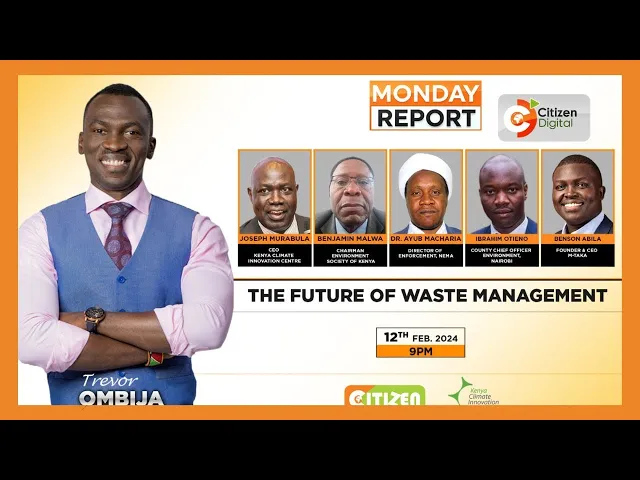
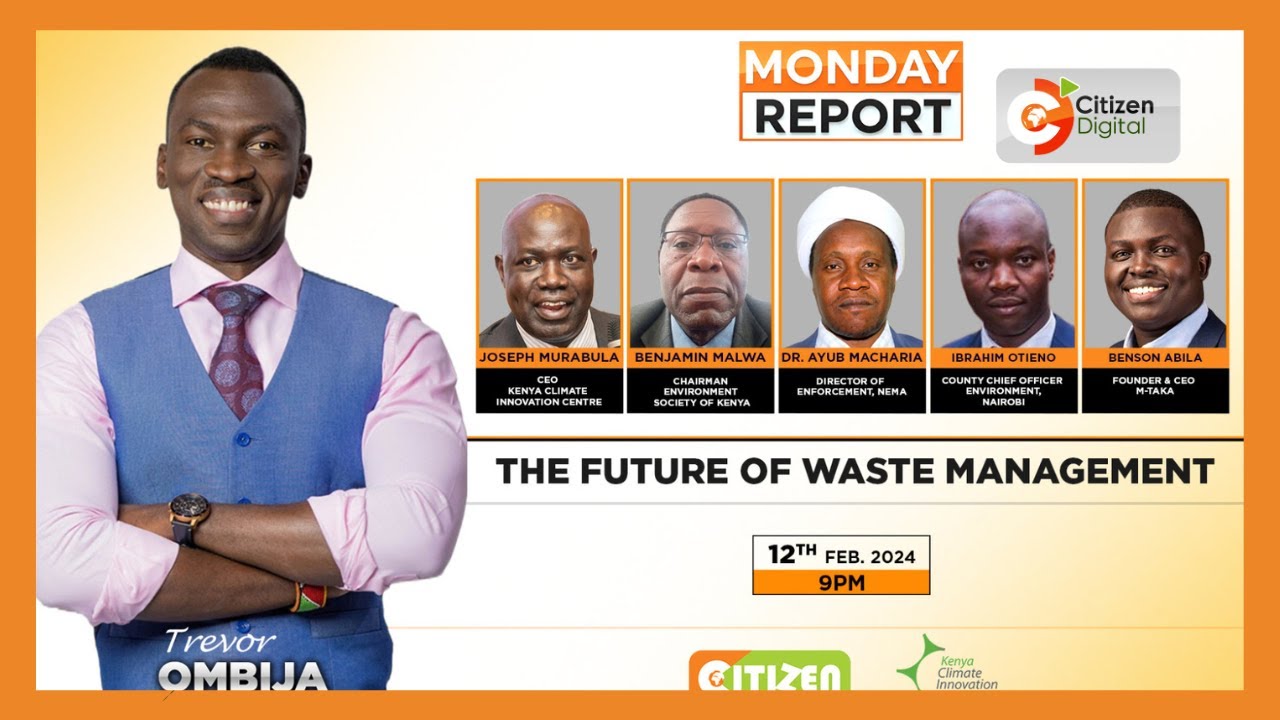
all right so there's a lot of duping going out there this this account is verified meaning it has that blue take so if you have your ideas go and put them there that is at Kenya cic you might just be the next one who will be funded for that innovative ideas and as you can see this is the conversation we can finish right now I want to thank all of you for making time this evening Joseph muraba CEO Kenya climate Innovation Center Dr a mashara director enforcement Nea ibrahimo County chief officer environment Nairobi County B
AB found and Co M taka and Benjamin malwa chairman environment Society of Kenya and mostly thank you all for all the ideas you've given and this is a conversation that we keep having as we go by because if the solutions comes from us the problems come from us as well all right on behalf of everybody Else who made this possible we say good night and God bless