But this is my ADHD as well, When I'm in a dirty car, like a car that has everything in it, all I can see and hear is the trash moving while you're driving. So I don't know if you've ever taken the time to do it. Don't because it will throw you like depending on what type of car you have while you're driving around the like, the sand is jumping in the mud. It's like you don't see it, like bouncing. And then you see on the dashboard, it's like a little colony of dirt that's celebrating at
every stoplight. Doesn't bother you like, no. And then and then and then there's a plastic. Cup that rattles at every turn, at. Every stop. And I'm like, how are you living like this? I got go, are you living. Like this extra pair of socks? Oh no. No. Oh. Nice knife. Just in case somebody tries to run up on me. I have, like, one of those things that you crack the window. I get it now. Like I'm in this pocket. And then in the middle pocket I have. Lotion and contact lens solution and an inhaler and
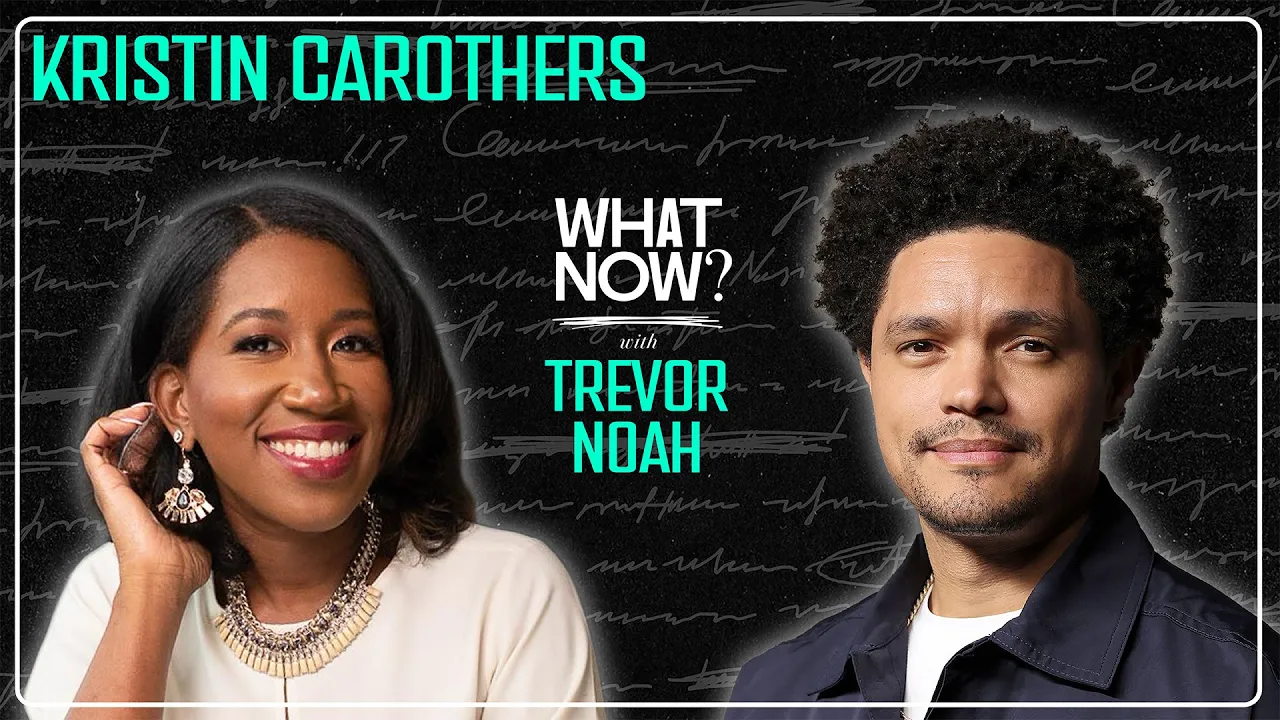
like, oh my God. And then you open this door. There might be, like a greeting. Card in case I'm. Going to a birthday party. And I see you in the car. Wow. Wow. I make up like, if I don't get a chance to put on makeup in the morning. Yeah, there's foundation on my steering wheel. I shouldn't be proud to say it, but it's just. Like it's a like. It's like it's okay. It's. This is what now with Trevor Noah. Well, Doctor Carruthers, thank you for joining us. Thank you. Podcast. You're a clinical psychologist? Yes.
Just to set the scene for for, like, the conversation I wanted to have today. Help me break down what you do and how it applies to ADHD. Okay. I'm a clinical psychologist. And when you work with children and adolescents, one of the predominant disorders or mental health presentations you're going to work with is attention deficit hyperactivity disorder. Yeah. And so for me I diagnose ADHD. And it's three forms. I provide intervention and I do consultation or coaching of parents when it comes to kids. Now, my practice has taken a bit of a turn, and I
work a lot with adults who have just learned I had ADHD, or they have it and I'm teaching them how to manage, like parenting and having a relationship and having a career while you're trying to also live a life with ADHD. Does does everyone have ADHD? We all have characteristics, but that does not mean we meet clinical criteria for the. Diagnosis, but we meet tick tock criteria. We definitely meet. I mean, we. And. Everybody everyone has ADHD. Yes. Explain the difference because some people actually dismiss The validity of ADHD as a diagnosis that like, well,
everyone has. And then some people inflate it the other way and they go like, oh, I definitely have it. And I'll say, no, you're just disorganized. So first of all, what is it that you have? Because there are three different forms. Okay. So there's hyperactive impulsive presentation. Hyperactive impulsive. And what does that look like? That looks like you are always on the go, Energizer bunny. You keep going and going and going. You talk nonstop. You're doing 15 different projects. You are, moving from one topic to the next. You're running when you should be walking. If
you're a little kid, you're climbing when it's dangerous to climb, you're just acting before you think. Can this be presented like so? I know with some people it's like the persistent tapping. Is that. The high? Okay, so that hyperactivity. Like they need to be constantly moving or they can't sit still in a chair for a while. So people can be anxious and do that. People can do that. So there can be lots of different functions of certain behaviors. So that's another thing like the tapping doesn't mean you have ADHD, but what you will find is
that people with ADHD tend to be a little bit louder. They tend to move their bodies more. They tend to have difficulty being aware of, like their body, and that their bodies are moving and that sometimes is restless energy. But that can you can also see that for people who have like anxiety, then you have the inattentive presentation, which is like space cadet, you are forgetting things. You're losing things. You're drifting off into space. You're supposed to be focused on one task and before you know it, like Bonnie runs across your path and you like.
Yeah, but I mean. Everyone should look at the brain. I always worry about people who don't look at the money. If you're living your life and a buddy runs across your pocket, You don't look at the bunny. Who are you? Who are you? What life are you living? I don't know, but it's not a good one. And so you got. Hyperactive, impulsive type. You got inattentive presentation and then the third is the combination. Of all three. Oh, the big boss. Who? The big boss, which is where in some settings are hyperactive, impulsive. And those same
settings. You might be inattentive. And this is when you see people really start to struggle and you have to have disruption in social and occupational functioning. What that means is this has to be negatively impacting your relationships Or it has to be causing trouble on your job occupationally, right? If you're a kid, you don't have a job. You have schools. So what you see is difficulty, like getting through a test or forgetting to turn the homework. And even though you did the home. Right. Or losing the worksheets, with my kids that I work with, I'll
have them bring the book back in and it looks like a war zone. I get that. But for adults, and I talk about myself. The house is organized, but if you open a drawer or you open the closet, it looks like it's chaos. Chaos? That's so I was. I was diagnosed with ADHD. I don't know when this was. Maybe it was definitely during the pandemic. Graduations. Welcome back. But what happened is one of my best friends, he was he was going through the most is the best way to put it. He he thought he had
depression and then he thought he had something else. And then someone who was bipolar, he went through his whole journey and then came out on the other side of it, a almost completely different person. And then he told me, he said, hey man, I was diagnosed with ADHD and this is what it means. And I was like, okay, I mean, I took it seriously, But also we're friends, so I didn't take it seriously. And then he said, this changed my life. And and I felt so emotional and the world has never looked like it. And
I feel like I've wasted so many chances in life now. And I was like, damn, this is getting deep. You know, you just forget things. Calm down, calm down. When he said no, now I take medication and then he explained some of the symptoms to me. Okay? And I was like, that sounds like me. But we're so different personality wise that I could not believe that we had the same thing, because in my head, he was describing a personality. And is not a personality disorder. Personal disorders, mood disorders, disorders of regulation. They are not the
same thing. And I also kind of want to move away from the the term disorder. Yeah, right. Your brain is wired to function differently and in different settings. In some settings, the way that your brain functions is optimal in other settings is suboptimal. And so rather than saying like, oh, we're disordered because we can't focus, well, when it comes time to solve a problem and we're down to the wire, we don't have a lot of time. Your brain is willing to think creatively. Yes a problem. Yeah. But it can be depressing for you if you
are in a setting where everybody seems to be able to go with the flow and go with the brain, and you're like, I am dying, I am miserable. Yeah, go on along with this. This is driving me crazy and nobody gets why you're so bother. And that's what I find, happens when you finally get validated or you get a diagnosis. You know, they're like, okay, I knew I wasn't crazy. This is actually more for me. This is not the way my brain is reinforced. This is not what I'm meant to do in life. And, the
reason I say congratulations to you Is because I think once people know what's going on with their brains, then they can, like, not just look at it from like a negative point of view, but almost like embrace it like, okay, so this explains it. And now that I know this, I've got to figure out how I work. I'm curious because you specialize in children. And the thing about early childhood is that it's very difficult to articulate your own experience. Yes. And what's going on in your brain? Yes. A lot of the things you describe, you're
like, oh, that sounds just like a toddler, right? Well, that sounds like a bright five six year old. Right? So how for parents with young children that are displaying Some of this behaviors, how can they know the difference between that being like, okay, this brain is wired differently and this is just emerging childhood okay. So a couple of different places. ADHD used to be diagnosed. You had to have the symptoms before age six. Now we say you have to have them before age 12. There are oh why. Do they make it. Because the researchers said
I don't really know. But they're. Just sad what the new additions of like the manual that we use to diagnose a diagnostic and statistical manual for mental disorders. That's DSM. DSM, right, that it was based on the research that people were presenting with symptoms as late as age 12. And so they wanted to make sure that they could be I guess, more inclusive. Okay. So before what was happening is they said if you don't show it by six, you don't have it, you're good, you're good. But guess what happens at age six? Some kids are
just entering formal. School and now you get. Exposed and then you see it. Now you see, now you get exposed. You don't send your kids to preschool. Oh yeah. And then you wait until they turn six for kindergarten. And then at kindergarten, it's like this kid can not stay in. I see this kid is I've walked into classrooms where I'm coaching and, looking for my client, and they're under the table. And the teacher was like. Okay, that's classic, right? And like, where is this kid? Oh, under the table. Okay, time to go with me. Right?
Yeah. And so your original question was, how do parents know if it's like typical behavior or behavior that is different for us as a parent? You have to know what your temperament is. Is there a mismatch between your temperament and your child's temperament? That doesn't necessarily mean that there's a problem with your child. That's number one. I think what you want to look at is how that kid interacts with other kids, and what it takes to get that kid through a day, because typically, if you have a kid who's really hyperactive is going to take
a ton of energy and organization and routine and planning and accommodating to get this kid through the day, whereas you may have other kids where you can say, put your shoes on, come back five minutes later, the shoes on with this kid. If you say, put your shoes on and you come back, they're going to be off to the next thing. But we want to look at this. I want. To show they stole my shoes. And All these things. Okay. My, my, my record with my mom, the story that she keeps bringing up is one
day I came home from school. I had no backpack and I had no shoes. Come on. And then my mom said to me, and my cousin always tells a story as well, because that day I got one of the all time beating. And he says he remembers, like watching me going, but this could have been avoided. He was also a child, but he was like. This is he watched me and he thought to himself, but he could have avoided this. But what had happened was I came home and apparently my mom was like, Where's all
your stuff? And I said to her, I said, the bag got heavy, put it down. So I put it down. I literally left it on the side of the. Road up to. Me. Logically. Yeah. And then she said, and what happened to the shoes? And I said, the shoes were new and I didn't want to finish them. So I left them somewhere close to school so that I don't have to wear them out on the way home because, you know, like your shoes would get worn out on the sides, right? Like we couldn't afford new
shoes the same way other kids would. So I noticed kids always had like a flat heel on their shoe. Look at how observant you are. That. Yeah, exactly. And then my shoes had the slant. Yeah, that looked terrible. So I was like, okay, if I can preserve my shoes, then I won't get laughed at as much. So I'll leave the shoes near school and then walk home barefoot. And we went back and everything was where it was. Which means my plan worked. Technically. Technically, yeah. But she she couldn't understand my brain. I remember thinking. This
made sense to me. To me, it makes complete sense. Yes. Now, I don't have the kids, but I also have ADHD, right? So I find myself very comfortable with the. Child until daughter. Who has ADHD. I have a question. Yeah, so I have a bunch of friends, who are now the high performing girls in school super price men, nearly 40 and they're like recently diagnosed and it came up in postpartum. Yeah. Everything for fell apart. And a lot of things that their therapists and the people that work with that we we miss it in girls.
We miss it. Yes. I don't want to go into the gender binary, okay. But you know, the girls I see Even in my son's preschool and my they behave very differently, even when they're energetic, they're energetic in a different way. How they mean. Yeah. How do parents of girls who may not have the same presentation make sure that these girls don't go under the radar for a long time and maybe never get diagnosed? What are you seeing in girls as children? So that story that I told you about the kid under the desk was a
girl. And that four girls, unless their behaviors are so hyperactive that it is, like, really problematic girls tend to fly under the radar. I think because of confirmation bias, we expect that boys are going to be more likely to struggle With attention and focus or will say like, oh, it's part of being a boy. But then if it goes too far, it's like, okay, well then we probably need to look at this boy. I think a lot of girls present as inattentive initially and people miss in attention. Or the girls that get caught are the
girls who are super talkative, super busy, super on the go. And, and so for girls you can meet those six out of nine criteria for hyperactivity. But if it's not at a level comparatively to like a boy who's hyperactive or another girl who's super hyperactive, you could get miss. It's like based on like our cultural expectations For girls, behavior for boys, behaviors which make it tough. Yeah. But there are girls are girls who are struggling. Absolutely. So what would you look for? I guess I think you would look for how the girl is doing in
friendships. In friendships. Are they making friends? Are they sustaining friendships? Whoa, wait wait wait wait wait. Let's let's break this down. Yes. Why is that? One of the signifiers of potentially having ADHD? Because children with ADHD Are most likely to struggle in social relationships. They're going to be the last to be picked to be on teams. And we've got research for this. Wow. What happens is they stay little and people developmentally move on. So it's a lot of fun to have a hyperactive friend when you're 3 or 4. When you're at 910, not so much,
Okay. If we're 3 or 4 and you're breaking the rules and you're running, it's like, how have fun. This is so much. Yeah, yeah. Yeah, I'm going to play. But by the time we get to playing like the video games or we get to like, there's a sport and you got to be really agile physically, that's another thing That kind of tends to co-occur for people with ADHD is physically. When it comes to sports and activities, they don't necessarily excel in some of those because coordination. Yeah. Right. So you may be more likely to be
clumsy. And so you need a lot of input. Yeah. Like if you're playing baseball you got to stop. You got to watch. That can be really boring for kids. Soccer for a kid with ADHD. You out there and, and you out there? Yeah. There's there's moments where they're just watching. Nothing kick. They picking the flowers out of the dandelions. Hey. I got a basketball team. We got to get you to be able to look and and follow cues. And so your social functioning is major when you have ADHD. And so if you have a girl
or boy and you're worried about them and wandering, look at their social functioning. How are they doing with friends and our sports and activities then academically, talk to the teacher about what's happening in the classroom. Is the kid able to sit in a chair or do they stand the whole day? When you put the kid under timed pressure, or do they do poorer or better finishing an assignment? Is this kid likely to stay on task, like to do the assignment until it's done? Or do you have to give constant reminders? Think about at home. How
long does it take to wait to get up? How long does it take for the kid to get dressed? Does the kid lose things? Can they follow a routine without a constant reminder? And it takes a lot of, like, external stuff to be able to get them to that point where they can. So it's possible, but you're going to have reminders everywhere. So like for me, last two days I've been in New York, I've decided not to really set my alarm, which is not a good idea. But. I like winged it and I made it,
but I made it down to the wire. That's another thing. Wait till the last minute. Oh yeah, that's classic ADHD. Yeah, that's completely. I can do this at eight minutes. Yeah, yeah. Time blindness. Time blindness. Completely time. You know, you know, what I'd love to do is break down each part to help us understand the whys behind. Okay? Because I think a lot of people will, You know, a lot of people recognize this stuff, right? Yeah. They'll go like, oh, yeah, that's me. I can't wake up or I'm late or I'm, help us understand the
why. So why is it hard to wake up if you have ADHD. And you likely don't have great sleep hygiene? You know, you should go to bed at 8:00, but you really want to watch that show. And fixated go down. That rabbit hole. Why do you not go to bed then? Because your brain is like, but I could just watch this one episode and it won't be that bad. And then you get hooked on episode one you like, but now I want to watch another. Or you're like, I want to read this book, and my
brain isn't tired yet, so I'm going to read a few chapters of this book. Like, I need my brain to be exhausted, to fall asleep and stay asleep. Okay, but then why is your brain wanting? Because your brain is reinforced by dopamine. Okay, what is happening with ADHD is your brain functions differently. Okay. And so the dopamine or the reward centers of the brain need a lot of input for reinforcement. Okay. And what's happening with a with a regular brain. With a regular brain. I like to call an office brain. And office. Yeah I didn't
put it that just quarter I. Call it office. I call. It a non office. Brain. And my brain is like. What office brain people do. Office brain people are reinforced by being in the office and getting their work done. Okay. When an office brain person wakes up. Task. Oriented, they wake up easily because. Now they're happy to wake up. They're probably more organized or have better sleep patterns. Yeah, they're. Routine and structured. So they go to bed. They have a routine. Yeah. They sleep while they're in. Bed and their brains giving them dopamine for doing
that. Yeah, I don't know. That is giving them dopamine. But their brains and bodies are reinforced by having that eight hours of sleep. They know they need it to function. It really helps them to get through the day. It makes them feel comfortable and secure, and so they prioritize it. For a person with ADHD, sleep isn't necessarily a priority. Getting stuff done and having fun is a priority, like doing as much as you can in a day as a priority. Like being able to multitask even though you might not be good at it. That's the
priority. That's what's reinforcing. Like, usually I have to get up at 610 to wake my son up, but hey, got somebody waking him up because I'm not there yet. So you switch. Your I. Switch my alarm back 30 minutes. And before I left Atlanta one day, I decided, like, I'll just take them to school. Forget it. On the school bus. Right. That's me. Decided I'm not going to engage in routine because I just decided I didn't want to. But I am training my child to respond to an alarm. And so I was still on the
bed and got a knock on my door. And my child is like, it's 630. And I was like, oh, I was going to take you to school today. He's like undressed. I was like, okay. You know, the buzzer. Yeah. So, yeah. So. So okay, so it sounds actually you you have ADHD. Absolutely. But I was like, good. Look at me. I'm making excuses. So the school. I don't think my teachers would have complained about me. I just talked. I just talked, and I had to do. Did you? But did you know when you got into
clinical psychology. Did you did you know by that time would you know afterwards? I'm black. And when I got into my clinical psychology program, I had never been to therapy. All of my white colleagues, most of them have been to therapy before. They had seen psychologists. So I decided to do this. On saying I would never wanted therapy or nobody in my family went to therapy. It's like when. You just pray, you pray. I mean, that's what we did. And you say, is nothing wrong with anger, right? No. Wrong. Again. We just going to pray
on. A pray that like get out of here, you know, had no problems. We got problems like. You know, like it's like that's how it goes. So like when I went to grad school, I used to take copious notes so that I could focus. And then I would doodle and then in undergrad I remember getting called out by a professor because they knew I was doing one, which is pretty embarrassing at the collegiate level to get called out for dude. And I like, I'm in college like this is my fifth great. But I got called
out, but I've always just figured out how to make it work. Because that's like there's like different cultural expectations, right? And my grades were high. Yeah. I got everything done. But I just know that there's a there's a book that talks about ADHD and functioning and they talk about like brain glitches. And, one of the glitches is go ahead and forget it. Like go ahead, you're gonna have enough time later. Go ahead and do what you want. You're going to be able to calm down. Oh yes, I call that now and not now. Title that.
Is. What is that? So for an ADHD brain there are only two modes. There is now and there is not now. Okay okay. So when I meet other people, I'm always really impressed and fascinated by how they are able to see time laid out in, in a more gradual fashion. So somebody says to me, let's say it's now like 5 p.m. and they go, dinner's at eight. In my head, what I've heard is dinner is not now, okay. Then at like 630 they'll start like dressing. They'll go, all right, I'm going to go get dressed.
And I'll say to my friend, I'll be like, you're getting dressed. Why? I go so we can go to dinner. Then I go, wait, what's the time? They go at 630 and they're like, Caesar, Caesar! I have Caesar on the podcast all the time. He's like, the antithesis of it is he is the, like, the furthest thing possible. So he'll start getting dressed at like 6 p.m. or 630 with dinners at eight. Yes. And then I go, but dinner's at eight. And he's like, yeah, so I'm going to get dressed. Now I go, but that's
not now. Like dinner is not now. Could do so many other things now. My brain is going I mean I could watch a movie, I could watch a few episodes of a TV show, I could read something. This is this makes no sense, because how long does dressing take? Dressing takes approximately six minutes. That's like six minutes to get your whole outfit together. That's what I'm going to. -30. You never know. It's like six minutes. You put your things on and. Then I'm like. And then what? To get out of the door. That doesn't even
take time. That's like six 70s at best. And then when you're in the car, what does Google say? Oh 11 minutes. Okay. So it's going to take 11 minutes to get to the place. So if we combine all of this time, well 27 minutes is what I need. And I'll and I'll be this is what my brain says. Sit on the couch location location location location, location. And then at some point I even get anxious or I get I get annoyed that the time is not happening. So I'll look down and go, what's the time
now? 715 now I have to wait 15 minutes before I can start doing stuff, and I'll sit with that. I'll sit with that and look at it and look at it and look at it. And then finally at 730, I'll wait for that three minutes because I know I need 27 minutes. I wait for the three minutes, I'll be like, all right, time to go. And then like, my phone will ring. And then that now has thrown off everything Because someone phoned me for like four minutes. Now you have just killed my 27 minute plan.
And then now I'm not running. But then you're. Going to be late. Because it's not now. That's the thing. And like, I think that's why I say like with kids, part of it is because I don't take things that seriously. But when I talk to people's kids who have this, I articulated to their parents with them because I go, no, I know you're making it serious. And a lot of parents of ADHD children feel like their kids really undermine them. Yes, yes. That's like the biggest thing. Defiance. It feels like defying. But it also feels
like prank defiance. Because think about it. You send a child into another room. Just just think of it from a parent's perspective. Please go into your room. Yes. And put on your jacket and put on your shoes. We're leaving. We're leaving in ten minutes. The kid goes into the room. 15 minutes later, you're like, where's the kid? You go to the room. They have a. Plan. They do not have. A jacket on. They don't have the shoes on. They have books on the bed that if they've opened up, they've started reading something, they've started building
Lego. They've stopped and you're going, what are you doing? And the child looks at you and goes, what are you like your jacket in there? Well, he's like, what are you I just need. And I see how many parents because it feels like you're being under my. It feels like somebody please go and grab something for me. They never come back. Yeah. You know, and so I like. I love that you're saying that thing of, like, the brain, the brain glitching. Because I think people take that for granted. And I also understand a lot of
people are just like, this is this is bullshit. Come on. There's no way your brain works like that. Is absolutely not bullshit. If you've got a kid with ADHD or you have ADHD, you've got to do one thing at a time. You get one command in the room where you want it to occur. You wait for the person to start, so then you can reinforce the fact that they're started. Thank you for listening, cause I'm trying to get them to listen to you. Oh, I love this. Wait, so let's let's play the scenario out. Yes.
You want the best result for your kid and from your kid. Yes. Or from. Your partner. Right. Who might have ADHD? Okay. Oh, I like we'll get to that. Yes. We're going to get. We got to. Get to that. Let's so we start with the kids. So you in the room. Yes. So you want something to happen. You want your kid to make their bed? Absolutely. Okay. You don't tell them to make their bed from the living room. You're saying you go with them, you. Go with them. And so nobody has time for that. That's
our issue, right? We don't have time to go. I need you to go to your bedroom. Make your bed. Actually, you go to the setting where you want the behavior to occur. Okay? In order to increase the chances that the behavioral will occur. So ABC antecedent behavior consequence antecedent. We're going to go to the kid's room. We're going to say if you don't get some information you give it. Now I need you to make your bed the wrong mess. You don't have to throw in the rules mess. But I need you to make. Your bathroom
and rooms a mess at the wrong. Time. I need to make your bed. Yes, please make your bed. And you can say please, because it models a social scale. Being polite when you make a command and it's not a question is now like, are we ready to clean up the room? It's like a question now. It's a command. So this is not gentle parenting where it's like, oh, I'm being nice to the kid for the sake of being nice. Okay. Got it. There's a difference. So please make the bed. You wait, you say nothing. The
K starts to make the bed. Great job listener. I'll be back in two minutes. You think you can get this done in two minutes? Like, make it a little game? He's like, yeah, I got this in two minutes. You go, I. Like them, make. Them make it a game. Gamifying tasks that are non desirable. Yeah. For now reinforcement is a big thing for people with ADHD. You set that timer you see if you can beat it. So back to the kid. We want something done. We have to do the command in the setting where we
want it done. If you do it from afar with multiple parts, they're going to lose it. They're just going to lose the task Because their brain is not wired to keep up with multiple task at a time. I'm really curious because you said I'm black. Yes. Sorry. Said I'm. Not. I'm not sorry. I'm black. Yes. Your focus is children. Yes. And we know that black children, minority children in this country tend to be really under. Yes. And as a result that often expelled. It's like that's a bad kid. And we know about the school to
prison pipeline. And there's some that I can't remember the statistic about how many people in the prison system actually have ADHD. Right. It's I think it's, 60 to 70%. It's like a huge. Huge swath of, like, black men in this country who were once black boys with ADHD who were never diagnosed. And because of, you know, historical and social factors so bad you're a bad kid. Systemic racism, systemic racism. Yeah. So we're in this kind of very negative loop that becomes multi-generational because I think culturally, sometimes we don't have the words someone's anxious. They may
say my nerves is bad. They're not going to say that like I have anxiety. Yeah. So there's no none of the cultural language. So I'm wondering like, what can we do for those children around us Where they actually have internalized the idea that they are bad? Well, the school is saying that there are bad kid and they're on that expulsion track. How do we get them out of that? Because it seems that once you're on that track, it's hard. It's hard to get off. I think the first thing and this is like what I learned
as a behavioral psychologist is we don't discuss like, children as traits, characteristics. We talk about the behavior. Right. So we're externalizing a behavior from a kid. So it's not that you're bad because you won't sit down and listen is because it's hard for you to sit still. You have difficulty sitting still for long periods of time. That doesn't mean there's something wrong with you. It's just better for you to be able to move around. So getting parents to see behaviors as behaviors and not as children's personality or what they're going to grow up. Yeah. The
other thing that we've got to be really aware of is like, messages. They get passed down through generations and through families that can be really kind of negative. And trying to, like, compare kids to people around them who we think that they are like. And we have all this anxiety and this angst and this worry about whether or not our boys are going to be okay or what the future is going to hold. And so we want them to, like, conform to all of these, like, behaviors that are going to ensure that they're successful. And
now we're learning that there's no perfect recipe. I mean. Look at him. Come on. There is no recipe for this. But for black people, it's like, well, if there's no recipe, if you can't just be good and go to college and get a good job, what do we do now? And we're learning that that's not necessarily the recipe. Yeah. You know, but that's the recipe. This kind of being push, which is why I think a lot. And if systems around you I hate to go here, but whatever. If systems around you are built so that
you don't succeed, then you got to wonder if people are going to be more likely to blow you off and dismiss you for any difference, rather than looking at it as like a positive or saying, this is my kid who likes to talk in the classroom, so I'm going to have him stand up and explain to the class what I just said in his terminology. And if this is my kid who likes to be on the table, then I'm going to say, if you all get through this assignment, I'm going to let you come up
with a beat on the table and the rest of you all dance. If this is my kid who likes to challenge and question, then let's have a debate right about this subject. But you got to care. And you got to believe that this type of behavior is functional. Right. You've got to believe that there's functionality to being busy. There's functionality to thinking outside of the box. There's functionality to like thinking. And many systems are set up for that. We're going to continue this conversation right after this short break. And I'll often say to my friend,
I say it a half joking, but I do believe it. I go ADHD isn't necessarily a problem. ADHD is just like the enemy of capitalism. I truly believe this. And what I mean by that is if you think of what how ADHD presents most of the things that ADHD presents, they're like sort of bad for a factory worker. Absolutely. I joke and I call people office thinkers, but I know some of my friends love organizing and being quiet and reading and looking at lists and putting numbers to get good for you. Good for you. But
you have to admit that the world has just been designed that way. Absolutely right. So the world is great for people who wake up early. The world is great for people who wish to sit in a cubicle. But what does the world do for you if you do want to talk, or if you do want to run, or if you want to jump, or if you want to? Now luckily, there's some outlets, like for instance, in the same way that prison athletes overindex for ADHD. Oh, I didn't know that. Yeah a lot. Do they. Train?
No, but. No, no, that's what reinforces that's what reinforces that okay. Yeah. The hyper focus is their sport. So I'm intrinsically internally motivated To do this activity that I love this athletic. So I can do it for hours. I can train for hours. I'm around my people who also love it. I'm so reinforced by that. I just want to be in this setting in and I can I can perform and I can excel. It does. Two things that I've seen firsthand is like, number one, it's it's routine and it's rhythm, right? But it's also not
boring routine and rhythm. Yeah. So it's high intensity. Someone's throwing a ball at your face. This is not like like if you read a textbook And you miss a line, you're not walking out with a black eye. Do you know what I'm saying? Trevor, normally I agree with you when you say stuff about, like, capitalism and office workers. Yes, but an ADHD brain. I'm with you on that. But I think that ADHD brain can make you a bad partner. Like in a relationship. Definitely. You know, I mean, like, but imagine you didn't even have a
job and you have all the money in the world. Oh, that's. Why you get. What your wife is saying to you. I need you to pick up the dry cleaning. But you know what's interesting about the at least, you know, before we move on to to talk is, a lot of athletes don't know that they have ADHD. That's what I've realized as well, because especially in America, like, sports started at such a young age. Yeah, yeah. So they just know that they excel. Yeah. Right. A lot of them don't even realize that it's their ADHD
brain that makes them excel. So they're able to think of multiple plays at the same time. On the court. They're noticing it's. A level of. Genius. It is a level of genius, sure. But they never get diagnosed and they never present it. But maybe in their personal lives that I know. That's why I mentioned the partner thing. Tom Brady I'm not saying he has ADHD, but. Like this is a good. His life kind of fell apart when he retired, right? Yeah. And then he has to go back to the thing and then you know. Yeah.
No. Look you never know. You never know with anyone. But that's what I mean. It's like because but I think also even in those situations like you, You listen to some of the, the top performing athletes, the ones who have, I would say, like the most rigid routines are generally the ones who do the best, because even in their personal lives, their meals are the time with the family. They they have this. So the family has to also fit into the schedule because the schedule is so intense. So then that to me goes to the
conversation about partners, right? So the athlete is hyper focused in doing what they have to do to maximize what their bodies can do to maximize their amount of time. But then that is one part of your life. Yeah. And you miss out on the other parts of your life that are kind of orbiting around you. And that's not your life. Is your livelihood. But for many of them, it's their life. Yeah. It is their. Life is where they've been there it's been their life is finally where they feel secure and productive. And they may not
have. And it is a way out. Poverty is a way out is a way to help family. You serve so many functions. But when it comes time to being a partner of a person, you've got to be able to be empathic and to understand what it is you need and what it is your partner needs. And so can you give me an example about what might make it hard to be in partnership with somebody with ADHD? I don't want to look at it strictly through a heterosexual lens, but I think domestic labor is something most
couples, wherever you are, struggle with. Yes. Who does the washing up? Yeah. Who gets the laundry? Who's kicking today? Who's cleaning? Like the house needs to be in a certain way. And when you have children, that's even compounded, right? For the most part, women take on a lot of domestic labor. We talk about the mental load all the time. It's women doing that. And I speak to a lot of friends whose husbands have ADHD. And, like we're really dealing with the gender differences that come up. But I'm doing a lot of the domestic labor. But
this man is also forgetful and but he's not being an asshole, do you know? I mean, because sometimes there's this idea that, like, you know, the lazy man is like, he's struggling. He he generally forgot to take out the trash, even though I can smell it. Right? Right. Stinky forgot to take out the trash. He didn't make the bed. He didn't pick up the dry cleaning. I organized the cleaner. You forgot to get the cash to pay the cleaner. Do you know what I mean? And like that can cause a lot of tension in relationships.
And then you think that that person dislikes you? Because I think when you're in love with somebody, it's like, if you love me, you do this thing for me. But they're incapable of. But love is not transactional. Well, for some people it is. Okay. So that's one thing. So we have love is transactional. Then you need to know what the currency is. Yeah. My currency your currency is going to be different. Your currency is going to be organization. Yeah. You are going to be able to like make sure the kids have the schedule. Make sure
that the cleaner is scheduled. Make sure that we know what day the trash goes out. We know how much money is in the bank account. The other person's currency may be like on stuff, and it can be hard when you are the person, the the currency of responsibility and the other person who seems like to do the yes to do the fun stuff, but is like making sure that you all are having family outings. The person who has relationships with everybody in the neighborhood, that might be the person who's able to make sure that they
check in with the family, to make sure that you all are going to have a family vacation. So it may seem like one person is like day to day, like, what's happening right here on the ground. The other person may be bird's eye view. And I think you got to know what your strengths and weaknesses are in the couple. So if you are the partner of a person with ADHD and you know that money management is not their thing, then we don't want to put all money responsibilities on them. We want to make sure that
they're knowledgeable. But we may say hey, so we have a system and there's a budget. Your budget is this we have a credit card that is set to this amount, and once that amount is over, we're done. There's going to be some tension there. But you are helping that person to structure, but then you're also reinforcing that by saying like, look says we were able to stay within our budget. We have this much more to take. That vacation you want and you want it to plan is great, but you can't. Go either way because there's
a lot of wives who have the ADHD. Yeah, the husband doesn't like it. We can go either way. But I think really, you've got to be honest about who you are. You know, this is something that I know, like, I've struggled with, you know, after being diagnosed with ADHD, I then went back and I was like, oh, wow. Half of the issues I had in my relationships were from ADHD, and then 90% of the issues I had with my mom was just ADHD. Just me realizing, oh, oh, I was never I was never, quote unquote
naughty. Oh, my brain was just trying to be stimulated. I wanted to see what would happen if I threw rocks at all The windows at the houses in the neighborhood. And I know now, as an adult, it's now the logic has caught up to it. But I still think it's an exciting endeavor. Right? But how do you find the difference between being incompatible slash an asshole and oh no, this is the person's ADHD because I can understand in anyone's defense who's with someone who has ADHD. To your point, they might just be ignoring your requests
and they might not be. But then there's a person with ADHD who's going like, damn, I really, really, really didn't want to forget that. And I really didn't want to be late for dinner. And I really didn't want to be. Promising and under-delivering, which I think is another ADHD thing that could come up in relationship. Yeah. Like I, you know, the biggest thing that helped me genuinely, yeah, is now and I give this advice to anyone who has ADHD is I go start with no change my whole life. Start with no. Yeah. Let me think
about it. Everything people ask you start with no. And you'll be shocked at how it like changes. Because that's what I realize happens to ADHD people. Our brains are moving so quickly. Someone says something, we love being stimulated. And so Christiana goes, hey, can you babysit my kid this week? Yeah, I'd love to see. I said immediately. Yes. And then I leave the conversation. I pull up my phone and I go, oh, this weekend I have a oh, I've got, I've got an my world. I've got a gig that I have to do. And I
forgot about this thing. But now and then you send me a text going, Thank you so much for agreeing to babysit. I'm like, oh damn, what do I do now? Thank you for letting everybody down. Yeah. Now I'm like, okay, wait, wait, wait, I think I can do this. So wait, what time is the actual babysitting? Yeah, okay. From 4 to 6. My gig is at 630, so I could make. It's a 2020 seven minute drive. I think I can, and now I'm back in the loop. I'm back in the 27 minutes. Right. And then
what happens is I disappoint you on the day because I get overwhelmed. Because the day comes, my times aren't lining up. I can't get to you on time. And and then what? What happens to a lot of people with ADHD, I know is there's the shame that comes with it. Yes. Because you were because you were trying to do the thing for everybody. What happens is you fail everybody. Yeah. And because rightfully so on this, I they don't know what you were going through. And so they just go, why didn't you just tell me then
why did you agree to do this? And why did you like it? Why do you want so much on your plate? Is this part of why people with ADHD have higher levels of depression and suicide? Let's talk about it. Is absolutely. Is it? Yeah. That I think so. Yeah. You internalize it. And I think already the research we don't technically I don't think we have a ton of it just yet. But anecdotally I believe that many people who struggle with ADHD often have underlying anxiety and depression for decades. Anxiety and depression tend to kind of
co-occur. It's hard for us to tease them apart, but what happens a lot of times is kids who once they're medicated, once a person is medicated for ADHD with the stimulant medication, which actually slows your brain down, then we start to see all of these anxious thoughts come up. And it's not that the medication is causing those thoughts is that we can hear them now. Oh, the person was so busy or so distracted that all we were focused on was their behaviors, and we didn't know what was happening in their mind. Yeah. So on the
partner side, what advice would you give someone like how does because I think like if I'm just being fair to everyone here, I would hate for some people to use ADHD or their. Diagnosis to get out. As an excuse. Like I use pregnancy not to do stuff. No, no, you should be able to use pregnancy to get like I. I can't, I can't breathe when I can. You switch on me like I'm pregnant. The life cycle. Right. Very like right now. Like I do ask excuse about. Pregnancy should be used as an excuse for. Everything.
If you were talking to the partner who doesn't have ADHD and how would you counsel them and say, okay, this is where I think your your boundaries should be or this is what I think you should look for, and then we'll move on to the partner with ADHD. Okay. So anecdotally what I tend to notice is that we attract opposites. A person with ADHD is typically going to attract somebody who's more structured Routine, right. It helps them a person who's. Monsters could pack bags very well. Are you expecting them to write? I do. They were
just like you said it, not me. They were just like, no, I didn't pack my bag. I didn't know. If they did. You were. Happy? No. Can I tell you is the opposite? I think someone. Sorry to attack, you. Know, I hate, so I don't feel attacked. I had someone packing my bag Because then I don't know if the thing I want is in the bag. You don't know I stuff do not pack my bag for me. Do you like that? You don't. That's your. Control. And that's what I was going to say. A lot
of times, people who are with someone with ADHD start to get engaged in over controlling behaviors, because you are so worried about what happens when the person with ADHD forget something oh, so overcorrect okay, and then the person with ADHD becomes resentful because they think you're trying to control. And really, what you are Trying to do is manage your anxiety about something being forgotten. Because they forget every time. Because they do forget everything. You forget they're not forgetting everything. To get at. You are to be annoying. It's just something that happens. But what then you
may do is list out a schedule, make sure that everything is just so, and when that person doesn't comply, you lose it. When they do comply, you're happy. But what you're teaching them is not to engage in the behaviors on their own. So if I am scheduling all of your appointments, packing all of your bags, when do you have to think and when do you learn to do it yourself? Okay, so well, you had to watch for if you're the partner of a person With ADHD and you don't have ADHD, is that you could start
to do too much, and then you start getting into this control dynamic, and then the person starts to resent you because they think you're trying to control them. And then you resent them doing double the. Work. Yes. Do you know something? You said that because I feel very ignorant to ADHD, because I think my brain is probably wired the opposite way. When you said that piece about the control and you're doing it for them, you're saying that people with ADHD are capable of doing these things, and they just you just need a system, okay? Because
I in my mind I'm like, yeah, oh, you just can't do it. But they are capable. You're capable, but that your system may not look like the person who's over control system. Your system may be okay when it comes to packing a bag for me. I'm going to set that bag out three days in advance. But guess what? An hour before it's time for me to go to the airport. I'm still rifling through that bag. Yeah, because there's something I forgotten. Or I decided, like, I had two blazers and then I'm like, I don't like
these Blazers. Throw the Blazers out. And then I'm like, well, maybe I don't need the Blazers. Put the blazer back in. So I start to question myself. My brain is getting busy. I'm getting distracted. I'm overwhelmed. So even though I had the goal of being prepared, I still find myself struggling an hour before I'm supposed to go. So because it's not now. Because it's not now. It's not now. But when it's now, I'm like, well, yeah, that wasn't as bad. Exactly. So yesterday I had to go by a blazer. So it required. So I got,
I got what I love I guess about me. So I'm going to be real with you all. I'm not going to point fingers. Yeah. You know. Yeah. Do you know what I think that means for the person who is not neuro spicy? And his wife very was wired in a very typical way. It requires a lot of acceptance because part of me is judging. I'm like, what's wrong with you? But guess what? When you want to have fun. Who do you call exactly? Trevor. He probably says, and if he doesn't come, you're sad because you're
like, I'm not going to be able to push myself to have fun the way I have. Yeah, yeah. It's true, it's true. Have you Ever thought about all the crazy specific jobs out there? And I mean, like crazy and I mean specific. For example, did you know a company is currently hiring for a psychic in California? This is a real thing. Yeah, this job and others like it or what inspired a special part of today's episode next big Opportunity, brought to you by ZipRecruiter. Every day, ZipRecruiter helps 10 million candidates with their job search, which
means no matter the role or industry, they can help your business find qualified candidates fast. And when they say no matter the role or industry, they really mean it. You can see for yourself by going to ziprecruiter.com/trevor Christiana. I always wondered what jobs do you think you would be good at? Like, do you think you'd be a good life coach? Oh no a good no. Wow. I would be a good life cut. No, because I would probably tell you that it's not going to go well for you. And you need someone, like, inspiring. You know,
I think I'm just too cynical and real to be a life coach. I'm going to go the opposite way. And I say, I think we need a few more life coaches who tell people, hey, man, this is not work. I just can't do this, right? It's not. Yeah, yeah yeah yeah, yeah, yeah, this rap thing. I actually think if we had more life coaches like you, people would be in better careers and the world would be a better place. And not everyone would try to go viral on TikTok. I just feel like. Medicine, medicine, accounting,
engineering. We need more plumbers, electricians. I'm just going to tell you to do regular jobs and make some money. But the rest of the stuff now, not for me. I can't believe that people are hiring psychics. Like, yeah, well. Yeah, if you're going to get your wish, that's word of mouth, which is not something. You go against. What do you what. Do you even ask in that interview? I would just sit there and I'd be like, well, you know what my questions are, aren't they? Yeah. That's true. You know the questions. Maybe I'm a little
too closed minded, but if I was working at a company and they said, hey guys, I know things have been going bad for the past few quarters, But the good news is we've hired a psychic. I'd be like, Okay, if you'll excuse me, I'm going to go on ZipRecruiter and see if there are any other companies out there who are hiring for my position. What? I do want. To work somewhere that is open to the spirit realm, but that's a bit too open, you know? I mean, I actually do like that I would love to
work in a company that had a psychic on staff, just for the vibes. Yeah, yeah. Do you know what I mean? Just like lunchtime vibes. Just go check in with the psychic, see how things are. I like that actually, because we've worked in a dog office. Why not have a psychic friendly office? Well, whatever role you're looking to fill, ZipRecruiter can help with smart matching technology and handy tools like the Invite to Apply feature. You'll find a potential hire in no time. ZipRecruiter is the hiring site employers prefer most based on G2. In fact, four
out of five employers who post on ZipRecruiter get a quality candidates within the first day. See for yourself. Try it now for free at ziprecruiter.com/trevor that's ziprecruiter.com/tree the org ZipRecruiter. The smartest way to hire. It's also it's also difficult to try and explain to people how many fights in their relationship aren't necessarily fights, but they're a manifestation of ADHD. Meeting up with non ADHD. So I didn't until I like delved into all of this. I didn't know that for an ADHD brain for the most part not all brains, but for most ADHD brains arguments are
fun. Yes, because this cycle of interaction there's a term for. Coercive cycle of interaction. Reinforced by your coercive behaviors. And this is what we teach in behavioral parent management training. Another plug for an evidence based intervention for ADHD itself and behavioral parent management training. The first step is teaching parents about the coercive cycle of interaction and how their kids are reinforced to continue arguing because they eventually get what they want, and parents are reinforced to be more punitive because they eventually get what they want. So when you get when you've done that as a child
with your parent, and then you get into a relationship and you're like, I can prove that I'm right, I can get you to see that the way I'm thinking is the way you should be thinking. And you just continue to engage in this spiral until you win. And the other person is pissed. Oh, they gave up because they're desperate. They're example. So ADHD person can keep. Can they keep going along and you'll be like, can you just stop? And they're like, no. So instead of telling them to stop, you give them the positive opposite behavior.
The two do behavior. So instead of would you stop talking? It's can we take a quiet moment? Can you be quiet? What do I want you to do? Okay, so instead of, stop arguing, Can we change the subject? Or sometimes you got to kind of just turn away and, like, wait for to catch them being good and then turn back. Like, if you're taking me down that spiral where you're trying to argue with me, I'm going to, like, turn away, pretend to do something else. And then the minute you get quiet, even if is by
accident. Thanks, driver, for being quiet. But I think. I think sometimes people take for granted. And I'm saying this from experience is like ADHD people. We are not. We are not arguing. And you're not an ADHD person. You are a person with a neurodivergent brain. Okay. First of all, I feel like you did. There was like, it's like going, you don't homeless you, unhoused you. That's what you just said. She said the poetic. But you really did. You really did you like. No, Trevor, you are not. A homeless person. You were a person who does
not have a home. Live in you are now seriously makes a difference. Okay, okay, fine. You are Trevor. Yes. Happens to have a brain that is neurodivergent. Okay, okay, I'll take that. All right. So sorry I got. No, no, this is fine. So I think when people take for granted is this. And sometimes it's because we don't know to articulate it as people. Sometimes we don't even we don't even know what's happening. Some people think of it as an argument, but it's not an argument. You get what I'm saying. So the ADHD brain is just
having fun. Yeah. And it's going, let's discuss the merits of and you just go. It's just so you can be exact. And you're spinning and you're spinning and you spinning and you spinning and you spinning, but you just having fun trying to figure this puzzle out. Now a non ADHD person goes like, no, but but but. What do you why you just let it go okay. They get it. They're getting. Angry. And then at the end of it and I've seen this happened like in my group of friends. All the ADHD friends will like hang
out together. All the friends who have a neurodivergent brain. Yes. They thank you for. Using that. Term. They'll be energized At the end of a group argument and they'll go like, that was fun. And then all the friends who don't have a neurodivergent brain hissed, they are pissed. They're they're worn out. They're carrying it. I can't believe you. You said you. Why did we fight? You know what? I'm tired. And you and you and the rest of us are going. Wait, what? This was fantastic. This was fantastic. We argued the merits of Mesopotamian laws and.
And from that, we understood why we shouldn't be eating fried chicken tonight. Just the understanding of it helps, because to your point, if you understand that I'm not doing something to you, yes, then you don't think of it that way. Like so, you know, some divergences, we'll call them, whatever they may be, physical or mental, are more apparent than others. If somebody's blind, we normally can see that they're blind. If that person bumps into you, most rational human beings will never go. You're right. What were you going to bump into? You'll be like, oh man,
that person is blind. Oh, person's blind, you know what I mean? If somebody rolls up in a wheelchair and they can't go up the stairs, No one goes like, get up the stairs. You go like, oh, let's get the ramp. Or can we help someone? Because there's a signifier that tells us that this person is divergent physically, mentally, there's almost no signifiers for this. So you meet someone with ADHD, you don't realize that you started speaking. Their brain hadn't even started pressing the record button, right? You started a whole conversation. You got home, you started
talking to your partner. Oh. Hey, honey, you know, I was just thinking we got to do. And don't forget the thing. And, you know, I can't believe as well. And then the person goes, like, what? What just happened? And they're like, oh, my God, did you listen to anything I just said. Oh, it's so annoying. Yes. And it's not that they're not listening to you. If there was a way for you to be, you know, if they could signify it, you'd realize, oh, the record button wasn't on. You hadn't paused for a moment, the same
way I've seen people pull up their phones, stand at a concert and record a moment, and then I look at their phone. I realize they never press the record button, but then they they blame themselves. They go, I don't press record. I'm an idiot. Yes. And I sometimes say to people, I know it's a bit of a burden, but think of it that way. When you have an ADHD partner, ask yourself if you've pressed record. Like one of my best friends taught me this and he has ADHD, but he literally will be talking and he'll
notice that my brain is I'm finishing an email. He'll say like, oh man, I got to tell you, this thing that happened. So the I was at the office and and then he'll pause and you'll go, like, I'll wait for you to finish. Yes. And I go, no, no, I'm here. He's like, no, no, no, finish the email. Do you know, the funny thing is I'm hearing you both speak today. I think there's something about if you're the non ADHD parent or partner, whatever you are in relation to someone with ADHD, I think it can
really increase your empathy and your sense of patience if you really sit with the diagnosis. Yeah, because what you're saying right now, whether somebody has ADHD or not to say to your partner, let me just finish what you're doing. We'll talk when like, you can give me your full attention. Yeah. What changed? So many times or even dealing with your child? Because sometimes I, like you, just say things to a kid. But maybe the kid is like, with their Legos, with their dolls or whatever they had had. They. Have you pressed record? Yeah. Have you
pressed record? You haven't pressed. Okay. We'll come back to it. Yes. It kind of just transform. Oh, I need you to press record. Right. That also helps me as well. Yeah. Someone goes like, hey, no, no. Can you put that down? Yeah. No, no, I need you. Then I'm like, oh okay. You even, even even signaling urgency helps an ADHD brain. Absolutely. So you say to me like if you as Christian I'll go like, oh friend, I need your help. Immediately. My brain goes like, yo, what's happening? I love that what's happening? And then I
focus. I won't look at my phone, I won't, but if you just tell a story and it's like the music of it doesn't signal urgency. And then the name and then and and my brain just goes like, oh, she doesn't need me. And I don't realize my brain's doing this. I'm thinking of four things at the same time. Is how you communicate to an ADHD. It's ADHD. Complete. Make sure record has been pressed. Then you can like fight with them if they're not doing the things you hope them to do. But I promise you, the
difference it makes is insane. You say, I need you to listen to me right now, or you say, let me know when you're done. And all of a sudden it just changes the dynamic that you have with somebody. And that's the antecedent intervention that's setting up the environment for success. Yeah. You say in person record or let me know when you're ready to press record signals to his brain that I've got to do something. I've got to behave differently. Yeah. And then he's able to follow through. And then you reinforce and because then you continue
to talk to him, once you know that, he's ready to listen, okay. Consequences. You all are connected. So like right. What you are jazzy right now there was connection there. You gave feedback about when you are able to really hear her. And then you were like, thank you for giving me that feedback, because now I know how to come in when I need to talk to you. And that's what does happen in partnerships and relationships. Whether it's parent to child. Parent to child, spouse to family, family to family, that's what we don't that's like a
process thing. We don't take time to process things because we're so focused on moving forward and getting to the next phase. Yeah. And so to have the opportunity to say, especially to your significant other, I need you to press record or I need you to say, hey, can you put your phone down? Because like with kids, we're accustomed to like snatching a tablet, turn it off screen to get them focus. As adults, we're just as guilty of being preoccupied with Instagram, with our screens, with our phones. And sometimes we need help to get away from
those things so we can actually attend to each other, you know? And like one of the things I say to little kids that I'm working with, an intervention is, give me your art. Thank you for looking at me. Now that I know that you're looking, I think you can listen. Please pass me that. And then we continue to maintain eye contact. That really helps them to know that I'm engaged and so on a relationship, if you have ADHD or you don't have ADHD, I think that's a skill that we could all learn because many of
us think we have ADHD because we are so wired to screens right now. We're so reinforced with screens with so reinforced by multitasking. We, are hearing a lot of noise, and we don't take a lot of time to be fully present and aware in this moment. I had to I have a question, yeah, about setting up for success that I, I've seen a lot of parents grapple with, and it's the question of medication. Yes. Now I'm a millennial and I and I think we're like the Ritalin generation as well. And there's a lot of millennials
who felt that they were overmedicated, that they looked back at their childhood and they're like, I felt like a zombie. They're trying to figure out who they are without the presence of some sort of medication. And I think a consequence of that is that a lot of millennial people who are becoming parents now, who are medicated as kids, are maybe reluctant to medicate their children, do not know when they should introduce that modality. What are the effects of it? Can you even, you know, I struggle giving my kids Tylenol. I'm like, is. This a gateway
to my dad now? Anyway, okay, so let me talk to you about that gateway drug thing. In my opinion, that is a cultural belief that comes out of the crack pandemic, right? We know that there were specific plans and things that were done to make sure that a certain group of people were destroyed by a drug. And over time, we have become very wary and suspicious. And it is healthy cultural paranoia about the use of medications and drugs. Yeah. How can we get hooked? How could this ruin life for us? Because we had a whole
generation that this impacted? What I want you to know when it comes to stimulant medication, Any of the psychotropic medications is consider the ways that you are self-medicating. Are you using gummies? And we just to get out of the bed half the time. How much alcohol are you drinking? How much are you indulging and overeating? Is this a symptom of some difficulty that you are having in your life? The medication you take for depression is not the same class of medication that we take to address ADHD. And so what you need to know is for
stimulants. Stimulus can be abused and they're the same class like they're amphetamines. Those things amphetamines are similar to what's called cocaine right. It's an amphetamine as well. The difference is it's highly regulated. It's been studied. It's been studied in children. And we can pretty much tell that there have been there's at least 30 years worth of data about people being successfully treated. One thing about stimulant medication is once it's in your system, eight hours typically is out of your system. Unlike other classes of medication that take weeks to build up in your system. That's like
anti-depressants. Takes about two. Weeks. You can't you can't go off of them right instantly. So I'll tell you one of the craziest, craziest things I learned Actually made me really, really sad because then I had to go back and think about how it affected my relationships. I have had this crippling feeling whenever I travel day one of any trip, I'll fly somewhere, I land a vacation and immediately I go, I need to go home. Or anxiety. Immediately. And my brain is like, I need to go home. I need to go home. What am I? What
am I doing here? I need to go home and go home. I need to go home. I need to go home. I need to go home. So what would happen is sometimes I'd be on a trip. I would be with my partner with somewhere. They couldn't get me to leave the hotel room. And. They couldn't get me. And they would be like, what is going on? I was like, I think, I think I need to go home and I can't imagine what they were going through. But for me, I was and I was, I was
trapped. And until I understood how dependent and ADHD brain is on routine. Did I then understand what was happening was like, oh, because it's a new place. Time zones have screwed me over. I also have nothing to do, which is the most crippling thing. Funny enough for an ADHD brain. What are we doing? What do you want to do? Right? What do you mean what do I want to do? I don't know, my brain jams my brain. I know how to give me a schedule. That's from, you know, 8:00 am until midnight. I'm fine. Give
me space. The brain panics, ADHD, you know, too many choices. And then now, literally, what I'll do is I'll only medicate most of the time when I'm traveling first day, because I just know for that first day it just brings my brain down. I don't think about what's tomorrow, what's the next day, what's the next day, what am I doing on the trip? What are the because I would rush to the conclusion of the trip. And I know a lot of people will do that with ADHD in the now and not now is your brain
has the ability. But I mean infinitely. So do you know how many ADHD people I'll speak to as like kids or parents or just people? And I have such empathy for them because I go, you don't understand what you're experiencing. So you might think, for instance, you you are you have depression. But I go, no, no, your depression is from ADHD is not just like a depression, Which it could be on its own. But sometimes this is what like my brain will do. And I've spoken to a lot of people who experience this. I'll wake
up in the morning, I go, what time is it? Oh, it's 30 minutes before I need to get up. Okay. Should I sleep now? Maybe I'll wake up. Okay. I'll wake up then. What I do? I gotta go brush my teeth. Then I've got a shower. I want to get dressed, then I've got to leave the house. Then I've got to go to the office. Now. I got to have that meeting that I'm going to have that next meeting, that I'm gonna have that other meeting, then I'm going to do that thing. Then I've got
to go to the dinner that that those people have planned. Then I had to come. Oh, then I've got to find time to work out. Then I got to my plan, my outfit for the way. Then you do it the next day. You do the same thing. You brush your teeth again. Oh, you got to get clothes. Okay. Wait. How many years does this happen for? Oh, wait. So we just going to do this for like 80 years? 90 years? We're just going to keep on doing this. And then what the next generation does it.
And then as well. Why am I waking up? Wait I'm going to come back to bed anyway. What's the point of leaving the bed? Why am I leave? Why am I waking up? What are we all doing? Why are we building these things? Why are we not? And you will be shocked at how ADHD brains can do this for everything, for people. So even in a relationship, You'll have a fight. And then your brain goes, oh, fight. This is. And this is how. And this is hard. And what's the point of relationships? And yes, everything
ends with. And there's typically a time of day. There's a place where everybody's going. Yes, you're not wrong. It's time of. Day. Ruminate. And all the rumination is in as an anxiety thing, too. But that rumination as part of ADHD is made. It really is. And if there's a certain time of day I'm a nighttime person, I can lose my mind. And I can, I tell you so if there's one thing I've learned from my brain, the mornings is where I have the biggest feelings of what is the point of this whole thing we're doing
right? The evenings. This is where I have the I mean, anything can happen. So it's like an existential morning. You're crazy. Evening. Yo. The morning, the morning. No. The mornings. Let me tell you something. In the morning. Can I tell you something? The worst thing you can do to me in the morning. The worst thing you can do to me in the morning. And I've experienced this. I remember someone turn to me in the morning and said, hey, do you love me? This is in the morning. What do you left me? Did you love them?
And I did so, but. I did, but I did, but my brain went. Nuts. How does anyone define love? What is love? Oh, and that pissed that. Oh, you. Oh that poor. And what is it about my words that will make you feel like your day got better or worse? So you're like. I don't know. My brain was like, oh, and my brain did that. And in my brain, maybe this was two seconds, but it lasted a lifetime. A person, the. Person that went, oh, what was that pause? What was that past? And then I
go, no, no, no. Yeah, of course I love you. Then they go like, no, what was that? Pause. And now we're in fight land. But they just started to fight. Right. But we were in fight land because the person like, I can't believe you put why do you put a knife? I explain it, it's terrible. Well, but why would you even think that? What kind of person would think. You just always have a message for the person of the person with a person with ADHD is not always about you. That's hard to learn. That's hard
because it. Always should be. What it is about me. But it's not like that pause or that like what it says is not necessarily about you. It's about something is going on in that person's head that you don't even know about you. Yeah, the night time version is and I know this with like a lot of my ADHD friends, that's like, we call that sugar time. Is second time. Oh my. It's literally it came from start zooming. No, it came from the direct thing which was sugar. So we all start craving sugar, I can't eat
sweet things in the morning. Pancakes or. I don't know how people do that. I'm like, no little sugar cereal, I can't I night time. Let me tell you something. If there is sugar hidden in your house, I will find it. Okay, If you think there's sugar in your house and you're not sure where it is, call me over night and I will find that sugar for you. And then my brain then goes like but for. And we call it sugar time because it's like the it's sort of the manifestation of sugar as a concept. Is
it like sugar? Time for everything. Then it's like, what's happening? Where's it happening? Who's it happening with, and where are we going? What do we do? Oh yeah. Oh, this is sleep is terrible. Nothing good has ever happened during sleep. No. Tell me one great story that involves sleep. None. What about what about a good dream? History is there's no. I mean, okay, MLK had a dream. Okay. Yes. Oh, wait. No. When he first had the dream. He had the dream. So maybe. That's. The one. That's the only great thing that's happened in sleep was
his dream. The rest of history happened when people were awake. I love that you said that because it's it's it's learning yourself, being honest with yourself. And if there's one piece of advice I would give people think of the ADHD as this little gremlin passenger in my life who I have a fun relationship with, by the way. I don't resent it. Yeah, I don't hate it. But what I will I'll do is I'll call it out. Like I'll actively say at times. You'll find if you leave a microphone in my home randomly, you'll hear me
going, hello ADHD, I just say this every now and again. I'll just be like, there you my mom's going to be like, yeah, you're. Yeah, my mom. Is the spirit. My mom actually, love it. Yes. But I promise you. I promise you I do that all the time. Yes. Because I've also learned for people with ADHD, it's nice to to to remove the shame. Yeah. Because people will tell you the thing you're experiencing is bullshit. They'll tell you that it's not real. You need to get over it. You just need to work just to function,
function, function. But people just say this to you, but it's like, no, just trust me. Take it out of yourself and say, Hello, old friend. Eliza. Hello. Yeah. You just like, look at you. You want some ice cream? Do you. Know ice cream for. You? You know. And then I'll. I'll even play the game. I'll be like, okay, how about this? If you have very cold water and you still want ice cream, 30 minutes later, you can do it. And then I'll go and drink like a cold glass of water and see what happens in
30 minutes, 90% of the time I don't want the ice cream. You've you've moved on. Yeah, but it's also because I've started to learn. I've started to learn that sometimes the thing that you look like this is for everyone. The thing that you craving is oftentimes the manifestation of lacking something else. Yeah. So what I've tried to learn to do is go, what is happening right now? I'm craving ice cream. But what is ice cream? It's a cold thing to sweet thing. Let me try. Break it down. Start with the cold. You're a thinker. Yeah,
I am a overthinker. Yeah. So I start with a cold. And then I go. And also. What does it do? Okay. It also does hydrate me. So I'll go with something cold and hydrating that has no sugar. See how I feel. And most of the time I find those small things. But I gamify everything in my life. Too, right? So that's 80s brain again. The superpower. You're a thinker. You think very deeply, and then you are willing to try different interventions to solve your problem. So you don't just give up and give in to the
ice cream. And a brain that's like, maybe depressed might just say, well, forget it, it's hopeless. It's worthless. I'm just going to give in to the ice cream. You're like, no, this is serving a function. I need to try to figure out what the function of this craving is. How can I come up with a plan so that I don't engage in this behavior? Like there's multiple levels, and that can be exhausting if you have to do it with every decision you make, which some people get into like analysis paralysis when it comes to that
ADHD, because they're over thinking whether or not and it's not necessarily anxiety, but it's like trying to plan out the consequences. Yes, because. You're a problem solver. Yes. And problem solvers are very tied to consequence of behavior. So it's like, well, if I did it this way, this might happen in this way, this might happen if I did it this way. And then you've lost track of time while you're doing all of that. So I think is good. That would be a thinker. Yeah. Which is also why the capitalistic societies are. Right to bring. It
back. Yeah. Why this has been so useful for me. I just think for people that are in community with people and with ADHD, whether you're a parent, partner or a friend, it's like our job is to like understand the superpower. Like understand how you how it works. Understand if you're drinking some water late at night. Oh, they probably wanted ice cream. They're having the water. Leave them. Don't be like. Why are you drinking? Yeah, glass. Of water at 1230 in the morning. To be like this is their way of coping. And you just say to
our community, yeah, we need to be in community with people and other people who have similar and dissimilar experience because it can get very lonely. Yeah, it sounds like a lonely. It can be very lonely. You got to be in community, like you got to find your tribe and this is a big thing for me right now with the young adults I'm working with who have ADHD. It's like they have not found their tribe. Yeah. And then they internalize it, and then they feel super depressed, like, what is wrong with me? Why does it never
work? And so I want I want to tell young adults with ADHD and teens with ADHD, you will find your tribe, but you have got to seek them out and that tribe may not be the people who like, look like you all who have the same interests. But the superpower of having ADHD is you're willing to put yourself out there and take a risk. And so you may have to take a risk with different people. You have a tribe. You haven't found it yet. Because you have found your tribe. Doesn't mean you'll never find your
tribe, because I also get worried about those people in terms of suicide out. Because there's the loneliness, there's the like, does anybody care about me? I can't get anything right. What's your relationship and what's wrong with me? And so just like having some hope and knowing there is you've got to try and then parents leave them alone. If the tribe is online like they have a try. Yeah. I just want you to have some social connections, safe social connections. I want you playing with like adults of your kid. But we need to have, that's why
we have kids in sports and doing activities. We want them to build relationships with different groups of people. But as adults, once we get into our careers, we can become isolated. And so you have got to have community. You got to have a tribe. You have to have community. Yeah. You guys are a tribe. Yeah, reluctantly. I love it. And any other way you guys. Don't go anywhere because we got more. What now? After this. You know, There's an idea that I have often say to Christiana, I go, there's moments where I dream of being
a dictator, just like a like a small island. Said this. You said this is not the time. Yeah. I'm not Pakistan. I would I would love to be a dictator of a small island, though, like just a small place, because I think the small number helps you be a little more nimble, you know, like like like Sweden, for instance. I would love you as an advisor, you know, Swedes, 4 million people or whatever. It's like, it's easy. It's easier to do things and see how they work. 300 million people is chaos. And, and one of
the experiments I would love to conduct because I, I, I'm sure there will be second system effects, don't get me wrong. But I wonder what would happen. Two things. One, I wonder what would happen if we treated almost everybody who we think is an outlier in society just for ADHD. And I know this is a gross mal practicing of science and medicine, so don't cosign this at all. I'm just telling you about my crazy world. I would love to see what would happen. No joke if everyone who is homeless gets ADHD medication like people in
the street. Like we don't want people like that person is crazy. I genuinely would love to see what I just want to see what would happen. You give all of them ADHD medication, you give everyone in prison, ADHD medication, or every kid who's been expelled ADHD everyone. I'm willing to bet money. Yes they will be. Please terms and conditions apply. There's obviously gonna be something for you. I want him to be making this exact ADHD medication. Will go very bad. There you. Go. So that's. Why I'm sure they have a hard. Problem. Terms and conditions.
Apply. Right. Those are terms. And conditions apply. I'm not saying, but I'm willing to bet you will see a massive amount of that population no longer have the problem. And I can't help but think to myself, how many people in our society are one intervention away and not a massive one, by the way, right? One intervention away from being fully back in society, fully part of a community, and fully being back to who they wish to be as a human being. Do you know what I mean? Yeah. So I'm from Chicago originally and Cook County
Jail at one time. They are the person who was in charge of the director was a clinical psychologist. And I think this was a few years back, and she did a program where she had when people came in and they were repeat offenders, they got a psych eval as part of the psyche vows, they were able to determine that many of the people who were coming through this system, this program actually had met criteria for diagnoses, and then they were able to get them medicated, right. They were able to get them on. Even if it
wasn't medication. They were able to get them some psychotherapeutic intervention. Yeah. And the types of gains that can be made from doing that type of intervention. Right. So even if you don't have an island, what will happen In terms of reform in the justice system? If people had access to high quality mental health care before they got there? Right. I'm in private practice. People will ask, why don't you accept insurance? Insurance companies don't value mental health right now. So they're starting to understand that if we can treat depression, you're more likely to follow through on
your medication regimen when it comes to the hypertension, when it when it comes to like the diabetes, right. If you're not depressed, if I've treated your depression, you're going to be more likely to change your lifestyle factors exercise, diet, etc.. So if we address mental health first, we can actually do medicine, physiological medicine, a big service because people would be engaged and invested in taking care of their bodies and making different choices about the way they ate, etc., etc. but it's almost like mental health care is an afterthought. And so I think there are many
different avenues to actually make what you want to see have it happen. It could be school systems. It could be like, juvenile justice systems. It could. I just think there's ways I don't think that's a far fetched idea. May not be an island. Yeah. I mean. You know, I think it's a far fetched. In. South Africa without foundation. The thing we did was we we brought in psychiatric help to the schools because they didn't have it. And we found the results were in it was exponential. Just. And here's one of the most interesting ones we
learned. We learned that our foundation just having someone to talk to improved kids scores. You literally didn't have to fix the problem. They were kids who were coming from homes where they were neglected, They were abused, they were beaten, they were whatever it was. And we were like, what do we do? How do we fix this? And then we were humbled to realize that most of the kids weren't looking for someone to fix it. They just needed somebody to speak to, and all of a sudden their grades would improve. They just needed somebody to say,
you're not crazy. Your parents aren't treating you well, your community isn't looking after you. And yes, you're validated and the kids scores would go up and you're like, this is come on. This is this is beyond basic. The other thing I think of and, you know, we we've said it multiple times in this conversation, and I love how you've tied in. There was a beautiful conversation that I had on The Daily Show with a woman who is one of the foremost, like disability advocates, advocates in the US. Right. So she was part of the team
that was behind the Disability Rights Act in America. So people take for granted. There was a time when places didn't have ramps right? Places didn't have any accessibility features at all. It was like, oh, you can't come up stairs. Tough luck. Right. And she said something really fantastic to me. She said, you know, the biggest arrogance a mistake people make is one they always assume that they will never be disabled. Right? This is like, no, you just it can happen to you through age, through accident, through whatever it is in life. It can always it's
it's an opt in service. Surprisingly. And she said, you also take for granted how the idea that seems like a burden today because you're doing it for others is actually the thing that's going to help you. So they designed ramps at supermarkets for people with disabilities. Do you know who uses ramps more than anyone now is people who are fully able bodied and have found it's an easier way to roll things up and down into a supermarket. I'm always with my with you, with my stroller. Yes. Ramps again. Yeah, but changes for me. I can
take my kids into a supermarket because as a yes. Because there's a ramp. And then you go, thank you. Disability advocacy. Do you get I'm saying all the things and it's like it seems and I think of it. Let's let's go through everything we discussed today. We start with the kids. Yeah, right. You go everything you're talking about for an ADHD kid, if we learn How to implement those systems for ADHD kids, other kids benefits, right? Yeah. How do you make a classroom more engaging? Yeah. How do you talk to your child? How do you
engage with your child? How do you empathize with them? You apply that to a non ADHD brain. It's still going to be rewarded. It's still going to reward you. The things that you said about athletes and finding purpose on the other side of life and the pivot. Yeah. Yeah, that's great for ADHD. But you know who is also grateful? Everyone else people are going to switch careers. People are going to change what they're doing in life. People are going to find themselves a little unmoored. And this is the same thing. All of a sudden, you
found a path. You go to relationships. Yes, your partner might have ADHD. And so it helps to say, hey, are you listening to me? Or I need you to listen right now. Or actually, hey, I noticed you in your trigger right now. Go relax. Go sleep. Let's not do this now because you're going to spot, you know, that also helps people in normal relationships. Yeah, it's just ADHD is the most acute example I find. And it's also the most obvious at times. But I think like if we solve the world for ADHD people, it solves
the world for everyone. We're almost like the Canaries in the coal mine, I think where, you know, I genuinely. Think we are. You're showing like the sickness. And I think. Let me tell you something. No, I'll tell you now. If a kid thinks it's boring, they're right. As do you know, because people with, like kids don't. Kids can't. Pay attention. Yo, kids can play 18 hours a fortnight. They can definitely pay. I was in, I took my son to a like a dinner and we were like 45 minutes through and he said, how do you
guys listen so long. Like ten more minutes? Can we have those? Right. Like it was just going on and on and. On and it was like, yes, we don't have to do all of it. Yes. Do you know what? I was never bored as a kid where, you know, I was never bored. Black church never so much because. Someone would be like, no, it's about listening, yo, when we would go to White Church. Yeah, it was just. All right, here we go. John 316 For God so loved the world that he gave his only begotten
son, that whosoever loved him shall not perish but have eternal life as I all. I have a black church. I don't care if you were four years old or 40 years old. That pastor made that sermon come alive in response. Yeah, exactly. Yeah. You're engaged. Standing up, you're standing, you're in. And even as a child, I was like, yes. In Jesus name. I was like, wow. Wow, right, right. I might not understand all these concepts, but I'm you. And that kid says, what is happening like this. And this is a god. And then I'm like,
hey, and the pastor will like, repeat something. You know, I don't think you heard me say it again. I'm gonna say it again, right? I'm gonna say it. Again because he knows we have ADHD. You see what I mean? But no, that works for the whole congregation. And so I feel like like in these things, sometimes people I can understand if you don't have ADHD, you're going like, This silly sounding because it really sounds like a little quirky little, you know, disorder that people have. Everyone has ADHD. Yeah. Everything good. Everybody does. Well, I also
struggle to get out of bed. Get over it. You think I like the office? Get over it. Oh, please. You can't pack your suit. Get over it. I understand where you're coming from, but mark my words, if you listen to ADHD people and you quote unquote fix the world for them, you will live in a better world. I grew up sometimes that was not quite as loud at night, but our brains can exist. I think they can't. And I think sometimes if you take that so I'll I'll challenge my friends who are parents of ADHD
kids and I'll say this to them, I'll go and I go, please. I say this with all the compassion in my heart because I know you're busy. I know you're tired. I know, I know all this. I'm not saying you're not. And even a person who's in a relationship with someone with ADHD, I know it's I know it's annoying. I know how much you hate repeating yourself. I know how much you feel like you, you know, going through the same cycle of, I say, all of those caveats, but you'll be shocked at how much fun
you can have and how much it can benefit you to take it as as a fun challenge. So, for instance, I say to parents of ADHD kids, sometimes your child with ADHD who's like climbing on the couch and then like standing on a thing and then doing somersaults in the living. You know what they might actually expose for you if you're willing to listen to it, they might show you how little you move. Do. You know what I'm saying? Because you're living a sedentary lifestyle, you barely move. You sit at the office, you sit in
your car, and then you sit at home. Now another child is able to mold themselves to match what you're doing. An ADHD kid cannot. They need to get the thing out of their body. It's cool. It's got some image on them. Yeah, pent up energy, but now they're exposing it like like you, you you go like, this kid can never sit still. But sometimes you ask yourself like, I've noticed that we sit still quite a lot. Yes. Like, look at that as a challenge and go like, okay, every time they do that, do 20 squats
with them, do jumping jacks with them for a minute. Do. Yes, exactly. But this is. Already in good shape. This is my point. This is exactly my point is that sometimes you can find things that you've taken for granted that can actually help you as well. And that, like the gamification can go both ways, is what I'm saying. But it's like, yeah, solve the world for others and solve the world for yourself. I love it. That's a beautiful refrain. Yeah. This has been so much fun. It was so much fun. Thank you. I hope we
have you back again at the end. By the way, thank you for being a bridge as well. You know, I think as you said, you know, like, black People just take for granted how culturally certain cultures are going to catch up to certain ideas in different ways. Right. And I remember when I was diagnosed, my first time actually was when I was diagnosed with Aids. Back then, they. Just called in deficit disorder when I was just 80, in fact. No, that back then they called it hyperactivity. That's all they called it. Okay. So that was
like. This was I was like 6 or 5. So you know what it probably was was that ICD ten, which is the international system. Probably. Was calling it one thing. And then the United States system was calling it aid. Right. And so now they try to be on the same page. So they said to me, your title, your they said to my mom, so the school said to my mom, I guess they did a good job. They said, hey, you need to take this kid for evaluation. He's very smart, but he's chaos. But not he's
not rude, he's not anything. He's just chaos though. And she took me in and they told her that. And when we came out by mom, I said, what did they say? And mom said, I suck at these people. They they said, you, you you, you hyperactive. I said, this is a child. And they said, no, but he's very hyperactive. And I said, so what do we do when she says, honey, we pray. We pray. Right, let's move on. And I said, but we've been praying. And she said. That's we've been praying. And it hasn't worked.
And she said, yes, sweetie. And that's then once the praying doesn't work, then that's what the beatings are for. Then we will, she said, we'll we'll beat it out of you, my child. Don't worry. And your rules? My favorite thing is she made it seem like it was going to be a team effort. My mom didn't make it seem like I was going to get. She was like me. She was afraid. She was like. Honey, I'm not even a threat. She made it like, honey, you know what, baby? We're going to beat this thing. We
will take a stick and we will beat this thing out of you, baby. We're not going to let it win. And I'm like, this sounds like a team talk, but I'm the one. Who's going to be beat you in the same job. But no, I the reason I say thank you for bridging the gap is because it doesn't matter. Black, Latino or, you know, you name it might you know how many of my Asian friends have told me in a different way they've had like a it's not the spiritual one. Their one is like a
no no, suck it up, keep moving vibe. Yeah. That's like up on my brain. No, no, no. What do you mean, your brain? Hey, you make it work. And I think. Right, I think it would be great for us to find those bridges because somebody sees a doctor who looks like them. Sounds like them is. So you don't roll your eyes when someone says that's the. That's a spirit. That's a that's a demon. You don't go like. They bring up a spirit. Yeah. I'm totally I'm gonna be like, okay, you did it first. But you
see I think yeah, I think so. You see, that's what I was going to say. Yes, that's what I was going to say. We take for granted that most of the ideas of professionalism that we've adopted in society are a homogenous idea of professionalism. Right. So we go that's not professional. What we mean is that's not stock standard white men like WASPy white men as well, because southern white men are my southern friends. They have a different vibe of what professionalism is. They'll say thing, hey darlin. There's like, hey, hey, that's not professional. You don't
call people darling. Yes, but then you do. Yes. You know, and then you go. All around the world, Italians have different professionalism. French people have different professions. And I think that's something we take for granted when we're treating people, helping people, discussing things with people. We forget that guy is an African doctor. We'll joke with you in a setting where no joke would be told, you know what I mean? Like a white person would go, I cannot. Believe that an African. Doctor can come in and just be like, so you're dying and you're like, what?
Yeah, you're dying. You're dead this week. No, I'm joking, I'm joking. No. I'm joking. No. The blood test came back. You're looking. Good. Like that is unprofessional, right, African? There's an element of, like, you. Come on. Okay. You can't be serious all. The time, right? And I think those things are beautiful to examine. It's like it's fun to be in a space with somebody who knows you, even though they've never met you. Because then I think they can help you get to the place where they helping you fix the problem. But they're not seeing who
you are as part of the problem. They're not seeing your culture as part of the problem. They're able to split it and go, oh no, no, no, that's not a problem. That's just black. This is the thing we're actually trying to solve. Yeah. So I'm it's been really wonderful meeting you. Thank you. You're doing. That. You're doing the good work. What now with Trevor Noah is produced by Spotify Studios in partnership with Day Zero Productions. The show was executive produced by Trevor Noah, Samas Yamin and Jody Avigan. Our senior producer is Jess Hackel. Claire Slaughter
is our producer. Music mixing and mastering by Hannah Brown. Thank you so much for listening. Join me next Thursday for another episode of What Now?