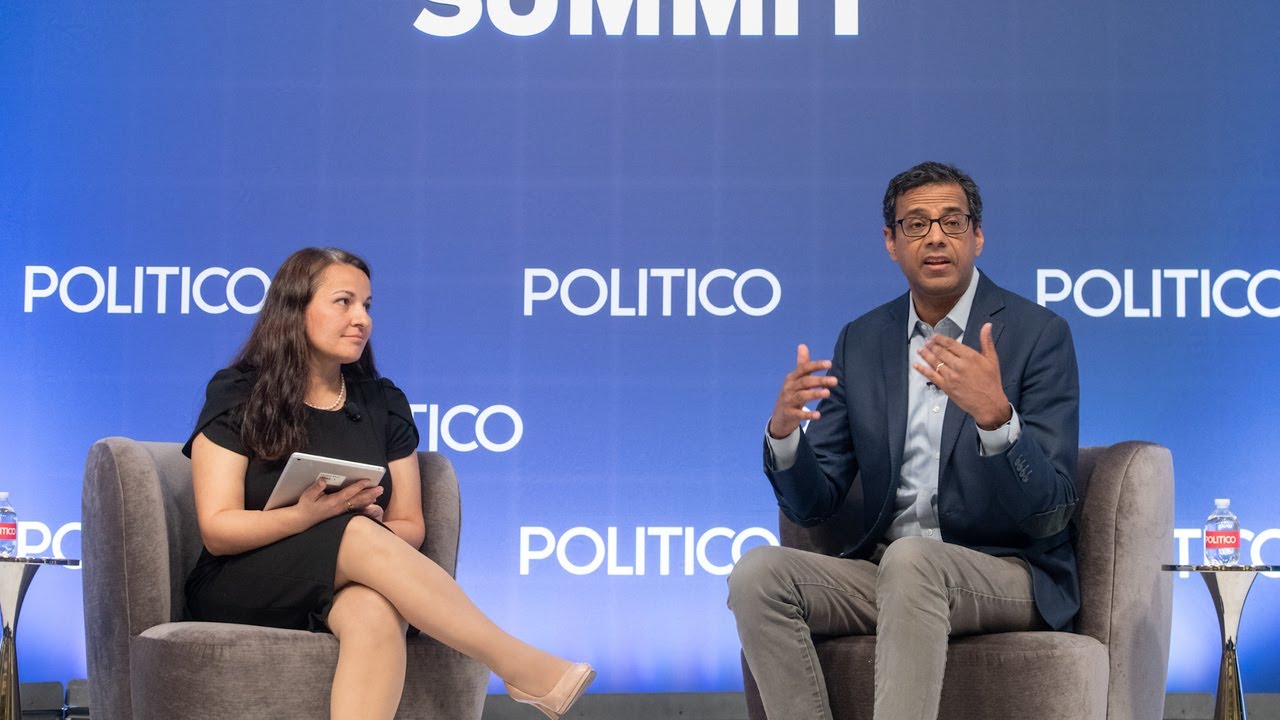
[MUSIC PLAYING] [APPLAUSE] ANNA SHCHETININA: Good afternoon, everyone. Thank you for being here. Today is the National Superhero day, and we are actually thrilled to welcome a true hero whose work is changing the world.
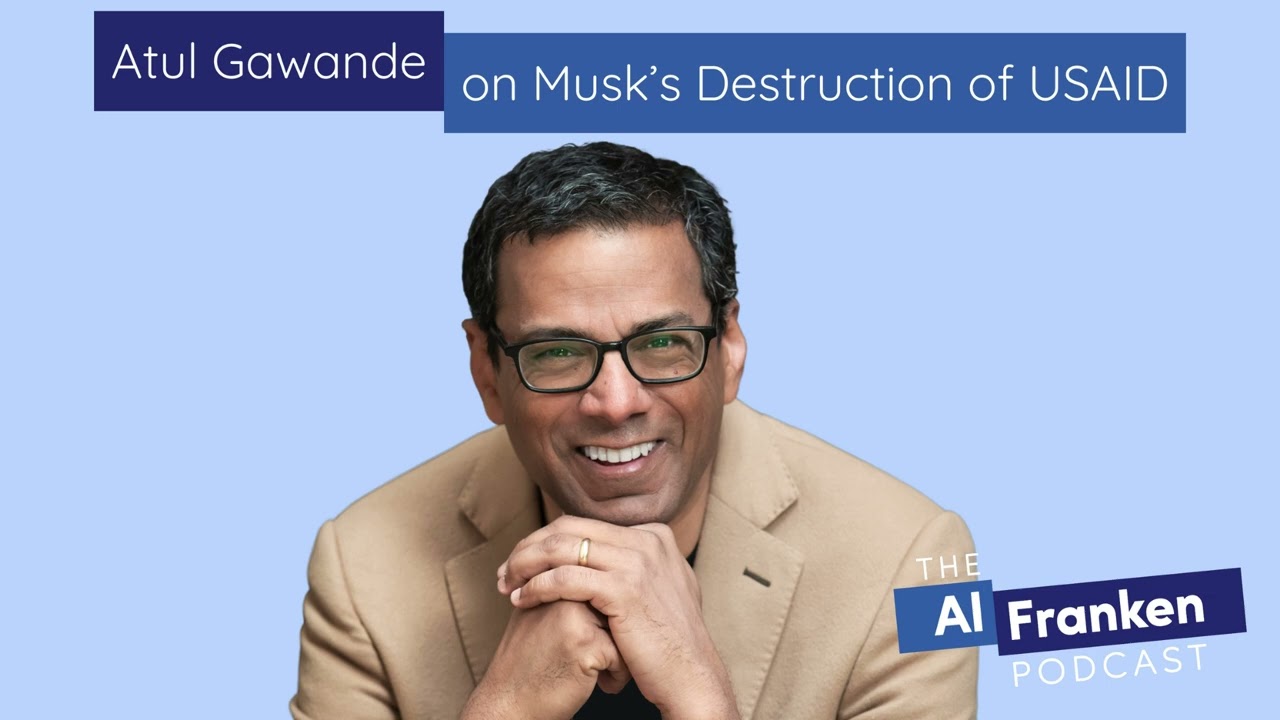
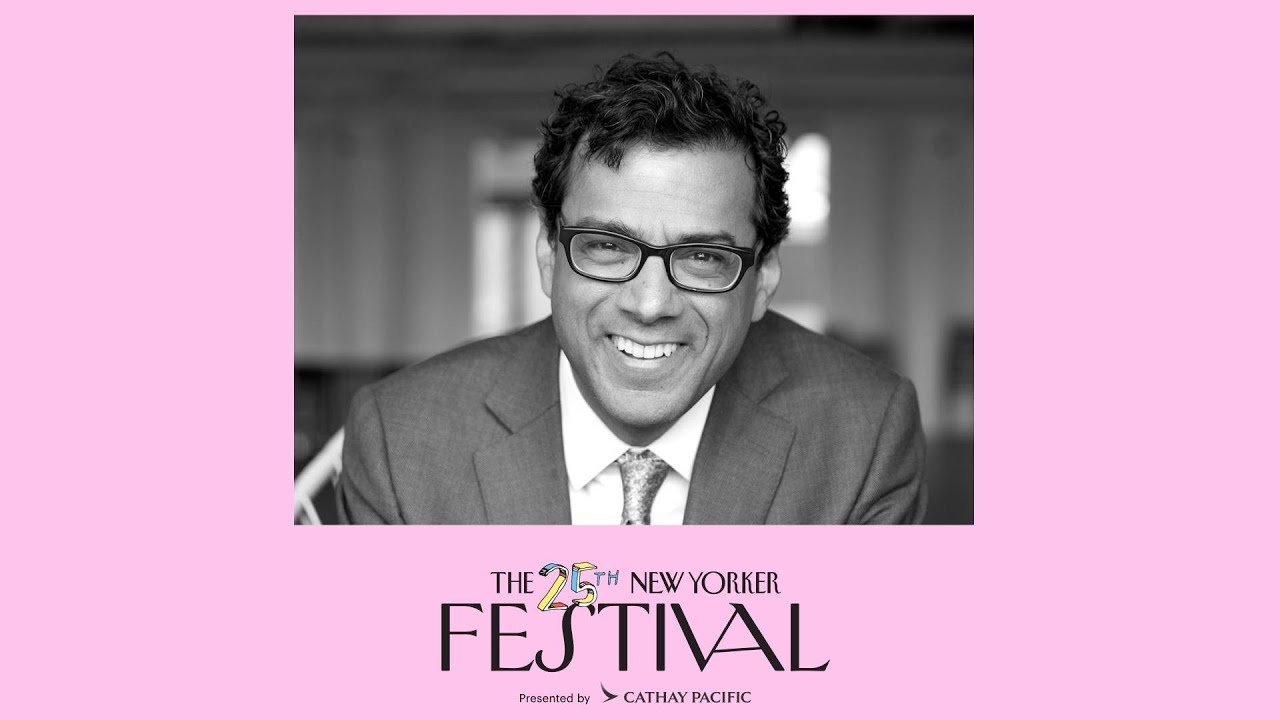
We're thrilled to welcome Dr Atul Gawande, a surgeon, author, and visionary in health system innovation and public service. Most recently, he served as Assistant Administrator for Global Health at USAID, where he led efforts to expand access to care, confront global health threats, and close life expectancy gaps worldwide. A former professor here at Chan and Harvard Medical School, he is also the co-founder of Ariadne Labs, a joint center for health system innovation, and Lifebox, a nonprofit making surgery safer globally.
Beyond the operating room and policy arenas, Dr Gawande is known around the world for his eloquent, deeply human writing. Through his longtime contributions to The New Yorker and his four New York Times best-selling books, including the Checklist Manifesto and, my personal favorite, Being Mortal. He was the executive producer for the Emmy-nominated documentary film adaptation of Being Mortal and for the Oscar-nominated documentary film To Kill a Tiger.
His work reminds us that at the heart of every system and policy, there are real people and real lives. We'll begin with opening remarks from Dr Gawande, followed by a conversation moderated by Dr Marcia Castro, the Angelo Professor of Demography and Chair of the Department of Global Health and Population. With over two decades of research in the Brazilian Amazon and extensive collaborations with health ministries, Dr Castro offers unparalleled expertise in infectious disease dynamics, health inequities, and far-reaching impacts of climate change on population health.
Together, Dr Gawande and Doctor Castro will delve into the future of global health, drawing on insights from USAID on scaling public health interventions, driving system-level innovations, and navigating times of uncertainty. It's a conversation we're fortunate to witness. So please join me in warmly welcoming Dr Atul Gawande and Dr Marcia Castro.
[APPLAUSE] MARCIA CASTRO: Thank you. ATUL GAWANDE: So great to be in G1. [LAUGHTER] It's been a while.
I returned now at a tough time for the school and for the University, and I know for many of you in this room, it's really personal. It's your careers. It's your life's work.
It's your livelihoods at stake. The halt, the stop work orders on Harvard's life sciences research funding is part of a broader assault on America's health and science infrastructure. And I've had a firsthand vantage on this as this attack unfolded over the last three months, having taken a leave from getting to teach and work here at the School of Public Health, as well as the Brigham across the way, having taken leave at the end of 2021 to lead Global Health at USAID.
Hi, Bill. Nice to see you. I got to lead 800 staff in headquarters, working alongside more than 1,600 health officers in 65-plus countries.
They had less than half the budget of my Boston hospital system here, about $12 per American. And with that, they saved lives by the millions. And they contained disease threats everywhere.
I've called it the best job in medicine that you've likely never heard of. Some of the things that we did-- we built a 50 country network for surveillance of deadly diseases, from bird flu to Ebola, being able to capture what was happening around the world so that we could respond faster and better and also prevent. We cut the emergency response time to deadly global outbreaks from more than two weeks to less than 48 hours.
We deployed programs for preventing child and maternal deaths that reached 93 million women and children under the age of five in the year 2023 and added, on average, six years of extra lifespan. We supported services for prevention and treatment of HIV, TB, and malaria that dramatically reduce prevalence rates and deaths for tens of millions of people. Before I completed my tour of duty on January 20, I briefed the Senate Foreign Relations Committee about major opportunities on the horizon that we are all excited about for the next few years of public health.
Among the things that I discussed were three breakthroughs. One is a drug that gives us the power now to eliminate HIV. Lenacapavir almost completely prevents HIV with a single injection that lasts at least six months and likely a year, according to recent data.
The journal Science declared it the scientific breakthrough of 2024. It's an extraordinary moment in medical history to have a shot that could be given a flu shot yearly, deploying this game changer in high-risk communities through PEPFAR, I told the committee, could finally bring an end to HIV in the next 5 to 10 years. Similarly for tuberculosis, the world's number one infectious disease killer, three TB vaccines are completing clinical trial as we speak.
And USAID had launched a trial of a four-dose pill that could prevent tuberculosis in exposed individuals and dramatically reduce cases and had begun work with the makers of bedaquiline, a TB treatment, on a long-acting injectable that could do the same with a single shot. And then at the same time, USAID was just about to scale up a novel, inexpensive package of existing drugs and treatments that were found in the E-MOTIVE trial to reduce severe hemorrhage after childbirth, the leading cause of maternal deaths by 60%. American scientists, companies, nonprofits, universities, and American funding had played key roles in these advances and these breakthroughs.
And they were poised to transform the health of our species over the next decade. The new administration had no reason not to pursue these objectives. Congress had already funded them.
There was nothing partisan about them at all. But instead of saving millions of lives, we got surgery with a chainsaw. In a matter of weeks, the new administration not only halted this work.
It escalated an attack that eventually fired the entire staff of USAID, terminated 86% of its programs, and kneecapped the rest, all against congressional directives. They dismantled the US's largest civilian workforce advancing global stability, peace, economic growth and survival. And they've done it in a way that maximized loss of life and mismanagement of billions in taxpayer dollars.
That damage alone has been devastating. But they are now using the same playbook to purge staff and destroy programs across our entire domestic infrastructure in government for health and science, including at NIH, CDC, and FDA, and now turning to our universities and potentially our medical centers. So now I find I've returned to this community as it's come under attack.
My center, Ariadne Labs, where I've rejoined, was hit by the federal funding freeze, like all of you, imperiling large-scale tests of scalable system solutions that have been demonstrating dramatic improvements in outcomes in surgery, in childbirth, and primary care. What I know now, three months from when I departed my role at USAID, is USAID cannot be restored to what it was. But it is not too late to save our health and science infrastructure and our talent.
And it's not too late to stop the destruction. There's a lot that I really look forward to talking to you about coming out of all of that. One is how amazingly this school and community prepared me for my work at USAID.
Another is why you and your expertise will be needed no matter what, whatever happens, number three, why I think the work of public health and science will ultimately prevail, and finally, why President Garber's leadership in standing up to the Trump administration is so important. So with that, thank you for welcoming me back, and I really look forward to our conversation, Marcia. [APPLAUSE] MARCIA CASTRO: Good afternoon, everyone.
And we're going to start a conversation about what you just heard, USAID, but also about Atul's career. So thank you so much for being here. And I want to immediately start by following your initial remarks.
So you mentioned all the absolutely fundamental and necessary programs that USA was funding and how it has made a difference already. So a lot of those programs don't exist anymore. What is your perception about what's happening with the population that you used to be served by those programs?
And are you seeing other organizations trying to step in and fill in the gap that USAID left? ATUL GAWANDE: Yeah, so first of all, the world doesn't stop when the US changes course. I think the first thing that immediately happened was something that the world has not had to deal with before is America as an unreliable partner in a space like global health, global development and one where, for a century, we've been at the center of leadership, whether it is malaria eradication, the push to eradicate smallpox, and more.
So there was absolutely a period of shock. There's a current period of some confusion because not everything is turned off. There is 92% of the maternal child health funding is stopped, but there is 8% continuing.
About 50% of HIV funding is continuing. But the funds haven't started to flow. It's unclear when.
There are some programs that have now gotten up and running. And as I track the details-- and I've been digging into it carefully-- HIV, most of the countries have six to nine month stocks of medications. But the funding for services immediately shut off.
It's your staffing. The secret of all work across infectious disease or, really, across all of driving health or education outcomes or going much further is it's not just having a solution. It's the follow through.
And so much of the power of what USAID does and that I see WHO doing as well is the technical assistance that gets you from 60% vaccination to 80% and then to 90% vaccination, gets you to figure out the gaps and where the goals are, where you're trying to hit the HIV 95-95-95 objective, 95% of people having their diagnosis of HIV, being aware of their diagnosis of HIV, 95% of people then being on treatment, and 95% staying on treatment enough to have suppressed their viral load and that that's the secret to now controlling HIV. And countries across the income span have been achieving those goals. And so what is interesting and challenging, there's not pictures of what the devastation is that's occurring right now because it's really hard to see the difference between a 70% and a 90% vaccination rate, even though that will cost millions of lives.
It's really hard to see the difference between there are drugs, there are diagnostics for HIV and TB, but fewer people are getting them. Governments are responding. They are directing people into primary health centers.
They're working to try to get people trained. Many of the HIV programs were in standalone outside programs, and they're now rapidly trying to drive those in. Family planning programs would have been 100% shut down, and it seems to be accepted that they won't come back, even though that is a critical pillar of saving the lives of mothers and enabling autonomy in people's lives.
And so a lot of the discussions are around the idea that, how do we allow ourselves to be so dependent on foreign assistance to begin with? How do we accelerate changes that, during our term and my term in office we had pushed very hard to say that we are, as countries move to middle-income status, that they are taking on more and more of the responsibility? At Gavi, for example, once you reach low-middle income level-- that's the global alliance for vaccines-- at the lowest income levels, you still pay something, $0.
20 a vaccine. And as your income improves, you are expected to take on more of the burden and then exit when you reach a certain level of low-middle income, that the fundamental thing your health system should do is to be able to provide vaccines. And countries exit.
And so there's a pathway, but this just got turned on a dime. And then the poorest countries in the world will be absolutely the ones that suffer the most. MARCIA CASTRO: Yeah, you mentioned an important point that, for example, countries may have drugs for HIV for eight, nine months.
In malaria, for example, some countries still have bed nets. But the logistics of distributing bed nets were also paid by USAID. And in this case, they don't know what to do with the bed net.
So we also have the situation that, for some countries, they may be able to step up and put more resources and guarantee that those bed nets that are there, that they save lives instead of being in a room, not being used. ATUL GAWANDE: That's so important. A lot of the stuff that we really focus on USAID, the least efficient place to put it was in buying the bed net or buying the drug.
The most efficient was in tracking the data that people don't invest in so that you understand, where are the gaps in coverage? Where are the children dying? What needs to be done?
Training people to use the data to have that resilience and internal capacity and then quality improvement at the local level, you do all of that work. And that's a lot of what's disappeared. And some of the hardest part about that is we're now flying blind.
The data in malaria, in famine, early warning systems, in so much of HIV and TB and maternal child survival is severely debilitated. And so now are others going to step up? Some of the things that's not well covered, WHO's funding-- United States has pulled out, so WHO is facing a major retrenchment.
But then the shift to saying, for example, to Europe, we may or may not be supporting Europe in the future , again, an unreliable partner defensively. So now national security and defense budgets have to rise substantially. And so they're pulling back on foreign assistance as well.
WHO, Global Vaccine Alliance, Gavi, Global Fund for Malaria, TB, and AIDS. They're all facing a situation where they're getting cut. And then the tariff impacts are compounding debt burdens that have been through the roof following COVID that low-income countries have been facing.
Japan, one of the biggest donors in this space, after the United States has a 30% drop in its currency. And so even if they hold a flat line, it will mean 30% less coming to the space. So this is going to be a very tough next two to four years.
The good side is when PEPFAR and a lot of the global health funding really accelerated in the early 2000s, 25% of Africa was middle income, and 40% of Asia was middle income. 40% in Latin America was middle income. Today, that's 80% of Asia and Latin America's low-middle income or higher, and Africa is 60%, on its way to climbing higher.
So the world is different, and there's more capacity in the world. I think the School plays a really important role in building that capacity. It's important that 40% of our student body here is international because the needs of humanity are global.
MARCIA CASTRO: So you mentioned in your initial remarks how the School prepared you for this work. So starting to move towards your career, can you share some of the lessons you learned over your career, ups and downs-- we all have ups and downs-- that can really help the future generation of public health and global health that are here in this room navigate uncertain times? ATUL GAWANDE: Well, let's see.
[LAUGHTER] MARCIA CASTRO: Easy question. I only have easy questions. ATUL GAWANDE: I came to the school as a weirdo, a surgeon who joined the Department of Health Policy and Management, interested in population, public health, and wanting to apply it to my field.
One of the first things that we set out to do was try to count how many operations were done in the United States and worldwide. And it turns out it was well over 300 million operations a year that were done with human beings, so 1 for every 22 or so people in the world in any given year, and that the average person would have between 8 to 9 operations in their lifetime and that surgery was needed to live a long and healthy life It was regarded as a luxury. Surgeons didn't see it as a public health good.
Public health people didn't see it as surgery good. I wanted to do research on it because you're doing that much surgery. It turned out that the death rates and complication rates from surgery alone were larger than deaths and childbirth, deaths from many infectious diseases, from any infectious disease.
But you go to the NIH or you go to others, and there is no funding. But it was a big problem. It felt neglected.
And I was just interested in, where can I have the biggest personal impact? So the next question I asked was, how can I find out where my best opportunity for impact would come from, studying the surgery, studying work in surgery? So one core question is, are the deaths because of things we haven't discovered and therefore you need to go to the lab?
Or is it a failure to execute on existing knowledge? So I joined a study that Troy Brennan in the Department of Health Policy and Management and Lucian Leape and the chair Arnie Epstein was involved in, where they were studying hospitals across the US, mainly in two states, where they'd collected 15,000 medical records of admissions in the hospitals and had coded them and analyzed them for who had deaths and disability. And I stepped in to say, well, how many of them were from surgery?
So 3% of hospital admissions resulted in a death or a permanent disability. 2/3 were from surgery. That was pretty interesting.
I had something that could be valuable. And so then we did an analysis where we looked at all of the complications from surgery and said, what percent were because of lack of knowledge, the knowledge didn't exist? And what percent were because of the knowledge existed but people did not execute on it correctly?
And the answer was the majority were from existing knowledge failing to execute correctly. And that led to-- came up with various tests of ways to improve the outcomes. We ultimately created the Safe Surgery Checklist with the WHO.
And that whole time I was desperate for funding and could not find it. But you always find a way. Eventually we created the checklist.
We tested it locally. We were able to get enough funds to run a global trial. We tested it in eight cities and had $3 million that came forward.
That took years to ultimately come up with. But it demonstrated a 47% reduction in mortality across eight cities in the world. And we were able to then work on implementation, and it's now the standard of care in 3/4 of the operating rooms in the world.
And that was without having-- except for that one round of funding that took seven or eight years to get to in the first place. There's a lot you can do even when you don't have the funding you think you need. MARCIA CASTRO: And what really inspired you to move to those large scales?
You go from a surgeon in one patient, and you've gone as large and as globally scale as possible. ATUL GAWANDE: That's the dream of public health. MARCIA CASTRO: No kidding.
ATUL GAWANDE: I mean, as a surgeon, the wonderful thing-- And taking the job at USAID was-- I did my last operation on December 15, 2021. That was really hard. I loved the contact, and it was also my glimpse into the reality of the world.
What is the health system really like? What are the problems that it has, constant source of problems to solve? But where do you get to do work that can reach 75% of the world?
Where do I get to do work that, at USAID, reaching hundreds of millions of people? That's why I said, it's the best job in medicine no one's really ever heard of. So that, for me, I'm addicted to impact.
It is, for whatever reason, the way I can feel like I matter in existence, even though it should be. Just because my kids love me or something. [LAUGHTER] And so that's my personal drive.
MARCIA CASTRO: So you were a surgeon. You were a phenomenal writer. ATUL GAWANDE: Thank you.
MARCIA CASTRO: You work in public health. And then you took on working for the federal government. That's quite a career path.
And can you also share with us some of the principles that guided and continue to guide your career in all of those areas? ATUL GAWANDE: Let me unpack a couple of things. I think I've been working on the same problem the whole time, and I've been fascinated by-- we have learned how to double the lifespan of human beings if you can get access to the capabilities of public health and medical care that have been discovered over the last Century and we have not really learned, how do you deploy this capability town by town, to everyone alive, without bankrupting societies, while managing to deliver it in some kind of reliable way, when it's just ordinary human beings that are signing up to open up your body and tell you I'm going to make you better or give you drugs or that may or may not be manufactured appropriately?
The problem of scale has totally fascinated me on the level of the individual relationship, the combination of art and science and bringing knowledge to a human being sitting in front of you, and negotiating that relationship to, at scale, not bankrupting societies, delivering on things that, the interaction with politics, I just feel like you see all of it coming together. And so I feel like I've gotten to work on the same problems, but I get to do it through writing, through practice, through research and science, with teams trying interesting innovations around the world. And I've done work in the private sector as well.
And going to government, what drew me in was COVID. Here was this disaster that became the most high impact thing any of us could work on. It had ground the economy to a halt, wrecked people's educations.
We were talking about that in Brazil. And I got a call from Samantha Power asking if I would come to USAID to lead the global response on COVID for the US. How do you say no to that?
That was worth a try. And then it turned out to be even more interesting than I thought. Six weeks after I arrived, Russia invades Ukraine.
And it turns out we, at USAID, could help Ukraine keep their health system going. Russia had cut off its supply of medicines. Russia had bombed the oxygen factories.
And here, many times more would die from the cutoff of their HIV medicines or their heart medicines than would die from the war itself. And 20 people on the team, within eight weeks, could work with them to get half the pharmacies opened again, get the medical supplies coming from humanitarian aid agencies, and get oxygen flowing. It was remarkable and a great opportunity.
And what I learned-- to go to the second part of your question, I think the principles are ones that are really quite simple but actually hard to execute on. All I kept asking is, we made a basic metric. I imposed a metric.
Our top metric was, to reduce premature mortality, we were going to measure the percentage of deaths that occurred in any given country before the age of 50. And our goal was to reduce the percentage of deaths that occurred before the age of 50 in any given country. And my questions were always, what's the most important?
What's the data on what kills people? And where we can make that difference? In the United States, I would say it's under the age of 70.
And what's the pathway for high-quality care all the way to the end of life? So there's more than just survival. But in these countries where lifespan was so much shorter, you start with the basics.
And Ukraine, for example, I went to the team, and they said, we have a TB outbreak. We have polio that's re-entered. And we're starting to see cases of diphtheria in the refugees.
And then we have all these other problems. I said, OK, what's going to kill people the most? We're going to set aside the polio potential or the TB or the-- because no one can get medicines right now.
And the hospitals have to be able to function. So let's start there. And then six months later, nine months later, we were trying to address closing those other gaps.
And so my core principle is, you do need data. And it's to understand, how do you see-- data is what makes the work of people who make the systems function. You're making their work visible and their impact visible, and that's how you know what to do.
And so that's what I come back to again and again , and I learned that here. MARCIA CASTRO: And I'm glad you mentioned that because, without data, we're just navigating blind. And going back to USAID, the Demographic Health Survey, which is the main data source for a lot of countries to guide their actions and evaluate what they've done in the past two years, is also gone.
ATUL GAWANDE: Yeah. So MARCIA CASTRO: That's a major concern because I wonder if we're even going to be able to measure the impact of all those actions, those terminations in those countries, because the data are also gone. But I want to move to questions that the audience has-- ATUL GAWANDE: And I've worked with that team to see if we can get a philanthropic funder, which we may have, and lobbying Congress, which is hard to do, and making sure the Democrats and Republicans know DHS would be on the top of the list of the contracts to unterminate.
And so I haven't given up hope on that one. MARCIA CASTRO: The Pop Division of the UN and several groups, including the Population Association of America, are trying to do similar efforts because nobody wants to see those countries without those data. So I hope some of those efforts will be successful and we continue to have the data.
All right. Several of you submitted questions when you registered. So I'll read some of those, and hopefully I'll have time for one quick question at the end.
ATUL GAWANDE: I'll try to give shorter answers. MARCIA CASTRO: So they're all from our students. So Ivorn asked the question, for early career physicians interested in writing about the health challenges of the current times, what advice do you have for us to write to audiences that break past the academic, public health echo chambers?
ATUL GAWANDE: So my advice is just do it. [LAUGHS] I think trying to write, a lot of what you want to figure out is, who's the community you really want to talk to? Who's the community you're ultimately interested in?
I was on a panel with three writers from medicine. One was Perri Klass, a pediatrician who used to be at Boston University, and she had written a couple of novels. And what she wanted to explore was really for herself, which was relationships in medicine.
Her first breakthrough book was called Other Woman's Children, and it was about a pediatrician not taking care of their own children to take care of other children and understanding those relationships with the mothers and with the colleagues and other things. Samuel Shem, who was the pen name for Steve Bergman, wrote a book called House of God. And he said his aim was to stick it to the man.
And so he wrote about very sharp, blistering critiques of the medical system. And it wasn't really clear who his audience was, except that he was very funny, and he connected with people in a broad way. I always felt my audience I was interested in people in health and people outside of health, but as citizens, not as professionals, and that we're all trying to navigate, how do I make this system work?
We all depend on it for our lives while we participate in it in other ways too. And I felt I was trying to unpack what's confusing to me about the problems. Writing was my way to write through the complexities of the issues so I could find out where I really stand and what I believe.
And so when you want to write, a lot of it is, who is the audience you're trying to reach? It could be a newsletter to your friends. It could be a blog, which is basically how I got started for Slate Magazine is the first place I started writing.
Or it could be a professional audience, and you're trying to reach people through journals, through perspective pieces, and other things like that. It could be an op ed in The Boston Globe. But being clear, who are you speaking to?
And what would they actually want to hear about and whether they'd be interested? And how do you make them interested? MARCIA CASTRO: OK.
Cora, another one of our students, asks, how academia, particularly students, can best advocate for federal funding towards global health and against cuts to USAID? ATUL GAWANDE: It's a great question. And to speak to this moment right now, let me go back to that audience question.
Who is going to actually change the situation on federal funding? The normal answer would be write to your congressperson or write to a congressperson if they're not your congressperson because Congress is a critical place to make it happen. But it's clearly not sufficient.
Congress isn't acting. And so I go back to more basic principles right now. I think the most important thing we do is bear witness, bear witness to the actual harm that is going on.
It's very hard for people to see. Everybody's in their own bubble, seeing their own pain in the moment. And being able to see beyond our walls to what's happening in the world and bear witness, whether it's Sarah Fortune's demolished $60 million TV program and the impact on the world or it's your own career and what's happening to your own concerns.
But I think bearing witness and telling the story, that is really important. That needs to be told not here. It needs to be told around the kitchen table of family members of yours, telling people what this has meant as you're going through this.
Most of the country under the age of 40 or the world is not getting news from Fox or CNN or MSNBC. They're getting it on TikTok and Instagram. So go there, and tell people what you're experiencing, what you're doing.
I think the second thing is to not deny reality, that bearing witness is about helping people see the reality at a time when the reality right in front of us is being often denied. And then the last thing I'd say you can do is to stand with those who stand up. That's why I mentioned Alan Garber's name.
I think there's so much fear right now for very good reason. But our only way to oppose the fear is we only have fear if we're acting alone. We have much less fear when we're acting together.
And extending your support and standing up with those who are doing the hard thing, standing against what's happening is so important. In small ways or in big ways, reaching out and thanking people, reaching out and praising them for what they're doing. I want our hospitals here to be not just saying, well, we're independent, and we're separate from Harvard, but that we also stand with the president.
And I don't have to speak for these institutions, but these are the things that we have to do right now. And I think it's the most powerful who need to take the strongest moves to do that. And I think it's contagious.
When President Garber stood up, many, many of us felt much better standing up. MARCIA CASTRO: Together, we stand. Apart, we fall.
That's a Pink Floyd song, but it's true. ATUL GAWANDE: [LAUGHS] MARCIA CASTRO: Another question from Sarah, a student as well, how do you find ways of processing loss and wanting to make a difference? ATUL GAWANDE: Processing loss.
I don't think I'm very good at processing loss. I guess I process the loss by not denying the reality of it, by calling it out, sharing it publicly, and then trying to find a way to move on. I think a lot of you here are processing loss of an image of your future.
You had a fairly clear idea of at least the next couple of years, if not longer. And now that's thrown into uncertainty. And I think pretending that hasn't happened does no good for anybody, that you can have-- there's a difference between optimism and faith that you will persevere.
The optimism is that, oh, things will be fine in three months. And I have no indication that that's going to be true. But I have absolute faith that not only this institution will persevere but that you will persevere.
People in public health, the problems, some of which I discussed, are not going away, and the opportunities are not going away. They're going to get worse, and you will be needed more than ever. It won't be the way you thought it was going to be.
There are some ways that you will learn a lot out of the experience that will make you better at being able to speak to all of the constituencies and others that you can help serve. But I think you do have to accept-- not just accept. We all have to acknowledge the pain we're going through and name it and see it and not feel it like that it's self-indulgent or anything else to have to do that and then figure out, where is the pathway to do what you love?
And know that you may not have that answer. What I learned from-- my last book was called Being Mortal and was dealing with I'm a cancer surgeon and really trying to understand how to do better with people I was not going to be able to fix. And a lot of it was about the idea that people have priorities in their lives besides just living longer.
You need to ask them what their priorities in their lives are. And we don't ask. And therefore, our plans are often out of sync with what they expect.
But when you're talking to people who face very serious illnesses, maybe terminal, maybe not, is that their horizon has shrunk. Their future, they can't plan for 10 or 15 years from now. And it leads them to be closer to people around them, to be more focused on what they need in the here and now.
And it doesn't close out the possibility of the best possible outcome. But it recognizes that you're looking for your pathway that preserves what makes life worth living, preserves your purpose no matter what happens. And I think being sharp-- I think that extends well beyond people who are ill.
In this moment, everybody feels their life is fragile and uncertain. And you can remember what it is that made you do what you want to do, brought you here, and find pathways that still feed those needs, even if sometimes you have to do something else to make the money for a little while or other things. But you serve the purposes that brought you here in the first place, and I think those paths will still be there.
MARCIA CASTRO: And so we have just a few minutes. But the other two questions you addressed, it's about the future. It's about advice.
We have our graduating cohort. What do we do in those uncertain times? What we do if we don't have a job?
But you addressed some of those issues, so I think I want to end with one question that I'm sure your answer will address this. What gives you hope? ATUL GAWANDE: I'm always hopeful.
There is always a path forward, and I'm always interested in where that path is going to open up. As an American, one of the things I'm quite uncertain about is whether America is going to be part of leading and part of the solution anytime soon. But I have no question humanity will be part of the solution.
When Germany went into eclipse and sacrificed its health and science establishment, America snapped people up. And it was an important part of-- we got Albert Einstein. I think there are states that are going to stand up and see this as an opportunity to build in interesting and powerful ways.
I think Massachusetts could be one of them. If the federal government isn't going to fund and finance this work and is going to be slashing taxes and everything else, well, can there be a place, states that build for the long-term future and represent a different way? And I think there are countries that are stepping up and are going to show themselves to be leaders at every different level.
And there will be individuals who will help build a path forward because chaos and destruction and denial of reality is not a stable equilibrium. The alternative path is still ultimately the one that will prevail, the one that does not deny reality, the one that gives people a return to stability. And it's going to be in new and powerful ways.
MARCIA CASTRO: Yeah, so the geography of leadership will definitely change. And as with any challenge, there comes opportunities, and I hope we can tap on those opportunities. And we'll live with scars, but hopefully we'll leave all of this alive.
And I want to thank you for being here with us, for sharing this. And good luck with all your initiatives in trying to fill in the gaps. I want to thank Anna for introducing us, and I want to thank all of you for joining us today.
Please join me in thanking Atul Gawande for joining us. ATUL GAWANDE: Thank you. [APPLAUSE] Thank you, Marcia.

![Harvard Professor reveals the Science of Happiness in 15 minutes | Arthur Brooks [ARC 2025]](https://img.youtube.com/vi/w8a0T5XLrXc/maxresdefault.jpg)