Hi Friends! Today you will learn about something really helpful called CBT, or Cognitive Behavioral Therapy. Don't worry if that sounds complicated - we're going to break it down into simple parts that are easy to understand!
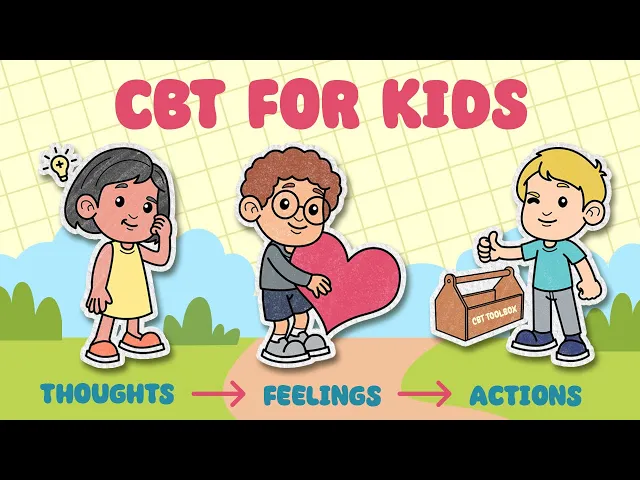
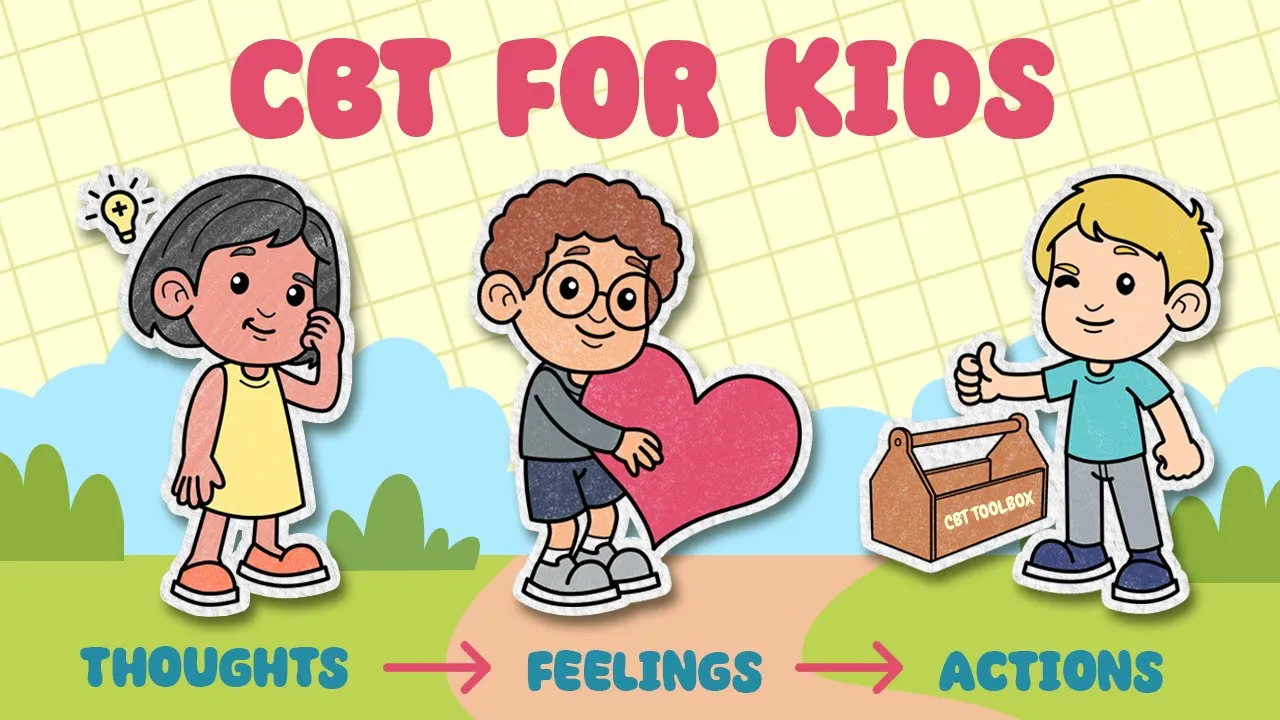
What Is CBT? CBT is a way to understand how your thoughts, feelings, and actions work together. It helps you better manage your emotions when going through a difficult situation, and gives you tools to make positive changes when you're feeling stuck or upset.
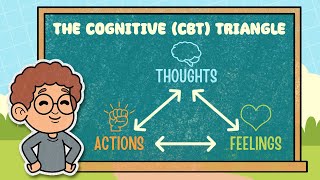
Have you ever noticed how your thoughts, feelings, and actions are all connected, kind of like a chain reaction? For example, imagine you're about to give a presentation in class. You might think "I'm going to mess up," which makes you feel nervous, and then you might act by speaking very quietly or rushing through your words.
CBT is like having a special toolbox that helps you understand and change this chain reaction. It's all about learning how your thoughts affect your feelings, and how your feelings affect your actions. The cool thing is, when you understand this connection, you can make positive changes.
Here’s a simple example. Imagine you're playing your favorite video game, and you keep losing at a tough level. You might have these thoughts: "I'm terrible at this game!
I'll never beat this level! " These thoughts might make you feel frustrated and upset. Then, because you're feeling upset, you might throw your controller or give up completely.
But what if you used your CBT toolbox to change this situation? First, you could change your thoughts to something more helpful, like: "This level is challenging, but I can learn from my mistakes and try different strategies. " When you think this way, you might feel determined instead of frustrated.
And when you feel determined, you might act by taking a short break to calm down, or asking a friend for tips on beating the level. Here's another example. Let's say you have a big math test tomorrow.
Your thoughts might be: "Math is so hard! I'm going to fail! " These thoughts could make you feel anxious and scared.
And when you feel this way, you might act by avoiding studying altogether. Using CBT, we can change these thoughts to: "Math can be challenging, but I can ask for help and do my best. " This new thought might help you feel more hopeful and calm.
And when you feel calmer, you might act by studying with a friend or asking your teacher for extra help. Here are 4 helpful CBT tools you can practice when you notice negative thoughts: 1. The Pause Button.
Imagine you have a TV remote control for your thoughts. When you notice a negative thought, press pause. Take a moment to stop and think about whether this thought is helpful or unhelpful.
2. The Detective Tool. Become a thought detective.
Look for evidence that supports or doesn't support your thought. For example, if you think "Nobody wants to be my friend," remember the times when friends have played with you or invited you to their birthday parties. 3.
The Thought Balloon. Imagine your negative thoughts are like heavy balloons weighing you down. You can practice letting go of these heavy thought balloons and replacing them with lighter, more helpful ones.
For example, instead of carrying the heavy thought “I'll never be good at sports,” you can let it float away and hold onto “I can improve with practice. ” 4. The Weather Reporter.
Become a weather reporter for your thoughts. Just like how weather changes throughout the day, your thoughts can change too. When you notice a 'stormy thought' like “This is too hard!
,” you can practice giving a new forecast such as “Right now it feels hard, but soon I'll understand it better - sunny skies ahead! ” Learning to use CBT tools might feel tricky at first, but the more you practice, the easier it gets. Here are 3 simple steps to remember how to use CBT: 1.
Catch your thoughts (like catching butterflies in a net) 2. Check if they're helpful or unhelpful And 3. Change them to more helpful thoughts if needed We all have times when our thoughts make us feel bad or make us act in ways we don't want to.
That's totally normal. The important thing is learning how to notice these thoughts and having tools to help you feel better. If you found this video helpful, please like, share, and subscribe!
For more social-emotional and mental health resources for kids and teens, please visit www. mentalhealthcenterkids. com.
Thanks for watching!