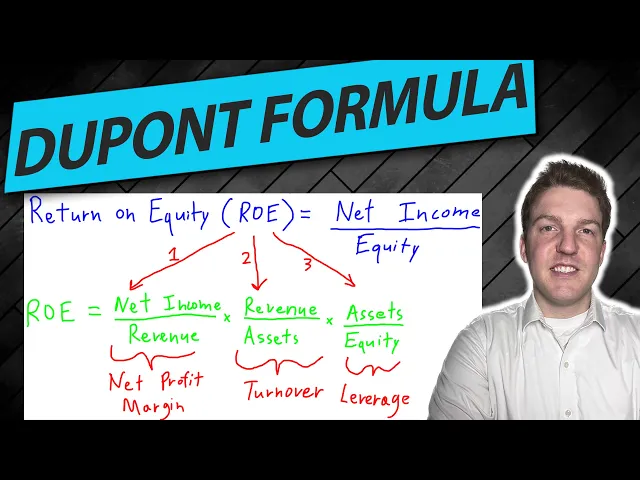
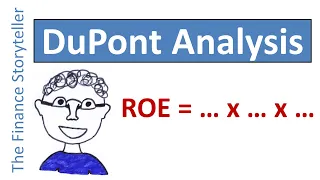
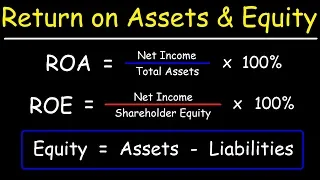
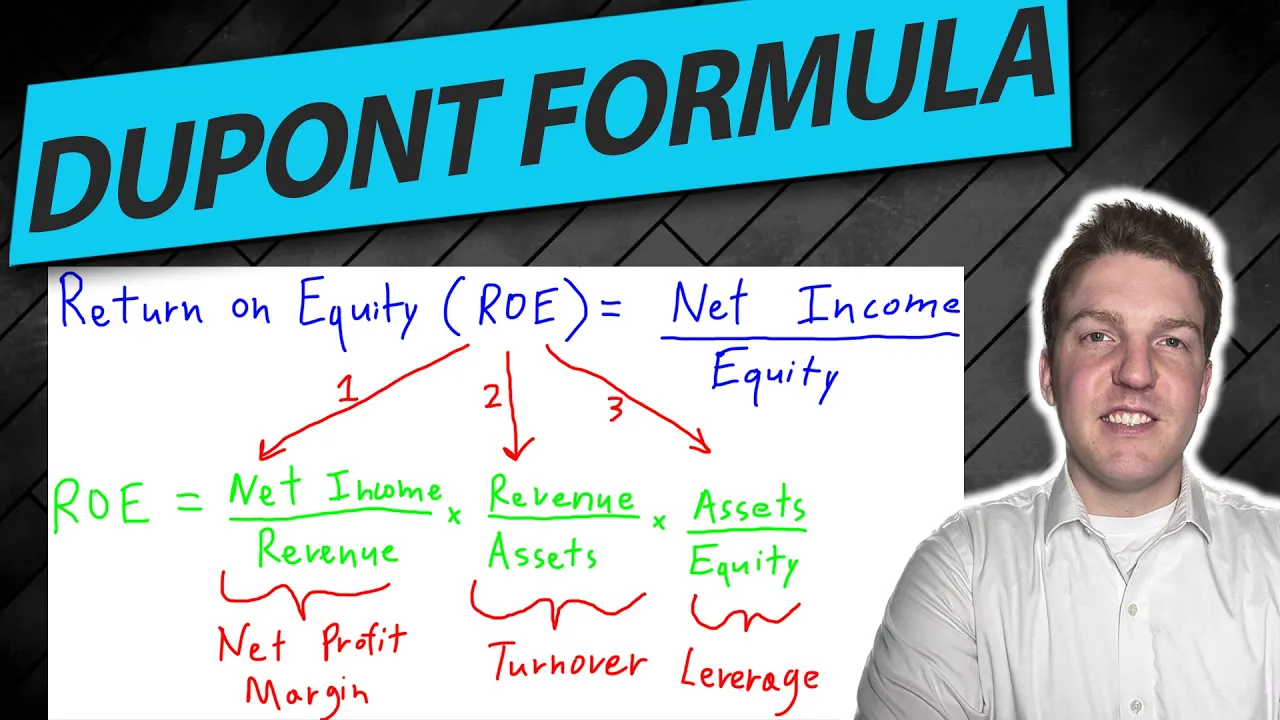
the DuPont formula is simply a way to break out the return on Equity of a stock or the Roe of a stock into it's a separate components now the Roe is just an efficiency metric it tells you how profitable a company is by giving you the net income of the company divided by the total total equity which essentially tells us what percentage of return the equity holders in this company are receiving for their investment the three components of the DuPont formula that we will multiply together are the net profit margin the warehouse turnover and the
financial leverage now let's take a look at each of these components the net profit margin is just the net income divided by the revenue this tells us how efficiently this company is converting its sales into profits the next component Warehouse turnover is just Revenue divided by assets and this tells us how quickly this company is turning over its inventory and then the last component the financial leverage is just the total assets of the company divided by the total Equity this will amplify the Roe if it's positive it will increase Roe if the RO or sorry
if these two components multiplied together are positive then this will further increase the Roe however if these two components multiply together are negative this will decrease the Roe so one thing you'll notice about this formula is that there's in each denominator there's a numerator until we get back to the original equation so we can cancel out the revenue here with the revenue there and cancel out the assets here with the assets there and then we end up with the same formula just net income divided by Equity that we had originally started with up here so
the DuPont analysis just breaks it down Roe into three separate components but it comes out with the exact same calculation as the original return on Equity calculation foreign