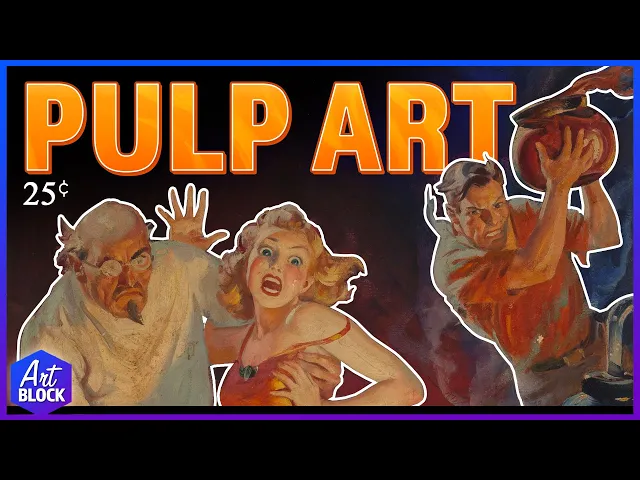
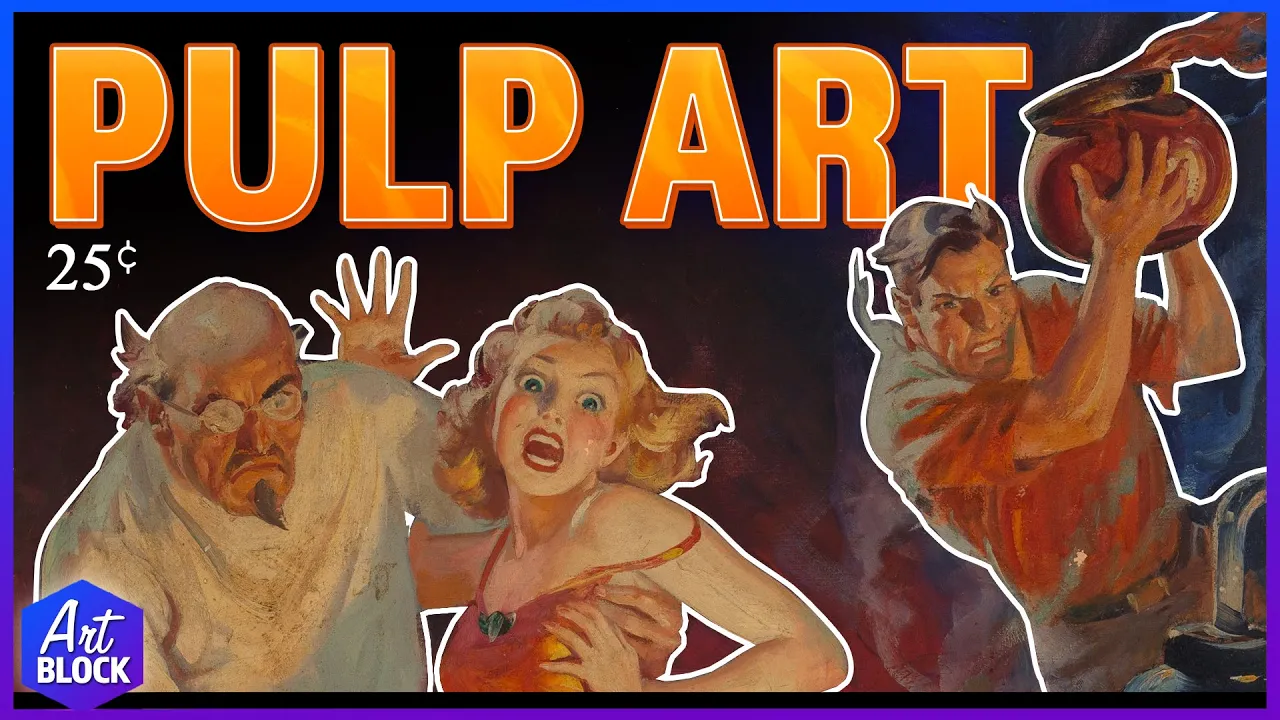
[Music] prior to World War II pulpart was seen on the covers of magazines everywhere spanning many genres Adventure Western romance science fiction and sports to name a few the job of the cover was to grab the attention of readers now you can grab it way up high and as the number of these magazines increased the covers became racer and more provocative other forms of entertainment slowly took over and the pulps eventually disappeared [Music] pulpart is the artwork created for the covers of cheap fiction magazines known as pulps although the covers were printed on glossy stock
paper the pulp refers to the cheap wood pulp paper that the stories were printed on the target audience of the magazines were workingclass people that couldn't afford some of the higher-end magazines such as Cosmopolitan life and the Saturday evening post which were nicknamed slicks for their comparatively better paper quality in 1882 a publisher named Frank munie published the first issue of golden Argy which was a weekly dime novel featuring adventure stories aimed at school AG children the magazine was later named the Argy and in 1896 it became an all fiction magazine geared toward young adult
men the Argy was the OG pul magazine and it became a huge success with many imitators the first of these imitators published by Street and Smith was the popular magazine in November 1903 which also had the first full cover color illustration on its cover in 1905 munie started the all story magazine which was another multi genre fiction magazine the monthly story magazine published by story press was the next competitor later changing it name to Blue Book magazine in 1907 all of the magazines at this point were a collection of genres that would later fit into
the adventure category in 1906 msie started the first genre specific hulp with railroad man's magazine focusing on oddly enough the railroad genre the second oddly specific genre Again by mie was the ocean the following year this aquatic magazine was somehow less successful than the previous genre and only lasted 11 issues it was common for pulp artists to do most of their work with one publisher artists like PJ Monahan Frederick small Marshall France and Paul star did most of their work for MSY Publications artists Steven weight Joseph Duan and Elliot do did most of their work
for publisher William Clayton John Walter Scott was a popular cover artist for Columbia Publications and red circle and artist Lawrence hearnden did most of the covers on the blue book magazine for over a decade one of the big artists for the popular magazine was NC wyth who was an expert on composition color and dramatic lighting before working as an illustrator he was a student at Howard piles School of Art which taught students how to create commercially successful Works other students of the school included Frank skover and Harvey Dunn who were also regular artists for the
popular magazine as well as other pulp magazines following the success of early pulp magazines former slick magazines short stories and top-notch magazine were converted to pulps in 1910 the magazine Adventure was started the same year published by the Ridgeway company the biggest genre of pulps was adventure and Adventure magazine was the most popular in the category most Publishers with more than a few Publications had an adventure magazine Dynamic Adventures thrilling Adventures dime adventure adventure novels Adventure Yarns Adventure trails and complete adventure magazine to name a few despite the large number of Adventure magazines with characters
and settings all over the world the heroes in these magazines were almost always white men not surprisingly the target audience were white men who were afraid of the changes happening in the early 20th century continuing the theme of racist undertones the character Tarzan was introduced in the October 1912 issue of the all story magazine by writer Edgar Rice buroughs and the iconic cover art done by popular msie artist Clinton PTI buroughs began writing fiction in 1911 after reading and being unimpressed by other PP magazines Tarzan was a popular character that would eventually become a pop
culture icon buru success would continue with his character John Carter and popular series such as pdar CPAC and Venus Burrow's name became associated with good storytelling by readers and having his name on the cover guaranteed a magazine would sell despite his success as a writer buroughs was open about his support of eugenics and scientific racism themes that can be found throughout his career the magazine Snappy stories was released in 1912 and would lead to a genre of more risque material competitors that followed were live stories Breezy stories these magazines would give way to the spicy
pulps in later years spicy being 1920 speak for sexy titles such as bedtime stories tattletales Cupid's Capers and stolen sweets the first issue of detective story magazine published by Street and Smith was released in 1915 and kicked off the detective genre artist John Albert Coughlin created most of the covers for detective story over the next 20 years in addition to working on other pulps the detective genre was among the most popular with titles such as dime detective thrilling detective Clues detective stories and flynns which later became detective fiction weekly black mask was another popular detective
magazine although it wasn't completely dedicated to detective stories until 1932 black mask took the genre in a more action-oriented Direction with tough Private Eyes slick hardboiled detectives and scant clad women dime mystery magazine began as a competitor to detective story but eventually turned into the weird Menace genre which were supernatural detective stories where ghosts and monsters were revealed to be humans a genre that Scooby-Doo would later take credit for popular artists in the genre were Walter M bomb Hofer Tom Lovel and Raphael Doo spin-offs of the detective genre were seen with the gang genre and
the [ __ ] spy detective genre a popular character introduced in spicy detective magazine was Dan Turner Hollywood detective with covers painted by the infamous HJ Ward as well as Joseph seoli the first all-western P magazine was started in 1919 with Street and Smith's Western story magazine the Western genre had the most Publications out of any other genre Cowboy stories ace high magazine diam Western magazine Wild West weekly and Ranch romances were all popular entries also debuting in 1919 was the iconic character Zoro in all story weekly early Western artists like Nick egenhofer and Howard
Hastings created classic Western Art scenes while later artists like George gross Alan Anderson and Norman Saunders focused more on action Gunslingers and busty damsels in distress notable authors of the western pulps include Louis LaMore and Frederick fost who was better known as Max brand brand through his writing would turn the cowboy into a pop culture [Music] icon there was also a Northwestern sub JRE with stories highlighting the Northwestern United States and Canada titles included Northwest stories West real Northwest and Far West stories JRE specific pulps continued their success in the 1920s Love Story magazine in
1921 kicked off the very successful romance genre Ranch romances in 1924 began a subgenre of Western romance which was also popular competitors included rangeland romances popular love thrilling love romance and new love but the original Love Story magazine was the most successful with with over 600,000 readers at its peak much of the Magazine's success was thanks to Legendary editor Daisy bacon whose feminist ideas appealed to women readers unlike other genres romance pulps were aimed at a female audience and replaced scantily clad damsels with independent and empowered women throughout the 1920s modest Stein was the artist
behind almost every Love Story cover Gloria Stole was another popular name in the romance pulp genre being one of many female artists to work in the genre taking a different approach weird Tales was a fantasy and horror magazine started in 1923 by JC hurger and JM Lan singer and later sold to rural publishing Corporation the most popular female artist in all of pulpart Margaret Brundage was a key cover artist for weird tales in the October 1928 issue HP lovecraft's cthulu monster Mythos first appeared Conan the Barbarian also debuted in the December 1932 issue horror and
fantasy magazines grew in popularity with Strange Tales unknown Fantastic Adventures Terror Tales dime mystery magazine and horror stories but none were as popular as weird Tales stories involving War had been a part of the general pulps for years but the first magazine to be entirely dedicated to this genre was War Stories published by Publications in 1926 other War magazines included War novels War Birds skyraiders Daredevil Aces G8 and his battle Aces and over the top battle stories was the main competitor to War Stories which exclusively focused on World War I stories in 1927 following Charles
Lindberg Spirit of St Louis Flight Aviation magazines became another popular genre air stories was the first entry to focused on Aviation Stories the following year wings and then Aces were released which both focused on aerial combat other popular Aviation pulps were flying Aces air Adventures air Trails Sky Riders skyb Birds airplane stories and zoom with all the genres specific pulps of the 20s and 30s not all of them were successful submarine stories Civil War Stories firefighters and Zeppelin stories Pro to be too narrowly focused I thought you said we're good on that side but then
I said wait wait wait Sports story magazine was the first pulp to be dedicated to sports and it would be the only one until 1935's dim Sport magazine the sports genre was the least successful pulp genre but was less saturated than others the most popular sports magazines were centered around football and baseball but other sports like boxing and track had some success as well the most most well-known artists in the sports genre used em motion to sell their work artists such as Norman Saunders Earl Bergie Rudolph bski and George gross were all popular picks in
1926 Hugo gernsbach published Amazing Stories which was the first science fiction pulp although gernsbach referred to the genre as scient fiction the term science fiction wasn't coined until 1954 by Forest acur Frank Paul was the primary artist for Amazing Stories astounding stories by publisher William Clayton was the next competitor in science fiction with cover art provided by Hans waloski other titles of the genre included Wonder Stories strange stories astonishing stories startling stories Planet stories and many more but amazing and astounding stories would Define the genre future science fiction writers like Isaac azimov and Arthur Clark
got their start working in these magazines open the pod bay doors H the hero genre was started in 1931 with the instant hit the shadow a detective magazine published by streeten Smith the shadow was the first reoccurring character to appear in a magazine specifically about that character jumping on the success of the Shadow other hero pulps followed such as the Phantom detective Doc Savage G8 and his battle Aces and the spider which were all released in 1933 during the Depression era hero pulps outsold other genres and Publishers combined Heroes with these genres popular artist Walter
M bomhof was known as the king of the pulps for his Unique Style most notably on Doc Savage and Pete rice covers other artists of the genre were H Winfield Scott known for his work on the Avenger John Newton howt for operator number five and The Spider and rafhael the photo for Phantom detective in Black Mask the pulps were at their peak in the 1920s through the 1940s the Great Depression had fueled the need for cheap entertainment but by the end of World War II America had changed drastically paper shortages following the war led to
an uncertainty in the pulp industry Publishers reduced the amount of magazines being produced and many were forced to shut down superhero comic books were increasingly popular with young people in paperback books became popular with more mature readers P magazines had mostly disappeared from the United States by the mid 1950s they had success in other countries as well most notably the UK but nothing compared to the status achieved in North America the pulp era gave rise to many Characters themes and genres that continue in entertainment today two of the biggest names in comic books borrowed heavily
from Pulp Heroes with the character of Batman being heavily influenced by the Shadow and Superman sharing many similarities with Doc Savage from the early 1900s until the 1950s tens of thousands of paintings were created for p magazine covers these original paintings are hard to find today and most of them are considered lost many paintings were thrown away after the magazine was published or simply painted over to save on resources popular Publications which was one of the largest PP publishers had their painting collection destroyed in a fire at their Bronx Warehouse in 1940 Street and Smith
another big pul publisher disposed of their large art collection after being acquired by K Nast in 1961 when viewed today subjects of these paintings can be seen as sexist or racist but even when they were first produced they were never meant to be displayed in living rooms pulp art is largely seen as low art or functional art created for the m opposed to high art which is displayed in museums and is meant to be taken seriously what do you think about pulp art or pulp magazines in general the themes of sexism and racism are hard
to ignore but is it possible to view the artwork for what it is let me know any thoughts you have in the comments and if you'd like to see more videos like this please consider liking subscribing and clicking the Bell