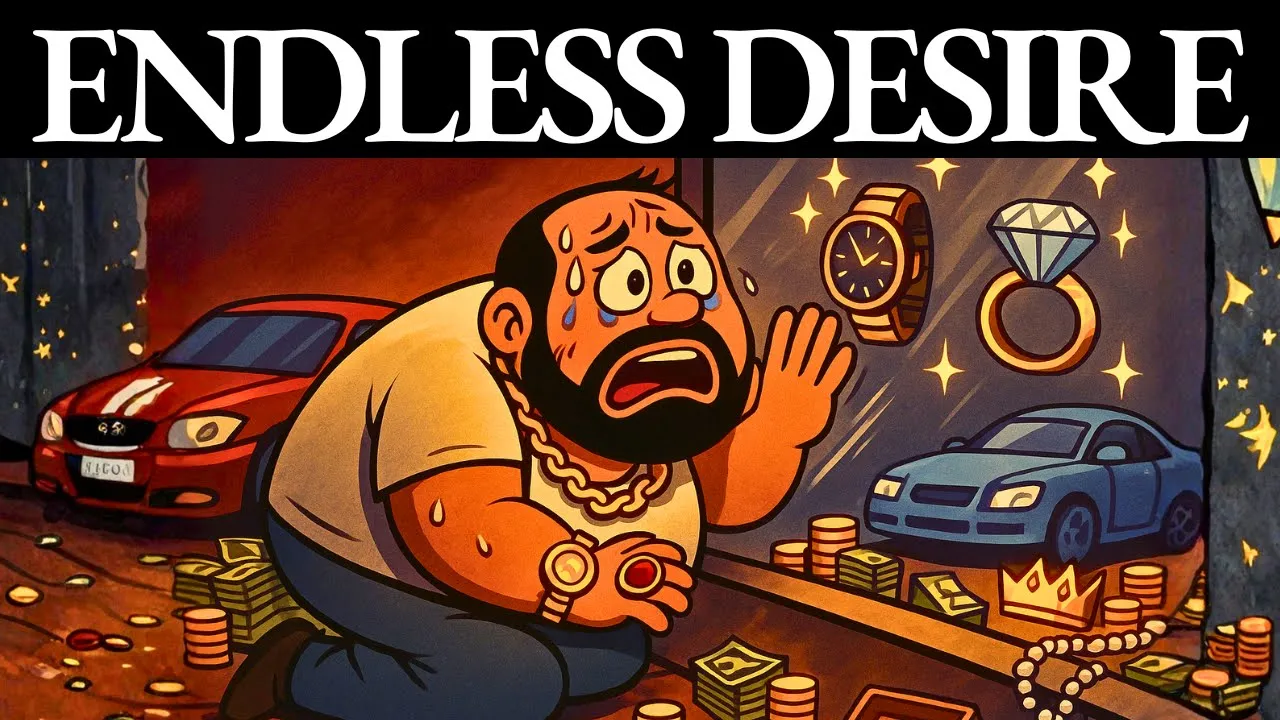
[Music] Have you ever stopped to think about why even after getting everything you wanted, you still feel empty? Why that purchase you desired so much lost its appeal within just a few days? The truth is harsh.
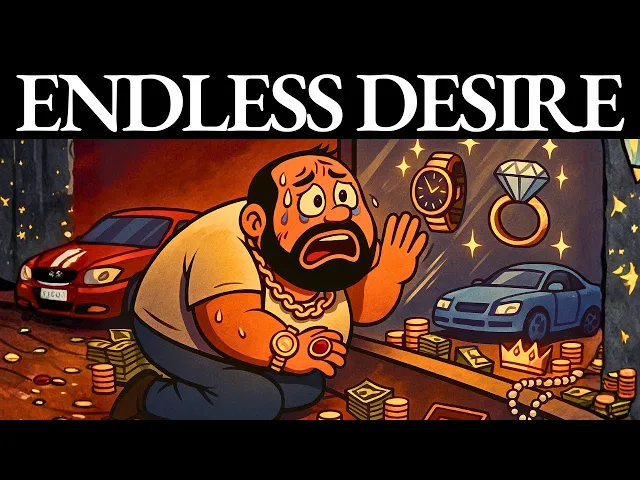
The more we want, the more we suffer. And this isn't just your feeling. It's a law of human nature discovered by one of the most brutally honest philosophers in history, Arthur Schopenhau.
He understood something that most people take a lifetime to realize. Our desires don't free us, they imprison us. And today, you're going to discover why.
Schopenhau spent years studying human nature and came to a disturbing conclusion. We're driven by a blind force called will. This will doesn't think, doesn't reason, doesn't care about our happiness.
It just wants. It wants food, wants pleasure, wants status, wants recognition. And it never stops.
This force is inside you right now, pushing you toward the next achievement, toward the next goal. You didn't choose to have this will. It simply exists, and it commands your life in ways you don't even notice.
Think about how you wake up every day. Before you even open your eyes, there's already a list of things you need to do, achieve, solve. You don't have peace because the will doesn't allow it.
It creates needs out of nothing. Turns luxuries into essentials. Makes you believe you need something you didn't even know existed.
This is our condition. And there's no way to escape completely. But there is a way to understand the game.
The problem starts when you fulfill a desire. Let's use a simple example. You want a new phone.
For weeks, you research models, compare prices, dream about that incredible camera. Finally, you buy it. The feeling is good.
For how long? 2 days? A week?
Soon, that object that seemed to be the solution to your problems becomes just another item in your drawer. And worse, a better model has already appeared on the market. Now you want that one.
The cycle starts over. This happens because our brain wasn't made to be satisfied. It was made to survive.
And survival means always wanting more. Our ancestors who were satisfied with what they had didn't prosper. Those who always wanted more food, more security, more resources, they're the ones who passed their genes forward.
You're a descendant of the unsatisfied. Restlessness is in your blood. But here's nature's cruel trick.
Between the moment you desire something and the moment you get it, there's a period of suffering. You become anxious. Your mind doesn't rest.
You think about it when you wake up during work before sleeping. The desire consumes your mental energy. You get irritated with any obstacle.
You fight with people who delay your plans. You lose nights of sleep planning how you're going to get it. And all of this is suffering disguised as motivation.
Schopenhauer called this the state of lack. You're not complete while you don't have that thing. And since there's always something you don't have, you're never complete, never at peace, always chasing something.
And when you get it, instead of peace, you find only brief relief before the next desire appears. It's like being thirsty in the desert. You find water, drink it, feel relief.
But within a few hours, the thirst returns and you need to search for water again. Now comes the part few people understand. There's something worse than desiring and not having.
It's not desiring anything. Schopenhau realized that when we satisfy all our immediate desires, we fall into another type of suffering, boredom. Have you ever had a weekend with nothing to do?
That horrible feeling of emptiness. That's it. Your brain needs a goal, a quest, something to chase.
Without it, you feel lost. That's why so many rich and famous people are miserable. They have everything they desired.
Now they don't know what they want anymore. Boredom devours them. They try to create new artificial desires, buy things they don't need, seek extreme emotions, anything to escape that emptiness.
Because emptiness hurts more than the pursuit. At least in the pursuit, you feel alive. Like you have a purpose.
In emptiness. You realize none of it had real meaning. So we're trapped between two sufferings.
The suffering of desiring and not having. And the suffering of having everything and feeling it means nothing. Schopenhau described human life as a pendulum swinging between pain and boredom.
You're always in one of these two states, rarely in the middle, and the brief moments of satisfaction between them are so short we barely notice them. Let's look at how this works in today's world. We live in the age of consumption.
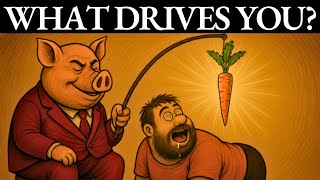
Companies spend billions studying how to create desires in you. Every advertisement is designed to make you feel your life is incomplete without that product. Social media shows people with apparently perfect lives, making you desire what they have.
The entire economic system depends on you never being satisfied. Think about car commercials. They don't sell transportation.
They sell status, success, admiration. They plant in you the desire to be seen a certain way. And when you buy the car, you realize nothing really changed.
You're still the same person with the same insecurities, except now with bigger debt. But the ad is already showing you the next model, the next desire. The wheel never stops turning and stores know exactly how to hook you.
They create artificial scarcity, limited time offer, last units available, all to accelerate your desire to make you act without thinking. Because if you stop to think, you'll realize you don't need that. But they can't let you think.
They need you to feel urgency, necessity, lack. They need you to suffer a little so you'll consume later. This system works because it exploits exactly what Schopenhau discovered.
Our blind will, our inability to be satisfied. And the more you consume, the emptier you become. Because each purchase promises happiness and delivers only temporary relief.
You're already conditioned to seek the next dose. Like an addict who needs increasingly larger amounts of the drug to feel the same effect. But material desires are just the surface.
Let's go deeper. Think about relationships. How many people enter a relationship projecting onto that person the solution to all their problems?
You meet someone, feel attraction, start idealizing. This person is going to make you happy, will fill your emptiness, will give meaning to your life. You create a fantasy in your head and expect the real person to match it.
When reality doesn't match the fantasy, what happens? frustration, fighting, disappointment. You blame the person for not being what you imagined.
But the problem wasn't with the person. It was with your desire. You wanted someone from outside to solve something that's internal.
Schopenhau would say you were trying to use another person to calm your will. But the will doesn't calm down. It just shifts focus.
That's why so many relationships start intense and end empty. Initial passion is just intense desire. When desire is satisfied, what's left?
If there's nothing deeper, only boredom remains. And then people move on to the next relationship, seeking that intensity again. They change partners like they change phones, always thinking the next one will be different.
It rarely is. The thing is, no relationship can complete you if you're empty inside. another person isn't responsible for your peace, isn't responsible for your happiness.
When you place that weight on someone, you're condemning the relationship to failure because nobody can carry another person's existential emptiness. It's too heavy and unfair. Now, think about your career.
How many times did you think you'd be happy once you got that job, that promotion, that salary? You fought, made efforts, sacrificed time and health. Finally got it.
The happiness lasted how long? Weeks. Soon you were already looking at the position above at the higher salary.
At the next rung of the ladder, this is ambition's trap. It never lets you enjoy the present. There's always a next goal.
And society congratulates you for it. They call it determination, grit, the will to win. But Schopenhau would see only a person running on a treadmill, always moving, never arriving anywhere, tired, stressed, but unable to stop because they've been conditioned to believe that stopping means failing.
Professional success becomes another bottomless desire. You climb the hierarchy and realize the problems continue. They change form, but they continue.
The boss is different now. The pressures are different, but no less. And that feeling of fulfillment you expected never truly arrives because it wasn't about the position.
It was about you trying to prove something to yourself. And that proof is never enough. And there's another modern aggravator.
Social media. Schopenhau didn't live to see Instagram, but he would describe perfectly the suffering it causes. You open your phone and see people traveling, buying, celebrating.
You see perfect bodies, beautiful houses, lives apparently without problems. And you compare it to your real life, full of flaws and difficulties. What do you feel?
Envy, desire, inadequacy. Each post is a reminder of what you don't have. And you start desiring that life, that body, that trip, that perfect relationship.
But it's all illusion. Nobody posts the bad moments. Nobody shows the fight they had before the happy photo.
The perfect body full of filters and angles. The trip that generated huge debt. You're comparing your reality with other people's fantasy.
And you'll always lose in that comparison. Social media turned comparison into addiction. Before you compared yourself with your neighbor, your co-workers.
Now you compare yourself with the entire world. with celebrities, influencers, people in other countries, the number of things to desire multiplied infinitely and your suffering multiplied along with it because you'll never have all that. Nobody does.
But the illusion is powerful. And there's another problem. You also participate in this game.
You post your best photos, your best moments. You create your own illusion. And this disconnects you even more from reality.
You start living for the likes, for the comments. Your value starts depending on strangers approval. Each notification is a small dose of satisfaction.
Each lack of notification is a small pain. You've become addicted to external validation. Schopenhau would say you handed control of your peace to others opinions and that's prison because you'll never please everyone.
There will always be someone criticizing, judging, envying, and you'll suffer with each criticism because you based your identity on the image you project. You lost touch with who you really are. You became a character in your own life.
So what to do? Schopenhau wasn't optimistic, but he offered some exits. The first is to understand and accept this nature of will.
You won't eliminate your desires, but you can stop being their slave. You can create distance between you and your impulses. When you feel a desire arise, observe it.
Don't identify with it immediately. Ask whether that will really bring you something of value or if it's just another empty cycle. The idea is to decrease the intensity of will in you.
And how do you do that? By simplifying your life, reducing needs. Each thing you decide you don't need is a freedom conquered.
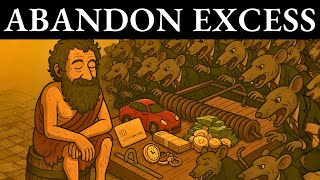
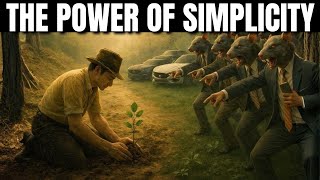
Minimalism isn't about being poor. It's about consciously choosing what deserves your time, money, and energy. It's about leaving the rat race because you realize that even those who win are still rats.
When you stop chasing a thousand things, mental space remains. Peace remains. You're no longer anxious about what you don't have.
You're no longer comparing. You're just living with what you have. and you discover it's enough, that it always was enough.
The problem was never lack of things. It was excess of desires. Schopenhau also spoke of art as escape.
When you contemplate something truly beautiful, something happens. You forget yourself. You forget your desires, your worries, your problems.
For a few minutes, you're no longer that person always wanting something. You simply exist, observing, feeling, being. It's one of the few moments of real peace we achieve.
It can be music, painting, nature, anything that takes you out of automatic mode. What's important is that during that contemplation, the will stops. You're not seeking anything.
You're not becoming anything. You're just present. And you realize this state is infinitely more valuable than any material achievement because it's genuine.
It doesn't depend on anything external. It's pure peace. Another thing that helps is compassion.
When you understand that everyone is suffering with this same blind will, it becomes easier to forgive. That person who irritated you is also trapped in the cycle. That difficult boss is also suffering.
Everyone is trying to calm their own will somehow. Some through power, others through money, others through pleasure. But everyone is in the same prison.
This understanding takes you out of the center. You stop taking everything so personally. You stop thinking the world is against you.
You realize everyone is fighting their own battles. And this brings lightness. You become less reactive, less defensive, more human.
And curiously, the less you worry about your own desires, the lighter your life becomes. Modern minimalism took a lot of these ideas. People are realizing that accumulating things doesn't bring happiness.
They're getting rid of objects, simplifying homes, reducing commitments, and they report more peace, less anxiety, more time for what matters. It's exactly what Schopenhau suggested. Less will, less suffering, simple math, but careful.
It's not about becoming a monk. It's not about denying all pleasures. It's about awareness, about choice.
You can have desires, but you don't need to be defined by them. You can want things, but not depend on them to be happy. The difference is in attachment.
When you attach yourself to a specific result, any obstacle becomes tragedy. When you're open to whatever comes, everything becomes lighter. Think of it this way.
You can want to pass an exam, but if your happiness depends totally on that, you're already suffering before the result. Anxiety eats you alive. And if you don't pass, you destroy yourself.
Now, if you want to pass but accept it might not happen, if you already have alternative plans, if you know you'll be okay either way, the whole process is less painful. It's about letting go, doing your part, and letting go of the result. Difficult?
Very impossible? No. But it requires practice.
It requires you to challenge years of social conditioning that says you need to control everything, plan everything, guarantee everything. The truth is you don't control almost anything. The only thing under your control is how you respond to what happens.
And here's a hard truth. You're going to die. Everything you conquered will stay behind.
The car, the house, the money, the likes, none of it goes with you. Schopenhau used this awareness of death as a tool. If everything is temporary, does it make sense to suffer so much for temporary things?
Does it make sense to dedicate your entire life chasing things that won't last? This isn't a depressing message. It's liberating.
When you accept that nothing is permanent, you stop clinging so much. You enjoy the present moment more because you know it won't return. You stop postponing happiness until you get that thing.
You realize happiness isn't in conquering. It's inexisting without needing to conquer anything. But what about goals and dreams?
They remain valid. The difference is motivation. You can work for something because it genuinely makes sense to you.
Not because society expects it, not because everyone is doing it, but because it has real meaning in your life. And if you don't achieve it, that's okay, too. The value was in the process, in the growth, in the learning, not just in the final result.
Schopenhau proposed a more contemplative life. Less blind action and more reflection, less consumption and more experience, less accumulation and more detachment. It's not an easy path because it goes against everything you were taught.
But it's a path that leads to less suffering. And in the end, isn't that what everyone wants? to suffer less.
The wisdom is in recognizing the game. You're playing a game where the rules are the more you want, the more you suffer. Knowing this, you can play differently.
You can want less. You can appreciate more what you have. You can stop running and start walking.
The world will keep spinning. People will keep running. But you don't need to be in that race.
And there's an interesting paradox. When you stop chasing happiness desperately, it appears more frequently. When you stop needing external validation, people respect you more.
When you stop clinging to thing, you appreciate them more deeply. It's like holding sand. The harder you squeeze, the more it escapes.
When you relax your hand, it stays. That's why so many sages throughout history spoke of detachment. Not because things are bad, but because attachment to things is prison.
You can have, can enjoy, can delight in them. You just can't depend. Can't make possession your identity because possession is temporary.
You are temporary. Everything changes. The only constant is change.
Schopenhau lived this. He had money but lived simply. He had knowledge but didn't seek fame.
He spent hours in contemplation, writing, thinking. He wasn't trying to impress anyone. He was trying to understand life.
And his conclusions, though harsh, are honest. He doesn't sell you illusion. Doesn't promise you'll be a millionaire or famous if you follow five steps.
He shows you reality bare and raw. And reality is suffering is part of human life. You can't eliminate it completely, but you can reduce it greatly.
You can live with more awareness. You can make better choices. You can stop self-sabotaging by chasing empty desires.
You can build a simpler life, more true, more yours. The first step is to stop lying to yourself. Recognize that purchase won't make you happy.
That like doesn't define your value. That position won't fill your emptiness. When you stop seeking happiness in the wrong places, you can start looking in the right places.
And the right places are usually simpler than you imagine. They're small moments. A true conversation.
A sunset observed without rush. A book that expands your mind. A walk without destination.
These things cost nothing. Don't impress anyone on social media. But they fill something real inside you because they're not about wanting.
They're about being. Schopenhau left us a brutal gift. The unfiltered truth.
Yes. The more we desire, the more we suffer. And I'm leaving another gift for you, a mega offer of our channel's exclusive content.
Check it out in the first pinned comment. If this video helped you in any way, stay with me and subscribe to the channel.