[Music] we're at the Solomon R Guggenheim Museum in New York City we're looking at a painting by vasil Kandinsky this is improvisation number 28 second version it's interesting to start off by thinking about that title because it's not the title of something that's being represented it's the kind of notation that a composer uses right normally in art history we have paintings with titles of stories from the Bible or from history or from mythology or Landscapes that have the name of a place but here we have improvisation which is the name of a kind of musical
composition so the immediate question is why is Kandinsky doing that well because he's composing here he's composing with form but this is still rooted in the stories of the Bible and of his particular historical moment but he's clearly trying to associate painting with music to suggest that like music painting can signify it can mean things it can take us places without representing anything concrete actually he would go further than that and say that you could hear color that you could see music this idea which is called synesthesia is something that kinsky was very interested in
the idea that there could be a kind of crossing of the senses so looking at this he may have wanted us to actually hear something and in fact we know know that Kandinsky was very influenced by Arnold shurberg a turn of the century composer who was jettisoning the familiar Western harmonies to create a new kind of difficult atonal music for the beginning of the 20th century and I see something atonal I see something difficult here what would this painting sound like for me it would sound like a cacophony it would sound like chaos it would
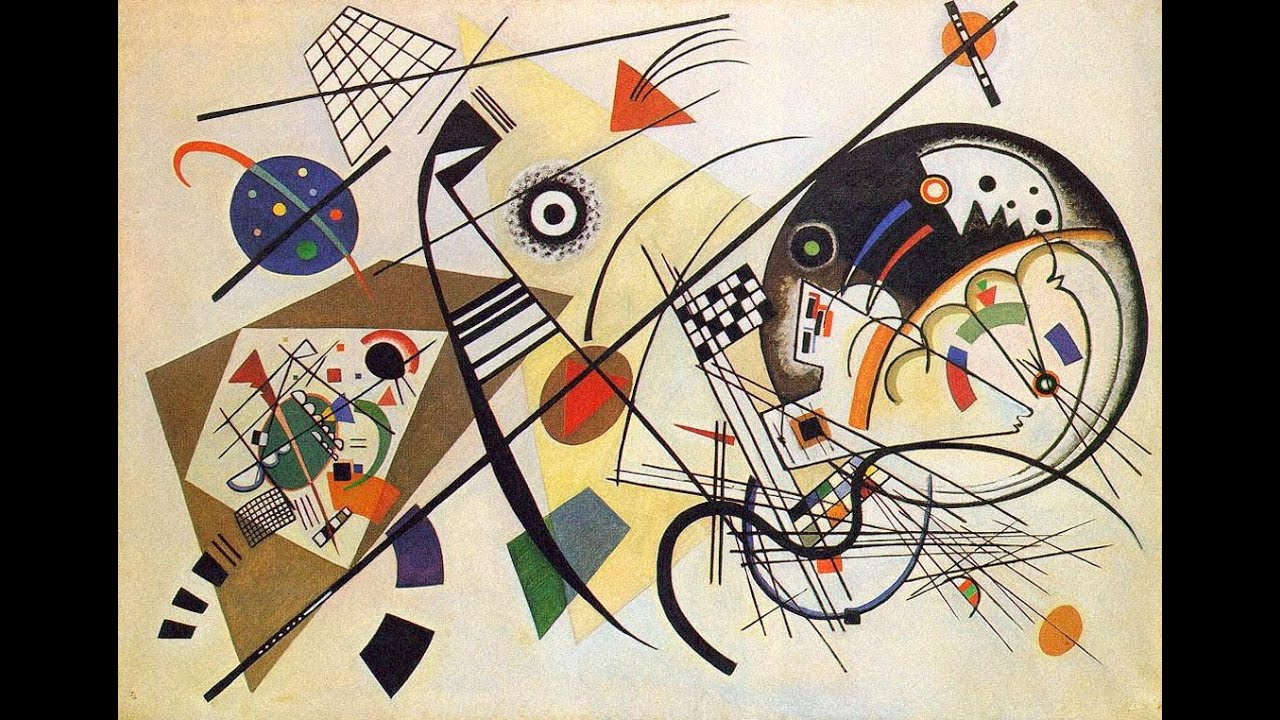
sound like a very dangerous but also brilliant moment we have brilliant color a kind of hazy atmosphere through which that color pops we have these black diagonal lines that crisscross with each other that almost feel like weapons moving through space and it's appropriate that the analogy that you're drawing is one of War this is 1912 it's just 2 years before the first world war begins and early 20th century Russian history is filled with political chaos we're clearly on the verge of abstraction and in fact when we first look at this painting it looks entirely abstract
that is we don't immediately recognize the things of the world but this isn't what we would call a completely abstract painting right so one might not call this painting an abstract painting but call it an abstracted painting so therefore we should still be able to recognize some elements of the natural world Kandinsky was concerned that if we could recognize things too clearly that our conscious Minds would take take over the interpretation and we would close off our emotional ability to respond to the Pure Color and form on the upper right I seem to see a
mountain with some buildings on it maybe with chimney Stacks or perhaps a church on a hill an ideal city a kind of heavenly Jerusalem kinsky was deeply influenced by biblical imagery and so even though this is a tremendously modern painting it is still rooted in this ancient tradition of representing Christian stories so it makes sense that we have a Battlefield forces at war in fact art historians have looked at these paintings as a kind of representation of an apocalypse of a moment when the sins of the world are going to be washed away in the
lower left you have a great flood you have a wave this idea of the way in which God in the old testate had wiped man from the earth except for Noah and his family just above that wave Cannon are being fired the atmospheric effect almost reads like the the smoke on a battlefield down at the bottom art historians sometimes recognized the mains and the arcs of the necks of horses and we know that Kinski was really interested throughout his career in the idea of the Horse and Rider symbolizing a number of different things having overlapping
meanings referencing The Four Horsemen of the Apocalypse but also the idea of redemption this was also utopian the idea that we could wash away the old world a world that was about to be destroyed not only by the Russian Revolution but also by the first world war Kandinsky at this moment was convinced that he could help lead that at least in the visual realm many artists at this time in the early 20th century had a sense that the artists could play an important role in the new civilization that was going to emerge in the 20th
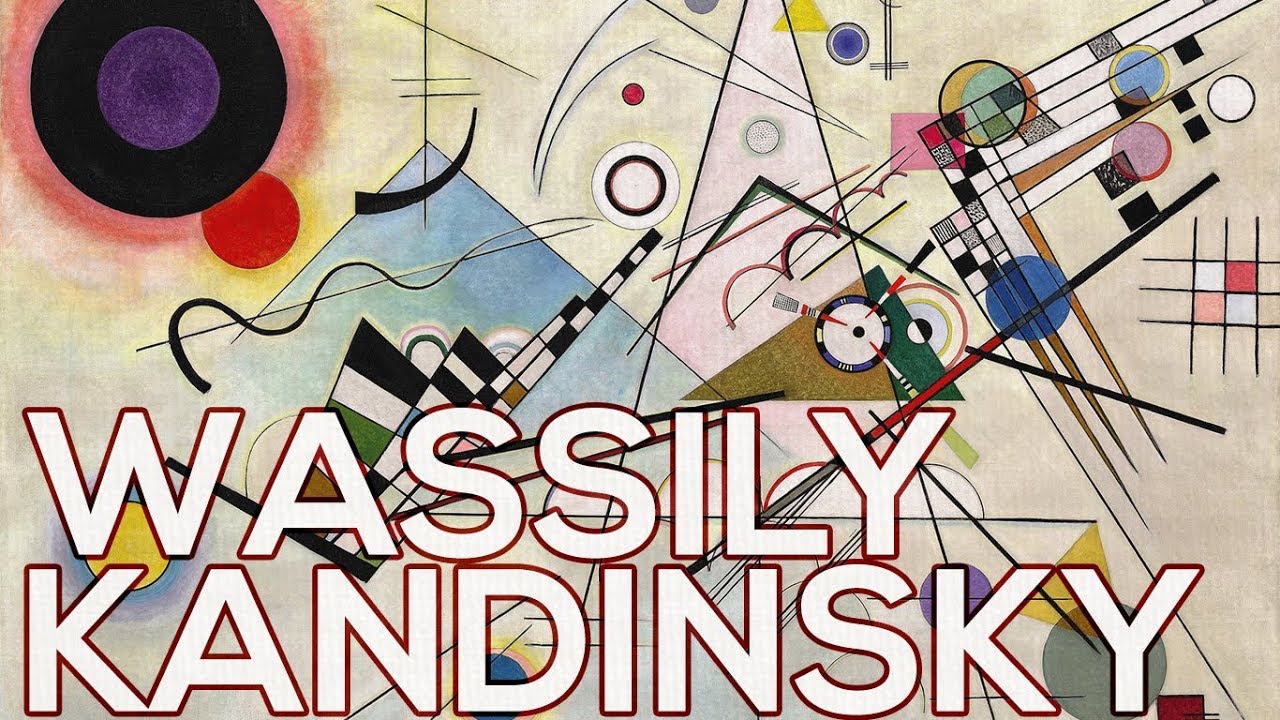
century so here we have a painting that is using color in a radically new way this is color for its own sake not to mimic not to describe we have line that is being used for its own sake lines that are abstractly moving across the surface to create a sense of Rhythm to create a sense of stac musicality in this painting it is absolutely new [Music]