[Music] Oh. On the day you pass from this world and your spirit leaves your physical body, it is essential to avoid entering the frequency and energy of fear. Death is not the end, but a transition, a return to clarity beyond the illusions of fear and limitation.
From the other side of death, life appears as a fleeting play rich with emotion, lessons, and impermanent roles. Much of what was feared in life is seen as self-created. Thoughts shaped by energy in motion.
As death approaches the soul begins to detach from the physical body, a sudden coldness may be felt followed by a calm sensation of observing from above. A profound sense of liberation emerges. I'm free.
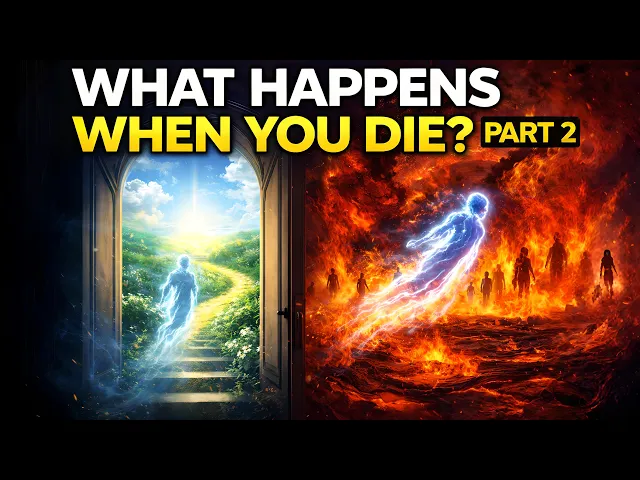
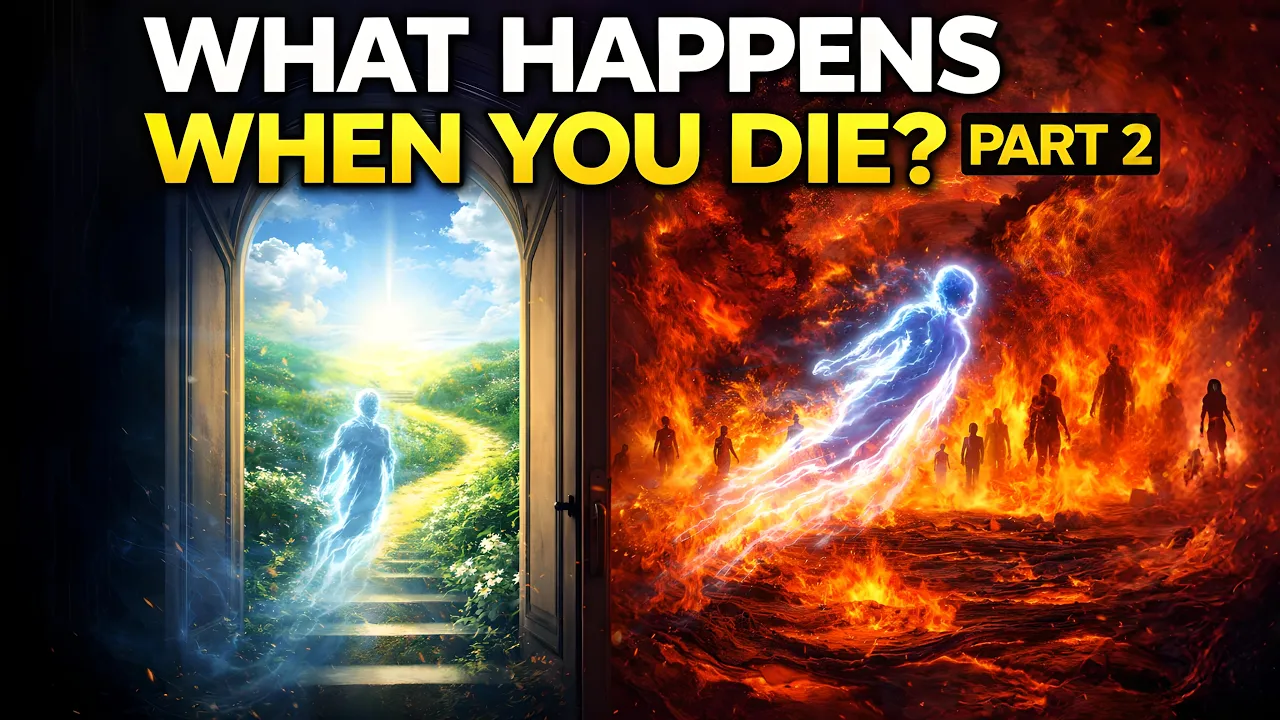
I can go anywhere. Religious man-made beliefs such as heaven and hell do not exist. at least not in the way they are understood on Earth.
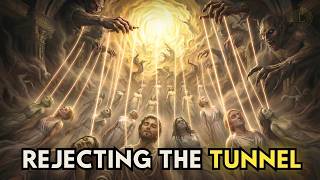
On the day of death, the soul or spirit is released from the body, and the silver cord that once bound them together is severed. Most souls are able to float around their former body, observing and reflecting, taking one final look. From there, the soul is drawn into what is commonly described as the tunnel of light, a phenomenon reported consistently by near-death experiences.
This light is beautiful and deeply alluring, pulling the soul forward toward the end of the tunnel. At the end lies the gateway to the reincarnation cycle. However, most souls do not look back.
If one does turn around, they may witness the vastness of the universe, galaxies, and stars. And for some, the option exists to return to the cosmos and merge with the infinite source. For those who pass through the light, they undergo a comprehensive life review, typically lasting about 21 Earth days.
This review is not a judgment, but a reflective journey guided gently by wise ancient beings, spirit guides or mentors who assist the soul in understanding its choices and growth. These entities are higher dimensional benevolent beings, not lower dimensional demonic archons. Each of these guides has lived millions of lives and through their evolution earned the divine status of no longer needing to live or die.
They are known as the seven lords referenced in the book of Thoth. Once the life review concludes, your soul then chooses its next path to return to the cycle of reincarnation or to reunite with the creator's realm, Earth, and various other realms, including mainly three areas. The first is the lower astral realm.
This realm is not a punishment but a reflection. A landscape shaped by density. Souls here are caught in loops of unprocessed trauma, addiction, greed, rage or delusion.
It is a twilight zone, dim and heavy, filled with echoing thought forms and distorted reflections of earthly life. Some wander, confused, unaware they have even died, trapped in routines or desires they once clung to. Others create tormenting hallucinations drawn from guilt, shame, or the need for control.
But even here, there is no eternal damnation, only delay. Eventually, these souls grow weary of the static noise and emotional repetition. Helpers, often unseen beings or ancestors, guide them toward realization.
When their vibration lightens, they are magnetically pulled back into the reincarnation cycle, often to resolve unfinished patterns or seek new growth. The middle realm is what many religious traditions attempted to describe as heaven, though their versions are fragments of a more expansive truth. In the middle astral, thought creates form instantly, shaped by love, joy, curiosity, and clarity.
Souls arrive here when their vibration is harmonized with compassion, openness, and awakening. They often appear young and luminous, able to fly or shift shape at will. Cities of shimmering architecture, vast flower gardens that sing, and crystalline rivers of flowing memory are common.
It is a place of reunion where soul families, friends, and even animal companions reconnect. Many souls explore their last lifetime guided by inner mentors. Here they review key moments not from a place of judgment but from expanded awareness.
What did I learn? What did I forget? Time is fluid.
A soul might linger centuries in human terms or mere moments depending on their desire to rest, reflect, or continue their evolution. Beyond the astral lies, a realm that is more vibrational than visual. A golden realm of archives that becomes libraries.
Sound that becomes wisdom. This is the domain of the accashic records. a vast energetic field that stores the memory of all experiences, all beings, all choices across time and parallel timelines.
Here, souls may consult the elders of cycles, not gods or rulers, but ancient intelligences who serve as guides. They do not tell you what to do. Instead, they help you see.
See how one life is a thread in a much larger tapestry. See how every sorrow and triumph interweavves with the whole. In this state, many souls choose next steps consciously.
Some decide to re-enter the simulation, earth or elsewhere, driven by curiosity, karmic ties, or a mission to assist others in their awakening. Others remain in the higher fields, studying, creating, assisting from behind the veil as spirit guides, dream walkers, or vibrational architects. A rare few having remembered their full essence dissolve into source not as loss but as expansion into the all.
There is no eternal hell only repeated opportunities to learn. Life is viewed as a stage, the body as a costume and death as the moment one steps off stage to rest, reflect or begin again. Upon death, the silver cord, our tether to the body, is severed and the soul is lovingly greeted.
If returning to earth, the soul makes new contracts with others, parents, friends, partners to continue its journey. Many souls cycle through repeated lives with familiar beings until lessons are fulfilled and patterns are broken. But why return?
The answer lies in the soul's purpose to evolve to shed the weight of human entanglements and ultimately reach a state of peace and spiritual completion. The path is not easy. Life's emotional depth often clouds objectivity, making learning more immersive and more real.
From the other side, fear is understood but no longer felt. Within life, fear must be faced and felt to be overcome. Some souls find value in a single long life filled with rich experiences and relationships where karma can unfold and resolve.
Others take shorter lives, learning in fragments. In all cases, relationships and energetic exchanges shape the soul's path. Near-death and post-death accounts often describe a life flashing before the eyes.
A literal experience of soul level review. Guided by compassionate beings, the soul observes what was learned, missed, and what remains. Each life contributes to the soul's mastery until finally it returns home, whole, and at peace.
One such account came from a woman who under regression relived her death as an elderly woman. After her peaceful passing, her body was buried on a hill near her home. But instead of immediately transitioning to the other side, she chose to linger.
She returned to her home drawn by unfinished business and found herself in an ethereal ghostlike state, misty and translucent, able to walk through walls and unseen by the living. She heard the chambermaid's whisper that the house was haunted, never realizing it was she who stirred the floorboards at night. Eventually, she grew tired of her ghostly existence.
She realized she could not influence or communicate with the physical world and that whatever had brought her back could not be resolved in this form. The moment she accepted this truth, she found herself on a hilltop overlooking a wide, luminous valley. Her deceased husband appeared beside her, young once more, just as they had looked on their wedding day.
What lay before them was no ordinary valley. It was the valley of life, a vivid dreamlike panorama of every moment they had lived together. The cities, mountains, house, cemetery, all were present simultaneously, like a vast living quilt of memories.
Unlike a linear life review, this was a total immersion in everything at once. A tangible scrapbook of scenes, emotions, and achievements. They stood together arm in-armm and surveyed it all with peace and satisfaction.
The woman likened it to a garden they had planted and tended. Each flower representing an experience, each field a phase of life. From this place, they could appreciate the wholeness of their journey and reflect on all they had grown through together.
The soul does not simply vanish after death. It observes, learns, reflects, and then when ready, it chooses to return, to live again, to continue the journey toward completeness. For many souls, the experience of reviewing their life after death brought unexpected satisfaction even when confronting the most painful chapters.
The process was not one of judgment, but rather of reflection. Like mental note-taking, these reviews allow the soul to quietly observe what they wish to change in the future, offering an opportunity for learning and growth without condemnation. While there are undoubtedly many ways to view the life just lived, this gentle and illuminating method stood out for its beauty.
In one particular case, a man who had just perished in an avalanche described his death as a transition not of terror, but of natural movement. He likened it to diving into a deep, dark pool and then swimming upward toward the light. As he rose, the darkness gave way to clarity until he broke the surface, surrounded by sunlight.
The physical trauma of the accident, he noted, was only briefly felt just before consciousness left the body. After that, the process was effortless, peaceful, and profoundly natural. He explained that death was not a punishment or an end, but simply a shift, a crossing from the physical plane into the spiritual, like walking, running, or swimming.
It was just another motion of life. In truth, he insisted, there was no such thing as death, only the continuation of being on a different plane. He also addressed the fear many hold, the fear of pain in death.
Pain, he said, was optional. If a soul felt the need for pain, perhaps to teach a lesson or to complete a karmic cycle, it could remain in the body to experience it. However, every soul had the option to step out and observe from afar.
The actual act of dying, the transition itself, was not painful. The body might suffer, but the spirit did not. The only suffering a soul might feel was remorse, an emotional ache for things left undone or unsaid.
Physical pain belonged to the body. And when the cord between body and soul was severed, such pain lost all meaning. There were in fact many accounts confirming that individuals could leave the body before death completed its physical toll.
One woman in a past life regression relived being burned at the stake for her beliefs. She was terrified, but her defiance was greater. Determined not to give her persecutors the satisfaction of seeing her suffer, she consciously exited her body just before the flames overtook it.
From above, she watched her body scream and wythe. The separation was clear. The soul had already moved on while the body acted on instinct.
These observations offer deep reassurance. Many who lose loved ones violently might find comfort in knowing that the soul often does not remain within the body during the final moments of trauma. Just as one instinctively jerks back from a burn without conscious thought, the body reacts, but the spirit has already departed.
The person, who they truly are, may be quietly watching from the sidelines. Another soul provided a powerful metaphor for the journey from life to death. They described life as wandering, naked, and wounded through a dark, thorny forest filled with unseen dangers.
Fear haunted every step. Then without warning, one emerges into a sunlit meadow where birds sing and a gentle stream winds through the grass. The contrast, they explained, was the essence of passing from life into death.
Though many fear the unknown, especially when walking through the forest of physical existence, once the soul emerges into the clearing, all fear vanishes. The fear exists only in life, never in death. The transition itself is neither to be feared nor avoided.
It is simply a door. No matter how many times it is opened, it remains what it is, a threshold between one state of being and the next. Many who had passed from the physical world, the experience of dying was described as effortless, like the soft closing and opening of eyelids.
One moment they found themselves in a physical reality and with a gentle shift they were in another plane entirely. The sensation was subtle and painless. Any discomfort during the process came not from the soul but from the physical body sustaining injury.
The spirit, however, felt no pain. It continued on whole and aware, memories intact, the self unchanged, only freed. At first, the newly departed soul might still feel tethered to the physical world.
It could take a brief moment to realize that the body had been left behind. Yet, this realization came quickly as perceptions began to expand. What was once veiled, the spiritual realm, now stood clearly in view.
The fogged mirror, so often spoken of in allegorories, was wiped clean. What followed was a period of orientation. The spirit, though still conscious of the material world, began to explore the richness of the spiritual one.
And with time, it adjusted to the truth. It had entered a new existence, one that felt natural and profoundly familiar. In this state, the concept of the soul and spirit became indistinguishable.
They were one and the same. This essence, one's core identity, awareness, and energy was the true self. Whether one called it spirit or soul, depended only on the framework through which they chose to perceive it.
There were mechanisms to this transition that echoed throughout spiritual traditions. One such mechanism was the so-called silver cord, a luminous thread often described as connecting the spirit to the physical body. Energetically real, it served as a lifeline, maintaining the soul's connection to its earthly vessel.
At the moment of physical death, this cord was severed. Only then was the spirit fully released. Many feared out-of body experiences for worry that the cord might be unintentionally broken, leaving them stranded.
But this fear was unfounded. Separation of the cord did not happen by accident. If one left the body through astral projection or dream travel, the silver cord remained intact, serving as a reliable tether until the moment of death.
There was no danger of getting lost or failing to return. If a soul did not come back, it was by its own valition, not because of some external force cutting the connection. The journey was always protected, always intentional, even when it occurred spontaneously.
Death during such an experience would not register as a heart attack or any obvious medical condition. Often it would be recorded as natural causes or attributed to conditions like sudden infant death or unexplained passing in sleep. Even an autopsy might yield no answers.
This was because the physical death in these cases was not caused by trauma or disease. It was simply the soul choosing not to return. There were other rare and mysterious cases.
Spontaneous human combustion for instance where the body appeared to ignite from within. These incidents though strange had explanations rooted in biochemical imbalance. The human body being an energy system metabolized matter slowly and precisely.
But when that control was disrupted, say by an excess of phosphorus or a genetic anomaly, the body could combust through internal chemical reaction. Such events were often hereditary and not solely caused by diet, but rather by signals within the body that regulated chemical production. Whether such a death was accidental or intentional was difficult to define.
As with all things in the soul's journey, it depended entirely on the individual experience. Some were chosen, others simply occurred. All were transitions.
In the grand continuum of existence, death is not an end, but a doorway. What lays beyond is not darkness, but the light of memory, clarity, and expansion. Life continuing in a higher octave of awareness.
Much like the late great Albert Einstein himself said, "Energy cannot be destroyed, only transferred. " In the journey of life and death, there are moments when souls choose to depart not alone but as part of a collective. These occurrences, mass deaths through events like train accidents, natural disasters, or tragic explosions are not as random as they might appear.
They often stem from what is known as group karma. A phenomenon where souls bound by shared experiences or purposes elect to enter and exit life together. Throughout eons, certain souls have moved through incarnations in close association, forming soul groups that work together to learn, to evolve, or to fulfill a mutual mission.
When such souls choose to transition at the same time, it is not merely coincidence. It is a coordinated experience chosen before birth, offering mutual support in the act of dying. A final shared task to deepen their understanding of existence and transformation.
In moments of group departure, such as the Challenger space shuttle disaster, these souls had made a pre-incarnational agreement to die together. The event, while deeply painful for those left behind, served a higher purpose, creating a collective mourning that bound survivors together through shared grief and compassion. Death from the soul's perspective is not an end, but a transition.
Many who recall the moment of crossing describe it as passing through a tunnel toward a radiant, dazzling light. This light is not a figure or a place, but an energy field. an intense loving brilliance that marks the boundary between the physical and spiritual realms.
In near-death experiences, individuals approach this light, but are pulled back before crossing fully. These encounters, though profound, do not sever the bond between body and soul. True death occurs when that bond, often described as a silver cord, like an energetic umbilical, is severed.
This cord links the spirit to the physical form sustaining life in the body. When the spirit fully crosses into the light, the energy of this lifeline is overwhelmed and cut. Once severed, the spirit can no longer return to the body.
The connection is lost and the body no longer animated by consciousness begins its natural decline. In death, the soul continues. It retains memory, identity, and awareness.
The transition is rarely traumatic for the spirit. Rather, it is a shedding of limitations like stepping through a doorway. For those who leave together in groups, it is often a reunion of souls, friends in spirit, rejoining one another in a realm where unity and purpose persist beyond the veil of the physical.
For when a person dies, the experience of transition varies from soul to soul. Some pass peacefully and quickly understand what has happened while others may enter a brief period of confusion. This uncertainty often depends on how the person died, whether it was a natural death or something sudden and unexpected.
But one truth remains. No soul crosses over alone. In many cases, the spirit initially feels unsure.
The sensations of the spiritual world can closely resemble the physical one. Yet, something about them feels unfamiliar. This in between state can cause confusion as the soul tries to grasp where it is and what has occurred.
Fortunately, help is sent right away. Spiritual guides, souls with deep karmic ties from past lives, arrive to greet the newly departed. Some of them are between incarnations themselves and offer comfort through their familiar presence.
At first, the soul may recognize them from the most recent life, but as memory begins to expand, deeper recognition follows. Lifetimes unfold in the soul's awareness. past relationships, old connections, the tapestry of karma.
This remembering is an important part of the process. It helps the soul reflect on what has just been completed and what lessons still remain for future lifetimes. These guides help orient the soul and gently explain what's happening.
This is especially crucial in cases of sudden or violent death where the individual might not even realize they've died. In such moments, the helpers provide calm explanations and guide them toward understanding and peace. Once the soul begins to accept its new state, it naturally gravitates toward a specific spiritual plane.
Not a place in the physical sense, but a state of being. This is where learning continues. The spirit interacts with others, shares knowledge, and prepares for what comes next.
Eventually, it meets with wise spiritual beings, often referred to as spiritual masters. Together, they plan the soul's next incarnation, choosing life circumstances and relationships that will help the soul evolve. Sometimes, if a soul has endured a traumatic or damaging life, it is first taken to a resting place.
This is a special realm where healing occurs before the soul rejoins others or prepares for a new life on earth. The resting place offers solitude, peace, and recovery. For some, the transition is marked by the appearance of deeply held spiritual figures.
A person who strongly believes in Jesus, for example, might be greeted by the presence of his spirit. This appearance is not universal, nor is it required. But if the soul sincerely wishes to see him, the energy of Jesus, also known as Yeshua, will come to comfort them just as he promised.
This same principle applies across cultures and beliefs. Whatever divine energy the individual holds sacred will often manifest to help ease the crossing if the soul is open to it. In the end, the soul is never alone, never abandoned.
Whether guided by familiar spirits, wise teachers, or divine presences, each spirit is gently shown the way toward understanding, peace, and the next step on his eternal journey. After a person dies, their spirit continues to exist. What happens next depends a lot on what they believed while they were alive.
Some people think they need to wait until Jesus returns to be resurrected. Because of this belief, their soul may go into a kind of deep sleep in the spirit world, waiting just as they expected. If someone believed they would go to a joyful place after death, like a garden or even a carnival, that's often what they experience.
If they expected to meet loved ones, angels, or spiritual guides, those figures usually appear. But if they feared punishment and believed they deserved it, they might feel trapped or judged for a while until they realize they can move on. How you die matters.
The way someone dies can also affect what they experience right after. A peaceful death often brings feelings of freedom, calm, and clarity. A sudden or violent death, like from an accident or war, can leave the soul feeling shocked or confused.
They may not even realize they've died right away. Help always arrives. No matter how someone dies, help is usually sent quickly.
Souls are often greeted by loved ones or spiritual guides, beings they had strong connections with in this or past lives. These guides help the soul understand what's happened and keep them calm. If a soul is too overwhelmed, they may be taken to a healing place in the spirit world to rest and slowly recover.
Rest after trauma. When someone dies in a traumatic way, their soul might fall into a deep sleep. This is a protective process.
It gives them time to adjust without being thrown into confusion. Waking up too soon could lead to fear or mental chaos. Sometimes confused souls try to stay near the physical world, which can cause strange disturbances both for themselves and for the living.
Loved ones still come. Even when death is traumatic, souls are not left alone. Loved ones and guides still come to help.
What humans see as tragic may not feel the same on the other side. For example, many soldiers who die in battle feel peace and acceptance, while someone who dies suddenly during childbirth might have a harder time letting go. Every soul's journey is unique.
Why souls return? The spirit world is beautiful and peaceful, but it's not meant to be a final resting place forever. Souls come back to Earth again and again through reincarnation, like students moving to the next grade in school.
Earth gives us challenges that help us grow and evolve. If a soul stayed in one place forever, even a peaceful one, it would eventually feel stuck. Growth comes through change, new lessons, and new experiences.
That's why letting go of old beliefs and moving forward is important for spiritual progress. Some people think death is the end. But that's not true.
Energy can't be destroyed. It only changes form. The body is only temporary, like clothing you wear for one lifetime.
Everything in the universe, including your body, is made of energy that has taken form. Fire, for example, shows how solid things can return to pure energy. So even after death, you continue not as a ghost or a shadow, but as your truest form, energy, consciousness, and light.
Death isn't the end. Many people fear death, but that fear comes mostly from misunderstanding. Death is not something to be afraid of.
In truth, it's not an ending at all. It's a return to a greater life, one that is more real and expansive than what we experience on Earth. However, if someone ends their life early through suicide or other unnatural means, that pain and confusion follows them into the spirit world.
The energy they carry doesn't disappear. It must still be worked through and healed after death. Leaving the body before its natural time is considered a serious spiritual mistake.
It doesn't end suffering. It carries it forward. The challenge isn't fear.
It's belief. The biggest challenge in talking about life after death isn't fear, but belief systems. What people are taught to believe and refuse to question.
Many people have been raised to believe in very fixed ideas. that there's only one life, that there's only heaven or hell, and that our fate is final when we die. These ideas can block people from understanding deeper truths.
Some people just can't accept the idea of having lived many lives before. But is it really harder to believe you can be born more than once than just once? People often struggle because they believe this is their only life.
And if they make mistakes, they feel they've ruined their one and only chance that can lead to anxiety, depression, and guilt. But if people understood that we live many lives, they could forgive themselves more easily and focus on doing their best in each life, knowing they'll have more opportunities to grow. Why many resist this truth?
Some people simply don't want to believe in reincarnation or life after death because their current life is painful and they fear the suffering will never end. Others resist because their religious institutions have taught them otherwise. In many religions, spiritual truths have been hidden or twisted to control people.
For example, some forms of Hinduism might say someone suffers in this life because of past karma and therefore they shouldn't be helped. that can create apathy. Similarly, some Christian groups teach that this life is your only chance, creating fear and obedience.
Both approaches use guilt and control, even if that wasn't their original purpose. Even the Bible has been changed over time, books removed, words altered to match what leaders wanted it to say. Many religious leaders have knowingly or unknowingly guided people away from truth to maintain power.
Why truth can be frightening? When people are told something different from what they've believed their entire lives, especially if it means their parents or religious teachers were wrong, it shakes their foundation. And yet, people need something to believe in.
Even if it's the belief that there's nothing after death. When you question their belief, it can feel like taking away their ground to stand on. The truth still finds a way.
Every time someone speaks a deeper truth, people resist it at first. They resisted Jesus when he said he came to fulfill the prophecies. They called him mad, a liar, or dangerous.
This always happens when someone introduces new ideas that challenge old ones. But truth still spreads slowly, steadily. Even Jesus started with only a small group of followers.
Now billions know his name. In the same way, people today are beginning to awaken to deeper spiritual truths about the soul, reincarnation, energy, and life after death. There are those who are ready for this knowledge.
It will resonate with them like a spark of memory. They'll recognize it not because it's new, but because it's something their soul already knows. Those are the ones who will carry this truth forward.
They are the future, and their understanding will help others awaken, too. The time has come to release the fear, let go of false beliefs, and open to the true nature of who we are. Eternal beings of energy and spirit, learning and growing across many lifetimes.
Not all knowledge about what happens after death comes from hypnosis. Sometimes people remember powerful events called near-death experiences, moments when they died briefly, crossed into the spirit world and were brought back by modern medicine. These experiences became widely known thanks to the research of Dr Raymond Moody and Dr Elizabeth Cubler Ross.
While some researchers gather information from hypnosis, others hear directly from people who actually died for a short time and returned. Their stories often match those found through past life regression with one key difference. These people remember the journey consciously, while others only recall it under hypnosis.
One such person was Megan, a woman introduced to the researcher by a mutual friend. Her story was remarkable. She had told very few people about it, partly because she feared they wouldn't understand and partly because it was deeply personal.
Megan believed the experience changed her life forever and that she had been allowed to keep the memory as a kind of spiritual gift. It helped her through hard times and decisions and no one could ever convince her it wasn't real. Unlike others whose memories were buried deep in the subconscious, Megan didn't need hypnosis.
Her experience was burned into her mind. Though she admitted some details were a little hazy, the memory was clear and unforgettable. When they met at her friend's house for privacy, Megan settled into a chair and spoke carefully into a tape recorder.
She was focused on accuracy and avoided exaggerating anything. Her only request was that her name be kept private. This is Megan's story.
It happened in 1978 during a time when Megan was preparing to open a bookstore. During a routine checkup, doctors found a lesion on her lung. They weren't sure if it was cancerous or benign.
So, they scheduled her for lung surgery. Megan admitted she had a strange feeling about the operation. Intuitively, she didn't believe she had cancer, but something felt off.
She described it as a bad vibration, a gut feeling that the surgery wasn't going to go smoothly. Megan came from a very ordinary background. As a child, she had attended many different Christian churches, congregational, Lutheran, Baptist, but she was never deeply religious.
Her connection to church life had always been casual. When she married, she joined her husband's Episcopal Church, but even then, her spiritual connection remained distant. Over time, she began to question religion more seriously.
She reached a point where she considered herself agnostic, maybe even atheist. Still, because of how she was raised, she never fully embraced atheism. The night before surgery, alone in her hospital bed, she whispered a quiet, reluctant prayer.
Perhaps the last she ever thought she'd say, "I don't really think you're there, but I really need some help. I'm sorry I can't have more faith, but honestly, this is all I've got. I'm sorry I can't have more faith, but honestly, this is all I've got.
" It was raw, unfiltered, human. The surgery went well. She survived, but recovery was painful, unbearably so.
Megan was placed on heavy doses of demoral and her waking moments blurred into drug induced sleep. All she could think about was the next shot. I mentioned that, she said, because skeptics will point to the medication, but skeptics will say what they say.
Then on the third day in intensive care, something extraordinary happened. Megan slipped into a deep sleep and into something else. She found herself moving through a long black canyon, the darkest place she had ever seen.
The canyon walls seemed at first like distant cliffs, then suddenly loomed close. But despite the dark, she wasn't afraid. There was warmth, stillness, a strange peace.
Flickers of orange light danced across the walls. She couldn't explain why, but she felt it had something to do with souls. Ahead, a misty barrier appeared, like a stone gate shrouded in fog.
It blocked the path, yet seemed just narrow enough to pass through. And then she saw them. Three figures stood in the mist.
Two appeared as men. One was shadowy and indistinct. But as she looked at him, the figure transformed, not into someone she knew from life, but someone strangely familiar.
He looked just like Gene Wilder in Willy Wonka. She laughed later. Curly hair, whimsical suit, white piping.
And then a calm realization came over her. I'm dying. The figure spoke gently but clearly.
You are at death. He never called himself the angel of death, but she knew. He was slightly intimidating, but his presence was laced with kindness.
He radiated a kind of purposeful compassion, like someone fulfilling a sacred task with precision and care. Megan was stunned by the ease of it all. There really is something after death.
She kept thinking. Death is so easy. It's like getting up from this chair and sitting in that one.
One of the other men nodded. Yes, but it is hard to get there. Then the second revelation came.
You are being given a choice. The angel said she could stay or return, but not the way she yeti expected. Stay meant remain in this realm.
Go meant return to her body, to her life. Megan wanted to stay. She felt a yearning in her soul, a pull toward the peace, the depth, the learning she sensed ahead.
Though she hadn't seen it, she knew this realm held knowledge, discovery, and answers. She was ready for all of it. But the angel said, "There are some things you need to know before you decide.
" In the next instant, she was shown a vivid scene, her mother completely undone with grief. The angel explained that her death would shatter her, and in her mother's unraveling, others, especially her father, would fall as well. Still, Megan whispered, "I want to stay.
" Time moved differently here. She believed her family would soon arrive, and once they did, they would understand. Then came her husband, weeping.
I never knew I loved her. Their marriage had been distant, sometimes strained, but she felt his pain, and still she said, "I want to stay. " Then came the hardest truth.
The angel said, "Your children will be all right, but they will not go as far as they could. " Megan considered it deeply. "They'll survive," she thought.
"Maybe they won't thrive, but they'll be okay. And once again, I want to stay. " But then the angel said something that changed everything.
You will have to stay close to your children. She wouldn't be allowed to fully cross. She'd have to remain near the veil, helping from the edge.
That stopped her. She had longed to go fully into the light, to immerse herself in the wisdom and rest of this place. But now, faced with the prospect of staying halfway, unable to truly enter or to truly leave, she made a decision.
If I have to stay close anyway, she reasoned, I might as well go back, I've got responsibilities, and I can help them better from that side. Then she said aloud, "Okay, I'll go. " The response from the others was not disappointment, only acceptance and grace.
As she began to pull away, she heard whispers among the other shadowy guides. She's going to go. She's going to go.
They had been there to help her cross. Had she chosen to stay, but now their part was finished. Whether they vanished or slipped into the mist, she didn't know.
She began to return. Megan awoke in her hospital bed. Forever changed.
The pain remained, but something inside her had shifted. The experience was not hazy or dreamlike. It was clear, coherent, complete.
She had never needed hypnosis to remember it. It stayed with her like sunlight on skin. It was a turning point.
She later said, "It changed how I see everything, and no one will ever convince me it didn't happen. " Megan told her story without fanfare. She hadn't read books on near-death experiences.
She hadn't studied reincarnation or spiritual awakenings. Her story came only from her lived experience. If you enjoyed this episode, don't forget to like, share, and subscribe to Astral Legends for more ancient myths and cosmic mysteries unlocked.
May the eternal light forever guide your path. See you in the next episode.