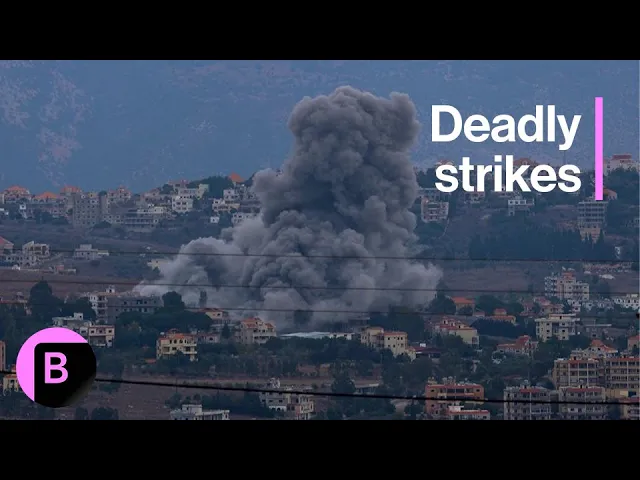
Well, it was an extremely deadly, violent day, a day of bloodshed in Lebanon yesterday, the worst day the country has seen since 2006. So many views out there about what is happening, what is going on. But let me just ask you your opinion, opinion on where you think this leads to, what happens next?
And do you see the possibility of this actually evolving into a full blown ground offensive from Israel into Lebanon? Well, good morning, Jim and I. It really was a terrible day yesterday in Lebanon.
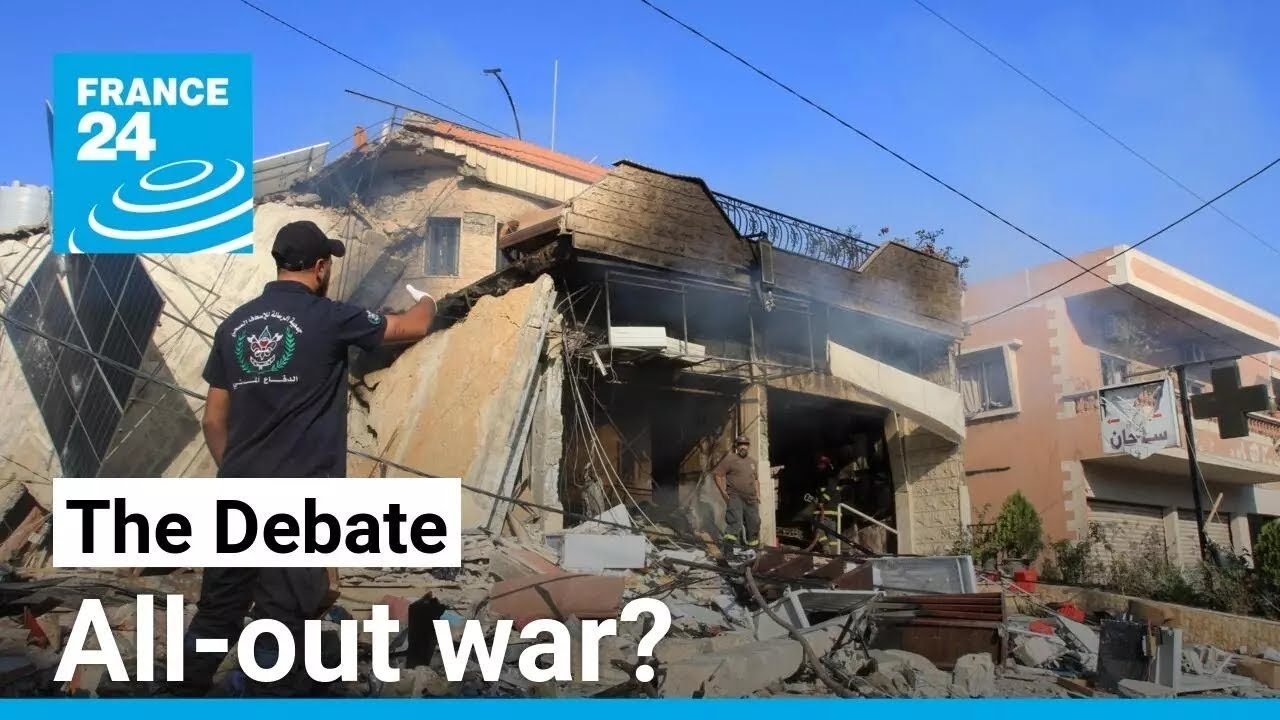
We hope the day today will not be as bad. It is causing a mass displacement of hundreds of thousands of Lebanese from the south and for parts of the Bekaa Valley to points closer to Beirut and the north. As you said, the great the greatest loss of life since 2006 and many, many wounded.
This is really part of an escalation that started last week with the pager attacks and the walkie talkie attacks targeting Hezbollah and other assassination attacks on high Hezbollah figures by Israel. Obviously, this is in a context of almost one year now of Hezbollah opening a second front on October eight last year, and Hezbollah and Israel exchanging fire. And it's hard to predict what will happen in the next few days, but things look ominous.
Israel, I believe, is hoping and raising the pressure on Hezbollah to try to get Hezbollah to agree to a diplomatic settlement, a cease fire with Hezbollah, a withdrawal from Hezbollah from some of the border areas. But Hezbollah vows to fight on. And that is the big question here, Paul, because there are serious questions about whether Hezbollah can continue to fight on.
Their capabilities have been severely degraded. Many of the senior commanders have been wiped out per Israeli military yesterday. This is comments that were put out by the Israeli military.
50% of Hezbollah's infrastructure has been eliminated. Pretty much all of their senior commanders from the elite Redwan fighting force have also been are thought to have been killed. What does this mean for Hezbollah's capabilities and future ability to engage in a any viable war at this point?
Well, Hezbollah can continue to launch missiles and drones into Israel. It has an enormous stockpile. It has definitely been greatly degraded over the last weeks and the last year.
But it has such an enormous stockpile. Keep in mind that it has a direct route of contact and resupply through Syria to Iran. Unlike Hamas in the Gaza Strip, it is not besieged.
It is not isolated. So, yes, they are very much degraded. But also, yes, they can continue to fire dozens or hundreds, probably of missiles as they are doing on and off on a daily basis.
Israel is relying on its Iron Dome and its defenses, but some missiles are falling in Israel and injuring Hezbollah is certainly degraded in its ability to resist a land incursion. If Israel would that you would choose to do that. One of the other questions people are asking is where is Iran in all of this?
And we know that Hezbollah gets a lot of its military funding, its training financial support from Iran. And yet yesterday, the Iranian president position was paying his first visit to the U. S.
He spoke to reporters outside the U. N. General Assembly and he said, we're willing to put all our weapons aside so long as Israel is willing to do the same.
This doesn't sound like Iran is going to show up in a meaningful capacity to provide Hezbollah with the support it needs right now. Well, a couple of things. I mean, President Bush's position doesn't really speak for the IRGC or the the hard side of Iranian power.
It's often the case in Iran that they send soft messages in one area and hard messages in another. But it's also true that Iran does not want Hezbollah to go into an all out war with Israel. It wants to preserve Hezbollah as a long term deterrent for Iran itself, not for Hamas or anything related to the Palestinian issue.
And so I think it's trying to calm the situation, de-escalate the situation. I doubt very much that they would join any escalation of fighting between Israel and Hezbollah. I think they will keep their powder dry and to avoid being dragged into it, although they would certainly try to resupply and support Hezbollah.
What is the likelihood, Paul, of this eventually leaving to leading to some form of Resolution 1701? For viewers not familiar with it, that's the resolution that was introduced after the Lebanon Israel 2006 war, which stipulated that Hezbollah have to put down their arms and retreat away from the border. How likely is it that the this all culminates with some form of 1701 actually being implemented this time?
Well, I think in the near term it's unlikely. Hezbollah, backed by Iran, has said that they will accept a cease fire and potentially new security arrangements across the border if and when Israel and Hamas get to a cease fire agreement in Gaza. And that doesn't seem to be happening anytime soon.
Israel is hoping is trying to raise the pressure on Hezbollah to make it unpalatable for Hezbollah to seize so much suffering, so much death among its own people in its own community, to force it to the negotiation table. But unfortunately, unfortunately, I don't think Hezbollah will be sufficiently moved by those dynamics in order to accept a full cease fire. They might de-escalate a bit.
They might hold their fire in a limited way, but I don't see a full agreement coming any time soon. It is important to note that the Israeli envoy to Lebanon sorry, the Syrian and the French envoy to Lebanon, had just arrived to Lebanon to try to negotiate something like that. And I'm sure the U.
S. envoy, Amis Hochstein, will be there soon. So there is you know, there's potential for an agreement, but maybe a limited.