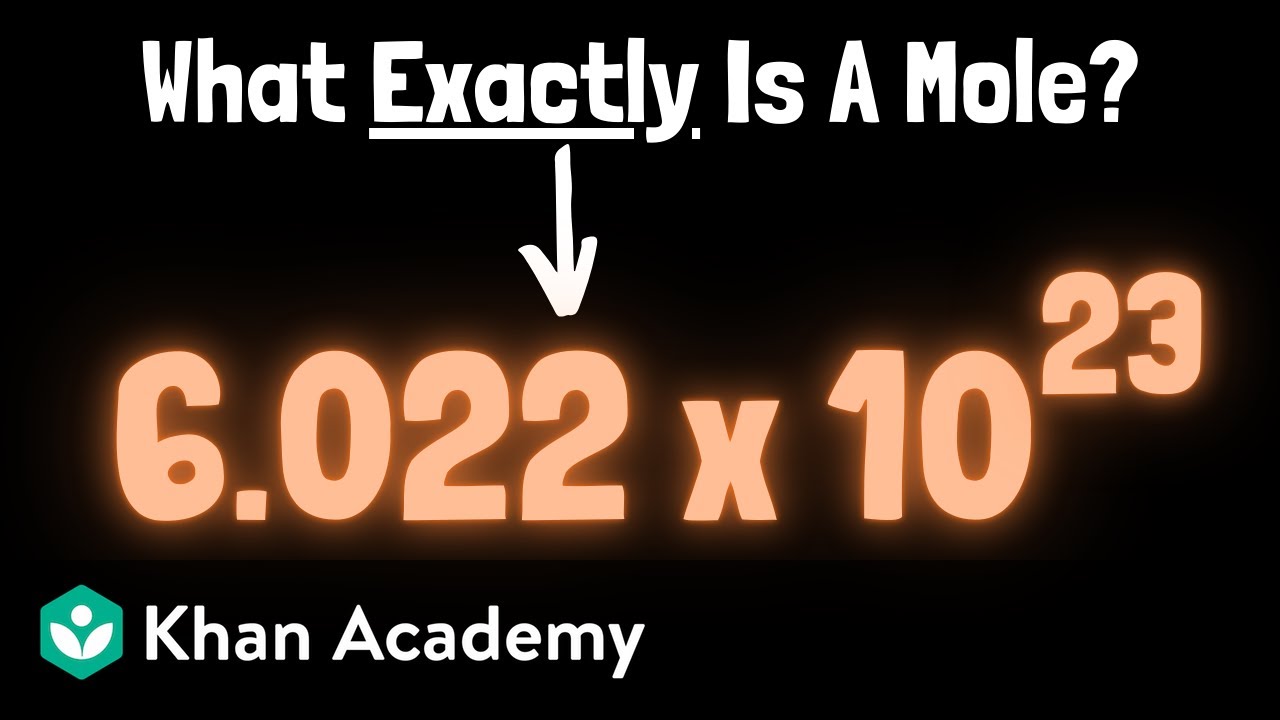
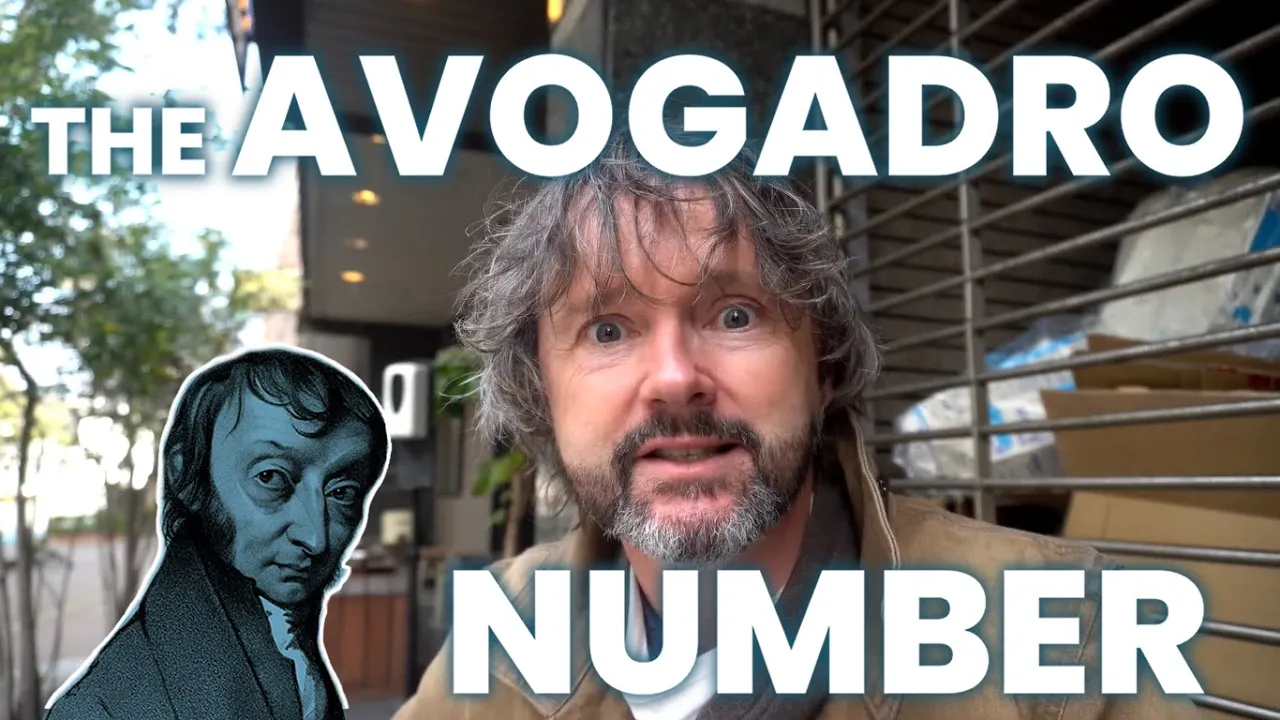
what is the avogadro number y is the avogadro number who is the avogadro number these and other questions such as how did avogadro come up with the number in the first place he didn't and why is it based on carbon 12 it isn't will be answered in this video i recently made a video all about moles and how and why chemists use moles and as part of that video i wanted to briefly explain where the avogadro number came from except that it turned out to be a lot more complicated than i thought and it also turned out that there wasn't any single place i could go to get a detailed history on where the ideas came from they all seem to be jumbled up with either the wrong people getting the credit or anachronistic terminology like people claiming this value was the avogadro number before it had even been decided so let's see if we can get the complete history of the avogadro number the best place to start of course is right at the beginning and the beginning for us is over 2000 years ago with the greek philosopher democritus in about 400 bce he's the first person that we know of who not only thought hey maybe the world is made of these tiny bits and those bits combined together in different ways to make all the different stuff but he also had some pretty good reasoning about why that would be and how that would work now he wasn't the only philosopher to have this idea and to play around with it and this continued for roughly the next 2000 years until the beginning of the 1700s and that's when we get francis bacon now he is the person who is generally credited with introducing the scientific method in other words instead of just talking about stuff and thinking about stuff you should actually make observations of the world around you and then test your ideas and then go back and change them following bacon's ideas towards the end of the 1700s we begin to get our first real scientists we've got the lavoisiers antoine lavoisier and marianne lavoisier we've got henry cavendish and crucially for our story we've got robert boyle the lavoisiers and cavendish between them came up with the idea of elements the idea that some substances are only made of themselves they can't be made by combining any other kind of substance and robert boyle made the observation that there is a direct relationship between the volume of a gas and the pressure of a gas and that's going to be very important for us later in our story now among the early experiments that these chemists were performing was to measure how the weight changed as they did various chemical reactions and in fact in those days they started weighing gases so they could see how materials change their weight either gaining weight or losing weight as they heated them up or reacted them with acids and in 1797 this led joseph proust to state his law of definite proportions in other words he stated that elements only combined with each other in certain proportions this was the first indication that there was a difference between compounds and mixtures because you can have any mixture of salt and sugar that you want in any ratio that you like but when hydrogen and oxygen make water they always combine in a weight ratio of one to eight and never anything in between now these detailed measurements of the various weight changes as the reactions were performed were crucial to our next big step and it's not just for our story but probably the biggest step in all of chemistry in 1803 john dalton proposed that elements were made of atoms of different kinds atoms with different weights and that those atoms could come together to make bigger assemblies he didn't yet use the word molecule but that's what he was talking about and also crucially for our story he was able to use tables of these weights right done okay and he could compare the weights of the elements to each other in other words for the same amount of substance he could say that oxygen was always heavier than hydrogen and that iron was always heavier than oxygen and not just say that they were heavier but he could give specific values to that weight relationship and he published a scale he took the lightest element that anybody knew about which was hydrogen and he called that weight one it didn't matter one what hydrogen he defined as being weight one and that made everything else multiples of the weight of hydrogen so in his scale he made oxygen weight eight because unfortunately he didn't know that there were two atoms of hydrogen in water so all that he knew was that oxygen from water weighed eight times as much as the hydrogen so his scale was wrong concerning oxygen which might be forgivable except the oxygen turned out to be one of the most important elements in the periodic table for determining these relative atomic weights so now in 1811 we get our first big big step in our discussion this is when amadeo avogadro looked at the experiments that people were performing on weighing gases and weighing elements and hypothesized that this could all be explained if at a given temperature and pressure the same volume of gas contained the same number of molecules whatever kind of molecules they were or whatever kind of substance it was now this was huge because remember at that time scientists weren't even convinced that molecules and atoms existed so avogadro's insight was really quite amazing for his time but in particular chemists now had a way of counting molecules using volumes they didn't know what the actual numbers were but they did know that if they had twice the volume they had twice the number of molecules and this gave scientists a way to start thinking how many bits of our compound is in this sample next we move forward to 1818 and the chemist yern bazalius he continued dalton's work and produced some really accurate measurements of relative atomic weights but he wanted to change dalton's definition of hydrogen from being one he was convinced that it would be much better to define oxygen as the reference element and this was because oxygen reacts with nearly everything in the periodic table so you can just do your reaction with oxygen compare the weight of whatever you found with oxygen directly and not have to calculate back to hydrogen being one additionally they were beginning to be problems with using hydrogen as one what we know now is that elements come in different isotopes and hydrogen a normal sample of hydrogen has quite a bit of deuterium in it in other words this is hydrogen that has a weight of two instead of one not a lot but enough to mess up your calculations if you are making very careful measurements but it turns out that oxygen's isotopes are very rare so basaleus could get much better accuracy by setting oxygen as the reference element but he did make one decision which is probably what's kept him out of the textbooks he decided that we should call oxygen weight 100. that might seem a bit strange to us now but it wasn't so crazy in his day nobody knew whether hydrogen really was the lightest element of all so by setting oxygen to value 100 everything could be scaled to that and there was plenty of room at the bottom if chemists discovered lighter elements later when i mean no reason they shouldn't be having a chat they're walking around our next step uh which is an another important one for our story comes in 1834 this is when benoit clapperion realized that if he took avogadro's hypothesis and he took boyle's law which related gasses uh volume and pressure and he took the gas law of jacques charles which related temperature and pressure he could combine them together in what was originally known as the combined gas law but what we now do what we now know as the ideal gas law crucially this equation had a letter n in it which means number of molecules or number of moles these days we can talk about that a little bit later this meant now that chemists had a way of comparing the number of molecules in a sample they didn't need to know what the exact number was but they could say that in this case n is twice as big as that case or make any calculations on n and this way you can make sure you've got the right relative numbers of molecules whatever the absolute number of molecules is now through the middle of the 1800s chemistry got itself into a bit of a mess you see so many chemists were using competing scales for comparing their weights some of them still had oxygen as weight eight others were using basaleus scale with oxygen as weight 100 many of them were convinced atoms and molecules didn't exist it really was becoming a bit of a problem so in 1860 three chemists including kekule who you might have heard of as the person who first proposed the structure for benzene decided to organize the world's first international conference in chemistry now the purpose of this conference was to get some kind of unifying thoughts and understanding of chemistry but it didn't go well all the usual problems that you get when you have lots of very important people together they did a lot of talking and very little listening and this was how the conference continued until the last day this was when a little-known italian chemist called stanislau canozzaro came to the stage and he gave a talk that electrified the audience you see he was an excellent communicator and he explained his understanding of chemistry so plainly and so clearly that the audience could see his vision made so much sense and canizarro's understanding of chemistry is pretty much the birth of modern chemistry as we know it crucially he laid out very clear examples of how chemistry only makes sense if you take atoms of elements and combine them into molecules of compounds he also set the weight of hydrogen gas to two and demonstrated how that made everything so much clearer and crucially for our story he made the point very clearly that this understanding related directly back to avogadro's hypothesis and that hypothesis is what made it so possible to accurately measure how many molecules must be involved in these reactions you see canizarro was doing lots of experiments with gases and that's what gave him these fantastic insights now for the rest of the 18th century there were still arguments and disputes despite cannazarro's excellent performance but one measure did emerge and this was something called the gram molecule or the gram atom or the gram ion depending on what you were talking about given a table of atomic weights and let's take uh the case where hydrogen atoms have weight one a useful unit for making sure you have things in the right proportion is to say if hydrogen is weight one then let's make one gram of hydrogen atoms a thing called a gram atom and if hydrogen molecules have relative weight two then let's say that two grams of hydrogen gas is one gram molecule of hydrogen gas and you can see where i'm going if you have 32 grams of oxygen gas then you have one gram molecule of oxygen gas this was a measure that was floating around and seemed to be quite common in chemistry and importantly for our story it's not about numbers it's about amount of stuff you see you can still use the ideal gas equation and use n to mean gram molecules but you don't actually have to believe that molecules exist now your n is just talking about amount of stuff and this state of affairs continued until 1899 when a chemist called wilhelm ostweld suggested setting oxygen as the the reference weight but with weight 16 and this fixed a whole bunch of problems in one go firstly all the berzalius people could keep oxygen as their reference element which made so much more sense than hydrogen but in particular setting oxygen atoms as weight 16 meant that the people who were using dalton scales but adjusted to hydrogen gas as being weight too could keep their relative weights and not change it too much following this many chemists decided that oxygen 16 would be a good place to set a reference our next big step comes in nineteen hundred and this is when ostfeld published a textbook in it he talks about the concept of gram molecules but osfeld was convinced molecules did not exist and he didn't like the way that word was being used so he stated in his textbook that the word gram molecule should henceforth be known as the mole so great we've got our avogadro hypothesis now we've got the concept of moles most of chemistry and science are convinced that atoms and molecules exist but by no means everybody yet yeah that's our problem we haven't actually proven that atoms and molecules exist yet and that situation remains until 1908 and this is where we introduce jean param now he was a physical chemist who was very much interested in the phenomenon of brownian motion a scientist called robert brown had noticed that tiny microscopic grains of pollen bumped around in water as if they were being hit by tiny particles well paran had come up with some ideas and some equations to explain this this phenomenon but in 1905 einstein published his hugely influential paper on how this kind of system would behave now einstein didn't do any experiments but he did produce some excellent equations which showed that if atoms and molecules exist this kind of behavior is what you would expect to see and paran knew how to turn those ideas into hard science in fact he performed thousands of experiments and performed experiments by a number of different methods to prove once and for all that atoms and molecules must exist now he didn't just do that but he also took the ideal gas equation remember that with its mysterious n number he was able to use the ideal gas equation combined with einstein's laws of brownian motion to get an actual number for how many molecules must be found in one mole of material and the number he came up with was 7. 1 times 10 to the 23 and crucially for our story he refers to this number the number of molecules in one mole of gas as being avogadro's constant now paran seems to get all the credit for coining the phrase avogadro's constant but there is a textbook from 1904 where joseph thompson is talking about the kinetic hypothesis this idea that gas molecules fly around and bump into each other and he said that the number n in the ideal gas equation is known as avogadro's constant so clearly it had been a term that had been floating around in those circles for some time okay so we're nearly there right we've got our moles we've got a value for the number of particles in a mole which parans soon rounded down to about six times 10 to the 23 and we've got oxygen defined as our reference element with a weight of 16.
we're nearly at modern chemistry well there were some big problems around the corner in 1910 frederick saudi realized that chemists were reporting many more elements then there were spaces in the periodic table and he realized that some elements must have different weights in other words you could have something which reacted exactly the same as hydrogen had exactly the same chemistry as hydrogen but weighed twice as much and these are now called isotopes then in 1911 ernest rutherford discovered the nucleus of the atom he went on to discover protons in 1917 and his student james chadwick discovered neutrons in 1937. now physicists knew exactly where the weight of atoms came from and this caused the problem with the chemists because chemists didn't care you see chemists deal with an amount of substance we deal with a typical amount we weigh out grams of material whereas physicists were interested in individual atoms where was the weight of a particular atom coming from this led physicists and chemists to have a different standard for their atomic weights physicists wanted to base their standard on oxygen 16 the isotope of oxygen that has exactly eight protons and eight neutrons but chemists wanted to base their standard on a typically available amount of oxygen because chemists work with a large amount of materials from grams to kilograms or even tons so a pure sample of oxygen 16 is really not very useful for chemists but there was a problem you see the weight of a typically available mole of oxygen depends on where you get the oxygen from because of isotope effects the weight of one mole of oxygen produced from water at high latitudes for example the north pole is very slightly lighter than the weight of one mole of oxygen produced at the tropics and that clearly causes problems if you're trying to define your standards based on what you think is a typical mole of oxygen so this situation of physicists basing their value for atomic weights on pure oxygen 16 and chemists basing their atomic weights on a typically available mole of oxygen 16 meant that chemists and physicists were using different values very slightly different but enough to cause problems when they were performing experiments that crossed over the disciplines now where was i oh yeah so finally in 1971 the scientific community got together to thrash out this problem and what they worked out was that if they based the mole on the number of nucleons in exactly 12 grams of pure carbon 12 then no one would have to change their numbers by very much this value of the mole and the avogadro number that went with it was pretty much in the middle of the chemist's values and the physicists physicists values so the chemist would have to move their numbers one way a little bit and the physicists move their numbers the other way a little bit and everybody's happy furthermore the mole was still based on an amount of stuff 12 grams of carbon 12 and now we had this number of nucleons involved in the definition as well so the physicists were happy too additionally physicists have been doing experiments with carbon 12 in mass spectrometers to weigh weigh it accurately carbon 12 is very common cheap and abundant in our environment so everybody was confident this would be a good reference to set but in the end it turns out that nobody actually made that exactly 12 grams of pure carbon 12. in fact it was easier to measure silicon and what they did was make a sphere of silicon as round as they could make it they weighed it as accurately as they could weigh it and then they counted the atoms in that sphere as accurately as they could count them and the last most accurate measurement of the avogadro number that was made gave us the value of 6.
02214076 times 10 to the power of 23. so that's why the avogadro number is that number it was finally based on the measurement of a pure sample of silicon 28. now these measurements and this formal definition of the mole as being based on 12 grams of carbon 12 was still causing problems firstly it's a bit silly to base your your standards on something that doesn't actually exist a theoretical sample of pure carbon 12 but secondly the avogadro number was always changing because as technology improved those measurements could be more accurate and therefore the avogadro number had to be updated in fact it was updated on a yearly basis for a long time additionally we have the problem of defining the mole as being an amount of stuff stuff wasn't the word they used they used substance but it's pretty much the same thing nobody could really define it they knew what it was when they saw it you know you can have a mole of hydrogen atoms a mole of oxygen molecules a mole of protons a mole of electrons but what is stuff or what is a substance finally after much debate in 2090 the international bureau of weights and measures decided to fix the avogadro number and then based the mole on that instead of the other way round so what this meant was their final measured value remember 6.