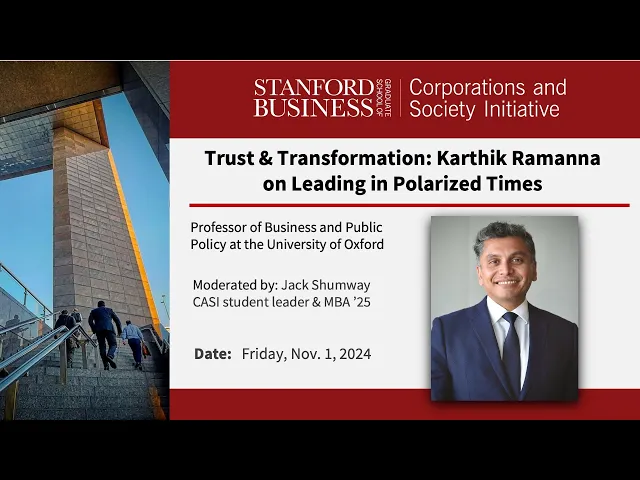
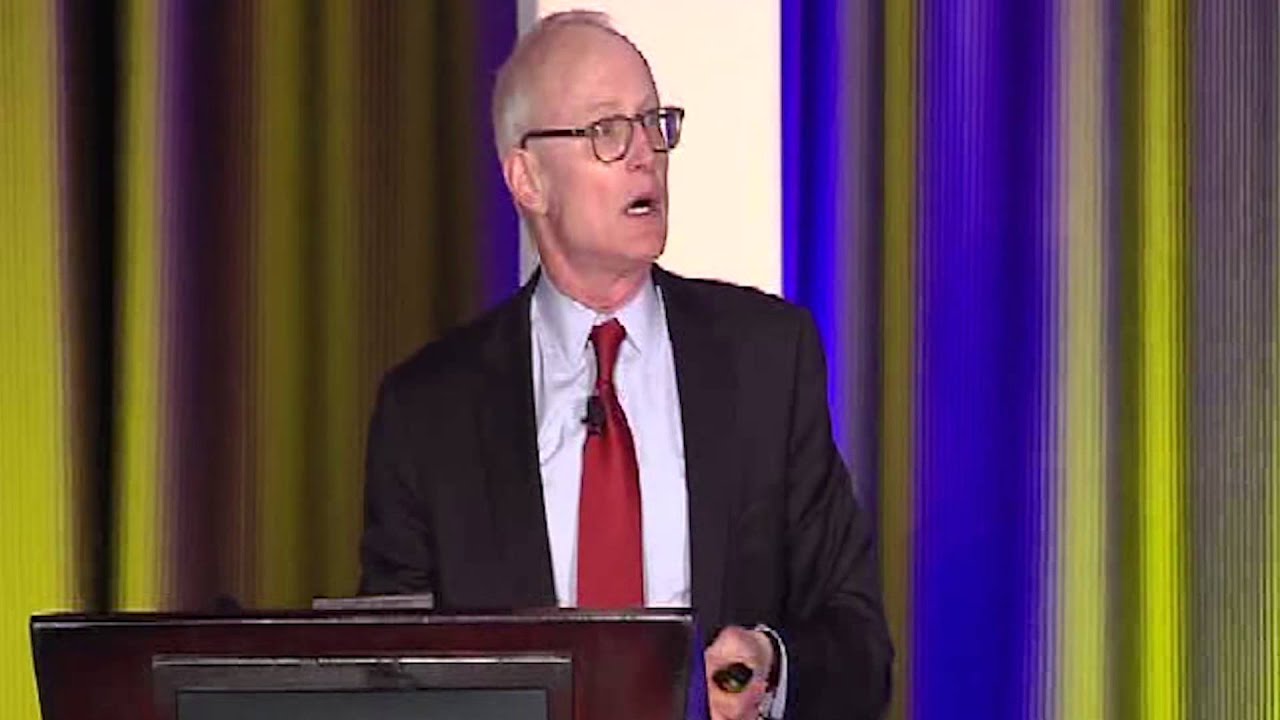
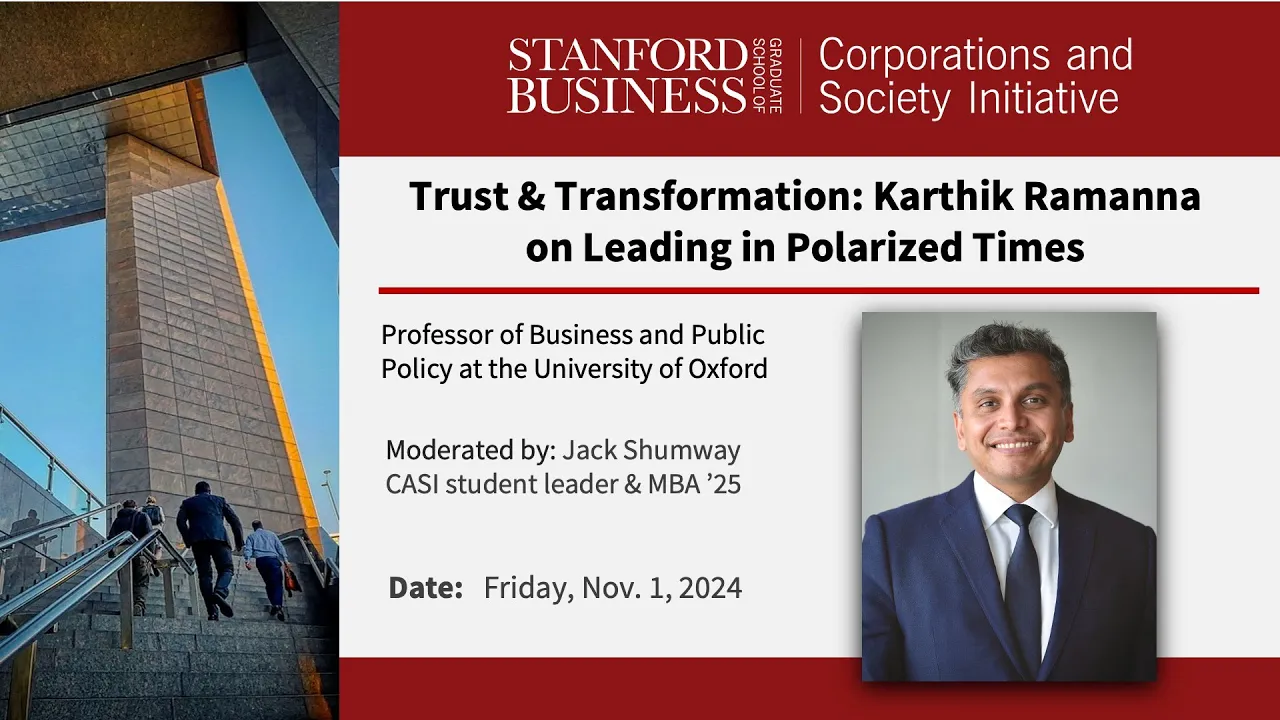
[Music] good afternoon everybody and thank you so much for joining us my name is an Professor here and the faculty director of the corporation Society initiative is sponsoring this event um I don't know how whether I need to introduce Cassie every event but briefly the name suggests what Cassie is about and I see in the front uh row and here some of our student leaders and our Staff being uh Lisa and Tina in the back uh a new one uh and we have even our departing uh staff uh project manager Loretta here um I'm very
very pleased to have here today karthy Grandma an alltime friend uh not exactly on this issue but he's very broad caric was a um accounting professor at uh Harvard Business School and so he belongs to a small Club of business school professors at various fields that somehow are have kind of gone out of their silos and Worry about these big picture issues and drifted into leadership or into politics and lobbying and capitalism democracy and all of that so he belongs in that in fact he uh so he wrote a book in 2014 which is how
we first met called the uh political standards which is about the politics of accounting standards setting FB the MBA students learn accounting uh that's how the sausage is made uh and who's in the room when they set these rules and what their interests are and He coined the term thin political markets and that was the title of a session in a conference that he and I organized back in 2020 in December 2020 just reflect on that time it was by Zoom uh and was called corporations and democracy and uh he was part of a panel
called then political markets about expertise in policy and conflicted expertise and things of that sort but today he's here talk about his book today and his book That just appeared called the age of our age leading how to lead in a polarized World very timely and meanwhile all we talk about is his work on carbon disclosures and all his amazing work on that which we'll discuss later but not today today Cassie leader Jack shamway shamway uh sorry um is going to have a conversation and then your engagement with caric who's hailing from Oxford blavatnik school
of a government so he's no longer in a business school uh and Came here um after stopping in Chicago in a similar Center and um more like CSI and uh spending the uh meeting and uh and engaging thank you very much thank you all for coming to the second event of the year for uh Cassie the corporation Society initiative uh before we begin like to note that we have some 15 minutes set aside for Q&A at the end so I'll ask you to please hold your questions until then um and I'd also like to thank
carick for being here today uh we greatly appreciate you returning to California I think after just having been here a couple days ago and then flying to Chicago and and flying back so uh we appreciate the time you spent on a plane for us um so to kick things off you are obviously an author having just published a book U but you're also a professor at the blatnik school at Oxford so before we get into your book um I think it'd be Great to share with the audience a little bit about um the BL blatnik
school's Mission um how it contrasts with your time at HBS and how it helped maybe Inspire the book fabulous thank you um for having me it's a pleasure to be here uh again at Stanford I think the last time uh I was giving a talk was um uh on the book uh the previous book uh thin poit on which is called political standards on the phenomenon of thin political markets and I always enjoy my Time here uh I was at Google two days ago uh doing this talk and then uh unfortunately had to fly back
to Chicago before I came back here but it's such a pleasure to be at Stanford that I couldn't think uh twice about the uh offer from an not to join you guys so uh about about uh 8 nine years ago now I was first contacted by a head hunter uh for the opportunity to serve as the first director of the master public policy program uh at the newly created Um blatnik School of government and uh I remember talking to a number of people because I had no connection with the uh Harvard Kennedy School I was
as an not mentioned the professor at Harvard Business School uh and so I thought maybe they made a mistake um you know said maybe there's another professor caric at the Kennedy School and they just got it wrong but there wasn't so I um so I talked to a few people and they said oh you should put Your hat in the ring and uh you know we'll see what happens and then you know long story short I was offered the role and I remember talking to someone who's a very senior leader at the Kennedy School about
whether I should take that opportunity and this person had served in a a very senior leadership capacity there and he gave me great advice he said you know carthic there are only a handful of great universities in the world uh this being one of them and the Opportunity to be at the beginning of something to help create something uh that's something that comes very rarely in your career so if you can get in on the ground floor uh and this particular faculty had been there at the founding of the Kennedy School he said there was
a magical moment around that and um so that's what brought me to Oxford it was a tremend it's been a tremendous experience and a tremendous ride the thing that most contrasts is um so Teaching at Harvard Business School I think at the time about uh 23 third of my students were American and one third were were International that there may be more International students there today um but notwithstanding that um the uh the ethic in the classroom was definitely the American ethic and you could hold certain truths to be self-evident right and including the fact
that if you were in a business school uh the pursuit of business is a Good and Noble thing that will help us Advance a human flourishing so I arrived as this transplant from what is sometimes called the West Point of capitalism uh to the blatnik school and um uh you know there were as many students from China as there were from the United States there were in that first year I think more students from Russia than they were from the United Kingdom uh and so it was just this tremendously diverse Group and one student said
to me the the wonderful thing about the public policy program at Oxford is that there's no such thing as an international student and um you know because it's just this sort of I think in that first year there were 120 students from 70 different jurisdictions and so you couldn't hold any truths to be self-evident uh you know uh I remember in the first year because we were sort of trying to re um sort of engage the students in Government and uh in in student government and uh I said to the students oh it'd be good
if you sort of you know organize some elections and elect student leaders and then I had a group of students come to me after class to the uh to my office and say what is this election thing why don't you just appoint the leaders so you know things that we would hold self-evident weren't necessarily um sort of self-evident in different societies and that presented Both a tremendous learning opportunity as well as quite frankly was terrifying um because I said oh God they've made this bet on me I don't know what I'm doing and um at
the very least by conventing all these public leaders from around the world these are people who we hope will go on to become presidents and prime ministers and certainly many of them are in very senior leadership positions cabinet ministers Chief secretaries and the Civil Service Mayors Governors Etc and at the very least we should do no harm but hopefully we also do some good right so aspirationally we should be doing some good and so I did what many academics do when they don't know the answer to something they teach a course on it so I
offered a course called how to lead in a polarized world and um I didn't know the answer to it I was very forthright with the students look I have no clue what the answer is to this Question but let's work on it together let's try figure it out together and um we uh what I did was you know Oxford terms are very short they're eight weeks long so so I uh reached out to eight friends of mine who were either the the the rule was no Consultants no Bankers uh they had to be CEOs or
Coos they had to run something right so and they came from business from government from the not for-profit sector so one of them was the head of one of the largest um University Hospital Systems in Europe one of them was the commissioner of the Metropolitan Police of London one was the CEO of a very large um uh sort of business uh one was uh the CFO of the Tata Steel Group and so you know just brought these guys because they were running something really sort of substantive and I said bring to me your biggest challenge
in this age of polarization but uh you know alas Socratic method don't tell us what you Did uh just bring the problem and then let's have the class sort of work out the problem together uh but also bring your favorite piece of reading uh and this could be anything it could be an academic article from a journal it could be uh I don't know something from the Harvard Business review it could be um a poem from Shakespeare uh whatever you want but bring your favorite piece of reading as well so that was the first sort
of Corpus of this uh course uh and It was just eight interesting conversations there was no framework or anything like that but over time we taught that several you know iterations and it got to a point where it became a required course in the curriculum and then um for reasons that perhaps we'll talk about in this uh after a few years of doing this I decided I I wanted I I needed the space to step back because um you know it was it's just one of those things where it It's all-encompassing it takes a lot
and you have to be on all the time and I knew that if I tried do it one more time I wouldn't be as on as I should be right you you should never do more harm than good in these kinds of roles so I needed to take a step back and so I said but be ashamed to lose all of the sort of momentum and energy that we've created in this so I wrote a uh 10,000-word essay and I sent it to my editor at hbr and he said this is great we'll Publish it
uh but it's too short and we should turn it into a book and so I worked with him and and that's where the age of outrage uh how to lead in a polarized world came from that's fascinating uh it's interesting to interesting to hear how having such an International Group sort of brought you back to First principles and not taking you know any of those assumptions for granted that maybe you did at Harvard um so moving on to the book then um you Begin the B with the story of Disney and how CEO Bob chaik
muted response to the quotequote don't say gay legislation led to internal criticism at this name um but your book isn't an argument for leaders to take a specific kind of stance on certain issues and big moments um really you describe it more as a framework for handling these kinds of controversies in the intermediate and the long run could you elaborate a little bit on the ambition of the book And what you hope leaders can gain from reading it yeah um it's a great question um so so I think one of the core premises of the
book is that managing in the age of outrage is not managing outrage so managing outrage is Crisis management it's in some sense we're good at it we know how to do it we might bring in some PR skills at it it's an element of firefighting right it's got an element of firefighting Associated managing in the age of outrage there are Two things to note about it first that some of the outrage we're talking about is very legitimate and depending on the perspective of the constituency you're dealing with you know you may not politically agree with
it but they they take it very very personally and so treating it as a PR issue you can spin your way out of it is not going to in the long run make the problem go away so you need to have a more holistic way to think about this the second is um if you Approach this through a firefighting lens then you'll constantly be in firefighting mode and you can't afford to do that you need to be in fire prevention mode but more importantly you need to do all the things that as an organization leader
you have to do in terms of advancing human flourishing your mission if you're a for-profit business you have to think about economic growth and sources of innovation and so forth so how do you Create the space to do all of that in the context of this deeply polarized world and this age of outrage that's sort of the central premise of the book and it is very much a book about the how rather than the what right so the strategy that Disney has to adopt in this world is very different than say the strategy that Exxon
would adopt because they're in very different businesses and they have to approach this very differently but the book is Really about how you arrive at that strategy and how you then put that strategy into place and of course there's a whole question about values as well that I don't directly engage in because you're going to bring your own values to it and you've got courses here in the business school that will help you navigate that and so forth so um but it's a how book yeah so moving on uh to the actual how then um
there's a four-part framework that you introduce In the book and it's rooted largely in Behavioral Science and and some other areas as well without giving away too much of the book uh could you talk a little bit about that four-part framework and its interdisciplinary nature sure so at the core of the framework is actually um something I call turning down the temperature right um because if you're dealing with this in a an animated state if you're dealing with this in when you're triggered into An aggressive State then you're very unlikely to um do good uh
and I and I write that chapter from the perspective of the manager turning down her or his own temperature as opposed to uh the manager uh you know because there's a tendency of managers to see everybody else is outraged and them as somehow sort of you know uh Beyond it all or above it all um but look we're all human and we're all likely to uh be prone to aggression and um so let's start with Ourselves as sort of the and the uh the science of aggression uh actually provides nice insights into how you know
you might navigate this um so simple things like you know how might ambient conditions provoke you and what are the ambient conditions that really provoke you so that you as a manager are self-aware of them and then you're able to sort of put yourself out of those conditions uh so that's sort of one simple trick um but also thinking You know we T we tend to think of ourselves as very cognitively sort of uh engaged and especially if we're in leadership positions we're rational people that will look at the evidence and weigh on it Etc
but of course you know a lot of how we interpret the world is a product of what uh you know in that literature is called knowledge structures that we might call lived experiences or scripts and so what we these are in some sense think of it as Axioms so yes we might be rational and logical but we're rational and logical within the context of a certain set of maintained assumptions or axioms which are the product of our knowledge structures or lived experiences so how do you ensure that that bias doesn't lean into what you think
of is a cognitive response and one way you do that is by creating a group of people around you who have different knowledge structures who have different scripts But who you trust and they trust you enough to speak truth to you right and that's something that often we don't do because we might do one or the other we might of course have close friends who we can sort of You Know download with but they might actually be very similar they might have the same they might bring the same biases so it's actually doing both of
those things where you bring uh people who are very different from you and and yet people who you Trust to do that and then uh so when we were uh when I was running the uh the master public policy program at Oxford I would notice that you know all the students from Australia would study together and all the students from Colombia would study together and all the Brazilians would study together and so forth and I said but actually what you want is groups that actually study across those differences because that's where the trust is built
and that's Where the real learning will come from because you'll see these things differently so so that's sort of One S so but that's the core part of the framework which is this turning down the temperature and then beyond that it's a book that explores as as you said there are four further parts to it which explores how you would go about creating active listening communities so that you can understand what's really going on how you might think about um what are The parts of the problem that you bite and what are the parts of
the problem where you say no because companies often and organizations often make mistakes with biting off more they can chew then they overcommit and then or they might ignore something that they shouldn't be ignoring which was the Disney case um and then you know how you put that in practice because implementation is really important and then the final part of it is really about resilience um Right because uh uh the idea that somehow you as a leader have to be heroic and always there and always on uh that is not very resilient um so how
do you build this in your organization so there is tremendous sort of redundancy and capacity to handle these issues um is so that's just a very quick tour of the of the framework thank you for uh for giving that overview um yeah you spoke about axioms as part of that there were two axioms that you mentioned uh Pretty early in the book that I thought were um incredibly valuable for level setting U what leaders can expect when responding to a politically charged environment uh the first is no matter what you do you can never address
the demands in front of you um there's always going to be someone at least who sees your response is insufficient um and then second you cannot and should not see yourself as the whole solution um so with these two axioms in mind uh What do you think you know success really looks like as a leader possibly using the examples of of Oxford or um the London metropolitan police force from your book as an example yeah so so basically the first principle is um you want you're not going to don't don't try solve the whole problem
because you know the the factors behind uh this age of outrage are so complex they're so societ they draw on so many problems in society if you think that somehow you're going To solve this all you know you'll very quickly exhaust your organization's capacity to do anything else and secondly don't think of this as a popularity contest don't expect to be liked even if you're doing the right thing if you think you're doing the right thing because um you know I mean the the world is deeply polarized and if you have a sense of perspective
that you might do the right thing but still come out of it as the bad guy or the you know That's that that helps you somehow uh deal with the so so it's just it's it's it's to give you a sense of humility and perspective uh because of the nature of the problems and the the nature of the divisions where dealing with in society um you know I'll give you an example of um I think a leader who sort of maybe embraced this um quite quite well and um I mean and I mean of course
this is an inductive framework so which is to say that lader was not aware of these Actions they did it and then we were we were looked at 40 50 different cases before we sort of were able to see some patterns there um but um this was a person who was the um uh chief medical officer of Oxford University Hospitals uh and Oxford University Hospitals is a very like one of the top research hospitals in um the world uh certainly one of the largest in Europe and a very sort of you know um complex place
to run as you can imagine with any hospital System that has you know all these sort of Nobel prizewinning type uh scientists on board and um top surgeons and so forth and you're managing and of course uh there in the UK even a hospital system like Oxford is part of the public NHS system so um uh so you're sort of you know you're managing across both public and private interests and um and of course the hospital system had to deal with a covid pandemic like you know much of the rest of the world and this
Particular uh this is the CH she was then the chief medical officer of the hospital system and she's since been promoted to CEO of the hospital system um and she was brought in uh quite unusually um you know she was the first uh woman to be in that role she was the first person of color to be in that role she was also um the first person born out outside the UK to be in that role but perhaps most importantly in the context of Oxford she was the first Person who didn't have an Oxford degree
who was brought into that role so that tells you something about right there was there was a condition under which you bring such an outsider into such a um you know um it's it's it's this hallowed institution which is producing all of its Talent from within and part of the challenge they were facing when she was brought in was um the hospital in the year before she was appointed had seven never events right so a never Event is like when you operate on the wrong limb uh that should never happen hence it's a never event
um so they had seven of those which is of course um you know seven too many um and so they bring her in and part of what she does is try to First figure out what's going on in the culture and part of what's going on in the culture is there's this big disconnect between say uh there many disconnects but one of them for instance is a disconnect between say surgeons and The staff in the like the nursing staff in the operating theater so there are checklists but of course if you're this super bright surgeon
fellow of the Royal Society Etc um when the nurse says here's the checklist let's start with the surgery kind of thing right and so um how do you Empower that kind of communication is part of what the the challenge is what she's trying to deal with so she creates these um um uh what she calls um patient safety huddles Where every morning the groups have to get together and they have to talk through what their objectives are and they have to right and of course you can imagine I mean those of us who are academics
you know when something like this comes we say what the hell are we doing Etc but they said no no we have to do this and in the first year they make some progress so they go from Seven never events to two never events staff morale particularly outside of the sort Of surgical Community um uh sort of goes up uh you know for those of you who are in orchestras they say violinists are the uh sort of hardest people to deal with and in hospital Administration um surgeons are like the violinist of an orchestra right
they're the they're the top of the food chain they the hardest to manage but so so people are are starting to get to a place where they feel like they can have they can challenge a surgeon if they're not um Following a checklist and then of course the pandemic hits and as you know in the early part of the pandemic um you've got a situation where um uh there's a lot of uncertainty we don't have enough PPE or personal protective equipment we uh don't know how infectious this virus is we don't know uh how uh
sort of you know um what kind of testing we need and so forth there's all this uncertainty and then the Prime Minister uh at the time Was Boris Johnson was the Prime Minister he goes on radio and I think he says um uh that all elective surgeries must continue right and um and he's not crazy to say this because part of what they were worried about was there would be this sort of there's a pandemic of Uncertain length and there would be all this buildup of elective surgeries and then this would create sort of you
know a huge capacity problem in the medical system but the problem is that this news Is delivered you know kind of top down and then the surgeons some of them at least uh threaten to sort of you know Revolt they threaten to not follow the order and um because this is sort of part of a public health care System uh this particular the chief medical officer is um the the NHS uses this horrible term called gold commander and she is the gold Commander for this district and that means she has sort of almost military like
authority too right And so she's given this um her her some members of her team say you need to enforce this this is the and you know now is the time because as you can imagine as this Outsider this great skepticism of her leadership and so forth now is the time to sort of clamp down and show that you're in charge Etc and then someone else on her team says and you know this culture change there's no time for it you got to sort of put that aside and of course she says hell No if
you're if the culture doesn't work in this moment then what are we building it for right so she does something quite remarkable she turns over the decision-making to the surgeons explaining to them that their um uh sort of their their Authority and by virtue of being Oxford they will have a sort of sort of a profound impact in shaping how every other surgeon in the country will behave as well so she puts them in that position and she gets them to sort of Make the decision it's an enormous gamble that she's taking um but um
in this particular case it pays off and the surgeon's backed down right so there's that sense of perspective of saying look this is not a problem I can solve and this is not a problem that I ought to be solving right and of course um in turning it over she will take this huge risk and some people might resent her for it and the people certainly at the top of the NHS Administration might Resent her for it because you know it sets the sort of they they they would hope to sort of just control everything
very tightly um but she saids look if if we're building this culture we're building it for precisely this moment cuz she she I remember in on the the day we we were um sort of uh you know we kind of shadowed her um you know just to see what her a day in her life looked like and the day we were doing that was March 17th 2020 and she was receiving 20 200 emails every 30 minutes right and no human being can because there's so much anxiety right no human being can process that and she
says there's something very wrong if we think that we can go through a pandemic of Uncertain length with the idea that someone will manage 200 emails a minute and of course as you go higher up the food chain there will be even more of that so we've got to create a new way to approach it yeah I think that's it's fascinating and it must take A lot of Bravery to stick to the culture of an organization that you built in those kinds of moments um feels very topical these days uh we've seen a couple examples
lately when you know top- down decision um potentially motivated by politics isn't aligned um with an organization's culture of course in the book uh you talk about Disney and and Florida's legislation but more recently there's been some high-profile examples of this with the LA Times which For the first time is endorsing a presidential candidate um and with the Washington Post which saw um a number of its senior editors quit the organization after it made a similar type of decision um could you elaborate a little bit on the relationship between a company's culture and the impact
of top- down decisions um during moments of Crisis yeah so um you know I'll give you two quick examp examples one is Disney and then one from Google just because I was There two days ago um so so Disney um whether it likes it or not it's just part of the political Zeitgeist right I mean what Disney princes and princesses do in the cartoons today that's going to shape the culture of America tomorrow indeed of the world tomorrow so um it's hard for a company like Disney to say oh we don't do politics that just
doesn't I mean that's their business and um it's different if you were say on I mean obviously they do Politics as well but Their product is not the same doesn't have the same sort of cultural salience uh that Disney does and they can so so they're different strategies it's not like Exxon can be completely divorced from it but they they could they could take a different strategy so part of what was happening at Disney was um they had of course this very LGBT affirmative approach they used to run this thing called Gay at or they
still do I think gay at Disney and so forth and at the Same time uh they had also a very Progressive creative approach to creative talent and so forth and then the um uh you know Ronda santis is running for uh Republican Presidential nomination so he decides to sort of push this um uh don't say gay Bill through the uh Florida legislatures and Disney's response is oh we don't do politics kind of thing and that gets U the CEO into tremendous amounts of trouble because um you know I mean you've sort of set Expectations that
you're going to be LGBT Progressive you've sort of promised that to implicitly to your customers youve promised that implicitly to your creative talent and to your employees and then when things get rough you try to back away so that gets him into enormous trouble and he tries to make a donation to HRC which is this uh LGBT group in Washington and of course they say no we're not interested in your money that's not what you know so and Eventually he ends up losing his job the other sort of example of that uh uh is again
sort of picking up on Google um so you know uh this was sort of the first time I'd been to the Google campus and it's so clear how valued the employees are I mean how important they take that because a Google is not a Chevron or an Exxon in the sense of its assets are it's people there's nothing sort of you know there's no oil to sell or anything like that so you know you see all this Reference to googlers on every building that you're entering and then apparently the dogs of googlers are called doogers
and and then there's references to you know this building is doogler friendly or something like that and so so you know you can see that this is like in the culture this is they they keep telling people how important they are Etc and then of course you know the world happens around it and you know there's a war in the Middle East and uh There are some employees that feel very strongly about it and they want to have these conversations about it they might feel like Google is not doing enough about it that Google is
perhaps taking sides implicitly in this and uh the CEO's response is to say we're a business we can't bring that here right now even if that is the right thing to do the challenge is that it jars with everything you've been saying about we're a family and you know this is our Sort of this is our community and you know we want you to spend a lot of time here you can do I mean there's no reason to leave there you can do like everything there right like dry cleaning gym everything is there so suddenly
to say oh we're a business we can't sort of do this that is is jarring so even if that's the right answer the question is how do you create the conditions where it's the googlers who say that that's where we need to land this is it goes Back to this chief medical officer at OU she said even if it's the right answer that we want elective surgeries to continue how do you get the surgeons to own that that's the culture I was trying to create she says that right and so um you can't then have
this dickt from above because it jars with what you've said so far and now of course you run a risk just like that um chief medical officer ran the risk that the surgeons would come to a different decision right If you thought the right decision was for the surgeries to continue and of course the chief medical officer of the UK had sort of run the numbers with the epidemiologists and said yes on balance this is a risk we can take you need the surgeons to own it so you need the googlers to own it and
so how do you create the conditions where they have those uh conversations on an authentic level and they come to the right decision and you know because if they if They come to the wrong decision well then chances are you don't have the right process or you don't have the right employees or or maybe just as importantly you're not the right CEO right you have to have a sense of perspective that you're the wrong person for this job um and and so it's that those lessons that we hope people take away from this and that's
the kind that's why I say it's a it's a book about the process the how so that you Can get these kinds of um conversations surfacing from the bottom up because we're living in such a polarized world right I mean if it was a homogeneous world then maybe you can just sort of say okay well this is I think what everyone is more or less aligned with yeah that makes a lot of sense and and very to have those illustrative examples I guess to flip the perspective a little bit maybe to uh to that of
googlers or to whoever else is actually working in The organizations themselves um what advice would you give to employees who feel that their organization stance on an issue or like a particular action that they take um goes against you know their personal values or the values of the company yeah so um you know I mean because I I try so initially I thought of this as a management book uh and I thought of this as a managerial exercise but then working with my editor we um figured out that actually it's more About leadership than management
because um I mean it's not about positional Authority it's about you know you can lead from wherever you are in an organization and it's about personal Effectiveness and it's about sort of trying to figure out how you bring people with you um in whatever you think is the important um so in the preface I say look if you're working in a context where you've got these sort of deep divisions and you feel this pressure how Can you be more effective um if the way you want to do that is not to deepen the polarization because
of course there's a way to get things done by making things still more polarized uh in the in the limit resorting to violence and if that's what you want to do obviously you could don't need to buy the book it's it's not very useful but if you say Okay um if what I'm trying to do is figure out how to get things done given that we're living in this deeply divided World then you know what is the um uh what is the way I do it and one of the things that um the book sort
of uh grapples with the framework grapples with is power because um Power is something that tends to sort of have a pejorative connotation um uh and because you know people think of it's something somehow that's not something they should be embracing um but of course you can't get anything done without power right and um uh it's defined in sort of the Organizational behavior literature is the potential to mobilize the energy of others to your ends um okay so how do you do this in a way that's uh sort of additive to the organization rather than
depletive of the organization that's one way you can be more effective and we look at you know examples of people who have um you know even from the bottom up or you know when they've had to sort of manage upwards try to do this effectively and one case that comes to Mind is this um character called Renee brulard so Renee was the um first lay person uh in recent history in the Vatican to be given a direct reporting line to the pope um and he was basically like the Central Bank governor of the Pope he
of the of the Vatican he was brought in basically to oversee the Vatican bank because there was the sense that um there were lots of problems with the Vatican bank and he was brought in late in the papacy of uh the previous Pope Benedict and then um you know Benedict resigns and and and then francis's elected Pope and so forth so he's this the case is set around that time and which is a time of great uncertainty of course for the Catholic Church as a whole because the pope has just resigned and there's a lot
going on and so forth and um the challenge is that you know after 9911 one of the things that the treasury the US Treasury sort of figured out was that there was a Lot of illicit Capital flowing through the banking system and we needed to clean that up and uh you know countries like Switzerland and lonstein had to sort of really sort of redo themselves because they were sort of you know systematically um engaged in this kind of um uh you want to call it chicanery money laundering or just sort of turning a blind eye
depends on your perspective but so that there was that whole cleanup going on and the Vatican bank had Resisted that right so the Vatican bank had said well this this quote from the case we're not accountable to you to the US Treasury we're accountable to God right so now that's that I mean like look that might be their perspective so but you've got to work with that and um the they made some good arguments they said look during World War II we we were able to get money to the resistance across the lines right during
the solidarity movement in Poland we were Able to get money to the Dock Workers um in a way that no other financial institution was so there's a role for this sort of extra judicial extra institutional type of um uh bank or or financial organization it's a formal term is institutes for the work of religion right so so that's what they were saying that was the case but of course you know that tribe passed that through the US Treasury they were not they were not having it so they had Effectively uh sort of categorized the Vatican
Bank as enabling terrorist financing because they didn't meet all of the um and so the Vatican Bank was thrown out of the international banking system and you couldn't even use a credit card in the Vatican now I didn't realize this until I did this case but Museum sales uh Museum ticket sales for the Vatican Museum are a huge part of uh their revenue and income because of course they're very rich in terms of Assets they all these Priceless works of art but they're cash poor so they need those those and the fact that you couldn't
even use a credit card in the Vatican was sort of a source of deep embarrassment and so the charge to folks like Renee was so Renee by the way is a Swiss Banker lawyer and part of what his claim to fame was that he had helped bring lonstein back into the U International banking system so that was why he was brought in he's Catholic but He has no sort of clerical basis or anything um so he was brought in and um and the pope gave him this popee uh Francis gave him two instructions he they
said um you've got us you've got to get us back on the banking system but you can't embarrass the church right now that might be sort of like seemingly irreconcilable um because of course part of the concern is that if you start saying well how do the people with accounts in the Vatican Bank get the Money then you don't have any answers so you've got to sort of manage upwards I mean this guy had you know whatever it was at the time 140 Cardinals that he had to manage upward toward wordss Etc because although he
had this direct reporting line he was obviously he was not even an ordained priest and so he has no sort of standing in an organization like the Vatican and he adopts this um you know you might say a a passive approach to sort of that Transformation and he starts holding a series of press conferences where he incrementally commits to what's going to do what what's going to be done right and by having this public press conference he's sort of setting expectations more internally than externally right so he uses that external uh Force as a way
for accountability and he's known at the time for having these brutally honest press conferences because he says you Know yes three months ago I promised you X I'm 50% of the way there we haven't made an up right and that's the sense in which he's sort of driving the change from within so to your point about upward management there are ways in which you can deploy power in a way that is additive now that particular Vatican story has a very sad ending um or actually it's not yet complete the ending um and I won't go
into the details of that but you can sort of uh Read in the book or you can Google it Etc and you can see how complex an issue like that can be so I think for our last question before we uh wrap up for questions from the audience uh I'd actually like to to bring in a personal experience um I have a memory of working from home during Co during the January 6 riots and watching on TV as um the news as protesters storming the capital building and in that moment it felt very strange and
um Honestly um wrong and alienating to be working on a trivial slide deck due in weeks rather than uh paying attention to what was going on um you know around me and in the capital um I remember mentioning to my manager uh that it looked like there there are rides in the capital building and uh getting the uh somewhat dismissive response yeah politics is crazy um and you know at the time I felt shocked by that um of course we have the Election coming up um on the 5th and you know no matter which side
wins there is sure to be a huge amount of uh extreme dissatisfaction with the result so you know I'm curious what are perhaps the first things that uh leaders should do and and maybe at what point uh does it become impossible for an organization or businesses that seem like they want to become more insulated from politics to actually do that and what point do they have to sort of acknowledge what's going On yeah so um that's a great question and as it uh pertains to business I'd say um obviously you can't ignore the context in
which you operate but the specifics of your strategy will depend on what you do right so that goes back to what I said about Disney Etc and there's a couple of chapters in the book that talk about there they introduce seven questions for businesses to ask about how what they do connects with the environment and what um they're Operating with um and this is not as a replacement for say corporate strategy because obviously the strategy is what it is your purpose and your mission and your values are what they are but here are seven questions
that then help you think about how much to lean in and where to lean in versus uh not so there's that but I think an even more interesting element of your question is um what can leaders do in the context of that kind of polarization because you're I think you're dead right doesn't matter who wins we will be a very very polarized country and um what can we do about that and it brings to mind um one of the people I profile in the book is Chris Liddell and Chris um was the CFO of Microsoft
uh so you know Bill Gates is a serious guy his CFO is probably an even more serious guy a very very numbers driven guy and that's Chris he's like a sharp as a lark very detailed focus and he's sort of this Romney Republican type figure that you know he was actually leading the Romney transition had Romney won in uh 2012 against uh Obama and um but of course Romney didn't win and so Chris went on to other things I think he became vice chairman of General Motors and so forth and um then of course Trump
wins in 2016 and um uh and Chris is appointed uh as the um uh or appointed into the senior administration of the White House and quite remarkably uh so he served as Deputy Chief of Staff of the White House I think he was smart not to serve as Chief of Staff because uh as you know there was a very high turnover with Chief of staffs uh or Chiefs of Staff and but but Chris S as Deputy Chief of Staff and I think quite remarkably for an appointee in that admin rtion I think outside of Jar
someone named Jared and someone named Ivanka he was the only person to last all four years in the senior leadership of the White House Most people have never heard of him right um but that's kind of his secret weapon that he was someone who obviously you know many people might disagree with his politics and so forth but was um incredibly principled and committed to certain things that and one of the things that happens after January 6th is um and actually well before January 6th Chris starts the transition planning so he's one of those few people
inside the top Machinery of the uh Trump White House that is planning the transition no matter what happens and um after January 6th he wants to resign because he is feels like you um on that like whoa what just happened um and uh it's the Biden Administration or the Biden um Team incoming team that says don't you dare resign right so they they they they request him they plead with him to stay on and Chris is actually one of the last people in from the Trump Administration in the White House on January 20th Because as
you recall the Trump people had left on the 19th uh and he sort of you know and then Martha Kumar who uh helped run the Biden uh transition writes this article called the man who saved America uh which is about um Chris Liddell so in any Administration it will take these kinds of Leadership Model people who embody this kind of leadership and you hope that in any context you hope that within the Putin Administration there is a Chris Lidell You hope that within the next um Administration no matter what administration we end up with here
um there are the people like this um for whom sort of this message around well yes we're in a polarized world and yes we're not expecting to radically change our own view right I mean Chris is a conservative and you know he spouses conservative things and so forth but who have a real understanding and a real appreciation for the importance of um Creating an inclusive process of keeping people in the uh in the conversation as you sort of move your agenda forward and and there are of course many other examples of leaders who've done that
quite well um through history and that's what we're hoping for uh whatever happens in this country well thank you so much I think that's a an inspiring note to end on and a lot to think about it a very timely moment um so now we'll move on to audience Q&A Uh thank you at the beginning you mentioned how As Americans we have certain view truths that we hold is self-evident that you realize not everyone does when you move to your new role in this more Global role what if anything do you no longer view as
self-evident so U that do I personally not view was self-evident um well I don't think it has changed my perspective or politics um if anything it's probably moderated me a little um Because I've seen really smart people hold very different positions than my myself we're very very lucky that I think every year we have about 30 or 40 Road Scholars of the 130 40 people we bring into the program we have 30 or 40 Commonwealth Scholars chiving Scholars Etc so these are incredibly committed people but they see the world very differently and they they are
pursuing what they see as good government in to advance the good life and a good Society But they see the world very differently and it does um you know humble you and it does in some sense moderate your most extreme instincts so there is that but I mean you know my politics are what they are so I wouldn't say that it's sort of um but you know one of the things we did in that Community because we had this radical um uh diversity was to create three um rules of the game and these rules of
the game had to all what we were saying about the um the the chief Medical officer they had to come from the bottom up they couldn't be things that we sort of dropped uh onto them so in the first year we did this we worked with the student the student government that was eventually elected um to create some first version 1.0 of what these rules of the game would look like and then every subsequent year um people would improve on them um but the at the core of them were these three principles the first was
look um we turn Down road schols so there's no um state of the world in which we brought you here and don't want you to be able to engage authentically based on what you feel is important so if you feel like you have to come to this community and censor yourself then we failed you because we've turned down some incredibly bright people to bring you here and we need to hear from you we need to learn from you that's rule number one rule number two is just the Coraly of that which is just as much
as it applies to you it applies to everybody else here right so it can't be just your uh truth it has to be that you've created the conditions where others um can um but instead of then creating some sort of radical debating Society rule number three is what is really important to make this all work which is we are a leadership community that we're what what we're trying to build in this institution is a community And a habit of leadership and that means that we are responsible not just for what we say but we are
responsible for how our words land on others right so we take accountability as a manager would do as a leader would do for not just dropping our argument and expecting the people around us to pick up the pieces but for making people uh or helping people work through those those arguments that's what a manager leader would do and that takes a lot of work That requires you to be on in a way that's important and to your development and to the development of this community to which we are all committed and it also means we're
going to make mistakes and I as the leader of this program will make the most mistakes um right so that's something that you have to be very upfront about and that you know chances are that they're not going to be malicious in fact most likely I've over the course of now I've taught 2,000 Students between Harvard and Oxford I have almost never come across a student that was maliciously engaging in that kind of troublemaking so let's give people some benefit of the doubt and you know you have to sort of create these conditions early on
uh in order to sort of make something like this work and um one of the things we did um over the course of the first couple of years we figured out this was really important was so on the first day of class people Would usually sew up in uh in in suits and because you know you want to sort of impress your new te and this cologne and you can smell all the uh cologne around the building and then on the second day of class you ask people to come in their gym shorts right and
we take them to uh what's called the university tanks which are these sort of um modified swimming pools with rowing boats in them um because rowing is a big deal at Oxford and um you put them in these sort of Simulated rowing Olympics and the reason you don't take them out on the river is not everyone can swim and there' be a huge health and safety risk kind of thing so you don't want to do something like that but you can you know the pool is shallow so if you fall in nothing will happen so
um you put them in that and of course makes for great insta shots and all that but um what you're doing is you're sort of um a you're getting them to sweat together and That's really important because you learn to be vulnerable from day one right remember we're all going to make mistakes and so let's sort of sweat together let the cologne wear off and let's sort of like start from that and two you you know the nice thing about rowing is um you have you can't be the fastest person in your boat you have
to learn to time and pace yourself with the seven other people in the boat and let's say you've randomized this with you know People from the US and China from Russia and Ukraine Israel Palestine India Pakistan and you have to learn to pace yourself with everybody in that boat right so it's these sorts of activities are really important to seeding that culture very early on and one of the themes in the book is you have to create the conditions that will allow you to deal with polarization before you're dealing with polar ation right so in
the first two 3 weeks of the program is what I call the honeymoon period that's where you can get a lot of this seated in Because by the time you get to week four or five the politics will come up right I mean that's why they're there these are incredibly bright committed people who want to change the world and they they they will have differences in politics and that's why the school exists so but use that honeymoon period to start building that trust because you're going to need it later on the um And that's true
with any business it's true with any government it's true with any um right there's some other cases outside of Oxford that we can talk to if we have time but um going back to your medical example um and never events I was working at Kaiser Permanente late last century uh when the issue in Santa Clara County was ER closures which is a never event yes and we I was the director of organization development so you know Everybody was pointing fingers at each other and what I'm getting the Insight that I got from you was was
that um whereas what the medical director coxford was doing as a prevention I was already in the middle of this and so what do you do when you have these ER closures and everybody's pointing their fingers yeah and we had the inspiration to use an after action review methodology that was triggered because I there was no way I could get people to a Regular meeting to solve this but we were able to what happened at 8:00 in the morning after the ER closed everybody had to be at this meeting and look at why it happened
and just what was the intention what happened blah blah blah and um that really helped this was Santa Clara Kaiser and then we extended it to you know other places and and we really helped deal with that um incident so um the inside I've never thought about using it from a prevention Which is what she did but the after action review as a as a process when you have a situation that's going on and you have to empower the people to figure it out because every single one it was a different reason one of the
main things was taxis we couldn't get people out of the U ER because they couldn't get people out of the out of the med surge unit because you couldn't get them out you know it's the whole system out of the ICU and they were waiting for a taxi That's a really good point and and you know in some sense I say there's a circularity to the framework and you can join anywhere in that right because sometimes you join when you know the thing is already boiling and what do you do then that's where the turning
down the temperature is the first step of it and then you say okay where do I go from there it reminds me of the situation faced by the um Metropolitan Commissioner of police in London uh Cresta dick she was the first woman in that role also the first LGBT person in that role and she had been a 40-year veteran of the police and so uh she was seen in some sense not that this was her uh identity but she was expected to be seen as this sort of liberal Progressive leader Etc so there were a
lot of expectations and wait on her and then in the pandemic there was uh some data released that suggested that stop and search which in this country is called Stop and frisk um uh was at an all-time high and that if you were a young black man in London you're 16 times more likely to be stopped than if you're white right so this is a huge issue and then shortly after that George Floyd is murdered here and so then there are these anti- policing protests Etc and suddenly Crest is dealing crad dick is her name
uh is dealing with this sort of Crisis and she's got to figure out what to do and uh the guardian is running These articles about you know how she needs to call out the police as being institutionally racist um of course you know the police at the time was uh London Police was uh 85% white in a city that's about um 50% white so um one of the risks she ran was if she used the term institutionally racist she would alienate the police force so she couldn't afford to do that because we were in the
middle of this pandemic you know there was all the other things Going on and um part of the other problem she faced was uh the Met Police Commissioner in London has two bosses the mayor of London and the Home Secretary which is sort of like the Attorney General uh in this country and um and they were very different political Persuasions the mayor of London is uh still the still the same mayor sadik Khan who's a sort of left leaning uh labor party uh and the Home Secretary at the time was a woman called Priy Patel
who's very sort of made Boris Johnson look um moderate so um uh and they were openly criticizing her in the media right uh so on both sides so she was dealing with all this and one of the things she recognized was um uh you know who are the catalytic forces in this sort of and how to bring them around the table right now eventually she ends up losing her job um because the situation you know that crisis after crisis after crisis but in the immediate crisis that She was managing she realized that the Met black
Police Officers Association was absolutely crucial to have on board right if you're going to sort of bring the temperature under control yes you have to keep the um the police officers Union on board which is largely white you have to keep the um anti-top and search activist communities on board which were sort of riled up there were all of these um sort of um anti-p policing protests that were openly Violating the social distancing orders and then there was a lot of push back from people who had lost loved ones during the pandemic it said I
would even go to my funeral and you're not stopping this anti- policing protest what the hell so she has to deal with all this right and she brings in the head of the mat met black Police Officers Association as a way to sort of manage that uh um right and so often times in these situations you've got to Understand who are the catalytic forces um you know they might be institutions they might be individuals and they are extremely important to that first stage of deescalation um right because if you look Lo that if you lose
the Met blacks police officers this year you're finished you might as well resign because then you there's no way out of something like that and so it's uh and of course it depends on which situation you were in Yeah I'm s um I actually have qu I was at meta before this I was Facebook uh working on the Integrity team during the US 2020 election so Jan 6 was a very different day for us having seen the actual people who are doing it from Facebook um aring back to Nicholas tb's concept of anti agility our
team even though we were working crisis constantly and polarization and we went on to work I went and work multiple other elections And crisis events yes I I was in demand for being working in a a polarized C but our team was suffering from a lot of burnout just we all this very cynical very jaded individuals at the end of that's why I came to sord to relax but right the NBA program is such an easy yeah but um my question is how what are your thoughts on the idea of creating an antifragile culture not
one that necessarily invites polarization crisis but can benefit and grow and become more Robust with each event of polarization and how do you as a leader how do you promote that in a way that is sustainable yeah it's a brilliant question and in fact the last two chapters in the book are about that the what the theme of resilience uh I talk about and both at the individual level and at the organizational level right um you've got to think about it and both um and um you know at the individual level it's interesting many of
the Protagonists we profiled in the case studies in the book I asked them this question about you know what are some of your favorite readings on um sort of you know from philosophy or from the humanist traditions on resilience and the stoics was uh something that came up now stoicism gets a bad R in sort of modern uh academic philosophy because it's uh sort of seen as uh not as conceptually rigorous as some of the other um classical Greek traditions and Then of course um um uh you know in popular culture it might be misunderstood
as sort of this um you know um almost um clinical uh indifference right um to uh emotional uh sort of unintelligence and um but but what sort of the best conception of stoicism that um I've heard is the uh idea of dialectical sophistication right so being uh careful about what you say and how you engage and having a sense of perspective on what it is you can and Cannot control right and uh it's interesting that the leaders who sort of navigated this uh fairly successfully um had sort of been reading stoicism or somehow following uh
stoic writings even modern day stoic writings even if not in the original uh classical traditions because they recognized how much of this was outside their control and how they needed to keep themselves sane in that context um the on organizational level um perhaps the piece of reading that um Uh most struck me was a paper written by two of my colleagues Rebecca Henderson uh at Harvard and Bob Gibbons at uh MIT on something called relational contracts uh which is just a way economists talk about uh in some sense the need for creating cultures where you
can delegate to people where you can uh train people to have good judgment to ex ize that delegation thoughtfully and then eventually where you have the capacity and the trust to allow them to fail Because you know yes there are organizations that delegate uh but often they fail to train people how to use that delegation wisely and even if they do those two things when things do go wrong they punish people for making mistakes and all three of those things are necessary to build resilience and how again organizations that have done that uh have been
you know because then there are many people uh that are able to sort of address this and sort of a Closing thought is a quote I came across that um was the advice given by Dwight Eisenhower to Jack Kennedy uh just before Kennedy took the oath of office so Kennedy was your know youngest person elected president and uh Eisenhower is this great World War General five stars and all that and so Kennedy asked him for advice and uh Eisenhower says uh no easy matter should ever come to you as president if it is easy it
should be settled at a lower level right and Eisenhower is saying two things there one he's saying be prepared for how tough this job is but also create an organization that you're not receiving 200 emails every 30 minutes right that I mean of course there were no emails at the time but you can't centralize it that way and so um that's a sort of useful thought um for us to I guess leave this with which is uh that on resilience great well uh hope you all join me in thinking carthic for a Wonderful talk and
thank you [Music]