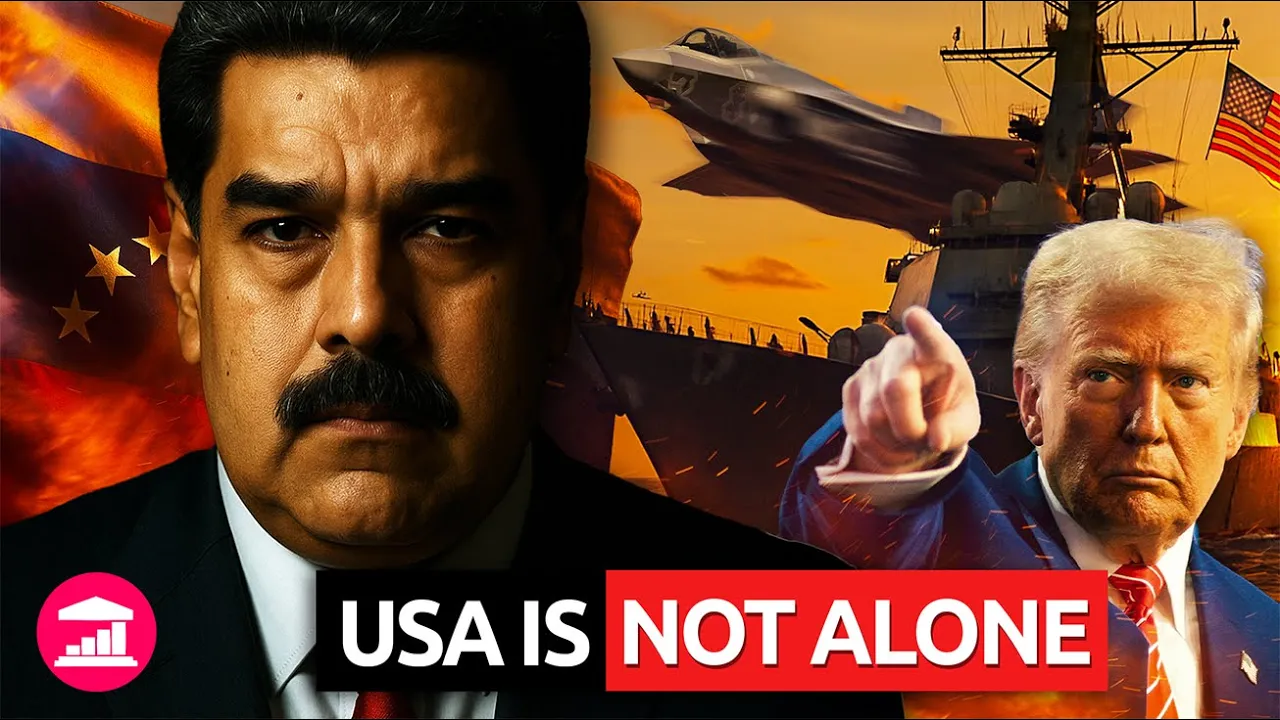
In recent years, Donald Trump's America First brand has had one sacred principle. No regime change, no getting involved in other people's wars, no repeat of Iraq or Afghanistan. That has been the red line, the ideological boundary, the absolute dogma of his foreign policy.
And he clearly shows this in his recently published national security strategy. We seek good relations and peaceful commercial relations with the nations of the world without imposing on them democratic or other social change. National security strategy of the United States of America.
And yet this does not match what we're seeing in the Caribbean. You know, the concentration of troops and the constant threat. Could it be that everything we're seeing is just for show?
It doesn't seem like it. The force is real, very real. It doesn't fit with the published strategy.
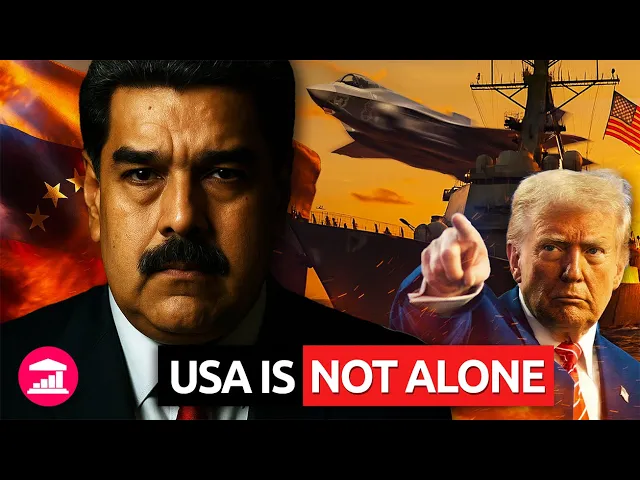
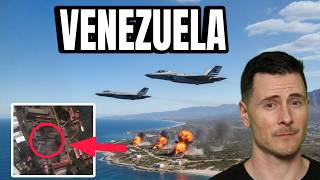
But that's how this administration operates. Because while the White House was finalizing the publication of the strategy, Trump continued to say things like this. Trump on Tuesday teased an imminent land strike against Venezuela and suggested he might attack other countries as well.
Some say that Venezuela is different because it's all about oil. But no, that's not the reason. They don't need it.
It probably doesn't even suit them. And if they want it, they already have Chevron operating there. All they need to do is to give a couple more licenses to companies like Exxon Mobile and that's it.
On the other hand, we're told that an attack on Venezuela would be aimed at stopping the flow of narcotics into the United States. You know, to put an end to the dangerous Solless cartel, spoiler alert, this is not the reason either. If the United States wants to attack the flow of narcotics at its root and with force, then it would have to put Colombia, Mexico, and Ecuador well ahead of Venezuela.
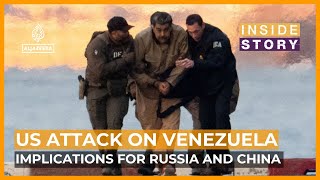
No, all these things may have an influence, but what is happening in Venezuela, or rather what may happen is basically a political issue. The faction of the administration led by Marco Rubio wants to take down the Bolivarian bigwigs and later the Castroist satraps of Cuba for the sake of legacy, for the stability of the Western Hemisphere, to kick Moscow and Beijing in the shins for whatever reason, and clearly also for the elections and the Hispanic vote. That's why even though no one knows what the hell is going to happen yet, we do know that the White House has plans on the table for a military escalation to attack targets on the ground and even to try to decapitate and end the power of the chistas.
Because what is typically a red line may in this case be treated as a full-blown political opportunity. And that's why, at least publicly, there's no longer talk of containment nor of diplomatic pressure. Now the discussion is openly about how and when to get rid of Javviso at its roots.
It remains to be seen. Of course, we've already talked about this in a lot of videos. And obviously, the idea with this video is not to tell you what you already know, but to give you new insights that are worth considering.
It seems Maduro and his henchmen are living now more than ever in fear, anxiety, and with the feeling that the conflict could spill onto land at any moment. And that is why in light of what may happen today on Visual Politic, we want to answer a question that is lingering. Who's who in this whole mess?
Who is helping the United States and who is helping Maduro? What do the various players in the region make of this possible conflict? Pay close attention because in the Caribbean, nothing is what it seems.
But first, if you're interested in the world of investing, if you want to learn how to manage your savings, protect yourself against inflation, and figure out how to make money beyond your day job, I've got some news for you. At Visual Factory, we've created the Visual Factory Club, a newsletter where every week we send out free content focused on essential financial education, the ABC of what everyone should know to understand the stock market, financial markets in general, investment platforms, how to assess investment opportunities, and which markets may have more or less potential. Because, of course, if you want to invest your money so you're not at the mercy of your country's economic instability, you at least need to understand the basics of the financial world.
in the Visual Factory Club. You'll learn all of this completely free of charge. Through the link below and this QR code, you can sign up for the club and start receiving the upcoming additions.
What's more, when you sign up, you'll receive a dossier where [music] I explain in a clear and simple way the most essential investment concepts. What [music] multiples or the PE ratio are, what indices are, ETFs, derivatives, funds, EPS, you get the idea. After that, every week, you'll receive additional materials and market analysis to help you stay informed about what's going on.
And by the way, the sooner you sign up, the better. Since we send each episode of the series by email, and every edition is unique, if you're not subscribed, you might miss some of them, and you won't be [music] able to access them later. But with that said, let's get into the video.
The New Wall of the Caribbean. [music] Ah, the Caribbean. That place that always used to generate thoughts of idilic beaches, rum, and British tourists burning roar in the sun.
Of course, these days the atmosphere is a little different. Today, we would think of radars, reactivated military bases, tanker aircraft, and presidential speeches that sound less like welcome to paradise and more like get ready for some scandalous turbulence. And visual politically, while Washington threatened Maduro with more than just words, several Caribbean islands have begun to close ranks around Trump.
Some out of conviction, others out of fear, others due to energy interests, and others because their neighbor is Venezuela and they prefer to have the one with an aircraft carrier on their side. But let's take it one step at a time. The Dominican Republic has become the most explicit stronghold of the US operation.
Luis Abanadir, the Dominican president, has left any diplomatic ambiguity far behind. He has given the green light for the United States to use the Santa Cedro air base and Los America's international airport. [music] And we're not talking about using the cafeteria and the bathroom, but using the bases for resupply, equipment, transport, technical staff, accommodation, and complete logistical operations.
What's more, Abinada and Pete Hegth, the US Secretary of Defense, held a joint press conference that looked almost like a promotional video for bilateral cooperation. And that's not all. He also confirmed that they would provide the necessary refueling services to the United States and any other country that joins the operation.
Now the question is why? What does Santo Domingo gain from all this? First, supposedly to cut off or mitigate drug trafficking to this island, which has become a major international distribution center, a place where drug traffickers are beginning to have more and more influence.
Second, to consolidate itself as Uncle Sam's preferred partner in the Caribbean. In fact, since January 2025, Washington has sent delegations, renovated the embassy, increased military cooperation. In a way, the Dominican Republic could be seeking to fill the gap left by Colombia in its special relationship with Trump's Washington.
And third, I'll scratch your back if you scratch mine. And here we're talking about winning the support of the White House to manage the situation with Haiti. Dominican Republic registers a record number of Haitian deportations.
More than [music] 370,000 undocumented Haitians have been deported from the Dominican Republic in the last year. The humanitarian and migration problem with Haiti is enormous, and the White House has not wanted to get too involved lately. But Abanada knows that aligning himself with Trump on Venezuela could earn him a lot of points in terms of US political support when it comes to implementing tougher policies as well as help with border management.
Not surprisingly, internal criticism has been quick to follow. The opposition says the island is becoming a platform for someone else's conflict. Some activists denounce violations of the spirit of the constitution.
There have even been protests in Sto. Domingo against participating in what they consider to be a possible war of aggression in the Caribbean. And of course, let's not forget that a large part of the dollars reaped by the Bolivarians have ended up on this island, but we'll talk about that another day.
In any case, it seems that the Dominican Republic is going to play a key role in what is going to happen. And this time, they're going all out with the United States. Of course, they're not the only ones.
Trinidad and Tobago is one of the least known countries in the region. It's only 16 km from Venezuela, a distance at which you almost don't even need radar. You just have to look over at the beach.
It's a country that used to get along well with the Chvistas, particularly in the days of Commander Hugo Chavez Frias. Of course, those were different times. These days, the relationship is much more tense to the point that a few months ago, Venezuela suspended all energy agreements with this island nation.
This includes the shutdown of Compo Drggon, a huge gas field that was to be developed by Shell, which has an express license from the Office of Foreign Assets Control, exempting it from US sanctions when it comes to exploiting Venezuelan gas, something that is now at a standstill. In any case, Maduro has gone so far as to say, literally, that the prime minister of Trinidad and Tobago is a wararmongering pimp who is turning her country into a kind of US aircraft carrier. For her part, Prime Minister Kamla Passad Biscessa has responded in a way that perhaps hurts the Trafista Bigwigs the most.
She has confirmed that US Marines are already stationed at Tobago airport and are working on installing new radar systems, extended runways, and strategic roads, a military modernization that is not exactly going unnoticed in a small country like this. Furthermore, when the prime minister recently met with the chairman of the US Joint Chiefs of Staff, Dan Kaine, she made such gentle and diplomatic statements as this. I have no sympathy for the traffickers.
The US military should kill them all violently. >> That's no longer foreign policy. That's almost like the Caribbean version of John Wick.
And what could possibly interest this country of barely 1. 5 million inhabitants, so geographically close to Venezuela, in getting involved in such a mess? Well, this is where we need to tune our thinking because Trinidad has not become pro-American on a whim.
It has very specific reasons. The first is obviously drunk trafficking. Like the Dominican Republic, these islands are a key trans shshipment point.
Criminal networks use Trinidad as a stopover on their way to the US and Europe. Every year, huge shipments are seized. Passad Bisasar wants to push security and internal order, and US support is perfect for that.
Yet, there is another much more compelling reason. We're talking about the gas project I mentioned a moment ago, the Drgon Field, the goose that lays the golden eggs. You see, Trinidad depends on gas for its economy.
It is its biggest export. Well, the Drgon Field, which lies in Venezuelan waters, but needs Trinidad and Tobago to be exploited, would be a major boost for the local economy. It would complement its local reserves and allow it to maintain its export business.
The problem is Maduro's Venezuela. Yes, Shell has an exemption from the White House, but it's not easy. With Caracas, everything is a problem.
There's not much legal certainty, and no one is sure what will happen. If the Bolivarian regime were to disappear, this project would probably be one of the first to see the light of day, if not the first of all. And that would be a huge stroke of luck for Trinidad.
And clearly all this at a time when the country is also experiencing serious economic difficulties would be very beneficial. At the same time, Pad Bisasar believes that a strong alliance with the US will also attract investment and technical assistance. And all this explains why Venezuela is threatening them directly.
Although the truth is that they are not in a position to do so. I say to these governments, I am referring to the governments of the Cooperative Republic of Guana, the government of Trinidad and Tobago. If they attack us from their territory, they too will receive a response in legitimate self-defense.
And speaking of Guyana, publicly, Guyana has not taken sides. They are with Washington. That much is clear.
They have a longstanding dispute over the esakibbo. We've already talked about this on the channel. Venezuela claims the region.
Guyana says, "No way. " And there's a lot of oil at stake. oil whose exploitation is led by the big players in the US oil industry, particularly the powerful Exxon Mobile and Chevron.
In recent years, Maduro has been threatening them senselessly. He even held a referendum. Remember for April 2024, Guana condemns Venezuela for signing into law a referendum approving annexation of disputed region.
This has backfired on him with Exxon drawing the attention of the White House and convincing many in Washington that the Chvistas could be a threat if they aren't stopped. It has also triggered two reactions from its neighboring country. First, in Guyana, they're delighted to see the leading gerilla fall, even though, to be honest, it's not entirely bad for them that an incompetent regime next door is unable to exploit its own oil reserves, something that, as a good oil producer, actually benefits Guyana.
And second, it has pushed them completely into Washington's arms. President Fionan Ali has held numerous meetings with senior US officials in recent months, requesting assistance with maritime and aerial surveillance, equipment supplies, security training, and has also strengthened intelligence sharing mechanisms. And it's not just about the territorial threat.
Guyana considers Venezuela to be a hotbed of criminal groups, which is the last thing they want now that they are on track to becoming the third richest country on the continent behind only Canada and the United States. So, they are delighted with the increased US presence in the Caribbean. The fact is, this country is experiencing a real economic boom.
With a population of just over 800,000, Guyana already produces more than one barrel of oil per person per day. It will soon surpass Venezuela and will soon be producing two barrels per person per day. In short, the Dominican Republic gives the US additional air projection to what they already have with their enormous naval capabilities.
Trinidad and Tobago gives them intelligence and Guyana gives them narrative and if necessary a possible base of operations. Well, along with Puerto Rico, this chain is what we can refer to as Washington's new iron belt in the Caribbean. Puerto Rico, of course, doesn't support anything.
It's the United States. But on this island, Washington has reactivated a strategic base, Roosevelt Roads. Closed in 2004, the base is coming back to life.
Reuters has already photographed everything. Repaving of runways, construction activity, the arrival of CH53 Super Stallion Marine Transport helicopters, MV22 Osprey landings, and even Coast Guard helicopters making rounds. And why is this base so valuable?
Well, obviously because it's close to Venezuela, but on sovereign US territory. And let's not forget the US Virgin Islands, another piece of Uncle Sam's territory where military aircraft have also been spotted. As I said, Washington's new pressure belt in these parts.
Of course, when we look at continental South America, the rules of the game are different. There, Caracas still has some support. Neighbors who don't want fires in their backyard on the mainland.
things are far less epic because it's one thing to see the planes flying overhead and quite another to share 2,000 km of jungle with Venezuela and fear that this country will descend into even greater chaos with all that this implies more immigration and more crime. And that's why we enter the realm of creative neutrality here. We're talking about governments that don't like Maduro but don't trust Trump either and above all don't want trouble right on their doorstep.
Colombia probably has the most complicated situation of all along with Brazil. It's Venezuela's only South American neighbor. It has already received millions of Venezuelan migrants, has a border of more than 2,200 km full of jungle, illegal crossings, and armed groups.
And on top of that, a president, Gustavo Petro, who doesn't exactly get along well with Trump. His official line is something like, "No invasion, no dictatorship. Leave the Venezuelans alone and let them sort it out themselves.
" >> [music] >> The Colombian government has even backed a proposal that is as concrete as it is probably absurd. A shared transitional government in Caracus with Chavismo and the opposition sitting together trying to engineer an agreed return to democracy. [music] And among those who support these plans, well, we can find a whole range of emotions.
There are those who still distrust Washington more than Caracus. There are those who are pragmatic and don't want to risk more refugees, border chaos, and drug traffickers running rampant if the situation gets out of hand. And there are also those who don't trust that they will not be next in some way.
Because don't forget what we told you in one of our recent videos. Even if it's not popular, if we're talking about drug traffickers, we have to talk about Colombia more than ever. In any case, pro does not mince his words.
I want to know under what rule of international law can a president of one country close its airspace to another nation. I tell the world that a foreign president cannot close a national airspace. And if Colombia is walking a tight rope in this entire story, Brazil is balancing without a safety net.
Lula Dilva has a very clear idea about foreign policy. South America should be a region free of international intervention. No Marines, no bombers, no repeat of the 1970s with coups blessed by Washington.
That's why Lula has even offered to personally mediate between Washington and Caracas. Oh, it's not exactly that Brazil is embracing Maduro. Far from it.
After the fraudulent Venezuelan elections of 2024, Brazil froze relations with Javismo and it does not recognize Maduro's new term. But it doesn't want the story to end violently, perhaps due to conflicting interests. For instance, in recent years, Brazil has been experiencing a huge oil boom.
So why on earth would they want to see things change in Venezuela? But clearly, they're not going to waste a single ounce of energy supporting the Chvista thugs. Now, if there's one country that is a historical aversion to US military interventions in Latin America, it's Mexico.
And Claudia Shinebam is not going to be the president who breaks that tradition among other things, because her country could be next. So from the beginning she has repeated the classic mantra of Mexican diplomacy. We talk about respect for sovereignty not intervention and peaceful resolution of conflicts.
Of course they aren't going to lift a finger either. Soft words and that's it. Shine bomb and Trump smile at their first small meeting.
The Mexican president said it was excellent. >> After all, we're talking about a country that sends 80% of its exports to the United States and they already have enough trouble with immigration at the border. drug trafficking and Uncle Sam's trade deficit.
They aren't going to do anything that would upset Trump too much. They are not up for unnecessary battles. These are the countries most involved, but the rest, well, the rest of the story is very much aligned with Washington.
Ecuador, Paraguay, Peru, Argentina, El Salvador, the future, Nicaragua, Chile, they all condemn the region that tyrannizes, Venezuela. the truth. I don't think there has ever been such a strong anti-chevvisista movement in Latin America.
It's practically dominant. And do you know what this means? It means that this time the Chvista regime is more isolated than ever.
No one is going to lift a finger for them anymore. Pro Lula and Shinbound probably don't like any of this, but that's the way it is. So the question is, what does Maduro have left in the region?
Cuba, which means practically zilch. That island is falling apart. They no longer have electricity and they're eagerly awaiting the new aid that Putin's Russia is sending them.
Well, this is another part of the game board. The who's who in this whole story. The question, the one question that keeps coming up is how on earth will it all end?
Leave us your opinions below in the comments and let's start the debate. And very importantly, if you like this video, give it a like and subscribe to Visual Politic if you haven't done so already. These small gestures help us out a lot.
And as always, thank you very much for watching. All the best. I'll see you next time.